Bala Kanda · Sarga 10 of 77 · 33 verses
How Rishyashringa Was Brought to Anga
Sumantra tells how it was done. Romapada’s priest and ministers proposed a plan: Rishyashringa knows nothing of women or pleasures, so let beautiful, well-adorned courtesans go to the forest and entice him to the city. The courtesans camp near the hermitage. One day the young sage, who has never seen a man or woman from a town, wanders near and sees them. They sing, ask who he is, and he innocently invites them to his hermitage and honours them as guests with water and roots and fruit.
Afraid of his father, they leave quickly, but first embrace him and give him sweets, which he takes for a new kind of fruit. He is restless all night. The next day he comes back, and they lead him away. The moment he is brought into Anga, rain pours down. King Romapada bows to the ground before him, begs that he not be angry, and gives him Shanta in marriage. Rishyashringa lives there, honoured, with his wife.
Press › to begin with verse 1.
सुमन्त्रश्चोदितो राज्ञा प्रोवाचेदं वचस्तदा । यथर्ष्यशृङ्गस्त्वानीतो येनोपायेन मन्त्रिभिः । तन्मे निगदितं सर्वं शृणु मे मन्त्रिभिः सह ॥ १ ॥
Urged by the king, Sumantra then said: “Hear with your ministers all I was told of how Rishyashringa was brought by the ministers, and by what means.
राजा के आग्रह पर सुमंत्र ने कहा: “अपने मंत्रियों के साथ वह सब सुनिए जो मुझे बताया गया था, कि मंत्रियों ने ऋष्यशृंग को कैसे और किस उपाय से बुलाया।
Commentary on the whole sarga
How Rishyashringa Was Brought to Anga 1 min read.
Read the commentary CommentaryNot scripture Sumantra now tells the full tale “with your ministers” listening. The story is meant to be heard by the whole court. Notice how Valmiki keeps the nested frame alive: we hear Sumantra telling Dasharatha what he once heard.
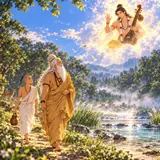
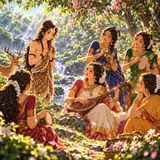
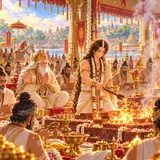
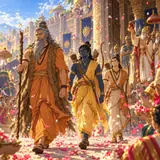
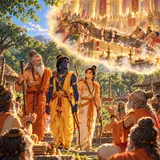
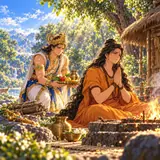
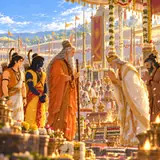
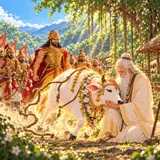
Scene 1 of 3 · Singing women in bright clothes meet the forest boy Rishyashringa, who has never seen another person.
रोमपादमुवाचेदं सहामात्यः पुरोहितः । उपायो निरपायोऽयमस्माभिरभिचिन्तितः ॥ २ ॥
“The family priest, with the ministers, said to Romapada: ‘We have thought of a way that carries no danger.
“पुरोहित ने मंत्रियों के साथ रोमपाद से कहा: ‘हमने एक ऐसा उपाय सोचा है जिसमें कोई खतरा नहीं है।
CommentaryNot scripture The priest’s plan carries “no danger” (apaya-varjita ). The danger they fear is the curse of Vibhandaka, the boy’s powerful father. Any plan must avoid angering him, and that shapes everything that follows.
Scene 1 of 3 · Singing women in bright clothes meet the forest boy Rishyashringa, who has never seen another person.
ऋष्यशृङ्गो वनचरस्तपःस्वाध्यायसंयुतः । अनभिज्ञस्तु नारीणां विषयाणां सुखस्य च ॥ ३ ॥
“’Rishyashringa lives in the forest, devoted to austerity and study, and knows nothing of women, of the objects of the senses, or of pleasure.
“’ऋष्यशृंग वन में रहते हैं, तप और स्वाध्याय में लगे रहते हैं, और स्त्रियों, इंद्रियों के विषयों या सुख के बारे में कुछ नहीं जानते।
CommentaryNot scripture The boy knows nothing of women, of the senses’ objects, or of pleasure. He is pure in the most literal way: he has simply never met the world. The plan depends on his innocence. That makes the story both comic and tender.
Scene 1 of 3 · Singing women in bright clothes meet the forest boy Rishyashringa, who has never seen another person.
इन्द्रियार्थैरभिमतैर्नरचित्तप्रमाथिभिः । पुरमानाययिष्यामः क्षिप्रं चाध्यवसीयताम् ॥ ४ ॥
“’With the pleasant objects of the senses that stir the minds of men, we will bring him to the city. Let it be decided quickly.
“’मनुष्यों के मन को लुभाने वाले मनोहर विषयों से हम उन्हें नगर में ले आएँगे। इसका निर्णय जल्दी किया जाए।
CommentaryNot scripture The plan: use “the pleasant objects of the senses” to draw him out. It is a gentle trap. What the forest has never offered him, the city will.
Scene 1 of 3 · Singing women in bright clothes meet the forest boy Rishyashringa, who has never seen another person.
गणिकास्तत्र गच्छन्तु रूपवत्यः स्वलङ्कृताः । प्रलोभ्य विविधोपायैरानेष्यन्तीह सत्कृताः ॥ ५ ॥
“’Let courtesans go there, beautiful and well adorned. Enticing him by various means, they will bring him here, and be rewarded.’
“’सुंदर और सजी-धजी गणिकाएँ वहाँ जाएँ। तरह-तरह से लुभाकर वे उन्हें यहाँ ले आएँगी, और उन्हें पुरस्कार मिलेगा।’
CommentaryNot scripture Courtesans (vara-mukhyah ) were respected professionals in ancient Indian cities, trained in music, dance and conversation. They are sent not to harm him but to charm him, and they will be rewarded.
Scene 1 of 3 · Singing women in bright clothes meet the forest boy Rishyashringa, who has never seen another person.
श्रुत्वा तथेति राजा च प्रत्युवाच पुरोहितम् । पुरोहितो मन्त्रिणश्च तथा चक्रुश्च ते तथा ॥ ६ ॥
“Hearing this, the king said to the priest, ‘So be it,’ and the priest and ministers did accordingly.
“यह सुनकर राजा ने पुरोहित से कहा, ‘ऐसा ही हो’, और पुरोहित तथा मंत्रियों ने वैसा ही किया।
CommentaryNot scripture Tatha , “so be it”: the king agrees at once. A drought is killing his people; he cannot wait. The priest and ministers carry out the plan.
Scene 1 of 3 · Singing women in bright clothes meet the forest boy Rishyashringa, who has never seen another person.
वारमुख्यास्तु तच्छ्रुत्वा वनं प्रविविशुर्महत् । आश्रमस्याविदूरेऽस्मिन् यत्नं कुर्वन्ति दर्शने ॥ ७ ॥
ऋषेः पुत्रस्य धीरस्य नित्यमाश्रमवासिनः । पितुः स नित्यसन्तुष्टो नातिचक्राम चाश्रमात् ॥ ८ ॥
“Hearing this, the chief courtesans entered the great forest and, not far from the hermitage, tried to be seen by the steadfast son of the sage, who always lived at the hermitage. Always content with his father, he never went beyond the hermitage.
“यह सुनकर प्रमुख गणिकाएँ उस महावन में गईं और आश्रम से थोड़ी दूर रहकर सदा आश्रम में रहने वाले धीर मुनिपुत्र को दिखाई देने का प्रयत्न करने लगीं। पिता के साथ सदा संतुष्ट रहने वाले वे आश्रम से बाहर कभी नहीं जाते थे।
CommentaryNot scripture The women stay “not far from the hermitage” and try to be seen. They dare not enter, because his father might return. The boy never goes beyond the hermitage; he is “content with his father”. The trap must wait for chance.
Scene 1 of 3 · Singing women in bright clothes meet the forest boy Rishyashringa, who has never seen another person.
न तेन जन्मप्रभृति दृष्टपूर्वं तपस्विना । स्त्री वा पुमान्वा यच्चान्यत् सत्त्वं नगरराष्ट्रजम् ॥ ९ ॥
“From his birth that ascetic had never seen a woman or a man, or any other creature from a town or kingdom.
“जन्म से उस तपस्वी ने कभी कोई स्त्री या पुरुष नहीं देखा था, न नगर या राज्य का कोई और प्राणी।
CommentaryNot scripture A striking detail: from birth he has never seen a woman or a man, apart from his father. His whole world is one old ascetic and the forest animals. Imagine meeting people for the first time.
Scene 1 of 3 · Singing women in bright clothes meet the forest boy Rishyashringa, who has never seen another person.
ततः कदाचित् तं देशमाजगाम यदृच्छया । विभाण्डकसुतस्तत्र ताश्चापश्यद् वराङ्गनाः ॥ १० ॥
“Then one day, by chance, the son of Vibhandaka came to that place and saw those lovely women.
“फिर एक दिन संयोग से विभांडक के पुत्र उस स्थान पर आए और उन सुंदर स्त्रियों को देखा।
CommentaryNot scripture Yadrichhaya , “by chance”: one day he wanders to that spot. The plan works through an accident. In the Ramayana, small chances often open the way for large destinies.
Scene 1 of 3 · Singing women in bright clothes meet the forest boy Rishyashringa, who has never seen another person.
ताश्चित्रवेषाः प्रमदा गायन्त्यो मधुरस्वरम् । ऋषिपुत्रमुपागम्य सर्वा वचनमब्रुवन् ॥ ११ ॥
“The young women, in bright clothes, singing sweetly, approached the sage’s son and all said to him:
“उजले वस्त्र पहने, मधुर स्वर में गाती वे युवतियाँ मुनिपुत्र के पास आईं और सब उनसे बोलीं:
CommentaryNot scripture The women come to him “in bright clothes, singing sweetly”. To a boy who has known only bark cloth and silence, they must seem like beings from another world.
Scene 1 of 3 · Singing women in bright clothes meet the forest boy Rishyashringa, who has never seen another person.
कस्त्वं किं वर्तसे ब्रह्मञ्ज्ञातुमिच्छामहे वयम् । एकस्त्वं विजने घोरे वने चरसि शंस नः ॥ १२ ॥
“’Who are you? What do you do, brahmana? We want to know. Tell us why you wander alone in this lonely, dreadful forest.’
“’ब्राह्मण, आप कौन हैं? क्या करते हैं? हम जानना चाहती हैं। हमें बताइए कि आप इस सूने, भयानक वन में अकेले क्यों घूमते हैं।’
CommentaryNot scripture Their question is warm and curious: who are you, why are you alone in this frightening forest? They speak to him as to a lost child. The tone is gentle, not seductive.
Scene 1 of 3 · Singing women in bright clothes meet the forest boy Rishyashringa, who has never seen another person.
अदृष्टरूपास्तास्तेन काम्यरूपा वने स्त्रियः । हार्दात्तस्य मतिर्जाता आख्यातुं पितरं स्वकम् ॥ १३ ॥
“Those women of lovely form, never seen before in the forest, moved his heart, and he decided to tell them about his father.
“वन में पहले कभी न देखी गई उन सुंदर रूप वाली स्त्रियों ने उनका मन मोह लिया, और उन्होंने उन्हें अपने पिता के बारे में बताने का निश्चय किया।
CommentaryNot scripture His heart is moved (manah prakritam ). He has never seen such forms. His instinct is to tell them about his father, the only person he knows. It is a young boy’s answer.
Scene 1 of 3 · Singing women in bright clothes meet the forest boy Rishyashringa, who has never seen another person.
पिता विभाण्डकोऽस्माकं तस्याहं सुत औरसः । ऋष्यशृङ्ग इति ख्यातं नाम कर्म च मे भुवि ॥ १४ ॥
“’Our father is Vibhandaka; I am his own son. My name, Rishyashringa, and my practice are known in the world.
“’हमारे पिता विभांडक हैं; मैं उनका अपना पुत्र हूँ। मेरा नाम ऋष्यशृंग है, और मेरी साधना संसार में जानी जाती है।
CommentaryNot scripture He introduces himself with simple pride: son of Vibhandaka, and “my name and my practice are known in the world”. He does not know how small his world is. The line is lovely in its innocence.
Scene 1 of 3 · Singing women in bright clothes meet the forest boy Rishyashringa, who has never seen another person.
इहाश्रमपदोऽस्माकं समीपे शुभदर्शनाः । करिष्ये वोऽत्र पूजां वै सर्वेषां विधिपूर्वकम् ॥ १५ ॥
“’Our hermitage is near here, you who are lovely to see. There I will honour you all properly.’
“’हमारा आश्रम यहीं पास में है, देखने में सुंदर देवियो। वहाँ मैं आप सबका विधिवत सत्कार करूँगा।’
CommentaryNot scripture He invites them home and promises to honour them properly. Even in his innocence he knows the duty of hospitality. A boy who has never met a guest knows exactly how to welcome one.
Scene 1 of 3 · Singing women in bright clothes meet the forest boy Rishyashringa, who has never seen another person.
ऋषिपुत्रवचः श्रुत्वा सर्वासां मतिरास वै । तदाश्रमपदं द्रष्टुं जग्मुः सर्वास्ततोऽङ्गनाः ॥ १६ ॥
“Hearing the sage’s son, they all decided to go, and all the women went to see his hermitage.
“मुनिपुत्र की बात सुनकर सबने जाने का निश्चय किया, और सब स्त्रियाँ उनका आश्रम देखने गईं।
CommentaryNot scripture The women go with him to see the hermitage. The plan is unfolding faster than they hoped: he is bringing them in himself.
Scene 1 of 3 · Singing women in bright clothes meet the forest boy Rishyashringa, who has never seen another person.
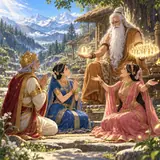
गतानां तु ततः पूजामृषिपुत्रश्चकार ह । इदमर्घ्यमिदं पाद्यमिदं मूलं फलं च नः ॥ १७ ॥
“When they came, the sage’s son honoured them: ‘Here is water for your hands, here is water for your feet, here are our roots and fruit.’
“उनके आने पर मुनिपुत्र ने उनका सत्कार किया: ‘यह हाथ धोने का जल है, यह पैर धोने का जल है, ये हमारे कंद-मूल और फल हैं।’
CommentaryNot scripture He offers arghya (water for the hands), padya (water for the feet), roots and fruit: everything a forest hermitage has. It is the same rite Valmiki offered Brahma in sarga 2. Simple gifts, perfectly given.
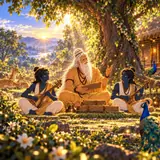
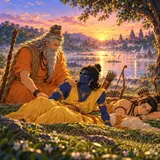
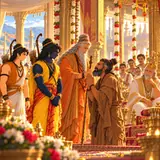
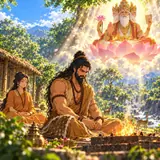
Scene 2 of 3 · At his hermitage he honours his guests with roots and fruit, and tastes city sweets for the first time.
प्रतिगृह्य तु तां पूजां सर्वा एव समुत्सुकाः । ऋषेर्भीताश्च शीघ्रं तु गमनाय मतिं दधुः ॥ १८ ॥
“They accepted his welcome eagerly, but, afraid of the sage, quickly made up their minds to leave.
“उन्होंने उत्सुकता से उनका सत्कार स्वीकार किया, पर मुनि के डर से जल्दी लौटने का मन बना लिया।
CommentaryNot scripture They accept eagerly but are afraid of the sage. Vibhandaka could return at any moment. Fear quickens the story.
Scene 2 of 3 · At his hermitage he honours his guests with roots and fruit, and tastes city sweets for the first time.
अस्माकमपि मुख्यानि फलानीमानि हे द्विज । गृहाण विप्र भद्रं ते भक्षयस्व च मा चिरम् ॥ १९ ॥
“’Brahmana, these are our own finest fruits. Take them, blessings on you, and eat them; don’t wait.’
“’ब्राह्मण, ये हमारे अपने उत्तम फल हैं। इन्हें लीजिए, आपका कल्याण हो, और इन्हें खाइए; देर मत कीजिए।’
CommentaryNot scripture Now they offer their own “fruits”: city sweets. They urge him to eat at once. A playful trick on a boy who has never seen a sweet.
Scene 2 of 3 · At his hermitage he honours his guests with roots and fruit, and tastes city sweets for the first time.
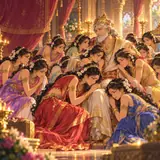
ततस्तास्तं समालिङ्ग्य सर्वा हर्षसमन्विताः । मोदकान् प्रददुस्तस्मै भक्ष्यांश्च विविधाञ्छुभान् ॥ २० ॥
“Then all of them, delighted, embraced him and gave him sweetmeats and many other good things to eat.
“फिर सबने प्रसन्न होकर उन्हें गले लगाया और मिठाइयाँ तथा बहुत-सी अच्छी खाने की चीज़ें दीं।
CommentaryNot scripture They embrace him and give him sweetmeats (modaka ) and other delicacies. For the first time he tastes the city. The story is light and humorous here.
Scene 2 of 3 · At his hermitage he honours his guests with roots and fruit, and tastes city sweets for the first time.
तानि चास्वाद्य तेजस्वी फलानीति स्म मन्यते । अनास्वादितपूर्वाणि वने नित्यनिवासिनाम् ॥ २१ ॥
“Tasting them, the radiant youth took them for fruits, never having tasted such before, since he always lived in the forest.
“उन्हें चखकर उस तेजस्वी युवक ने उन्हें फल ही समझा, क्योंकि सदा वन में रहने के कारण उसने ऐसा कुछ पहले कभी नहीं चखा था।
CommentaryNot scripture He thinks the sweets are fruits. He has never tasted anything like them. It is one of the gentlest comic moments in the poem: a holy boy amazed by a laddu.
Scene 2 of 3 · At his hermitage he honours his guests with roots and fruit, and tastes city sweets for the first time.
आपृच्छ्य च तदा विप्रं व्रतचर्यां निवेद्य च । गच्छन्ति स्मापदेशात्ता भीतास्तस्य पितुः स्त्रियः ॥ २२ ॥
“Taking leave of the brahmana and telling him they were keeping a vow, the women went away on a pretext, afraid of his father.
“ब्राह्मण से विदा लेकर और यह कहकर कि वे किसी व्रत का पालन कर रही हैं, वे स्त्रियाँ उनके पिता के डर से किसी बहाने चली गईं।
CommentaryNot scripture The women leave, saying they must keep a vow. A pretext (vyapadesha ). They are afraid of his father. The plan needs one more meeting.
Scene 2 of 3 · At his hermitage he honours his guests with roots and fruit, and tastes city sweets for the first time.
गतासु तासु सर्वासु काश्यपस्यात्मजो द्विजः । अस्वस्थहृदयश्चासीद् दुःखाच्च परिवर्तते ॥ २३ ॥
“When they had all gone, the twice-born son of Kashyapa’s line was uneasy at heart and tossed about in distress.
“उन सबके चले जाने पर कश्यप वंश का वह ब्राह्मण मन में बेचैन हो गया और व्याकुल होकर इधर-उधर छटपटाने लगा।
CommentaryNot scripture After they leave he is restless, troubled, tossing about. He does not know what he feels. Valmiki describes first longing in someone who has no word for it.
Scene 2 of 3 · At his hermitage he honours his guests with roots and fruit, and tastes city sweets for the first time.
ततोऽपरेद्युस्तं देशमाजगाम स वीर्यवान् । विभाण्डकसुतः श्रीमान् मनसाचिन्तयन्मुहुः ॥ २४ ॥
मनोज्ञा यत्र ता दृष्टा वारमुख्याः स्वलङ्कृताः । दृष्ट्वैव च ततो विप्रमायान्तं हृष्टमानसाः ॥ २५ ॥
“The next day the powerful and handsome son of Vibhandaka came again to the place, thinking again and again in his mind, where he had seen those charming, well-adorned courtesans. As soon as they saw the brahmana coming, they were glad at heart,
“अगले दिन विभांडक का वह बलवान और सुंदर पुत्र मन में बार-बार सोचता हुआ फिर उसी स्थान पर आया, जहाँ उसने उन मनोहर, सजी-धजी गणिकाओं को देखा था। ब्राह्मण को आता देखते ही वे मन में प्रसन्न हुईं,
CommentaryNot scripture The next day he returns to the same place, thinking about them “again and again”. The women are glad to see him. The trap is now his own heart.
Scene 2 of 3 · At his hermitage he honours his guests with roots and fruit, and tastes city sweets for the first time.
उपसृत्य ततः सर्वास्तास्तमूचुरिदं वचः । एह्याश्रमपदं सौम्य अस्माकमिति चाब्रुवन् ॥ २६ ॥
“and all went to him and said: ‘Come to our hermitage, gentle one.’
“और सब उनके पास जाकर बोलीं: ‘सौम्य, हमारे आश्रम में चलिए।’
CommentaryNot scripture “Come to our hermitage”: they use his own word, as if they too were ascetics. He will understand it in the only way he can.
Scene 2 of 3 · At his hermitage he honours his guests with roots and fruit, and tastes city sweets for the first time.
चित्राण्यत्र बहूनि स्युर्मूलानि च फलानि च । तत्राप्येष विशेषेण विधिर्हि भविता ध्रुवम् ॥ २७ ॥
“’There are many wonderful roots and fruits there, and there we will surely perform our special rite.’
“’वहाँ बहुत से अद्भुत कंद-मूल और फल हैं, और वहाँ हम अवश्य अपना विशेष अनुष्ठान करेंगी।’
CommentaryNot scripture They promise fruits and a special rite. To him, this sounds like the life he knows. That is how they draw him away from the forest.
Scene 2 of 3 · At his hermitage he honours his guests with roots and fruit, and tastes city sweets for the first time.
श्रुत्वा तु वचनं तासां सर्वासां हृदयङ्गमम् । गमनाय मतिं चक्रे तं च निन्युस्तदा स्त्रियः ॥ २८ ॥
“Hearing their words, which went to his heart, he made up his mind to go, and the women led him away.
“उनके हृदय तक पहुँचने वाले वचन सुनकर उन्होंने जाने का मन बना लिया, और स्त्रियाँ उन्हें ले चलीं।
CommentaryNot scripture The words “went to his heart” (hridayam-gama ). He decides to go. And the women lead him toward Anga. The boy steps out of the forest for the first time.
Scene 2 of 3 · At his hermitage he honours his guests with roots and fruit, and tastes city sweets for the first time.
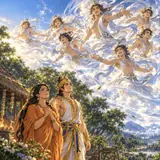
तत्र चानीयमाने तु विप्रे तस्मिन् महात्मनि । ववर्ष सहसा देवो जगत् प्रह्लादयंस्तदा ॥ २९ ॥
“As that great-souled brahmana was being brought in, the god suddenly sent rain, gladdening the world.
“जैसे ही उन महात्मा ब्राह्मण को लाया जा रहा था, देवता ने अचानक वर्षा कर दी, जिससे संसार प्रसन्न हो गया।
CommentaryNot scripture The moment he enters the land, rain falls. The drought ends with his arrival. His purity has the power the brahmanas foretold. Joy spreads through the whole world.
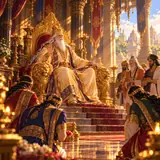
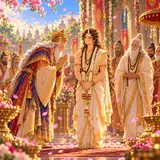
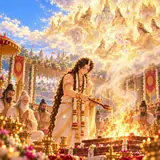
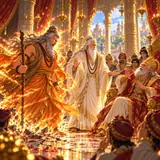
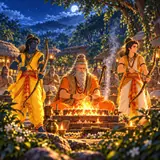
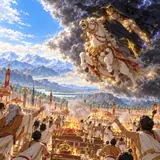
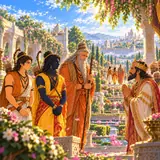
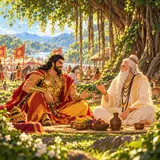
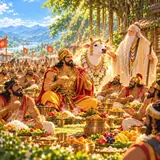
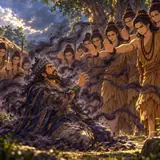
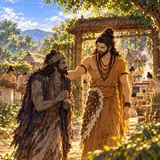
Scene 3 of 3 · As Rishyashringa enters Anga, rain pours down, and King Romapada bows to the ground before him.
वर्षेणैवागतं विप्रं तापसं स नराधिपः । प्रत्युद्गम्य मुनिं प्रह्वः शिरसा च महीं गतः ॥ ३० ॥
“The king went out to meet the brahmana ascetic who had come with the rain, bowed, and touched his head to the ground.
“वर्षा के साथ आए उस ब्राह्मण तपस्वी से मिलने राजा बाहर गए, प्रणाम किया, और सिर धरती से लगाया।
CommentaryNot scripture The king comes out and bows, touching his head to the ground. A king bowing before a boy: holiness ranks above royalty.
Scene 3 of 3 · As Rishyashringa enters Anga, rain pours down, and King Romapada bows to the ground before him.
अर्घ्यं च प्रददौ तस्मै न्यायतः सुसमाहितः । वव्रे प्रसादं विप्रेन्द्रान्मा विप्रं मन्युराविशेत् ॥ ३१ ॥
“With full attention he offered him the guest-water duly, and begged a favour of the best of brahmanas: that anger should not enter the brahmana.
“पूरे ध्यान से उन्होंने विधिपूर्वक अर्घ्य दिया, और ब्राह्मणश्रेष्ठ से यह कृपा माँगी कि ब्राह्मण के मन में क्रोध न आए।
CommentaryNot scripture Romapada asks one favour: that the brahmana not be angry. He knows the boy was brought by a trick. Asking forgiveness before offering honour is wise and honest.
Scene 3 of 3 · As Rishyashringa enters Anga, rain pours down, and King Romapada bows to the ground before him.
अन्तःपुरं प्रवेश्यास्मै कन्यां दत्त्वा यथाविधि । शान्तां शान्तेन मनसा राजा हर्षमवाप सः ॥ ३२ ॥
“He brought him into the inner palace and, by the rite, gave him his daughter Shanta, with a peaceful mind, and the king was overjoyed.
“वे उन्हें अंतःपुर में ले गए और विधि से, शांत मन से, अपनी पुत्री शांता उन्हें ब्याह दी, और राजा अत्यंत प्रसन्न हुए।
CommentaryNot scripture He gives his daughter Shanta in marriage “with a peaceful mind” (shanta-chetasa ), a play on her name. The drought is over, the debt repaid, and a marriage seals it. In other tellings, the father Vibhandaka arrives in fury and is calmed by the honours paid to his son.
Scene 3 of 3 · As Rishyashringa enters Anga, rain pours down, and King Romapada bows to the ground before him.
एवं स न्यवसत् तत्र सर्वकामैः सुपूजितः । ऋष्यशृङ्गो महातेजाः शान्तया सह भार्यया ॥ ३३ ॥
“So the radiant Rishyashringa lived there, honoured with every desire, with his wife Shanta.”
“इस प्रकार तेजस्वी ऋष्यशृंग अपनी पत्नी शांता के साथ हर इच्छा पूरी होते हुए, सम्मान से वहाँ रहने लगे।”
CommentaryNot scripture Rishyashringa lives in Anga with Shanta, honoured and content. And here Sumantra’s tale ends. Now Dasharatha knows who can bring him sons. The next sarga tells how he goes to fetch him.
Scene 3 of 3 · As Rishyashringa enters Anga, rain pours down, and King Romapada bows to the ground before him.