Bala Kanda · Sarga 26 of 77 · 36 verses
The Death of Tataka
Rama joins his palms and agrees: his father told him in Ayodhya never to disregard Vishvamitra’s word, so he will kill Tataka, for the good of cattle, brahmanas and the land. He twangs his bowstring; the sound terrifies the forest, and Tataka rushes towards it in fury. Seeing her, Rama tells Lakshmana he does not wish to kill her because she is a woman; he will only cut off her ears and nose and break her power and movement.
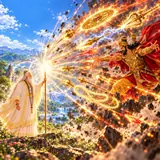
Tataka attacks with clouds of dust and a rain of stones. Rama cuts off her arms with arrows, and Lakshmana cuts off her ears and nose. She becomes invisible and keeps raining stones. Vishvamitra calls out: “Enough pity, Rama! She is evil and will only grow stronger by magic; kill her before twilight, when rakshasas become invincible.” Rama, aiming by sound alone, hems her in with arrows, and as she charges at him like a thunderbolt he shoots her through the chest. She falls dead.
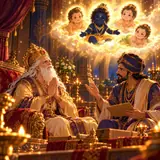
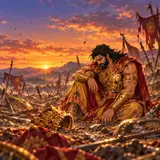
Indra and the gods praise Rama and tell Vishvamitra to give him the divine weapons, the sons of Krishashva. The sage kisses Rama’s head, and they spend the night in the forest, which, freed of its curse, now shines as lovely as Kubera’s garden.
Press › to begin with verse 1.
मुनेर्वचनमक्लीबं श्रुत्वा नरवरात्मजः । राघवः प्राञ्जलिर्भूत्वा प्रत्युवाच दृढव्रतः ॥ १ ॥
Hearing the sage’s resolute words, the son of the best of men, Raghava, firm in his vows, joined his palms and replied:
मुनि के दृढ़ वचन सुनकर नरश्रेष्ठ के पुत्र, दृढ़व्रती राघव ने हाथ जोड़कर उत्तर दिया:
Commentary on the whole sarga
The Death of Tataka 1 min read.
Read the commentary CommentaryNot scripture Rama joins his palms before he answers. His decision comes with respect. He is “firm in his vows” (dridha-vrata ), but firmness in Valmiki’s Rama is never harshness.
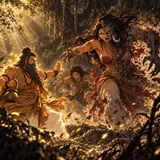
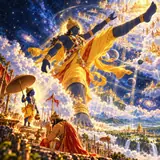
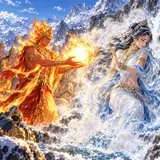
Scene 1 of 3 · Rama twangs his bowstring, and the huge yakshi Tataka bursts out of the dark forest toward the sound.
पितुर्वचननिर्देशात् पितुर्वचनगौरवात् । वचनं कौशिकस्येति कर्तव्यमविशङ्कया ॥ २ ॥
“At my father’s direction and out of respect for my father’s word, the word of Kaushika must be carried out without hesitation.
“पिता के निर्देश से और पिता के वचन के आदर के कारण कौशिक की बात बिना संकोच के माननी चाहिए।
CommentaryNot scripture Rama’s reason is obedience to his father. Dasharatha told him to follow Vishvamitra. Rama’s first act of war is an act of filial duty, the same principle that will send him into exile.
Scene 1 of 3 · Rama twangs his bowstring, and the huge yakshi Tataka bursts out of the dark forest toward the sound.
अनुशिष्टोऽस्म्ययोध्यायां गुरुमध्ये महात्मना । पित्रा दशरथेनाहं नावज्ञेयं हि तद्वचः ॥ ३ ॥
“In Ayodhya, among the elders, I was instructed by my great-souled father Dasharatha: ‘His word must not be disregarded.’
“अयोध्या में बड़ों के बीच मेरे महात्मा पिता दशरथ ने मुझे सिखाया था: ‘इनकी बात की अवहेलना नहीं करनी है।’
CommentaryNot scripture “His word must not be disregarded.” Rama quotes his father’s parting instruction, given “among the elders”. He remembers it precisely. For Rama, a parent’s word is a vow.
Scene 1 of 3 · Rama twangs his bowstring, and the huge yakshi Tataka bursts out of the dark forest toward the sound.
सोऽहं पितुर्वचः श्रुत्वा शासनाद् ब्रह्मवादिनः । करिष्यामि न संदेहस्ताटकावधमुत्तमम् ॥ ४ ॥
“Having heard my father’s word, and at the command of this expounder of Brahman, I will without doubt perform the excellent deed of killing Tataka,
“पिता के वचन सुनकर, और ब्रह्मज्ञानी आपकी आज्ञा से, मैं निःसंदेह ताटका के वध का उत्तम कर्म करूँगा,
CommentaryNot scripture He will kill Tataka “without doubt”. The hesitation of the last sarga is answered by duty. He calls Vishvamitra brahma-vadin , an expounder of sacred knowledge: a teacher he trusts completely.
Scene 1 of 3 · Rama twangs his bowstring, and the huge yakshi Tataka bursts out of the dark forest toward the sound.
गोब्राह्मणहितार्थाय देशस्य च हिताय च । तव चैवाप्रमेयस्य वचनं कर्तुमुद्यतः ॥ ५ ॥
“for the good of cattle and brahmanas and for the good of the land. I am ready to carry out your word, you of immeasurable power.”
“गायों और ब्राह्मणों के हित के लिए और देश के हित के लिए। अपार प्रभाव वाले, मैं आपकी बात पूरी करने को तैयार हूँ।”
CommentaryNot scripture For the good of cattle, brahmanas and the land. Rama repeats the purpose: protection. He is ready.
Scene 1 of 3 · Rama twangs his bowstring, and the huge yakshi Tataka bursts out of the dark forest toward the sound.
एवमुक्त्वा धनुर्मध्ये बद्ध्वा मुष्टिमरिन्दमः । ज्याघोषमकरोत् तीव्रं दिशः शब्देन नादयन् ॥ ६ ॥
Having said this, the subduer of enemies gripped his bow at the middle and made a sharp twang of the string, filling the directions with the sound.
यह कहकर शत्रुओं का दमन करने वाले राम ने धनुष को बीच से पकड़कर डोरी की तीखी टंकार की, जिससे दिशाएँ गूँज उठीं।
CommentaryNot scripture The twang of the bowstring (jya-ghosha ) fills the directions. Before he shoots, Rama announces himself. An honourable warrior gives warning; he does not ambush.
Scene 1 of 3 · Rama twangs his bowstring, and the huge yakshi Tataka bursts out of the dark forest toward the sound.
तेन शब्देन वित्रस्तास्ताटकावनवासिनः । ताटका च सुसंक्रुद्धा तेन शब्देन मोहिता ॥ ७ ॥
At that sound the dwellers of Tataka’s forest were terrified, and Tataka, enraged, was bewildered by it.
उस ध्वनि से ताटका के वन के निवासी भयभीत हो गए, और क्रोधित ताटका उससे भ्रमित हो गई।
CommentaryNot scripture The forest creatures are terrified, and Tataka is confused by the sound. Rama’s bowstring alone shakes the forest.
Scene 1 of 3 · Rama twangs his bowstring, and the huge yakshi Tataka bursts out of the dark forest toward the sound.
तं शब्दमभिनिध्याय राक्षसी क्रोधमूर्छिता । श्रुत्वा चाभ्यद्रवत् क्रुद्धा यत्र शब्दो विनिःसृतः ॥ ८ ॥
Hearing that sound and brooding on it, the rakshasi, faint with fury, ran angrily to the place from which the sound had come.
उस ध्वनि को सुनकर और उस पर सोचकर क्रोध से मूर्च्छित-सी राक्षसी गुस्से में उस स्थान की ओर दौड़ी जहाँ से ध्वनि आई थी।
CommentaryNot scripture Tataka, “faint with fury”, rushes toward the sound. Rage drives her straight into the fight.
Scene 1 of 3 · Rama twangs his bowstring, and the huge yakshi Tataka bursts out of the dark forest toward the sound.
तां दृष्ट्वा राघवः क्रुद्धां विकृतां विकृताननाम् । प्रमाणेनातिवृद्धां च लक्ष्मणं सोऽभ्यभाषत ॥ ९ ॥
Seeing her, enraged, deformed, with misshapen face and of enormous size, Raghava said to Lakshmana:
उसे क्रोधित, विकृत, बिगड़े मुख वाली और विशाल आकार वाली देखकर राघव ने लक्ष्मण से कहा:
CommentaryNot scripture Rama sees her: deformed, misshapen, enormous. He speaks to Lakshmana first. The brothers face their first battle together.
Scene 1 of 3 · Rama twangs his bowstring, and the huge yakshi Tataka bursts out of the dark forest toward the sound.
पश्य लक्ष्मण यक्षिण्या भैरवं दारुणं वपुः । भिद्येरन् दर्शनादस्या भीरूणां हृदयानि च ॥ १० ॥
“See, Lakshmana, the terrible, dreadful body of the yakshi. At the sight of her, the hearts of the timid would break.
“लक्ष्मण, यक्षिणी का भयानक, डरावना शरीर देखो। इसे देखकर डरपोक लोगों के हृदय फट जाएँ।
CommentaryNot scripture “The hearts of the timid would break.” Rama does not pretend she is not frightening. Courage is not the absence of fear in the eyes; it is steadiness in the heart.
Scene 1 of 3 · Rama twangs his bowstring, and the huge yakshi Tataka bursts out of the dark forest toward the sound.
एतां पश्य दुराधर्षां मायाबलसमन्विताम् । विनिवृत्तां करोम्यद्य हृतकर्णाग्रनासिकाम् ॥ ११ ॥
“See this unassailable one, endowed with the power of magic. Today I will make her turn back, with the tips of her ears and her nose cut off.
“माया की शक्ति से युक्त इस अजेय को देखो। आज मैं इसके कानों के सिरे और नाक काटकर इसे लौटा दूँगा।
CommentaryNot scripture Rama’s plan: cut off the tips of her ears and nose and send her back. He means to disable and disgrace, not to kill. Even now he looks for a lesser path.
Scene 1 of 3 · Rama twangs his bowstring, and the huge yakshi Tataka bursts out of the dark forest toward the sound.
न ह्येनामुत्सहे हन्तुं स्त्रीस्वभावेन रक्षिताम् । वीर्यं चास्या गतिं चैव हन्यामिति हि मे मतिः ॥ १२ ॥
“I cannot bring myself to kill her, protected as she is by being a woman. My intention is to destroy her strength and her movement.”
“स्त्री होने के कारण सुरक्षित इसे मारने का मेरा मन नहीं करता। मेरा विचार इसका बल और इसकी गति नष्ट करने का है।”
CommentaryNot scripture “I cannot bring myself to kill her, protected as she is by being a woman.” Rama’s instinct of mercy holds even after his teacher’s command. This verse shows us his heart: he will obey, but he will obey in the gentlest way he can.
Scene 1 of 3 · Rama twangs his bowstring, and the huge yakshi Tataka bursts out of the dark forest toward the sound.
एवं ब्रुवाणे रामे तु ताटका क्रोधमूर्छिता । उद्यम्य बाहू गर्जन्ती राममेवाभ्यधावत ॥ १३ ॥
As Rama said this, Tataka, faint with fury, raised her arms and rushed roaring straight at Rama.
राम के ऐसा कहते ही क्रोध से मूर्च्छित ताटका भुजाएँ उठाकर गरजती हुई सीधे राम की ओर झपटी।
CommentaryNot scripture Tataka raises her arms and charges, roaring. The enemy does not wait for mercy.
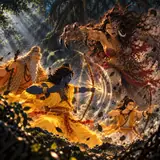
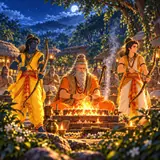
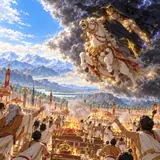
Scene 2 of 3 · Through a storm of dust and stones, Rama shoots by sound alone and brings Tataka down.
विश्वामित्रस्तु ब्रह्मर्षिर्हुंकारेणाभिभर्त्स्य ताम् । स्वस्ति राघवयोरस्तु जयं चैवाभ्यभाषत ॥ १४ ॥
The brahmarshi Vishvamitra rebuked her with a ‘Hum!’ and said: “May it go well with the Raghavas, and may they win.”
ब्रह्मर्षि विश्वामित्र ने ‘हुं’ कहकर उसे फटकारा और कहा: “राघवों का कल्याण हो, और वे विजयी हों।”
CommentaryNot scripture Vishvamitra rebukes her with “Hum!” and blesses the brothers: “May they win.” The teacher stands by his students. His blessing is a kind of armour.
Scene 2 of 3 · Through a storm of dust and stones, Rama shoots by sound alone and brings Tataka down.
उद्धुन्वाना रजो घोरं ताटका राघवावुभौ । रजोमेघेन महता मुहूर्तं सा व्यमोहयत् ॥ १५ ॥
Raising a terrible cloud of dust, Tataka bewildered both Raghavas for a moment with a great dust-cloud.
भयानक धूल का बादल उठाकर ताटका ने एक बड़े धूल के बादल से दोनों राघवों को क्षण भर के लिए भ्रमित कर दिया।
CommentaryNot scripture A great dust cloud: for a moment the brothers are blinded. Tataka fights with magic and confusion, as Dasharatha feared: “rakshasas fight with deceit”.
Scene 2 of 3 · Through a storm of dust and stones, Rama shoots by sound alone and brings Tataka down.
ततो मायां समास्थाय शिलावर्षेण राघवौ । अवाकिरत् सुमहता ततश्चुक्रोध राघवः ॥ १६ ॥
Then, resorting to magic, she showered the Raghavas with a great rain of stones. At that Raghava became angry.
फिर माया का सहारा लेकर उसने राघवों पर पत्थरों की बड़ी वर्षा की। इस पर राघव क्रोधित हो गए।
CommentaryNot scripture Then a rain of stones. And now Rama becomes angry. His anger is aroused only when the attack becomes violent. Anger mastered, then released for protection: the quality praised in sarga 1.
Scene 2 of 3 · Through a storm of dust and stones, Rama shoots by sound alone and brings Tataka down.
शिलावर्षं महत् तस्याः शरवर्षेण राघवः । प्रतिवार्योपधावन्त्याः करौ चिच्छेद पत्रिभिः ॥ १७ ॥
Warding off her great rain of stones with a rain of arrows, Raghava cut off her two hands with feathered shafts as she ran at him.
बाणों की वर्षा से उसके पत्थरों की बड़ी वर्षा को रोककर राघव ने अपनी ओर दौड़ती उस राक्षसी के दोनों हाथ पंखदार बाणों से काट डाले।
CommentaryNot scripture Rama blocks the stones with arrows and cuts off her hands. He is still trying to disarm her, not kill her.
Scene 2 of 3 · Through a storm of dust and stones, Rama shoots by sound alone and brings Tataka down.
ततश्च्छिन्नभुजां श्रान्तामभ्याशे परिगर्जतीम् । सौमित्रिरकरोत् क्रोधाद्धृतकर्णाग्रनासिकाम् ॥ १८ ॥
Then, as she roared close by, exhausted, her arms severed, Saumitri in anger cut off the tips of her ears and her nose.
फिर जब वह पास गरज रही थी, थकी हुई, भुजाएँ कटी हुई, तब सौमित्रि ने क्रोध में उसके कानों के सिरे और नाक काट डाली।
CommentaryNot scripture Lakshmana, angry, cuts off her ears and nose. The brothers carry out Rama’s plan. The same act will happen again with Shurpanakha in the Aranya Kanda, with far greater consequences.
Scene 2 of 3 · Through a storm of dust and stones, Rama shoots by sound alone and brings Tataka down.
कामरूपधरा सा तु कृत्वा रूपाण्यनेकशः । अन्तर्धानं गता यक्षी मोहयन्ती स्वमायया ॥ १९ ॥
But that yakshi, able to take any form, assumed many shapes and vanished, bewildering them with her magic.
पर इच्छा से रूप बदलने वाली वह यक्षिणी अनेक रूप धारण करके, अपनी माया से उन्हें भ्रमित करती हुई अदृश्य हो गई।
CommentaryNot scripture But she is a shape-shifter. She takes many forms and vanishes. Rama’s mercy has let her escape. The mild path has failed.
Scene 2 of 3 · Through a storm of dust and stones, Rama shoots by sound alone and brings Tataka down.
अश्मवर्षं विमुञ्चन्ती भैरवं विचचार सा । ततस्तावश्मवर्षेण कीर्यमाणौ समन्ततः ॥ २० ॥
दृष्ट्वा गाधिसुतः श्रीमानिदं वचनमब्रवीत् । अलं ते घृणया राम पापैषा दुष्टचारिणी ॥ २१ ॥
She moved about terribly, letting loose a rain of stones. Seeing the two covered on every side by the rain of stones, the glorious son of Gadhi said: “Enough of your pity, Rama; this is an evil woman of wicked conduct.
पत्थरों की वर्षा करती हुई वह भयानक रूप से घूमने लगी। दोनों को चारों ओर से पत्थरों की वर्षा से ढका देखकर यशस्वी गाधि-पुत्र ने कहा: “राम, बस करो अपनी दया; यह दुष्ट आचरण वाली पापिनी स्त्री है।
CommentaryNot scripture She becomes invisible and rains stones on them. Vishvamitra speaks sharply: “Enough of your pity, Rama.” The teacher sees what the student does not: some evil will not stop until it is stopped.
Scene 2 of 3 · Through a storm of dust and stones, Rama shoots by sound alone and brings Tataka down.
यज्ञविघ्नकरी यक्षी पुरा वर्धेत मायया । वध्यतां तावदेवैषा पुरा संध्या प्रवर्तते ॥ २२ ॥
“This yakshi, a spoiler of sacrifices, will soon grow strong again by magic. Let her be killed now, before twilight sets in.
“यज्ञों को बिगाड़ने वाली यह यक्षिणी माया से जल्दी ही फिर बलवान हो जाएगी। संध्या होने से पहले, अभी इसे मार डालो।
CommentaryNot scripture “She will soon grow strong again by magic. Kill her now, before twilight.” The danger is practical and immediate.
Scene 2 of 3 · Through a storm of dust and stones, Rama shoots by sound alone and brings Tataka down.
रक्षांसि संध्याकाले तु दुर्धर्षाणि भवन्ति हि । इत्युक्तः स तु तां यक्षीमश्मवृष्ट्याभिवर्षणीम् ॥ २३ ॥
दर्शयञ्शब्दवेधित्वं तां रुरोध स सायकैः । सा रुद्धा बाणजालेन मायाबलसमन्विता ॥ २४ ॥
“For at twilight rakshasas become unassailable.” So told, he showed his skill at hitting by sound, and hemmed in with arrows the yakshi who was pouring down a rain of stones. Checked by the net of arrows, she, mighty with magic,
“क्योंकि संध्या के समय राक्षस अजेय हो जाते हैं।” ऐसा कहे जाने पर उन्होंने शब्द सुनकर निशाना लगाने की अपनी कला दिखाई, और पत्थरों की वर्षा करती यक्षिणी को बाणों से घेर लिया। बाणों के जाल से रुकी हुई वह माया से बलवान राक्षसी
CommentaryNot scripture Rakshasas grow invincible at twilight. Rama now uses his skill of shooting by sound (shabda-vedhin ), the same skill Ayodhya’s archers had in sarga 5. He cannot see her, so he aims at her noise.
Scene 2 of 3 · Through a storm of dust and stones, Rama shoots by sound alone and brings Tataka down.
अभिदुद्राव काकुत्स्थं लक्ष्मणं च विनेषुदी । तामापतन्तीं वेगेन विक्रान्तामशनीमिव ॥ २५ ॥
शरेणोरसि विव्याध सा पपात ममार च । तां हतां भीमसंकाशां दृष्ट्वा सुरपतिस्तदा ॥ २६ ॥
rushed roaring at Kakutstha and Lakshmana. As she came on with force, violent as a thunderbolt, he pierced her in the chest with an arrow; she fell and died. Seeing her slain, dreadful to look at, the lord of the gods then,
गरजती हुई काकुत्स्थ और लक्ष्मण की ओर झपटी। जब वह वज्र जैसे वेग से आ रही थी, तब उन्होंने उसकी छाती में बाण मारा; वह गिरी और मर गई। उसे मरा हुआ, देखने में भयानक, देखकर देवराज ने,
CommentaryNot scripture She charges with the force of a thunderbolt, and Rama’s arrow strikes her chest. She falls and dies. Rama’s first battle ends with a single arrow, given only after mercy was tried and failed.
Scene 2 of 3 · Through a storm of dust and stones, Rama shoots by sound alone and brings Tataka down.
साधु साध्विति काकुत्स्थं सुराश्चाप्यभिपूजयन् । उवाच परमप्रीतः सहस्राक्षः पुरन्दरः ॥ २७ ॥
and the gods too, honoured Kakutstha with “Well done, well done!” The thousand-eyed Purandara, greatly pleased, spoke,
और देवताओं ने भी “साधु, साधु!” कहकर काकुत्स्थ की प्रशंसा की। सहस्र नेत्रों वाले पुरंदर (इंद्र) ने अत्यंत प्रसन्न होकर कहा,
CommentaryNot scripture Indra and the gods cry “Well done!” (sadhu sadhu ). Heaven recognises that the first great deed of Rama’s life has been done.
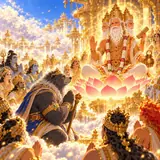
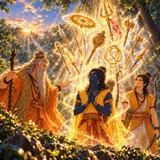
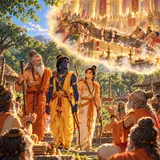
Scene 3 of 3 · The gods cry “Well done!”, and at dusk the cursed forest blooms again like a garden of heaven.
सुराश्च सर्वे संहृष्टा विश्वामित्रमथाब्रुवन् । मुने कौशिक भद्रं ते सेन्द्राः सर्वे मरुद्गणाः ॥ २८ ॥
तोषिताः कर्मणानेन स्नेहं दर्शय राघवे । प्रजापतेः कृशाश्वस्य पुत्रान् सत्यपराक्रमान् ॥ २९ ॥
and all the gods, delighted, said to Vishvamitra: “Sage Kaushika, blessings on you. Indra and all the hosts of Maruts are pleased by this deed. Show your affection to Raghava. The sons of Prajapati Krishashva, of true valour,
और सब देवताओं ने आनंदित होकर विश्वामित्र से कहा: “मुनि कौशिक, आपका कल्याण हो। इंद्र और मरुतों के सब समूह इस कर्म से प्रसन्न हैं। राघव पर अपना स्नेह दिखाइए। प्रजापति कृशाश्व के सत्य-पराक्रमी पुत्र,
CommentaryNot scripture The gods speak to Vishvamitra: “Show your affection to Raghava.” They ask the sage to give Rama the divine weapons, the sons of Krishashva described in sarga 21.
Scene 3 of 3 · The gods cry “Well done!”, and at dusk the cursed forest blooms again like a garden of heaven.
तपोबलभृतो ब्रह्मन् राघवाय निवेदय । पात्रभूतश्च ते ब्रह्मंस्तवानुगमने रतः ॥ ३० ॥
कर्तव्यं सुमहत् कर्म सुराणां राजसूनुना । एवमुक्त्वा सुराः सर्वे जग्मुर्हृष्टा विहायसम् ॥ ३१ ॥
“who bear the power of austerity, brahmana, give to Raghava. He is a worthy recipient, brahmana, devoted to following you. A very great work for the gods must be done by the king’s son.” Having said this, all the gods went joyfully into the sky,
“जो तप की शक्ति धारण करते हैं, ब्राह्मण, उन्हें राघव को दीजिए। ब्राह्मण, वे योग्य पात्र हैं, आपका अनुसरण करने में लगे हैं। राजपुत्र को देवताओं का एक बहुत बड़ा कार्य करना है।” यह कहकर सब देवता प्रसन्न होकर आकाश में चले गए,
CommentaryNot scripture “He is a worthy recipient.” And: “A very great work for the gods must be done by the king’s son.” The gods hint at Rama’s destiny. The young prince does not yet know what that great work will be.
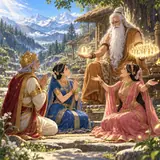
Scene 3 of 3 · The gods cry “Well done!”, and at dusk the cursed forest blooms again like a garden of heaven.
विश्वामित्रं पूजयन्तस्ततः संध्या प्रवर्तते । ततो मुनिवरः प्रीतस्ताटकावधतोषितः ॥ ३२ ॥
मूर्ध्नि राममुपाघ्राय इदं वचनमब्रवीत् । इहाद्य रजनीं राम वसाम शुभदर्शन ॥ ३३ ॥
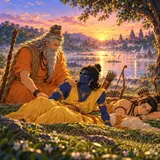
honouring Vishvamitra. Then twilight came on. Then the best of sages, pleased and gratified by the killing of Tataka, kissed Rama on the head and said: “Let us stay here tonight, Rama, you who are lovely to see.
विश्वामित्र का सम्मान करते हुए। फिर संध्या हो गई। तब ताटका के वध से प्रसन्न और संतुष्ट मुनिश्रेष्ठ ने राम का सिर चूमा और कहा: “सुंदर राम, आज रात हम यहीं रहें।
CommentaryNot scripture Twilight falls. Vishvamitra kisses Rama’s head, the same loving gesture Dasharatha used at parting. The teacher has become like a second father.
Scene 3 of 3 · The gods cry “Well done!”, and at dusk the cursed forest blooms again like a garden of heaven.
श्वः प्रभाते गमिष्यामस्तदाश्रमपदं मम । विश्वामित्रवचः श्रुत्वा हृष्टो दशरथात्मजः ॥ ३४ ॥
उवास रजनीं तत्र ताटकाया वने सुखम् । मुक्तशापं वनं तच्च तस्मिन्नेव तदाहनि । रमणीयं विबभ्राज यथा चैत्ररथं वनम् ॥ ३५ ॥
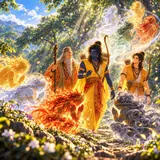
“Tomorrow at dawn we will go to my hermitage.” Hearing Vishvamitra’s words, the son of Dasharatha was glad and spent the night happily there in Tataka’s forest. And that forest, freed from its curse that very day, shone lovely like the Caitraratha grove.
“कल सवेरे हम मेरे आश्रम चलेंगे।” विश्वामित्र के वचन सुनकर दशरथ-पुत्र प्रसन्न हुए और उन्होंने वह रात ताटका के वन में सुख से बिताई। और वह वन, उसी दिन अपने शाप से मुक्त होकर, चैत्ररथ उपवन की तरह सुंदर शोभा पाने लगा।
CommentaryNot scripture They spend the night in the forest, and the forest, freed from its curse, becomes as lovely as Caitraratha, Kubera’s celestial garden. The land itself is healed. This was the real purpose of the battle.
Scene 3 of 3 · The gods cry “Well done!”, and at dusk the cursed forest blooms again like a garden of heaven.
निहत्य तां यक्षसुतां स रामः प्रशस्यमानः सुरसिद्धसङ्घैः । उवास तस्मिन् मुनिना सहैव प्रभातवेलां प्रतिबोध्यमानः ॥ ३६ ॥
Having slain the yaksha’s daughter, Rama, praised by the hosts of gods and siddhas, stayed there with the sage, waiting to be woken at dawn.
यक्ष की पुत्री को मारकर देवताओं और सिद्धों के समूहों से प्रशंसित राम सवेरे जगाए जाने की प्रतीक्षा में मुनि के साथ वहाँ रहे।
CommentaryNot scripture Rama rests, “waiting to be woken at dawn”, just as on the first morning, when Vishvamitra woke him with the famous verse. The day of his first battle ends in peace.
Scene 3 of 3 · The gods cry “Well done!”, and at dusk the cursed forest blooms again like a garden of heaven.