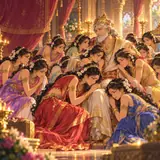
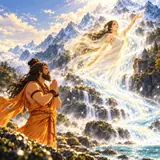
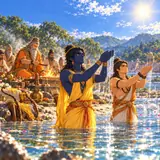
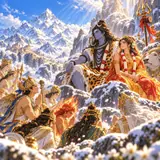
Bala Kanda · Sarga 2 of 77 · 43 verses
The Krauncha Birds and the First Shloka
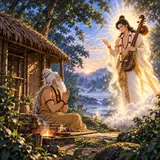
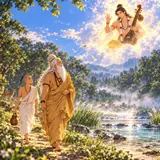
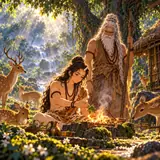
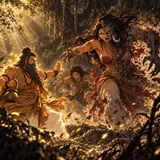
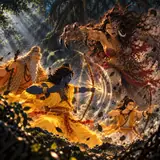
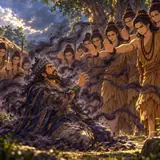
After Narada leaves, Valmiki goes with his disciple Bharadvaja to bathe in the clear Tamasa river. On the bank he watches a pair of krauncha birds (sarus cranes) mating, when a hunter shoots the male. The female cries out over her dying mate. Moved by pity, Valmiki curses the hunter, and the curse comes out of him as a perfect metrical verse: four equal quarters, fit to be sung to the vina. He names it a shloka, because it was born from shoka, grief.
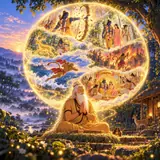
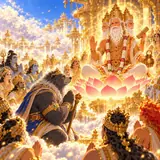
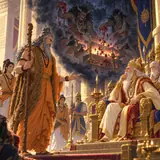
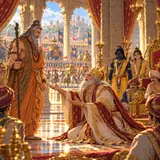
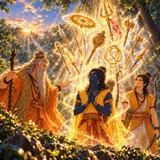
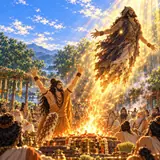
Back at the hermitage the god Brahma appears and tells Valmiki that this was no accident: speech came to him by Brahma’s will. He asks Valmiki to tell the whole story of Rama in this metre, promises that the poet will see every hidden and open event of it truthfully, and that the Ramayana will last as long as mountains and rivers. Valmiki resolves to compose it.
Press › to begin with verse 1.
नारदस्य तु तद्वाक्यं श्रुत्वा वाक्यविशारदः । पूजयामास धर्मात्मा सहशिष्यो महामुनिम् ॥ १ ॥
Hearing Narada’s words, the righteous sage, master of speech, honoured the great sage together with his disciples.
नारद के वचन सुनकर वाणी में निपुण धर्मात्मा वाल्मीकि ने अपने शिष्यों के साथ उन महामुनि का पूजन किया।
Commentary on the whole sarga
The Krauncha Birds and the First Shloka 1 min read.
Read the commentary CommentaryNot scripture Valmiki is called vakya-visharada , “master of speech”, in the very sarga where his true speech will be born. He honours Narada with his disciples around him. A guru’s teaching is received in community: the disciples are present for the story that will change their teacher’s life.
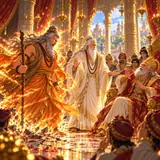
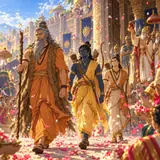
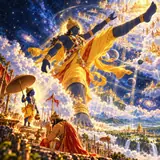
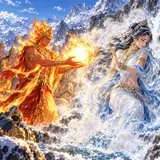
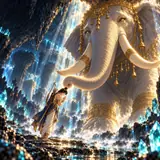
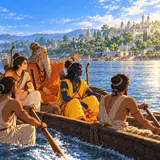
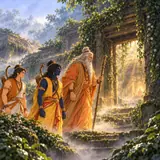
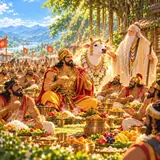
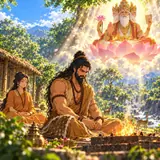
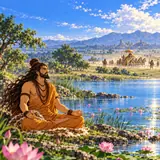
Scene 1 of 5 · Narada rises into the sky, and Valmiki walks down to the clear Tamasa with his disciple Bharadvaja.
यथावत्पूजितस्तेन देवर्षिर्नारदस्तदा । आपृष्ट्वैवाभ्यनुज्ञातः स जगाम विहायसम् ॥ २ ॥
Duly honoured by him, the divine sage Narada took leave, and with his consent rose into the sky.
उनसे यथोचित सम्मान पाकर देवर्षि नारद ने विदा ली, और उनकी अनुमति से आकाश में उड़ गए।
CommentaryNot scripture Narada leaves the way he came, through the sky (vihayasa ). Before he goes, he asks permission. Even a divine sage takes leave of his host. These small courtesies run all through the Ramayana and show what Valmiki thought a good life looks like.
Scene 1 of 5 · Narada rises into the sky, and Valmiki walks down to the clear Tamasa with his disciple Bharadvaja.
स मुहूर्तं गते तस्मिन् देवलोकं मुनिस्तदा । जगाम तमसातीरं जाह्नव्यास्त्वविदूरतः ॥ ३ ॥
A moment after he had gone to the world of the gods, the sage went to the bank of the Tamasa, not far from the Jahnavi (Ganga).
उनके देवलोक चले जाने के थोड़ी देर बाद मुनि गंगा से कुछ ही दूर तमसा नदी के तट पर गए।
CommentaryNot scripture The Tamasa is a small river near the Ganga (here called Jahnavi, “daughter of the sage Jahnu”). Its name means “dark”. Tradition places Valmiki’s hermitage near it. The story of the first poem begins with an ordinary daily act: a sage going down to the river to bathe.
Scene 1 of 5 · Narada rises into the sky, and Valmiki walks down to the clear Tamasa with his disciple Bharadvaja.
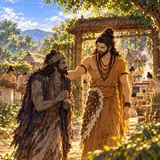
स तु तीरं समासाद्य तमसाया मुनिस्तदा । शिष्यमाह स्थितं पार्श्वे दृष्ट्वा तीर्थमकर्दमम् ॥ ४ ॥
Reaching the bank of the Tamasa and seeing a bathing place free of mud, the sage said to the disciple standing beside him:
तमसा के तट पर पहुँचकर और कीचड़ से रहित एक घाट देखकर मुनि ने पास खड़े अपने शिष्य से कहा:
CommentaryNot scripture Akardama , “without mud”: Valmiki notices the clean bathing place before anything else. A ford (tirtha ) is both a place to cross water and a holy bathing site. The poet’s eye is already at work, noticing a small beauty that others might miss.
Scene 1 of 5 · Narada rises into the sky, and Valmiki walks down to the clear Tamasa with his disciple Bharadvaja.
अकर्दममिदं तीर्थं भरद्वाज निशामय । रमणीयं प्रसन्नाम्बु सन्मनुष्यमनो यथा ॥ ५ ॥
“Bharadvaja, look at this bathing place without mud: lovely, its water clear, like the mind of a good man.
“भरद्वाज, इस घाट को देखो, इसमें ज़रा भी कीचड़ नहीं है। यह कितना सुंदर है, और इसका जल सज्जन के मन जैसा निर्मल है।
CommentaryNot scripture The first simile spoken by Valmiki himself: the clear water is “like the mind of a good man” (san-manushya-mano yatha ). The sage who will write the life of the best of men begins by comparing nature to a pure mind. This is how the poem will see the world: outer things mirroring inner virtue.
Scene 1 of 5 · Narada rises into the sky, and Valmiki walks down to the clear Tamasa with his disciple Bharadvaja.
न्यस्यतां कलशस्तात दीयतां वल्कलं मम । इदमेवावगाहिष्ये तमसातीर्थमुत्तमम् ॥ ६ ॥
“Set down the pitcher, my son, and give me my bark garment. I will bathe here, in this finest ford of the Tamasa.”
“वत्स, कलश यहीं रख दो और मुझे मेरा वल्कल दो। मैं तमसा के इसी उत्तम घाट में स्नान करूँगा।”
CommentaryNot scripture Tata , “my son”, is the loving word a teacher uses for a student. Valmiki asks for his bark garment (valkala ), the clothing of forest ascetics. It is the same garment Rama will wear in exile. The pitcher (kalasha ) is set down; a quiet moment before the bath.
Scene 1 of 5 · Narada rises into the sky, and Valmiki walks down to the clear Tamasa with his disciple Bharadvaja.
एवमुक्तो भरद्वाजो वाल्मीकेन महात्मना । प्रायच्छत मुनेस्तस्य वल्कलं नियतो गुरोः ॥ ७ ॥
So addressed by the great-souled Valmiki, the disciplined Bharadvaja handed the bark garment to his teacher.
महात्मा वाल्मीकि के ऐसा कहने पर संयमी भरद्वाज ने अपने गुरु को वल्कल दे दिया।
CommentaryNot scripture Bharadvaja, his disciple, is niyata , disciplined. This is not the great sage Bharadvaja of Prayaga whom Rama will meet later, but a student with the same name. He serves his teacher in small ways, and in doing so becomes a witness to the birth of poetry.
Scene 1 of 5 · Narada rises into the sky, and Valmiki walks down to the clear Tamasa with his disciple Bharadvaja.
स शिष्यहस्तादादाय वल्कलं नियतेन्द्रियः । विचचार ह पश्यंस्तत् सर्वतो विपुलं वनम् ॥ ८ ॥
Taking the bark garment from his disciple’s hand, the self-controlled sage walked about, gazing on every side at the wide forest.
शिष्य के हाथ से वल्कल लेकर जितेंद्रिय मुनि उस विशाल वन को चारों ओर निहारते हुए घूमने लगे।
CommentaryNot scripture Valmiki walks in the forest with the garment in his hand, “gazing on every side”. He is not yet bathing; he is looking. Poets are first of all watchers, and the next verse shows what he sees.
Scene 1 of 5 · Narada rises into the sky, and Valmiki walks down to the clear Tamasa with his disciple Bharadvaja.
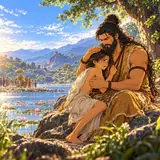
तस्याभ्याशे तु मिथुनं चरन्तमनपायिनम् । ददर्श भगवांस्तत्र क्रौञ्चयोश्चारुनिःस्वनम् ॥ ९ ॥
Close by, the holy man saw a pair of krauncha birds, never apart from each other, wandering and calling sweetly.
पास ही भगवान वाल्मीकि ने क्रौंच पक्षियों का एक जोड़ा देखा, जो कभी एक-दूसरे से अलग नहीं होता था और मधुर स्वर में बोलता हुआ विचर रहा था।
CommentaryNot scripture The krauncha birds are usually identified as sarus cranes, which mate for life and are famous in India for their devotion. Anapayinam , “never parted”: the pair is never apart. Their call is charu-nihsvana , sweet. Valmiki stops and watches two creatures in love.
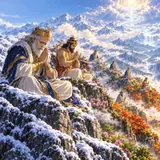
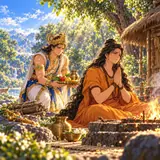
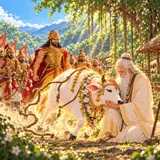
Scene 2 of 5 · A hunter’s arrow strikes one of a pair of cranes, and Valmiki’s grief bursts out as a verse.
तस्मात् तु मिथुनादेकं पुमांसं पापनिश्चयः । जघान वैरनिलयो निषादस्तस्य पश्यतः ॥ १० ॥
Of that pair, while he watched, a nishada hunter, set on evil, a home of hostility, struck down the male.
उनके देखते-देखते, पाप का निश्चय करने वाले, वैर से भरे एक निषाद शिकारी ने उस जोड़े में से नर पक्षी को मार गिराया।
CommentaryNot scripture The hunter is a nishada , a forest hunter, and here he is called “set on evil” (papa-nishchaya ) and “a home of hostility” (vaira-nilaya ). The point is his act, not his people: Guha, king of the Nishadas, is Rama’s dear friend. In one moment, violence breaks into the scene of love.
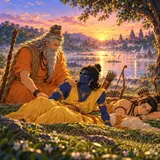
Scene 2 of 5 · A hunter’s arrow strikes one of a pair of cranes, and Valmiki’s grief bursts out as a verse.
तं शोणितपरीताङ्गं चेष्टमानं महीतले । भार्या तु निहतं दृष्ट्वा रुराव करुणां गिरम् ॥ ११ ॥
Seeing him killed, rolling on the ground, his body covered in blood, his mate cried out in a pitiful voice,
उसे मरा हुआ, खून से लथपथ, धरती पर छटपटाते देखकर उसकी साथिन करुण स्वर में रोने लगी,
CommentaryNot scripture The female sees her mate struck, bloodied, struggling on the ground, and cries out (rurava ). Valmiki shows the death unflinchingly but briefly. The poem’s attention moves at once to the one who is left behind. That is where this poem will always look: at grief.
Scene 2 of 5 · A hunter’s arrow strikes one of a pair of cranes, and Valmiki’s grief bursts out as a verse.
वियुक्ता पतिना तेन द्विजेन सहचारिणा । ताम्रशीर्षेण मत्तेन पत्त्रिणा सहितेन वै ॥ १२ ॥
parted from her husband, the bird who had been her companion, copper-crested, passion-filled, winged and always with her.
अपने उस पति से बिछुड़कर, जो उसका सदा का साथी था, ताँबे जैसे लाल सिर वाला, प्रेम में मग्न, पंखों वाला और सदा उसके संग रहने वाला।
CommentaryNot scripture One verse of loving detail about the fallen bird: copper-crested (tamra-shirsha , matching the red head of a sarus crane), full of love, always at her side. By naming what she lost, Valmiki makes us feel her loss. It is the Ramayana’s own theme in miniature: a pair torn apart.
Scene 2 of 5 · A hunter’s arrow strikes one of a pair of cranes, and Valmiki’s grief bursts out as a verse.
तथाविधं द्विजं दृष्ट्वा निषादेन निपातितम् । ऋषेर्धर्मात्मनस्तस्य कारुण्यं समपद्यत ॥ १३ ॥
Seeing the bird brought down like this by the hunter, compassion arose in the righteous sage.
शिकारी द्वारा इस तरह गिराए गए पक्षी को देखकर उन धर्मात्मा ऋषि के मन में करुणा उमड़ आई।
CommentaryNot scripture Karunya , compassion, rises in the sage. This is the hinge of the whole tradition: the first poem is born not from pride, or from a king’s command, but from pity for a bird. Later critics name karuna , compassion and sorrow, as the main feeling of the whole Ramayana.
Scene 2 of 5 · A hunter’s arrow strikes one of a pair of cranes, and Valmiki’s grief bursts out as a verse.
ततः करुणवेदित्वादधर्मोऽयमिति द्विजः । निशाम्य रुदतीं क्रौञ्चीमिदं वचनमब्रवीत् ॥ १४ ॥
Then, from that feeling of pity, the brahmana thought “This is adharma”, and seeing the krauncha hen weeping, he spoke these words:
तब करुणा के भाव से “यह अधर्म है” ऐसा सोचकर, रोती हुई क्रौंची को देखकर उस ब्राह्मण ने ये वचन कहे:
CommentaryNot scripture Valmiki judges what he sees: “This is adharma .” Killing a creature lost in love, for no need, is wrong. His pity is not vague sadness; it has moral clarity. Then he speaks, and he does not yet know what form his words will take.
Scene 2 of 5 · A hunter’s arrow strikes one of a pair of cranes, and Valmiki’s grief bursts out as a verse.
मा निषाद प्रतिष्ठां त्वमगमः शाश्वतीः समाः । यत् क्रौञ्चमिथुनादेकमवधीः काममोहितम् ॥ १५ ॥
“Hunter, may you never find rest for endless years, since you killed one of this pair of kraunchas while it was lost in love.”
“हे निषाद, तुम अनंत वर्षों तक कभी शांति और प्रतिष्ठा न पाओ, क्योंकि तुमने प्रेम में मग्न इस क्रौंच जोड़े में से एक को मार डाला।”
CommentaryNot scripture This is the most famous verse in Sanskrit literature: ma nishada pratishtham tvam . On the surface it is a curse: may you find no rest. Tradition also reads it a second way, as praise of Vishnu (ma-nishada , “dwelling place of Lakshmi”) who kills Ravana, the one of a pair “lost in desire”. One verse, two meanings: grief, and the whole story to come.
Scene 2 of 5 · A hunter’s arrow strikes one of a pair of cranes, and Valmiki’s grief bursts out as a verse.
तस्यैवं ब्रुवतश्चिन्ता बभूव हृदि वीक्षतः । शोकार्तेनास्य शकुनेः किमिदं व्याहृतं मया ॥ १६ ॥
Even as he spoke, a thought arose in his heart as he looked: “What is this I have uttered, stricken with grief for this bird?”
ऐसा कहते ही, उधर देखते हुए, उनके मन में विचार उठा: “इस पक्षी के शोक से पीड़ित होकर मैंने यह क्या कह दिया?”
CommentaryNot scripture The sage is startled by his own words. Kim idam vyahritam maya : “What have I said?” He spoke in anger and grief, yet the words came out shaped and measured. Great art often surprises its own maker, and Valmiki’s first feeling is wonder, not pride.
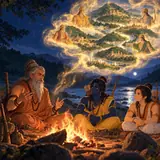
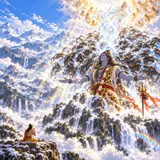
Scene 3 of 5 · Startled by his own words, Valmiki names the new form, the shloka, and walks home lost in thought.
चिन्तयन् स महाप्राज्ञश्चकार मतिमान्मतिम् । शिष्यं चैवाब्रवीद् वाक्यमिदं स मुनिपुङ्गवः ॥ १७ ॥
Reflecting, the wise and thoughtful sage came to a conclusion, and that foremost of sages said to his disciple:
सोच-विचार करके उस महाज्ञानी, बुद्धिमान मुनिश्रेष्ठ ने एक निश्चय किया, और अपने शिष्य से यह कहा:
CommentaryNot scripture Mati , a resolve: he thinks it through before he names it. Maha-prajna and matiman , wise and thoughtful, describe a man who does not act on the impulse that produced the verse. He reflects, and then he speaks to his student. Inspiration first, then careful judgment.
Scene 3 of 5 · Startled by his own words, Valmiki names the new form, the shloka, and walks home lost in thought.
पादबद्धोऽक्षरसमस्तन्त्रीलयसमन्वितः । शोकार्तस्य प्रवृत्तो मे श्लोको भवतु नान्यथा ॥ १८ ॥
“Bound in quarters, with equal syllables in each, fit to be sung to the strings and to rhythm: what came from me in grief, let it be a shloka and nothing else.”
“चार चरणों में बँधा, हर चरण में बराबर अक्षरों वाला, वीणा और लय पर गाने योग्य, जो वचन मेरे शोक से निकला है, वह श्लोक कहलाए, और कुछ नहीं।”
CommentaryNot scripture Here is the birth of the shloka , the metre of the epics: four quarters (pada ) of equal syllables, fit to be sung to the strings and rhythm. Valmiki gives it its name. Shoka , grief, became shloka , verse. The thousands of verses of the Ramayana you are reading are all in this one form.
Scene 3 of 5 · Startled by his own words, Valmiki names the new form, the shloka, and walks home lost in thought.
शिष्यस्तु तस्य ब्रुवतो मुनेर्वाक्यमनुत्तमम् । प्रतिजग्राह संहृष्टस्तस्य तुष्टोऽभवद्गुरुः ॥ १९ ॥
The disciple joyfully took in the excellent words the sage had spoken, and the teacher was pleased with him.
मुनि के कहे उन उत्तम वचनों को शिष्य ने प्रसन्न होकर ग्रहण किया, और गुरु उससे संतुष्ट हुए।
CommentaryNot scripture The disciple “took in” the words joyfully, memorising them. That is how the Ramayana survived for many centuries before it was written down: teacher to student, by heart. And the teacher is pleased, tushta . A good student is part of every great teaching.
Scene 3 of 5 · Startled by his own words, Valmiki names the new form, the shloka, and walks home lost in thought.
सोऽभिषेकं ततः कृत्वा तीर्थे तस्मिन् यथाविधि । तमेव चिन्तयन्नर्थमुपावर्तत वै मुनिः ॥ २० ॥
Then the sage bathed at that ford according to the rite, and turned back, still pondering the same thing.
फिर उस घाट में विधि से स्नान करके मुनि उसी बात पर विचार करते हुए लौट पड़े।
CommentaryNot scripture The bath happens after all, “according to the rite”. Even after this shaking experience, Valmiki completes his daily duty. But the verse does not leave him: he walks home “still pondering”. Something has begun in him that will not stop.
Scene 3 of 5 · Startled by his own words, Valmiki names the new form, the shloka, and walks home lost in thought.
भरद्वाजस्ततः शिष्यो विनीतः श्रुतवान् गुरोः । कलशं पूर्णमादाय पृष्ठतोऽनुजगाम ह ॥ २१ ॥
His disciple Bharadvaja, humble and learned, took the full pitcher and followed behind his teacher.
उनका विनम्र और विद्वान शिष्य भरद्वाज भरा हुआ कलश लेकर गुरु के पीछे-पीछे चला।
CommentaryNot scripture A small picture: Bharadvaja carrying the full pitcher, following his teacher home. The detail is quiet and true. Valmiki keeps these ordinary actions in the story because they are the frame around the extraordinary.
Scene 3 of 5 · Startled by his own words, Valmiki names the new form, the shloka, and walks home lost in thought.
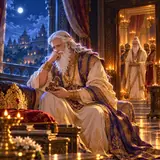
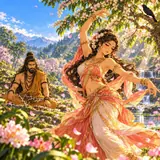
स प्रविश्याश्रमपदं शिष्येण सह धर्मवित् । उपविष्टः कथाश्चान्याश्चकार ध्यानमास्थितः ॥ २२ ॥
Entering the hermitage with his disciple, the knower of dharma sat down, spoke of other things, and remained absorbed in thought.
शिष्य के साथ आश्रम में प्रवेश करके धर्म के ज्ञाता मुनि बैठ गए, दूसरी बातें करते रहे, पर मन ध्यान में डूबा रहा।
CommentaryNot scripture Back in the hermitage he talks of other things, yet he is dhyanam asthita , lost in thought. Anyone who has been gripped by an idea knows this state: present in body, elsewhere in mind. The poem is growing inside him.
Scene 3 of 5 · Startled by his own words, Valmiki names the new form, the shloka, and walks home lost in thought.
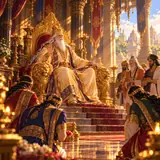
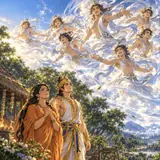
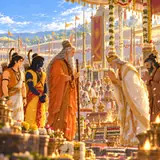
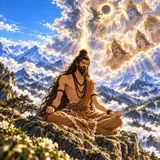
आजगाम ततो ब्रह्मा लोककर्ता स्वयं प्रभुः । चतुर्मुखो महातेजा द्रष्टुं तं मुनिपुङ्गवम् ॥ २३ ॥
Then Brahma himself came, the maker of the worlds, the lord, four-faced and full of splendour, to see that foremost of sages.
तब लोकों के रचयिता, चार मुखों वाले, महातेजस्वी प्रभु ब्रह्मा स्वयं उन मुनिश्रेष्ठ से मिलने आए।
CommentaryNot scripture Brahma, the creator, comes in person. He is four-faced (catur-mukha ), facing every direction, the god from whose mouths the Vedas came. That the creator himself visits a poet says how important this moment is. A new kind of creation, the poem, is about to begin.
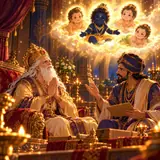
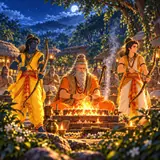
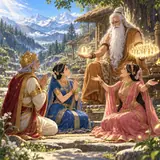
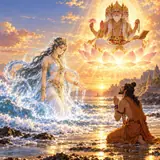
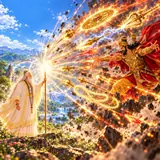
Scene 4 of 5 · Brahma, four-faced creator, visits the hermitage and asks Valmiki to tell the whole story of Rama.
वाल्मीकिरथ तं दृष्ट्वा सहसोत्थाय वाग्यतः । प्राञ्जलिः प्रयतो भूत्वा तस्थौ परमविस्मितः ॥ २४ ॥
Seeing him, Valmiki rose at once, silent, and stood with joined palms, composed and utterly amazed.
उन्हें देखकर वाल्मीकि तुरंत उठ खड़े हुए, मौन रहकर, हाथ जोड़कर, संयत होकर, अत्यंत विस्मय से खड़े रहे।
CommentaryNot scripture Valmiki rises at once, vag-yata , holding his speech. The master of words falls silent before the source of all words. He stands with joined palms, utterly amazed. Wonder and reverence: the right posture to receive a great task.
Scene 4 of 5 · Brahma, four-faced creator, visits the hermitage and asks Valmiki to tell the whole story of Rama.
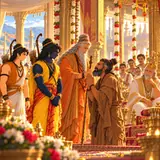
पूजयामास तं देवं पाद्यार्घ्यासनवन्दनैः । प्रणम्य विधिवच्चैनं पृष्ट्वा चैव निरामयम् ॥ २५ ॥
He honoured the god with water for the feet, the guest offering, a seat and salutations; bowing to him as prescribed, he asked after his welfare.
उन्होंने पाद्य, अर्घ्य, आसन और वंदना से उन देव का पूजन किया, और विधि से प्रणाम करके उनका कुशल पूछा।
CommentaryNot scripture Valmiki performs the full rites of hospitality: water for the feet (padya ), the guest offering (arghya ), a seat, and salutations. Then he asks after Brahma’s welfare. Even the god of creation is received as a guest, with the same courtesy a householder gives any traveller.
Scene 4 of 5 · Brahma, four-faced creator, visits the hermitage and asks Valmiki to tell the whole story of Rama.
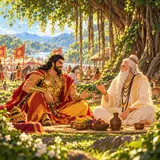
अथोपविश्य भगवानासने परमार्चिते । वाल्मीकये च ऋषये संदिदेशासनं ततः ॥ २६ ॥
The lord sat on a seat of highest honour, and then directed the sage Valmiki to a seat.
तब भगवान ब्रह्मा परम सम्मान वाले आसन पर बैठे, और उन्होंने ऋषि वाल्मीकि को भी आसन पर बैठने का संकेत किया।
CommentaryNot scripture Brahma sits on the seat of honour and then invites Valmiki to sit. The creator makes room for the poet. This small gesture, a god directing a human to a seat beside him, foreshadows the honour the poet will earn.
Scene 4 of 5 · Brahma, four-faced creator, visits the hermitage and asks Valmiki to tell the whole story of Rama.
ब्रह्मणा समनुज्ञातः सोऽप्युपाविशदासने । उपविष्टे तदा तस्मिन् साक्षाल्लोकपितामहे । ॥ २७ ॥
Permitted by Brahma, he too sat down. Yet while the grandsire of the worlds himself sat there,
ब्रह्मा की अनुमति पाकर वे भी आसन पर बैठे। पर लोकपितामह स्वयं सामने बैठे थे, फिर भी
CommentaryNot scripture Valmiki sits, and the verse turns: “Yet, while the grandsire of the worlds himself sat there...” The sentence carries on into the next verse. Even in front of Brahma, the poet’s mind will not leave the river.
Scene 4 of 5 · Brahma, four-faced creator, visits the hermitage and asks Valmiki to tell the whole story of Rama.
तद्गतेनैव मनसा वाल्मीकिर्ध्यानमास्थितः । पापात्मना कृतं कष्टं वैरग्रहणबुद्धिना । ॥ २८ ॥
यत् तादृशं चारुरवं क्रौञ्चं हन्यादकारणात् । शोचन्नेव पुनः क्रौञ्चीमुपश्लोकमिमं जगौ ॥ २९ ॥
Valmiki, his mind still on what had happened, sank into thought: “What a wrong was done by that evil-minded man, bent on enmity, to kill without cause a krauncha whose voice was so sweet!” Grieving for the krauncha hen, he sang the verse again.
वाल्मीकि का मन उसी घटना में डूबा रहा: “वैर के भाव से भरे उस पापी ने कैसा बुरा काम किया, जो ऐसे मधुर स्वर वाले क्रौंच को बिना कारण मार डाला!” क्रौंची के लिए शोक करते हुए उन्होंने वह श्लोक फिर से गाया।
CommentaryNot scripture This is remarkable. With the creator of the universe before him, Valmiki is still thinking about one dead bird. He calls the killing akaranat , without reason. And he sings the verse again. His compassion is so deep that not even a god can distract him from it, and that is exactly why the god has come.
Scene 4 of 5 · Brahma, four-faced creator, visits the hermitage and asks Valmiki to tell the whole story of Rama.
पुनरन्तर्गतमना भूत्वा शोकपरायणः । तमुवाच ततो ब्रह्मा प्रहसन् मुनिपुङ्गवम् ॥ ३० ॥
As he grew inward again, given over to grief, Brahma smiled and said to the foremost of sages:
जब वे फिर से भीतर डूब गए और शोक में खो गए, तब ब्रह्मा ने मुस्कराकर उन मुनिश्रेष्ठ से कहा:
CommentaryNot scripture Brahma smiles (prahasan ). He is not offended that the sage is lost in grief. The smile is the warmth of someone who knows what is happening better than the person it is happening to. The creator recognises a creator.
Scene 4 of 5 · Brahma, four-faced creator, visits the hermitage and asks Valmiki to tell the whole story of Rama.
श्लोक एवास्त्वयं बद्धो नात्र कार्या विचारणा । मच्छन्दादेव ते ब्रह्मन् प्रवृत्तेयं सरस्वती ॥ ३१ ॥
“It is a shloka that you have composed; do not doubt it. It was by my will alone, brahmana, that this speech came forth from you.
“तुमने जो रचा है, वह श्लोक ही है, इसमें संदेह मत करो। ब्राह्मण, मेरी इच्छा से ही तुम्हारे मुख से यह वाणी निकली है।
CommentaryNot scripture “It is a shloka. Do not doubt it.” Brahma confirms the new form, and then reveals its source: “by my will this speech came forth”. Sarasvati , the word used for speech here, is also the goddess of learning, Brahma’s consort. The poem is a gift from above, received through a compassionate heart.
Scene 4 of 5 · Brahma, four-faced creator, visits the hermitage and asks Valmiki to tell the whole story of Rama.
रामस्य चरितं कृत्स्नं कुरु त्वमृषिसत्तम । धर्मात्मनो भगवतो लोके रामस्य धीमतः ॥ ३२ ॥
“Best of sages, tell the whole story of Rama, the righteous, the blessed, the wise Rama in the world.
“ऋषिश्रेष्ठ, तुम संसार में धर्मात्मा, भगवान, बुद्धिमान राम का पूरा चरित्र रचो।
CommentaryNot scripture The commission: tell “the whole story of Rama” (kritsnam ). Rama is called bhagavan , blessed or divine. Brahma asks for the full life, not only the famous parts. That is the promise this edition tries to keep as well: every verse, nothing left out.
Scene 4 of 5 · Brahma, four-faced creator, visits the hermitage and asks Valmiki to tell the whole story of Rama.
वृत्तं कथय धीरस्य यथा ते नारदाच्छ्रुतम् । रहस्यं च प्रकाशं च यद् वृत्तं तस्य धीमतः ॥ ३३ ॥
रामस्य सहसौमित्रे राक्षसानां च सर्वशः । वैदेह्याश्चैव यद् वृत्तं प्रकाशं यदि वा रहः ॥ ३४ ॥
“Tell the life of the steadfast one as you heard it from Narada: whatever happened to the wise Rama, hidden or open; to Rama with Saumitri, to the rakshasas in every way, and to Vaidehi, in public or in private.
“उस धीर पुरुष का जीवन वैसा ही कहो जैसा तुमने नारद से सुना है: बुद्धिमान राम के साथ जो कुछ हुआ, छिपा हुआ या प्रकट; लक्ष्मण के साथ राम का, राक्षसों का, और वैदेही का, जो कुछ सबके सामने हुआ या एकांत में।
CommentaryNot scripture Brahma asks for everything: open and hidden (prakasham ca rahasyam ca ), public and private. Rama with Lakshmana, the rakshasas, and Sita too. The poet will see private moments no human witness saw. This is why the Ramayana can tell us what Sita thought alone in the ashoka grove.
Scene 4 of 5 · Brahma, four-faced creator, visits the hermitage and asks Valmiki to tell the whole story of Rama.
तच्चाप्यविदितं सर्वं विदितं ते भविष्यति । न ते वागनृता काव्ये काचिदत्र भविष्यति ॥ ३५ ॥
“All of it, even what is unknown, will be known to you. No word of yours in this poem will be untrue.
“वह सब, जो तुम्हें अभी पता नहीं, वह भी तुम्हें ज्ञात हो जाएगा। इस काव्य में तुम्हारा कोई भी वचन असत्य नहीं होगा।
CommentaryNot scripture The most important promise in the sarga: “No word of yours in this poem will be untrue” (na te vag anrita ). Brahma gives the poet a vision of what he could not have known. This is why tradition treats the Valmiki Ramayana as true history (itihasa ), not just a beautiful tale.
Scene 4 of 5 · Brahma, four-faced creator, visits the hermitage and asks Valmiki to tell the whole story of Rama.
कुरु रामकथां पुण्यां श्लोकबद्धां मनोरमाम् । यावत् स्थास्यन्ति गिरयः सरितश्च महीतले ॥ ३६ ॥
तावद् रामायणकथा लोकेषु प्रचरिष्यति । यावद् रामस्य च कथा त्वत्कृता प्रचरिष्यति ॥ ३७ ॥
तावदूर्ध्वमधश्च त्वं मल्लोकेषु निवत्स्यसि । इत्युक्त्वा भगवान् ब्रह्मा तत्रैवान्तरधीयत । ततः सशिष्यो भगवान् र्मुनिर्विस्मयमाययौ ॥ ३८ ॥
“Make the holy story of Rama, delightful and bound in shlokas. As long as the mountains and rivers stand on the earth, so long will the story of the Ramayana travel through the worlds. And as long as the story of Rama made by you is told, so long will you dwell in my worlds, above and below.” Having said this, the lord Brahma vanished from that very place, and the holy sage and his disciples were filled with wonder.
“राम की पवित्र, मनोहर कथा श्लोकों में रचो। जब तक धरती पर पर्वत और नदियाँ रहेंगी, तब तक रामायण की कथा संसार में फैलती रहेगी। और जब तक तुम्हारी रची राम कथा कही जाती रहेगी, तब तक तुम ऊपर और नीचे के मेरे लोकों में निवास करोगे।” यह कहकर भगवान ब्रह्मा वहीं अंतर्धान हो गए, और शिष्यों सहित भगवान वाल्मीकि विस्मय में डूब गए।
CommentaryNot scripture “As long as mountains and rivers stand”: one of the most famous blessings in Indian literature, and so far it has held true. The story has lived for many centuries and spread across Asia, in Thai, Javanese, Tamil and countless other retellings. Then Brahma vanishes, and the sage and his students are left in wonder.
Scene 4 of 5 · Brahma, four-faced creator, visits the hermitage and asks Valmiki to tell the whole story of Rama.
तस्य शिष्यास्ततः सर्वे जगुः श्लोकमिमं पुनः । मुहुर्मुहुः प्रीयमाणाः प्राहुश्च भृशविस्मिताः ॥ ३९ ॥
Then all his disciples sang the verse again and again, delighted, and said in great amazement:
तब उनके सब शिष्य प्रसन्न होकर बार-बार वह श्लोक गाने लगे, और अत्यंत विस्मित होकर बोले:
CommentaryNot scripture The disciples sing the verse again and again, muhur muhuh . They are delighted and amazed. This is the first recitation of the Ramayana, and it is joyful. Recitation is how the poem was meant to live, in voices, sung together.
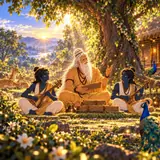
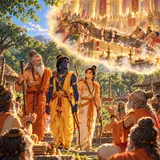
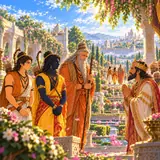
Scene 5 of 5 · The disciples sing the new verse again and again, and Valmiki resolves to compose the Ramayana.
समाक्षरैश्चतुर्भिर्यः पादैर्गीतो महर्षिणा । सोऽनुव्याहरणाद् भूयः शोकः श्लोकत्वमागतः ॥ ४० ॥
“The grief that the great sage sang in four quarters of equal syllables has, by being repeated, become a shloka.”
“महर्षि ने जो शोक बराबर अक्षरों वाले चार चरणों में गाया, वह बार-बार दोहराने से श्लोक बन गया।”
CommentaryNot scripture The disciples see what happened: shokah shlokatvam agatah , “grief has become a shloka”. This line is the tradition’s own theory of poetry. Pain, given form and repeated, turns into something that can be shared, sung and healed by. The Ramayana is grief made beautiful.
Scene 5 of 5 · The disciples sing the new verse again and again, and Valmiki resolves to compose the Ramayana.
तस्य बुद्धिरियं जाता वाल्मीकेर्भावितात्मनः । कृत्स्नं रामायणं काव्यमीदृशैः करवाण्यहम् ॥ ४१ ॥
And this resolve arose in Valmiki, whose soul was pure: “I will make the whole Ramayana as a poem in verses like these.”
तब शुद्ध आत्मा वाले वाल्मीकि के मन में यह संकल्प उठा: “मैं ऐसे ही श्लोकों में पूरी रामायण का काव्य रचूँगा।”
CommentaryNot scripture Bhavitatman , “whose self was purified”: Valmiki’s resolve comes from a cleansed heart. He decides to make the entire Ramayana in this form. The single verse of grief becomes the seed of twenty-four thousand.
Scene 5 of 5 · The disciples sing the new verse again and again, and Valmiki resolves to compose the Ramayana.
उदारवृत्तार्थपदैर्मनोरमै- स्तदास्य रामस्य चकार कीर्तिमान् । समाक्षरैः श्लोकशतैर्यशस्विनो यशस्करं काव्यमुदारदर्शनः ॥ ४२ ॥
Then the renowned sage of noble vision made for the glorious Rama a poem that spreads his fame, in hundreds of shlokas of equal syllables, with noble metre, meaning and words that delight the mind.
तब उदार दृष्टि वाले यशस्वी मुनि ने यशस्वी राम के लिए उनकी कीर्ति फैलाने वाला काव्य रचा, बराबर अक्षरों वाले सैकड़ों श्लोकों में, उत्तम छंद, अर्थ और मन को भाने वाले शब्दों से।
CommentaryNot scripture This verse changes metre, moving into a longer and more ornate form, as if the poem itself celebrates. It praises the qualities of good verse: noble metre, meaning and words, and equal syllables. Valmiki makes the poem for Rama’s fame (yashaskara ), not for his own.
Scene 5 of 5 · The disciples sing the new verse again and again, and Valmiki resolves to compose the Ramayana.
तदुपगतसमाससंधियोगं सममधुरोपनतार्थवाक्यबद्धम् । रघुवरचरितं मुनिप्रणीतं दशशिरसश्च वधं निशामयध्वम् ॥ ४३ ॥
Listen to the deeds of the best of the Raghus, composed by the sage, and to the slaying of the ten-headed one: a poem joined with fitting compounds and euphony, bound in sentences even and sweet, whose meaning comes easily.
सुनो, रघुश्रेष्ठ राम का चरित्र और दस सिर वाले रावण का वध, जिसे मुनि ने रचा है: उचित समासों और संधियों से जुड़ा, सम और मधुर वाक्यों में बँधा, जिसका अर्थ सहज ही समझ आता है।
CommentaryNot scripture The closing verse invites us directly: nishamayadhvam , “listen, all of you”. It describes the poem we are about to hear: well joined, even and sweet, its meaning easy to grasp. This is a promise of clarity. The Ramayana was meant to be understood by everyone who hears it.
Scene 5 of 5 · The disciples sing the new verse again and again, and Valmiki resolves to compose the Ramayana.