Bala Kanda · Sarga 77 of 77 · 29 verses
Home to Ayodhya; Rama and Sita
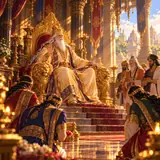
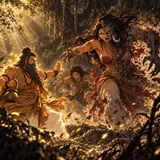
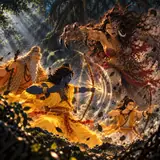
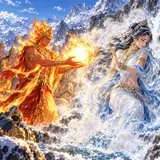
When Parashurama has gone, Rama, his mind at peace, places Vishnu’s bow in the hands of Varuna. He salutes Vasishtha and the sages, sees his father still shaken, and says: “Rama Jamadagnya has gone. Let the army, protected by you, march on toward Ayodhya.” Dasharatha embraces his son, kisses his head, and feels as though both his son and he himself have been born again.
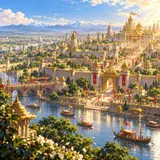
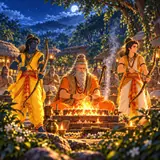
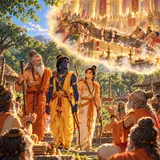
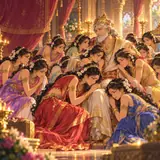
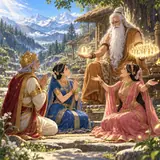
They enter Ayodhya, bright with banners, music, sprinkled roads and scattered flowers, the citizens coming out far to meet them with auspicious offerings. In the palace Kausalya, Sumitra and Kaikeyi and the other royal women receive Sita, Urmila and Kushadhvaja’s two daughters with blessings and offerings; the brides worship at the shrines, bow to the elders, and live happily with their husbands. The four princes, married, skilled in arms, wealthy and surrounded by friends, serve their father.
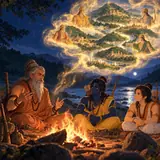
After some time Dasharatha tells Bharata that his uncle Yudhajit has come to take him to Kekaya. Bharata takes leave of his father, of Rama, and of his mothers, and goes with Shatrughna. With Bharata gone, Rama and Lakshmana serve their father; Rama carries out every task for the citizens, serves his mothers and teachers, and wins the hearts of all. Rama and Sita spend many seasons in delight; she lives in his heart, and he in hers twice over, for their hearts speak to each other even without words. With her, Rama shines like Vishnu with Shri.
Press › to begin with verse 1.
गते रामे प्रशान्तात्मा रामो दाशरथिर्धनुः । वरुणायाप्रमेयाय ददौ हस्ते महायशाः ॥ १ ॥
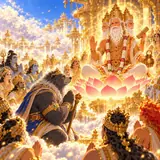
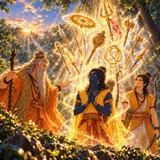
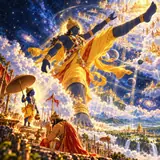
When Rama (Parashurama) had gone, the glorious Rama, son of Dasharatha, his mind at peace, gave the bow into the hands of the immeasurable Varuna.
जब राम (परशुराम) चले गए, तब यशस्वी दशरथ-पुत्र राम ने शांत मन से वह धनुष अपार शक्ति वाले वरुण के हाथों में दे दिया।
Commentary on the whole sarga
Home to Ayodhya; Rama and Sita 1 min read.
Read the commentary CommentaryNot scripture Rama gives Vishnu’s bow to Varuna, god of the waters, “his mind at peace”. He does not keep the divine weapon as a trophy. He needs no proof of his strength.
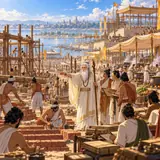
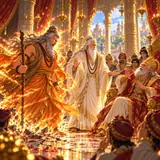
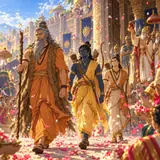
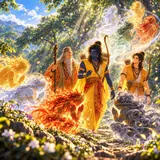
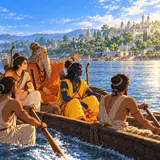
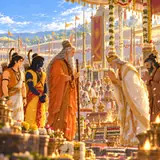
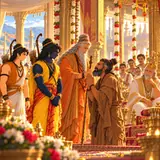
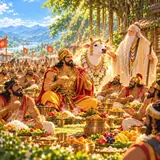
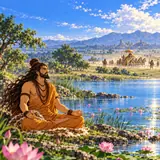
Scene 1 of 3 · Dasharatha embraces Rama, and the whole of Ayodhya pours out with flowers and banners to welcome the four couples home.
अभिवाद्य ततो रामो वसिष्ठप्रमुखानृषीन् । पितरं विकलं दृष्ट्वा प्रोवाच रघुनन्दनः ॥ २ ॥
Then Rama saluted the sages led by Vasishtha, and, seeing his father shaken, the delight of the Raghus said:
फिर राम ने वसिष्ठ आदि मुनियों को प्रणाम किया, और अपने पिता को व्याकुल देखकर रघुनंदन ने कहा:
CommentaryNot scripture He salutes the sages and sees his father “shaken”. His first concern is Dasharatha.
Scene 1 of 3 · Dasharatha embraces Rama, and the whole of Ayodhya pours out with flowers and banners to welcome the four couples home.
जामदग्न्यो गतो रामः प्रयातु चतुरंगिणी । अयोध्याभिमुखी सेना त्वया नाथेन पालिता ॥ ३ ॥
“Rama Jamadagnya has gone. Let the fourfold army, protected by you as its lord, march toward Ayodhya.”
“जामदग्न्य राम चले गए हैं। आप स्वामी के रूप में जिसकी रक्षा करते हैं, वह चतुरंगिणी सेना अयोध्या की ओर चले।”
CommentaryNot scripture “Parashurama has gone. Let the army march home.” Rama reassures his father simply.
Scene 1 of 3 · Dasharatha embraces Rama, and the whole of Ayodhya pours out with flowers and banners to welcome the four couples home.
रामस्य वचनं श्रुत्वा राजा दशरथः सुतम् । बाहुभ्यां सम्परिष्वज्य मूर्ध्न्युपाघ्राय राघवम् ॥ ४ ॥
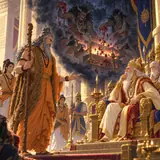
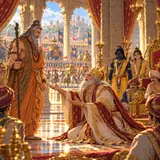
Hearing Rama’s words, King Dasharatha embraced his son Raghava with both arms and kissed him on the head.
राम के वचन सुनकर राजा दशरथ ने अपने पुत्र राघव को दोनों भुजाओं से गले लगाया और उनका सिर चूमा।
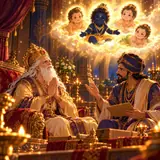
CommentaryNot scripture Dasharatha embraces him with both arms and kisses his head. The third time in this kanda a father or teacher kisses Rama’s head. Each marks a moment of relief and love.
Scene 1 of 3 · Dasharatha embraces Rama, and the whole of Ayodhya pours out with flowers and banners to welcome the four couples home.
गतो राम इति श्रुत्वा हृष्टः प्रमुदितो नृपः । पुनर्जातं तदा मेने पुत्रमात्मानमेव च ॥ ५ ॥
Hearing that Rama (Parashurama) had gone, the king was glad and delighted; he felt that his son and he himself had been born again.
राम (परशुराम) के चले जाने की बात सुनकर राजा प्रसन्न और आनंदित हुए; उन्हें लगा कि उनका पुत्र और वे स्वयं फिर से जन्मे हैं।
CommentaryNot scripture The king feels “his son and he himself had been born again”. Twice now he thought he might lose Rama, and twice Rama has returned.
Scene 1 of 3 · Dasharatha embraces Rama, and the whole of Ayodhya pours out with flowers and banners to welcome the four couples home.
चोदयामास तां सेनां जगामाशु ततः पुरीम् । पताकाध्वजिनीं रम्यां तूर्योद्घुष्टनिनादिताम् ॥ ६ ॥
सिक्तराजपथारम्यां प्रकीर्णकुसुमोत्कराम् । राजप्रवेशसुमुखैः पौरैर्मङ्गलपाणिभिः ॥ ७ ॥
सम्पूर्णां प्राविशद् राजा जनौघैः समलंकृताम् । पौरैः प्रत्युद्गतो दूरं द्विजैश्च पुरवासिभिः ॥ ८ ॥
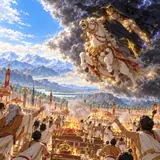
He urged on the army and went swiftly to the city, which was lovely with flags and banners, resounding with trumpets, beautiful with sprinkled royal roads and strewn with heaps of flowers, crowded with throngs of people and adorned with citizens holding auspicious things in their hands, their faces turned eagerly to the king’s entry. The king entered it, and the citizens and the brahmanas of the city came out far to meet him.
उन्होंने सेना को आगे बढ़ाया और जल्दी नगरी पहुँचे, जो ध्वजाओं और पताकाओं से सुंदर थी, तुरहियों से गूँज रही थी, छिड़काव किए राजमार्गों से सुंदर और फूलों के ढेरों से सजी थी, लोगों की भीड़ से भरी थी और राजा के प्रवेश की ओर उत्सुकता से मुख किए, हाथों में मंगल वस्तुएँ लिए नगरवासियों से सजी थी। राजा ने उसमें प्रवेश किया, और नगर के लोग और ब्राह्मण दूर तक उनसे मिलने बाहर आए।
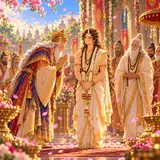
CommentaryNot scripture Ayodhya welcomes them: flags, trumpets, sprinkled roads, flowers, citizens holding auspicious things, faces turned eagerly toward the king. The city’s joy mirrors the joy of the day Rama was born.
Scene 1 of 3 · Dasharatha embraces Rama, and the whole of Ayodhya pours out with flowers and banners to welcome the four couples home.
पुत्रैरनुगतः श्रीमान् श्रीमद्भिश्च महायशाः । प्रविवेश गृहं राजा हिमवत्सदृशं प्रियम् ॥ ९ ॥
Followed by his glorious sons, the glorious and greatly renowned king entered his beloved palace, like the Himalaya.
अपने यशस्वी पुत्रों के पीछे-पीछे चलते, यशस्वी और महायशस्वी राजा ने हिमालय जैसे अपने प्रिय महल में प्रवेश किया।
CommentaryNot scripture The king enters his palace, “like the Himalaya”, followed by his sons.
Scene 1 of 3 · Dasharatha embraces Rama, and the whole of Ayodhya pours out with flowers and banners to welcome the four couples home.
ननन्द स्वजनै राजा गृहे कामैः सुपूजितः । कौसल्या च सुमित्रा च कैकेयी च सुमध्यमा ॥ १० ॥
वधूप्रतिग्रहे युक्ता याश्चान्या राजयोषितः । ततः सीतां महाभागामूर्मिलां च यशस्विनीम् ॥ ११ ॥
कुशध्वजसुते चोभे जगृहुर्नृपयोषितः । मंगलालापनैर्होमैः शोभिताः क्षौमवाससः ॥ १२ ॥
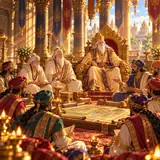
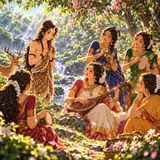
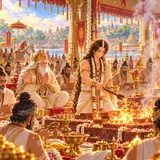
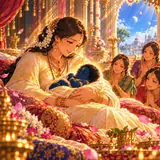
The king rejoiced in his home with his kin, honoured with all good things. Kausalya, Sumitra and slender-waisted Kaikeyi, and the other royal women, busy with receiving the brides, received fortunate Sita, glorious Urmila and both daughters of Kushadhvaja, with auspicious greetings and offerings, the brides shining in their linen garments.
राजा अपने संबंधियों के साथ सब अच्छी चीज़ों से सम्मानित होकर अपने घर में आनंदित हुए। कौसल्या, सुमित्रा और पतली कमर वाली कैकेयी, और दूसरी रानियों ने, वधुओं के स्वागत में लगी हुई, भाग्यशाली सीता, यशस्विनी ऊर्मिला और कुशध्वज की दोनों पुत्रियों का मंगल वचनों और भेंटों से स्वागत किया, जो रेशमी वस्त्रों में शोभा पा रही थीं।
CommentaryNot scripture Kausalya, Sumitra and Kaikeyi welcome the four brides with blessings and gifts. Kaikeyi is among the welcomers, glad and gracious. Valmiki shows her without shadow here, which makes the Ayodhya Kanda’s turn all the more painful.
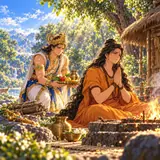
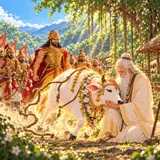
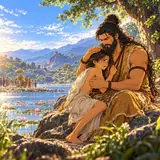
Scene 2 of 3 · The three queens welcome the four brides, and Bharata and Shatrughna set out with their uncle for Kekaya.
देवतायतनान्याशु सर्वास्ताः प्रत्यपूजयन् । अभिवाद्याभिवाद्यांश्च सर्वा राजसुतास्तदा ॥ १३ ॥
Quickly they all worshipped at the shrines of the gods; all the princesses saluted those who were to be saluted,
सबने जल्दी से देवताओं के मंदिरों में पूजा की; सब राजकुमारियों ने वंदनीय लोगों को प्रणाम किया,
CommentaryNot scripture The brides worship at the shrines and bow to their elders. They are welcomed into the family’s sacred life.
Scene 2 of 3 · The three queens welcome the four brides, and Bharata and Shatrughna set out with their uncle for Kekaya.
रेमिरे मुदिताः सर्वा भर्तृभिर्मुदिता रहः । कृतदाराः कृतास्त्राश्च सधनाः ससुहृज्जनाः ॥ १४ ॥
शुश्रूषमाणाः पितरं वर्तयन्ति नरर्षभाः । कस्यचित्त्वथ कालस्य राजा दशरथः सुतम् ॥ १५ ॥
and, delighted, all took their pleasure in private with their husbands. Married, accomplished in arms, wealthy, surrounded by friends, the bulls among men lived serving their father. After some time King Dasharatha,
और प्रसन्न होकर सब अपने पतियों के साथ एकांत में आनंद से रहने लगीं। विवाहित, अस्त्रों में निपुण, धन से संपन्न, मित्रों से घिरे वे पुरुषश्रेष्ठ अपने पिता की सेवा करते हुए रहने लगे। कुछ समय बाद राजा दशरथ,
CommentaryNot scripture The couples live happily in private. The brothers, married, accomplished and well loved, live serving their father.
Scene 2 of 3 · The three queens welcome the four brides, and Bharata and Shatrughna set out with their uncle for Kekaya.
भरतं कैकयीपुत्रमब्रवीद् रघुनन्दनः । अयं केकयराजस्य पुत्रो वसति पुत्रक ॥ १६ ॥
त्वां नेतुमागतो वीरो युधाजिन्मातुलस्तव । श्रुत्वा दशरथस्यैतद् भरतः कैकयीसुतः ॥ १७ ॥
delight of the Raghus, said to his son Bharata, Kaikeyi’s son: “This son of the king of Kekaya, your heroic uncle Yudhajit, is staying here, my son; he has come to take you.” Hearing this from Dasharatha, Bharata, Kaikeyi’s son,
रघुनंदन, ने अपने पुत्र, कैकेयी के पुत्र भरत से कहा: “पुत्र, केकयराज के ये पुत्र, तुम्हारे वीर मामा युधाजित यहाँ ठहरे हैं; वे तुम्हें ले जाने आए हैं।” दशरथ से यह सुनकर कैकेयी के पुत्र भरत
CommentaryNot scripture Yudhajit has waited to take Bharata to visit his grandfather in Kekaya. A small arrangement, with large consequences: Bharata will be far away when Kaikeyi claims her boons.
Scene 2 of 3 · The three queens welcome the four brides, and Bharata and Shatrughna set out with their uncle for Kekaya.
गमनायाभिचक्राम शत्रुघ्नसहितस्तदा । आपृच्छ्य पितरं शूरो रामं चाक्लिष्टकारिणम् ॥ १८ ॥
मातॄश्चापि नरश्रेष्ठः शत्रुघ्नसहितो ययौ । युधाजित् प्राप्य भरतं सशत्रुघ्नं प्रहर्षितः ॥ १९ ॥
prepared to go then with Shatrughna. Taking leave of his father and of Rama, tireless in action, and of his mothers, the hero, best of men, went with Shatrughna. Yudhajit, having got Bharata with Shatrughna, was delighted;
तब शत्रुघ्न के साथ जाने को तैयार हुए। पिता से, कर्म में अथक राम से, और अपनी माताओं से विदा लेकर वह वीर, पुरुषश्रेष्ठ शत्रुघ्न के साथ गए। शत्रुघ्न सहित भरत को पाकर युधाजित प्रसन्न हुए;
CommentaryNot scripture Bharata goes with Shatrughna, taking leave of his father, of Rama and of his mothers. The inseparable pair leaves together.
Scene 2 of 3 · The three queens welcome the four brides, and Bharata and Shatrughna set out with their uncle for Kekaya.
स्वपुरं प्राविशद् वीरः पिता तस्य तुतोष ह । गते च भरते रामो लक्ष्मणश्च महाबलः ॥ २० ॥
पितरं देवसंकाशं पूजयामासतुस्तदा । पितुराज्ञां पुरस्कृत्य पौरकार्याणि सर्वशः ॥ २१ ॥
the hero entered his own city, and his father was pleased. When Bharata had gone, Rama and the mighty Lakshmana honoured their godlike father. Putting their father’s command first, Rama carried out all the affairs of the citizens,
वह वीर अपनी नगरी में प्रविष्ट हुए, और उनके पिता प्रसन्न हुए। भरत के चले जाने पर राम और बलवान लक्ष्मण ने अपने देवता जैसे पिता का सम्मान किया। पिता की आज्ञा को आगे रखकर राम ने नगरवासियों के सब काम किए,
CommentaryNot scripture Rama and Lakshmana remain. Rama, “putting his father’s command first”, takes on the people’s affairs. He is already acting as a prince-regent.
Scene 2 of 3 · The three queens welcome the four brides, and Bharata and Shatrughna set out with their uncle for Kekaya.
चकार रामः सर्वाणि प्रियाणि च हितानि च । मातृभ्यो मातृकार्याणि कृत्वा परमयन्त्रितः ॥ २२ ॥
गुरूणां गुरुकार्याणि काले कालेऽन्ववैक्षत । एवं दशरथः प्रीतो ब्राह्मणा नैगमास्तथा ॥ २३ ॥
everything pleasing and beneficial. Doing for his mothers what was due to mothers, with great self-discipline, he attended in season to his teachers’ affairs. So Dasharatha was pleased, and the brahmanas and the merchants,
जो कुछ भी प्रिय और हितकर था। माताओं के प्रति माताओं के योग्य कर्तव्य करते हुए, बड़े संयम से, वे समय पर अपने गुरुओं के काम भी देखते थे। इस प्रकार दशरथ प्रसन्न हुए, और ब्राह्मण और व्यापारी,
CommentaryNot scripture He serves his mothers as a son should, and attends to his teachers. Duty to every elder, in its proper season.
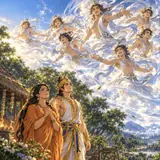
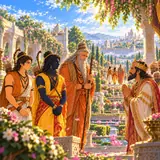
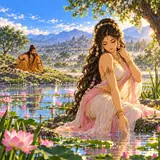
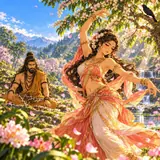
Scene 3 of 3 · Rama and Sita in the palace garden, heart speaking to heart, like Vishnu with Shri.
रामस्य शीलवृत्तेन सर्वे विषयवासिनः । तेषामतियशा लोके रामः सत्यपराक्रमः ॥ २४ ॥
स्वयंभूरिव भूतानां बभूव गुणवत्तरः । रामश्च सीतया सार्धं विजहार बहूनृतून् ॥ २५ ॥
and all who lived in the realm, by Rama’s character and conduct. Among them, Rama of true valour, of very great fame in the world, became the most virtuous of all beings, like the Self-born. And Rama, with Sita, delighted through many seasons.
और राज्य में रहने वाले सब लोग, राम के स्वभाव और आचरण से। उनमें सत्य-पराक्रमी, संसार में अत्यंत यशस्वी राम स्वयंभू ब्रह्मा की तरह सब प्राणियों में सबसे गुणवान हो गए। और राम सीता के साथ अनेक ऋतुओं तक आनंद से रहे।
CommentaryNot scripture The brahmanas, the merchants and all the people are pleased by Rama’s character. He becomes “the most virtuous of all beings”. And he lives happily with Sita “through many seasons”. The Bala Kanda ends in a long, peaceful happiness, twelve years by later reckoning.
Scene 3 of 3 · Rama and Sita in the palace garden, heart speaking to heart, like Vishnu with Shri.
मनस्वी तद्गतमनास्तस्या हृदि समर्पितः । प्रिया तु सीता रामस्य दाराः पितृकृता इति ॥ २६ ॥
गुणाद्रूपगुणाच्चापि प्रीतिर्भूयोऽभिवर्धते । तस्याश्च भर्ता द्विगुणं हृदये परिवर्तते ॥ २७ ॥
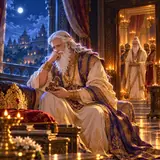
High-minded, his mind was fixed on her, and he was given into her heart. Sita was dear to Rama because she was the wife chosen by his father, and his love grew still more because of her virtues and her beauty. And in her heart her husband dwelt twice over.
ऊँचे मन वाले राम का मन उन्हीं में लगा रहता था, और वे उनके हृदय में समाए हुए थे। सीता राम को प्रिय थीं क्योंकि वे पिता द्वारा चुनी गई पत्नी थीं, और उनके गुणों और सौंदर्य से उनका प्रेम और भी बढ़ गया। और उनके हृदय में उनके पति दुगुने बसते थे।
CommentaryNot scripture One of the most beautiful love passages in Sanskrit poetry. Sita was dear to Rama first because his father chose her, then more for her own virtues and beauty. And Rama lived “twice over” in her heart.
Scene 3 of 3 · Rama and Sita in the palace garden, heart speaking to heart, like Vishnu with Shri.
अन्तर्गतमपि व्यक्तमाख्याति हृदयं हृदा । तस्य भूयो विशेषेण मैथिली जनकात्मजा । देवताभिः समा रूपे सीता श्रीरिव रूपिणी ॥ २८ ॥
Heart told heart clearly even what was hidden within. And for him, Maithili, daughter of Janaka, was dearer still: Sita, equal to the goddesses in beauty, like Shri herself in bodily form.
हृदय हृदय से भीतर छिपी बातें भी स्पष्ट कह देता था। और उनके लिए जनक की पुत्री मैथिली और भी अधिक प्रिय थीं: सौंदर्य में देवियों के समान सीता, मानो शरीरधारी स्वयं श्री (लक्ष्मी)।
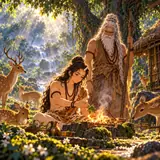
CommentaryNot scripture “Heart told heart clearly even what was hidden within.” They understood each other without words. This is Valmiki’s picture of a perfect marriage: not only love, but deep knowing.
Scene 3 of 3 · Rama and Sita in the palace garden, heart speaking to heart, like Vishnu with Shri.
तया स राजर्षिसुतोऽभिकामया । समेयिवानुत्तमराजकन्यया । अतीव रामः शुशुभे मुदान्वितो विभुः श्रिया विष्णुरिवामरेश्वरः ॥ २९ ॥
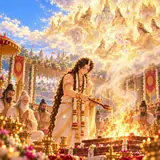
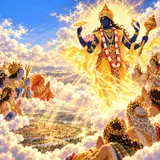
United with that loving, supreme princess, Rama, son of a royal sage, filled with joy, shone exceedingly, like the lord Vishnu, lord of the immortals, with Shri.
उस प्रेममयी, श्रेष्ठ राजकुमारी के साथ जुड़कर राजर्षि के पुत्र राम आनंद से भरकर ऐसे अत्यंत शोभा पाने लगे, जैसे श्री के साथ अमरों के स्वामी भगवान विष्णु।
CommentaryNot scripture Rama with Sita shines “like Vishnu with Shri”, the god with the goddess of fortune. The divine pair is together on earth. So ends the Bala Kanda: in joy, in love, in a kingdom at peace. The next book begins with a coronation that will never happen.
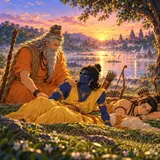
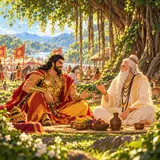
Scene 3 of 3 · Rama and Sita in the palace garden, heart speaking to heart, like Vishnu with Shri.