Bala Kanda · Sarga 7 of 77 · 24 verses
The King’s Ministers
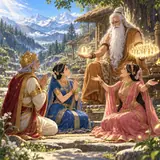
Dasharatha has eight ministers: Dhrishti, Jayanta, Vijaya, Surashtra, Rashtravardhana, Akopa, Dharmapala and Sumantra. His chief priests are Vasishtha and Vamadeva, with other counsellors such as Suyajna, Jabali, Kashyapa, Gautama, Markandeya and Katyayana.
The ministers are learned, modest, truthful and never lie out of anger or greed. Through spies they know everything done or planned at home and abroad. They are fair enough to punish even their own sons when it is due, they fill the treasury without oppressing anyone, and they guard secrets well. With such ministers Dasharatha rules the earth without an equal or a rival, shining like the rising sun with its rays.
Press › to begin with verse 1.
तस्यामात्या गुणैरासन्विक्ष्वाकोः सुमहात्मनः । मन्त्रज्ञाश्चेङ्गितज्ञाश्च नित्यं प्रियहिते रताः ॥ १ ॥
That great-souled Ikshvaku king had ministers of fine qualities, who knew counsel and could read gestures, always devoted to his welfare and pleasure.
उन महात्मा इक्ष्वाकु राजा के उत्तम गुणों वाले मंत्री थे, जो मंत्रणा जानते थे और संकेतों को पढ़ सकते थे, और सदा उनके हित और प्रसन्नता में लगे रहते थे।
Commentary on the whole sarga
The King’s Ministers 1 min read.
Read the commentary CommentaryNot scripture A king is only as good as his counsel. Dasharatha’s ministers “know counsel” (mantra-jna ) and “can read gestures” (ingita-jna ): they understand what is meant before it is said. In Indian statecraft, reading a face is a political skill.
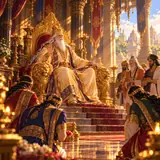
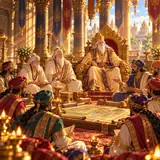
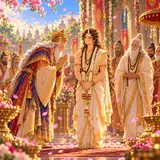
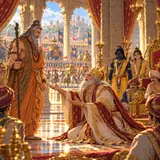
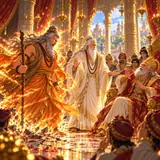
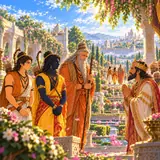
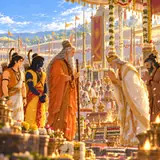
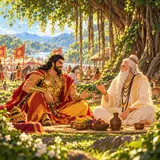
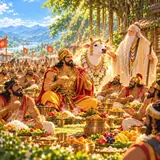
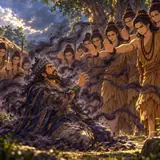
Scene 1 of 2 · Dasharatha in council with his priests Vasishtha and Vamadeva and his eight ministers.
अष्टौ बभूवुर्वीरस्य तस्यामात्या यशस्विनः । शुचयश्चानुरक्ताश्च राजकृत्येषु नित्यशः ॥ २ ॥
The hero had eight glorious ministers, honest, devoted and always attentive to the king’s affairs:
उन वीर राजा के आठ यशस्वी मंत्री थे, ईमानदार, भक्त और सदा राजा के कार्यों में सावधान:
CommentaryNot scripture Eight ministers, the classic number in Indian texts on kingship. They are honest (shuchi ), devoted, and always attentive. Valmiki will show what such men are worth, and what happens when a king stops listening to them.
Scene 1 of 2 · Dasharatha in council with his priests Vasishtha and Vamadeva and his eight ministers.
धृष्टिर्जयन्तो विजयः सुराष्ट्रो राष्ट्र्वर्धनः । अकोपो धर्मपालश्च सुमन्त्रश्चाष्टमोऽर्थवित् ॥ ३ ॥
Dhrishti, Jayanta, Vijaya, Surashtra, Rashtravardhana, Akopa, Dharmapala, and Sumantra, the eighth, who knew the business of state.
धृष्टि, जयंत, विजय, सुराष्ट्र, राष्ट्रवर्धन, अकोप, धर्मपाल, और आठवें सुमंत्र, जो राजकाज जानते थे।
CommentaryNot scripture Their names are worth hearing: Dhrishti (“boldness”), Jayanta and Vijaya (“victory”), Surashtra and Rashtravardhana (“good realm”, “realm-increaser”), Akopa (“without anger”), Dharmapala (“guardian of dharma”). And Sumantra, whose name means “good counsel”. He will become Rama’s charioteer in exile.
Scene 1 of 2 · Dasharatha in council with his priests Vasishtha and Vamadeva and his eight ministers.
ऋत्विजौ द्वावभिमतौ तस्यास्तामृषिसत्तमौ । वसिष्ठो वामदेवश्च मन्त्रिणश्च तथापरे ॥ ४ ॥
He had two esteemed chief priests, best of sages, Vasishtha and Vamadeva, and other counsellors too:
उनके दो सम्मानित मुख्य पुरोहित थे, मुनियों में श्रेष्ठ वसिष्ठ और वामदेव, और दूसरे सलाहकार भी:
CommentaryNot scripture Vasishtha, the family priest of the Ikshvakus, is one of the most revered sages in all Hindu tradition. Vamadeva is a seer of Vedic hymns. Dasharatha has the wisest men of the age beside him.
Scene 1 of 2 · Dasharatha in council with his priests Vasishtha and Vamadeva and his eight ministers.
सुयज्ञोऽप्यथ जाबालिः काश्यपोऽप्यथ गौतमः । मार्कण्डेयस्तु दीर्घायुस्तथा कात्यायनो द्विजः ॥ ५ ॥
Suyajna, Jabali, Kashyapa, Gautama, the long-lived Markandeya, and the brahmana Katyayana.
सुयज्ञ, जाबालि, काश्यप, गौतम, दीर्घायु मार्कंडेय, और ब्राह्मण कात्यायन।
CommentaryNot scripture Jabali will argue with Rama in the Ayodhya Kanda, urging him to give up his vow; Rama’s answer is one of his great speeches on truth. Markandeya is the sage famous for his long life. These are not just names: many will return.
Scene 1 of 2 · Dasharatha in council with his priests Vasishtha and Vamadeva and his eight ministers.
एतैर्ब्रह्मर्षिभिर्नित्यमृत्विजस्तस्य पौर्वकाः । विद्याविनीता ह्रीमन्तः कुशला नियतेन्द्रियाः ॥ ६ ॥
With these brahmarshis, his priests of long standing, the ministers were always cultured in learning, modest, skilled and master of their senses;
पुराने समय से चले आ रहे इन ब्रह्मर्षि पुरोहितों के साथ, मंत्री भी सदा विद्या से संस्कारी, विनम्र, कुशल और जितेंद्रिय थे;
CommentaryNot scripture The priests are brahmarshis , the highest rank of seers, and have served the family for generations (paramparagata ). Learning, humility and self-control mark the ministers too. Wisdom at court is built over generations.
Scene 1 of 2 · Dasharatha in council with his priests Vasishtha and Vamadeva and his eight ministers.
श्रीमन्तश्च महात्मानः शास्त्रज्ञा दृढविक्रमाः । कीर्तिमन्तः प्रणिहिता यथावचनकारिणः ॥ ७ ॥
fortunate, great-souled, versed in the shastras, firm in valour, renowned, attentive, and doing exactly as they were told;
भाग्यशाली, महात्मा, शास्त्रों के ज्ञाता, पराक्रम में दृढ़, यशस्वी, सावधान, और जैसा कहा जाए ठीक वैसा करने वाले;
CommentaryNot scripture One small phrase stands out: “doing exactly as they were told” (yatha-vacana-karinah ). Loyal service, yes. But the next verses show that they are not mere servants: they have judgement, honesty and courage too.
Scene 1 of 2 · Dasharatha in council with his priests Vasishtha and Vamadeva and his eight ministers.
तेजःक्षमायशःप्राप्ताः स्मितपूर्वाभिभाषिणः । क्रोधात् कामार्थहेतोर्वा न ब्रूयुरनृतं वचः ॥ ८ ॥
possessed of energy, patience and fame, speaking with a smile before they spoke; neither from anger nor for pleasure or gain would they speak a lie.
तेज, क्षमा और कीर्ति से युक्त, बोलने से पहले मुस्कराने वाले; वे क्रोध, सुख या लाभ के लिए कभी झूठ नहीं बोलते थे।
CommentaryNot scripture “Speaking with a smile before they spoke” (smita-purva-abhibhashin ). This phrase is used of Rama himself elsewhere in the poem. The ideal courtier is warm. And they never lie, “not from anger, nor for pleasure, nor for gain”. Truth runs through every portrait in these sargas.
Scene 1 of 2 · Dasharatha in council with his priests Vasishtha and Vamadeva and his eight ministers.
तेषामविदितं किंचित् स्वेषु नास्ति परेषु वा । क्रियमाणं कृतं वापि चारेणापि चिकीर्षितम् ॥ ९ ॥
Nothing was unknown to them, in their own land or in others’, whether being done, done, or planned, through their spies.
अपने देश में हो या पराए देश में, जो हो रहा है, हो चुका है या जिसकी योजना है, गुप्तचरों के द्वारा उनसे कुछ भी छिपा नहीं था।
CommentaryNot scripture Spies (chara ) are the eyes of a king in Indian political thought. Nothing is hidden from these ministers, at home or abroad, past, present or planned. A just kingdom is also a well-informed one.
Scene 1 of 2 · Dasharatha in council with his priests Vasishtha and Vamadeva and his eight ministers.
कुशला व्यवहारेषु सौहृदेषु परीक्षिताः । प्राप्तकालं यथा दण्डं धारयेयुः सुतेष्वपि ॥ १० ॥
Skilled in affairs and tested in friendship, they would inflict the punishment that was due, at the right time, even on their own sons.
कामकाज में कुशल और मित्रता में परखे हुए, वे उचित समय पर उचित दंड देते थे, चाहे अपने पुत्रों को ही क्यों न देना पड़े।
CommentaryNot scripture “Even on their own sons”: the ministers punish wrongdoers at the right time, without favouritism. Justice applied equally, even to one’s own family, is the hardest kind. The poem admires it.
Scene 1 of 2 · Dasharatha in council with his priests Vasishtha and Vamadeva and his eight ministers.
कोशसंग्रहणे युक्ता बलस्य च परिग्रहे । अहितं चापि पुरुषं न हिंस्युरविदूषकम् ॥ ११ ॥
They were diligent in filling the treasury and maintaining the army, and would not harm even an enemy who had done no wrong.
वे खज़ाना भरने और सेना को सँभालने में तत्पर रहते थे, और जिस शत्रु ने कोई अपराध न किया हो उसे भी हानि नहीं पहुँचाते थे।
CommentaryNot scripture They fill the treasury and maintain the army, but “would not harm even an enemy who had done no wrong”. Strength is never used without cause. This restraint is the same quality that marks Ayodhya’s archers in sarga 5.
Scene 1 of 2 · Dasharatha in council with his priests Vasishtha and Vamadeva and his eight ministers.
वीराश्च नियतोत्साहा राजशास्त्रमनुष्ठिताः । शुचीनां रक्षितारश्च नित्यं विषयवासिनाम् ॥ १२ ॥
They were heroes of constant energy, following the science of kingship, and always protected the honest people living in the realm.
वे सदा उत्साही वीर थे, राजनीति के शास्त्र का पालन करते थे, और राज्य में रहने वाले सज्जनों की सदा रक्षा करते थे।
CommentaryNot scripture The “science of kingship” (raja-shastra ) was a real body of knowledge in ancient India, later collected in texts like the Arthashastra. The ministers follow it, and use it to protect the honest. Policy serves people.
Scene 1 of 2 · Dasharatha in council with his priests Vasishtha and Vamadeva and his eight ministers.
ब्रह्मक्षत्रमहिंसन्तस्ते कोशं समपूरयन् । सुतीक्ष्णदण्डाः सम्प्रेक्ष्य पुरुषस्य बलाबलम् ॥ १३ ॥
Without harming brahmanas or kshatriyas they filled the treasury; their punishments were sharp, given after weighing a man’s strength and weakness.
ब्राह्मणों और क्षत्रियों को हानि पहुँचाए बिना वे खज़ाना भरते थे; उनके दंड कठोर थे, पर व्यक्ति के बल और दुर्बलता को तौलकर दिए जाते थे।
CommentaryNot scripture Taxes are raised without oppressing the priests or the warriors, and punishments are given after weighing a person’s strength and weakness. Even justice is measured by compassion: the same crime does not deserve the same punishment from the strong and the weak.
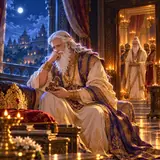
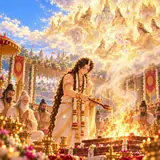
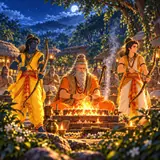
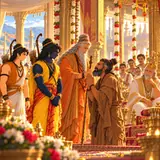
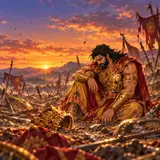
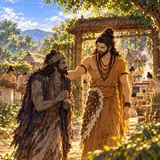
Scene 2 of 2 · At sunrise the king looks out over a kingdom at peace, his counsellors around him like rays of the sun.
शुचीनामेकबुद्धीनां सर्वेषां सम्प्रजानताम् । नासीत्पुरे वा राष्ट्रे वा मृषावादी नरः क्वचित् ॥ १४ ॥
Since all of them were honest, of one mind and well informed, there was not one liar anywhere in the city or the kingdom.
क्योंकि वे सब ईमानदार, एक मत वाले और जानकार थे, इसलिए नगर या राज्य में कहीं एक भी झूठा व्यक्ति नहीं था।
CommentaryNot scripture Because the ministers are truthful and united, the whole kingdom becomes truthful. Leaders set the tone. When those at the top do not lie, lying has no place to grow.
Scene 2 of 2 · At sunrise the king looks out over a kingdom at peace, his counsellors around him like rays of the sun.
क्वचिन्न दुष्टस्तत्रासीत् परदाररतिर्नरः । प्रशान्तं सर्वमेवासीद् राष्ट्रं पुरवरं च तत् ॥ १५ ॥
There was no wicked man there who desired another’s wife; the whole kingdom and that fine city were at peace.
वहाँ कोई ऐसा दुष्ट नहीं था जो पराई स्त्री की इच्छा करे; पूरा राज्य और वह सुंदर नगरी शांत थी।
CommentaryNot scripture No one desires another’s wife. This verse quietly sets up the poem’s great conflict: Ravana, the king who does exactly this, is the opposite of everything Ayodhya stands for.
Scene 2 of 2 · At sunrise the king looks out over a kingdom at peace, his counsellors around him like rays of the sun.
सुवाससः सुवेशाश्च ते च सर्वे शुचिव्रताः । हितार्थाश्च नरेन्द्रस्य जाग्रतो नयचक्षुषा ॥ १६ ॥
They were well dressed and finely attired, all of pure vows, seeking the king’s good, watchful with the eye of policy;
वे अच्छे वस्त्र पहनते थे, सुंदर ढंग से सजे रहते थे, सब पवित्र व्रत वाले थे, राजा का भला चाहते थे और नीति की आँख से सजग रहते थे;
CommentaryNot scripture The ministers are well dressed, pure in their vows, and “watchful with the eye of policy” (niti-chakshus ). Appearance, ethics and intelligence together. The court of Ayodhya is dignified in every way.
Scene 2 of 2 · At sunrise the king looks out over a kingdom at peace, his counsellors around him like rays of the sun.
गुरोर्गुणगृहीताश्च प्रख्याताश्च पराक्रमैः । विदेशेष्वपि विज्ञाताः सर्वतो बुद्धिनिश्चयाः ॥ १७ ॥
they had gained their virtues from their teachers, were famous for their deeds, known even in foreign lands, decisive in judgement on every side.
उन्होंने अपने गुण गुरुओं से पाए थे, अपने कर्मों के लिए प्रसिद्ध थे, विदेशों में भी जाने जाते थे, और हर ओर निर्णय में दृढ़ थे।
CommentaryNot scripture Their virtues came from their teachers (guru ). In the Indian view, character is learned, passed from teacher to student. Their reputation reaches foreign lands. Ayodhya is respected for its people, not only for its power.
Scene 2 of 2 · At sunrise the king looks out over a kingdom at peace, his counsellors around him like rays of the sun.
अभितो गुणवन्तश्च न चासन् गुणवर्जिताः । सन्धिविग्रहतत्वज्ञाः प्रकृत्या सम्पदान्विताः ॥ १८ ॥
All round they were men of virtue; none lacked it. They knew the essence of peace and war and were rich by nature.
वे चारों ओर से गुणवान थे; किसी में गुणों की कमी नहीं थी। वे संधि और विग्रह का सार जानते थे और स्वभाव से संपन्न थे।
CommentaryNot scripture Sandhi and vigraha : peace and war, the two great choices of foreign policy. The ministers know when to make treaties and when to fight. Every one of them is virtuous; none falls short.
Scene 2 of 2 · At sunrise the king looks out over a kingdom at peace, his counsellors around him like rays of the sun.
मंत्रसंवरणे शक्ताः शक्ताः सूक्ष्मासु बुद्धिषु । नीतिशास्त्रविशेषज्ञाः सततं प्रियवादिनः ॥ १९ ॥
They could keep counsel secret, could grasp subtle matters, were expert in the science of policy, and always spoke pleasantly.
वे मंत्रणा को गुप्त रख सकते थे, सूक्ष्म बातों को समझ सकते थे, नीतिशास्त्र में निपुण थे, और सदा मधुर बोलते थे।
CommentaryNot scripture Keeping counsel secret (gupta-mantra ) is essential for a king: a plan revealed too early is a plan lost. Notice how the poem ends this praise: “they always spoke pleasantly”. Wisdom and gentleness belong together.
Scene 2 of 2 · At sunrise the king looks out over a kingdom at peace, his counsellors around him like rays of the sun.
ईदृशैस्तैरमात्यैश्च राजा दशरथोऽनघः । उपपन्नो गुणोपेतैरन्वशासद् वसुन्धराम् ॥ २० ॥
With such virtuous ministers, the sinless King Dasharatha governed the earth.
ऐसे गुणवान मंत्रियों के साथ निष्पाप राजा दशरथ पृथ्वी का शासन करते थे।
CommentaryNot scripture Anagha , “sinless”: Dasharatha with such ministers governs the earth well. The portrait of a perfect kingdom is complete. All that is missing is an heir, and the next sarga turns to that sorrow.
Scene 2 of 2 · At sunrise the king looks out over a kingdom at peace, his counsellors around him like rays of the sun.
अवेक्ष्यमाणश्चारेण प्रजा धर्मेण रक्षयन् । प्रजानां पालनं कुर्वन्नधर्मं परिवर्जयन् ॥ २१ ॥
Watching through his spies, protecting his subjects with dharma, caring for his people and avoiding adharma,
गुप्तचरों के द्वारा देखते हुए, धर्म से प्रजा की रक्षा करते हुए, लोगों का पालन करते हुए और अधर्म से बचते हुए,
CommentaryNot scripture Four duties of a king in one verse: watch through spies, protect with dharma, care for the people, avoid adharma. This is a short handbook of good government.
Scene 2 of 2 · At sunrise the king looks out over a kingdom at peace, his counsellors around him like rays of the sun.
विश्रुतस्त्रिषु लोकेषु वदान्यः सत्यसंगरः । स तत्र पुरुषव्याघ्रः शशास पृथिवीमिमाम् ॥ २२ ॥
famed in the three worlds, generous and true to his promise, that tiger among men ruled this earth from there.
तीनों लोकों में प्रसिद्ध, उदार और सत्यप्रतिज्ञ वे पुरुषसिंह वहाँ से इस पृथ्वी पर राज्य करते थे।
CommentaryNot scripture Purusha-vyaghra , “tiger among men”: a common epic title of honour. Dasharatha is famous, generous, and above all true to his promise. That last quality is mentioned again and again in his portrait, and it will be his undoing.
Scene 2 of 2 · At sunrise the king looks out over a kingdom at peace, his counsellors around him like rays of the sun.
नाध्यगच्छद्विशिष्टं वा तुल्यं वा शत्रुमात्मनः । मित्रवान्नतसामन्तः प्रतापहतकण्टकः । स शशास जगद् राजा दिवि देवपतिर्यथा ॥ २३ ॥
He met no enemy his superior or equal; he had friends, his vassals bowed to him, and his prowess had removed every thorn. He ruled the world as the lord of the gods rules heaven.
उन्हें कोई ऐसा शत्रु नहीं मिला जो उनसे बढ़कर या उनके बराबर हो; उनके मित्र थे, सामंत उनके सामने झुकते थे, और उनके पराक्रम ने हर काँटा हटा दिया था। वे संसार पर वैसे ही राज्य करते थे जैसे देवराज स्वर्ग पर।
CommentaryNot scripture No enemy equal to him, friends all around, vassals bowing, every “thorn” removed: the kingdom is at peace. The image of thorns (kantaka ) means troublemakers and enemies inside the realm. Dasharatha has cleared them all.
Scene 2 of 2 · At sunrise the king looks out over a kingdom at peace, his counsellors around him like rays of the sun.
तैर्मन्त्रिभिर्मन्त्रहितै निविष्टै- र्वृतोऽनुरक्तैः कुशलैः समर्थैः । स पार्थिवो दीप्तिमवाप युक्त- स्तेजोमयैर्गोभिरिवोदितोऽर्कः ॥ २४ ॥
Surrounded by those counsellors, devoted, skilled and capable, seeking good counsel, the king shone, as the risen sun shines with its blazing rays.
उन भक्त, कुशल और समर्थ सलाहकारों से घिरे, अच्छी सलाह चाहने वाले राजा वैसे ही शोभायमान होते थे जैसे उगता सूर्य अपनी प्रखर किरणों से।
CommentaryNot scripture The sarga closes with a picture of light: the king among his counsellors shines “as the risen sun shines with its blazing rays”. The ministers are his rays. A king shines through the good people around him.
Scene 2 of 2 · At sunrise the king looks out over a kingdom at peace, his counsellors around him like rays of the sun.