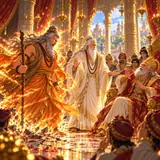
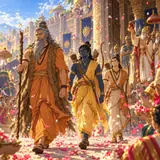
Bala Kanda · Sarga 34 of 77 · 23 verses
Vishvamitra’s Own Line; Night on the Shona
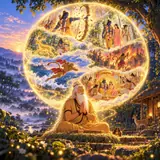
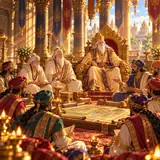
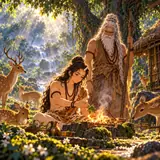
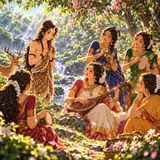
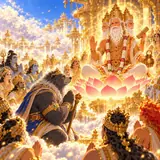
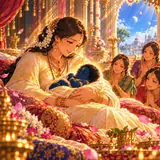
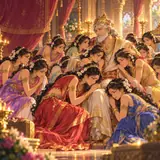
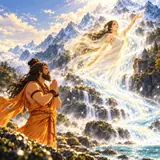
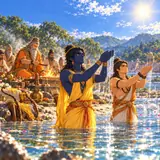
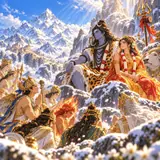
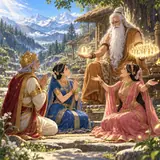
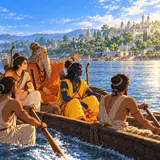
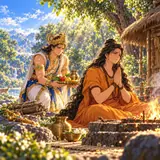
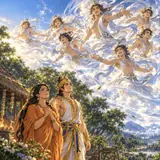
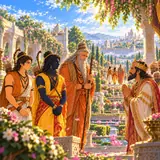
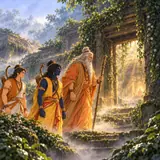
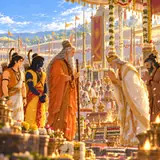
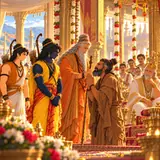
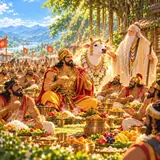
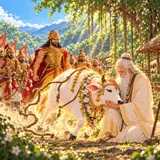
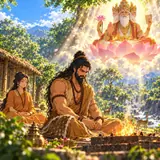
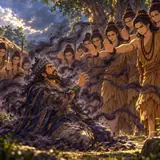
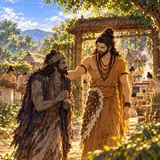
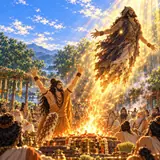
After Brahmadatta’s wedding, the sonless Kushanabha performs a sacrifice for a son, and his father Kusha promises him a righteous son, Gadhi, then rises to Brahma’s world. “That Gadhi was my father,” says Vishvamitra, “so I am called Kaushika, of Kusha’s line.” His elder sister Satyavati married the sage Richika, followed her husband to heaven in her own body, and became the great river Kaushiki, flowing from the Himalaya for the good of the world. Vishvamitra lives beside her out of love; he left her side only for his vow, and through Rama’s power has now succeeded.
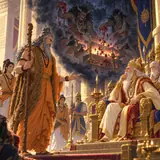
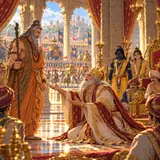
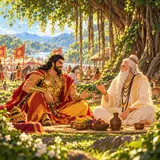
It is midnight. “Sleep now, so our journey is not hindered. The trees are still, the birds and beasts are hidden, the sky is thick with stars, the cool moon is rising and the creatures of the night are abroad.” The sages praise the Kushika line, and Vishvamitra sleeps like the setting sun. Rama and Lakshmana, full of wonder, praise him and sleep too.
Press › to begin with verse 1.
कृतोद्वाहे गते तस्मिन् ब्रह्मदत्ते च राघव । अपुत्रः पुत्रलाभाय पौत्रीमिष्टिमकल्पयत् ॥ १ ॥
“When Brahmadatta had married and gone, Raghava, the sonless Kushanabha arranged a sacrifice for a son, to gain a son.
“राघव, जब ब्रह्मदत्त विवाह करके चले गए, तब पुत्रहीन कुशनाभ ने पुत्र पाने के लिए पुत्रेष्टि यज्ञ का आयोजन किया।
Commentary on the whole sarga
Vishvamitra’s Own Line; Night on the Shona 1 min read.
Read the commentary CommentaryNot scripture Kushanabha, having married off his hundred daughters, has no son. Like Dasharatha, he performs a sacrifice for a son. The longing for a son runs through almost every family story in the Bala Kanda.
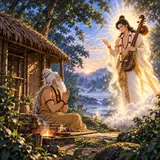
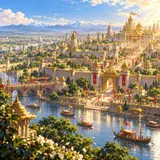
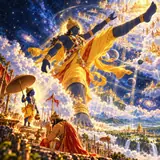
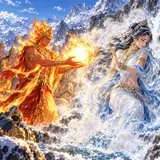
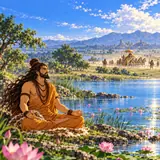
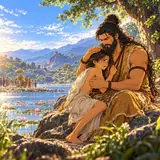
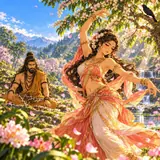
Scene 1 of 2 · Vishvamitra’s sister Satyavati rises to heaven and becomes the holy river Kaushiki, flowing from the Himalaya.
इष्ट्यां तु वर्तमानायां कुशनाभं महीपतिम् । उवाच परमोदारः कुशो ब्रह्मसुतस्तदा ॥ २ ॥
“While the sacrifice was going on, the most noble Kusha, son of Brahma, said to King Kushanabha:
“जब यज्ञ चल रहा था, तब ब्रह्मा के पुत्र, परम उत्तम कुश ने राजा कुशनाभ से कहा:
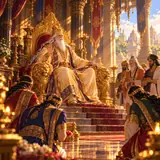
CommentaryNot scripture During the rite, his father Kusha, “son of Brahma”, appears. The founder of the line returns to bless it.
Scene 1 of 2 · Vishvamitra’s sister Satyavati rises to heaven and becomes the holy river Kaushiki, flowing from the Himalaya.
पुत्रस्ते सदृशः पुत्र भविष्यति सुधार्मिकः । गाधिं प्राप्स्यसि तेन त्वं कीर्तिं लोके च शाश्वतीम् ॥ ३ ॥
“’My son, you will have a son like yourself, most righteous. Through him you will have Gadhi and eternal fame in the world.’
“’पुत्र, तुम्हारे अपने ही जैसा अत्यंत धर्मात्मा पुत्र होगा। उसके द्वारा तुम्हें गाधि मिलेंगे और संसार में अमर यश।’
CommentaryNot scripture “You will have a son like yourself, and through him Gadhi and eternal fame.” A grandfather blesses his grandson’s birth before it happens.
Scene 1 of 2 · Vishvamitra’s sister Satyavati rises to heaven and becomes the holy river Kaushiki, flowing from the Himalaya.
एवमुक्त्वा कुशो राम कुशनाभं महीपतिम् । जगामाकाशमाविश्य ब्रह्मलोकं सनातनम् ॥ ४ ॥
“Having said this to King Kushanabha, Rama, Kusha rose into the sky and went to the eternal world of Brahma.
“राम, राजा कुशनाभ से यह कहकर कुश आकाश में उठे और ब्रह्मा के सनातन लोक को चले गए।
CommentaryNot scripture Kusha rises into the sky and goes to Brahma’s world. His work is complete; his line will continue.
Scene 1 of 2 · Vishvamitra’s sister Satyavati rises to heaven and becomes the holy river Kaushiki, flowing from the Himalaya.
कस्यचित् त्वथ कालस्य कुशनाभस्य धीमतः । जज्ञे परमधर्मिष्ठो गाधिरित्येव नामतः ॥ ५ ॥
“After some time, to the wise Kushanabha was born a most righteous son, named Gadhi.
“कुछ समय बाद बुद्धिमान कुशनाभ के गाधि नाम का एक अत्यंत धर्मात्मा पुत्र हुआ।
CommentaryNot scripture Gadhi is born, “most righteous”. The line is assured.
Scene 1 of 2 · Vishvamitra’s sister Satyavati rises to heaven and becomes the holy river Kaushiki, flowing from the Himalaya.
स पिता मम काकुत्स्थ गाधिः परमधार्मिकः । कुशवंशप्रसूतोऽस्मि कौशिको रघुनन्दन ॥ ६ ॥
“That most righteous Gadhi is my father, Kakutstha. Born of Kusha’s line, I am Kaushika, delight of the Raghus.
“काकुत्स्थ, वही अत्यंत धर्मात्मा गाधि मेरे पिता हैं। रघुनंदन, कुश के वंश में जन्म लेने से मैं कौशिक हूँ।
CommentaryNot scripture “That Gadhi is my father.” Vishvamitra now names himself: Kaushika, of Kusha’s line. The long history has been his own family’s story all along. The listener sees the sage now as a descendant of kings.
Scene 1 of 2 · Vishvamitra’s sister Satyavati rises to heaven and becomes the holy river Kaushiki, flowing from the Himalaya.
पूर्वजा भगिनी चापि मम राघव सुव्रता । नाम्ना सत्यवती नाम ऋचीके प्रतिपादिता ॥ ७ ॥
“And I had an elder sister, Raghava, of good vows, named Satyavati, who was given in marriage to Richika.
“और राघव, मेरी एक उत्तम व्रत वाली बड़ी बहन थी, सत्यवती नाम की, जिसका विवाह ऋचीक से हुआ।
CommentaryNot scripture His elder sister Satyavati married the sage Richika. (Their grandson will be Parashurama, whom Rama meets at the end of this kanda. The threads are already being tied.)
Scene 1 of 2 · Vishvamitra’s sister Satyavati rises to heaven and becomes the holy river Kaushiki, flowing from the Himalaya.
सशरीरा गता स्वर्गं भर्तारमनुवर्तिनी । कौशिकी परमोदारा सा प्रवृत्ता महानदी ॥ ८ ॥
“Following her husband, she went to heaven in her own body, and that most noble Kaushiki became a great river.
“पति का अनुसरण करते हुए वह अपने शरीर सहित स्वर्ग गई, और वह परम उत्तम कौशिकी एक महान नदी बन गई।
CommentaryNot scripture Following her husband, she rose to heaven in her own body, and became the river Kaushiki. In Indian tradition, holy women sometimes become rivers, giving their goodness to the world as water.
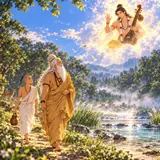
Scene 1 of 2 · Vishvamitra’s sister Satyavati rises to heaven and becomes the holy river Kaushiki, flowing from the Himalaya.
दिव्या पुण्योदका रम्या हिमवन्तमुपाश्रिता । लोकस्य हितकार्यार्थं प्रवृत्ता भगिनी मम ॥ ९ ॥
“Divine, holy of water, lovely, resting on the Himalaya, my sister flowed forth for the good of the world.
“दिव्य, पवित्र जल वाली, सुंदर, हिमालय पर टिकी हुई मेरी बहन संसार के कल्याण के लिए बह निकली।
CommentaryNot scripture Her waters are holy, flowing from the Himalaya “for the good of the world”. The Kaushiki is today’s Kosi river, which flows from Nepal into Bihar.
Scene 1 of 2 · Vishvamitra’s sister Satyavati rises to heaven and becomes the holy river Kaushiki, flowing from the Himalaya.
ततोऽहं हिमवत्पार्श्वे वसामि नियतः सुखम् । भगिन्यां स्नेहसंयुक्तः कौशिक्यां रघुनन्दन ॥ १० ॥
“So I live happily and disciplined on the slope of the Himalaya, out of love for my sister Kaushiki, delight of the Raghus.
“इसलिए रघुनंदन, मैं अपनी बहन कौशिकी के प्रेम के कारण हिमालय की ढलान पर सुख से और संयम से रहता हूँ।
CommentaryNot scripture “Out of love for my sister” Vishvamitra lives on the Himalayan slope beside her. A fierce sage, and a loving brother. This tender detail reveals a gentle side of Vishvamitra.
Scene 1 of 2 · Vishvamitra’s sister Satyavati rises to heaven and becomes the holy river Kaushiki, flowing from the Himalaya.
सा तु सत्यवती पुण्या सत्ये धर्मे प्रतिष्ठिता । पतिव्रता महाभागा कौशिकी सरितां वरा ॥ ११ ॥
“That holy Satyavati, established in truth and dharma, devoted to her husband, most fortunate, is Kaushiki, best of rivers.
“वह पवित्र सत्यवती, जो सत्य और धर्म में स्थित, पतिव्रता और अत्यंत भाग्यशाली थी, नदियों में श्रेष्ठ कौशिकी है।
CommentaryNot scripture Satyavati is “established in truth and dharma”, devoted to her husband. Her name means “truthful”. As a river, she remains what she was.
Scene 1 of 2 · Vishvamitra’s sister Satyavati rises to heaven and becomes the holy river Kaushiki, flowing from the Himalaya.
अहं हि नियमाद्राम हित्वा तां समुपागतः । सिद्धाश्रममनुप्राप्तः सिद्धोऽस्मि तव तेजसा ॥ १२ ॥
“I left her, Rama, because of my vow, and came to Siddhashrama; and by your power I have succeeded.
“राम, अपने व्रत के कारण मैं उसे छोड़कर सिद्धाश्रम आया; और तुम्हारे प्रभाव से मैं सफल हुआ।
CommentaryNot scripture He left her for his vow at Siddhashrama, and now “by your power I have succeeded”. Vishvamitra gives Rama the credit. A great teacher honours his student’s achievement.
Scene 1 of 2 · Vishvamitra’s sister Satyavati rises to heaven and becomes the holy river Kaushiki, flowing from the Himalaya.
एषा राम ममोत्पत्तिः स्वस्य वंशस्य कीर्तिता । देशस्य च महाबाहो यन्मां त्वं परिपृच्छसि ॥ १३ ॥
“This, Rama, is my origin and that of my own line, and of the country you asked me about, mighty-armed one.
“महाबाहु राम, यह मेरा और मेरे वंश का उद्गम है, और उस देश का भी जिसके बारे में तुमने पूछा था।
CommentaryNot scripture The story of the land, his family and himself is complete. Rama asked one question; the answer was three sargas of history.
Scene 1 of 2 · Vishvamitra’s sister Satyavati rises to heaven and becomes the holy river Kaushiki, flowing from the Himalaya.
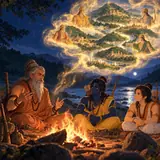
गतोऽर्धरात्रः काकुत्स्थ कथाः कथयतो मम । निद्रामभ्येहि भद्रं ते मा भूद् विघ्नोऽध्वनीह नः ॥ १४ ॥
“Half the night has passed, Kakutstha, while I have been telling stories. Go to sleep, bless you, so that there may be no hindrance on our road.
“काकुत्स्थ, कथाएँ कहते-कहते आधी रात बीत गई है। सो जाओ, तुम्हारा कल्याण हो, ताकि हमारी यात्रा में कोई बाधा न हो।
CommentaryNot scripture Half the night has passed. “Go to sleep, so there may be no hindrance on our road.” The storyteller notices the late hour and sends his listeners to bed.
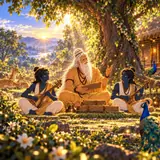
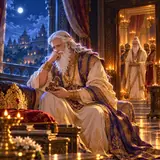
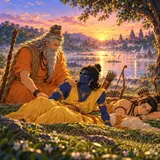
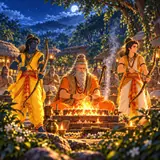
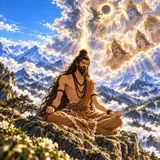
Scene 2 of 2 · Midnight on the Shona: the trees still, the sky full of stars like eyes, the moon rising as the camp falls asleep.
निष्पन्दास्तरवः सर्वे निलीना मृगपक्षिणः । नैशेन तमसा व्याप्ता दिशश्च रघुनन्दन ॥ १५ ॥
“All the trees are motionless; the beasts and birds have hidden; the directions are covered by the darkness of night, delight of the Raghus.
“सब वृक्ष निश्चल हैं; पशु और पक्षी छिप गए हैं; रघुनंदन, दिशाएँ रात के अंधकार से ढक गई हैं।
CommentaryNot scripture Then Vishvamitra describes the night: trees motionless, animals hidden, darkness everywhere. One of the most beautiful night passages in the Bala Kanda begins.
Scene 2 of 2 · Midnight on the Shona: the trees still, the sky full of stars like eyes, the moon rising as the camp falls asleep.
शनैर्विसृज्यते संध्या नभो नेत्रैरिवावृतम् । नक्षत्रतारागहनं ज्योतिर्भिरवभासते ॥ १६ ॥
“Slowly the twilight is let go; the sky, as if covered with eyes, thick with constellations and stars, shines with lights.
“धीरे-धीरे संध्या बीत रही है; नक्षत्रों और तारों से भरा आकाश मानो आँखों से ढका हुआ प्रकाश से चमक रहा है।
CommentaryNot scripture The sky “as if covered with eyes” (nayanair iva ): the stars are eyes looking down. A striking image of a starry Indian night.
Scene 2 of 2 · Midnight on the Shona: the trees still, the sky full of stars like eyes, the moon rising as the camp falls asleep.
उत्तिष्ठते च शीतांशुः शशी लोकतमोनुदः । ह्लादयन् प्राणिनां लोके मनांसि प्रभया स्वया ॥ १७ ॥
“And the cool-rayed moon is rising, dispeller of the world’s darkness, gladdening the hearts of creatures in the world with its light.
“और शीतल किरणों वाला चंद्रमा उदय हो रहा है, संसार के अंधकार को दूर करता, अपने प्रकाश से संसार के प्राणियों के मन को प्रसन्न करता हुआ।
CommentaryNot scripture The cool-rayed moon rises and gladdens every creature’s heart. After the darkness, a soft light.
Scene 2 of 2 · Midnight on the Shona: the trees still, the sky full of stars like eyes, the moon rising as the camp falls asleep.
नैशानि सर्वभूतानि प्रचरन्ति ततस्ततः । यक्षराक्षससंघाश्च रौद्राश्च पिशिताशनाः ॥ ॥ १८ ॥
“All the beings of the night are roaming here and there, hosts of yakshas and rakshasas, fierce eaters of flesh.”
“रात के सब प्राणी इधर-उधर घूम रहे हैं, यक्षों और राक्षसों के समूह, भयानक मांसभक्षी।”
CommentaryNot scripture But the night also belongs to “beings of the night”: yakshas and rakshasas roam. The poetry of beauty ends with a quiet warning.
Scene 2 of 2 · Midnight on the Shona: the trees still, the sky full of stars like eyes, the moon rising as the camp falls asleep.
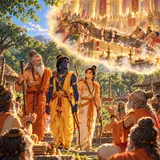
एवमुक्त्वा महातेजा विरराम महामुनिः । साधुसाध्विति तं सर्वे मुनयो ह्यभ्यपूजयन् ॥ १९ ॥
Having said this, the radiant great sage fell silent, and all the sages honoured him: “Well said, well said!
यह कहकर तेजस्वी महामुनि चुप हो गए, और सब मुनियों ने उनका सम्मान किया: “बहुत अच्छा, बहुत अच्छा!
CommentaryNot scripture The sages praise Vishvamitra: “Well said!” They enjoyed the storytelling as much as the princes.
Scene 2 of 2 · Midnight on the Shona: the trees still, the sky full of stars like eyes, the moon rising as the camp falls asleep.
कुशिकानामयं वंशो महान् धर्मपरः सदा । ब्रह्मोपमा महात्मानः कुशवंश्या नरोत्तमाः ॥ २० ॥
“This line of the Kushikas is great and always devoted to dharma. The great-souled men of Kusha’s line are like Brahma, the best of men.
“कुशिकों का यह वंश महान है और सदा धर्म में लगा रहता है। कुश के वंश के महात्मा पुरुष ब्रह्मा जैसे, पुरुषों में श्रेष्ठ हैं।
CommentaryNot scripture They praise the Kushika line: great, devoted to dharma, “like Brahma”. The family that Vishvamitra described is honoured by all.
Scene 2 of 2 · Midnight on the Shona: the trees still, the sky full of stars like eyes, the moon rising as the camp falls asleep.
विशेषेण भवानेव विश्वामित्र महायशः । कौशिकी सरितां श्रेष्ठा कुलोद्योतकरी तव ॥ २१ ॥
“And you above all, glorious Vishvamitra. Kaushiki, best of rivers, brings light to your family.”
“और यशस्वी विश्वामित्र, आप तो सबसे बढ़कर। नदियों में श्रेष्ठ कौशिकी आपके कुल को प्रकाशित करती है।”
CommentaryNot scripture “Kaushiki, best of rivers, brings light to your family.” The sister who became a river adds glory to the family of the brother who became a sage.
Scene 2 of 2 · Midnight on the Shona: the trees still, the sky full of stars like eyes, the moon rising as the camp falls asleep.
मुदितैर्मुनिशार्दूलैः प्रशस्तः कुशिकात्मजः । निद्रामुपागमच्छ्रीमानस्तंगत इवांशुमान् ॥ २२ ॥
Praised by the joyful tigers among sages, the glorious son of Kushika went to sleep, like the sun when it has set.
प्रसन्न मुनिसिंहों से प्रशंसा पाकर कुशिक के यशस्वी पुत्र अस्त हुए सूर्य की तरह सो गए।
CommentaryNot scripture Vishvamitra sleeps “like the sun when it has set”. Even in sleep, the sage is compared to light.
Scene 2 of 2 · Midnight on the Shona: the trees still, the sky full of stars like eyes, the moon rising as the camp falls asleep.
रामोऽपि सहसौमित्रिः किञ्चिदागतविस्मयः । प्रशस्य मुनिशार्दूलं निद्रां समुपसेवते ॥ २३ ॥
Rama too, with Saumitri, somewhat filled with wonder, praised the tiger among sages and went to sleep.
राम भी सौमित्रि के साथ कुछ विस्मय से भरे, मुनिसिंह की प्रशंसा करके सो गए।
CommentaryNot scripture Rama and Lakshmana sleep, “somewhat filled with wonder” (kinchid vismayam agatah ). The boys go to bed amazed by the stories they have heard. Anyone who has listened to a grandparent’s tales late at night knows this feeling.
Scene 2 of 2 · Midnight on the Shona: the trees still, the sky full of stars like eyes, the moon rising as the camp falls asleep.