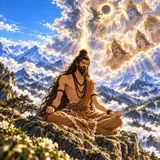
Bala Kanda · Sarga 23 of 77 · 22 verses
Dawn, and the Hermitage of Kama
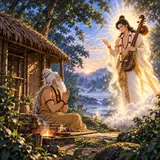
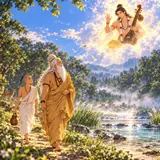
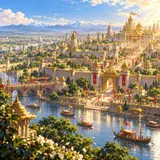
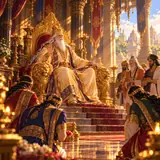
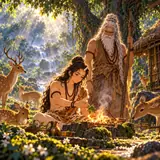
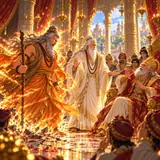
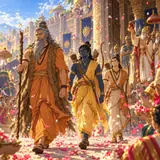
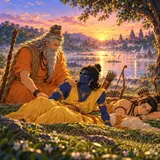
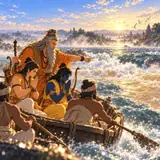
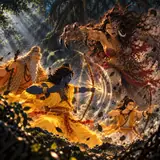
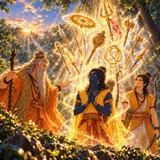
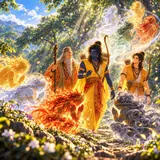
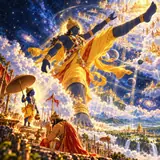
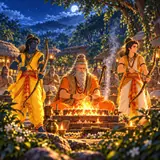
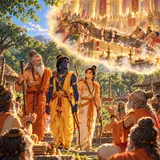
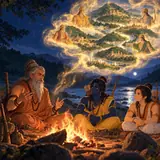
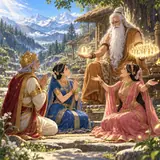
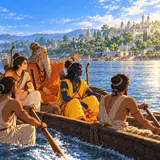
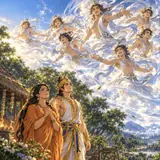
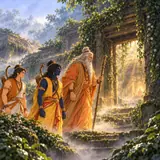
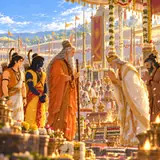
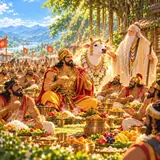
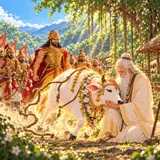
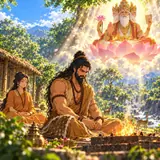
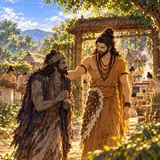
At dawn Vishvamitra wakes Rama on his bed of leaves: “Rama, fortunate son of Kausalya, the eastern twilight is breaking. Rise, tiger among men; the daily rites to the gods must be done.” The brothers bathe, offer water, recite their prayers, salute the sage and set out. At the meeting of the Sarayu with the heavenly three-pathed Ganga they see a holy hermitage where sages have practised austerity for thousands of years, and ask whose it is.
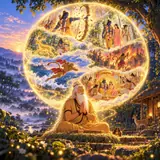
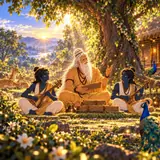
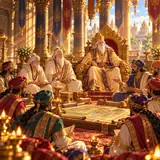
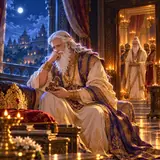
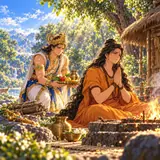
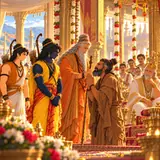
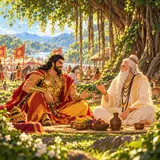
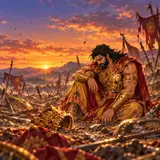
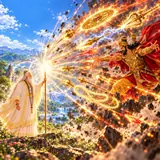
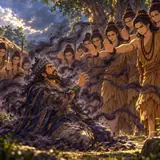
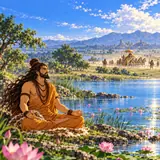
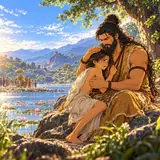
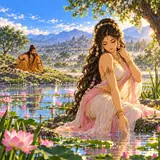
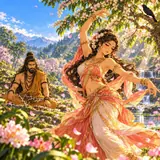
Vishvamitra smiles and tells them: Kama, the god of desire, once had a body. He tried to disturb Shiva (Sthanu) as Shiva practised austerity here after his marriage; Shiva roared “Hum!” and burned him with a glance, and every limb fell from his body. From then Kama was called Ananga, the bodiless, and the land where he let fall his body (anga) is called Anga. The sages here are the disciples of those of old. The travellers spend the night there, welcomed by the sages, who recognise them by the long sight of their austerity.
Press › to begin with verse 1.
प्रभातायां तु शर्वर्यां विश्वामित्रो महामुनिः । अभ्यभाषत काकुत्स्थं शयानं पर्णसंस्तरे ॥ १ ॥
When the night had dawned, the great sage Vishvamitra spoke to Kakutstha, lying on his bed of leaves:
जब रात बीती और सवेरा हुआ, तब महामुनि विश्वामित्र ने पत्तों के बिछौने पर लेटे काकुत्स्थ (राम) से कहा:
Commentary on the whole sarga
Dawn, and the Hermitage of Kama 1 min read.
Read the commentary CommentaryNot scripture Dawn after the first night in the open. Rama lies on a bed of leaves (parna-samstara ). The prince is already learning the forest life he will one day live for fourteen years.
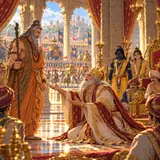
Scene 1 of 2 · At dawn Vishvamitra wakes Rama: “Rise, son of Kausalya, the eastern sky is turning bright.”
कौसल्या सुप्रजा राम पूर्वा संध्या प्रवर्तते । उत्तिष्ठ नरशार्दूल कर्तव्यं दैवमाह्निकम् ॥ २ ॥
“Rama, fortunate son of Kausalya, the eastern twilight is beginning. Rise, tiger among men; the daily rites to the gods must be done.”
“कौसल्या के सौभाग्यशाली पुत्र राम, पूर्व दिशा में संध्या आरंभ हो रही है। पुरुषसिंह, उठो; देवताओं के नित्य कर्म करने हैं।”
CommentaryNot scripture One of the most famous verses in Indian devotion: kausalya supraja rama purva sandhya pravartate . “Rama, fortunate son of Kausalya, the eastern twilight is beginning. Rise.” It opens the Venkatesha Suprabhatam , the dawn hymn sung every morning at Tirumala and in countless homes. A teacher waking his student has become the world’s wake-up call to God.
Scene 1 of 2 · At dawn Vishvamitra wakes Rama: “Rise, son of Kausalya, the eastern sky is turning bright.”
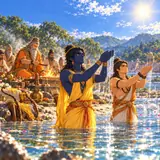
तस्यर्षेः परमोदारं वचः श्रुत्वा नरोत्तमौ । स्नात्वा कृतोदकौ वीरौ जेपतुः परमं जपम् ॥ ३ ॥
Hearing the sage’s most noble words, the two best of men bathed, offered water, and recited the supreme prayer.
मुनि के अत्यंत उत्तम वचन सुनकर दोनों श्रेष्ठ पुरुषों ने स्नान किया, जल अर्पित किया, और परम जप (गायत्री) किया।
CommentaryNot scripture They bathe, offer water, and recite “the supreme prayer” (paramam japyam ), understood as the Gayatri mantra. The princes keep their daily practice even on the road. Discipline travels with them.
Scene 1 of 2 · At dawn Vishvamitra wakes Rama: “Rise, son of Kausalya, the eastern sky is turning bright.”
कृताह्निकौ महावीर्यौ विश्वामित्रं तपोधनम् । अभिवाद्यातिसंहृष्टौ गमनायाभितस्थतुः ॥ ४ ॥
Their daily rites done, the two mighty ones saluted Vishvamitra, rich in austerity, and with great joy stood ready to go.
नित्य कर्म पूरे करके दोनों बलवान भाइयों ने तप के धनी विश्वामित्र को प्रणाम किया और बड़े आनंद से चलने को तैयार हो गए।
CommentaryNot scripture Rites done, they salute their teacher and stand ready “with great joy”. No complaints about the hard bed or the early start. Their eagerness is part of their character.
Scene 1 of 2 · At dawn Vishvamitra wakes Rama: “Rise, son of Kausalya, the eastern sky is turning bright.”
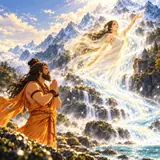
तौ प्रयान्तौ महावीर्यौ दिव्यां त्रिपथगां नदीम् । ददृशाते ततस्तत्र सरय्वाः संगमे शुभे ॥ ५ ॥
As the two mighty ones went on, they saw there the divine river that flows in three paths, at its lovely confluence with the Sarayu.
आगे चलते हुए दोनों बलवानों ने वहाँ तीन मार्गों में बहने वाली दिव्य नदी (गंगा) को सरयू के साथ उसके सुंदर संगम पर देखा।
CommentaryNot scripture They reach the confluence of the Ganga, “the river of three paths” (tri-patha-ga : she flows in heaven, on earth and in the underworld), with the Sarayu. Confluences (sangama ) are among the holiest places in India.
Scene 1 of 2 · At dawn Vishvamitra wakes Rama: “Rise, son of Kausalya, the eastern sky is turning bright.”
तत्राश्रमपदं पुण्यमृषीणां भावितात्मनाम् । बहुवर्षसहस्राणि तप्यतां परमं तपः ॥ ६ ॥
There was a holy hermitage of sages of purified soul, who had practised the highest austerity for many thousands of years.
वहाँ शुद्ध आत्मा वाले ऋषियों का एक पवित्र आश्रम था, जिन्होंने हज़ारों वर्षों तक परम तप किया था।
CommentaryNot scripture A hermitage of sages who practised austerity for thousands of years. The journey becomes a pilgrimage: each stop has a sacred story.
Scene 1 of 2 · At dawn Vishvamitra wakes Rama: “Rise, son of Kausalya, the eastern sky is turning bright.”
तं दृष्ट्वा परमप्रीतौ राघवौ पुण्यमाश्रमम् । ऊचतुस्तं महात्मानं विश्वामित्रमिदं वचः ॥ ७ ॥
Seeing that holy hermitage, the two Raghavas, greatly pleased, said to the great-souled Vishvamitra:
उस पवित्र आश्रम को देखकर दोनों राघव अत्यंत प्रसन्न होकर महात्मा विश्वामित्र से बोले:
CommentaryNot scripture The brothers are “greatly pleased”. They are curious young travellers. Their delight in new places is one of the charms of these sargas.
Scene 1 of 2 · At dawn Vishvamitra wakes Rama: “Rise, son of Kausalya, the eastern sky is turning bright.”
कस्यायमाश्रमः पुण्यः को न्वस्मिन्वसते पुमान् । भगवञ्श्रोतुमिच्छावः परं कौतूहलं हि नौ ॥ ८ ॥
“Whose holy hermitage is this? Who lives in it? Lord, we wish to hear; our curiosity is great.”
“यह पवित्र आश्रम किसका है? इसमें कौन रहता है? भगवन, हम सुनना चाहते हैं; हमें बड़ी उत्सुकता है।”
CommentaryNot scripture “Whose hermitage is this? Our curiosity is great.” The boys ask questions, and Vishvamitra answers with stories. This is how the Bala Kanda becomes a treasury of old legends: a teacher answering two curious students on a long walk.
Scene 1 of 2 · At dawn Vishvamitra wakes Rama: “Rise, son of Kausalya, the eastern sky is turning bright.”
तयोस्तद्वचनं श्रुत्वा प्रहस्य मुनिपुङ्गवः । अब्रवीच्छ्रूयतां राम यस्यायं पूर्व आश्रमः ॥ ९ ॥
Hearing their words, the foremost sage laughed and said: “Hear, Rama, whose hermitage this was of old.
उनकी बात सुनकर मुनिश्रेष्ठ हँसे और बोले: “राम, सुनो, पुराने समय में यह आश्रम किसका था।
CommentaryNot scripture The sage laughs (prahasya ). He enjoys their eagerness. The stern Vishvamitra of the court is a warm teacher on the road.
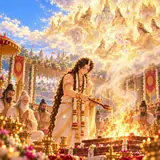
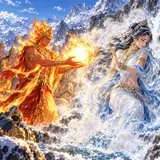
Scene 2 of 2 · At the meeting of the Ganga and the Sarayu, the sage tells how Shiva’s gaze burned Kama, the god of love.
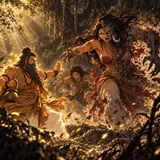
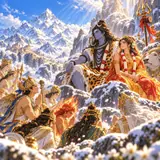
कन्दर्पो मूर्तिमानासीत्काम इत्युच्यते बुधैः । तपस्यन्तमिह स्थाणुं नियमेन समाहितम् ॥ १० ॥
कृतोद्वाहं तु देवेशं गच्छन्तं समरुद्गणम् । धर्षयामास दुर्मेधा हुंकृतश्च महात्मना ॥ ११ ॥
“Kandarpa once had a body; the wise call him Kama. The foolish one assaulted Sthanu, lord of the gods, who after his marriage was practising austerity here with the Maruts, collected in his discipline. The great-souled one roared ‘Hum!’ at him,
“पहले कंदर्प का शरीर था; ज्ञानी उसे काम कहते हैं। उस मूर्ख ने देवताओं के स्वामी स्थाणु (शिव) पर प्रहार किया, जो विवाह के बाद यहाँ मरुतों के साथ अपने नियम में एकाग्र होकर तप कर रहे थे। महात्मा शिव ने उस पर ‘हुं’ का गर्जन किया,
CommentaryNot scripture Kama (also called Kandarpa), the god of love, once had a body. He attacked Shiva with his flower-arrows while Shiva was in deep meditation. Shiva roared “Hum!” at him. The story is famous: love trying to disturb perfect stillness.
Scene 2 of 2 · At the meeting of the Ganga and the Sarayu, the sage tells how Shiva’s gaze burned Kama, the god of love.
अवध्यातश्च रुद्रेण चक्षुषा रघुनन्दन । व्यशीर्यन्त शरीरात् स्वात् सर्वगात्राणि दुर्मतेः ॥ १२ ॥
“and, looked upon by Rudra’s eye, delight of the Raghus, all the limbs of that fool fell away from his body.
“और रघुनंदन, रुद्र की आँख से देखे जाने पर उस मूर्ख के सब अंग उसके शरीर से गिर पड़े।
CommentaryNot scripture Shiva’s eye looks at Kama, and his limbs fall from his body. Later tradition makes it Shiva’s third eye, whose fire burns Kama to ash. Valmiki says simply: “looked upon by Rudra’s eye”.
Scene 2 of 2 · At the meeting of the Ganga and the Sarayu, the sage tells how Shiva’s gaze burned Kama, the god of love.
तस्य गात्रं हतं तत्र निर्दग्धस्य महात्मना । अशरीरः कृतः कामः क्रोधाद् देवेश्वरेण ह ॥ १३ ॥
“His body was destroyed there, burned by the great-souled one; Kama was made bodiless by the lord of the gods in his anger.
“वहीं उसका शरीर नष्ट हो गया, उन महात्मा द्वारा जला दिया गया; क्रोधित देवेश्वर ने काम को शरीर-रहित कर दिया।
CommentaryNot scripture Kama’s body is destroyed. Love itself lives on, but without form. This is a poetic way of saying that desire is everywhere, yet nowhere you can touch it.
Scene 2 of 2 · At the meeting of the Ganga and the Sarayu, the sage tells how Shiva’s gaze burned Kama, the god of love.
अनङ्ग इति विख्यातस्तदा प्रभृति राघव । स चाङ्गविषयः श्रीमान् यत्राङ्गं स मुमोच ह ॥ १४ ॥
“From that time, Raghava, he has been known as Ananga, and that glorious country where he let fall his body (anga) is the land of Anga.
“राघव, उसी समय से वह अनंग (बिना अंग वाला) कहलाता है, और वह यशस्वी देश, जहाँ उसने अपना अंग (शरीर) गिराया, अंग देश कहलाता है।
CommentaryNot scripture From then on Kama is Ananga , “the bodiless one”, and the land where his body (anga ) fell is called Anga. Indian place-names often come with such legends. This is the same Anga whose king was Romapada.
Scene 2 of 2 · At the meeting of the Ganga and the Sarayu, the sage tells how Shiva’s gaze burned Kama, the god of love.
तस्यायमाश्रमः पुण्यस्तस्येमे मुनयः पुरा । शिष्या धर्मपरा वीर तेषां पापं न विद्यते ॥ १५ ॥
“This is his holy hermitage, and these sages are disciples of his (Shiva’s) sages of old, devoted to dharma, hero; no sin is in them.
“यह उनका पवित्र आश्रम है, और वीर, ये मुनि उनके (शिव के) पुराने मुनियों के शिष्य हैं, धर्म में लगे हुए; इनमें कोई पाप नहीं है।
CommentaryNot scripture The sages here are disciples of Shiva’s ancient sages, “without sin”. The hermitage carries a lineage. Holy places in India are holy because generations have kept them so.
Scene 2 of 2 · At the meeting of the Ganga and the Sarayu, the sage tells how Shiva’s gaze burned Kama, the god of love.
इहाद्य रजनीं राम वसेम शुभदर्शन । पुण्ययोः सरितोर्मध्ये श्वस्तरिष्यामहे वयम् ॥ १६ ॥
“Let us stay here tonight, Rama, you who are lovely to see, between the two holy rivers; tomorrow we will cross.
“सुंदर राम, आज रात हम यहीं दोनों पवित्र नदियों के बीच रहें; कल हम पार करेंगे।
CommentaryNot scripture “Let us stay tonight between the two holy rivers.” Vishvamitra calls Rama shubha-darshana , “lovely to see”. The sage who sees past and future also sees the beauty of his student.
Scene 2 of 2 · At the meeting of the Ganga and the Sarayu, the sage tells how Shiva’s gaze burned Kama, the god of love.
अभिगच्छामहे सर्वे शुचयः पुण्यमाश्रमम् । इह वासः परोऽस्माकं सुखं वस्त्यामहे निशाम् ॥ १७ ॥
“Let us all, purified, go into the holy hermitage. Staying here is best for us; we shall pass the night happily,
“हम सब पवित्र होकर इस पवित्र आश्रम में चलें। यहाँ रुकना हमारे लिए सबसे अच्छा है; हम रात सुख से बिताएँगे,
CommentaryNot scripture They will enter “purified”, after bathing and prayer. A hermitage is entered with respect. Even a great sage observes the courtesies of arrival.
Scene 2 of 2 · At the meeting of the Ganga and the Sarayu, the sage tells how Shiva’s gaze burned Kama, the god of love.
स्नाताश्च कृतजप्याश्च हुतहव्या नरोत्तम । तेषां संवदतां तत्र तपोदीर्घेण चक्षुषा ॥ १८ ॥
विज्ञाय परमप्रीता मुनयो हर्षमागमन् । अर्घ्यं पाद्यं तथाऽऽतिथ्यं निवेद्य कुशिकात्मजे ॥ १९ ॥
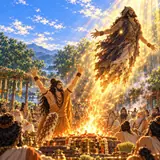
“bathed, having recited our prayers and made our offerings, best of men.” As they talked there, the sages, knowing them by the far-seeing eye of austerity, were greatly pleased and rejoiced. They offered the son of Kushika water for the hands and feet and hospitality,
“स्नान करके, जप करके और आहुति देकर, पुरुषश्रेष्ठ।” जब वे वहाँ बात कर रहे थे, तब तप की दूरदर्शी आँख से उन्हें पहचानकर मुनि अत्यंत प्रसन्न हुए और आनंदित हुए। उन्होंने कुशिक-पुत्र को अर्घ्य, पाद्य और आतिथ्य दिया,
CommentaryNot scripture The resident sages recognise them “by the far-seeing eye of austerity” before they even enter. Spiritual sight works both ways. Then the hospitality: water, rites of welcome, joy.
Scene 2 of 2 · At the meeting of the Ganga and the Sarayu, the sage tells how Shiva’s gaze burned Kama, the god of love.
रामलक्ष्मणयोः पश्चादकुर्वन्नतिथिक्रियाम् । सत्कारं समनुप्राप्य कथाभिरभिरञ्जयन् ॥ २० ॥
and afterwards performed the rites of welcome for Rama and Lakshmana. Having received this honour, and delighting them with stories,
और फिर राम और लक्ष्मण का स्वागत-सत्कार किया। यह सम्मान पाकर, और कथाओं से उन्हें आनंदित करते हुए,
CommentaryNot scripture Rama and Lakshmana are welcomed too. Two princes, still boys, honoured by sages. The world is learning who they are.
Scene 2 of 2 · At the meeting of the Ganga and the Sarayu, the sage tells how Shiva’s gaze burned Kama, the god of love.
यथार्हमजपन् संध्यामृषयस्ते समाहिताः । तत्र वासिभिरानीता मुनिभिः सुव्रतैः सह ॥ २१ ॥
न्यवसन् सुसुखं तत्र कामाश्रमपदे तथा । कथाभिरभिरामभिरभिरमौ नृपात्मजौ । रमयामास धर्मात्मा कौशिको मुनिपुङ्गवः ॥ २२ ॥
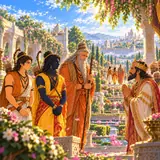
the sages, collected, recited the twilight prayers as was due. Brought there by the residents with the sages of good vows, they lived very happily in that hermitage of Kama. And the righteous Kaushika, best of sages, delighted the two princes with charming stories.
संयमी मुनियों ने विधिवत संध्या-वंदन किया। वहाँ के निवासी उत्तम व्रत वाले मुनियों के साथ उन्हें ले गए, और वे काम के उस आश्रम में बड़े सुख से रहे। और धर्मात्मा कौशिक, मुनियों में श्रेष्ठ, ने दोनों राजकुमारों को मनोहर कथाओं से आनंदित किया।
CommentaryNot scripture The evening prayers, the stories, a happy night in Kama’s hermitage. Vishvamitra delights the princes with “charming stories” (kathabhih abhiramabhih ). The journey is an education in the old tales of India, and the next sarga brings the first danger.
Scene 2 of 2 · At the meeting of the Ganga and the Sarayu, the sage tells how Shiva’s gaze burned Kama, the god of love.