Bala Kanda · Sarga 28 of 77 · 22 verses
The Withdrawals, and a Grove Ahead
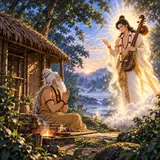
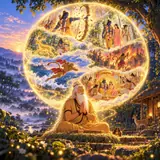
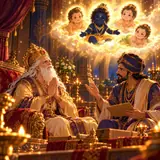
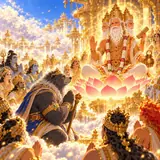
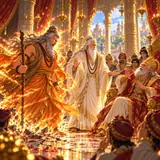
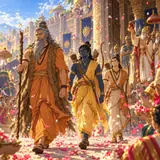
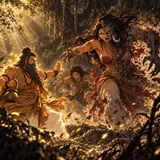
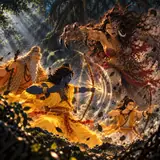
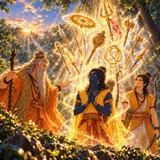
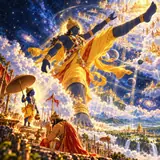
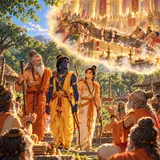
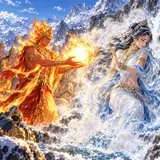
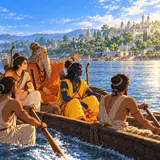
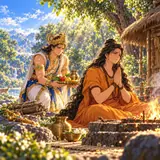
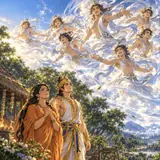
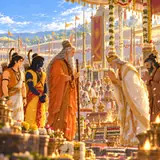
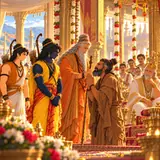
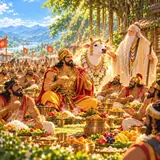
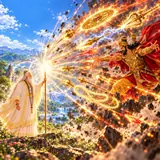
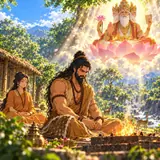
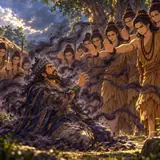
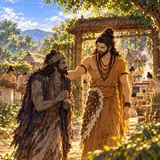
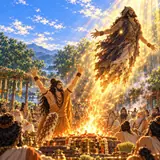
As they walk, Rama asks for the samharas, the powers that withdraw and control the weapons he has received. Vishvamitra names them: Satyavanta, Satyakirti, Dhrishta, Rabhasa, Pratiharatara, Paranmukha, Avanmukha, Lakshya and Alakshya, and many more, ending with Jrimbhaka, Sarvanabha, Panthana and Varuna, all sons of Krishashva. They appear in shining bodies, some like embers, some like smoke, some like the sun and moon, palms joined: “What shall we do?” Rama says: “Go as you please; come to my mind and help me when there is work to do.” They circle him and depart.
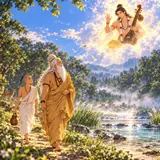
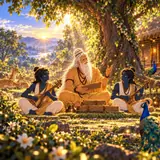
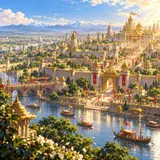
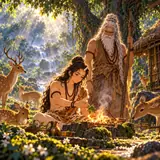
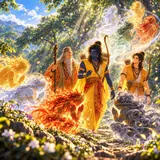
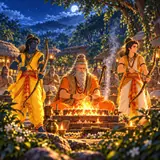
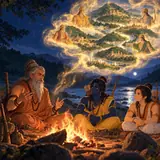
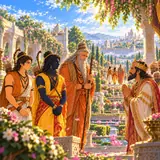
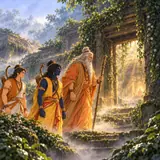
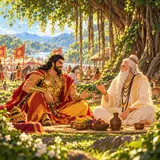
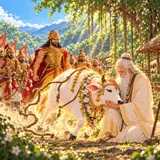
Then Rama sees, near a mountain, a grove dark as a cloud, full of deer and lovely birdsong, and senses from the ease of the land that they have left the frightening wilderness. “Whose hermitage is this? Where is the place of your sacrifice, which I must guard, and where the rakshasas must be killed?”
Press › to begin with verse 1.
प्रतिगृह्य ततोऽस्त्राणि प्रहृष्टवदनः शुचिः । गच्छन्नेव च काकुत्स्थो विश्वामित्रमथाब्रवीत् ॥ १ ॥
Having received the weapons, pure and with a joyful face, Kakutstha said to Vishvamitra as they walked on:
अस्त्र पाकर पवित्र और प्रसन्न मुख वाले काकुत्स्थ ने आगे चलते हुए विश्वामित्र से कहा:
Commentary on the whole sarga
The Withdrawals, and a Grove Ahead 1 min read.
Read the commentary CommentaryNot scripture Rama speaks “as they walked on” (pathi gacchan ). Teaching happens on the road. The whole of these sargas is a walking classroom.
Scene 1 of 2 · Rama asks for the powers that call weapons back; they come like embers, smoke, moon and sun, and bow to him.
गृहीतास्त्रोऽस्मि भगवन् दुराधर्षः सुरैरपि । अस्त्राणां त्वहमिच्छामि संहारान् मुनिपुङ्गव ॥ २ ॥
“Lord, I have received the weapons and am now hard to overcome even by the gods. But, best of sages, I wish to have the powers that withdraw the weapons.”
“भगवन, मैंने अस्त्र पा लिए हैं और अब देवताओं के लिए भी कठिनाई से जीता जा सकता हूँ। पर मुनिश्रेष्ठ, मैं उन शक्तियों को भी पाना चाहता हूँ जो अस्त्रों को लौटाती हैं।”
CommentaryNot scripture A remarkable request: Rama asks for the samharas , the powers that withdraw weapons once launched. Having received the power to destroy, he asks at once for the power to stop. This is a deep sign of his character: he wants control over his strength, not only strength.
Scene 1 of 2 · Rama asks for the powers that call weapons back; they come like embers, smoke, moon and sun, and bow to him.
एवं ब्रुवति काकुत्स्थे विश्वामित्रो महातपाः । संहारान् व्याजहाराथ धृतिमान् सुव्रतः शुचिः ॥ ३ ॥
As Kakutstha said this, Vishvamitra of great austerity, steadfast, of good vows and pure, imparted the withdrawals:
काकुत्स्थ के ऐसा कहने पर महातपस्वी, दृढ़, उत्तम व्रत वाले और पवित्र विश्वामित्र ने संहार (लौटाने के मंत्र) प्रदान किए:
CommentaryNot scripture Vishvamitra gives them at once. The teacher is pleased: a student who asks for restraint is a student who can be trusted with power.
Scene 1 of 2 · Rama asks for the powers that call weapons back; they come like embers, smoke, moon and sun, and bow to him.
सत्यवन्तं सत्यकीर्तिं धृष्टं रभसमेव च । प्रतिहारतरं नाम पराङ्मुखमवाङ्मुखम् ॥ ४ ॥
“Satyavanta, Satyakirti, Dhrishta and Rabhasa, the one named Pratiharatara, Paranmukha and Avanmukha,
“सत्यवंत, सत्यकीर्ति, धृष्ट और रभस, प्रतिहारतर नाम का, पराङ्मुख और अवाङ्मुख,
CommentaryNot scripture The names begin: Satyavanta (“truthful”), Satyakirti (“of true fame”), Dhrishta (“bold”), Rabhasa (“swift”), and others. Many names describe turning away (paranmukha , “face turned away”) and turning downward. These are the powers that make a weapon turn back.
Scene 1 of 2 · Rama asks for the powers that call weapons back; they come like embers, smoke, moon and sun, and bow to him.
लक्ष्यालक्ष्याविमौ चैव दृढनाभसुनाभकौ । दशाक्षशतवक्त्रौ च दशशीर्षशतोदरौ ॥ ५ ॥
“these two, Lakshya and Alakshya, Dridhanabha and Sunabha, Dashaksha and Shatavaktra, Dashashirsha and Shatodara,
“ये दोनों लक्ष्य और अलक्ष्य, दृढ़नाभ और सुनाभ, दशाक्ष और शतवक्त्र, दशशीर्ष और शतोदर,
CommentaryNot scripture Lakshya and Alakshya (“seen” and “unseen”), and names with “ten eyes”, “a hundred faces”, “ten heads”, “a hundred bellies”. The names sound like the descriptions of strange divine beings, which is what the weapons are.
Scene 1 of 2 · Rama asks for the powers that call weapons back; they come like embers, smoke, moon and sun, and bow to him.
पद्मनाभमहानाभौ दुन्दुनाभसुनाभकौ । ज्योतिषं शकुनं चैव नैरास्यविमलावुभौ ॥ ६ ॥
“Padmanabha and Mahanabha, Dundunabha and Sunabha, Jyotisha and Shakuna, and the two Nairasya and Vimala,
“पद्मनाभ और महानाभ, दुंदुनाभ और सुनाभ, ज्योतिष और शकुन, और दोनों नैरास्य और विमल,
CommentaryNot scripture Padmanabha (“lotus-navel”, a name of Vishnu), Jyotisha (“light”), Vimala (“stainless”). Reciters chant this list as a protective prayer; the names themselves are felt to carry power.
Scene 1 of 2 · Rama asks for the powers that call weapons back; they come like embers, smoke, moon and sun, and bow to him.
यौगन्धरविनिद्रौ च दैत्यप्रमथनौ तथा । शुचिबाहुर्महाबाहुर्निष्कलिर्विरुचस्तथा । सार्चिर्माली धृतिमाली वृत्तिमान् रुचिरस्तथा ॥ ७ ॥
“Yaugandhara and Vinidra, Daitya and Pramathana, Shuchibahu and Mahabahu, Nishkali and Viruca, Sarchirmali, Dhritimali, Vrittiman and Rucira,
“यौगंधर और विनिद्र, दैत्य और प्रमथन, शुचिबाहु और महाबाहु, निष्कलि और विरुच, सार्चिर्माली, धृतिमाली, वृत्तिमान और रुचिर,
CommentaryNot scripture More names: “sleepless”, “pure-armed”, “garlanded with flame”, “garlanded with steadiness”. The list is like a gallery of divine figures, each with its own character.
Scene 1 of 2 · Rama asks for the powers that call weapons back; they come like embers, smoke, moon and sun, and bow to him.
पित्र्यः सौमनसश्चैव विधूतमकरावुभौ । परवीरं रतिं चैव धनधान्यौ च राघव ॥ ८ ॥
“Pitrya and Saumanasa, the two Vidhuta and Makara, Paravira and Rati, Dhana and Dhanya, Raghava,
“पित्र्य और सौमनस, दोनों विधूत और मकर, परवीर और रति, धन और धान्य, राघव,
CommentaryNot scripture Pitrya (of the ancestors), Saumanasa (of good heart), Rati (delight), Dhana and Dhanya (wealth and grain). Some names are surprisingly gentle: even withdrawing a weapon can be an act of blessing.
Scene 1 of 2 · Rama asks for the powers that call weapons back; they come like embers, smoke, moon and sun, and bow to him.
कामरूपं कामरुचिं मोहमावरणं तथा । जृम्भकं सर्वनाभं च पन्थनवरुणौ तथा ॥ ९ ॥
“Kamarupa and Kamaruchi, Moha and Avarana, Jrimbhaka and Sarvanabha, Panthana and Varuna.
“कामरूप और कामरुचि, मोह और आवरण, जृंभक और सर्वनाभ, पंथान और वरुण।
CommentaryNot scripture Kamarupa (taking any form), Moha (delusion), Avarana (covering), Jrimbhaka (making one yawn). A weapon that makes the enemy yawn: Valmiki’s imagination is playful as well as grand.
Scene 1 of 2 · Rama asks for the powers that call weapons back; they come like embers, smoke, moon and sun, and bow to him.
कृशाश्वतनयान् राम भास्वरान् कामरूपिणः । प्रतीच्छ मम भद्रं ते पात्रभूतोऽसि राघव ॥ १० ॥
“These sons of Krishashva, Rama, shining and able to take any form, receive from me; blessings on you, you are worthy, Raghava.”
“राम, कृशाश्व के इन तेजस्वी, इच्छा से रूप लेने वाले पुत्रों को मुझसे ग्रहण करो; तुम्हारा कल्याण हो, राघव, तुम योग्य हो।”
CommentaryNot scripture “These sons of Krishashva” again: like the weapons, the withdrawals are living beings. “You are worthy”: Vishvamitra repeats his trust.
Scene 1 of 2 · Rama asks for the powers that call weapons back; they come like embers, smoke, moon and sun, and bow to him.
बाढमित्येव काकुत्स्थः प्रहृष्टेनान्तरात्मना । दिव्यभास्वरदेहाश्च मूर्तिमन्तः सुखप्रदाः ॥ ११ ॥
केचिदङ्गारसदृशाः केचिद् धूमोपमास्तथा । चन्द्रार्कसदृशाः केचित् प्रह्वाञ्जलिपुटास्तथा ॥ १२ ॥
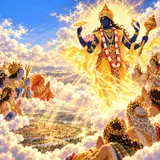
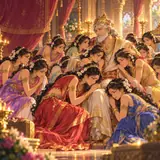
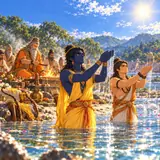
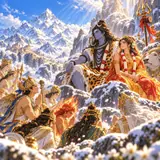
“Gladly,” said Kakutstha with a joyful heart. And they came in divine, shining bodies, embodied and bringing delight; some like burning embers, some like smoke, some like the moon and sun, bowing with joined palms.
“प्रसन्नता से,” काकुत्स्थ ने आनंदित मन से कहा। और वे दिव्य, चमकते शरीरों में, देहधारी और आनंद देने वाले आए; कोई जलते अंगारों जैसे, कोई धुएँ जैसे, कोई चंद्रमा और सूर्य जैसे, हाथ जोड़कर प्रणाम करते हुए।
CommentaryNot scripture They appear in bodies of light: some like burning embers, some like smoke, some like the moon and sun. A beautiful image, painted in a few words. All come with joined palms, bowing to the young prince.
Scene 1 of 2 · Rama asks for the powers that call weapons back; they come like embers, smoke, moon and sun, and bow to him.
रामं प्राञ्जलयो भूत्वाब्रुवन् मधुरभाषिणः । इमे स्म नरशार्दूल शाधि किं करवाम ते ॥ १३ ॥
With joined palms, speaking sweetly, they said to Rama: “Here we are, tiger among men. Command us; what shall we do for you?”
हाथ जोड़कर, मधुर स्वर में उन्होंने राम से कहा: “नरसिंह, हम यहाँ हैं। आज्ञा दीजिए; हम आपके लिए क्या करें?”
CommentaryNot scripture “Here we are. Command us.” The powers of the universe offer service. The scene repeats the last sarga’s, and the repetition deepens it: Rama is lord of both the weapons and their recall.
Scene 1 of 2 · Rama asks for the powers that call weapons back; they come like embers, smoke, moon and sun, and bow to him.
गम्यतामिति तानाह यथेष्टं रघुनन्दनः । मानसाः कार्यकालेषु साहाय्यं मे करिष्यथ ॥ १४ ॥
The delight of the Raghus said to them: “Go as you please. Come to me in the mind at the time of need, and help me.”
रघुनंदन ने उनसे कहा: “जैसी इच्छा हो जाओ। आवश्यकता के समय मन में मेरे पास आना, और मेरी सहायता करना।”
CommentaryNot scripture Rama’s answer is courteous and wise: “Go as you please. Come to me in the mind when I need you.” He does not keep them bound. Power that is free, but loyal, is power that can be trusted.
Scene 1 of 2 · Rama asks for the powers that call weapons back; they come like embers, smoke, moon and sun, and bow to him.
अथ ते राममामन्त्र्य कृत्वा चापि प्रदक्षिणम् । एवमस्त्विति काकुत्स्थमुक्त्वा जग्मुर्यथागतम् ॥ १५ ॥
Then they took leave of Rama, walked around him in reverence, said to Kakutstha “So be it”, and went as they had come.
तब उन्होंने राम से विदा ली, उनकी परिक्रमा की, काकुत्स्थ से कहा “ऐसा ही हो”, और जैसे आए थे वैसे ही चले गए।
CommentaryNot scripture They walk around him in reverence, say “So be it”, and leave. The divine weapons treat Rama as one treats a god or a teacher.
Scene 1 of 2 · Rama asks for the powers that call weapons back; they come like embers, smoke, moon and sun, and bow to him.
स च तान् राघवो ज्ञात्वा विश्वामित्रं महामुनिम् । गच्छन्नेवाथ मधुरं श्लक्ष्णं वचनमब्रवीत् ॥ १६ ॥
Raghava, having come to know them, said to the great sage Vishvamitra as he walked on, in sweet and gentle words:
उन्हें जान लेने के बाद राघव ने आगे चलते हुए महामुनि विश्वामित्र से मधुर और कोमल वचनों में कहा:
CommentaryNot scripture Rama speaks “sweetly and gently” (madhuram shlakshnam ). Having received such power, his speech is softer, not harder. Strength and gentleness grow together in him.
Scene 2 of 2 · Ahead, a grove as dark and green as a cloud rises by the mountain, full of deer and birdsong.
किमेतन्मेघसंकाशं पर्वतस्याविदूरतः । वृक्षखण्डमितो भाति परं कौतूहलं हि मे ॥ १७ ॥
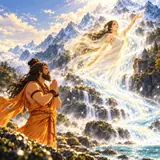
“What is this, like a cloud, not far from the mountain? A grove of trees shines there; my curiosity is great.
“पर्वत से कुछ ही दूर बादल जैसा यह क्या है? वहाँ वृक्षों का एक उपवन चमक रहा है; मुझे बड़ी उत्सुकता है।
CommentaryNot scripture “What is that, like a cloud near the mountain?” A grove so dense and green it looks like a dark cloud. Rama’s curiosity returns. He asks about every place.
Scene 2 of 2 · Ahead, a grove as dark and green as a cloud rises by the mountain, full of deer and birdsong.
दर्शनीयं मृगाकीर्णं मनोहरमतीव च । नानाप्रकारैः शकुनैर्वल्गुभाषैरलङ्कृतम् ॥ १८ ॥
“It is lovely to look at, full of deer and utterly charming, adorned with many kinds of sweetly singing birds.
“यह देखने में सुंदर है, हिरणों से भरा और अत्यंत मनोहर, मधुर गाते अनेक प्रकार के पक्षियों से सजा।
CommentaryNot scripture Deer, birds singing sweetly, great beauty. After Tataka’s dark forest, this place feels like paradise.
Scene 2 of 2 · Ahead, a grove as dark and green as a cloud rises by the mountain, full of deer and birdsong.
निःसृताःस्मो मुनिश्रेष्ठ कान्ताराद् रोमहर्षणात् । अनया त्ववगच्छामि देशस्य सुखवत्तया ॥ १९ ॥
“We have come out of that hair-raising wilderness, best of sages; I know it from the pleasantness of this country.
“मुनिश्रेष्ठ, हम उस रोंगटे खड़े कर देने वाले जंगल से निकल आए हैं; यह मैं इस देश की सुखदता से जानता हूँ।
CommentaryNot scripture “We have come out of that hair-raising wilderness.” Rama knows it by the change in the land: pleasantness returns. He reads the land like a book.
Scene 2 of 2 · Ahead, a grove as dark and green as a cloud rises by the mountain, full of deer and birdsong.
सर्वं मे शंस भगवन् कस्याश्रमपदं त्विदम् । संप्राप्ता यत्र ते पापा ब्रह्मघ्ना दुष्टचारिणः ॥ २० ॥
तव यज्ञस्य विघ्नाय दुरात्मानो महामुने । भगवंस्तस्य को देशः सा यत्र तव याज्ञिकी ॥ २१ ॥
“Tell me everything, lord: whose hermitage is this? Is this where those evil ones came, those killers of brahmanas of wicked conduct, those wicked souls who obstruct your sacrifice, great sage? Lord, which is the place where your sacrifice is held?
“भगवन, मुझे सब बताइए: यह आश्रम किसका है? क्या यहीं वे दुष्ट आते थे, ब्राह्मणों की हत्या करने वाले, दुष्ट आचरण वाले, वे पापात्मा जो आपके यज्ञ में बाधा डालते हैं, महामुनि? भगवन, वह स्थान कौन-सा है जहाँ आपका यज्ञ होता है?
CommentaryNot scripture “Is this where those evil ones come?” Rama asks directly about the demons and the place of the sacrifice. His mind has turned to the task. The question is eager, almost impatient.
Scene 2 of 2 · Ahead, a grove as dark and green as a cloud rises by the mountain, full of deer and birdsong.
रक्षितव्या क्रिया ब्रह्मन् मया वध्याश्च राक्षसाः । एतत् सर्वं मुनिश्रेष्ठ श्रोतुमिच्छाम्यहं प्रभो ॥ २२ ॥
“The rite must be protected by me, brahmana, and the rakshasas must be killed. All this, best of sages, I wish to hear, lord.”
“ब्राह्मण, मुझे उस अनुष्ठान की रक्षा करनी है और राक्षसों को मारना है। मुनिश्रेष्ठ, यह सब मैं सुनना चाहता हूँ, भगवन।”
CommentaryNot scripture “The rite must be protected by me, and the rakshasas must be killed.” Rama takes the mission as his own. He is no longer a boy sent by his father; he is a protector ready for his work.
Scene 2 of 2 · Ahead, a grove as dark and green as a cloud rises by the mountain, full of deer and birdsong.