Bala Kanda · Sarga 75 of 77 · 28 verses
The Bow of Vishnu
Parashurama says to Rama: “I have heard of your wonderful valour, the breaking of the bow. So I have come with another bow. String this great bow of Jamadagni’s son with an arrow and show your strength; if you can, I will grant you a duel, an honour to your valour.” Dasharatha, his face fallen, pleads with joined palms: “You gave up your anger against the kshatriyas and became a brahmana of great austerity. Give my young sons safety. Born of Bhrigu’s line, devoted to study and vows, you swore before Indra to lay down weapons, gave the earth to Kashyapa and went to live on Mount Mahendra. Have you come to destroy me entirely? If Rama is killed, none of us will live.”
Ignoring him, Parashurama tells Rama the story of two divine bows made by Vishvakarma. One the gods gave to Shiva for his battle with Tripura: that is the bow Rama broke. The other they gave to Vishnu. The gods once wished to know which of the two was stronger, and Brahma provoked a conflict between them; in that hair-raising duel Shiva’s bow was slackened and Shiva himself stopped short by Vishnu’s “Hum!”, and the gods judged Vishnu greater. Shiva gave his bow to the Videha king Devarata; Vishnu gave his to the sage Richika, who gave it to his son Jamadagni, Parashurama’s father. When Jamadagni had laid down his weapons, Arjuna (Kartavirya) killed him; in fury Parashurama destroyed the kshatriyas generation after generation, then gave the earth to Kashyapa and went to Mahendra. “This great bow of Vishnu, inherited from my fathers: take it, as a kshatriya should. Fit the arrow to it. If you can, I will fight you.”
Press › to begin with verse 1.
राम दाशरथे वीर वीर्यं ते श्रूयतेऽद्भुतम् । धनुषो भेदनं चैव निखिलेन मया श्रुतम् ॥ १ ॥
“Rama, son of Dasharatha, hero, your valour is spoken of as wonderful; I have heard all about the breaking of the bow.
“दशरथ-पुत्र राम, वीर, तुम्हारा पराक्रम अद्भुत कहा जाता है; धनुष तोड़ने की सारी बात मैंने सुनी है।
Commentary on the whole sarga
The Bow of Vishnu 1 min read.
Read the commentary CommentaryNot scripture Parashurama speaks: “Your valour is called wonderful. I have heard about the bow.” The tone is a challenge, not praise.
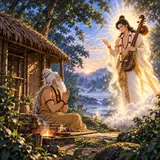
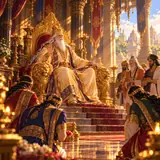
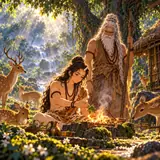
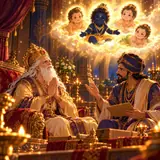
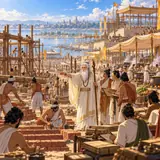
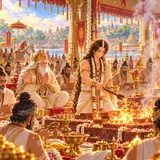
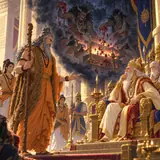
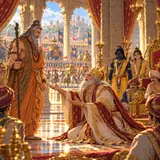
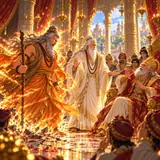
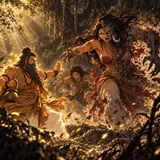
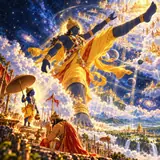
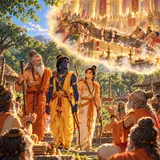
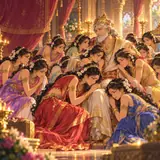
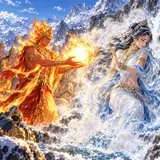
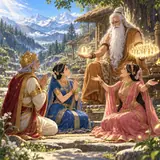
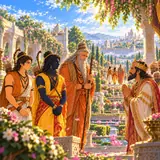
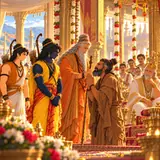
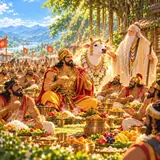
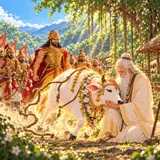
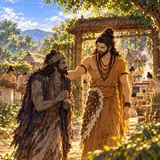
Scene 1 of 2 · Parashurama holds out a second great bow to Rama while old Dasharatha begs him with joined palms to spare his sons.
तदद्भुतमचिन्त्यं च भेदनं धनुषस्तथा । तच्छ्रुत्वाहमनुप्राप्तो धनुर्गृह्यापरं शुभम् ॥ २ ॥
“That breaking of the bow was wonderful and inconceivable. Having heard of it, I have come with another fine bow.
“धनुष का वह तोड़ना अद्भुत और अचिंत्य था। उसे सुनकर मैं एक और उत्तम धनुष लेकर आया हूँ।
CommentaryNot scripture “I have come with another bow.” The breaking of Shiva’s bow has summoned him.
Scene 1 of 2 · Parashurama holds out a second great bow to Rama while old Dasharatha begs him with joined palms to spare his sons.
तदिदं घोरसंकाशं जामदग्न्यं महद्धनुः । पूरयस्व शरेणैव स्वबलं दर्शयस्व च ॥ ३ ॥
“Here is the great, terrible-looking bow of Jamadagni’s son. Draw it with an arrow and show your own strength.
“यह जमदग्नि के पुत्र का महान, भयानक दिखने वाला धनुष है। इसे बाण से खींचो और अपना बल दिखाओ।
CommentaryNot scripture “Draw it, and show your strength.” The test of Mithila is to be repeated, with higher stakes.
Scene 1 of 2 · Parashurama holds out a second great bow to Rama while old Dasharatha begs him with joined palms to spare his sons.
तदहं ते बलं दृष्ट्वा धनुषोऽप्यस्य पूरणे । द्वन्द्वयुद्धं प्रदास्यामि वीर्यश्लाघ्यमहं तव ॥ ४ ॥
“Having seen your strength in drawing this bow, I will grant you a single combat, worthy of praise for your valour.”
“इस धनुष को खींचने में तुम्हारा बल देखकर मैं तुम्हें द्वंद्व युद्ध दूँगा, जो तुम्हारे पराक्रम के लिए प्रशंसनीय होगा।”
CommentaryNot scripture “Then I will grant you single combat.” To Parashurama, a kshatriya’s victory is a provocation.
Scene 1 of 2 · Parashurama holds out a second great bow to Rama while old Dasharatha begs him with joined palms to spare his sons.
तस्य तद् वचनं श्रुत्वा राजा दशरथस्तदा । विषण्णवदनो दीनः प्राञ्जलिर्वाक्यमब्रवीत् ॥ ५ ॥
Hearing his words, King Dasharatha, his face fallen and miserable, with joined palms, said:
उनके वचन सुनकर उदास और दुखी मुख वाले राजा दशरथ ने हाथ जोड़कर कहा:
CommentaryNot scripture Dasharatha, his face fallen, joins his palms. The father’s fear returns.
Scene 1 of 2 · Parashurama holds out a second great bow to Rama while old Dasharatha begs him with joined palms to spare his sons.
क्षत्ररोषात् प्रशान्तस्त्वं ब्राह्मणश्च महातपाः । बालानां मम पुत्राणामभयं दातुमर्हसि ॥ ६ ॥
“Your anger against the kshatriyas has been quieted, and you are a brahmana of great austerity. You should grant safety to my young sons.
“क्षत्रियों के प्रति आपका क्रोध शांत हो चुका है, और आप महातपस्वी ब्राह्मण हैं। आपको मेरे छोटे पुत्रों को अभय देना चाहिए।
CommentaryNot scripture “Your anger against the kshatriyas has been quieted. Grant safety to my young sons.” He calls them young (bala ): to a father, they are still boys.
Scene 1 of 2 · Parashurama holds out a second great bow to Rama while old Dasharatha begs him with joined palms to spare his sons.
भार्गवाणां कुले जातः स्वाध्यायव्रतशालिनाम् । सहस्राक्षे प्रतिज्ञाय शस्त्रं प्रक्षिप्तवानसि ॥ ७ ॥
“Born in the family of the Bhargavas, who are rich in study and vows, you vowed before the thousand-eyed one and laid down your weapons.
“स्वाध्याय और व्रतों के धनी भार्गवों के कुल में जन्मे आपने सहस्र नेत्रों वाले (इंद्र) के सामने प्रतिज्ञा करके अपने शस्त्र रख दिए थे।
CommentaryNot scripture “You laid down your weapons, vowing before Indra.” Dasharatha reminds Parashurama of his own vow, as Vasishtha once reminded Dasharatha of his.
Scene 1 of 2 · Parashurama holds out a second great bow to Rama while old Dasharatha begs him with joined palms to spare his sons.
स त्वं धर्मपरो भूत्वा कश्यपाय वसुंधराम् । दत्त्वा वनमुपागम्य महेन्द्रकृतकेतनः ॥ ८ ॥
“Devoted to dharma, you gave the earth to Kashyapa, went to the forest and made your home on Mahendra.
“धर्म में लगे आपने पृथ्वी कश्यप को दे दी, वन चले गए और महेंद्र पर्वत पर अपना घर बनाया।
CommentaryNot scripture “You gave the earth to Kashyapa and went to Mahendra.” He lists Parashurama’s acts of renunciation.
Scene 1 of 2 · Parashurama holds out a second great bow to Rama while old Dasharatha begs him with joined palms to spare his sons.
मम सर्वविनाशाय सम्प्राप्तस्त्वं महामुने । न चैकस्मिन् हते रामे सर्वे जीवामहे वयम् ॥ ९ ॥
“Have you come to destroy everything of mine, great sage? If Rama alone is killed, none of us will live.”
“महामुनि, क्या आप मेरा सब कुछ नष्ट करने आए हैं? यदि अकेले राम मारे गए, तो हममें से कोई जीवित नहीं रहेगा।”
CommentaryNot scripture “If Rama alone is killed, none of us will live.” The father’s heart in one line. In the Ayodhya Kanda, losing Rama will indeed cost Dasharatha his life.
Scene 1 of 2 · Parashurama holds out a second great bow to Rama while old Dasharatha begs him with joined palms to spare his sons.
ब्रुवत्येवं दशरथे जामदग्न्यः प्रतापवान् । अनादृत्य तु तद्वाक्यं राममेवाभ्यभाषत ॥ १० ॥
While Dasharatha was speaking so, the mighty son of Jamadagni, disregarding his words, spoke only to Rama:
जब दशरथ ऐसा कह रहे थे, तब जमदग्नि के बलवान पुत्र ने उनकी बात की उपेक्षा करके केवल राम से कहा:
CommentaryNot scripture Parashurama ignores the king entirely and speaks only to Rama. This is between the two Ramas.
Scene 1 of 2 · Parashurama holds out a second great bow to Rama while old Dasharatha begs him with joined palms to spare his sons.
इमे द्वे धनुषी श्रेष्ठे दिव्ये लोकाभिपूजिते । दृढे बलवती मुख्ये सुकृते विश्वकर्मणा ॥ ११ ॥
“These two bows were the best, divine and honoured by the world, firm, strong, foremost, well made by Vishvakarma.
“ये दो धनुष श्रेष्ठ थे, दिव्य और संसार से पूजित, दृढ़, बलवान, अग्रणी, विश्वकर्मा द्वारा अच्छी तरह बनाए गए।
CommentaryNot scripture Two divine bows, made by Vishvakarma, the architect of the gods.
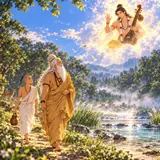
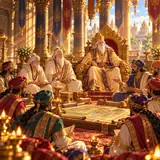
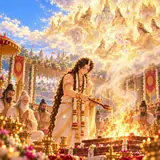
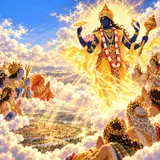
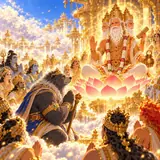
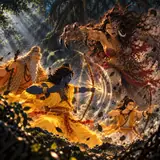
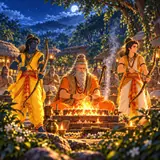
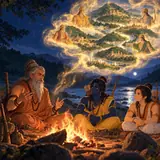
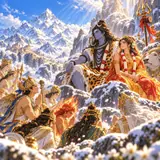
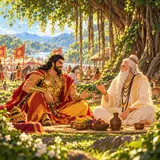
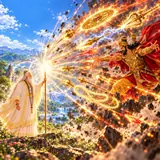
Scene 2 of 2 · Parashurama tells of the two divine bows, Shiva’s and Vishnu’s, and dares Rama to string the bow of Vishnu.
अनुसृष्टं सुरैरेकं त्र्यम्बकाय युयुत्सवे । त्रिपुरघ्नं नरश्रेष्ठ भग्नं काकुत्स्थ यत्त्वया ॥ १२ ॥
“One the gods gave to Tryambaka (Shiva), eager to fight Tripura, best of men, the destroyer of Tripura: the one you have broken, Kakutstha.
“एक देवताओं ने त्रिपुर से लड़ने को उत्सुक त्र्यंबक (शिव) को दिया, पुरुषश्रेष्ठ, त्रिपुर के नाशक को: वही जिसे तुमने तोड़ा है, काकुत्स्थ।
CommentaryNot scripture One was Shiva’s, used against Tripura (the three demon cities). That is the bow Rama broke.
Scene 2 of 2 · Parashurama tells of the two divine bows, Shiva’s and Vishnu’s, and dares Rama to string the bow of Vishnu.
इदं द्वितीयं दुर्धर्षं विष्णोर्दत्तं सुरोत्तमैः । तदिदं वैष्णवं राम धनुः परपुरंजयम् ॥ १३ ॥
“This second, unassailable one was given to Vishnu by the best of the gods. This is Vishnu’s bow, Rama, conqueror of enemy cities,
“यह दूसरा, अजेय धनुष श्रेष्ठ देवताओं ने विष्णु को दिया। राम, शत्रु नगरों को जीतने वाले, यह विष्णु का धनुष है,
CommentaryNot scripture The other is Vishnu’s, the bow he now holds.
Scene 2 of 2 · Parashurama tells of the two divine bows, Shiva’s and Vishnu’s, and dares Rama to string the bow of Vishnu.
समानसारं काकुत्स्थ रौद्रेण धनुषा त्विदम् । तदा तु देवताः सर्वाः पृच्छन्ति स्म पितामहम् ॥ १४ ॥
शितिकण्ठस्य विष्णोश्च बलाबलनिरीक्षया । अभिप्रायं तु विज्ञाय देवतानां पितामहः ॥ १५ ॥
“equal in strength to Rudra’s bow, Kakutstha. Then all the gods asked the Grandsire, wishing to see the strength and weakness of the blue-throated one and of Vishnu. Understanding the gods’ intention, the Grandsire,
“बल में रुद्र के धनुष के बराबर, काकुत्स्थ। तब सब देवताओं ने नीलकंठ (शिव) और विष्णु के बल और दुर्बलता को देखने की इच्छा से पितामह से पूछा। देवताओं का इरादा समझकर पितामह ने,
CommentaryNot scripture The gods wanted to know which god was stronger, and Brahma arranged a contest.
Scene 2 of 2 · Parashurama tells of the two divine bows, Shiva’s and Vishnu’s, and dares Rama to string the bow of Vishnu.
विरोधं जनयामास तयोः सत्यवतां वरः । विरोधे तु महद् युद्धमभवद् रोमहर्षणम् ॥ १६ ॥
शितिकण्ठस्य विष्णोश्च परस्परजयैषिणोः । तदा तु जृम्भितं शैवं धनुर्भीमपराक्रमम् ॥ १७ ॥
“best of the truthful, created a quarrel between the two. In that quarrel there was a great, hair-raising battle between the blue-throated one and Vishnu, each wishing to defeat the other. Then Shiva’s bow, of terrible power, was slackened,
“सत्यवादियों में श्रेष्ठ, दोनों के बीच विवाद उत्पन्न किया। उस विवाद में नीलकंठ और विष्णु के बीच एक-दूसरे को जीतने की इच्छा से रोंगटे खड़े कर देने वाला महान युद्ध हुआ। तब भयानक शक्ति वाला शिव का धनुष ढीला पड़ गया,
CommentaryNot scripture A great battle between Shiva and Vishnu. Shiva’s bow was slackened.
Scene 2 of 2 · Parashurama tells of the two divine bows, Shiva’s and Vishnu’s, and dares Rama to string the bow of Vishnu.
हुंकारेण महादेवः स्तम्भितोऽथ त्रिलोचनः । देवैस्तदा समागम्य सर्षिसङ्घः सचारणैः ॥ १८ ॥
याचितौ प्रशमं तत्र जग्मतुस्तौ सुरोत्तमौ । जृम्भितं तद् धनुर्दृष्ट्वा शैवं विष्णुपराक्रमैः ॥ १९ ॥
“and the three-eyed Mahadeva was stopped short by a ‘Hum!’ Then the gods came together with the hosts of sages and charanas and begged, and the two best of gods made peace. Seeing Shiva’s bow slackened by Vishnu’s might,
“और तीन नेत्रों वाले महादेव ‘हुं’ से रोक दिए गए। तब ऋषियों और चारणों के समूहों के साथ देवताओं ने आकर विनती की, और दोनों श्रेष्ठ देवताओं में शांति हो गई। विष्णु के पराक्रम से शिव के धनुष को ढीला पड़ा देखकर
CommentaryNot scripture Shiva was stopped by a “Hum”, and the gods made peace between them. The poem treats both gods with reverence, but in this telling Vishnu proved greater.
Scene 2 of 2 · Parashurama tells of the two divine bows, Shiva’s and Vishnu’s, and dares Rama to string the bow of Vishnu.
अधिकं मेनिरे विष्णुं देवाः सर्षिगणास्तथा । धनू रुद्रस्तु संक्रुद्धो विदेहेषु महायशाः ॥ २० ॥
देवरातस्य राजर्षेर्ददौ हस्ते ससायकम् । इदं च वैष्णवं राम धनुः परपुरंजयम् ॥ २१ ॥
“the gods and the hosts of sages considered Vishnu the greater. Rudra, glorious and angry, gave his bow with its arrow into the hands of the royal sage Devarata among the Videhas. And this bow of Vishnu, Rama, conqueror of enemy cities,
“देवताओं और ऋषियों के समूहों ने विष्णु को अधिक श्रेष्ठ माना। यशस्वी और क्रुद्ध रुद्र ने अपना धनुष बाण सहित विदेहों में राजर्षि देवरात के हाथों में दे दिया। और राम, शत्रु नगरों को जीतने वाले, विष्णु का यह धनुष
CommentaryNot scripture Shiva gave his bow to Devarata of Videha, which is how it came to Janaka.
Scene 2 of 2 · Parashurama tells of the two divine bows, Shiva’s and Vishnu’s, and dares Rama to string the bow of Vishnu.
ऋचीके भार्गवे प्रादाद् विष्णुः स न्यासमुत्तमम् । ऋचीकस्तु महातेजाः पुत्रस्याप्रतिकर्मणः ॥ २२ ॥
पितुर्मम ददौ दिव्यं जमदग्नेर्महात्मनः । न्यस्तशस्त्रे पितरि मे तपोबलसमन्विते ॥ २३ ॥
“Vishnu gave to Richika of Bhrigu’s line as a supreme trust. The radiant Richika gave the divine bow to his son, my father, the great-souled Jamadagni, who had no equal in deeds. When my father, full of the power of austerity, had laid down his weapons,
“विष्णु ने भृगु वंश के ऋचीक को परम धरोहर के रूप में दिया। तेजस्वी ऋचीक ने वह दिव्य धनुष अपने पुत्र, मेरे पिता, कर्मों में अनुपम महात्मा जमदग्नि को दिया। जब तप की शक्ति से भरे मेरे पिता ने शस्त्र रख दिए थे,
CommentaryNot scripture Vishnu gave his bow to Richika, who gave it to Jamadagni, Parashurama’s father. Notice the family threads: Richika is Vishvamitra’s brother-in-law. Every story in this kanda connects.
Scene 2 of 2 · Parashurama tells of the two divine bows, Shiva’s and Vishnu’s, and dares Rama to string the bow of Vishnu.
अर्जुनो विदधे मृत्युं प्राकृतां बुद्धिमास्थितः । वधमप्रतिरूपं तु पितुः श्रुत्वा सुदारुणम् । क्षत्रमुत्सादयं रोषाज्जातं जातमनेकशः ॥ २४ ॥
“Arjuna, holding to a base mind, brought about his death. Hearing of my father’s most dreadful, unworthy killing, I in anger destroyed the kshatriyas again and again as they were born.
“तब नीच बुद्धि वाले (कार्तवीर्य) अर्जुन ने उनकी मृत्यु करा दी। पिता की अत्यंत भयानक, अनुचित हत्या सुनकर मैंने क्रोध में क्षत्रियों को बार-बार, जैसे-जैसे वे जन्मे, नष्ट किया।
CommentaryNot scripture Jamadagni, having laid down his weapons, was killed by Arjuna Kartavirya, a king of the Haihayas. In grief and fury, Parashurama destroyed the kshatriyas “again and again”. His violence was born of a son’s grief.
Scene 2 of 2 · Parashurama tells of the two divine bows, Shiva’s and Vishnu’s, and dares Rama to string the bow of Vishnu.
पृथिवीं चाखिलां प्राप्य कश्यपाय महात्मने । यज्ञस्यान्तेऽददं राम दक्षिणां पुण्यकर्मणे ॥ २५ ॥
“Having won the whole earth, Rama, I gave it at the end of a sacrifice as the fee to the great-souled Kashyapa of holy deeds.
“राम, सारी पृथ्वी जीतकर मैंने उसे एक यज्ञ के अंत में दक्षिणा के रूप में पवित्र कर्मों वाले महात्मा कश्यप को दे दिया।
CommentaryNot scripture He gave the conquered earth to Kashyapa as a sacrificial fee. Having won everything, he kept nothing.
Scene 2 of 2 · Parashurama tells of the two divine bows, Shiva’s and Vishnu’s, and dares Rama to string the bow of Vishnu.
दत्त्वा महेन्द्रनिलयस्तपोबलसमन्वितः । श्रुत्वा तु धनुषो भेदं ततोऽहं द्रुतमागतः ॥ २६ ॥
“Having given it, I made Mahendra my home, full of the power of austerity. Hearing of the breaking of the bow, I came here quickly.
“देकर, तप की शक्ति से भरा मैं महेंद्र पर्वत पर रहने लगा। धनुष टूटने की बात सुनकर मैं जल्दी यहाँ आया।
CommentaryNot scripture He retired to Mahendra, until news of the broken bow brought him back.
Scene 2 of 2 · Parashurama tells of the two divine bows, Shiva’s and Vishnu’s, and dares Rama to string the bow of Vishnu.
तदेवं वैष्णवं राम पितृपैतामहं महत् । क्षत्रधर्मं पुरस्कृत्य गृह्णीष्व धनुरुत्तमम् ॥ २७ ॥
“So, Rama, this great bow of Vishnu, from my father and grandfather: putting the dharma of the kshatriya first, take this supreme bow.
“इसलिए, राम, मेरे पिता और पितामह से आया विष्णु का यह महान धनुष, क्षत्रिय धर्म को आगे रखकर, यह परम धनुष लो।
CommentaryNot scripture “Take Vishnu’s bow.” The bow of Vishnu, offered to the incarnation of Vishnu. Parashurama does not yet know whom he is testing.
Scene 2 of 2 · Parashurama tells of the two divine bows, Shiva’s and Vishnu’s, and dares Rama to string the bow of Vishnu.
योजयस्व धनुःश्रेष्ठे शरं परपुरंजयम् । यदि शक्तोऽसि काकुत्स्थ द्वन्द्वं दास्यामि ते ततः ॥ २८ ॥
“Fit to this best of bows the arrow that conquers enemy cities. If you are able, Kakutstha, then I will give you single combat.”
“इस श्रेष्ठ धनुष पर शत्रु नगरों को जीतने वाला बाण चढ़ाओ। काकुत्स्थ, यदि तुम समर्थ हो, तो मैं तुम्हें द्वंद्व युद्ध दूँगा।”
CommentaryNot scripture “If you can string it, I will fight you.” The challenge is set. The next sarga is its answer.
Scene 2 of 2 · Parashurama tells of the two divine bows, Shiva’s and Vishnu’s, and dares Rama to string the bow of Vishnu.