Bala Kanda · Sarga 6 of 77 · 28 verses
King Dasharatha and His People
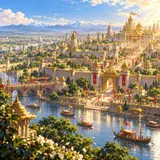
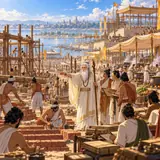
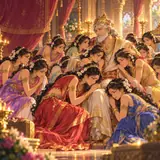
Dasharatha rules Ayodhya like Manu of old: learned in the Vedas, far-sighted, self-controlled, loved by town and country, a royal sage famous in the three worlds. His people are happy, truthful, content with what they own. No one in the city is greedy, cruel, ignorant or without faith; every man and woman is well dressed, adorned, well fed and generous.
The four orders each keep to their own duty. The city is guarded by fierce, skilled warriors and filled with the finest horses from Kamboja and Bahlika and with mountain-like elephants of famous lineages. Dasharatha governs it as the moon governs the stars.
Press › to begin with verse 1.
तस्यां पुर्यामयोध्यायां वेदवित् सर्वसंग्रहः । दीर्घदर्शी महातेजाः पौरजानपदप्रियः ॥ १ ॥
इक्ष्वाकूणामतिरथो यज्वा धर्मपरो वशी । महर्षिकल्पो राजर्षिस्त्रिषु लोकेषु विश्रुतः ॥ २ ॥
In that city of Ayodhya lived one who knew the Vedas and gathered all things to himself, far-seeing, full of splendour, dear to the people of town and country; a great chariot-warrior of the Ikshvakus, a sacrificer, devoted to dharma, self-controlled; a royal sage like a great seer, famed in the three worlds;
उस अयोध्या नगरी में एक ऐसे राजा रहते थे जो वेदों के ज्ञाता थे और सब कुछ अपने पास संचित करते थे, दूरदर्शी, तेजस्वी, नगर और देश के लोगों के प्रिय; इक्ष्वाकुओं के महारथी, यज्ञ करने वाले, धर्म में लगे, संयमी; महर्षि जैसे राजर्षि, तीनों लोकों में प्रसिद्ध;
Commentary on the whole sarga
King Dasharatha and His People 1 min read.
Read the commentary CommentaryNot scripture The portrait of Dasharatha opens with a long string of qualities. He knows the Vedas, sees far, is loved by both city and countryside (paura-janapada-priya ). He is a rajarshi , a royal sage: a king who lives with a sage’s discipline. This is the ideal Indian king, and the poem will test him hard.
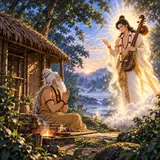
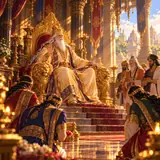
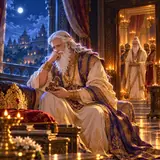
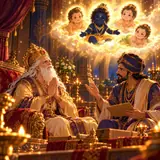
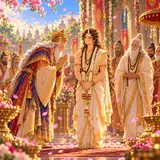
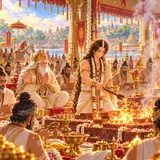
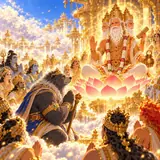
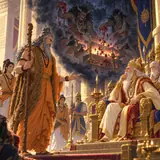
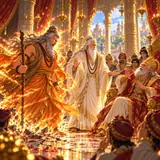
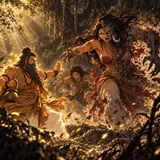
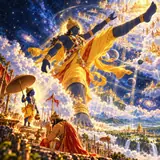
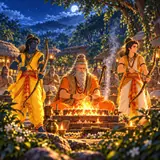
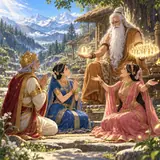
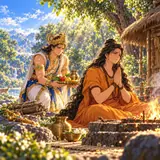
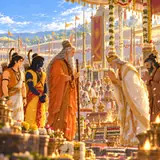
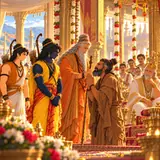
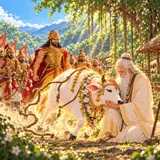
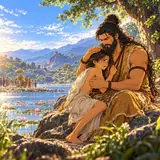
Scene 1 of 2 · King Dasharatha, the royal sage, on his throne in Ayodhya, guarding the city as Indra guards heaven.
बलवान् निहतामित्रो मित्रवान् विजितेन्द्रियः । धनैश्च संचयैश्चान्यैः शक्रवैश्रवणोपमः ॥ ३ ॥
mighty, his enemies destroyed, rich in friends, master of his senses; in wealth and possessions like Shakra and Vaishravana.
बलवान, शत्रुओं का नाश करने वाले, मित्रों से संपन्न, जितेंद्रिय; धन और संपत्ति में इंद्र और कुबेर के समान।
CommentaryNot scripture Shakra is Indra; Vaishravana is Kubera, god of wealth. Dasharatha has power like the one and riches like the other. Yet the verse also calls him vashi , master of his senses. In Valmiki’s world wealth without self-control is a danger, not a blessing.
Scene 1 of 2 · King Dasharatha, the royal sage, on his throne in Ayodhya, guarding the city as Indra guards heaven.
यथा मनुर्महातेजा लोकस्य परिरक्षिता । तथा दशरथो राजा लोकस्य परिरक्षिता ॥ ४ ॥
As Manu, full of splendour, was the protector of the world, so King Dasharatha was the protector of the world.
जैसे तेजस्वी मनु संसार के रक्षक थे, वैसे ही राजा दशरथ संसार के रक्षक थे।
CommentaryNot scripture Manu was the first king, the lawgiver of humankind. To be compared with Manu is the highest praise for a ruler. Dasharatha is the protector (rakshita ) of the world. Protection, not conquest, is the king’s first duty.
Scene 1 of 2 · King Dasharatha, the royal sage, on his throne in Ayodhya, guarding the city as Indra guards heaven.
तेन सत्याभिसंधेन त्रिवर्गमनुतिष्ठता । पालिता सा पुरी श्रेष्ठा इन्द्रेणेवामरावती ॥ ५ ॥
That finest of cities was guarded by him, true to his word, who followed the three aims of life, as Amaravati is guarded by Indra.
तीनों पुरुषार्थों का पालन करने वाले उन सत्यप्रतिज्ञ राजा से वह श्रेष्ठ नगरी वैसे ही सुरक्षित थी, जैसे इंद्र से अमरावती।
CommentaryNot scripture The three aims of life (trivarga ): dharma (right living), artha (wealth and power) and kama (love and pleasure). A good king pursues all three in balance. Dasharatha is also “true to his word” (satya-pratijna ): the very quality that will break his heart later.
Scene 1 of 2 · King Dasharatha, the royal sage, on his throne in Ayodhya, guarding the city as Indra guards heaven.
तस्मिन् पुरवरे हृष्टा धर्मात्मानो बहुश्रुताः । नरास्तुष्टा धनैः स्वैः स्वैरलुब्धाः सत्यवादिनः ॥ ६ ॥
In that great city the people were happy, righteous and learned, content each with his own wealth, free of greed and truthful.
उस महानगरी में लोग सुखी, धर्मात्मा और विद्वान थे, अपने-अपने धन से संतुष्ट, लोभ से रहित और सत्यवादी।
CommentaryNot scripture Now the people. They are happy, righteous, learned, and above all “content each with his own wealth” (tushtah svaih dhanaih ), free of greed. The ideal city is not one where everyone is rich, but one where no one wants what another has.
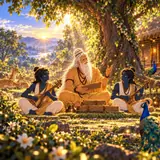
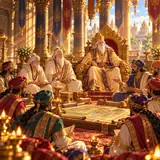
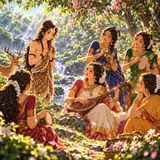
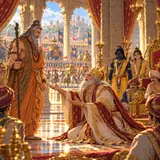
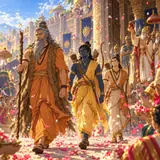
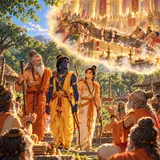
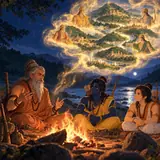
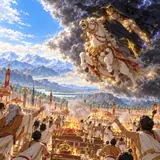
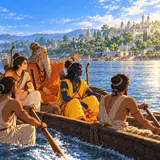
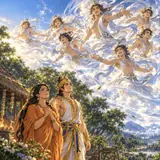
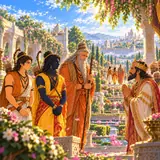
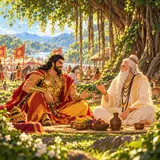
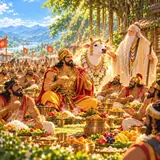
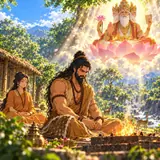
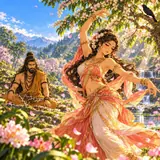
Scene 2 of 2 · The people of Ayodhya, content and generous, and the great elephants and horses of the unconquerable city.
नाल्पसंनिचयः कश्चिदासीत् तस्मिन् पुरोत्तमे । कुटुम्बी यो ह्यसिद्धार्थोऽगवाश्वधनधान्यवान् ॥ ७ ॥
In that finest city there was no householder with only a small store, none whose aims were unfulfilled, none without cattle, horses, wealth and grain.
उस श्रेष्ठ नगरी में कोई ऐसा गृहस्थ नहीं था जिसके पास थोड़ा ही संचय हो, जिसके उद्देश्य अधूरे हों, या जो गाय, घोड़े, धन और धान्य से रहित हो।
CommentaryNot scripture No household had too little; no one lacked cattle, horses, wealth or grain. In an agricultural world, these were the measures of security. The ideal is a city without poverty.
Scene 2 of 2 · The people of Ayodhya, content and generous, and the great elephants and horses of the unconquerable city.
कामी वा न कदर्यो वा नृशंसः पुरुषः क्वचित् । द्रष्टुं शक्यमयोध्यायां नाविद्वान् न च नास्तिकः ॥ ८ ॥
No lustful man, no miser, no cruel man could be seen anywhere in Ayodhya; no one unlearned and no unbeliever.
अयोध्या में कहीं कोई कामी, कंजूस या क्रूर व्यक्ति नहीं दिखता था; न कोई अनपढ़ था, न कोई नास्तिक।
CommentaryNot scripture Valmiki defines his ideal city partly by what is absent: no lustful man, no miser, no cruel man, no one uneducated, no nastika , a denier of the Vedas and the moral order. The ideal is moral as well as material.
Scene 2 of 2 · The people of Ayodhya, content and generous, and the great elephants and horses of the unconquerable city.
सर्वे नराश्च नार्यश्च धर्मशीलाः सुसंयताः । मुदिताः शीलवृत्ताभ्यां महर्षय इवामलाः ॥ ९ ॥
All the men and women were righteous and well controlled, joyful in character and conduct, spotless as great seers.
सब स्त्री-पुरुष धर्मात्मा और संयमी थे, स्वभाव और आचरण से प्रसन्न, और महर्षियों की तरह निर्मल।
CommentaryNot scripture Maharshayah iva amalah : “spotless like great seers”. Ordinary men and women are compared with sages. The ideal kingdom is one where holiness is not rare, but the common way of life.
Scene 2 of 2 · The people of Ayodhya, content and generous, and the great elephants and horses of the unconquerable city.
नाकुण्डली नामुकुटी नास्रग्वी नाल्पभोगवान् । नामृष्टो न नलिप्ताङ्गो नासुगन्धश्च विद्यते ॥ १० ॥
There was no one without earrings, without a crown, without a garland, with few comforts; no one unbathed, unanointed or without fragrance.
कोई ऐसा नहीं था जो कुंडल, मुकुट या माला के बिना हो, या जिसके पास सुख-साधन कम हों; कोई बिना स्नान किए, बिना अंगराग लगाए या बिना सुगंध के नहीं था।
CommentaryNot scripture Earrings, crowns, garlands, fragrance, a daily bath: everyone is beautifully dressed and cared for. Valmiki enjoys these details. Beauty and comfort for all is part of his picture of good government.
Scene 2 of 2 · The people of Ayodhya, content and generous, and the great elephants and horses of the unconquerable city.
नामृष्टभोजी नादाता नाप्यनङ्गदनिष्कधृक् । नाहस्ताभरणो वापि दृश्यते नाप्यनात्मवान् ॥ ११ ॥
No one ate unclean food, no one failed to give, no one lacked armlets and neck ornaments; none was seen without ornaments on the hands, and none who was not self-possessed.
कोई अशुद्ध भोजन नहीं करता था, कोई ऐसा नहीं था जो दान न करे, किसी के पास बाजूबंद और कंठहार की कमी नहीं थी; कोई हाथों के आभूषणों के बिना नहीं दिखता था, और कोई ऐसा नहीं था जो आत्मसंयमी न हो।
CommentaryNot scripture The list continues with ornaments, clean food, generosity, self-possession. It reads like a poet painting a perfect world, piling on detail after detail. These long lists are typical of epic description: they invite the listener to linger and imagine.
Scene 2 of 2 · The people of Ayodhya, content and generous, and the great elephants and horses of the unconquerable city.
नानाहिताग्निर्नायज्वा न क्षुद्रो वा न तस्करः । कश्चिदासीदयोध्यायां न चार्वृत्तो न संकरः ॥ १२ ॥
In Ayodhya there was no one who did not keep the sacred fire or perform sacrifice, no one mean, no thief, no one of bad conduct and none of mixed birth.
अयोध्या में कोई ऐसा नहीं था जो अग्निहोत्र या यज्ञ न करता हो; न कोई नीच था, न चोर, न दुराचारी, और न वर्णसंकर।
CommentaryNot scripture This verse lists the absence of thieves and wrongdoers, and also of people of “mixed birth” (sankara ), born of marriages across the four orders. That was the social ideal of the poem’s time and place. Modern readers rightly see it differently; this edition translates it faithfully rather than hiding it.
Scene 2 of 2 · The people of Ayodhya, content and generous, and the great elephants and horses of the unconquerable city.
स्वकर्मनिरता नित्यं ब्राह्मणा विजितेन्द्रियाः । दानाध्ययनशीलाश्च संयताश्च प्रतिग्रहे ॥ १३ ॥
The brahmanas, masters of their senses, were always devoted to their own work, given to giving and study, and restrained in accepting gifts.
ब्राह्मण जितेंद्रिय थे, सदा अपने कर्म में लगे रहते थे, दान और अध्ययन में तत्पर थे, और दान लेने में संयम रखते थे।
CommentaryNot scripture The brahmanas devote themselves to giving and study, and are “restrained in accepting gifts”. A priest who takes too much becomes dependent on patrons. The ideal brahmana lives simply and keeps his independence.
Scene 2 of 2 · The people of Ayodhya, content and generous, and the great elephants and horses of the unconquerable city.
नास्तिको नानृती वापि न कश्चिदबहुश्रुतः । नासूयको न चाशक्तो नाविद्वान् विद्यते क्वचित् ॥ १४ ॥
There was no unbeliever, no liar, no one of little learning anywhere; no envious man, no incapable man, no ignorant man.
कहीं कोई नास्तिक, झूठा या अल्पज्ञ नहीं था; न कोई ईर्ष्यालु, न असमर्थ, न अज्ञानी।
CommentaryNot scripture No liar, no envious man, no ignorant one. The list of absences returns. Truthfulness is mentioned again and again in this sarga: in the poem’s eyes, a city of truth-tellers is the foundation of everything else.
Scene 2 of 2 · The people of Ayodhya, content and generous, and the great elephants and horses of the unconquerable city.
नाषडङ्गविदत्रास्ति नाव्रतो नासहस्रदः । न दीनः क्षिप्तचित्तो वा व्यथितो वापि कश्चन ॥ १५ ॥
There was no one who did not know the six limbs of the Veda, no one without vows, no one who did not give in thousands; no one wretched, distracted or troubled.
कोई ऐसा नहीं था जो वेद के छह अंगों को न जानता हो, जिसके व्रत न हों, या जो हज़ारों का दान न करता हो; न कोई दीन था, न विक्षिप्त, न दुखी।
CommentaryNot scripture The six limbs of the Veda (vedanga ) are phonetics, metre, grammar, etymology, astronomy and ritual. In the ideal city, learning is everyone’s. No one is wretched, distracted or troubled: a city of calm and capable minds.
Scene 2 of 2 · The people of Ayodhya, content and generous, and the great elephants and horses of the unconquerable city.
कश्चिन्नरो वा नारी वा नाश्रीमान् नाप्यरूपवान् । द्रष्टुं शक्यमयोध्यायां नापि राजन्यभक्तिमान् ॥ १६ ॥
No man or woman could be seen in Ayodhya who lacked fortune or beauty, or who lacked devotion to the king.
अयोध्या में कोई ऐसा स्त्री या पुरुष नहीं दिखता था जो सौभाग्य या सुंदरता से रहित हो, या जिसमें राजा के प्रति भक्ति न हो।
CommentaryNot scripture Everyone has fortune and beauty, and everyone is devoted to the king. Raja-bhakti , devotion to the king, closes the list. In this world, loyalty flows both ways: the king protects, the people love.
Scene 2 of 2 · The people of Ayodhya, content and generous, and the great elephants and horses of the unconquerable city.
वर्णेष्वग्र्यचतुर्थेषु देवतातिथिपूजकाः । कृतज्ञाश्च वदान्याश्च शूरा विक्रमसंयुताः ॥ १७ ॥
Among the four orders, the first to the fourth, all honoured the gods and guests; they were grateful, generous, brave and full of valour.
पहले से चौथे तक चारों वर्णों के लोग देवताओं और अतिथियों का सम्मान करते थे; वे कृतज्ञ, उदार, वीर और पराक्रमी थे।
CommentaryNot scripture Here all four orders, “from the first to the fourth”, are praised together: grateful, generous, brave. Each honours the gods and guests. Hospitality to guests (atithi ) is one of the deepest Indian values, and here every person shares it.
Scene 2 of 2 · The people of Ayodhya, content and generous, and the great elephants and horses of the unconquerable city.
दीर्घायुषो नराः सर्वे धर्मं सत्यं च संश्रिताः । सहिताः पुत्रपौत्रैश्च नित्यं स्त्रीभिः पुरोत्तमे ॥ १८ ॥
All the men in that finest city were long-lived, devoted to dharma and truth, and lived always with their sons, grandsons and wives.
उस श्रेष्ठ नगरी के सब पुरुष दीर्घायु थे, धर्म और सत्य में लगे थे, और सदा अपने पुत्रों, पौत्रों और पत्नियों के साथ रहते थे।
CommentaryNot scripture Long lives, devotion to truth, and families together across three generations. For the ancient listener, a home with sons, grandsons and wives all living together was the picture of happiness.
Scene 2 of 2 · The people of Ayodhya, content and generous, and the great elephants and horses of the unconquerable city.
क्षत्रं ब्रह्ममुखं चासीद् वैश्याः क्षत्रमनुव्रताः । शूद्राः स्वधर्मनिरतास्त्रीन् वर्णानुपचारिणः ॥ १९ ॥
The kshatriyas had the brahmanas at their head, the vaishyas followed the kshatriyas, and the shudras, devoted to their own duty, served the three orders.
क्षत्रिय ब्राह्मणों को आगे रखते थे, वैश्य क्षत्रियों का अनुसरण करते थे, और अपने कर्तव्य में लगे शूद्र तीनों वर्णों की सेवा करते थे।
CommentaryNot scripture This verse sets out the order of the four classes as the poem’s world saw it. It describes the social structure of its time. Readers today will hold it beside the poem’s other great theme, Rama’s equal love for the Nishada Guha, the forest woman Shabari and the vanaras.
Scene 2 of 2 · The people of Ayodhya, content and generous, and the great elephants and horses of the unconquerable city.
सा तेनेक्ष्वाकुनाथेन पुरी सुपरिरक्षिता । यथा पुरस्तान्मनुना मानवेन्द्रेण धीमता ॥ २० ॥
That city was well protected by the lord of the Ikshvakus, as it had been before by the wise Manu, lord of men.
वह नगरी इक्ष्वाकुओं के स्वामी द्वारा वैसे ही सुरक्षित थी जैसे पहले बुद्धिमान मनुष्यों के स्वामी मनु द्वारा।
CommentaryNot scripture The comparison with Manu returns: the city is protected now as it was in the first age. Continuity matters. Dasharatha does not invent a new order; he keeps the ancient one well.
Scene 2 of 2 · The people of Ayodhya, content and generous, and the great elephants and horses of the unconquerable city.
योधानामग्निकल्पानां पेशलानाममर्षिणाम् । सम्पूर्णा कृतविद्यानां गुहा केसरिणामिव ॥ २१ ॥
It was full of warriors like fire, skilled, unyielding, accomplished in their art, like a mountain cave full of lions.
वह अग्नि जैसे तेजस्वी, कुशल, अडिग, अपनी विद्या में पारंगत योद्धाओं से भरी थी, जैसे पर्वत की गुफा सिंहों से भरी हो।
CommentaryNot scripture Warriors “like a mountain cave full of lions”: a vivid image of strength held in reserve. Lions in a cave are not hunting, but their presence alone keeps enemies away. That is real defence.
Scene 2 of 2 · The people of Ayodhya, content and generous, and the great elephants and horses of the unconquerable city.
काम्बोजविषये जातैर्बाह्लीकैश्च हयोत्तमैः । वनायुजैर्नदीजैश्च पूर्णा हरिहयोत्तमैः ॥ २२ ॥
It was full of the best horses, like Indra’s own, born in the land of Kamboja and in Bahlika, in Vanayu and by the rivers.
वह इंद्र के घोड़ों जैसे उत्तम घोड़ों से भरी थी, जो कांबोज और बाह्लीक देशों में, वनायु में और नदियों के किनारे पैदा हुए थे।
CommentaryNot scripture Horses from Kamboja and Bahlika, lands in the north-west (in today’s Afghanistan and Central Asia), famous for fine horses. Vanayu’s location is uncertain. Ayodhya gathers the best from distant lands.
Scene 2 of 2 · The people of Ayodhya, content and generous, and the great elephants and horses of the unconquerable city.
विन्ध्यपर्वतजैर्मत्तैः पूर्णा हैमवतैरपि । मदान्वितैरतिबलैर्मातङ्गैः पर्वतोपमैः ॥ २३ ॥
It was full of elephants like mountains, born in the Vindhya hills and in the Himalaya, in rut, of enormous strength,
वह पर्वतों जैसे हाथियों से भरी थी, जो विंध्य पर्वत और हिमालय में पैदा हुए थे, मदमस्त और अत्यंत बलवान,
CommentaryNot scripture Elephants from the Vindhya hills and the Himalaya, “like mountains”, in rut and of great strength. Elephants were the tanks of ancient Indian armies, and the pride of every king.
Scene 2 of 2 · The people of Ayodhya, content and generous, and the great elephants and horses of the unconquerable city.
ऐरावतकुलीनैश्च महापद्मकुलैस्तथा । अञ्जनादपि निष्क्रान्तैर्वामनादपि च द्विपैः ॥ २४ ॥
elephants of the lines of Airavata and Mahapadma, and descended from Anjana and Vamana;
ऐरावत और महापद्म के वंश के हाथी, और अंजन तथा वामन के वंशज;
CommentaryNot scripture Airavata is Indra’s own elephant; Mahapadma, Anjana and Vamana are the great elephants who hold up the directions of the world. Ayodhya’s elephants descend from these divine lines. Even the animals have noble pedigrees.
Scene 2 of 2 · The people of Ayodhya, content and generous, and the great elephants and horses of the unconquerable city.
भदैर्मन्द्रैर्मृगैश्चैव भद्रमन्द्रमृगैस्तथा । भद्रमन्द्रैर्भद्रमृगैर्मृगमन्द्रैश्च सा पुरी ॥ २५ ॥
of the Bhadra, Mandra and Mriga breeds and their crosses, Bhadra-Mandra-Mriga, Bhadra-Mandra, Bhadra-Mriga and Mriga-Mandra.
भद्र, मंद्र और मृग जाति के हाथी, और उनकी मिश्रित जातियाँ: भद्र-मंद्र-मृग, भद्र-मंद्र, भद्र-मृग और मृग-मंद्र।
CommentaryNot scripture Bhadra, Mandra and Mriga were the classic breeds in Indian elephant lore, each with its own build and temperament. Valmiki lists them and their crosses with obvious pleasure. Ancient Indians studied elephants as a science (gaja-shastra ).
Scene 2 of 2 · The people of Ayodhya, content and generous, and the great elephants and horses of the unconquerable city.
नित्यमत्तैः सदा पूर्णा नागैरचलसंनिभैः । सा योजने द्वे च भूयः सत्यनामा प्रकाशते । यस्यां दशरथो राजा वसञ्जगदपालयत् ॥ २६ ॥
The city was always full of elephants like hills, ever in rut. For two yojanas beyond, it shone, true to its name (unconquerable). Living there, King Dasharatha protected the world.
वह नगरी सदा पहाड़ जैसे, सदा मदमस्त हाथियों से भरी रहती थी। दो योजन आगे तक वह अपने नाम (अजेय) के अनुरूप शोभा पाती थी। वहाँ रहते हुए राजा दशरथ संसार की रक्षा करते थे।
CommentaryNot scripture For two yojanas around, the city shines, true to its name: ayodhya , unconquerable. Both the walls and the reputation keep it safe. And at its centre, Dasharatha guards the world.
Scene 2 of 2 · The people of Ayodhya, content and generous, and the great elephants and horses of the unconquerable city.
तां पुरीं स महातेजा राजा दशरथो महान् । शशास शमितामित्रो नक्षत्राणीव चन्द्रमाः ॥ २७ ॥
That city the great and splendid King Dasharatha, who had quelled his enemies, ruled as the moon rules the stars.
शत्रुओं को शांत करने वाले महान और तेजस्वी राजा दशरथ उस नगरी पर वैसे ही शासन करते थे, जैसे चंद्रमा तारों पर।
CommentaryNot scripture “As the moon rules the stars”: a gentle image of kingship. The moon does not conquer the stars; it shines among them, brightest of all. That is how Dasharatha rules: by radiance, not by force.
Scene 2 of 2 · The people of Ayodhya, content and generous, and the great elephants and horses of the unconquerable city.
तां सत्यनामां दृढतोरणार्गलाम् गृहैर्विचित्रैरुपशोभितां शिवाम् । पुरीमयोध्यां नृसहस्रसंकुलां शशास वै शक्रसमो महीपतिः ॥ २८ ॥
That city of Ayodhya, true to its name, with strong gates and bars, adorned with beautiful houses, auspicious, crowded with thousands of people, the lord of the earth, equal to Shakra, ruled.
अपने नाम के अनुरूप, मज़बूत द्वारों और अर्गलाओं वाली, सुंदर घरों से सजी, मंगलमयी, हज़ारों लोगों से भरी उस अयोध्या नगरी पर इंद्र के समान पृथ्वीपति राज्य करते थे।
CommentaryNot scripture The sarga closes with the city again: strong gates, bars, beautiful houses, thousands of people. The king, equal to Indra, rules it. Everything is in place. In the next sarga we meet the ministers who help him govern.
Scene 2 of 2 · The people of Ayodhya, content and generous, and the great elephants and horses of the unconquerable city.