Bala Kanda · Sarga 14 of 77 · 60 verses
The Horse Sacrifice
A year later the horse returns and the great ashvamedha begins, with Rishyashringa at the head of the priests. Every rite is done exactly by the shastra: the morning, midday and evening pressings of soma, the invocations of Indra and the gods in sweet chant. No offering goes astray and nothing is mishandled.
During the days of the rite everyone is fed without end: brahmanas, the poor, ascetics, the old, the sick, women and children. Mountains of food stand ready; between rites the learned debate. Twenty-one decorated sacrificial posts are raised, the fire altar is built in the shape of the eagle Garuda with golden wings, and the animals are bound to the posts. Kausalya tends the horse and, after it is struck down, stays beside it one night, as the rite requires; the king inhales the smoke of the offering to cleanse his sins.
At the end Dasharatha gives the whole earth to the priests as their fee. They return it, saying they cannot rule it, and ask for gold and cattle instead: he gives a million cows, ten crores of gold and four times as much silver. Then he asks Rishyashringa to do what will increase his line, and the sage promises: “You will have four sons, upholders of your race.”
Press › to begin with verse 1.
अथ संवत्सरे पूर्णे तस्मिन् प्राप्ते तुरङ्गमे । सरय्वाश्चोत्तरे तीरे राज्ञो यज्ञोऽभ्यवर्तत ॥ १ ॥
When the year was complete and the horse had returned, the king’s sacrifice began on the north bank of the Sarayu.
जब वर्ष पूरा हो गया और घोड़ा लौट आया, तब सरयू के उत्तरी तट पर राजा का यज्ञ आरंभ हुआ।
Commentary on the whole sarga
The Horse Sacrifice 1 min read.
Read the commentary CommentaryNot scripture The horse has returned after its year of wandering. The sacrifice begins where the priests chose: the north bank of the Sarayu. This sarga is one of the most detailed descriptions of a Vedic horse sacrifice in Sanskrit literature, and Valmiki tells it as an eyewitness would.
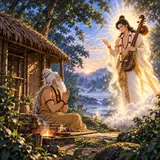
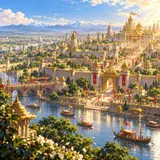
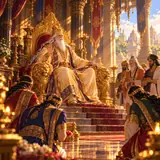
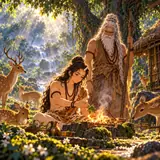
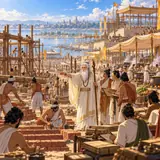
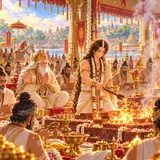
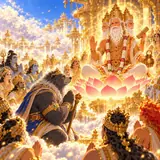
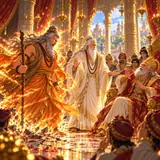
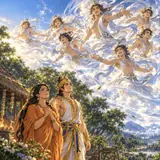
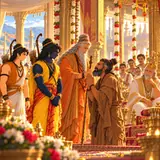
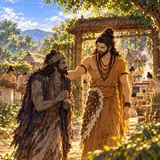
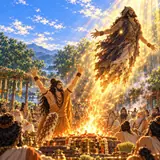
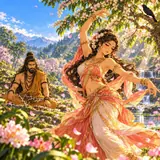
Scene 1 of 5 · On the bank of the Sarayu the great horse sacrifice begins, with Rishyashringa leading the chants before the fires.
ऋष्यशृङ्गं पुरस्कृत्य कर्म चक्रुर्द्विजर्षभाः । अश्वमेधे महायज्ञे राज्ञोऽस्य सुमहात्मनः ॥ २ ॥
With Rishyashringa at their head, the best of brahmanas performed the rites in the great horse sacrifice of that great-souled king.
ऋष्यशृंग को आगे करके श्रेष्ठ ब्राह्मणों ने उन महात्मा राजा के महान अश्वमेध यज्ञ में कर्म किए।
CommentaryNot scripture Rishyashringa leads again. The boy who once thought sweets were fruits now presides over the grandest rite of the age. His purity, not his worldliness, is what qualifies him.
Scene 1 of 5 · On the bank of the Sarayu the great horse sacrifice begins, with Rishyashringa leading the chants before the fires.
कर्म कुर्वन्ति विधिवद् याजका वेदपारगाः । यथाविधि यथान्यायं परिक्रामन्ति शास्त्रतः ॥ ३ ॥
The priests, masters of the Vedas, performed the rites duly, moving about as the rule, custom and shastra direct.
वेदों के पारंगत ऋत्विजों ने विधि, परंपरा और शास्त्र के अनुसार चलते हुए विधिवत कर्म किए।
CommentaryNot scripture Three guides for the priests: rule (vidhi ), custom, and shastra. Ritual combines written law with inherited practice. The priests “move about” (parikraman ): Vedic rites involve precise movements around the fires.
Scene 1 of 5 · On the bank of the Sarayu the great horse sacrifice begins, with Rishyashringa leading the chants before the fires.
प्रवर्ग्यं शास्त्रतः कृत्वा तथैवोपसदं द्विजाः । चक्रुश्च विधिवत् सर्वमधिकं कर्म शास्त्रतः ॥ ४ ॥
Having performed the Pravargya and the Upasad by the shastra, the brahmanas duly performed all the further rites by the shastra.
शास्त्र के अनुसार प्रवर्ग्य और उपसद करके ब्राह्मणों ने आगे के सब कर्म भी शास्त्र के अनुसार विधिवत किए।
CommentaryNot scripture The Pravargya (an offering of heated milk) and the Upasad (a series of preparatory rites) come first. Valmiki names the technical rites accurately. His audience would have known them; we can simply feel their care and order.
Scene 1 of 5 · On the bank of the Sarayu the great horse sacrifice begins, with Rishyashringa leading the chants before the fires.
अभिपूज्य ततो हृष्टाः सर्वे चक्रुर्यथाविधि । प्रातःसवनपूर्वाणि कर्माणि मुनिपुङ्गवाः ॥ ५ ॥
Then, having worshipped, the best of sages, joyful, all performed by rule the rites that begin with the morning pressing.
फिर पूजन करके सब श्रेष्ठ मुनियों ने प्रसन्न होकर प्रातःसवन से आरंभ होने वाले कर्म नियम से किए।
CommentaryNot scripture The soma sacrifice has three “pressings” (savana ) through the day: morning, midday and evening. The juice of the soma plant was pressed and offered to the gods. This verse begins the morning pressing.
Scene 1 of 5 · On the bank of the Sarayu the great horse sacrifice begins, with Rishyashringa leading the chants before the fires.
ऐन्द्रश्च विधिवत् दत्तो राजा चाभिषुतोऽनघः । मध्यन्दिनं च सवनं प्रावर्तत यथाक्रमम् ॥ ६ ॥
Indra’s portion was duly offered, the sinless king pressed the soma, and the midday pressing followed in order.
इंद्र का भाग विधिवत अर्पित किया गया, निष्पाप राजा ने सोमरस निकाला, और क्रम से माध्यंदिन सवन हुआ।
CommentaryNot scripture Indra receives his portion. Indra is the king of the gods, and the soma rite is above all his. The king himself takes part in pressing the soma.
Scene 1 of 5 · On the bank of the Sarayu the great horse sacrifice begins, with Rishyashringa leading the chants before the fires.
तृतीयसवनं चैव राज्ञोऽस्य सुमहात्मनः । चक्रुस्ते शास्त्रतो दृष्ट्वा यथा ब्राह्मणपुङ्गवाः ॥ ७ ॥
And the third pressing too for that great-souled king those best of brahmanas performed, as they saw it in the shastra.
और उन महात्मा राजा के लिए उन श्रेष्ठ ब्राह्मणों ने तीसरा सवन भी वैसे ही किया जैसे शास्त्र में देखा था।
CommentaryNot scripture The third pressing, in the evening, completes the cycle. Morning, noon, evening: the whole day is offered. Everything is done “as seen in the shastra”.
Scene 1 of 5 · On the bank of the Sarayu the great horse sacrifice begins, with Rishyashringa leading the chants before the fires.
आह्वायाञ्चक्रिरे तत्र शक्रादीन् विबुधोत्तमान् । ऋष्यशृङ्गादयो मन्त्रैः शिक्षाक्षरसमन्वितैः ॥ ८ ॥
गीतिभिर्मधुरैः स्निग्धैर्मन्त्राह्वानैर्यथार्हतः । होतारो ददुरावाह्य हविर्भागान् दिवौकसाम् ॥ ९ ॥
Rishyashringa and the others invoked Shakra and the other best of gods with mantras of correct pronunciation, with sweet and tender chants; the hotris, invoking them as was due, gave the dwellers of heaven their shares of the offering.
ऋष्यशृंग आदि ने शुद्ध उच्चारण वाले मंत्रों से, मधुर और कोमल गान से इंद्र आदि श्रेष्ठ देवताओं का आवाहन किया; होताओं ने यथोचित आवाहन करके स्वर्गवासियों को आहुति के उनके भाग दिए।
CommentaryNot scripture The gods are invited with mantras chanted “with correct pronunciation” and “sweet and tender” melodies. The hotri priests recite the invitations. Each god receives a share. Vedic chant is believed to work through exact sound, which is why its pronunciation was guarded so carefully for thousands of years.
Scene 1 of 5 · On the bank of the Sarayu the great horse sacrifice begins, with Rishyashringa leading the chants before the fires.
न चाहुतमभूत् तत्र स्खलितं वा न किञ्चन । दृश्यते ब्रह्मवत् सर्वं क्षेमयुक्तं हि चक्रिरे ॥ १० ॥
Nothing there was offered wrongly, nor did anything go amiss; everything was seen to be done according to the Veda, and they performed it all safely.
वहाँ कुछ भी गलत अर्पित नहीं हुआ, और न कुछ बिगड़ा; सब कुछ वेद के अनुसार होता दिखा, और उन्होंने सब कुशलता से पूरा किया।
CommentaryNot scripture Nothing went wrong: no wrong offering, no mistake. After all the anxiety of earlier sargas about flaws and demons, this is a relief. The rite is perfect.
Scene 1 of 5 · On the bank of the Sarayu the great horse sacrifice begins, with Rishyashringa leading the chants before the fires.
न तेष्वहःसु श्रान्तो वा क्षुधितो वा न दृश्यते । नाविद्वान् ब्राह्मणः कश्चिन्नाशतानुचरस्तथा ॥ ११ ॥
In those days no one was seen tired or hungry; no brahmana there was unlearned, and none had fewer than a hundred followers.
उन दिनों कोई थका या भूखा नहीं दिखता था; वहाँ कोई ब्राह्मण अनपढ़ नहीं था, और किसी के सौ से कम अनुयायी नहीं थे।
CommentaryNot scripture Now the human side: no one tired, no one hungry. Even the priests each brought a hundred followers. A great rite was a great feast, and Valmiki shows its generosity.
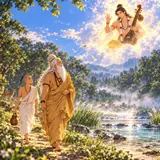
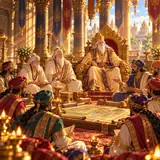
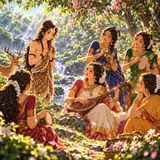
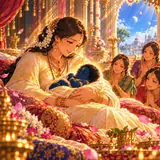
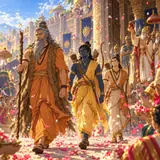
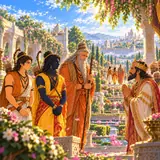
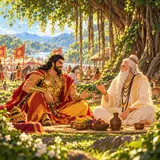
Scene 2 of 5 · Mountains of food, and guests from every land fed day and night while the learned debate.
ब्राह्मणा भुञ्जते नित्यं नाथवन्तश्च भुञ्जते । तापसा भुञ्जते चापि श्रमणाश्चैव भुञ्जते ॥ १२ ॥
Brahmanas ate continually, and those with protectors ate; ascetics ate, and wandering monks ate as well.
ब्राह्मण लगातार भोजन करते थे, आश्रित जन भोजन करते थे; तपस्वी भोजन करते थे, और भिक्षु भी भोजन करते थे।
CommentaryNot scripture Brahmanas, dependants, ascetics, wandering monks: all ate. The feeding is for everyone, not only for the priests. A rite that leaves people hungry is no rite at all.
Scene 2 of 5 · Mountains of food, and guests from every land fed day and night while the learned debate.
वृद्धाश्च व्याधिताश्चैव स्त्रीबालाश्च तथैव च । अनिशं भुञ्जमानानां न तृप्तिरुपलभ्यते ॥ १३ ॥
The old and the sick, women and children ate without pause, and still no one had enough.
बूढ़े और रोगी, स्त्रियाँ और बच्चे बिना रुके भोजन करते थे, और फिर भी किसी का मन नहीं भरता था।
CommentaryNot scripture The old, the sick, women, children ate without pause, and still no one had enough: a playful way of saying the food was so good that everyone kept eating. Abundance is part of blessing.
Scene 2 of 5 · Mountains of food, and guests from every land fed day and night while the learned debate.
दीयतां दीयतामन्नं वासांसि विविधानि च । इति संचोदितास्तत्र तथा चक्रुरनेकशः ॥ १४ ॥
“Give food, give clothes of every kind!”: urged like this, they gave many times over.
“भोजन दो, हर प्रकार के वस्त्र दो!”: ऐसे प्रेरित होकर वे बार-बार देते रहे।
CommentaryNot scripture “Give food! Give clothes!” The cry keeps going round, and the servants give again and again. The rite becomes a festival of giving.
Scene 2 of 5 · Mountains of food, and guests from every land fed day and night while the learned debate.
अन्नकूटाश्च दृश्यन्ते बहवः पर्वतोपमाः । दिवसे दिवसे तत्र सिद्धस्य विधिवत् तदा ॥ १५ ॥
Many heaps of food like mountains were seen there, cooked properly day after day.
वहाँ पहाड़ों जैसे भोजन के कई ढेर दिखते थे, जो दिन-प्रतिदिन ठीक से पकाए जाते थे।
CommentaryNot scripture Heaps of food “like mountains”, cooked fresh every day. Valmiki loves this picture of plenty. Feeding guests is one of the deepest Indian sacred duties, and here it is done on a royal scale.
Scene 2 of 5 · Mountains of food, and guests from every land fed day and night while the learned debate.
नानादेशादनुप्राप्ताः पुरुषाः स्त्रीगणास्तथा । अन्नपानैः सुविहितास्तस्मिन् यज्ञे महात्मनः ॥ १६ ॥
Men and women who had come from many lands were well provided with food and drink at the great-souled king’s sacrifice.
अनेक देशों से आए स्त्री-पुरुषों को उन महात्मा राजा के यज्ञ में भोजन और पेय से अच्छी तरह तृप्त किया गया।
CommentaryNot scripture Men and women from many lands are fed. The rite welcomes the world. Hospitality without borders is part of the king’s glory.
Scene 2 of 5 · Mountains of food, and guests from every land fed day and night while the learned debate.
अन्नं हि विधिवत्स्वादु प्रशंसन्ति द्विजर्षभाः । अहो तृप्ताः स्म भद्रं ते इति शुश्राव राघवः ॥ १७ ॥
The best of brahmanas praised the food as properly prepared and tasty, and Raghava (Dasharatha) heard them say, “Ah, we are satisfied; blessings on you!”
श्रेष्ठ ब्राह्मणों ने भोजन को ठीक से बना हुआ और स्वादिष्ट बताकर सराहा, और राघव (दशरथ) ने उन्हें कहते सुना, “अहा, हम तृप्त हैं; आपका कल्याण हो!”
CommentaryNot scripture The king overhears the brahmanas praising the food: “Ah, we are satisfied; blessings on you!” The greatest reward of a host is a satisfied guest. Here Dasharatha is called Raghava, “descendant of Raghu”, a family name his son will make famous.
Scene 2 of 5 · Mountains of food, and guests from every land fed day and night while the learned debate.
स्वलंकृताश्च पुरुषा ब्राह्मणान् पर्यवेषयन् । उपासन्ते च तानन्ये सुमृष्टमणिकुण्डलाः ॥ १८ ॥
Well-adorned men served the brahmanas, and others, wearing bright jewelled earrings, waited on them.
सजे-धजे पुरुष ब्राह्मणों को परोसते थे, और चमकीले रत्नजड़ित कुंडल पहने दूसरे लोग उनकी सेवा करते थे।
CommentaryNot scripture The servers are finely dressed, with jewelled earrings. Honour for the guests includes the dignity of those who serve them. Everything is done beautifully.
Scene 2 of 5 · Mountains of food, and guests from every land fed day and night while the learned debate.
कर्मान्तरे तदा विप्रा हेतुवादान् बहूनपि । प्राहुः सुवाग्मिनो धीराः परस्परजिगीषया ॥ १९ ॥
Between the rites, eloquent and steady brahmanas put forward many arguments, each eager to win over the others.
कर्मों के बीच के समय में वाक्पटु और धीर ब्राह्मण एक-दूसरे को जीतने की इच्छा से अनेक तर्क रखते थे।
CommentaryNot scripture Between rites, the brahmanas debate, each trying to win the argument. Learned debate (vada ) was a prized art in ancient India. Great rites drew scholars as well as priests, and argument was part of the celebration.
Scene 2 of 5 · Mountains of food, and guests from every land fed day and night while the learned debate.
दिवसे दिवसे तत्र संस्तरे कुशला द्विजाः । सर्वकर्माणि चक्रुस्ते यथाशास्त्रं प्रचोदिताः ॥ २० ॥
Day after day there the skilled brahmanas performed all the rites as the shastra directed.
वहाँ कुशल ब्राह्मण दिन-प्रतिदिन शास्त्र के निर्देश के अनुसार सब कर्म करते रहे।
CommentaryNot scripture Day after day, the rites continue by the shastra. The ashvamedha took many days, and the poem lets us feel its steady rhythm.
Scene 2 of 5 · Mountains of food, and guests from every land fed day and night while the learned debate.
नाषडङ्गविदत्रासीन्नाव्रतो नाबहुश्रुतः । सदस्यास्तस्य वै राज्ञो नावादकुशलो द्विजः ॥ २१ ॥
None of the king’s assembly-members was ignorant of the six limbs of the Veda, or without vows, or of little learning; no brahmana there was unskilled in debate.
राजा के सभासदों में कोई ऐसा नहीं था जो वेद के छह अंगों को न जानता हो, जिसके व्रत न हों, या जो अल्पज्ञ हो; वहाँ कोई ब्राह्मण शास्त्रार्थ में अकुशल नहीं था।
CommentaryNot scripture Every member of the assembly was learned and disciplined; no brahmana there was unskilled in debate. The king gathers the best minds. Learning is honoured as highly as wealth.
Scene 2 of 5 · Mountains of food, and guests from every land fed day and night while the learned debate.
प्राप्ते यूपोच्छ्रये तस्मिन् षड् बैल्वाः खादिरास्तथा । तावन्तो बिल्वसहिताः पर्णिनश्च तथा परे ॥ २२ ॥
When the time came to raise the sacrificial posts, there were six of bilva wood and as many of khadira, as many of palasha along with the bilva,
जब यूप (यज्ञ-स्तंभ) खड़े करने का समय आया, तो छह बेल की लकड़ी के थे और उतने ही खैर के, और बेल के साथ उतने ही पलाश के,
CommentaryNot scripture Now the sacrificial posts (yupa ), to which the animals would be bound. They are made from different sacred woods: bilva (wood-apple), khadira (acacia), palasha (flame of the forest). Each wood had its ritual meaning.
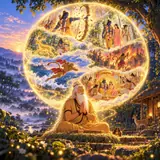
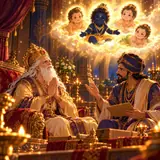
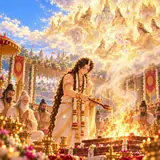
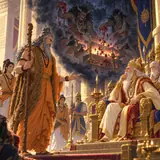
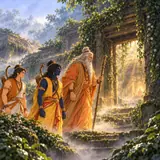
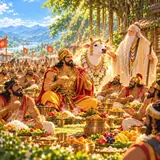
Scene 3 of 5 · Twenty-one golden sacrificial posts shine like the seven sages, around a fire altar shaped like Garuda.
श्लेष्मातकमयो दिष्टो देवदारुमयस्तथा । द्वावेव तत्र विहितौ बाहुव्यस्तपरिग्रहौ ॥ २३ ॥
one of shleshmataka as prescribed, and of devadaru; two were placed there, at the span of two outstretched arms.
एक लिसोड़े (श्लेष्मातक) का विधि के अनुसार, और देवदारु के; दो वहाँ फैली हुई दो भुजाओं की दूरी पर लगाए गए।
CommentaryNot scripture More woods: shleshmataka and devadaru (the Himalayan cedar). Two posts stand an arm-span apart. Valmiki records even the spacing. This is the precision of the ritual texts.
Scene 3 of 5 · Twenty-one golden sacrificial posts shine like the seven sages, around a fire altar shaped like Garuda.
कारिताः सर्व एवैते शास्त्रज्ञैर्यज्ञकोविदैः । शोभार्थं तस्य यज्ञस्य काञ्चनालंकृता भवन् ॥ २४ ॥
All of them were made by men who knew the shastras and the sacrifice, and to adorn the sacrifice they were decorated with gold.
वे सब शास्त्र और यज्ञ जानने वाले पुरुषों ने बनाए थे, और यज्ञ की शोभा के लिए सोने से सजाए गए थे।
CommentaryNot scripture The posts were carved by men who knew both the shastras and the rite, and they were covered in gold. Beauty and correctness go together.
Scene 3 of 5 · Twenty-one golden sacrificial posts shine like the seven sages, around a fire altar shaped like Garuda.
एकविंशतियूपास्ते एकविंशत्यरत्नयः । वासोभिरेकविंशद्भिरेकैकं समलंकृताः ॥ २५ ॥
There were twenty-one posts, each twenty-one cubits high, and each adorned with twenty-one cloths.
इक्कीस यूप थे, हर एक इक्कीस हाथ ऊँचा, और हर एक इक्कीस वस्त्रों से सजा।
CommentaryNot scripture Twenty-one posts, each twenty-one cubits tall, each wrapped in twenty-one cloths. Twenty-one is a sacred number in Vedic ritual. The posts must have towered over the enclosure.
Scene 3 of 5 · Twenty-one golden sacrificial posts shine like the seven sages, around a fire altar shaped like Garuda.
विन्यस्ता विधिवत् सर्वे शिल्पिभिः सुकृता दृढाः । अष्टाश्रयः सर्व एव श्लक्ष्णरूपसमन्विताः ॥ २६ ॥
All were set in place by the rule, well made and firm by craftsmen, all eight-sided and smooth.
सब कारीगरों ने विधि से अच्छी तरह बनाकर मज़बूती से खड़े किए थे, सब अष्टकोण और चिकने।
CommentaryNot scripture Eight-sided and smooth: the posts were shaped by craftsmen with care. In the Vedic world, the yupa itself was holy, a pillar linking earth and sky.
Scene 3 of 5 · Twenty-one golden sacrificial posts shine like the seven sages, around a fire altar shaped like Garuda.
आच्छादितास्ते वासोभिः पुष्पैर्गन्धैश्च पूजिताः । सप्तर्षयो दीप्तिमन्तो विराजन्ते यथा दिवि ॥ २७ ॥
Covered with cloth and worshipped with flowers and perfumes, they shone like the seven radiant sages in the sky.
वस्त्रों से ढके और फूलों तथा सुगंध से पूजे गए वे आकाश में चमकते सप्तर्षियों की तरह शोभा पाते थे।
CommentaryNot scripture Covered in cloth, worshipped with flowers and perfume, they shone “like the seven radiant sages in the sky”, the stars of the Great Bear. The sacrificial ground becomes a mirror of the heavens.
Scene 3 of 5 · Twenty-one golden sacrificial posts shine like the seven sages, around a fire altar shaped like Garuda.
इष्टकाश्च यथान्यायं कारिताश्च प्रमाणतः । चितोऽग्निर्ब्राह्मणैस्तत्र कुशलैः शुल्बकर्मणि ॥ २८ ॥
The bricks were made properly and to measure, and the fire altar was built by brahmanas skilled in the measuring of altars.
ईंटें ठीक से और नाप से बनाई गई थीं, और वेदियों के नाप में कुशल ब्राह्मणों ने अग्नि-वेदी बनाई।
CommentaryNot scripture The bricks were made exactly to measure, and the fire altar was built by experts in measuring (shulba ). The Shulba Sutras, the Vedic texts on altar building, contain some of the earliest geometry in the world.
Scene 3 of 5 · Twenty-one golden sacrificial posts shine like the seven sages, around a fire altar shaped like Garuda.
स चित्यो राजसिंहस्य संचितः कुशलैर्द्विजैः । गरुडो रुक्मपक्षो वै त्रिगुणोऽष्टादशात्मकः ॥ २९ ॥
That altar of the lion among kings, built by skilled brahmanas, was in the form of Garuda with golden wings, threefold, of eighteen parts.
कुशल ब्राह्मणों द्वारा बनाई गई उस राजसिंह की वेदी सोने के पंखों वाले गरुड़ के आकार की थी, तिगुनी, अठारह भागों वाली।
CommentaryNot scripture The altar is shaped like Garuda, the great eagle, with golden wings. Garuda is Vishnu’s mount. Fire altars in the shape of a bird, built of precisely counted bricks, are described in Vedic texts, and their remains have been studied by archaeologists.
Scene 3 of 5 · Twenty-one golden sacrificial posts shine like the seven sages, around a fire altar shaped like Garuda.
नियुक्तास्तत्र पशवस्तत्तदुद्दिश्य दैवतम् । उरगाः पक्षिणश्चैव यथाशास्त्रं प्रचोदिताः ॥ ३० ॥
Animals were bound there, each meant for its own deity, and snakes and birds too, as the shastra directed.
वहाँ अपने-अपने देवता के लिए निश्चित पशु बाँधे गए, और शास्त्र के निर्देश के अनुसार सर्प और पक्षी भी।
CommentaryNot scripture Animals are bound, each for its own deity, along with snakes and birds. This is the Vedic sacrificial world, and the poem describes it as it was. Later Hindu tradition largely replaced animal offerings with symbolic ones.
Scene 3 of 5 · Twenty-one golden sacrificial posts shine like the seven sages, around a fire altar shaped like Garuda.
शामित्रे तु हयस्तत्र तथा जलचराश्च ये । ऋषिभिः सर्वमेवैतन्नियुक्तं शास्त्रतस्तदा ॥ ३१ ॥
At the place of immolation the horse and the creatures of the water were set: all of this was arranged by the sages according to the shastra.
बलि के स्थान पर घोड़ा और जलचर प्राणी रखे गए: यह सब ऋषियों ने शास्त्र के अनुसार व्यवस्थित किया।
CommentaryNot scripture The horse and water creatures are set in place by the sages. The ashvamedha was the most elaborate of all royal rites, and its details were strictly laid down.
Scene 3 of 5 · Twenty-one golden sacrificial posts shine like the seven sages, around a fire altar shaped like Garuda.
पशूनां त्रिशतं तत्र यूपेषु नियतं तदा । अश्वरत्नोत्तमं तत्र राज्ञो दशरथस्य ह ॥ ३२ ॥
Three hundred animals were bound to the posts there, together with King Dasharatha’s horse, the jewel among horses.
वहाँ यूपों से तीन सौ पशु बँधे थे, और उनके साथ राजा दशरथ का घोड़ों में रत्न जैसा घोड़ा।
CommentaryNot scripture Three hundred animals, and the king’s horse, “a jewel among horses”. The scale is immense. Valmiki presents the rite in full, as a record of what the great sacrifice involved.
Scene 3 of 5 · Twenty-one golden sacrificial posts shine like the seven sages, around a fire altar shaped like Garuda.
कौसल्या तं हयं तत्र परिचर्य समन्ततः । कृपाणैर्विससारैनं त्रिभिः परमया मुदा ॥ ३३ ॥
Kausalya, having tended the horse on every side, struck it with three blades, with the greatest joy.
कौसल्या ने चारों ओर से घोड़े की परिचर्या करके बड़े आनंद से तीन खड्गों से उसका वध किया।
CommentaryNot scripture Kausalya, the chief queen, performs the immolation of the horse with three blades, as the ritual requires. The verse says she did it “with the greatest joy” (paraya muda ), because she is fulfilling the rite that will bring her sons. This edition translates it plainly.
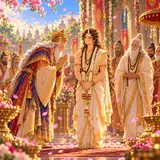
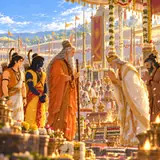
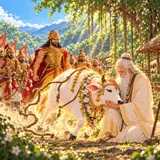
Scene 4 of 5 · The rite complete, Dasharatha offers the whole earth to the priests, who ask for gold and cattle instead.
पतत्रिणा तदा सार्धं सुस्थितेन च चेतसा । अवसद् रजनीमेकां कौसल्या धर्मकाम्यया ॥ ३४ ॥
Kausalya, with a steady mind, desiring dharma, spent one night with that horse.
धर्म की इच्छा रखने वाली कौसल्या ने स्थिर मन से उस घोड़े के साथ एक रात बिताई।
CommentaryNot scripture Kausalya spends a night beside the horse, as the ritual prescribes, “desiring dharma” and “with a steady mind”. This is a solemn part of the ashvamedha described in the Vedic texts. The poem treats it with full seriousness.
Scene 4 of 5 · The rite complete, Dasharatha offers the whole earth to the priests, who ask for gold and cattle instead.
होताध्वर्युस्तथोद्गाता हस्तेन समयोजयन् । महिष्या परिवृत्त्याथ वावातामपरां तथा ॥ ३५ ॥
The hotri, the adhvaryu and the udgatri joined with their hands the chief queen, the neglected wife and the favourite wife.
होता, अध्वर्यु और उद्गाता ने महिषी (पटरानी), परिवृक्ता (उपेक्षित रानी) और वावाता (प्रिय रानी) के हाथ से हाथ मिलाया।
CommentaryNot scripture Three queens with ritual roles: the mahishi (chief queen), the parivrikta (the neglected wife) and the vavata (the favourite). These are fixed ritual titles in the ashvamedha, not comments on Dasharatha’s household. The priests join hands with them as part of the rite.
Scene 4 of 5 · The rite complete, Dasharatha offers the whole earth to the priests, who ask for gold and cattle instead.
पतत्रिणस्तस्य वपामुद्धृत्य नियतेन्द्रियः । ऋत्विक्परमसम्पन्नः श्रपयामास शास्त्रतः ॥ ३६ ॥
Then the priest, master of his senses and fully accomplished, took out the horse’s omentum and cooked it according to the shastra.
तब जितेंद्रिय और पूर्ण कुशल ऋत्विज ने घोड़े की वपा (चर्बी) निकाली और शास्त्र के अनुसार उसे पकाया।
CommentaryNot scripture The vapa , the fatty membrane, is cooked as an offering. Every step of the rite is technical. The priest is “master of his senses”, performing it with full self-control.
Scene 4 of 5 · The rite complete, Dasharatha offers the whole earth to the priests, who ask for gold and cattle instead.
धूमगन्धं वपायास्तु जिघ्रति स्म नराधिपः । यथाकालं यथान्यायं निर्णुदन् पापमात्मनः ॥ ३७ ॥
The lord of men smelled the smoke of the omentum at the proper time, as was right, driving away his sin.
मनुष्यों के स्वामी ने उचित समय पर, जैसा उचित था, वपा का धुआँ सूँघा, और अपने पाप को दूर किया।
CommentaryNot scripture The king inhales the smoke of the offering “at the proper time”, and it drives away his sin. In Vedic thought, the smoke carries the offering upward, and the sacrificer is purified by it.
Scene 4 of 5 · The rite complete, Dasharatha offers the whole earth to the priests, who ask for gold and cattle instead.
हयस्य यानि चाङ्गानि तानि सर्वाणि ब्राह्मणाः । अग्नौ प्रास्यन्ति विधिवत् समस्ताः षोडशर्त्विजः ॥ ३८ ॥
All sixteen priests together cast all the horse’s limbs into the fire by the rule.
सोलहों ऋत्विजों ने मिलकर घोड़े के सब अंग विधि से अग्नि में अर्पित किए।
CommentaryNot scripture The sixteen priests together offer the horse into the fire. Sixteen is the full number of priests in the great soma rites, four groups of four.
Scene 4 of 5 · The rite complete, Dasharatha offers the whole earth to the priests, who ask for gold and cattle instead.
प्लक्षशाखासु यज्ञानामन्येषां क्रियते हविः । अश्वमेधस्य चैकस्य वैतसो भाग इष्यते ॥ ३९ ॥
In other sacrifices the offering is made on branches of plaksha; in the horse sacrifice alone the portion is of cane.
दूसरे यज्ञों में आहुति प्लक्ष की शाखाओं पर दी जाती है; केवल अश्वमेध में भाग बेंत पर दिया जाता है।
CommentaryNot scripture A detail of ritual law: in the horse sacrifice alone, portions are offered on cane rather than on branches of plaksha (a fig tree). Valmiki shows his knowledge of the rites.
Scene 4 of 5 · The rite complete, Dasharatha offers the whole earth to the priests, who ask for gold and cattle instead.
त्र्यहोऽश्वमेधः संख्यातः कल्पसूत्रेण ब्राह्मणैः । चतुष्टोममहस्तस्य प्रथमं परिकल्पितम् ॥ ४० ॥
उक्थ्यं द्वितीयं संख्यातमतिरात्रं तथोत्तरम् । कारितास्तत्र बहवो विहिताः शास्त्रदर्शनात् ॥ ४१ ॥
The brahmanas reckon the horse sacrifice by the Kalpa Sutra as a three-day rite: the Chatushtoma is set as its first day, the Ukthya the second, and the Atiratra the last. Many other rites were performed there as the shastra directs:
ब्राह्मण कल्पसूत्र के अनुसार अश्वमेध को तीन दिन का कर्म मानते हैं: पहला दिन चतुष्टोम, दूसरा उक्थ्य, और अंतिम अतिरात्र। वहाँ शास्त्र के निर्देश के अनुसार और भी अनेक कर्म किए गए:
CommentaryNot scripture The ashvamedha is a three-day rite, with named stages: Chatushtoma, Ukthya, Atiratra. The Kalpa Sutras are the ritual manuals that set out these procedures. Then other great rites follow.
Scene 4 of 5 · The rite complete, Dasharatha offers the whole earth to the priests, who ask for gold and cattle instead.
ज्योतिष्टोमायुषी चैवमतिरात्रौ च निर्मितौ । अभिजिद्विश्वजिच्चैवमाप्तोर्यामौ महाक्रतुः ॥ ४२ ॥
the Jyotishtoma and Ayus and two Atiratras were performed, the Abhijit, the Vishvajit and the Aptoryama, great rites.
ज्योतिष्टोम और आयुष, और दो अतिरात्र किए गए; अभिजित, विश्वजित और आप्तोर्याम, ये महान यज्ञ किए गए।
CommentaryNot scripture Jyotishtoma, Ayus, Abhijit, Vishvajit, Aptoryama: the names of great Vedic soma rites. The king performs not one sacrifice but a cluster of them. His generosity to the gods is unbounded.
Scene 4 of 5 · The rite complete, Dasharatha offers the whole earth to the priests, who ask for gold and cattle instead.
प्राचीं होत्रे ददौ राजा दिशं स्वकुलवर्धनः । अध्वर्यवे प्रतीचीं तु ब्रह्मणे दक्षिणां दिशम् ॥ ४३ ॥
उद्गात्रे तु तथोदीचीं दक्षिणैषा विनिर्मिता । अश्वमेधे महायज्ञे स्वयम्भूविहिते पुरा ॥ ४४ ॥
The king, increaser of his line, gave the east to the hotri, the west to the adhvaryu, the south to the brahman, and the north to the udgatri: this was the fee set down for the great horse sacrifice by the Self-born of old.
वंश को बढ़ाने वाले राजा ने होता को पूर्व दिशा, अध्वर्यु को पश्चिम, ब्रह्मा को दक्षिण और उद्गाता को उत्तर दिशा दी: पुराने समय में स्वयंभू ब्रह्मा ने महान अश्वमेध के लिए यही दक्षिणा निश्चित की थी।
CommentaryNot scripture The fee (dakshina ) for the horse sacrifice: the four quarters of the earth, one to each chief priest. East to the hotri, west to the adhvaryu, south to the brahman, north to the udgatri. The king gives away his whole kingdom.
Scene 4 of 5 · The rite complete, Dasharatha offers the whole earth to the priests, who ask for gold and cattle instead.
क्रतुं समाप्य तु तदा न्यायतः पुरुषर्षभः । ऋत्विग्भ्यो हि ददौ राजा धरां तां कुलवर्धनः ॥ ४५ ॥
Having completed the rite properly, the bull among men, increaser of his line, gave that earth to the priests.
कर्म को ठीक से पूरा करके वंश को बढ़ाने वाले उन पुरुषश्रेष्ठ ने वह पृथ्वी ऋत्विजों को दे दी।
CommentaryNot scripture He actually gives the earth to the priests. A king who has completed the greatest rite gives away the greatest gift. The scene is grand and also a little comic, as the next verses show.
Scene 4 of 5 · The rite complete, Dasharatha offers the whole earth to the priests, who ask for gold and cattle instead.
एवम् दत्त्वा प्रहृष्टोऽभूच्छ्रीमानिक्ष्वाकुनन्दनः । ऋत्विजस्त्वब्रुवन् सर्वे राजानं गतकिल्बिषम् ॥ ४६ ॥
Having given it so, the glorious delight of the Ikshvakus rejoiced. But all the priests said to the king, freed from his sin:
इस प्रकार देकर इक्ष्वाकुओं के आनंद, यशस्वी राजा प्रसन्न हुए। पर सब ऋत्विजों ने पाप से मुक्त हुए राजा से कहा:
CommentaryNot scripture The priests answer the king, who is now “freed from his sin”. The rite has purified him. But they have a practical objection.
Scene 4 of 5 · The rite complete, Dasharatha offers the whole earth to the priests, who ask for gold and cattle instead.
भवानेव महीं कृत्स्नामेको रक्षितुमर्हति । न भूम्या कार्यमस्माकं नहि शक्ताः स्म पालने ॥ ४७ ॥
“You alone are able to protect the whole earth. We have no use for land; we are not able to govern.
“केवल आप ही पूरी पृथ्वी की रक्षा कर सकते हैं। हमें भूमि से कोई काम नहीं; हम शासन करने में समर्थ नहीं हैं।
CommentaryNot scripture “You alone can protect the earth. We are not able to govern.” The priests refuse the gift. They know their dharma: study and ritual, not ruling. Each must do his own work.
Scene 4 of 5 · The rite complete, Dasharatha offers the whole earth to the priests, who ask for gold and cattle instead.
रताः स्वाध्यायकरणे वयं नित्यं हि भूमिप । निष्क्रयं किञ्चिदेवेह प्रयच्छतु भवानिति ॥ ४८ ॥
“We are always devoted to study, lord of the earth. Give us some ransom for it instead.
“पृथ्वीपति, हम सदा स्वाध्याय में लगे रहते हैं। इसके बदले हमें कोई मूल्य दे दीजिए।
CommentaryNot scripture “We are always devoted to study.” They ask for something else instead, a nishkraya , a ransom or substitute. The kingdom is returned to the king.
Scene 4 of 5 · The rite complete, Dasharatha offers the whole earth to the priests, who ask for gold and cattle instead.
मणिरत्नं सुवर्णं वा गावो यद्वा समुद्यतम् । तत् प्रयच्छ नरश्रेष्ठ धरण्या न प्रयोजनम् ॥ ४९ ॥
“Give us jewels, gold, cattle, or whatever is at hand, best of men; we have no use for the earth.”
“पुरुषश्रेष्ठ, हमें रत्न, सोना, गायें, या जो भी पास हो, दे दीजिए; हमें पृथ्वी से कोई काम नहीं।”
CommentaryNot scripture Jewels, gold, cattle, whatever is at hand: anything but the earth. The scene teaches respect for one’s own role. A good priest does not want a throne.
Scene 4 of 5 · The rite complete, Dasharatha offers the whole earth to the priests, who ask for gold and cattle instead.
एवमुक्तो नरपतिर्ब्राह्मणैर्वेदपारगैः । गवां शतसहस्राणि दश तेभ्यो ददौ नृपः ॥ ५० ॥
So addressed by the brahmanas, masters of the Vedas, the king gave them ten hundred thousand cows,
वेदों के पारंगत ब्राह्मणों के ऐसा कहने पर राजा ने उन्हें दस लाख गायें दीं,
CommentaryNot scripture The king gives ten hundred thousand cows: a million. Cattle were the measure of wealth in Vedic India, and also a sacred gift.
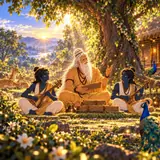
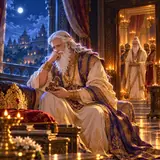
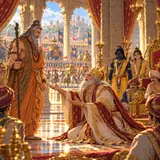
Scene 5 of 5 · The king gives his own bracelet to a poor brahmana, and Rishyashringa promises him four sons.
दशकोटिं सुवर्णस्य रजतस्य चतुर्गुणम् । ऋत्विजस्तु ततः सर्वे प्रददुः सहिता वसु ॥ ५१ ॥
ऋष्यशृङ्गाय मुनये वसिष्ठाय च धीमते । ततस्ते न्यायतः कृत्वा प्रविभागं द्विजोत्तमाः ॥ ५२ ॥
ten crores of gold and four times as much silver. Then all the priests together gave the wealth to the sage Rishyashringa and the wise Vasishtha. Then those best of brahmanas, having divided it fairly,
दस करोड़ सोना और उसका चार गुना चाँदी। फिर सब ऋत्विजों ने मिलकर वह धन मुनि ऋष्यशृंग और बुद्धिमान वसिष्ठ को दे दिया। फिर उन श्रेष्ठ ब्राह्मणों ने उसे न्याय से बाँटकर
CommentaryNot scripture Ten crores of gold and four times as much in silver. Then the priests hand it all to Rishyashringa and Vasishtha, who divide it fairly. Even great wealth is shared justly.
Scene 5 of 5 · The king gives his own bracelet to a poor brahmana, and Rishyashringa promises him four sons.
सुप्रीतमनसः सर्वे प्रत्यूचुर्मुदिता भृशम् । ततः प्रसर्पकेभ्यस्तु हिरण्यं सुसमाहितः ॥ ५३ ॥
जाम्बूनदं कोटिसंख्यं ब्राह्मणेभ्यो ददौ तदा । दरिद्राय द्विजायथ हस्ताभरणमुत्तमम् ॥ ५४ ॥
all said, delighted and well pleased: “We are satisfied.” Then, with full attention, he gave a crore of fine gold to the brahmanas who had come to watch. And to a poor brahmana
प्रसन्न और संतुष्ट होकर कहा: “हम तृप्त हैं।” फिर राजा ने पूरे ध्यान से देखने आए ब्राह्मणों को एक करोड़ उत्तम सोना दिया। और एक दरिद्र ब्राह्मण को,
CommentaryNot scripture “We are satisfied.” The priests are content. Then the king gives more gold to the brahmanas who came only to watch. No one leaves empty-handed.
Scene 5 of 5 · The king gives his own bracelet to a poor brahmana, and Rishyashringa promises him four sons.
कस्मैचित् याचमानाय ददौ राघवनन्दनः । ततः प्रीतेषु विधिवत् द्विजेषु द्विजवत्सलः ॥ ५५ ॥
प्रणाममकरोत् तेषां हर्षव्याकुलितेन्द्रियः । तस्याशिषोऽथ विविधा ब्राह्मणैः समुदाहृताः ॥ ५६ ॥
who begged of him, the delight of the Raghus gave his own fine bracelet. Then, when the brahmanas were duly satisfied, the king who loved brahmanas bowed before them, his senses overwhelmed with joy. Then the brahmanas pronounced many blessings
जिसने उनसे याचना की, रघुकुल के आनंद ने अपना उत्तम कंगन दे दिया। फिर जब ब्राह्मण विधिवत तृप्त हो गए, तो ब्राह्मणों से प्रेम करने वाले राजा ने आनंद से विभोर होकर उन्हें प्रणाम किया। तब ब्राह्मणों ने अनेक आशीर्वाद दिए
CommentaryNot scripture A beautiful moment: a poor brahmana asks, and the king gives him his own bracelet from his arm. After all the crores of gold, Valmiki ends with one personal gift. The king bows before the brahmanas, overwhelmed with joy.
Scene 5 of 5 · The king gives his own bracelet to a poor brahmana, and Rishyashringa promises him four sons.
उदारस्य नृवीरस्य धरण्यां पतितस्य च । ततः प्रीतमना राजा प्राप्य यज्ञमनुत्तमम् ॥ ५७ ॥
पापापहं स्वर्नयनं दुस्तरं पार्थिवर्षभैः । ततोऽब्रवीदृष्यशृङ्गं राजा दशरथस्तदा ॥ ५८ ॥
on the generous hero among men, who lay prostrate on the ground. Then the king, glad at heart, having achieved that unsurpassed sacrifice, which destroys sin, leads to heaven and is hard for even the best of kings to accomplish, said to Rishyashringa:
उस उदार, पुरुषों में वीर राजा को, जो धरती पर दंडवत पड़े थे। फिर प्रसन्न मन वाले राजा ने पाप का नाश करने वाला, स्वर्ग ले जाने वाला और श्रेष्ठ राजाओं के लिए भी कठिन वह अनुपम यज्ञ पूरा करके ऋष्यशृंग से कहा:
CommentaryNot scripture The king lies prostrate on the ground as they bless him. The sacrifice “destroys sin and leads to heaven”, and is hard even for great kings to complete. Dasharatha has done it. Now he turns to the reason he began.
Scene 5 of 5 · The king gives his own bracelet to a poor brahmana, and Rishyashringa promises him four sons.
कुलस्य वर्धनं तत् तु कर्तुमर्हसि सुव्रत । तथेति च स राजानमुवाच द्विजसत्तमः । भविष्यन्ति सुता राजंश्चत्वारस्ते कुलोद्वहाः ॥ ५९ ॥
“You of excellent vows, you should do what will increase my line.” “So be it,” that best of brahmanas said to the king. “King, you will have four sons, upholders of your race.”
“उत्तम व्रत वाले, आप वह कीजिए जिससे मेरा वंश बढ़े।” उन ब्राह्मणश्रेष्ठ ने राजा से कहा, “ऐसा ही हो। राजन, आपके चार पुत्र होंगे, जो आपके कुल को धारण करेंगे।”
CommentaryNot scripture “Do what will increase my line.” Rishyashringa answers: “You will have four sons.” The promise is now spoken directly by the priest of the rite. The long longing is about to end.
Scene 5 of 5 · The king gives his own bracelet to a poor brahmana, and Rishyashringa promises him four sons.
स तस्य वाक्यं मधुरं निशम्य प्रणम्य तस्मै प्रयतो नृपेन्द्रः । जगाम हर्षं परमं महात्मा तमृष्यशृङ्गं पुनरप्युवाच ॥ ६० ॥
Hearing his sweet words, the great-souled lord of kings bowed to him with reverence, felt the greatest joy, and spoke again to Rishyashringa.
उनके मधुर वचन सुनकर महात्मा राजाधिराज ने श्रद्धा से उन्हें प्रणाम किया, परम आनंद पाया, और फिर ऋष्यशृंग से बोले।
CommentaryNot scripture The king bows again and speaks to Rishyashringa once more. The sarga ends mid-conversation. In the next sarga, a second rite for sons begins, and the scene shifts to heaven.
Scene 5 of 5 · The king gives his own bracelet to a poor brahmana, and Rishyashringa promises him four sons.