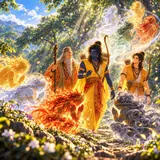
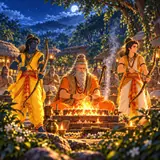
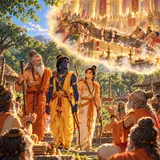
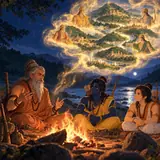
Bala Kanda · Sarga 25 of 77 · 22 verses
Who Tataka Is
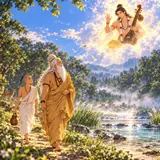
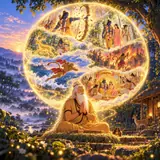
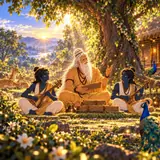
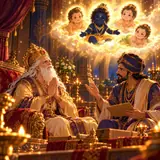
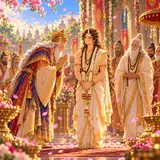
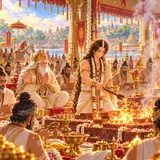
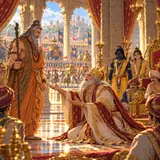
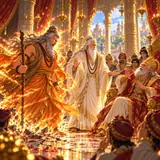
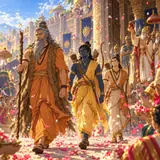
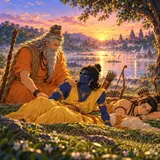
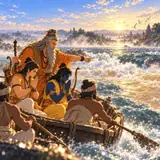
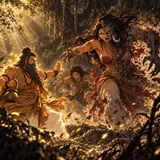
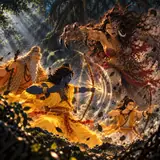
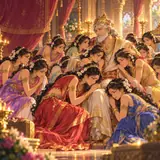
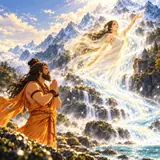
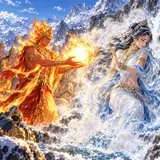
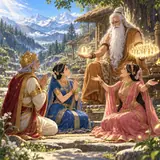
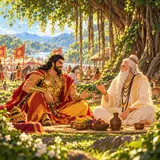
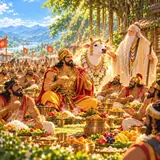
Rama asks how a yakshi, a woman, can have the strength of a thousand elephants. Vishvamitra explains. A virtuous, childless yaksha named Suketu practised great austerity; Brahma gave him not a son but a jewel of a daughter, Tataka, with the strength of a thousand elephants. She married Sunda, son of Jambha, and bore Maricha. When Sunda was killed, Tataka and her son rushed roaring at the sage Agastya to devour him. Agastya cursed Maricha to become a rakshasa, and Tataka to lose her beauty and become a hideous man-eater. Enraged by the curse, she now ravages the land where Agastya once lived.
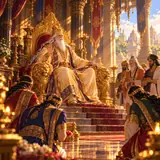
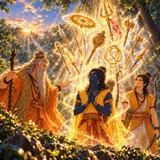
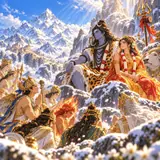
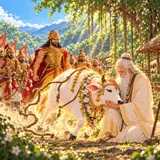
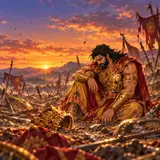
“Kill her, for the good of cattle and brahmanas. No one but you can. Do not feel pity at killing a woman: a king’s son must do what protects the four orders, whether it seems cruel or not, whether it carries fault or not. That is the eternal duty of those who bear the burden of rule.” He gives examples: Indra killed Manthara, who wished to destroy the earth, and Vishnu killed the wife of Bhrigu, who wished the world to be without Indra.
Press › to begin with verse 1.
अथ तस्याप्रमेयस्य मुनेर्वचनमुत्तमम् । श्रुत्वा पुरुषशार्दूलः प्रत्युवाच शुभां गिरम् ॥ १ ॥
Hearing the excellent words of that sage of immeasurable power, the tiger among men replied in fine words:
अपार प्रभाव वाले उन मुनि के उत्तम वचन सुनकर पुरुषसिंह राम ने सुंदर वचनों में उत्तर दिया:
Commentary on the whole sarga
Read the commentary CommentaryNot scripture Rama answers “in fine words” (shubham giram ). Even when he questions his teacher, he speaks respectfully. This is the first time in the poem we hear the young Rama reason aloud.
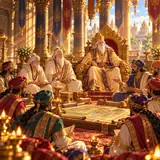
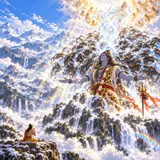
Scene 1 of 2 · Vishvamitra tells how the yakshi Tataka, once a beautiful girl, was cursed by the sage Agastya into a man-eating monster.
अल्पवीर्या यदा यक्षी श्रूयते मुनिपुङ्गव । कथं नागसहस्रस्य धारयत्यबला बलम् ॥ २ ॥
“Best of sages, since a yakshi is said to be of little strength, how does a weak woman bear the strength of a thousand elephants?”
“मुनिश्रेष्ठ, जब यक्षिणी को कम बल वाली कहा जाता है, तो एक दुर्बल स्त्री हज़ार हाथियों का बल कैसे धारण करती है?”
CommentaryNot scripture His question is honest: yakshis are thought to be weak, so how does a woman have such strength? Underneath it lies a deeper hesitation that the sage will address: Rama is reluctant to fight a woman.
Scene 1 of 2 · Vishvamitra tells how the yakshi Tataka, once a beautiful girl, was cursed by the sage Agastya into a man-eating monster.
इत्युक्तं वचनं श्रुत्वा राघवस्यामितौजसः । हर्षयञ्श्लक्ष्णया वाचा सलक्ष्मणमरिन्दमम् ॥ ३ ॥
विश्वामित्रोऽब्रवीद् वाक्यं शृणु येन बलोत्कटा । वरदानकृतं वीर्यं धारयत्यबला बलम् ॥ ४ ॥
Hearing these words of Raghava of boundless energy, Vishvamitra, delighting the subduer of enemies and Lakshmana with gentle speech, said: “Hear how this woman, though a woman, came to bear such overwhelming strength, a power given by a boon.
असीम तेज वाले राघव के ये वचन सुनकर विश्वामित्र ने शत्रुओं का दमन करने वाले राम और लक्ष्मण को कोमल वाणी से प्रसन्न करते हुए कहा: “सुनो कि यह स्त्री, स्त्री होते हुए भी, ऐसा प्रचंड बल कैसे धारण करती है, जो एक वरदान से मिली शक्ति है।
CommentaryNot scripture Vishvamitra answers “with gentle speech”, delighting both brothers. He does not scold the question. A good teacher welcomes doubt and answers it with a story.
Scene 1 of 2 · Vishvamitra tells how the yakshi Tataka, once a beautiful girl, was cursed by the sage Agastya into a man-eating monster.
पूर्वमासीन्महायक्षः सुकेतुर्नाम वीर्यवान् । अनपत्यः शुभाचारः स च तेपे महत्तपः ॥ ५ ॥
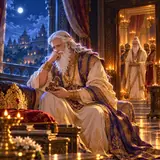
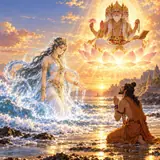
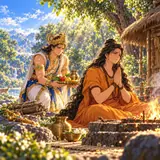
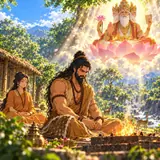
“There was once a great and mighty yaksha named Suketu. He was childless and of good conduct, and he practised great austerity.
“पहले सुकेतु नाम का एक महान और बलवान यक्ष था। वह संतानहीन और सदाचारी था, और उसने बड़ा तप किया।
CommentaryNot scripture Tataka’s father was Suketu, a yaksha of good conduct who practised austerity because he had no children. Like Dasharatha, he longed for a child. The two stories echo each other.
Scene 1 of 2 · Vishvamitra tells how the yakshi Tataka, once a beautiful girl, was cursed by the sage Agastya into a man-eating monster.
पितामहस्तु सुप्रीतस्तस्य यक्षपतेस्तदा । कन्यारत्नं ददौ राम ताटकां नाम नामतः ॥ ६ ॥
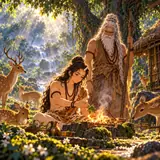
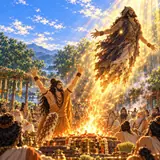
“The Grandsire, well pleased with that lord of yakshas, gave him a jewel of a daughter, Rama, named Tataka.
“उस यक्षराज से अत्यंत प्रसन्न होकर पितामह ब्रह्मा ने उसे ताटका नाम की एक रत्न जैसी पुत्री दी, राम।
CommentaryNot scripture Brahma gave him “a jewel of a daughter”. Tataka began as a blessing, the answer to a father’s prayer. No one is born a monster in this story.
Scene 1 of 2 · Vishvamitra tells how the yakshi Tataka, once a beautiful girl, was cursed by the sage Agastya into a man-eating monster.
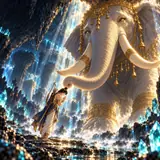
ददौ नागसहस्रस्य बलं चास्याः पितामहः । न त्वेव पुत्रं यक्षाय ददौ चासौ महायशाः ॥ ७ ॥
“And the Grandsire gave her the strength of a thousand elephants; but the greatly renowned one did not give the yaksha a son.
“और पितामह ने उसे हज़ार हाथियों का बल दिया; पर उन महायशस्वी ने यक्ष को पुत्र नहीं दिया।
CommentaryNot scripture She was given the strength of a thousand elephants. But Suketu was not given a son. Her strength was a gift, not a curse. What she becomes depends on what happens next.
Scene 1 of 2 · Vishvamitra tells how the yakshi Tataka, once a beautiful girl, was cursed by the sage Agastya into a man-eating monster.
तां तु बालां विवर्धन्तीं रूपयौवनशालिनीम् । जम्भपुत्राय सुन्दाय ददौ भार्यां यशस्विनीम् ॥ ८ ॥
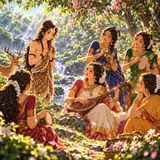
“When the girl was growing up, full of beauty and youth, he gave the glorious one as wife to Sunda, son of Jambha.
“जब कन्या बड़ी हुई, रूप और यौवन से भरपूर, तब उसने उस यशस्विनी को जंभ के पुत्र सुंद को पत्नी के रूप में दे दिया।
CommentaryNot scripture She grows up beautiful and is married to Sunda. A normal life. The tragedy comes later.
Scene 1 of 2 · Vishvamitra tells how the yakshi Tataka, once a beautiful girl, was cursed by the sage Agastya into a man-eating monster.
कस्यचित्त्वथ कालस्य यक्षी पुत्रं व्यजायत । मारीचं नाम दुर्धर्षं यः शापाद् राक्षसोऽभवत् ॥ ९ ॥
“After some time the yakshi bore a son, the invincible Maricha, who became a rakshasa through a curse.
“कुछ समय बाद यक्षिणी ने एक पुत्र को जन्म दिया, अजेय मारीच, जो एक शाप से राक्षस बन गया।
CommentaryNot scripture Her son is Maricha, “invincible”, who will become a rakshasa through a curse. Here we learn the origin of the demon who will one day become the golden deer.
Scene 1 of 2 · Vishvamitra tells how the yakshi Tataka, once a beautiful girl, was cursed by the sage Agastya into a man-eating monster.
सुन्दे तु निहते राम अगस्त्यमृषिसत्तमम् । ताटका सहपुत्रेण प्रधर्षयितुमिच्छति ॥ १० ॥
भक्षार्थं जातसंरम्भा गर्जन्ती साभ्यधावत । आपतन्तीं तु तां दृष्ट्वा अगस्त्यो भगवानृषिः ॥ ११ ॥
“When Sunda was killed, Rama, Tataka with her son wished to attack Agastya, best of sages. Furious, wanting to devour him, she rushed at him roaring. Seeing her rushing at him, the blessed sage Agastya
“राम, जब सुंद मारा गया, तब ताटका अपने पुत्र के साथ मुनिश्रेष्ठ अगस्त्य पर आक्रमण करना चाहती थी। क्रोधित होकर, उन्हें खा जाने की इच्छा से वह गरजती हुई उन पर झपटी। उसे झपटते देखकर भगवान मुनि अगस्त्य ने
CommentaryNot scripture When Sunda is killed, Tataka and her son attack the sage Agastya, roaring, wanting to devour him. Grief and rage turned her violent. The poem does not excuse her, but it lets us see where her fury came from.
Scene 1 of 2 · Vishvamitra tells how the yakshi Tataka, once a beautiful girl, was cursed by the sage Agastya into a man-eating monster.
राक्षसत्वं भजस्वेति मारीचं व्याजहार सः । अगस्त्यः परमामर्षस्ताटकामपि शप्तवान् ॥ १२ ॥
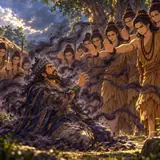
“said to Maricha, ‘Become a rakshasa!’ And Agastya, in great anger, cursed Tataka too:
“मारीच से कहा, ‘राक्षस बन जा!’ और अत्यंत क्रोध में अगस्त्य ने ताटका को भी शाप दिया:
CommentaryNot scripture Agastya curses Maricha: “Become a rakshasa!” And then he turns to Tataka. A sage’s curse is his only weapon, and Agastya uses it in great anger.
Scene 1 of 2 · Vishvamitra tells how the yakshi Tataka, once a beautiful girl, was cursed by the sage Agastya into a man-eating monster.
पुरुषादी महायक्षी विकृता विकृतानना । इदं रूपम् विहायाशु दारुणं रूपमस्तु ते ॥ १३ ॥
“’Great yakshi, become an eater of men, deformed, with a misshapen face. Abandon this form at once; let your form be dreadful.’
“’महायक्षिणी, तू मनुष्यों को खाने वाली, विकृत, बिगड़े मुख वाली हो जा। यह रूप तुरंत छोड़ दे; तेरा रूप भयानक हो जाए।’
CommentaryNot scripture “Become an eater of men, deformed, misshapen.” The beautiful daughter becomes a monster. Many Indian stories show a curse turning someone into what their worst deed has already made them.
Scene 1 of 2 · Vishvamitra tells how the yakshi Tataka, once a beautiful girl, was cursed by the sage Agastya into a man-eating monster.
सैषा शापकृतामर्षा ताटका क्रोधमूर्छिता । देशमुत्सादयत्येनमगस्त्याचरितं शुभम् ॥ १४ ॥
“This Tataka, enraged by the curse and maddened with anger, is laying waste this lovely land where Agastya lived.
“शाप से क्रुद्ध और क्रोध से उन्मत्त यह ताटका अगस्त्य के रहने के इस सुंदर देश को उजाड़ रही है।
CommentaryNot scripture Enraged by the curse, Tataka now lays waste the land where Agastya lived. Her anger feeds itself. The curse has turned her into a destroyer of everything around her.
Scene 1 of 2 · Vishvamitra tells how the yakshi Tataka, once a beautiful girl, was cursed by the sage Agastya into a man-eating monster.
एनां राघव दुर्वृत्तां यक्षीं परमदारुणाम् । गोब्राह्मणहितार्थाय जहि दुष्टपराक्रमाम् ॥ १५ ॥
“Raghava, kill this yakshi of evil conduct, utterly dreadful, of wicked valour, for the good of cattle and brahmanas.
“राघव, गायों और ब्राह्मणों के हित के लिए इस दुराचारी, अत्यंत भयानक, दुष्ट पराक्रम वाली यक्षिणी को मारो।
CommentaryNot scripture “For the good of cattle and brahmanas”: the traditional phrase for protecting the innocent and the vulnerable. Vishvamitra frames the killing as protection, not revenge.
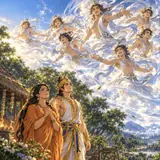
Scene 2 of 2 · The sage tells the hesitant young Rama that a protector must protect the people, and bids him kill her.
नह्येनां शापसंसृष्टां कश्चिदुत्सहते पुमान् । निहन्तुं त्रिषु लोकेषु त्वामृते रघुनन्दन ॥ १६ ॥
“No man in the three worlds can bring himself to kill her, bound up as she is with the curse, except you, delight of the Raghus.
“रघुनंदन, तुम्हारे सिवा तीनों लोकों में कोई मनुष्य शाप से बँधी हुई इसे मारने का साहस नहीं कर सकता।
CommentaryNot scripture Only Rama can do it. No other man in the three worlds can kill her while she is bound by the curse. This is not just a test of courage; it is a task only he can fulfil.
Scene 2 of 2 · The sage tells the hesitant young Rama that a protector must protect the people, and bids him kill her.
नहि ते स्त्रीवधकृते घृणा कार्या नरोत्तम । चातुर्वर्ण्यहितार्थं कर्तव्यं राजसूनुना ॥ १७ ॥
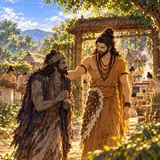
“You must not feel pity at killing a woman, best of men. A king’s son must act for the good of the four orders.
“नरश्रेष्ठ, स्त्री को मारने में तुम्हें दया नहीं करनी चाहिए। राजपुत्र को चारों वर्णों के हित के लिए काम करना चाहिए।
CommentaryNot scripture “You must not feel pity at killing a woman.” Vishvamitra addresses Rama’s real hesitation directly. Rama’s reluctance is itself a sign of his gentle nature. In the Indian epics, killing a woman was considered deeply wrong.
Scene 2 of 2 · The sage tells the hesitant young Rama that a protector must protect the people, and bids him kill her.
नृशंसमनृशंसं वा प्रजारक्षणकारणात् । पातकं वा सदोषं वा कर्तव्यं रक्षता सदा ॥ १८ ॥
“Whether it is cruel or not cruel, whether it is sinful or carries fault, it must always be done by one who protects, for the protection of the people.
“चाहे वह क्रूर हो या न हो, पापपूर्ण हो या दोषयुक्त, प्रजा की रक्षा के लिए रक्षक को उसे सदा करना ही चाहिए।
CommentaryNot scripture Vishvamitra’s argument: whether cruel or not, sinful or not, a protector must act to protect the people. This is the hard dharma of kingship. It is not comfortable, and the poem does not pretend it is.
Scene 2 of 2 · The sage tells the hesitant young Rama that a protector must protect the people, and bids him kill her.
राज्यभारनियुक्तानामेष धर्मः सनातनः । अधर्म्यां जहि काकुत्स्थ धर्मो ह्यस्यां न विद्यते ॥ १९ ॥
“This is the eternal dharma of those charged with the burden of a kingdom. Kill this unrighteous one, Kakutstha; there is no dharma in her.
“राज्य का भार उठाने वालों का यही सनातन धर्म है। काकुत्स्थ, इस अधर्मिणी को मारो; इसमें कोई धर्म नहीं है।
CommentaryNot scripture “The eternal dharma of those who bear the burden of a kingdom.” A ruler cannot choose only pleasant duties. “There is no dharma in her”: she has given up every claim to protection by destroying the innocent.
Scene 2 of 2 · The sage tells the hesitant young Rama that a protector must protect the people, and bids him kill her.
श्रूयते हि पुरा शक्रो विरोचनसुतां नृप । पृथिवीं हन्तुमिच्छन्तीं मन्थरामभ्यसूदयत् ॥ २० ॥
“It is heard, king, that long ago Shakra killed Manthara, daughter of Virocana, who wished to destroy the earth.
“राजन, सुना जाता है कि पहले इंद्र ने विरोचन की पुत्री मंथरा को मारा था, जो पृथ्वी का नाश करना चाहती थी।
CommentaryNot scripture A precedent: Indra killed Manthara, Virocana’s daughter, who wanted to destroy the earth. (She is a different figure from Kaikeyi’s maid, who has the same name.) Vishvamitra offers examples from the past to steady Rama’s mind.
Scene 2 of 2 · The sage tells the hesitant young Rama that a protector must protect the people, and bids him kill her.
विष्णुना च पुरा राम भृगुपत्नी पतिव्रता । अनिन्द्रं लोकमिच्छन्ती काव्यमाता निषूदिता ॥ २१ ॥
“And long ago, Rama, Vishnu killed the wife of Bhrigu, the mother of Kavya (Shukra), a devoted wife, who wished the world to be without Indra.
“और राम, पहले विष्णु ने भृगु की पत्नी, काव्य (शुक्राचार्य) की माता, एक पतिव्रता स्त्री को मारा था, जो संसार को इंद्र से रहित करना चाहती थी।
CommentaryNot scripture Another: Vishnu killed the wife of the sage Bhrigu, a devoted wife, because she sought to leave the world without its protector Indra. Even Vishnu acted against a woman when the world’s order was at stake.
Scene 2 of 2 · The sage tells the hesitant young Rama that a protector must protect the people, and bids him kill her.
एतैश्चान्यैश्च बहुभी राजपुत्रैर्महात्मभिः । अधर्मसहिता नार्यो हताः पुरुषसत्तमैः । तस्मादेनां घृणां त्यक्त्वा जहि मच्छासनान्नृप ॥ २२ ॥
“By these and by many other great-souled princes, best of men, women joined with adharma have been killed. Therefore put aside pity and kill her at my command, prince.”
“नरश्रेष्ठ, इन्होंने और दूसरे अनेक महात्मा राजकुमारों ने अधर्म में लगी स्त्रियों को मारा है। इसलिए दया छोड़कर, राजकुमार, मेरी आज्ञा से इसे मारो।”
CommentaryNot scripture “Put aside pity and kill her at my command.” Vishvamitra gives the order and takes the responsibility. In the next sarga, Rama will obey, but even then he will try to disable her rather than kill her.
Scene 2 of 2 · The sage tells the hesitant young Rama that a protector must protect the people, and bids him kill her.