Bala Kanda · Sarga 54 of 77 · 23 verses
Shabala’s Army
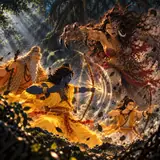
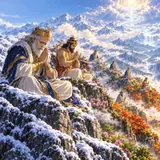
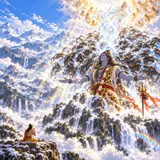
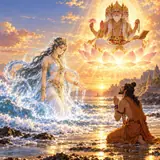
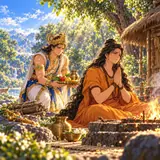
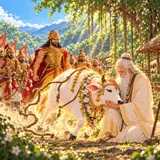
When Vasishtha will not give up the cow, Vishvamitra has her dragged away. Shabala, weeping, wonders: “Has the great sage abandoned me? What wrong have I done him, that he lets me go, innocent and devoted?” Sighing, she shakes off hundreds of the king’s men and runs like the wind to Vasishtha’s feet. Lowing like a thundercloud, she asks: “Lord, son of Brahma, have you abandoned me, that the king’s soldiers take me from you?”
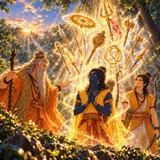
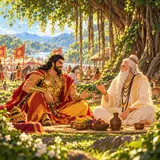
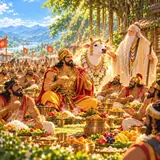
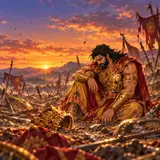
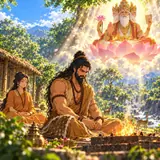
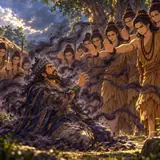
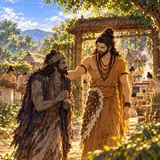
Vasishtha, speaking to her as to a grieving sister, says he has not abandoned her and she has done nothing wrong: the mighty king is taking her by force, and Vasishtha’s strength is not equal to a king with a full army. Shabala answers humbly: “Brahmanas do not count a kshatriya’s strength as strength. The divine power of a brahmana is greater. Your power is immeasurable. Command me, filled with your brahmic power, and I will destroy that evil king’s pride, strength and effort.” Vasishtha says: “Create an army.” With her lowing she brings forth hundreds of Pahlava warriors, who destroy Vishvamitra’s army before his eyes. The furious king cuts them down with weapons, and she creates Shakas mixed with Yavanas, golden-armoured, with sharp swords and spears, who burn up his army like blazing fire. Then Vishvamitra looses his divine weapons, and the Yavanas, Kambojas and Barbaras are thrown into confusion.
Press › to begin with verse 1.
कामधेनुं वसिष्ठोऽपि यदा न त्यजते मुनिः । तदास्य शबलां राम विश्वामित्रोऽन्वकर्षत ॥ १ ॥
When the sage Vasishtha would not give up the wish-cow, Vishvamitra dragged Shabala away, Rama.
राम, जब मुनि वसिष्ठ ने कामधेनु नहीं छोड़ी, तब विश्वामित्र शबला को घसीटकर ले जाने लगे।
Commentary on the whole sarga
Shabala’s Army 1 min read.
Read the commentary CommentaryNot scripture Vishvamitra takes the cow by force. The courteous king of two sargas ago has become a thief. Desire, refused, turns to violence.
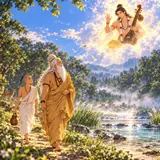
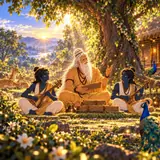
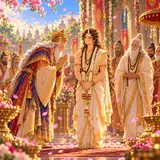
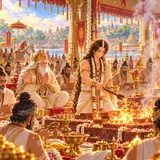
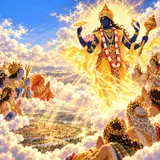
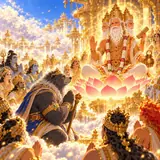
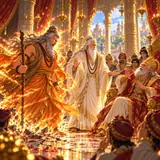
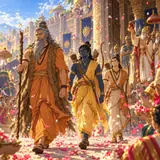
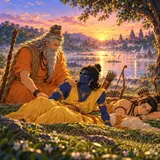
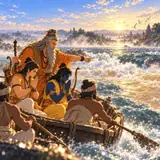
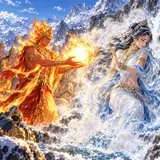
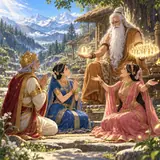
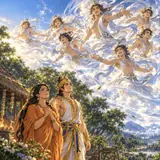
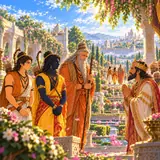
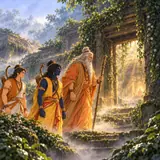
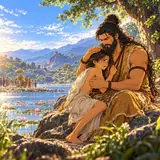
Scene 1 of 2 · Dragged away by the king’s men, the wish-cow Shabala breaks free and runs weeping back to Vasishtha’s feet.
नीयमाना तु शबला राम राज्ञा महात्मना । दुःखिता चिन्तयामास रुदन्ती शोककर्शिता ॥ २ ॥
As Shabala was being led away by the great-souled king, Rama, she grieved and thought, weeping, wasted with sorrow:
राम, जब महात्मा राजा शबला को ले जा रहे थे, तब वह दुखी होकर, रोते हुए, शोक से दुर्बल होकर सोचने लगी:
CommentaryNot scripture Shabala weeps as she is dragged away. Valmiki gives the cow a voice and a heart. She is not property; she is a being who grieves.
Scene 1 of 2 · Dragged away by the king’s men, the wish-cow Shabala breaks free and runs weeping back to Vasishtha’s feet.
परित्यक्ता वसिष्ठेन किमहं सुमहात्मना । याहं राजभृतैर्दीना ह्रियेय भृशदुःखिता ॥ ३ ॥
“Have I been abandoned by the great-souled Vasishtha, that I am carried off, wretched and in deep distress, by the king’s servants?
“क्या महात्मा वसिष्ठ ने मुझे त्याग दिया है, कि मुझ दीन और अत्यंत दुखी को राजा के सेवक ले जा रहे हैं?
CommentaryNot scripture “Has Vasishtha abandoned me?” Her first fear is not for herself but about her bond with the sage.
Scene 1 of 2 · Dragged away by the king’s men, the wish-cow Shabala breaks free and runs weeping back to Vasishtha’s feet.
किं मयापकृतं तस्य महर्षेर्भावितात्मनः । यन्मामनागसं दृष्ट्वा भक्तां त्यजति धार्मिकः ॥ ४ ॥
“What wrong have I done that great sage of purified soul, that the righteous one, seeing me innocent and devoted, abandons me?”
“मैंने शुद्ध आत्मा वाले उन महर्षि का क्या अपराध किया है, कि वे धर्मात्मा मुझे निर्दोष और भक्त देखकर भी त्याग रहे हैं?”
CommentaryNot scripture “What wrong have I done?” The innocent always ask this. Her sorrow is the sorrow of a faithful companion who thinks she has been betrayed.
Scene 1 of 2 · Dragged away by the king’s men, the wish-cow Shabala breaks free and runs weeping back to Vasishtha’s feet.
इति संचिन्तयित्वा तु निःश्वस्य च पुनः पुनः । जगाम वेगेन तदा वसिष्ठं परमौजसम् ॥ ५ ॥
Having thought this, and sighing again and again, she then went swiftly to Vasishtha of supreme power.
यह सोचकर, बार-बार साँस भरते हुए, वह तेज़ी से परम प्रभावशाली वसिष्ठ के पास गई।
CommentaryNot scripture Sighing again and again, she runs back to Vasishtha.
Scene 1 of 2 · Dragged away by the king’s men, the wish-cow Shabala breaks free and runs weeping back to Vasishtha’s feet.
निर्धूय तांस्तदा भृत्यान् शतशः शत्रुसूदन । जगामानिलवेगेन पादमूलं महात्मनः ॥ ६ ॥
Shaking off those servants by the hundred, destroyer of enemies, she went with the speed of the wind to the feet of the great soul.
शत्रुओं का नाश करने वाली, सैकड़ों सेवकों को झटककर वह वायु के वेग से महात्मा के चरणों में पहुँची।
CommentaryNot scripture She shakes off hundreds of servants and runs “with the speed of the wind” to his feet. Love gives her strength.
Scene 1 of 2 · Dragged away by the king’s men, the wish-cow Shabala breaks free and runs weeping back to Vasishtha’s feet.
शबला सा रुदन्ती च क्रोशन्ती चेदमब्रवीत् । वसिष्ठस्याग्रतः स्थित्वा रुदन्ती मेघनिःस्वना ॥ ७ ॥
Standing before Vasishtha, Shabala, weeping and crying out with a voice like a thundercloud, said:
वसिष्ठ के सामने खड़ी होकर, रोती हुई, मेघ जैसे स्वर में पुकारती हुई शबला बोली:
CommentaryNot scripture She cries out “with a voice like a thundercloud”. A cow’s lowing becomes a cry of protest.
Scene 1 of 2 · Dragged away by the king’s men, the wish-cow Shabala breaks free and runs weeping back to Vasishtha’s feet.
भगवन् किं परित्यक्ता त्वयाहं ब्रह्मणः सुत । यस्माद् राजभटा मां हि नयन्ते त्वत्सकाशतः ॥ ८ ॥
“Lord, son of Brahma, have you abandoned me, that the king’s soldiers are taking me away from you?”
“भगवन, ब्रह्मपुत्र, क्या आपने मुझे त्याग दिया है, कि राजा के सैनिक मुझे आपसे दूर ले जा रहे हैं?”
CommentaryNot scripture “Have you abandoned me?” The question returns, now spoken to his face.
Scene 1 of 2 · Dragged away by the king’s men, the wish-cow Shabala breaks free and runs weeping back to Vasishtha’s feet.
एवमुक्तस्तु ब्रह्मर्षिरिदं वचनमब्रवीत् । शोकसंतप्तहृदयां स्वसारमिव दुःखिताम् ॥ ९ ॥
So addressed, the brahmarshi said these words to her, her heart burning with grief, distressed like a sister:
ऐसा कहे जाने पर ब्रह्मर्षि ने शोक से जलते हृदय वाली, बहन की तरह दुखी उससे ये वचन कहे:
CommentaryNot scripture Vasishtha speaks to her “like a sister” (bhratrivat , literally “like a brother”): tenderly, as to family. His heart burns with grief too.
Scene 1 of 2 · Dragged away by the king’s men, the wish-cow Shabala breaks free and runs weeping back to Vasishtha’s feet.
न त्वां त्यजामि शबले नापि मेऽपकृतं त्वया । एष त्वां नयते राजा बलान्मत्तो महाबलः ॥ १० ॥
“I do not abandon you, Shabala, and you have done me no wrong. This mighty king is taking you from me by force.
“शबला, मैं तुम्हें नहीं त्यागता, और तुमने मेरा कोई अपराध नहीं किया। यह बलवान राजा तुम्हें मुझसे बलपूर्वक ले जा रहा है।
CommentaryNot scripture “I do not abandon you, and you have done no wrong. He takes you by force.” Vasishtha reassures her first: the bond is unbroken.
Scene 1 of 2 · Dragged away by the king’s men, the wish-cow Shabala breaks free and runs weeping back to Vasishtha’s feet.
नहि तुल्यं बलं मह्यं राजा त्वद्य विशेषतः । बली राजा क्षत्रियश्च पृथिव्याः पतिरेव च ॥ ११ ॥
“My strength is not equal, especially to a king today: a strong king, a kshatriya, and lord of the earth.
“मेरा बल बराबर नहीं है, विशेषकर आज एक राजा के: एक बलवान राजा, एक क्षत्रिय, और पृथ्वी का स्वामी।
CommentaryNot scripture “My strength is not equal to a king’s.” The sage seems to admit defeat. He is testing her, and perhaps himself.
Scene 1 of 2 · Dragged away by the king’s men, the wish-cow Shabala breaks free and runs weeping back to Vasishtha’s feet.
इयमक्षौहिणी पूर्णा गजवाजिरथाकुला । हस्तिध्वजसमाकीर्णा तेनासौ बलवत्तरः ॥ १२ ॥
“Here is a full akshauhini, crowded with elephants, horses and chariots, thick with elephant-banners; by this he is the stronger.”
“यह हाथियों, घोड़ों और रथों से भरी, हाथी-ध्वजाओं से घनी पूरी एक अक्षौहिणी है; इसी से वह अधिक बलवान है।”
CommentaryNot scripture A full army stands behind the king. Worldly power looks overwhelming.
Scene 1 of 2 · Dragged away by the king’s men, the wish-cow Shabala breaks free and runs weeping back to Vasishtha’s feet.
एवमुक्ता वसिष्ठेन प्रत्युवाच विनीतवत् । वचनं वचनज्ञा सा ब्रह्मर्षिमतुलप्रभम् ॥ १३ ॥
So addressed by Vasishtha, she, knowing how to speak, replied humbly to the brahmarshi of incomparable splendour:
वसिष्ठ के ऐसा कहने पर बोलना जानने वाली उसने अनुपम तेज वाले ब्रह्मर्षि को विनम्रता से उत्तर दिया:
CommentaryNot scripture Shabala answers, “knowing how to speak”, humbly. The cow becomes the teacher.
Scene 1 of 2 · Dragged away by the king’s men, the wish-cow Shabala breaks free and runs weeping back to Vasishtha’s feet.
न बलं क्षत्रियस्याहुर्ब्राह्मणा बलवत्तराः । ब्रह्मन् ब्रह्मबलं दिव्यं क्षात्राच्च बलवत्तरम् ॥ १४ ॥
“They do not call the kshatriya’s strength strength; brahmanas are stronger. Brahmana, the divine power of Brahman is stronger than that of the kshatriya.
“क्षत्रिय के बल को बल नहीं कहते; ब्राह्मण अधिक बलवान होते हैं। ब्राह्मण, ब्रह्म की दिव्य शक्ति क्षत्रिय की शक्ति से बढ़कर है।
CommentaryNot scripture “The kshatriya’s strength is not called strength; the brahmana’s is greater. The divine power of Brahman is stronger.” This is the central theme of the whole Vishvamitra story: spiritual power versus worldly power.
Scene 1 of 2 · Dragged away by the king’s men, the wish-cow Shabala breaks free and runs weeping back to Vasishtha’s feet.
अप्रमेयं बलं तुभ्यं न त्वया बलवत्तरः । विश्वामित्रो महावीर्यस्तेजस्तव दुरासदम् ॥ १५ ॥
“Your power is immeasurable; no one is stronger than you. Vishvamitra is very mighty, but your energy is unassailable.
“आपकी शक्ति अपार है; आपसे बलवान कोई नहीं। विश्वामित्र बहुत बलवान हैं, पर आपका तेज अजेय है।
CommentaryNot scripture “No one is stronger than you.” She reminds Vasishtha of what he is. Sometimes even the wise need reminding.
Scene 1 of 2 · Dragged away by the king’s men, the wish-cow Shabala breaks free and runs weeping back to Vasishtha’s feet.
नियुङ्क्ष्व मां महातेजस्त्वं ब्रह्मबलसम्भृताम् । तस्य दर्पं बलं यत्नं नाशयामि दुरात्मनः ॥ १६ ॥
“Command me, radiant one, filled with the power of Brahman. I will destroy the pride, strength and effort of that wicked one.”
“तेजस्वी, ब्रह्म की शक्ति से भरे, मुझे आज्ञा दीजिए। मैं उस दुष्ट का घमंड, बल और प्रयत्न नष्ट कर दूँगी।”
CommentaryNot scripture “Command me, and I will destroy his pride.” The gentle cow is ready to fight for her master.
Scene 1 of 2 · Dragged away by the king’s men, the wish-cow Shabala breaks free and runs weeping back to Vasishtha’s feet.
इत्युक्तस्तु तया राम वसिष्ठस्तु महायशाः । सृजस्वेति तदोवाच बलं परबलार्दनम् ॥ १७ ॥
So addressed by her, Rama, the greatly renowned Vasishtha said: “Create an army that crushes the enemy’s army.”
राम, उसके ऐसा कहने पर महायशस्वी वसिष्ठ ने कहा: “शत्रु की सेना को कुचलने वाली सेना रचो।”
CommentaryNot scripture Vasishtha agrees: “Create an army.” The sage, who would not use force himself, allows the cow to defend herself and him.
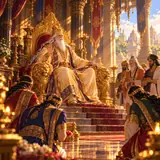
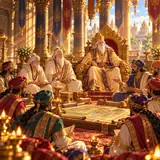
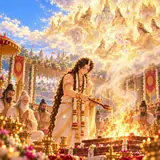
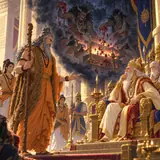
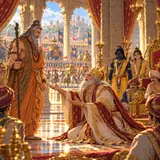
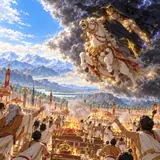
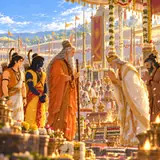
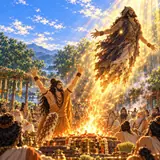
Scene 2 of 2 · At Vasishtha’s word, warriors in golden armour pour from Shabala’s lowing and scatter the king’s army.
तस्य तद् वचनं श्रुत्वा सुरभिः सासृजत् तदा । तस्या हुंभारवोत्सृष्टाः पह्लवाः शतशो नृप ॥ १८ ॥
नाशयन्ति बलं सर्वं विश्वामित्रस्य पश्यतः । स राजा परमक्रुद्धः क्रोधविस्फारितेक्षणः ॥ १९ ॥
Hearing his words, Surabhi then created: Pahlavas by the hundred, king, sent forth by her lowing, destroying the whole army while Vishvamitra watched. The king, in the greatest fury, his eyes wide with anger,
उनके वचन सुनकर सुरभि ने तब, राजन, अपने रँभाने से उत्पन्न सैकड़ों पह्लव रचे, जो विश्वामित्र के देखते-देखते सारी सेना का नाश करने लगे। राजा अत्यंत क्रोध में, क्रोध से फैली आँखों से,
CommentaryNot scripture From her lowing come the Pahlavas, a people of the north-west (often linked with the Parthians). They destroy the king’s army. Vishvamitra, wild with fury, fights back.
Scene 2 of 2 · At Vasishtha’s word, warriors in golden armour pour from Shabala’s lowing and scatter the king’s army.
पह्लवान् नाशयामास शस्त्रैरुच्चावचैरपि । विश्वामित्रार्दितान् दृष्ट्वा पह्लवान् शतशस्तदा ॥ २० ॥
भूय एवासृजद् घोरान् शकान् यवनमिश्रितान् । तैरासीत् संवृता भूमिः शकैर्यवनमिश्रितैः ॥ २१ ॥
destroyed the Pahlavas with weapons of every kind. Seeing the Pahlavas struck down by Vishvamitra in hundreds, she again created terrible Shakas mixed with Yavanas. The earth was covered by those Shakas mixed with Yavanas,
हर प्रकार के अस्त्रों से पह्लवों का नाश करने लगे। विश्वामित्र द्वारा सैकड़ों पह्लवों को मारा गया देखकर उसने फिर यवनों से मिले भयानक शकों को रचा। यवनों से मिले उन शकों से पृथ्वी ढक गई,
CommentaryNot scripture He destroys the Pahlavas, so she creates Shakas (Scythians) and Yavanas (originally the Greeks, later any westerners). The poem names real foreign peoples known to ancient India. Here they spring from a cow.
Scene 2 of 2 · At Vasishtha’s word, warriors in golden armour pour from Shabala’s lowing and scatter the king’s army.
प्रभावद्भिर्महावीर्यैर्हेमकिंजल्कसंनिभैः । तीक्ष्णासिपट्टिशधरैर्हेमवर्णाम्बरावृतैः ॥ २२ ॥
निर्दग्धं तद्बलं सर्वं प्रदीप्तैरिव पावकैः । ततोऽस्त्राणि महातेजा विश्वामित्रो मुमोच ह । तैस्ते यवनकाम्बोजा बर्बराश्चाकुलीकृताः ॥ २३ ॥
powerful, of great valour, like golden filaments of lotus, holding sharp swords and spears, clad in garments of golden colour. The whole army was burned up as if by blazing fires. Then the radiant Vishvamitra loosed his weapons, and by them the Yavanas, Kambojas and Barbaras were thrown into confusion.
बलवान, महापराक्रमी, कमल के सुनहरे केसर जैसे, तीखी तलवारें और भाले लिए, सुनहरे रंग के वस्त्र पहने। सारी सेना मानो जलती आग से भस्म हो गई। तब तेजस्वी विश्वामित्र ने अपने अस्त्र छोड़े, और उनसे यवन, कांबोज और बर्बर तितर-बितर हो गए।
CommentaryNot scripture Shining like golden lotus filaments, armed with swords and spears, in golden garments. They burn the king’s army like fire. Vishvamitra loosens his divine weapons, and the Yavanas, Kambojas and Barbaras are thrown into confusion. The battle of a king against a cow is turning into a war of worlds.
Scene 2 of 2 · At Vasishtha’s word, warriors in golden armour pour from Shabala’s lowing and scatter the king’s army.