Bala Kanda · Sarga 61 of 77 · 24 verses
Ambarisha Buys Shunahshepa
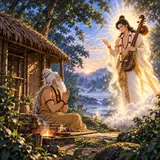
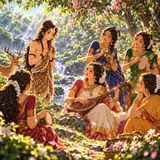
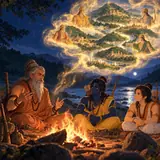
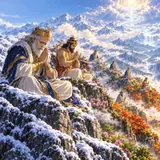
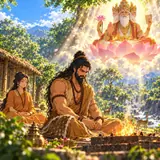
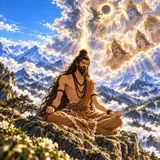
Vishvamitra tells the sages that the south has become a place of great obstruction; they will go west, to the holy lakes of Pushkara, and practise austerity there in peace. There he practises fierce austerity, living on roots and fruit.
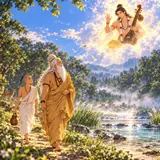
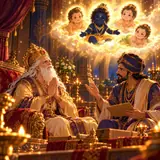
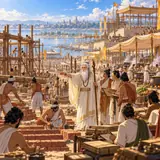
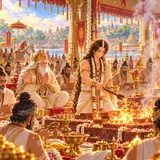
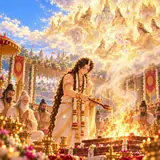
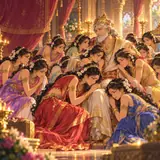
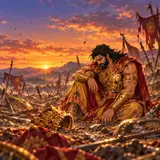
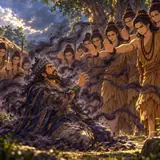
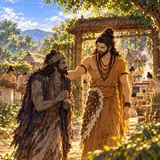
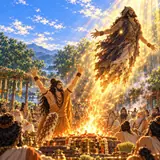
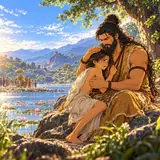
At that time Ambarisha, king of Ayodhya, begins a sacrifice, and Indra steals the sacrificial animal. The priest warns: the loss is due to the king’s poor guarding, and a king who does not protect is struck down by faults; the great atonement is to bring the animal, or a man in its place, quickly. Ambarisha searches lands, cities, forests and hermitages, offering thousands of cows, and finds the sage Richika of Bhrigu’s line at Bhrigutunga with his wife and sons. He offers a hundred thousand cows for one son. Richika refuses to sell the eldest; his wife refuses to give the youngest, Shunaka, saying fathers usually love the eldest and mothers the youngest. Then the middle son, Shunahshepa, speaks for himself: “Father will not sell the eldest, mother not the youngest; I suppose the middle one is for sale. Take me, prince.” Ambarisha buys him for crores of gold, heaps of jewels and a hundred thousand cows, puts him in his chariot and hurries away.
Press › to begin with verse 1.
विश्वामित्रो महातेजाः प्रस्थितान् वीक्ष्य तानृषीन् । अब्रवीन्नरशार्दूल सर्वांस्तान् वनवासिनः ॥ १ ॥
Seeing those sages setting out, the radiant Vishvamitra said to all those forest-dwellers, tiger among men:
उन मुनियों को जाते देखकर तेजस्वी विश्वामित्र ने उन सब वनवासियों से कहा, पुरुषसिंह:
Commentary on the whole sarga
Ambarisha Buys Shunahshepa 1 min read.
Read the commentary CommentaryNot scripture The sages depart, and Vishvamitra speaks to the forest-dwellers of his hermitage. After the Trishanku affair, he needs a fresh start.
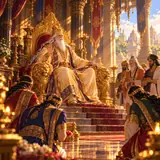
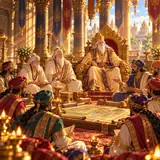
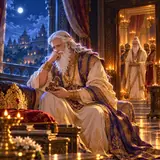
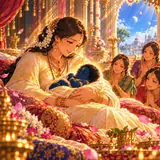
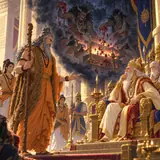
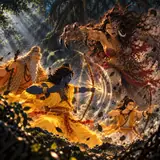
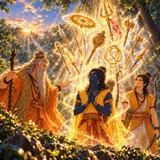
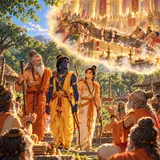
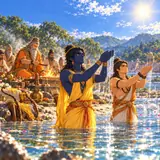
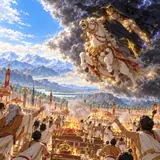
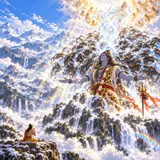
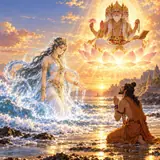
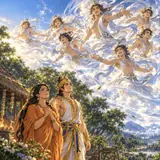
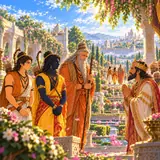
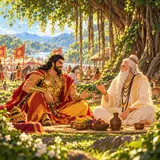
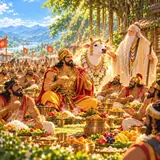
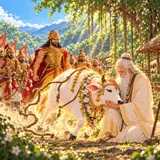
Scene 1 of 2 · Vishvamitra moves west to the lakes of Pushkara, while King Ambarisha searches the land for a lost sacrificial animal.
महाविघ्नः प्रवृत्तोऽयं दक्षिणामास्थितो दिशम् । दिशमन्यां प्रपत्स्यामस्तत्र तप्स्यामहे तपः ॥ २ ॥
“A great obstacle has arisen while we have stayed in the southern direction. We will go to another direction and practise austerity there.
“दक्षिण दिशा में रहते हुए एक बड़ी बाधा आ गई है। हम दूसरी दिशा में जाएँगे और वहाँ तप करेंगे।
CommentaryNot scripture “A great obstacle has arisen here in the south.” He sees that the quarrel and the cursing have damaged his austerity. He decides to move.
Scene 1 of 2 · Vishvamitra moves west to the lakes of Pushkara, while King Ambarisha searches the land for a lost sacrificial animal.
पश्चिमायां विशालायां पुष्करेषु महात्मनः । सुखं तपश्चरिष्यामः सुखं तद्धि तपोवनम् ॥ ३ ॥
“In the broad west, at the lakes of Pushkara of the great soul, we will practise austerity in peace; that forest of austerity is pleasant.”
“विशाल पश्चिम दिशा में, महात्मा के पुष्कर सरोवरों पर हम शांति से तप करेंगे; वह तपोवन सुखद है।”
CommentaryNot scripture To Pushkara in the west, a lake still sacred in Rajasthan, home of one of India’s very few temples to Brahma. A peaceful place to begin again.
Scene 1 of 2 · Vishvamitra moves west to the lakes of Pushkara, while King Ambarisha searches the land for a lost sacrificial animal.
एवमुक्त्वा महातेजाः पुष्करेषु महामुनिः । तप उग्रं दुराधर्षं तेपे मूलफलाशनः ॥ ४ ॥
Having said this, the radiant great sage practised fierce, unassailable austerity at Pushkara, living on roots and fruit.
यह कहकर तेजस्वी महामुनि ने कंद-मूल और फल खाते हुए पुष्कर में कठोर, अजेय तप किया।
CommentaryNot scripture He practises fierce austerity, living on roots and fruit. The second great phase of his effort begins.
Scene 1 of 2 · Vishvamitra moves west to the lakes of Pushkara, while King Ambarisha searches the land for a lost sacrificial animal.
एतस्मिन्नेव काले तु अयोध्याधिपतिर्महान् । अम्बरीष इति ख्यातो यष्टुं समुपचक्रमे ॥ ५ ॥
At that very time the great lord of Ayodhya, known as Ambarisha, began to sacrifice.
उसी समय अयोध्या के महान स्वामी, अंबरीष नाम से प्रसिद्ध, यज्ञ करने लगे।
CommentaryNot scripture Meanwhile, another king of Ayodhya, Ambarisha, Rama’s ancestor, begins a sacrifice. Once again the Ikshvaku line meets Vishvamitra.
Scene 1 of 2 · Vishvamitra moves west to the lakes of Pushkara, while King Ambarisha searches the land for a lost sacrificial animal.
तस्य वै यजमानस्य पशुमिन्द्रो जहार ह । प्रणष्टे तु पशौ विप्रो राजानमिदमब्रवीत् ॥ ६ ॥
While he was sacrificing, Indra carried off his sacrificial animal. When the animal was lost, the brahmana said to the king:
जब वे यज्ञ कर रहे थे, तब इंद्र उनका यज्ञ-पशु चुरा ले गए। पशु खो जाने पर ब्राह्मण ने राजा से कहा:
CommentaryNot scripture Indra steals his sacrificial animal. Indra again, as with Sagara’s horse.
Scene 1 of 2 · Vishvamitra moves west to the lakes of Pushkara, while King Ambarisha searches the land for a lost sacrificial animal.
पशुरभ्याहृतो राजन् प्रणष्टस्तव दुर्नयात् । अरक्षितारं राजानं घ्नन्ति दोषा नरेश्वर ॥ ७ ॥
“King, the animal that was brought has been lost through your poor conduct. Faults destroy a king who does not protect, lord of men.
“राजन, जो पशु लाया गया था, वह तुम्हारे दुराचरण से खो गया है। मनुष्यों के स्वामी, रक्षा न करने वाले राजा को दोष नष्ट कर देते हैं।
CommentaryNot scripture The priest blames the king: “Faults destroy a king who does not protect.” A lost offering is the king’s failure.
Scene 1 of 2 · Vishvamitra moves west to the lakes of Pushkara, while King Ambarisha searches the land for a lost sacrificial animal.
प्रायश्चित्तं महद्ध्येतन्नरं वा पुरुषर्षभ । आनयस्व पशुं शीघ्रं यावत् कर्म प्रवर्तते ॥ ८ ॥
“This is a great atonement: bring a man, bull among men, or bring the animal back quickly, while the rite is still going on.”
“यह एक बड़ा प्रायश्चित्त है: पुरुषश्रेष्ठ, एक मनुष्य लाओ, या जल्दी से पशु वापस लाओ, जब तक कर्म चल रहा है।”
CommentaryNot scripture The atonement: bring a man, or recover the animal. The demand for a human sacrifice is shocking. The story will show it does not happen, and that is the point.
Scene 1 of 2 · Vishvamitra moves west to the lakes of Pushkara, while King Ambarisha searches the land for a lost sacrificial animal.
उपाध्यायवचः श्रुत्वा स राजा पुरुषर्षभः । अन्वियेष महाबुद्धिः पशुं गोभिः सहस्रशः ॥ ९ ॥
Hearing the teacher’s words, that wise king, bull among men, searched for an animal, offering cows by thousands.
गुरु के वचन सुनकर उस बुद्धिमान पुरुषश्रेष्ठ राजा ने हज़ारों गायें देकर पशु खोजा।
CommentaryNot scripture Ambarisha searches everywhere, offering thousands of cows.
Scene 1 of 2 · Vishvamitra moves west to the lakes of Pushkara, while King Ambarisha searches the land for a lost sacrificial animal.
देशाञ्जनपदांस्तांस्तान् नगराणि वनानि च । आश्रमाणि च पुण्यानि मार्गमाणो महीपतिः ॥ १० ॥
Searching through lands and countries, cities and forests, and holy hermitages, the lord of the earth
देशों और प्रदेशों, नगरों और वनों, और पवित्र आश्रमों में खोजते हुए पृथ्वीपति ने
CommentaryNot scripture Countries, cities, forests, hermitages. A desperate king.
Scene 1 of 2 · Vishvamitra moves west to the lakes of Pushkara, while King Ambarisha searches the land for a lost sacrificial animal.
स पुत्रसहितं तात सभार्यं रघुनन्दन । भृगुतुंगे समासीनमृचीकं संददर्श ह ॥ ११ ॥
saw, child, delight of the Raghus, Richika sitting at Bhrigutunga with his sons and wife.
वत्स, रघुनंदन, भृगुतुंग पर अपने पुत्रों और पत्नी के साथ बैठे ऋचीक को देखा।
CommentaryNot scripture He finds the sage Richika at Bhrigutunga with his wife and sons. (Richika is the husband of Satyavati, Vishvamitra’s sister, from sarga 34. So Shunahshepa is Vishvamitra’s nephew.)
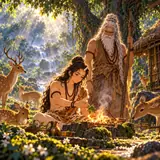
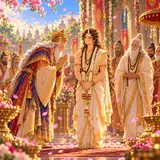
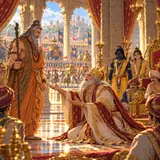
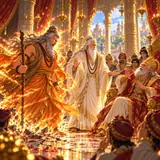
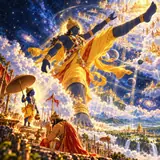
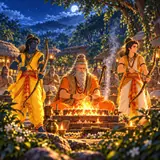
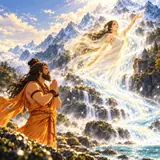
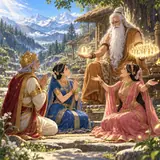
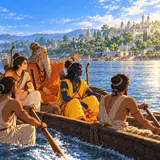
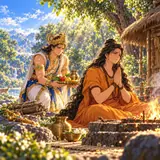
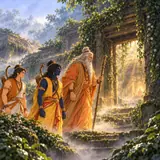
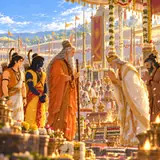
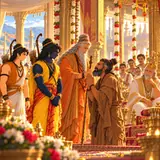
Scene 2 of 2 · At the sage Richika’s hermitage, the middle son Shunahshepa steps forward: “I suppose I am the one for sale.”
तमुवाच महातेजाः प्रणम्याभिप्रसाद्य च । महर्षिं तपसा दीप्तं राजर्षिरमितप्रभः ॥ १२ ॥
The radiant royal sage of boundless splendour bowed to him and propitiated the great sage, blazing with austerity, and spoke to him.
अपार तेज वाले तेजस्वी राजर्षि ने उन्हें प्रणाम किया, तप से दमकते महर्षि को प्रसन्न किया, और उनसे बोले।
CommentaryNot scripture The king bows and speaks respectfully. His request is terrible, but his manner is courteous.
Scene 2 of 2 · At the sage Richika’s hermitage, the middle son Shunahshepa steps forward: “I suppose I am the one for sale.”
पृष्ट्वा सर्वत्र कुशलमृचीकं तमिदं वचः । गवां शतसहस्रेण विक्रीणीषे सुतं यदि ॥ १३ ॥
पशोरर्थे महाभाग कृतकृत्योऽस्मि भार्गव । सर्वे परिगता देशा यज्ञियं न लभे पशुम् ॥ १४ ॥
दातुमर्हसि मूल्येन सुतमेकमितो मम । एवमुक्तो महातेजा ऋचीकस्त्वब्रवीद् वचः ॥ १५ ॥
Having asked Richika about his welfare in all things, he said: “If you will sell a son for a hundred thousand cows, for the sake of the animal, fortunate one, I shall have done what I must, Bhargava. I have gone through every land and do not find a sacrificial animal. You should give me one son from here for a price.” So addressed, the radiant Richika said:
ऋचीक से सब बातों में कुशल पूछकर उन्होंने कहा: “भाग्यशाली भार्गव, यदि आप पशु के लिए एक लाख गायों के बदले एक पुत्र बेचें, तो मेरा कर्तव्य पूरा हो जाएगा। मैं हर देश में घूम चुका हूँ और मुझे यज्ञ-पशु नहीं मिलता। आप यहाँ से मूल्य लेकर मुझे एक पुत्र दीजिए।” ऐसा कहे जाने पर तेजस्वी ऋचीक ने कहा:
CommentaryNot scripture “Sell me a son for a hundred thousand cows.” He has searched every land. The request is put plainly.
Scene 2 of 2 · At the sage Richika’s hermitage, the middle son Shunahshepa steps forward: “I suppose I am the one for sale.”
नाहं ज्येष्ठं नरश्रेष्ठ विक्रीणीयां कथंचन । ऋचीकस्य वचः श्रुत्वा तेषां माता महात्मनाम् ॥ १६ ॥
उवाच नरशार्दूलमम्बरीषमिदं वचः । अविक्रेयं सुतं ज्येष्ठं भगवानाह भार्गवः ॥ १७ ॥
ममापि दयितं विद्धि कनिष्ठं शुनकं प्रभो । तस्मात् कनीयसं पुत्रं न दास्ये तव पार्थिव ॥ १८ ॥
“I would in no way sell my eldest, best of men.” Hearing Richika’s words, the mother of those great-souled boys said to Ambarisha, tiger among men: “The blessed Bhargava says the eldest son is not to be sold. Know that the youngest, Shunaka, is dear to me, lord; so I will not give you my youngest son, king.
“पुरुषश्रेष्ठ, मैं अपना सबसे बड़ा पुत्र किसी भी तरह नहीं बेचूँगा।” ऋचीक के वचन सुनकर उन महात्मा बालकों की माता ने पुरुषसिंह अंबरीष से कहा: “भगवान भार्गव कहते हैं कि बड़ा पुत्र बेचने योग्य नहीं है। प्रभु, जान लीजिए कि सबसे छोटा शुनक मुझे प्रिय है; इसलिए राजन, मैं अपना सबसे छोटा पुत्र आपको नहीं दूँगी।
CommentaryNot scripture Richika will not sell his eldest. The mother will not sell her youngest, Shunaka: “he is dear to me.” Each parent protects one child.
Scene 2 of 2 · At the sage Richika’s hermitage, the middle son Shunahshepa steps forward: “I suppose I am the one for sale.”
प्रायेण हि नरश्रेष्ठ ज्येष्ठाः पितृषु वल्लभाः । मातॄणां च कनीयांसस्तस्माद् रक्ष्ये कनीयसम् ॥ १९ ॥
“For as a rule, best of men, the eldest are dear to fathers and the youngest to mothers; therefore I will keep the youngest.”
“क्योंकि पुरुषश्रेष्ठ, सामान्यतः बड़े पुत्र पिताओं को प्रिय होते हैं और छोटे माताओं को; इसलिए मैं छोटे को रखूँगी।”
CommentaryNot scripture “The eldest are dear to fathers, the youngest to mothers.” A painfully honest observation about families. And the middle child is left unprotected.
Scene 2 of 2 · At the sage Richika’s hermitage, the middle son Shunahshepa steps forward: “I suppose I am the one for sale.”
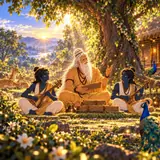
उक्तवाक्ये मुनौ तस्मिन् मुनिपत्न्यां तथैव च । शुनःशेपः स्वयं राम मध्यमो वाक्यमब्रवीत् ॥ २० ॥
When the sage and the sage’s wife had spoken, Shunahshepa, the middle son, himself spoke, Rama:
जब मुनि और मुनि की पत्नी बोल चुके, तब मँझले पुत्र शुनःशेप ने स्वयं कहा, राम:
CommentaryNot scripture Shunahshepa, the middle son, speaks for himself.
Scene 2 of 2 · At the sage Richika’s hermitage, the middle son Shunahshepa steps forward: “I suppose I am the one for sale.”
पिता ज्येष्ठमविक्रेयं माता चाह कनीयसम् । विक्रेयं मध्यमं मन्ये राजपुत्र नयस्व माम् ॥ २१ ॥
“Father says the eldest is not to be sold, and mother says the youngest. I think the middle one is for sale, prince. Take me.”
“पिता कहते हैं बड़ा बेचने योग्य नहीं, और माता कहती हैं छोटा। मुझे लगता है मँझला बिकाऊ है, राजकुमार। मुझे ले लीजिए।”
CommentaryNot scripture “Father won’t sell the eldest, mother won’t sell the youngest. I suppose the middle one is for sale. Take me.” One of the saddest lines in the Bala Kanda: a child who sees he is the least loved, and offers himself.
Scene 2 of 2 · At the sage Richika’s hermitage, the middle son Shunahshepa steps forward: “I suppose I am the one for sale.”
अथ राजा महाबाहो वाक्यान्ते ब्रह्मवादिनः । हिरण्यस्य सुवर्णस्य कोटिभी रत्नराशिभिः ॥ २२ ॥
गवां शतसहस्रेण शुनःशेपं नरेश्वरः । गृहीत्वा परमप्रीतो जगाम रघुनन्दन ॥ २३ ॥
Then, mighty-armed one, at the end of the words of that expounder of Brahman, the lord of men took Shunahshepa for crores of gold and bullion, heaps of jewels and a hundred thousand cows, and went away greatly pleased, delight of the Raghus.
तब, महाबाहु, उस ब्रह्मवादी के वचनों के अंत में मनुष्यों के स्वामी ने करोड़ों सोने और सोने की ईंटों, रत्नों के ढेरों और एक लाख गायों के बदले शुनःशेप को ले लिया, और अत्यंत प्रसन्न होकर चले गए, रघुनंदन।
CommentaryNot scripture Ambarisha pays crores of gold, heaps of jewels and a hundred thousand cows, and leaves “greatly pleased”. The king’s relief contrasts sharply with the boy’s sorrow.
Scene 2 of 2 · At the sage Richika’s hermitage, the middle son Shunahshepa steps forward: “I suppose I am the one for sale.”
अम्बरीषस्तु राजर्षी रथमारोप्य सत्वरः । शुनःशेपं महातेजा जगामाशु महायशाः ॥ २४ ॥
The royal sage Ambarisha, radiant and greatly renowned, put Shunahshepa in his chariot in haste and went off quickly.
तेजस्वी और महायशस्वी राजर्षि अंबरीष शुनःशेप को जल्दी से अपने रथ पर बिठाकर तेज़ी से चल पड़े।
CommentaryNot scripture He puts Shunahshepa in his chariot and hurries away. The ancient story of Shunahshepa is also told in the Aitareya Brahmana ; Valmiki’s version leads the boy, in the next sarga, to Vishvamitra.
Scene 2 of 2 · At the sage Richika’s hermitage, the middle son Shunahshepa steps forward: “I suppose I am the one for sale.”