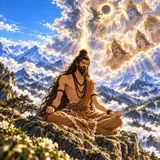
Bala Kanda · Sarga 35 of 77 · 24 verses
The Ganga: Daughters of the Himalaya
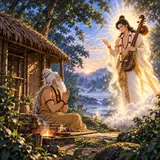
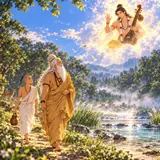
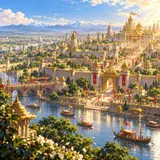
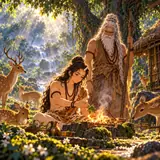
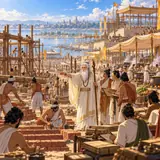
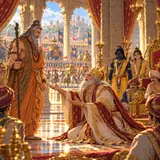
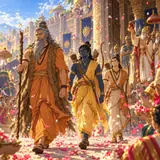
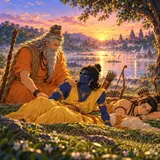
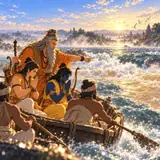
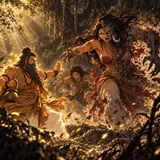
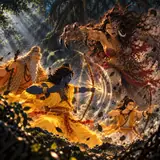
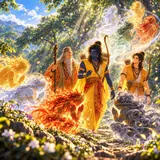
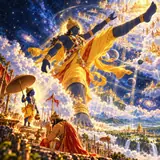
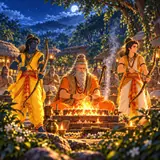
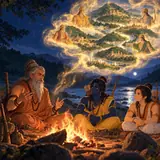
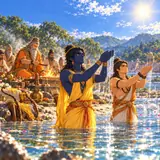
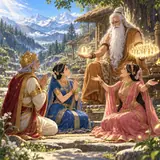
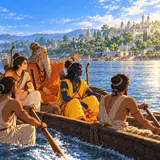
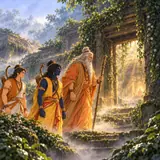
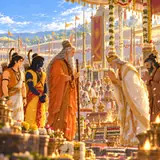
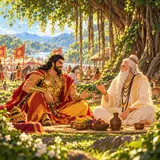
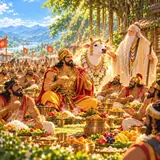
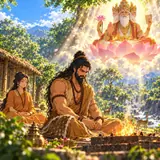
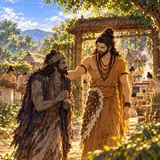
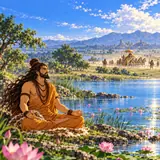
At dawn Vishvamitra wakes Rama again and they set off; the sage shows the sages’ path across the deep, sandy Shona. At midday they reach the Ganga, best of rivers, frequented by swans and cranes, and camp on her bank: they bathe, offer water to the ancestors and gods, tend the fires and eat. Rama asks how the Ganga came to flow through three worlds and reach the ocean.
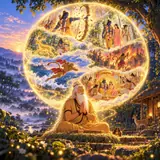
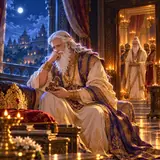
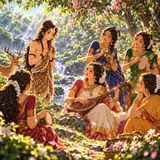
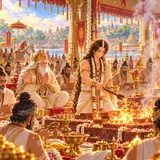
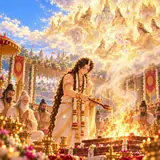
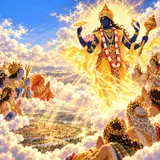
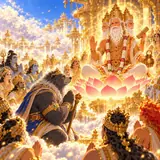
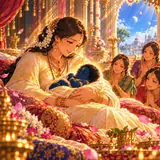
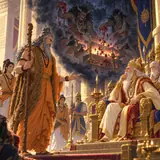
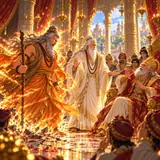
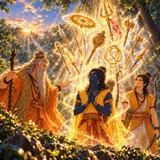
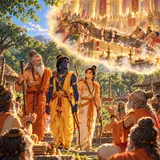
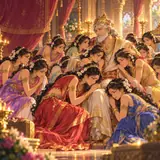
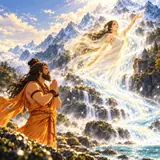
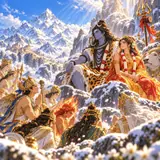
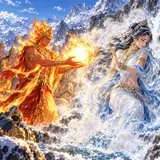
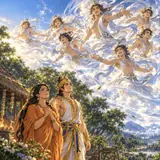
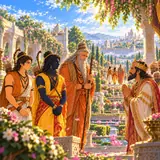
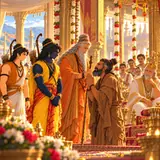
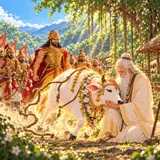
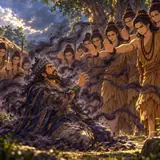
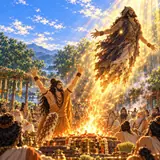
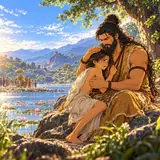
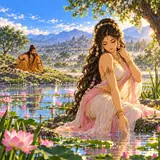
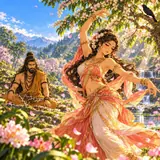
Vishvamitra begins. Himavan, king of mountains and storehouse of minerals, had two daughters of matchless beauty by Mena, daughter of Meru. The elder was Ganga, the younger Uma. The gods, needing her for their work, asked Himavan for Ganga, and he gave her for the good of the three worlds; they took her to heaven, and she flows wherever she wills. Uma practised fierce austerity, and her father gave her to Rudra. These are the two world-honoured daughters of the king of mountains: Ganga, best of rivers, and the goddess Uma. So the three-pathed river first went to the sky, the sinless water-bearing river of the gods.
Press › to begin with verse 1.
उपास्य रात्रिशेषं तु शोणाकूले महर्षिभिः । निशायां सुप्रभातायां विश्वामित्रोऽभ्यभाषत ॥ १ ॥
After spending the rest of the night with the great sages on the bank of the Shona, when night had brightened into dawn, Vishvamitra said:
शोण के तट पर महर्षियों के साथ बची हुई रात बिताकर, जब रात उजली होकर सवेरा हुआ, तब विश्वामित्र ने कहा:
Commentary on the whole sarga
The Ganga: Daughters of the Himalaya 1 min read.
Read the commentary CommentaryNot scripture Dawn on the Shona. Each new sarga of the journey begins with morning, and each morning brings a new place and a new story.
Scene 1 of 2 · At noon the travellers reach the Ganga, white with swans and cranes, and camp on her bank.
सुप्रभाता निशा राम पूर्वा संध्या प्रवर्तते । उत्तिष्ठोत्तिष्ठ भद्रं ते गमनायाभिरोचय ॥ २ ॥
“The night has dawned well, Rama; the morning twilight has begun. Rise, rise, bless you, and make ready to go.”
“राम, रात का सुंदर सवेरा हुआ है; प्रातःकाल की संध्या आरंभ हो गई है। उठो, उठो, तुम्हारा कल्याण हो, और चलने की तैयारी करो।”
CommentaryNot scripture “Rise, rise” (uttishtha uttishtha ). Vishvamitra wakes Rama again, echoing the famous dawn verse of sarga 23. The teacher’s morning call becomes a refrain.
Scene 1 of 2 · At noon the travellers reach the Ganga, white with swans and cranes, and camp on her bank.
तच्छ्रुत्वा वचनं तस्य कृतपूर्वाह्णिकक्रियः । गमनं रोचयामास वाक्यं चेदमुवाच ह ॥ ३ ॥
Hearing his words, having done his morning rites, he made ready to go and said this:
उनके वचन सुनकर प्रातःकाल के कर्म करके राम चलने को तैयार हुए और यह बोले:
CommentaryNot scripture Rama does his morning rites and is ready. Discipline has become habit.
Scene 1 of 2 · At noon the travellers reach the Ganga, white with swans and cranes, and camp on her bank.
अयं शोणः शुभजलोऽगाधः पुलिनमण्डितः । कतरेण पथा ब्रह्मन् संतरिष्यामहे वयम् ॥ ४ ॥
“This Shona has clear water, is deep and adorned with sandbanks. By which way shall we cross, brahmana?”
“यह शोण निर्मल जल वाली, गहरी और रेत के टीलों से सजी है। ब्राह्मण, हम किस मार्ग से पार करेंगे?”
CommentaryNot scripture The Shona is clear, deep, with sandbanks. Rama asks practically: how do we cross? A traveller’s question. Rama pays attention to the land.
Scene 1 of 2 · At noon the travellers reach the Ganga, white with swans and cranes, and camp on her bank.
एवमुक्तस्तु रामेण विश्वामित्रोऽब्रवीदिदम् । एष पन्था मयोद्दिष्टो येन यान्ति महर्षयः ॥ ५ ॥
Asked this by Rama, Vishvamitra said: “This is the way I have pointed out, by which the great sages go.”
राम के ऐसा पूछने पर विश्वामित्र ने कहा: “यही वह मार्ग है जो मैंने दिखाया है, जिससे महर्षि जाते हैं।”
CommentaryNot scripture “The way the great sages go.” There is a known path. The wise travel by the roads that the wise have walked before.
Scene 1 of 2 · At noon the travellers reach the Ganga, white with swans and cranes, and camp on her bank.
एवमुक्ता महर्षयो विश्वामित्रेण धीमता । पश्यन्तस्ते प्रयाता वै वनानि विविधानि च ॥ ६ ॥
So told by the wise Vishvamitra, the great sages set out, looking at forests of many kinds.
बुद्धिमान विश्वामित्र के ऐसा कहने पर महर्षि अनेक प्रकार के वनों को देखते हुए चल पड़े।
CommentaryNot scripture They walk, “looking at forests of many kinds”. The journey is also a joy of seeing.
Scene 1 of 2 · At noon the travellers reach the Ganga, white with swans and cranes, and camp on her bank.
ते गत्वा दूरमध्वानं गतेऽर्धदिवसे तदा । जाह्नवीं सरितां श्रेष्ठां ददृशुर्मुनिसेविताम् ॥ ७ ॥
Having gone a long way, when half the day had passed, they saw the Jahnavi, best of rivers, frequented by sages.
बहुत दूर जाकर, जब आधा दिन बीत गया, तब उन्होंने ऋषियों से सेवित नदियों में श्रेष्ठ जाह्नवी (गंगा) को देखा।
CommentaryNot scripture At midday they reach the Ganga (Jahnavi), “frequented by sages”. For the second time on this journey, they meet the holy river.
Scene 1 of 2 · At noon the travellers reach the Ganga, white with swans and cranes, and camp on her bank.
तां दृष्ट्वा पुण्यसलिलां हंससारससेविताम् । बभूवुर्मुनयः सर्वे मुदिताः सहराघवाः ॥ ८ ॥
Seeing her holy waters, frequented by swans and cranes, all the sages with the Raghavas were delighted.
हंसों और सारसों से सेवित उसके पवित्र जल को देखकर राघवों सहित सब मुनि प्रसन्न हुए।
CommentaryNot scripture Swans and cranes on her holy waters. The sages and the princes are delighted. In Indian poetry, swans on clear water are the classic image of purity.
Scene 1 of 2 · At noon the travellers reach the Ganga, white with swans and cranes, and camp on her bank.
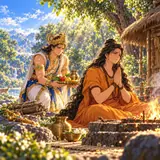
तस्यास्तीरे तदा सर्वे चक्रुर्वासपरिग्रहम् । ततः स्नात्वा यथान्यायं संतर्प्य पितृदेवताः ॥ ९ ॥
हुत्वा चैवाग्निहोत्राणि प्राश्य चामृतवद्धविः । विविशुर्जाह्नवीतीरे शुभा मुदितमानसाः ॥ १० ॥
They all made camp on her bank. Then, having bathed properly and satisfied the ancestors and gods, having made the fire offerings and eaten the nectar-like offering, they settled happily on the bank of the Jahnavi, glad at heart,
सबने उसके तट पर पड़ाव डाला। फिर विधिवत स्नान करके, पितरों और देवताओं का तर्पण करके, अग्निहोत्र करके और अमृत जैसा हवि खाकर, वे प्रसन्न मन से जाह्नवी के तट पर सुख से बैठ गए,
CommentaryNot scripture They bathe, satisfy the ancestors and gods with water offerings (tarpana ), make the fire offerings, and eat the sacred food. Then they sit happily on the riverbank. A day of travel ends in worship and rest.
Scene 1 of 2 · At noon the travellers reach the Ganga, white with swans and cranes, and camp on her bank.
विश्वामित्रं महात्मानं परिवार्य समन्ततः । विष्ठिताश्च यथान्यायं राघवौ च यथार्हतः । संप्रहृष्टमना रामो विश्वामित्रमथाब्रवीत् ॥ ११ ॥
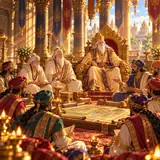
surrounding the great-souled Vishvamitra on every side, seated in proper order, and the Raghavas as was fitting. Then Rama, delighted, said to Vishvamitra:
महात्मा विश्वामित्र को चारों ओर से घेरकर, उचित क्रम से बैठे, और राघव भी यथोचित रीति से। तब प्रसन्न होकर राम ने विश्वामित्र से कहा:
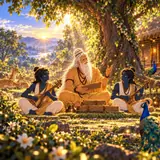
CommentaryNot scripture Everyone sits in proper order around Vishvamitra. It is story time again. And Rama, delighted, asks a question.
Scene 1 of 2 · At noon the travellers reach the Ganga, white with swans and cranes, and camp on her bank.
भगवञ्छ्रोतुमिच्छामि गङ्गां त्रिपथगां नदीम् । त्रैलोक्यं कथमाक्रम्य गता नदनदीपतिम् ॥ १२ ॥
“Lord, I wish to hear about the Ganga, the river of three paths: how did she cross the three worlds and go to the lord of rivers and streams?”
“भगवन, मैं तीन मार्गों वाली गंगा के बारे में सुनना चाहता हूँ: वह तीनों लोकों को पार करके नदियों और धाराओं के स्वामी (समुद्र) तक कैसे पहुँची?”
CommentaryNot scripture “How did the Ganga cross the three worlds and reach the sea?” Rama’s question opens the most famous story of the Bala Kanda: the descent of the Ganga. It will take nine sargas to answer.
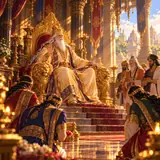
Scene 2 of 2 · The two daughters of the Himalaya: Ganga, given to the gods in heaven, and Uma, given to Shiva.
चोदितो रामवाक्येन विश्वामित्रो महामुनिः । वृद्धिं जन्म च गङ्गाया वक्तुमेवोपचक्रमे ॥ १३ ॥
Urged by Rama’s words, the great sage Vishvamitra began to tell of the Ganga’s birth and growth.
राम के वचनों से प्रेरित होकर महामुनि विश्वामित्र ने गंगा के जन्म और विस्तार की कथा कहनी आरंभ की।
CommentaryNot scripture Vishvamitra begins with the Ganga’s birth. Like a good storyteller, he starts at the very beginning.
Scene 2 of 2 · The two daughters of the Himalaya: Ganga, given to the gods in heaven, and Uma, given to Shiva.
शैलेन्द्रो हिमवान् राम धातूनामाकरो महान् । तस्य कन्याद्वयं राम रूपेणाप्रतिमं भुवि ॥ १४ ॥
“Himavan, king of mountains, Rama, is a great storehouse of minerals. He had two daughters, Rama, unmatched in beauty on earth.
“राम, पर्वतों के राजा हिमवान धातुओं के महान भंडार हैं। उनकी दो पुत्रियाँ थीं, राम, जो पृथ्वी पर सौंदर्य में अनुपम थीं।
CommentaryNot scripture Himavan, king of mountains, “a storehouse of minerals”. In Indian myth, the Himalaya is a living king, a father with daughters. Mountains have families too.
Scene 2 of 2 · The two daughters of the Himalaya: Ganga, given to the gods in heaven, and Uma, given to Shiva.
या मेरुदुहिता राम तयोर्माता सुमध्यमा । नाम्ना मेना मनोज्ञा वै पत्नी हिमवतः प्रिया ॥ १५ ॥
“Their mother, Rama, was the slender-waisted daughter of Meru, named Mena, charming, the beloved wife of Himavan.
“उनकी माता, राम, मेरु की पतली कमर वाली पुत्री थीं, मेना नाम की, मनोहर, हिमवान की प्रिय पत्नी।
CommentaryNot scripture Their mother is Mena, daughter of Meru, the golden mountain at the centre of the world. The divine family of the Ganga is a family of mountains.
Scene 2 of 2 · The two daughters of the Himalaya: Ganga, given to the gods in heaven, and Uma, given to Shiva.
तस्यां गङ्गेयमभवज्ज्येष्ठा हिमवतः सुता । उमा नाम द्वितीयाभूत् कन्या तस्यैव राघव ॥ १६ ॥
“Of her was born this Ganga, the elder daughter of Himavan; the second daughter of his was named Uma, Raghava.
“उन्हीं से हिमवान की बड़ी पुत्री यह गंगा उत्पन्न हुई; राघव, उनकी दूसरी पुत्री का नाम उमा था।
CommentaryNot scripture Two daughters: Ganga the elder, Uma the younger. Uma is Parvati, who will become Shiva’s wife. The two sisters, the holy river and the great goddess.
Scene 2 of 2 · The two daughters of the Himalaya: Ganga, given to the gods in heaven, and Uma, given to Shiva.
अथ ज्येष्ठां सुराः सर्वे देवकार्यचिकीर्षया । शैलेन्द्रं वरयामासुर्गङ्गां त्रिपथगां नदीम् ॥ १७ ॥
“Then all the gods, wishing to accomplish the work of the gods, asked the king of mountains for the elder, Ganga, the river of three paths.
“तब देवताओं का कार्य सिद्ध करने की इच्छा से सब देवताओं ने पर्वतराज से बड़ी पुत्री, तीन मार्गों वाली गंगा को माँगा।
CommentaryNot scripture The gods ask Himavan for Ganga, “for the work of the gods”. The river is needed in heaven. Her story begins with being given away for others’ good.
Scene 2 of 2 · The two daughters of the Himalaya: Ganga, given to the gods in heaven, and Uma, given to Shiva.
ददौ धर्मेण हिमवांस्तनयां लोकपावनीम् । स्वच्छन्दपथगां गङ्गां त्रैलोक्यहितकाम्यया ॥ १८ ॥
“Himavan, by dharma, gave his daughter, the purifier of the worlds, Ganga, who goes by paths of her own choosing, wishing the good of the three worlds.
“तीनों लोकों का हित चाहते हुए हिमवान ने धर्म के अनुसार अपनी पुत्री, लोकों को पवित्र करने वाली, अपनी इच्छा से मार्ग चुनने वाली गंगा को दे दिया।
CommentaryNot scripture Himavan gives her “by dharma”, “wishing the good of the three worlds”. She is called the purifier of the worlds, who goes by paths of her own choosing. A river follows her own course: Ganga has a will.
Scene 2 of 2 · The two daughters of the Himalaya: Ganga, given to the gods in heaven, and Uma, given to Shiva.
प्रतिगृह्य त्रिलोकार्थं त्रिलोकहितकांक्षिणः । गङ्गामादाय तेऽगच्छन् कृतार्थेनान्तरात्मना ॥ १९ ॥
“Receiving her for the three worlds, the gods, who desired the good of the three worlds, took Ganga and went with fulfilled hearts.
“तीनों लोकों के लिए उसे पाकर, तीनों लोकों का हित चाहने वाले देवता गंगा को लेकर पूर्ण मन से चले गए।
CommentaryNot scripture The gods take her to heaven with fulfilled hearts. That is the first of her three paths: the heavenly one. The earthly path comes later, through King Bhagiratha.
Scene 2 of 2 · The two daughters of the Himalaya: Ganga, given to the gods in heaven, and Uma, given to Shiva.
या चान्या शैलदुहिता कन्याऽसीद् रघुनन्दन । उग्रं सुव्रतमास्थाय तपस्तेपे तपोधना ॥ २० ॥
“And the other daughter of the mountain, delight of the Raghus, rich in austerity, undertook a fierce vow and practised austerity.
“और रघुनंदन, पर्वत की दूसरी पुत्री ने, जो तप की धनी थी, कठोर व्रत लेकर तप किया।
CommentaryNot scripture Uma, the younger, takes a fierce vow and practises austerity. Her austerity is famous: she fasted until even leaves were too much, earning the name Aparna, “without leaves”.
Scene 2 of 2 · The two daughters of the Himalaya: Ganga, given to the gods in heaven, and Uma, given to Shiva.
उग्रेण तपसा युक्तां ददौ शैलवरः सुताम् । रुद्रायाप्रतिरूपाय उमां लोकनमस्कृताम् ॥ २१ ॥
“To Rudra, who has no equal, the best of mountains gave his daughter Uma, honoured by the world, endowed with fierce austerity.
“पर्वतश्रेष्ठ ने अपनी संसार से पूजित, उग्र तप से युक्त पुत्री उमा को अनुपम रुद्र को दे दिया।
CommentaryNot scripture Himavan gives Uma to Rudra (Shiva), “who has no equal”. The austere goddess marries the great ascetic god.
Scene 2 of 2 · The two daughters of the Himalaya: Ganga, given to the gods in heaven, and Uma, given to Shiva.
एते ते शैलराजस्य सुते लोकनमस्कृते । गङ्गा च सरितां श्रेष्ठा उमादेवी च राघव ॥ २२ ॥
“These are the two daughters of the king of mountains, honoured by the world: Ganga, best of rivers, and the goddess Uma, Raghava.
“राघव, ये पर्वतराज की दो संसार से पूजित पुत्रियाँ हैं: नदियों में श्रेष्ठ गंगा, और देवी उमा।
CommentaryNot scripture Two daughters, both honoured by the world: Ganga the river and Uma the goddess. One flows, one shines. Both are worshipped across India to this day.
Scene 2 of 2 · The two daughters of the Himalaya: Ganga, given to the gods in heaven, and Uma, given to Shiva.
एतत् ते सर्वमाख्यातं यथा त्रिपथगामिनी । खं गता प्रथमं तात गतिं गतिमतां वर ॥ २३ ॥
“I have told you all of how the river of three paths first went to the sky, child, best of those who move.
“वत्स, चलने वालों में श्रेष्ठ, मैंने तुम्हें सब बता दिया कि तीन मार्गों वाली नदी पहले आकाश में कैसे गई।
CommentaryNot scripture “I have told you how the river first went to the sky.” The Ganga began in heaven. Now Rama knows the first of her three paths.
Scene 2 of 2 · The two daughters of the Himalaya: Ganga, given to the gods in heaven, and Uma, given to Shiva.
सैषा सुरनदी रम्या शैलेन्द्रतनया तदा । सुरलोकं समारूढा विपापा जलवाहिनी ॥ २४ ॥
“This is that lovely river of the gods, daughter of the king of mountains, who then ascended to the world of the gods: sinless, bearing water.”
“यह वही पर्वतराज की सुंदर देवनदी है, जो तब देवलोक को चढ़ गई: निष्पाप, जल धारण करने वाली।”
CommentaryNot scripture “This is that lovely river of the gods.” Vishvamitra points to the river flowing beside them. The heavenly river is right here, on earth. The next sargas tell how she came down.
Scene 2 of 2 · The two daughters of the Himalaya: Ganga, given to the gods in heaven, and Uma, given to Shiva.