Bala Kanda · Sarga 22 of 77 · 24 verses
Rama Leaves Home; the Mantras Bala and Atibala
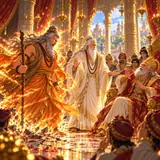
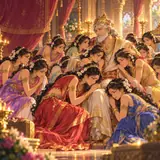
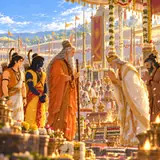
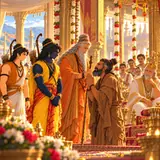
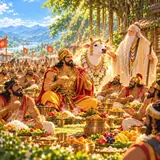
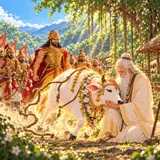
Dasharatha, now glad, calls Rama with Lakshmana. His mother and father perform the rites for a safe journey, Vasishtha blesses him with mantras, and the king kisses his son’s head and gives him to Vishvamitra. A gentle, dustless breeze blows, flowers rain, divine drums and conches sound.
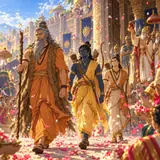
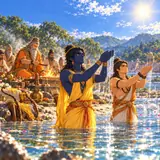
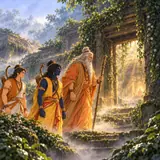
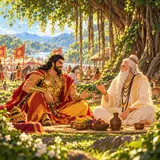
Vishvamitra walks in front; Rama follows with his bow and boyish side-locks, and Lakshmana behind him: two bright young archers with quivers and swords, like the Ashvins following Brahma. After a yojana and a half, on the south bank of the Sarayu, Vishvamitra calls Rama sweetly: “Take water, child, and receive two mantras, Bala and Atibala.” With them Rama will feel no fatigue, fever, hunger or thirst; no demon can attack him asleep or off guard; no one will equal him in strength, skill, knowledge or eloquence. Rama sips water, receives them, and shines like the autumn sun. The three spend the night on a bed of grass by the river, an unaccustomed bed for princes, made pleasant by the sage’s kind words.
Press › to begin with verse 1.
तथा वसिष्ठे ब्रुवति राजा दशरथः स्वयम् । प्रहृष्टवदनो राममाजुहाव सलक्ष्मणम् ॥ १ ॥
As Vasishtha spoke so, King Dasharatha himself, his face bright with joy, summoned Rama together with Lakshmana.
वसिष्ठ के ऐसा कहने पर प्रसन्न मुख वाले राजा दशरथ ने स्वयं राम को लक्ष्मण सहित बुलाया।
Commentary on the whole sarga
Rama Leaves Home; the Mantras Bala and Atibala 1 min read.
Read the commentary CommentaryNot scripture The king’s face is now “bright with joy” (prahrishta-vadana ). Fear has turned to trust. He summons Rama, and Lakshmana too: Vishvamitra asked only for Rama, but Lakshmana will not be left behind. They are inseparable, as sarga 18 said.
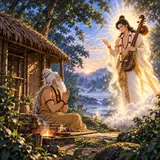
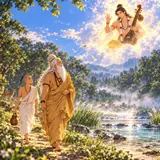
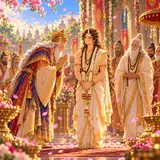
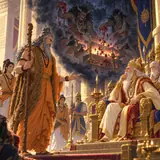
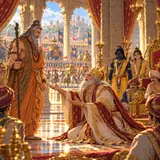
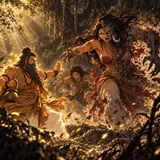
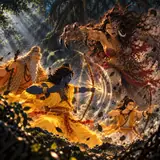
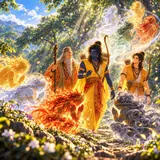
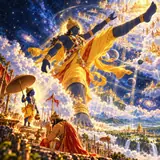
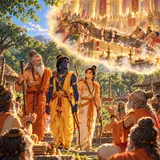
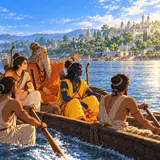
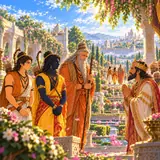
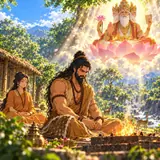
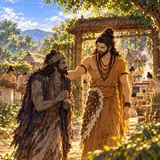
Scene 1 of 2 · Dasharatha kisses Rama’s head and gives him to Vishvamitra; the young princes follow the sage out of Ayodhya under a rain of flowers.
कृतस्वस्त्ययनं मात्रा पित्रा दशरथेन च । पुरोधसा वसिष्ठेन मङ्गलैरभिमन्त्रितम् ॥ २ ॥
स पुत्रं मूर्ध्न्युपाघ्राय राजा दशरथस्तदा । ददौ कुशिकपुत्राय सुप्रीतेनान्तरात्मना ॥ ३ ॥
After his mother and his father Dasharatha had performed the rites for a safe journey, and the family priest Vasishtha had blessed him with auspicious mantras, King Dasharatha kissed his son on the head and gave him to the son of Kushika with a heart well pleased.
जब माता और पिता दशरथ ने यात्रा के कुशल के लिए मंगल कर्म किए, और कुलपुरोहित वसिष्ठ ने मंगल मंत्रों से उन्हें आशीर्वाद दिया, तब राजा दशरथ ने पुत्र का सिर चूमा और अत्यंत प्रसन्न मन से उसे कुशिक-पुत्र को सौंप दिया।
CommentaryNot scripture His mother and father perform the rites for a safe journey (svasty-ayana ), and Vasishtha blesses him. Dasharatha kisses his son’s head (murdhny upaghraya , literally “smelling the head”, the old Indian gesture of a parent’s tenderness) and gives him to the sage.
Scene 1 of 2 · Dasharatha kisses Rama’s head and gives him to Vishvamitra; the young princes follow the sage out of Ayodhya under a rain of flowers.
ततो वायुः सुखस्पर्शो नीरजस्को ववौ तदा । विश्वामित्रगतं रामं दृष्ट्वा राजीवलोचनम् ॥ ४ ॥
Then a breeze blew, pleasant to the touch and free of dust, as it saw lotus-eyed Rama going with Vishvamitra.
तब कमल-नयन राम को विश्वामित्र के साथ जाते देखकर छूने में सुखद, धूल से रहित हवा बहने लगी।
CommentaryNot scripture The wind itself honours Rama: pleasant, dustless, as if it saw him go. Nature responds to the hero. In Valmiki, the natural world often reflects the moral world.
Scene 1 of 2 · Dasharatha kisses Rama’s head and gives him to Vishvamitra; the young princes follow the sage out of Ayodhya under a rain of flowers.
पुष्पवृष्टिर्महत्यासीद् देवदुन्दुभिनिस्वनैः । शङ्खदुन्दुभिनिर्घोषः प्रयाते तु महात्मनि ॥ ५ ॥
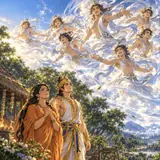
There was a great rain of flowers, with the sound of divine drums; conches and drums resounded as the great-souled one set out.
फूलों की भारी वर्षा हुई, देवताओं के नगाड़े बजे; उन महात्मा के चलते समय शंख और दुंदुभियाँ गूँज उठीं।
CommentaryNot scripture Flowers rain down and divine drums sound. Heaven blesses this departure. Rama’s first journey from home is a celebration, not a mourning, unlike the one to come.
Scene 1 of 2 · Dasharatha kisses Rama’s head and gives him to Vishvamitra; the young princes follow the sage out of Ayodhya under a rain of flowers.
विश्वामित्रो ययावग्रे ततो रामो महायशाः । काकपक्षधरो धन्वी तं च सौमित्रिरन्वगात् ॥ ६ ॥
Vishvamitra went in front, then the greatly renowned Rama with the side-locks of a boy, bow in hand, and Saumitri followed him.
आगे विश्वामित्र चले, फिर काकपक्ष वाले, हाथ में धनुष लिए महायशस्वी राम, और उनके पीछे सौमित्रि (लक्ष्मण)।
CommentaryNot scripture The order of the march: Vishvamitra first, then Rama with his boy’s side-locks (kaka-paksha , “crow’s wings”), then Lakshmana. The teacher leads, the students follow. This image of three walking figures will become one of the most loved scenes in Indian art.
Scene 1 of 2 · Dasharatha kisses Rama’s head and gives him to Vishvamitra; the young princes follow the sage out of Ayodhya under a rain of flowers.
कलापिनौ धनुष्पाणी शोभयानौ दिशो दश । विश्वामित्रं महात्मानं त्रिशीर्षाविव पन्नगौ ॥ ७ ॥
अनुजग्मतुरक्षुद्रौ पितामहमिवाश्विनौ । अनुयातौ श्रिया दीप्तौ शोभयेतावनिन्दितौ ॥ ८ ॥
With quivers on their backs and bows in their hands, lighting up the ten directions, the two noble youths followed the great-souled Vishvamitra like two three-headed serpents, as the Ashvins follow the Grandsire.
पीठ पर तरकश और हाथों में धनुष लिए, दसों दिशाओं को प्रकाशित करते हुए दोनों श्रेष्ठ युवक महात्मा विश्वामित्र के पीछे ऐसे चले जैसे तीन सिरों वाले दो सर्प, या जैसे पितामह के पीछे अश्विनीकुमार।
CommentaryNot scripture With quivers and bows, they “light up the ten directions”. Two images: like three-headed serpents (each youth with bow and two quivers), and like the twin Ashvins following Brahma. Valmiki reaches for divine comparisons to describe two boys walking.
Scene 1 of 2 · Dasharatha kisses Rama’s head and gives him to Vishvamitra; the young princes follow the sage out of Ayodhya under a rain of flowers.
तदा कुशिकपुत्रं तु धनुष्पाणी स्वलंकृतौ । बद्धगोधाङ्गुलित्राणौ खड्गवन्तौ महाद्युती ॥ ९ ॥
कुमारौ चारुवपुषौ भ्रातरौ रामलक्ष्मणौ । अनुयातौ श्रिया दीप्तौ शोभयेतावनिन्दितौ ॥ १० ॥
स्थाणुं देवमिवाचिन्त्यं कुमाराविव पावकी । अध्यर्धयोजनं गत्वा सरय्वा दक्षिणे तटे ॥ ११ ॥
Then, bows in hand and finely adorned, with lizard-skin finger guards fastened on and swords at their sides, of great splendour, the two princes of lovely form, the brothers Rama and Lakshmana, faultless and blazing with beauty, followed the son of Kushika, as the two sons of Fire (Skanda and Vishakha) follow the inconceivable god Sthanu (Shiva). Having gone a yojana and a half, on the south bank of the Sarayu,
फिर हाथों में धनुष लिए, सुंदर ढंग से सजे, गोह के चमड़े के अंगुलित्राण बाँधे, कमर में तलवारें लटकाए, महान तेज वाले, सुंदर रूप वाले दोनों राजकुमार भाई राम और लक्ष्मण, निर्दोष और सौंदर्य से दमकते हुए, कुशिक-पुत्र के पीछे ऐसे चले जैसे अग्नि के दो पुत्र (स्कंद और विशाख) अचिंत्य देव स्थाणु (शिव) के पीछे चलते हैं। डेढ़ योजन जाने पर, सरयू के दक्षिणी तट पर,
CommentaryNot scripture Lizard-skin finger guards (godha-anguli-trana ) protect an archer’s fingers from the bowstring. Swords at their sides. They follow Vishvamitra like Skanda and Vishakha, sons of Fire, following Shiva. A yojana and a half later, on the Sarayu’s south bank, the teaching begins.
Scene 1 of 2 · Dasharatha kisses Rama’s head and gives him to Vishvamitra; the young princes follow the sage out of Ayodhya under a rain of flowers.
रामेति मधुरां वाणीं विश्वामित्रोऽभ्यभाषत । गृहाण वत्स सलिलं मा भूत्कालस्य पर्ययः ॥ १२ ॥
Vishvamitra spoke the sweet word “Rama”, and said: “Take water, child; let no time be lost.
विश्वामित्र ने मधुर स्वर में “राम” कहा, और बोले: “वत्स, जल लो (आचमन करो); समय नष्ट न हो।
CommentaryNot scripture “Rama”: Vishvamitra says the name sweetly (madhuram vanim ). The fierce sage who made the earth shake in the last sarga is gentle with his student. “Take water, child”: the purifying sip before receiving sacred knowledge.
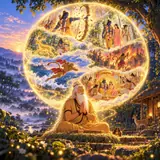
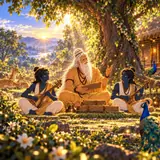
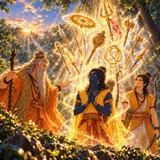
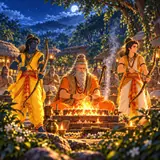
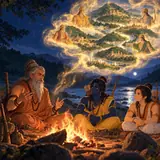
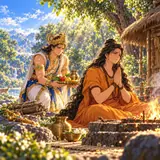
Scene 2 of 2 · On the bank of the Sarayu, Vishvamitra teaches Rama the mantras Bala and Atibala, and the princes sleep on grass.
मन्त्रग्रामं गृहाण त्वं बलामतिबलां तथा । न श्रमो न ज्वरो वा ते न रूपस्य विपर्ययः ॥ १३ ॥
न च सुप्तं प्रमत्तं वा धर्षयिष्यन्ति नैर्ऋताः । न बाह्वोः सदृशो वीर्ये पृथिव्यामस्ति कश्चन ॥ १४ ॥
“Receive this group of mantras, Bala and Atibala. You will have no fatigue or fever, no change in your form, and the nairritas (rakshasas) will not attack you when you are asleep or off guard. No one on earth will equal you in the strength of your arms.
“बला और अतिबला नाम के इन मंत्रों का समूह ग्रहण करो। तुम्हें न थकान होगी, न ज्वर, न तुम्हारे रूप में कोई बदलाव, और सोते समय या असावधान होने पर नैर्ऋत (राक्षस) तुम पर आक्रमण नहीं करेंगे। पृथ्वी पर भुजाओं के बल में कोई तुम्हारे बराबर नहीं होगा।
CommentaryNot scripture Bala (“strength”) and Atibala (“great strength”): two mantras, or two sciences. They protect from fatigue, fever, change of form, and attack while sleeping. A protective gift for two princes about to enter demon country.
Scene 2 of 2 · On the bank of the Sarayu, Vishvamitra teaches Rama the mantras Bala and Atibala, and the princes sleep on grass.
त्रिषु लोकेषु वा राम न भवेत्सदृशस्तव । बलामतिबलां चैव पठतस्तात राघव ॥ १५ ॥
न सौभाग्ये न दाक्षिण्ये न ज्ञाने बुद्धिनिश्चये । नोत्तरे प्रतिवक्तव्ये समो लोके तवानघ ॥ १६ ॥
“In the three worlds, Rama, there will be no one like you, child Raghava, when you recite Bala and Atibala: none like you in the world, sinless one, in good fortune, in courtesy, in knowledge, in firmness of judgement, or in answering a question.
“राम, वत्स राघव, जब तुम बला और अतिबला का जप करोगे, तो तीनों लोकों में तुम्हारे जैसा कोई नहीं होगा: निष्पाप, संसार में सौभाग्य, शिष्टता, ज्ञान, बुद्धि की दृढ़ता या प्रश्न का उत्तर देने में कोई तुम्हारे जैसा नहीं होगा।
CommentaryNot scripture The gifts go beyond the body: good fortune, courtesy, knowledge, firm judgement, and skill in answering. The mantras make Rama not only strong but wise and well spoken. Valmiki’s ideal hero is never only a fighter.
Scene 2 of 2 · On the bank of the Sarayu, Vishvamitra teaches Rama the mantras Bala and Atibala, and the princes sleep on grass.
एतद्विद्याद्वये लब्धे न भवेत् सदृशस्तव । बला चातिबला चैव सर्वज्ञानस्य मातरौ ॥ १७ ॥
“When you have these two sciences, no one will be your equal. Bala and Atibala are the mothers of all knowledge.
“जब तुम्हारे पास ये दोनों विद्याएँ होंगी, तो कोई तुम्हारे बराबर नहीं होगा। बला और अतिबला सब ज्ञान की माताएँ हैं।
CommentaryNot scripture “Bala and Atibala are the mothers of all knowledge.” These mantras are the root from which other learning grows. Vishvamitra begins Rama’s education at the beginning.
Scene 2 of 2 · On the bank of the Sarayu, Vishvamitra teaches Rama the mantras Bala and Atibala, and the princes sleep on grass.
क्षुत्पिपासे न ते राम भविष्येते नरोत्तम । बलामतिबलां चैव पठस्तात राघव ॥ १८ ॥
“Hunger and thirst will not touch you, Rama, best of men, child Raghava, when you recite Bala and Atibala.
“पुरुषश्रेष्ठ राम, वत्स राघव, जब तुम बला और अतिबला का जप करोगे, तो भूख और प्यास तुम्हें नहीं सताएँगी।
CommentaryNot scripture No hunger or thirst. In the forest, food and water are uncertain. Vishvamitra provides for his students in the deepest way, by giving them inner strength.
Scene 2 of 2 · On the bank of the Sarayu, Vishvamitra teaches Rama the mantras Bala and Atibala, and the princes sleep on grass.
गृहाण सर्वलोकस्य गुप्तये रघुनन्दन । विद्याद्वयमधीयाने यशश्चाथ भवेद् भुवि । पितामहसुते ह्येते विद्ये तेजःसमन्विते ॥ १९ ॥
प्रदातुं तव काकुत्स्थ सदृशस्त्वं हि पार्थिव । कामं बहुगुणाः सर्वे त्वय्येते नात्र संशयः ॥ २० ॥
तपसा संभृते चैते बहुरूपे भविष्यतः । ततो रामो जलं स्पृष्ट्वा प्रहृष्टवदनः शुचिः ॥ २१ ॥
“Take them for the protection of the whole world, delight of the Raghus. By learning these two sciences one gains fame on earth. These two radiant sciences are daughters of the Grandsire. I am to give them to you, Kakutstha, for you are worthy of them, prince. Surely all these many virtues are in you; there is no doubt of it. Nourished by austerity, these sciences will take many forms.” Then Rama, pure, his face bright with joy, touched water
“रघुनंदन, सारे संसार की रक्षा के लिए इन्हें ग्रहण करो। इन दोनों विद्याओं को सीखकर पृथ्वी पर यश मिलता है। ये दोनों तेजस्वी विद्याएँ पितामह की पुत्रियाँ हैं। काकुत्स्थ, मुझे इन्हें तुम्हें देना है, क्योंकि राजकुमार, तुम इनके योग्य हो। निश्चय ही ये सब अनेक गुण तुममें हैं; इसमें कोई संदेह नहीं। तप से पोषित होकर ये विद्याएँ अनेक रूप लेंगी।” तब पवित्र, प्रसन्न मुख वाले राम ने आचमन किया
CommentaryNot scripture “For the protection of the whole world.” The gift is not for Rama’s sake alone. The mantras are daughters of Brahma, and Rama is worthy of them. “Nourished by austerity, they will take many forms”: knowledge grows in a disciplined person.
Scene 2 of 2 · On the bank of the Sarayu, Vishvamitra teaches Rama the mantras Bala and Atibala, and the princes sleep on grass.
प्रतिजग्राह ते विद्ये महर्षेर्भावितात्मनः । विद्यासमुदितो रामः शुशुभे भूरिविक्रमः ॥ २२ ॥
सहस्ररश्मिर्भगवाञ्शरदीव दिवाकरः । गुरुकार्याणि सर्वाणि नियुज्य कुशिकात्मजे । ऊषुस्तां रजनीं तत्र सरय्वां सुसुखं त्रयः ॥ २३ ॥
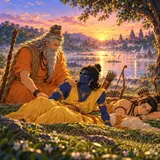
and received those two sciences from the great sage of purified soul. Endowed with that knowledge, Rama of great valour shone like the blessed thousand-rayed sun in autumn. Having done every service due to their teacher, the son of Kushika, the three spent that night very happily there on the Sarayu.
और शुद्ध आत्मा वाले महर्षि से वे दोनों विद्याएँ ग्रहण कीं। उस विद्या से संपन्न होकर महापराक्रमी राम शरद ऋतु के सहस्र किरणों वाले भगवान सूर्य की तरह चमकने लगे। अपने गुरु कुशिक-पुत्र की सारी सेवा करके तीनों ने वह रात सरयू के तट पर बड़े सुख से बिताई।
CommentaryNot scripture Rama sips water and receives the knowledge. He shines “like the thousand-rayed sun in autumn”, when the sky is clear and the light is pure. Then the boys serve their teacher: in the Indian tradition, a student serves the guru in daily life, not just in the classroom.
Scene 2 of 2 · On the bank of the Sarayu, Vishvamitra teaches Rama the mantras Bala and Atibala, and the princes sleep on grass.
दशरथनृपसूनुसत्तमाभ्यां तृणशयनेऽनुचिते तदोषिताभ्याम् । कुशिकसुतवचोऽनुलालिताभ्याम् सुखमिव सा विबभौ विभावरी च ॥ २४ ॥
For the two best sons of King Dasharatha, sleeping that night on a bed of grass to which they were not accustomed, cherished by the words of the son of Kushika, the night seemed to pass in comfort.
राजा दशरथ के दोनों श्रेष्ठ पुत्रों के लिए, जो उस रात घास के ऐसे बिछौने पर सोए जिसके वे अभ्यस्त नहीं थे, कुशिक-पुत्र के स्नेह भरे वचनों से वह रात सुख से बीतती-सी लगी।
CommentaryNot scripture A tender close: two princes who have only known palace beds sleep on grass. Yet the night passes “in comfort”, because of the sage’s loving words (lalitau ). A good teacher makes hardship feel like home. Their first night away from home is a happy one.
Scene 2 of 2 · On the bank of the Sarayu, Vishvamitra teaches Rama the mantras Bala and Atibala, and the princes sleep on grass.