Bala Kanda · Sarga 3 of 77 · 39 verses
The Poet Sees the Whole Story
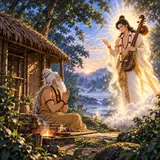
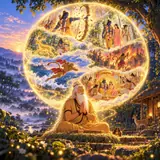
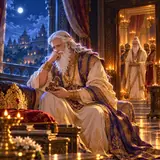
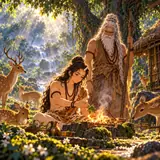
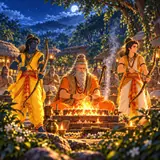
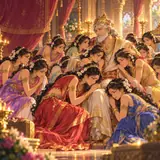
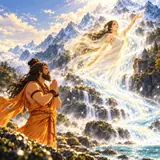
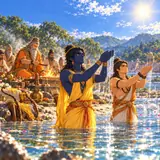
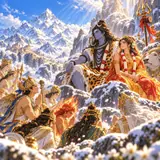
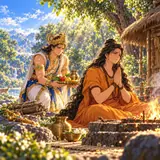
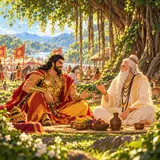
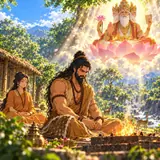
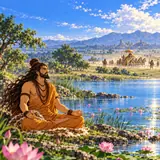
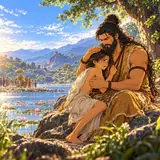
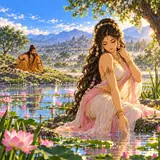
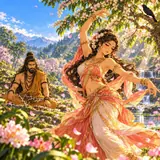
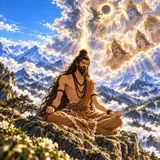
Having heard the story in outline, Valmiki sits on darbha grass facing east, sips water, and turns inward. Through the power of his discipline he sees everything that happened to Rama, Lakshmana, Sita, Dasharatha and his queens, as clearly as a gooseberry held in the palm: their laughter, their words, their movements.
Then the sarga lists, in order, the episodes he will put into the poem, from Rama’s birth to Sita’s later exile. It reads like the poem’s table of contents, and ends by saying that what was still to come in Rama’s life on earth the sage told in the final part.
Press › to begin with verse 1.
श्रुत्वा वस्तु समग्रं तद्धर्मार्थसहितं हितम् । व्यक्तमन्वेषते भूयो यद् वृत्तं तस्य धीमतः ॥ १ ॥
Having heard the whole subject, beneficial and full of dharma and meaning, the sage sought to know more clearly what had happened to that wise one.
धर्म और अर्थ से भरे, कल्याणकारी पूरे विषय को सुनकर मुनि ने उन बुद्धिमान राम के साथ जो कुछ हुआ था, उसे और स्पष्ट रूप से जानना चाहा।
Commentary on the whole sarga
The Poet Sees the Whole Story 1 min read.
Read the commentary CommentaryNot scripture Narada gave the outline; now Valmiki wants more. He “sought to know more clearly” (vyaktam anveshate ). A summary is not enough for a poet. He needs the living detail: faces, voices, places. This sarga shows how he gets it.
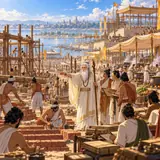
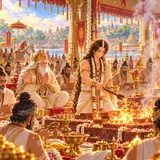
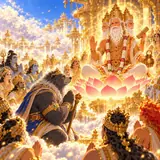
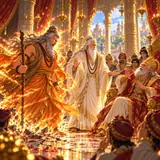
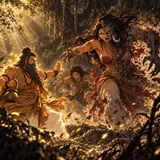
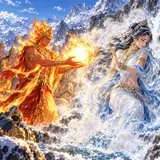
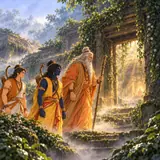
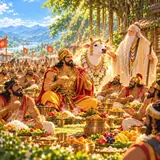
Scene 1 of 3 · Seated on darbha grass, Valmiki sees the whole story of Rama as clearly as a fruit held in the palm.
उपस्पृश्योदकं सम्यङ्मुनिः स्थित्वा कृताञ्जलिः । प्राचीनाग्रेषु दर्भेषु धर्मेणान्वेषते गतिम् ॥ २ ॥
The sage sipped water in the proper way, sat with joined palms on darbha grass with its tips to the east, and sought the path of the story through dharma:
मुनि ने विधि से आचमन किया, पूर्व की ओर नोक वाले कुशों पर हाथ जोड़कर बैठे, और धर्म के बल से कथा का मार्ग खोजने लगे:
CommentaryNot scripture Before seeing, he prepares. Upasprishya , sipping water for purification; sitting on darbha grass with the tips facing east, the direction of sunrise and of sacred rites; joined palms. Then he searches “through dharma”. His vision is a spiritual practice, not daydreaming.
Scene 1 of 3 · Seated on darbha grass, Valmiki sees the whole story of Rama as clearly as a fruit held in the palm.
रामलक्ष्मणसीताभी राज्ञा दशरथेन च । सभार्येण सराष्ट्रेण यत् प्राप्तं तत्र तत्त्वतः ॥ ३ ॥
हसितं भाषितं चैव गतिर्यावच्च चेष्टितम् । तत् सर्वं धर्मवीर्येण यथावत् संप्रपश्यति ॥ ४ ॥
whatever had truly happened there to Rama, Lakshmana and Sita, to King Dasharatha with his wives and his kingdom: their laughter, their speech, their gait and every movement. By the power of his dharma he saw all of it exactly as it was;
राम, लक्ष्मण और सीता के साथ, रानियों और राज्य सहित राजा दशरथ के साथ वहाँ सचमुच जो कुछ हुआ था: उनका हँसना, बोलना, चलना और हर एक चेष्टा। अपने धर्म के प्रभाव से उन्होंने वह सब ठीक वैसा ही देखा जैसा वह हुआ था;
CommentaryNot scripture Look at what he sees: hasitam bhashitam caiva gatih , their laughter, their speech, the way they walked. Not just events, but the small human textures that make people real. This is why the Ramayana feels alive: the poet claims to have seen how Sita laughed.
Scene 1 of 3 · Seated on darbha grass, Valmiki sees the whole story of Rama as clearly as a fruit held in the palm.
स्त्रीतृतीयेन च तथा यत् प्राप्तं चरता वने । सत्यसन्धेन रामेण तत् सर्वं चान्ववैक्षत ॥ ५ ॥
and all that befell Rama, true to his word, as he wandered in the forest with a woman as the third of them, he saw that too.
और सत्यप्रतिज्ञ राम ने जब तीसरी सीता के साथ वन में विचरते हुए जो कुछ सहा, वह भी उन्होंने देखा।
CommentaryNot scripture Stri-tritiya , “with a woman as the third”: Rama, Lakshmana and Sita, the three in the forest. The phrase is simple, almost plain. Valmiki sees their whole wandering, every hardship and every joy, through the same inner sight.
Scene 1 of 3 · Seated on darbha grass, Valmiki sees the whole story of Rama as clearly as a fruit held in the palm.
ततः पश्यति धर्मात्मा तत् सर्वं योगमास्थितः । पुरा यत् तत्र निर्वृत्तं पाणावामलकं यथा ॥ ६ ॥
Then, absorbed in yoga, the righteous one saw everything that had happened long ago, like an amalaka fruit in the palm of his hand.
तब योग में स्थित उन धर्मात्मा ने बहुत पहले घटी सब बातें ऐसे देखीं, जैसे हथेली पर रखा आँवला।
CommentaryNot scripture The famous image: he saw it all “like an amalaka fruit in the palm of his hand”. The amalaka (Indian gooseberry) is small, round and translucent. Held in the palm, it can be seen from every side at once. This is the tradition’s phrase for perfect, complete knowledge.
Scene 1 of 3 · Seated on darbha grass, Valmiki sees the whole story of Rama as clearly as a fruit held in the palm.
तत् सर्वं तत्त्वतो दृष्ट्वा धर्मेण स महामतिः । अभिरामस्य रामस्य तत् सर्वं कर्तुमुद्यतः ॥ ७ ॥
Having seen all of it truly through dharma, the great-minded one set out to make the whole of it, the story of Rama who delights all.
धर्म के द्वारा सब कुछ सत्य रूप में देखकर उन महामना ने सबको आनंद देने वाले राम की पूरी कथा रचने का उपक्रम किया।
CommentaryNot scripture Tattvatah , “truly”: he saw it as it really was. Only after seeing does he begin to write. The order matters: vision first, then words. Tradition calls this kind of poet a rishi , a seer, and calls the Ramayana arsha , the work of a seer.
Scene 1 of 3 · Seated on darbha grass, Valmiki sees the whole story of Rama as clearly as a fruit held in the palm.
कामार्थगुणसंयुक्तं धर्मार्थगुणविस्तरम् । समुद्रमिव रत्नाढ्यं सर्वश्रुतिमनोहरम् ॥ ८ ॥
It is full of the qualities of pleasure and wealth, rich in the qualities of dharma and its aims, full of jewels like the ocean, delighting every ear.
यह कथा काम और अर्थ के गुणों से भरी है, धर्म और उसके लक्ष्यों के गुणों से समृद्ध है, समुद्र की तरह रत्नों से भरी है और हर कान को आनंद देती है।
CommentaryNot scripture The poem holds all the aims of human life: kama (love and pleasure), artha (wealth and power) and dharma (right living). It is “full of jewels like the ocean”. The Ramayana is not only a holy book; it is a full picture of life, its pleasures included.
Scene 1 of 3 · Seated on darbha grass, Valmiki sees the whole story of Rama as clearly as a fruit held in the palm.
स यथा कथितं पूर्वं नारदेन महात्मना । रघुवंशस्य चरितं चकार भगवान् मुनिः ॥ ९ ॥
The holy sage made the story of the Raghu line just as the great-souled Narada had told it before:
भगवान ऋषि ने रघुवंश की कथा ठीक वैसे ही रची जैसे महात्मा नारद ने पहले सुनाई थी:
CommentaryNot scripture Valmiki composes “just as Narada had told it”. The new vision fills in the outline, but does not change it. Faithfulness to what was received is the first rule of this tradition, and it is the rule this edition follows too.
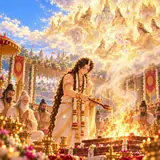
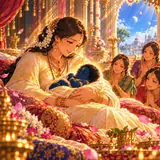
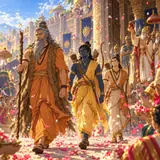
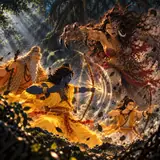
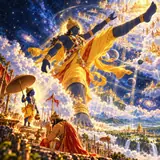
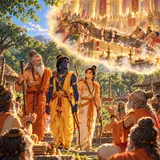
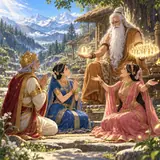
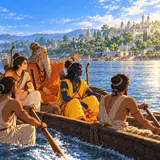
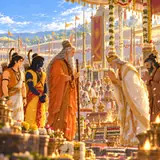
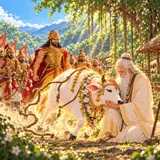
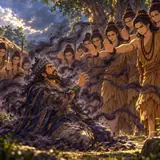
Scene 2 of 3 · The poem’s map, part one: Rama’s birth, the bow, the exile and the forest years.
जन्म रामस्य सुमहद्वीर्यं सर्वानुकूलताम् । लोकस्य प्रियतां क्षान्तिं सौम्यतां सत्यशीलताम् ॥ १० ॥
Rama’s birth, his great valour, his kindness to all, his being loved by the world, his patience, gentleness and truthfulness;
राम का जन्म, उनका महान पराक्रम, सबके प्रति उनकी कृपा, संसार का उनसे प्रेम, उनकी क्षमा, कोमलता और सत्यनिष्ठा;
CommentaryNot scripture Now begins the poem’s own table of contents. Rama’s birth comes first, and then his virtues: kindness to all, being loved by the world, patience, gentleness, truthfulness. The list of qualities comes before the list of events. Character is the real subject.
Scene 2 of 3 · The poem’s map, part one: Rama’s birth, the bow, the exile and the forest years.
नाना चित्राः कथाश्चान्या विश्वामित्रसहायने । जानक्याश्च विवाहं च धनुषश्च विभेदनम् ॥ ११ ॥
the many other wonderful stories on the journey with Vishvamitra, the marriage of Janaki and the breaking of the bow;
विश्वामित्र के साथ यात्रा में अनेक दूसरी अद्भुत कथाएँ, जानकी का विवाह और धनुष का टूटना;
CommentaryNot scripture The journey with Vishvamitra fills much of the Bala Kanda you are reading now, full of “wonderful stories”: the descent of the Ganga, Ahalya, the churning of the ocean. Then Sita’s marriage and the breaking of Shiva’s bow. All of this is still ahead in this kanda.
Scene 2 of 3 · The poem’s map, part one: Rama’s birth, the bow, the exile and the forest years.
रामरामविवादं च गुणान् दाशरथेस्तथा । तथाभिषेकं रामस्य कैकेय्या दुष्टभावताम् ॥ १२ ॥
the dispute of Rama with Rama, the virtues of Dasharatha’s son, the coronation of Rama and the wickedness of Kaikeyi;
राम का राम (परशुराम) से विवाद, दशरथ-पुत्र के गुण, राम का अभिषेक और कैकेयी की दुष्टता;
CommentaryNot scripture “The dispute of Rama with Rama”: the young Rama meets Parashurama, the warrior-sage who also bears the name Rama, at the end of the Bala Kanda. Then the Ayodhya Kanda: the coronation plans and Kaikeyi’s turn. The table of contents moves quickly from joy to crisis.
Scene 2 of 3 · The poem’s map, part one: Rama’s birth, the bow, the exile and the forest years.
विघातं चाभिषेकस्य रामस्य च विवासनम् । राज्ञः शोकं विलापं च परलोकस्य चाश्रयम् ॥ १३ ॥
the blocking of the coronation and Rama’s exile, the king’s grief and lament and his passing to the other world;
अभिषेक में बाधा और राम का वनवास, राजा का शोक और विलाप, और उनका परलोक गमन;
CommentaryNot scripture Four events, each a world of pain: the coronation stopped, the exile, the king’s grief, his death. In the Ayodhya Kanda these take dozens of sargas. Here each is a single word. A table of contents can hold a tragedy in a line.
Scene 2 of 3 · The poem’s map, part one: Rama’s birth, the bow, the exile and the forest years.
प्रकृतीनां विषादं च प्रकृतीनां विसर्जनम् । निषादाधिपसंवादं सूतोपावर्तनं तथा ॥ १४ ॥
the despair of the people and their sending back, the talk with the Nishada chief, and the return of the charioteer;
प्रजा का दुख और उन्हें लौटाना, निषादराज से बातचीत, और सारथी का लौटना;
CommentaryNot scripture The people’s despair (prakritinam vishada ) is one of the most moving parts of the Ayodhya Kanda: the citizens follow Rama’s chariot, and he must slip away from them at night. Then Guha, the Nishada chief, and the charioteer Sumantra sent back.
Scene 2 of 3 · The poem’s map, part one: Rama’s birth, the bow, the exile and the forest years.
गङ्गायाश्चापि संतारं भरद्वाजस्य दर्शनम् । भरद्वाजाभ्यनुज्ञानाच्चित्रकूटस्य दर्शनम् ॥ १५ ॥
the crossing of the Ganga, the meeting with Bharadvaja, and by Bharadvaja’s leave the sight of Chitrakuta;
गंगा पार करना, भरद्वाज से भेंट, और भरद्वाज की अनुमति से चित्रकूट के दर्शन;
CommentaryNot scripture Each place name marks a stage: the Ganga crossed, Bharadvaja at Prayaga, then Chitrakuta. Pilgrims still walk this route today, tracing the exile from place to place. The Ramayana is also a map of sacred India.
Scene 2 of 3 · The poem’s map, part one: Rama’s birth, the bow, the exile and the forest years.
वास्तुकर्म निवेशं च भरतागमनं तथा । प्रसादनं च रामस्य पितुश्च सलिलक्रियाम् ॥ १६ ॥
the building and settling of the dwelling, Bharata’s arrival, his pleading with Rama, and the water rites for their father;
कुटी बनाना और उसमें बसना, भरत का आना, राम से उनकी विनती, और पिता के लिए जल-तर्पण;
CommentaryNot scripture Building the hut at Chitrakuta, then Bharata’s arrival. “The water rites for their father” (salila-kriya ) is the moment Rama learns his father has died and offers water for his soul. It is one of the saddest scenes in the poem.
Scene 2 of 3 · The poem’s map, part one: Rama’s birth, the bow, the exile and the forest years.
पादुकाग्र्याभिषेकं च नन्दिग्रामनिवासनम् । दण्डकारण्यगमनं विराधस्य वधं तथा ॥ १७ ॥
the consecration of the noble sandals, the stay at Nandigrama, the going to the Dandaka forest and the killing of Viradha;
उत्तम पादुकाओं का अभिषेक, नंदीग्राम में निवास, दंडक वन में जाना और विराध का वध;
CommentaryNot scripture The sandals are consecrated like a king (paduka-abhisheka ). From Nandigrama, Bharata rules in their name. Then the scene shifts to the Dandaka forest and the first battle, with Viradha. Ayodhya Kanda ends; Aranya Kanda begins.
Scene 2 of 3 · The poem’s map, part one: Rama’s birth, the bow, the exile and the forest years.
दर्शनं शरभङ्गस्य सुतीक्ष्णेन समागमम् । अनसूयासमाख्यां च अङ्गरागस्य चार्पणम् ॥ १८ ॥
the sight of Sharabhanga, the meeting with Sutikshna, Anasuya’s story and her gift of ointment;
शरभंग के दर्शन, सुतीक्ष्ण से भेंट, अनसूया की कथा और उनका अंगराग देना;
CommentaryNot scripture Anasuya, wife of the sage Atri, is one of the Ramayana’s great women. She teaches Sita about faithful love and gives her an ointment (anga-raga ) that keeps her beautiful forever. It is a small gift with a meaning: Sita will never lose her radiance, even in captivity.
Scene 2 of 3 · The poem’s map, part one: Rama’s birth, the bow, the exile and the forest years.
दर्शनं चाप्यगस्त्यस्य धनुषो ग्रहणं तथा । शूर्पणख्याश्च संवादं विरूपकरणं तथा ॥ १९ ॥
the sight of Agastya and the taking of the bow, the conversation with Shurpanakha and her disfigurement;
अगस्त्य के दर्शन और धनुष ग्रहण, शूर्पणखा से बातचीत और उसका विरूप होना;
CommentaryNot scripture Agastya gives Rama his weapons. Then Shurpanakha appears. The list calls it a “conversation” (samvada ) before the disfigurement: the encounter begins with talk, and turns violent only when she attacks Sita.
Scene 2 of 3 · The poem’s map, part one: Rama’s birth, the bow, the exile and the forest years.
वधं खरत्रिशिरसोरुत्थानं रावणस्य च । मारीचस्य वधं चैव वैदेह्या हरणं तथा ॥ २० ॥
the killing of Khara and Trishiras, Ravana’s rousing, the killing of Maricha and the carrying off of Vaidehi;
खर और त्रिशिरा का वध, रावण का उकसाया जाना, मारीच का वध और वैदेही का हरण;
CommentaryNot scripture Four events that build to the theft: Khara and Trishiras killed, Ravana roused to revenge, Maricha killed as the golden deer, Sita carried off. The Aranya Kanda’s turning point is told in one breath.
Scene 2 of 3 · The poem’s map, part one: Rama’s birth, the bow, the exile and the forest years.
राघवस्य विलापं च गृध्रराजनिबर्हणम् । कबन्धदर्शनं चैव पम्पायाश्चापि दर्शनम् ॥ २१ ॥
Raghava’s lament, the death of the king of vultures, the sight of Kabandha and of the Pampa;
राघव का विलाप, गिद्धराज की मृत्यु, कबंध और पंपा के दर्शन;
CommentaryNot scripture Rama’s lament for Sita is long and heartbreaking in the Aranya Kanda: he asks the trees and rivers if they have seen her. Then Jatayu dies in his arms, and Kabandha points the way to the lake Pampa.
Scene 2 of 3 · The poem’s map, part one: Rama’s birth, the bow, the exile and the forest years.
शबरीदर्शनं चैव फलमूलाशनं तथा । प्रलापं चैव पम्पायां हनूमद्दर्शनं तथा ॥ २२ ॥
the meeting with Shabari and the eating of fruits and roots, the lament at the Pampa and the meeting with Hanuman;
शबरी से भेंट और फल-मूल का भोजन, पंपा के तट पर विलाप और हनुमान से भेंट;
CommentaryNot scripture Shabari feeds Rama fruits and roots, the forest food she has saved. At the Pampa lake Rama laments again, the springtime beauty sharpening his grief. Then Hanuman appears. The Kishkindha Kanda is near.
Scene 2 of 3 · The poem’s map, part one: Rama’s birth, the bow, the exile and the forest years.
ऋष्यमूकस्य गमनं सुग्रीवेण समागमम् । प्रत्ययोत्पादनं सख्यं वालिसुग्रीवविग्रहम् ॥ २३ ॥
the going to Rishyamuka, the meeting with Sugriva, the giving of proof, the friendship, and the fight of Vali and Sugriva;
ऋष्यमूक पर जाना, सुग्रीव से भेंट, विश्वास दिलाना, मित्रता, और वाली-सुग्रीव का युद्ध;
CommentaryNot scripture Rishyamuka is the hill where Sugriva hides from Vali. The “proof” (pratyaya ) is the seven sala trees pierced by one arrow, which we read of in sarga 1. Then the friendship, and the first fight between the vanara brothers.
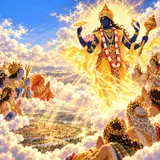
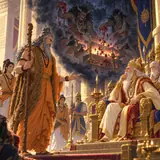
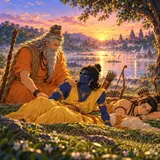
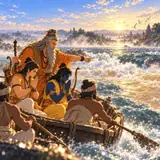
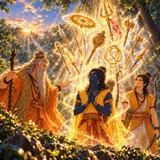
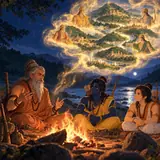
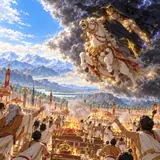
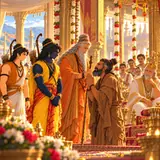
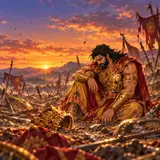
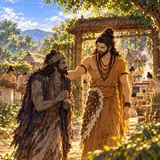
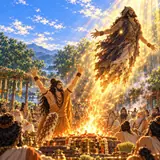
Scene 3 of 3 · The poem’s map, part two: the vanaras, Hanuman’s leap, the bridge, the war and the return.
वालिप्रमथनं चैव सुग्रीवप्रतिपादनम् । ताराविलापं समयं वर्षरात्रनिवासनम् ॥ २४ ॥
the crushing of Vali, the installing of Sugriva, Tara’s lament, the agreement, and the stay through the rainy season;
वाली का वध, सुग्रीव का अभिषेक, तारा का विलाप, समझौता, और वर्षा ऋतु में निवास;
CommentaryNot scripture Tara’s lament over Vali’s body is one of the most powerful speeches in the poem, given to a vanara queen. Then the long rainy season, when no army can march, and Rama waits in a mountain cave, missing Sita through the monsoon.
Scene 3 of 3 · The poem’s map, part two: the vanaras, Hanuman’s leap, the bridge, the war and the return.
कोपं राघवसिंहस्य बलानामुपसंग्रहम् । दिशः प्रस्थापनं चैव पृथिव्याश्च निवेदनम् ॥ २५ ॥
the anger of Raghava, lion among men, the gathering of the armies, the sending out in all directions, and the description of the earth;
नरसिंह राघव का क्रोध, सेनाओं का इकट्ठा होना, सब दिशाओं में भेजना, और पृथ्वी का वर्णन;
CommentaryNot scripture Rama’s anger: Sugriva forgot his promise during the rains, and Rama sends Lakshmana to remind him. Then the great gathering of armies and the search parties sent out. The “description of the earth” is a long geography of the ancient world, given by Sugriva.
Scene 3 of 3 · The poem’s map, part two: the vanaras, Hanuman’s leap, the bridge, the war and the return.
अङ्गुलीयकदानं च ऋक्षस्य बिलदर्शनम् । प्रायोपवेशनं चैव संपातेश्चापि दर्शनम् ॥ २६ ॥
the giving of the ring, the sight of the bear’s cave, the fast unto death, and the meeting with Sampati;
अँगूठी देना, ऋक्ष-बिल (भालू की गुफा) देखना, आमरण उपवास, और संपाति से भेंट;
CommentaryNot scripture The ring is given to Hanuman, the one Rama trusts most. The search party is lost in a magical cave, despairs, and resolves to fast unto death. Then Sampati, Jatayu’s brother, finds them and tells them where Sita is.
Scene 3 of 3 · The poem’s map, part two: the vanaras, Hanuman’s leap, the bridge, the war and the return.
पर्वतारोहणं चैव सागरस्यापि लङ्घनम् । समुद्रवचनाच्चैव मैनाकस्य च दर्शनम् ॥ २७ ॥
the climbing of the mountain, the leap across the ocean, and at the ocean’s word the sight of Mainaka;
पर्वत पर चढ़ना, समुद्र लाँघना, और समुद्र के कहने पर मैनाक के दर्शन;
CommentaryNot scripture Hanuman climbs Mount Mahendra and leaps. Mid-ocean the mountain Mainaka rises to offer him rest, at the ocean’s request. The Sundara Kanda begins with this flight, the most famous leap in Indian story.
Scene 3 of 3 · The poem’s map, part two: the vanaras, Hanuman’s leap, the bridge, the war and the return.
राक्षसीतर्जनं चैव च्छायाग्राहस्य दर्शनम् । सिंहिकायाश्च निधनं लङ्कामलयदर्शनम् ॥ २८ ॥
the threatening by the rakshasi, the sight of the shadow-seizer, the death of Simhika, and the sight of the Malaya mountain and Lanka;
राक्षसी द्वारा डराया जाना, छाया पकड़ने वाली को देखना, सिंहिका का वध, और मलय पर्वत तथा लंका के दर्शन;
CommentaryNot scripture Three tests on the flight: Surasa, mother of serpents, who tests his wit; Simhika, who seizes flying creatures by their shadows, whom he kills from inside; and then the first sight of Lanka on its mountain.
Scene 3 of 3 · The poem’s map, part two: the vanaras, Hanuman’s leap, the bridge, the war and the return.
रात्रौ लङ्काप्रवेशं च एकस्यापि विचिन्तनम् । आपानभूमिगमनमवरोधस्य दर्शनम् ॥ २९ ॥
the entering of Lanka by night, the lone vanara’s deliberation, the going to the drinking hall and the sight of the women’s quarters;
रात में लंका में प्रवेश, अकेले वानर का विचार करना, पानशाला में जाना और अंतःपुर को देखना;
CommentaryNot scripture Hanuman enters Lanka at night as a tiny creature, alone. He deliberates (vimarsha ) about how to search, walks through the drinking halls, and sees the women’s quarters. The Sundara Kanda describes Lanka’s splendour in rich detail through his eyes.
Scene 3 of 3 · The poem’s map, part two: the vanaras, Hanuman’s leap, the bridge, the war and the return.
दर्शनं रावणस्यापि पुष्पकस्य च दर्शनम् । अशोकवनिकायानं सीतायाश्चापि दर्शनम् ॥ ३० ॥
the sight of Ravana and of the Pushpaka, the going to the ashoka grove and the sight of Sita;
रावण और पुष्पक के दर्शन, अशोक वाटिका में जाना और सीता के दर्शन;
CommentaryNot scripture He sees Ravana asleep and the Pushpaka chariot, then finally reaches the ashoka grove and sees Sita. After the long search, the moment of finding her is one of the great reliefs of the poem.
Scene 3 of 3 · The poem’s map, part two: the vanaras, Hanuman’s leap, the bridge, the war and the return.
अभिज्ञानप्रदानं च सीतायाश्चापि भाषणम् । राक्षसीतर्जनं चैव त्रिजटास्वप्नदर्शनम् ॥ ३१ ॥
the giving of the token and Sita’s speech, the threatening by the rakshasis and Trijata’s dream;
पहचान का चिह्न देना और सीता का वचन, राक्षसियों का धमकाना और त्रिजटा का स्वप्न;
CommentaryNot scripture The ring is given, and Sita speaks. The rakshasi guards threaten her. Then Trijata, a kind rakshasi, tells her dream: Ravana ruined and Rama victorious. Even in Lanka there are those who side with Sita.
Scene 3 of 3 · The poem’s map, part two: the vanaras, Hanuman’s leap, the bridge, the war and the return.
मणिप्रदानं सीताया वृक्षभङ्गं तथैव च । राक्षसीविद्रवं चैव किंकराणां निबर्हणम् ॥ ३२ ॥
Sita’s gift of the jewel, the breaking of the trees, the flight of the rakshasis and the killing of the servants;
सीता का चूड़ामणि देना, वृक्षों को तोड़ना, राक्षसियों का भागना और सेवकों का वध;
CommentaryNot scripture Sita gives Hanuman her crest jewel (chudamani ) as a token for Rama. Then Hanuman shows his strength: he breaks the grove’s trees, the guards flee, and he defeats the servants sent against him.
Scene 3 of 3 · The poem’s map, part two: the vanaras, Hanuman’s leap, the bridge, the war and the return.
ग्रहणं वायुसूनोश्च लङ्कादाहाभिगर्जनम् । प्रतिप्लवनमेवाथ मधूनां हरणं तथा ॥ ३३ ॥
the capture of the wind’s son, his roar at Lanka’s burning, his leap back, and the plundering of the honey;
पवनपुत्र का पकड़ा जाना, लंका जलाते समय उनकी गर्जना, वापस छलाँग, और मधुवन का लूटना;
CommentaryNot scripture Hanuman is captured, his tail is set on fire, and he burns Lanka while roaring. He leaps back across the ocean. And then the joyful plunder of Sugriva’s honey grove by the happy vanaras: comedy after the fire.
Scene 3 of 3 · The poem’s map, part two: the vanaras, Hanuman’s leap, the bridge, the war and the return.
राघवाश्वासनं चैव मणिनिर्यातनं तथा । संगमं च समुद्रेण नलसेतोश्च बन्धनम् ॥ ३४ ॥
the comforting of Raghava and the handing over of the jewel, the meeting with the ocean and the building of Nala’s bridge;
राघव को धीरज देना और मणि सौंपना, समुद्र से भेंट और नल के सेतु का निर्माण;
CommentaryNot scripture Hanuman comforts Rama and gives him Sita’s jewel. Then Rama meets the ocean, and Nala builds the bridge. The Yuddha Kanda’s march to war begins.
Scene 3 of 3 · The poem’s map, part two: the vanaras, Hanuman’s leap, the bridge, the war and the return.
प्रतारं च समुद्रस्य रात्रौ लङ्कावरोधनम् । विभीषणेन संसर्गं वधोपायनिवेदनम् ॥ ३५ ॥
the crossing of the ocean, the siege of Lanka by night, the alliance with Vibhishana and his telling of the way to kill;
समुद्र पार करना, रात में लंका को घेरना, विभीषण से मित्रता और उनका वध का उपाय बताना;
CommentaryNot scripture The army crosses and besieges Lanka. Vibhishana, Ravana’s brother, joins Rama and tells him how the rakshasas can be defeated. One brother leaving a tyrant to stand with dharma: a choice the poem honours.
Scene 3 of 3 · The poem’s map, part two: the vanaras, Hanuman’s leap, the bridge, the war and the return.
कुम्भकर्णस्य निधनं मेघनादनिबर्हणम् । रावणस्य विनाशं च सीतावाप्तिमरेः पुरे ॥ ३६ ॥
the death of Kumbhakarna, the slaying of Meghanada, the destruction of Ravana and the winning back of Sita in the enemy’s city;
कुंभकर्ण की मृत्यु, मेघनाद का वध, रावण का विनाश, और शत्रु की नगरी में सीता को फिर पाना;
CommentaryNot scripture The great battles in one line: Kumbhakarna the giant, Meghanada (Indrajit) the sorcerer prince, and finally Ravana. Then Sita is won back “in the enemy’s city”. The war that fills the long Yuddha Kanda is summed up in four phrases.
Scene 3 of 3 · The poem’s map, part two: the vanaras, Hanuman’s leap, the bridge, the war and the return.
बिभीषणाभिषेकं च पुष्पकस्य च दर्शनम् । अयोध्यायाश्च गमनं भरद्वाजसमागमम् ॥ ३७ ॥
the consecration of Vibhishana, the sight of the Pushpaka, the going to Ayodhya and the meeting with Bharadvaja;
विभीषण का अभिषेक, पुष्पक के दर्शन, अयोध्या की ओर जाना और भरद्वाज से भेंट;
CommentaryNot scripture Vibhishana is crowned. The Pushpaka chariot carries the victors home, and they stop to see Bharadvaja. The return journey retraces the path of the exile in reverse.
Scene 3 of 3 · The poem’s map, part two: the vanaras, Hanuman’s leap, the bridge, the war and the return.
प्रेषणं वायुपुत्रस्य भरतेन समागमम् । रामाभिषेकाभ्युदयं सर्वसैन्यविसर्जनम् । स्वराष्ट्ररञ्जनं चैव वैदेह्याश्च विसर्जनम् ॥ ३८ ॥
the sending of the wind’s son, the meeting with Bharata, the festival of Rama’s consecration, the dismissal of all the armies, the gladdening of his kingdom, and the sending away of Vaidehi.
पवनपुत्र को भेजना, भरत से मिलना, राम के अभिषेक का उत्सव, सब सेनाओं को विदा करना, अपने राज्य को प्रसन्न करना, और वैदेही का त्याग।
CommentaryNot scripture The last items: Hanuman sent ahead, the brothers reunited, the coronation, the armies thanked and sent home. “The sending away of Vaidehi” belongs to the Uttara Kanda, a later book. This edition ends with the Yuddha Kanda and does not include it.
Scene 3 of 3 · The poem’s map, part two: the vanaras, Hanuman’s leap, the bridge, the war and the return.
अनागतं च यत् किंचिद् रामस्य वसुधातले । तच्चकारोत्तरे काव्ये वाल्मीकिर्भगवानृषिः ॥ ३९ ॥
Whatever was still to come in Rama’s life on earth, the holy sage Valmiki made in the later part of the poem.
पृथ्वी पर राम के जीवन में जो कुछ आगे होना था, वह भगवान ऋषि वाल्मीकि ने काव्य के उत्तर भाग में रचा।
CommentaryNot scripture “The later part” (uttare kavye ) refers to the Uttara Kanda. Many scholars consider that book, like this verse and the end of the one before it, to be a later addition to Valmiki’s poem. This edition presents the six kandas that end with Rama’s coronation.
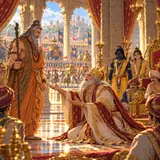
Scene 3 of 3 · The poem’s map, part two: the vanaras, Hanuman’s leap, the bridge, the war and the return.