Bala Kanda · Sarga 74 of 77 · 24 verses
Parashurama Appears on the Road
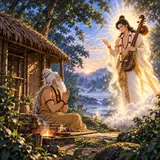
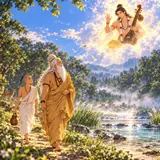
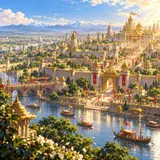
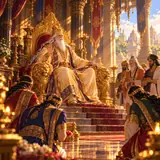
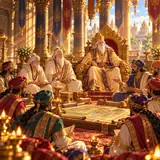
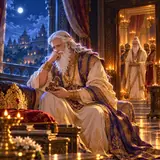
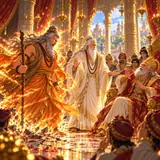
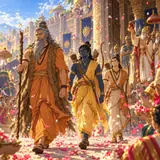
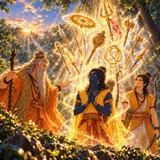
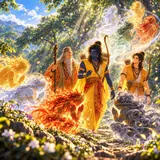
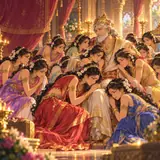
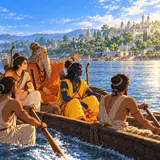
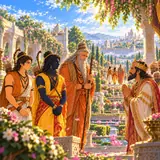
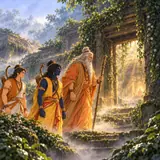
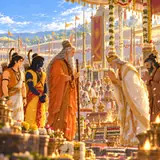
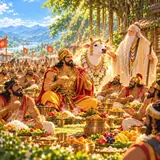
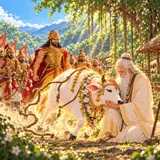
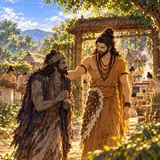
The next morning Vishvamitra takes leave of both kings and goes to the northern mountain. Dasharatha too takes leave of Janaka, who gives an enormous dowry: hundreds of thousands of cows, the best woollens, linen and silks by the crore, decorated elephants, horses, chariots and foot soldiers, a hundred maidservants for each bride, gold, silver, pearls and coral.
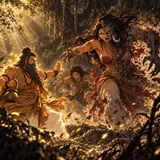
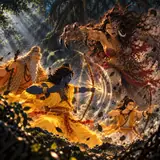
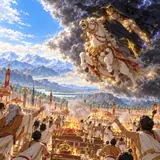
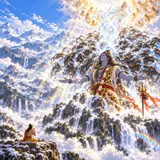
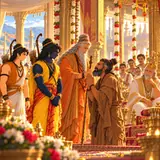
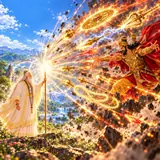
As Dasharatha travels home with his sons, sages and army, birds shriek ominously on every side, while the animals of the ground pass on the right, an auspicious sign. Dasharatha, his heart trembling, asks Vasishtha what it means. Vasishtha says: the birds announce a terrible, divine danger; the deer show that it will be appeased. Even as they speak, a violent wind rises, shaking the earth and felling trees; darkness covers the sun, ash covers everything, and the army is stunned. Only Vasishtha, the sages, the king and his sons keep their senses. Out of the darkness appears Parashurama, son of Jamadagni, of Bhrigu’s line, crusher of kings: terrible, with matted hair, unassailable as Kailasa, unbearable as the fire of doom, an axe on his shoulder, a bow like lightning, a fierce arrow in his hand, like Shiva the destroyer of Tripura. The sages whisper: “Is he still angry at his father’s murder? Will he destroy the kshatriyas again? He once killed them all and his anger had gone.” They offer him the guest-offering, saying “Rama, Rama” sweetly. Accepting it, Rama Jamadagnya speaks to Rama, son of Dasharatha.
Press › to begin with verse 1.
अथ रात्र्यां व्यतीतायां विश्वामित्रो महामुनिः । आपृष्ट्वा तौ च राजानौ जगामोत्तरपर्वतम् ॥ १ ॥
Then, when the night had passed, the great sage Vishvamitra took leave of both kings and went to the northern mountain.
फिर रात बीतने पर महामुनि विश्वामित्र दोनों राजाओं से विदा लेकर उत्तरी पर्वत (हिमालय) की ओर चले गए।
Commentary on the whole sarga
Parashurama Appears on the Road 1 min read.
Read the commentary CommentaryNot scripture Vishvamitra takes his leave and goes to the Himalaya. His work is done: he came to borrow a boy and returns him a hero and a husband. He leaves quietly, as sages do.
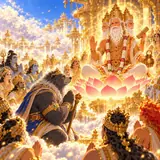
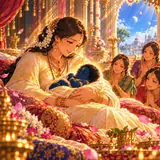
Scene 1 of 2 · Janaka sends his daughters home with a great dowry, and on the road ominous birds cry around Dasharatha’s procession.
विश्वामित्रे गते राजा वैदेहं मिथिलाधिपम् । आपृष्ट्वैव जगामाशु राजा दशरथः पुरीम् ॥ २ ॥
When Vishvamitra had gone, King Dasharatha took leave of the Videha king, lord of Mithila, and quickly set out for his city.
विश्वामित्र के चले जाने पर राजा दशरथ विदेहराज, मिथिलापति से विदा लेकर जल्दी अपनी नगरी की ओर चल पड़े।
CommentaryNot scripture Dasharatha sets out for Ayodhya.
Scene 1 of 2 · Janaka sends his daughters home with a great dowry, and on the road ominous birds cry around Dasharatha’s procession.
अथ राजा विदेहानां ददौ कन्याधनं बहु । गवां शतसहस्राणि बहूनि मिथिलेश्वरः ॥ ३ ॥
Then the king of the Videhas gave much bridal wealth: the lord of Mithila gave many hundreds of thousands of cows,
तब विदेहों के राजा ने बहुत-सा दहेज दिया: मिथिलापति ने अनेक लाख गायें दीं,
CommentaryNot scripture Janaka gives a generous dowry: many hundreds of thousands of cows.
Scene 1 of 2 · Janaka sends his daughters home with a great dowry, and on the road ominous birds cry around Dasharatha’s procession.
कम्बलानां च मुख्यानां क्षौमान् कोट्यम्बराणि च । हस्त्यश्वरथपादातं दिव्यरूपं स्वलंकृतम् ॥ ४ ॥
ददौ कन्याशतं तासां दासीदासमनुत्तमम् । हिरण्यस्य सुवर्णस्य मुक्तानां विद्रुमस्य च ॥ ५ ॥
the finest blankets, linen and crores of garments, elephants, horses, chariots and foot soldiers, divine to see and well adorned; he gave a hundred maidens for each of the brides, and excellent male and female servants; of bullion, gold, pearls and coral
श्रेष्ठ कंबल, रेशम और करोड़ों वस्त्र, हाथी, घोड़े, रथ और पैदल सैनिक, देखने में दिव्य और सुसज्जित; हर वधू के लिए सौ दासियाँ, और उत्तम सेवक और सेविकाएँ; सोने की ईंटें, सोना, मोती और मूँगा
CommentaryNot scripture Blankets, linen, garments, elephants, horses, chariots, soldiers, maidservants, gold, pearls, coral. A father who loves his daughters gives without limit.
Scene 1 of 2 · Janaka sends his daughters home with a great dowry, and on the road ominous birds cry around Dasharatha’s procession.
ददौ राजा सुसंहृष्टः कन्याधनमनुत्तमम् । दत्त्वा बहुविधं राजा समनुज्ञाप्य पार्थिवम् ॥ ६ ॥
the king gave, overjoyed, unsurpassed bridal wealth. Having given in many ways, and taken leave of the king,
राजा ने अत्यंत प्रसन्न होकर अनुपम दहेज दिया। अनेक प्रकार से देकर और राजा से विदा लेकर
CommentaryNot scripture “Unsurpassed bridal wealth”, given “overjoyed”.
Scene 1 of 2 · Janaka sends his daughters home with a great dowry, and on the road ominous birds cry around Dasharatha’s procession.
प्रविवेश स्वनिलयं मिथिलां मिथिलेश्वरः । राजाप्ययोध्याधिपतिः सह पुत्रैर्महात्मभिः ॥ ७ ॥
ऋषीन् सर्वान् पुरस्कृत्य जगाम सबलानुगः । गच्छन्तं तु नरव्याघ्रं सर्षिसङ्घं सराघवम् ॥ ८ ॥
the lord of Mithila entered his own dwelling in Mithila. And the king of Ayodhya, with his great-souled sons, with all the sages before him, set out with his army and followers. As the tiger among men went, with the hosts of sages and the Raghavas,
मिथिलापति मिथिला में अपने महल लौट गए। और अयोध्या के राजा अपने महात्मा पुत्रों के साथ, सब मुनियों को आगे करके, अपनी सेना और अनुयायियों के साथ चल पड़े। जब वे पुरुषसिंह मुनियों के समूहों और राघवों के साथ जा रहे थे,
CommentaryNot scripture Janaka returns to his palace. Dasharatha sets out with his sons, the sages and the army. The procession turns homeward.
Scene 1 of 2 · Janaka sends his daughters home with a great dowry, and on the road ominous birds cry around Dasharatha’s procession.
घोरास्तु पक्षिणो वाचो व्याहरन्ति समन्ततः । भौमाश्चैव मृगाः सर्वे गच्छन्ति स्म प्रदक्षिणम् ॥ ९ ॥
terrible birds cried out all around, while all the animals of the earth passed by on the right.
तब चारों ओर भयानक पक्षी चिल्लाने लगे, जबकि पृथ्वी के सब पशु दाहिनी ओर से निकले।
CommentaryNot scripture Then ominous birds cry, while the animals pass on the right. In Indian omen-lore, birds crying harshly warn of danger; animals passing on the right promise a good outcome. Two signs at once.
Scene 1 of 2 · Janaka sends his daughters home with a great dowry, and on the road ominous birds cry around Dasharatha’s procession.
तान् दृष्ट्वा राजशार्दूलो वसिष्ठं पर्यपृच्छत । असौम्याः पक्षिणो घोरा मृगाश्चापि प्रदक्षिणाः ॥ १० ॥
किमिदं हृदयोत्कम्पि मनो मम विषीदति । राज्ञो दशरथस्यैतच्छ्रुत्वा वाक्यं महानृषिः ॥ ११ ॥
Seeing them, the tiger among kings asked Vasishtha: “The birds are inauspicious and terrible, and the deer pass on the right. What is this that makes my heart tremble? My mind is sinking.” Hearing these words of King Dasharatha, the great sage
उन्हें देखकर राजसिंह ने वसिष्ठ से पूछा: “पक्षी अशुभ और भयानक हैं, और हिरण दाहिनी ओर से जा रहे हैं। यह क्या है जिससे मेरा हृदय काँप रहा है? मेरा मन डूब रहा है।” राजा दशरथ के ये वचन सुनकर महामुनि ने
CommentaryNot scripture “My heart trembles; my mind is sinking.” The old king, who feared for Rama once before, fears again.
Scene 1 of 2 · Janaka sends his daughters home with a great dowry, and on the road ominous birds cry around Dasharatha’s procession.
उवाच मधुरां वाणीं श्रूयतामस्य यत् फलम् । उपस्थितं भयं घोरं दिव्यं पक्षिमुखाच्च्युतम् ॥ १२ ॥
मृगाः प्रशमयन्त्येते संतापस्त्यज्यतामयम् । तेषां संवदतां तत्र वायुः प्रादुर्बभूव ह ॥ १३ ॥
spoke sweet words: “Hear what this portends. A terrible, divine danger is at hand, announced by the mouths of the birds; these deer are quieting it. Let this anxiety go.” As they were talking there, a wind arose,
मधुर वचन कहे: “सुनिए इसका क्या अर्थ है। पक्षियों के मुख से घोषित एक भयानक, दिव्य संकट निकट है; ये हिरण उसे शांत कर रहे हैं। यह चिंता छोड़ दीजिए।” जब वे वहाँ बात कर रहे थे, तब एक हवा उठी,
CommentaryNot scripture Vasishtha reads the omens: a terrible divine danger approaches, but the deer show it will pass. “Let this anxiety go.” Then a wind rises.
Scene 1 of 2 · Janaka sends his daughters home with a great dowry, and on the road ominous birds cry around Dasharatha’s procession.
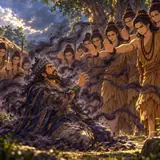
कम्पयन् मेदिनीं सर्वां पातयंश्च महाद्रुमान् । तमसा संवृतः सूर्यः सर्वे नावेदिषुर्दिशः ॥ १४ ॥
shaking the whole earth and throwing down great trees. The sun was covered by darkness, and no one could tell the directions.
जिसने सारी पृथ्वी को हिला दिया और बड़े-बड़े वृक्ष गिरा दिए। सूर्य अंधकार से ढक गया, और कोई दिशाएँ नहीं पहचान सका।
CommentaryNot scripture The earth shakes, trees fall, the sun is darkened. Nature itself announces the coming of someone tremendous.
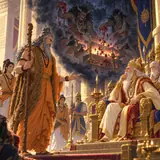
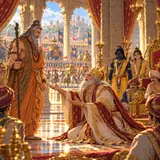
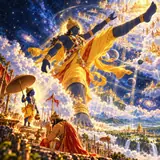
Scene 2 of 2 · A darkness of ash falls, and out of it strides Parashurama, the warrior-sage, axe on his shoulder and bow in hand.
भस्मना चावृतं सर्वं सम्मूढमिव तद्बलम् । वसिष्ठ ऋषयश्चान्ये राजा च ससुतस्तदा ॥ १५ ॥
ससंज्ञा इव तत्रासन् सर्वमन्यद्विचेतनम् । तस्मिंस्तमसि घोरे तु भस्मच्छन्नेव सा चमूः ॥ १६ ॥
Everything was covered with ash, and that army was as if stunned. Vasishtha and the other sages, and the king with his sons, were as if conscious there; all else was senseless. In that terrible darkness, the army as if covered with ash,
सब कुछ राख से ढक गया, और वह सेना मानो स्तब्ध हो गई। वसिष्ठ और दूसरे मुनि, और पुत्रों सहित राजा, वहाँ मानो सचेत थे; बाकी सब अचेत थे। उस भयानक अंधकार में, सेना मानो राख से ढकी हुई,
CommentaryNot scripture Ash covers everything. The army is stunned. Only Vasishtha, the sages, the king and his sons remain conscious. In that darkness, a figure appears.
Scene 2 of 2 · A darkness of ash falls, and out of it strides Parashurama, the warrior-sage, axe on his shoulder and bow in hand.
ददर्श भीमसंकाशं जटामण्डलधारिणम् । भार्गवं जामदग्न्येयं राजा राजविमर्दनम् ॥ १७ ॥
the king saw one of terrible aspect wearing a circle of matted hair: Bhargava, son of Jamadagni, crusher of kings,
राजा ने जटाओं का मंडल धारण किए भयानक रूप वाले एक पुरुष को देखा: जमदग्नि के पुत्र भार्गव (परशुराम), राजाओं का संहार करने वाले,
CommentaryNot scripture Parashurama, “son of Jamadagni, crusher of kings”. He is a brahmana warrior who, to avenge his father’s murder by a king, destroyed the kshatriyas of the earth twenty-one times, as later tradition tells. He is himself regarded as an avatara of Vishnu.
Scene 2 of 2 · A darkness of ash falls, and out of it strides Parashurama, the warrior-sage, axe on his shoulder and bow in hand.
कैलासमिव दुर्धर्षं कालाग्निमिव दुःसहम् । ज्वलन्तमिव तेजोभिर्दुर्निरीक्ष्यं पृथग्जनैः ॥ १८ ॥
unassailable as Kailasa, unbearable as the fire of doom, blazing as if with energy, hard for ordinary people to look upon,
कैलास जैसे अजेय, प्रलय की अग्नि जैसे असहनीय, मानो तेज से दमकते हुए, साधारण लोगों के लिए देखने में कठिन,
CommentaryNot scripture Unassailable as Kailasa, unbearable as the fire of doom. Valmiki’s description is one of terror.
Scene 2 of 2 · A darkness of ash falls, and out of it strides Parashurama, the warrior-sage, axe on his shoulder and bow in hand.
स्कन्धे चासज्ज्य परशुं धनुर्विद्युद्गणोपमम् । प्रगृह्य शरमुग्रं च त्रिपुरघ्नं यथा शिवम् ॥ १९ ॥
with an axe hung on his shoulder and a bow like a mass of lightning, holding a fierce arrow, like Shiva the destroyer of Tripura.
कंधे पर फरसा लटकाए और बिजली के पुंज जैसा धनुष, और एक उग्र बाण लिए, त्रिपुर का नाश करने वाले शिव जैसे।
CommentaryNot scripture An axe (parashu , from which his name comes) on his shoulder, a bow like lightning, a fierce arrow. Like Shiva destroying the three cities.
Scene 2 of 2 · A darkness of ash falls, and out of it strides Parashurama, the warrior-sage, axe on his shoulder and bow in hand.
तं दृष्ट्वा भीमसंकाशं ज्वलन्तमिव पावकम् । वसिष्ठप्रमुखा विप्रा जपहोमपरायणाः ॥ २० ॥
संगता मुनयः सर्वे संजजल्पुरथो मिथः । कच्चित् पितृवधामर्षी क्षत्रं नोत्सादयिष्यति ॥ २१ ॥
Seeing him, terrible, blazing like fire, the brahmanas led by Vasishtha, devoted to prayer and offering, all the sages, gathered and murmured to one another: “Surely, angered by his father’s killing, he will not destroy the kshatriyas?
अग्नि की तरह दमकते उस भयानक को देखकर जप और होम में लगे वसिष्ठ आदि ब्राह्मण, सब मुनि, इकट्ठे होकर आपस में धीरे-धीरे कहने लगे: “निश्चय ही, पिता की हत्या से क्रोधित होकर, वे क्षत्रियों का विनाश तो नहीं करेंगे?
CommentaryNot scripture The sages whisper: “Has he come again to destroy the kshatriyas?” Even the wise are uneasy.
Scene 2 of 2 · A darkness of ash falls, and out of it strides Parashurama, the warrior-sage, axe on his shoulder and bow in hand.
पूर्वं क्षत्रवधं कृत्वा गतमन्युर्गतज्वरः । क्षत्रस्योत्सादनं भूयो न खल्वस्य चिकीर्षितम् ॥ २२ ॥
“Long ago, having slaughtered the kshatriyas, his anger left him and his fever was gone. Surely he does not again wish to destroy the kshatriyas.”
“बहुत पहले क्षत्रियों का संहार करके उनका क्रोध शांत हो गया था और उनका ज्वर चला गया था। निश्चय ही वे फिर से क्षत्रियों का नाश नहीं करना चाहते।”
CommentaryNot scripture “His anger was once spent. Surely he does not want it again.” They hope, but they are not sure.
Scene 2 of 2 · A darkness of ash falls, and out of it strides Parashurama, the warrior-sage, axe on his shoulder and bow in hand.
एवमुक्त्वार्घ्यमादाय भार्गवं भीमदर्शनम् । ऋषयो राम रामेति मधुरं वाक्यमब्रुवन् ॥ २३ ॥
Saying this, the sages took the guest offering and spoke sweet words to the terrible Bhargava: “Rama, Rama.”
यह कहकर मुनियों ने अर्घ्य लेकर भयानक भार्गव से मधुर वचन कहे: “राम, राम।”
CommentaryNot scripture The sages bring the guest offering and call him gently: “Rama, Rama.” Two Ramas now stand face to face: Rama of the axe (Parashurama) and Rama of the bow.
Scene 2 of 2 · A darkness of ash falls, and out of it strides Parashurama, the warrior-sage, axe on his shoulder and bow in hand.
प्रतिगृह्य तु तां पूजामृषिदत्तां प्रतापवान् । रामं दाशरथिं रामो जामदग्न्योऽभ्यभाषत ॥ २४ ॥
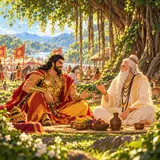
Accepting that honour given by the sages, the valiant Rama Jamadagnya spoke to Rama, son of Dasharatha.
मुनियों द्वारा दिया गया वह सम्मान स्वीकार करके पराक्रमी जामदग्न्य राम ने दशरथ-पुत्र राम से कहा।
CommentaryNot scripture Parashurama accepts their honour, and turns to speak to Dasharatha’s son. The broken bow of Shiva has brought its owner’s champion. The next sarga is the confrontation of the two Ramas, the “dispute of Rama with Rama” foretold in sarga 3.
Scene 2 of 2 · A darkness of ash falls, and out of it strides Parashurama, the warrior-sage, axe on his shoulder and bow in hand.