Bala Kanda · Sarga 4 of 77 · 36 verses
Kusha and Lava Sing the Poem
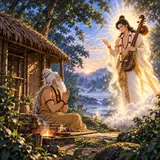
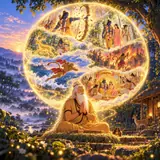
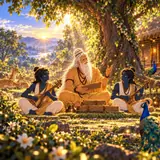
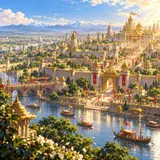
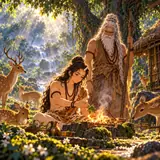
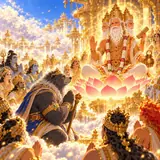
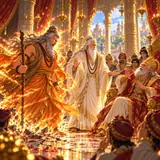
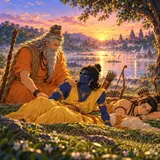
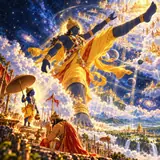
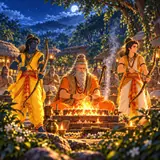
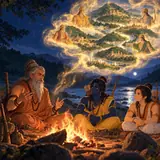
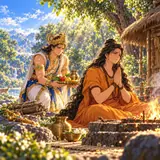
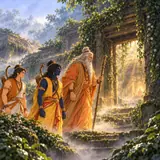
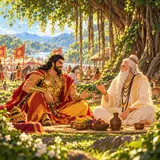
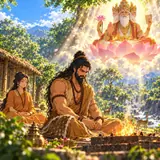
Valmiki finishes the poem: twenty-four thousand shlokas in five hundred sargas, six books and the Uttara. Wondering who could carry it into the world, he chooses two boys who live in his hermitage, Kusha and Lava, princes in sages’ dress, gifted singers who know the Vedas. He teaches them the whole Ramayana, which he calls “the great story of Sita” and “the slaying of Paulastya (Ravana)”.
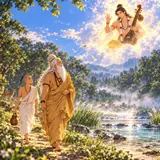
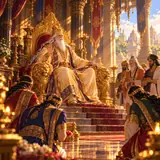
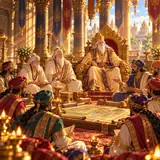
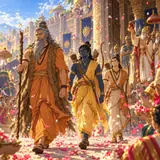
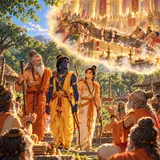
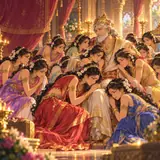
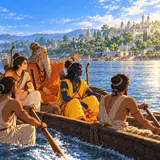
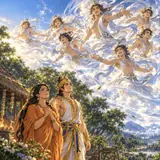
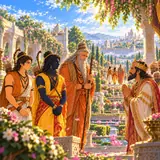
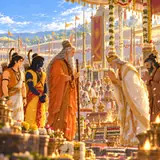
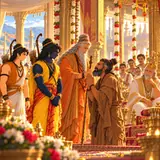
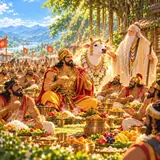
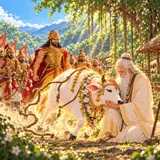
The twins sing it to an assembly of sages, who weep and give them gifts from their own few belongings: a water pot, bark cloth, a deer skin, a sacred thread, an axe. Later Rama himself sees them singing in the streets of Ayodhya, brings them to his palace, and, seated on his golden throne with his brothers and ministers, asks them to sing. As they begin, Rama is drawn in and listens.
Press › to begin with verse 1.
प्राप्तराज्यस्य रामस्य वाल्मीकिर्भगवानृषिः । चकार चरितं कृत्स्नं विचित्रपदमर्थवत् ॥ १ ॥
After Rama had regained his kingdom, the holy sage Valmiki composed the whole of his story, in varied words full of meaning.
राम के राज्य फिर से पा लेने के बाद भगवान ऋषि वाल्मीकि ने अर्थ से भरे विविध शब्दों में उनका पूरा चरित्र रचा।
Commentary on the whole sarga
Kusha and Lava Sing the Poem 1 min read.
Read the commentary CommentaryNot scripture Prapta-rajyasya ramasya : “after Rama had regained his kingdom”. The poem is composed after the events, while Rama still rules. Valmiki writes about a living king. Its words are vicitra-pada , varied, and artha-vat , full of meaning: beauty and substance together.
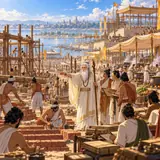
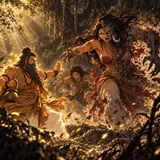
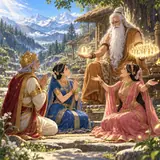
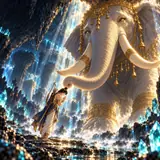
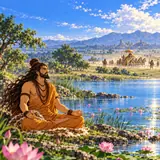
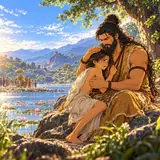
Scene 1 of 3 · Valmiki teaches the finished poem to the twin boys Kusha and Lava in his hermitage.
चतुर्विंशत्सहस्राणि श्लोकानामुक्तवानृषिः । तथा सर्गशतान् पञ्च षट्काण्डानि तथोत्तरम् ॥ २ ॥
The sage told it in twenty-four thousand shlokas and five hundred sargas, in six kandas and the Uttara.
मुनि ने इसे चौबीस हज़ार श्लोकों और पाँच सौ सर्गों में, छह कांडों और उत्तर कांड में कहा।
CommentaryNot scripture The famous numbers: twenty-four thousand shlokas, five hundred sargas, six kandas and the Uttara. Tradition links the 24,000 verses to the 24 syllables of the Gayatri mantra, one syllable for each thousand. The poem you are reading follows the six kandas.
Scene 1 of 3 · Valmiki teaches the finished poem to the twin boys Kusha and Lava in his hermitage.
कृत्वा तु तन्महाप्राज्ञः सभविष्यं सहोत्तरम् । चिन्तयामास को न्वेतत् प्रयुञ्जीयादिति प्रभुः ॥ ३ ॥
Having made it, with what was to come and with the Uttara, the great-minded master pondered: “Who could present this?”
भविष्य की घटनाओं और उत्तर कांड सहित इसे रचकर उन महामना प्रभु ने सोचा: “इसे लोगों के सामने कौन प्रस्तुत कर सकता है?”
CommentaryNot scripture Having made the poem, the poet faces a new question: who will carry it? Prayojayet , “who could present it”. A poem lives only when it is performed. Valmiki’s worry is the worry of every teacher: who will take this forward?
Scene 1 of 3 · Valmiki teaches the finished poem to the twin boys Kusha and Lava in his hermitage.
तस्य चिन्तयमानस्य महर्षेर्भावितात्मनः । अगृह्णीतां ततः पादौ मुनिवेषौ कुशीलवौ ॥ ४ ॥
As the great sage of purified soul was pondering, Kusha and Lava, in the dress of sages, came and touched his feet.
जब शुद्ध आत्मा वाले महर्षि ऐसा सोच रहे थे, तभी मुनियों के वेश में कुश और लव आए और उनके चरण छुए।
CommentaryNot scripture Kusha and Lava appear “in the dress of sages” (muni-vesha ). They live in the hermitage as young ascetics. Readers who know the Uttara Kanda know they are Rama’s own sons, born in Valmiki’s hermitage. Here the poem only hints at it, and the hint grows stronger.
Scene 1 of 3 · Valmiki teaches the finished poem to the twin boys Kusha and Lava in his hermitage.
कुशीलवौ तु धर्मज्ञौ राजपुत्रौ यशस्विनौ । भ्रातरौ स्वरसंपन्नौ ददर्शाश्रमवासिनौ ॥ ५ ॥
He saw Kusha and Lava, the two brothers living in the hermitage: princes who knew dharma, glorious, with fine voices.
उन्होंने आश्रम में रहने वाले दोनों भाइयों कुश और लव को देखा: धर्म के ज्ञाता, यशस्वी, मधुर स्वर वाले राजकुमार।
CommentaryNot scripture Su-svarau , “with fine voices”: the first thing the poet notices about them is their singing. They are also raja-putrau , princes. Royal blood, sages’ dress, and beautiful voices: the perfect carriers for a poem about a king who lived as an ascetic.
Scene 1 of 3 · Valmiki teaches the finished poem to the twin boys Kusha and Lava in his hermitage.
स तु मेधाविनौ दृष्ट्वा वेदेषु परिनिष्ठितौ । वेदोपबृंह्मणार्थाय तावग्राहयत प्रभुः ॥ ६ ॥
Seeing that they were intelligent and grounded in the Vedas, the master taught them the poem, to enrich the meaning of the Veda.
उन्हें बुद्धिमान और वेदों में निपुण देखकर प्रभु ने वेद के अर्थ को और समृद्ध करने के लिए उन्हें यह काव्य सिखाया।
CommentaryNot scripture Vedopabrimhanarthaya : “to enrich the meaning of the Veda”. The Ramayana is understood as an expansion of the Veda’s teaching through story. What the Veda says in hymns and rules, the Ramayana shows in a human life.
Scene 1 of 3 · Valmiki teaches the finished poem to the twin boys Kusha and Lava in his hermitage.
काव्यं रामायणं कृत्स्नं सीतायाश्चरितं महत् । पौलस्त्यवधमित्येवं चकार चरितव्रतः ॥ ७ ॥
The whole poem Ramayana, the great story of Sita, the slaying of Paulastya: so the sage of steadfast vows composed it.
पूरा रामायण काव्य, सीता का महान चरित्र, पौलस्त्य (रावण) का वध: ऐसा इसे दृढ़व्रती मुनि ने रचा।
CommentaryNot scripture Three titles for one poem: the Ramayana (“Rama’s journey”), “the great story of Sita” (sitayash charitam mahat ), and “the slaying of Paulastya”, Ravana, grandson of the sage Pulastya. Notice that Sita gets her own title. Many readers see her as the poem’s true heart.
Scene 1 of 3 · Valmiki teaches the finished poem to the twin boys Kusha and Lava in his hermitage.
पाठ्ये गेये च मधुरं प्रमाणैस्त्रिभिरन्वितम् । जातिभिः सप्तभिर्युक्तं तन्त्रीलयसमन्वितम् ॥ ८ ॥
It is sweet whether recited or sung, set in the three tempos, joined with the seven modes, and fitted to the strings and rhythm.
यह पढ़ने और गाने दोनों में मधुर है, तीनों लयों में बँधा है, सातों स्वरों से युक्त है, और वीणा तथा ताल के अनुकूल है।
CommentaryNot scripture The poem was made for music: three tempos (trayah pramanah ), seven notes, fitted to the vina and to rhythm. The Ramayana was first a song. Even today, reciters in temples across India sing it to traditional tunes.
Scene 1 of 3 · Valmiki teaches the finished poem to the twin boys Kusha and Lava in his hermitage.
रसैः शृङ्गारकरुणहास्यरौद्रभयानकैः । वीरादिभी रसैर्युक्तं काव्यमेतदगायताम् ॥ ९ ॥
With the moods of love, compassion, laughter, fury and fear, and heroism and the rest: this was the poem the two sang.
शृंगार, करुण, हास्य, रौद्र, भयानक, वीर और दूसरे रसों से भरा: यही वह काव्य था जिसे दोनों भाइयों ने गाया।
CommentaryNot scripture The rasas are the emotional flavours of Indian art: love (shringara ), compassion (karuna ), laughter (hasya ), fury (raudra ), fear (bhayanaka ), heroism (vira ) and more. The Ramayana contains them all. As you read, notice how each sarga carries its own flavour.
Scene 1 of 3 · Valmiki teaches the finished poem to the twin boys Kusha and Lava in his hermitage.
तौ तु गान्धर्वतत्त्वज्ञौ स्थानमूर्च्छनकोविदौ । भ्रातरौ स्वरसम्पन्नौ गन्धर्वाविव रूपिणौ ॥ १० ॥
The brothers knew the essence of music, were skilled in pitch and scale, had fine voices, and looked like gandharvas in human form.
दोनों भाई संगीत का सार जानते थे, स्वर और ग्राम में निपुण थे, उनके स्वर मधुर थे, और वे मनुष्य रूप में गंधर्वों जैसे लगते थे।
CommentaryNot scripture The twins know music deeply: svara (notes) and murchana (scales). They look like gandharvas, the singers of heaven, in human form. Their skill is not only talent but training. The tradition always values both.
Scene 1 of 3 · Valmiki teaches the finished poem to the twin boys Kusha and Lava in his hermitage.
रूपलक्षणसम्पन्नौ मधुरस्वरभाषिणौ । बिम्बादिवोत्थितौ बिम्बौ रामदेहात् तथापरौ ॥ ११ ॥
Full of beauty and auspicious marks, speaking in sweet voices, they were like reflections risen from an image: another pair, from Rama’s own body.
रूप और शुभ लक्षणों से संपन्न, मधुर स्वर में बोलने वाले, वे ऐसे लगते थे मानो किसी मूर्ति से उठे दो प्रतिबिंब हों: राम के अपने शरीर से उत्पन्न एक और जोड़ी।
CommentaryNot scripture This is the strongest hint: they look like “reflections risen from an image”, “another pair from Rama’s own body” (rama-dehat ). Anyone who sees them sees Rama. The poet does not say “they are his sons”. He lets us notice the likeness, just as Rama will.
Scene 1 of 3 · Valmiki teaches the finished poem to the twin boys Kusha and Lava in his hermitage.
तौ राजपुत्रौ कार्त्स्न्येन धर्म्यमाख्यानमुत्तमम् । वाचोविधेयं तत्सर्वं कृत्वा काव्यमनिन्दितौ ॥ १२ ॥
ऋषीणां च द्विजातीनां साधूनां च समागमे । यथोपदेशं तत्त्वज्ञौ जगतुः सुसमाहितौ ॥ १३ ॥
The two princes, faultless, learned the whole of that excellent, righteous tale by heart, and, knowing its essence, sang it with full attention as they had been taught, in gatherings of sages, of the twice-born and of good people.
दोनों निर्दोष राजकुमारों ने वह पूरी उत्तम, धर्ममय कथा कंठस्थ कर ली, और उसका सार जानकर, जैसा सिखाया गया था वैसा ही, पूरे ध्यान से ऋषियों, ब्राह्मणों और सज्जनों की सभाओं में उसे गाया।
CommentaryNot scripture They learn the whole poem by heart (kanthastha ). Twenty-four thousand verses, memorised. This is how Indian learning was carried for centuries: in the memory of trained voices. They sing it in gatherings of sages, of brahmanas, of good people. The poem first reaches the wise.
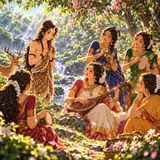
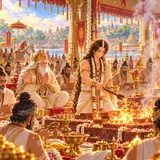
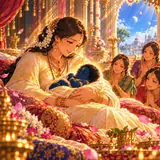
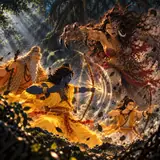
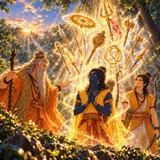
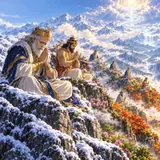
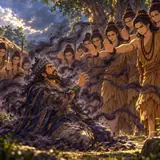
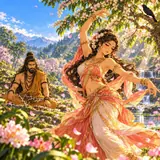
Scene 2 of 3 · The twins sing the Ramayana to an assembly of sages, who weep and give them their few belongings.
महात्मानौ महाभागौ सर्वलक्षणलक्षितौ । तौ कदाचित् समेतानामृषीणां भावितात्मनाम् ॥ १४ ॥
मध्ये सभं समीपस्थाविदं काव्यमगायताम् । तच्छ्रुत्वा मुनयः सर्वे बाष्पपर्याकुलेक्षणाः ॥ १५ ॥
Once those two great-souled, fortunate boys, bearing every auspicious mark, sat close by in the middle of an assembly of sages of purified soul and sang this poem. Hearing it, all the sages, their eyes filled with tears,
एक बार वे दोनों महात्मा, भाग्यशाली, सब शुभ लक्षणों वाले बालक शुद्ध आत्मा वाले ऋषियों की सभा के बीच पास बैठकर यह काव्य गा रहे थे। उसे सुनकर सब मुनियों की आँखें आँसुओं से भर आईं,
CommentaryNot scripture Before an assembly of sages, the boys sing, and the sages weep. These are hardened ascetics, men who have mastered their feelings. Yet the poem moves them to tears. That is the power Valmiki’s compassion gave his verses.
Scene 2 of 3 · The twins sing the Ramayana to an assembly of sages, who weep and give them their few belongings.
साधु साध्विति तावूचुः परं विस्मयमागताः । ते प्रीतमनसः सर्वे मुनयो धर्मवत्सलाः ॥ १६ ॥
प्रशशंसुः प्रशस्तव्यौ गायमानौ कुशीलवौ । अहो गीतस्य माधुर्यं श्लोकानां च विशेषतः ॥ १७ ॥
said to them “Well done, well done!” in the greatest amazement. All those sages, glad at heart and lovers of dharma, praised Kusha and Lava, worthy of praise, as they sang: “Ah, the sweetness of the singing, and above all of the verses!
और उन्होंने परम विस्मय से उनसे कहा, “साधु, साधु!” धर्म से प्रेम करने वाले वे सब मुनि प्रसन्न मन से गाते हुए प्रशंसा के योग्य कुश और लव की प्रशंसा करने लगे: “अहा, गायन की मधुरता, और उससे भी बढ़कर श्लोकों की!
CommentaryNot scripture Sadhu sadhu : “well done, well done!” The sages praise both the singing and the verses (shlokanam ca visheshatah , “and above all the verses”). Fine performance serves fine writing. Both are needed, but the poem comes first.
Scene 2 of 3 · The twins sing the Ramayana to an assembly of sages, who weep and give them their few belongings.
चिरनिर्वृत्तमप्येतत् प्रत्यक्षमिव दर्शितम् । प्रविश्य तावुभौ सुष्ठु तथाभावमगायताम् ॥ १८ ॥
“Though this happened long ago, it has been shown to us as if before our eyes.” The two entered fully into the feeling and sang it beautifully,
“यह सब बहुत पहले हुआ था, फिर भी हमें ऐसे दिखाया गया मानो आँखों के सामने हो।” दोनों भाई उस भाव में पूरी तरह डूबकर सुंदरता से गाते रहे,
CommentaryNot scripture “As if before our eyes”: the sages feel they are watching, not hearing. This is the test of all great storytelling. The boys enter fully into the feeling (bhava ) of what they sing, and their listeners enter it with them.
Scene 2 of 3 · The twins sing the Ramayana to an assembly of sages, who weep and give them their few belongings.
सहितौ मधुरं रक्तं सम्पन्नं स्वरसंपदा । एवं प्रशस्यमानौ तौ तपः श्लाघ्यैर्महर्षिभिः ॥ १९ ॥
संरक्ततरमत्यर्थं मधुरं तावगायताम् । प्रीतः कश्चिन्मुनिस्ताभ्यां संस्थितः कलशं ददौ ॥ २० ॥
together, sweetly, full of feeling, rich in tone. Praised so by the great sages, worthy of praise for their austerities, they sang even more feelingly and sweetly. One sage, standing there, pleased with them, gave them a water pot.
साथ-साथ, मधुर स्वर में, भाव से भरे, स्वर की समृद्धि के साथ। तपस्या के कारण प्रशंसा के योग्य महर्षियों से ऐसी प्रशंसा पाकर वे और भी भाव और मधुरता से गाने लगे। वहाँ खड़े एक मुनि ने प्रसन्न होकर उन्हें एक कलश दिया।
CommentaryNot scripture The praise makes them sing even better. Then a sage gives them a water pot (kalasha ). It is a humble gift from a man who owns almost nothing. A list of such gifts follows, and it is one of the most touching passages in the opening of the poem.
Scene 2 of 3 · The twins sing the Ramayana to an assembly of sages, who weep and give them their few belongings.
प्रसन्नो वल्कलं कश्चिद् ददौ ताभ्यां महायशाः । अन्यः कृष्णाजिनमदाद् यज्ञसूत्रं तथापरः ॥ २१ ॥
Another, of great renown, gave them a bark garment; another a black deer skin, another a sacred thread;
दूसरे महायशस्वी ने उन्हें वल्कल दिया, किसी ने काला मृगचर्म, किसी ने यज्ञोपवीत;
CommentaryNot scripture Bark garment, black deer skin, sacred thread: the basic belongings of a forest ascetic. Each sage gives what he has. These are not riches; they are everything. Their value is in the giving, not the price.
Scene 2 of 3 · The twins sing the Ramayana to an assembly of sages, who weep and give them their few belongings.
कश्चित् कमण्डलुं प्रादान्मौञ्जीमन्यो महामुनिः । बृसीमन्यस्तदा प्रादात् कौपीनमपरो मुनिः ॥ २२ ॥
another great sage a water vessel, another a girdle of munja grass; another gave a seat of grass, another a loincloth.
किसी महर्षि ने कमंडलु, किसी ने मूँज की मेखला; किसी ने कुश का आसन, और किसी ने कौपीन दिया।
CommentaryNot scripture A water vessel, a girdle of munja grass, a seat of grass, a loincloth. Such simple things. Valmiki lists them carefully, one by one, because each represents a man’s real gratitude.
Scene 2 of 3 · The twins sing the Ramayana to an assembly of sages, who weep and give them their few belongings.
ताभ्यां ददौ तदा हृष्टः कुठारमपरो मुनिः । काषायमपरो वस्त्रं चीरमन्यो ददौ मुनिः ॥ २३ ॥
Another sage, delighted, gave them an axe; another a saffron cloth, another a garment of rags;
किसी मुनि ने प्रसन्न होकर उन्हें कुल्हाड़ी दी; किसी ने गेरुआ वस्त्र, और किसी ने चीर-वस्त्र;
CommentaryNot scripture Even an axe, used for cutting firewood. And a saffron cloth, the colour of renunciation, and a garment of rags. The list keeps going, almost humorously long. Everyone wants to give something.
Scene 2 of 3 · The twins sing the Ramayana to an assembly of sages, who weep and give them their few belongings.
जटाबन्धनमन्यस्तु काष्ठरज्जुं मुदान्वितः । यज्ञभाण्डमृषिः कश्चित् काष्ठभारं तथा परः ॥ २४ ॥
another, joyfully, a band to tie matted hair, a rope for wood; one sage a sacrificial vessel, another a load of firewood;
किसी ने आनंद से जटा बाँधने की डोरी, लकड़ी बाँधने की रस्सी; किसी मुनि ने यज्ञ का पात्र, और किसी ने लकड़ियों का गट्ठर दिया;
CommentaryNot scripture A cord for matted hair, a rope for bundling wood, a sacrificial vessel, a load of firewood. This is what ascetics value. To the singers, these gifts said: you are one of us, and your song has enriched us.
Scene 2 of 3 · The twins sing the Ramayana to an assembly of sages, who weep and give them their few belongings.
औदुम्बरीं ब्रुसीमन्यः स्वस्ति केचित् तदावदन् । आयुष्यमपरे प्राहुर्मुदा तत्र महर्षयः ॥ २५ ॥
another a seat of udumbara wood; some said “May it go well with you”, and other great sages joyfully said “Long life”.
किसी ने गूलर की लकड़ी का आसन दिया; कुछ ने कहा “तुम्हारा कल्याण हो”, और दूसरे महर्षियों ने प्रसन्न होकर कहा “चिरंजीवी हो”।
CommentaryNot scripture Some give objects; others give words: “May it go well with you”, “Long life”. A blessing is the richest thing a sage can give. Valmiki ends the list with blessings, the gifts that cost nothing and mean everything.
Scene 2 of 3 · The twins sing the Ramayana to an assembly of sages, who weep and give them their few belongings.
ददुश्चैवं वरान् सर्वे मुनयः सत्यवादिनः । आश्चर्यमिदमाख्यानं मुनिना सम्प्रकीर्तितम् ॥ २६ ॥
परं कवीनामाधारं समाप्तं च यथाक्रमम् । अभिगीतमिदं गीतं सर्वगीतेषु कोविदौ ॥ २७ ॥
आयुष्यं पुष्टिजननं सर्वश्रुतिमनोहरम् । प्रशस्यमानौ सर्वत्र कदाचित् तत्र गायकौ ॥ २८ ॥
So all those truthful sages gave them boons. “This tale proclaimed by the sage is a wonder, the highest foundation for poets, complete and in due order. You two, masters of every kind of song, have sung this song, which gives long life and strength and delights every ear.” Praised everywhere, the two singers once
इस प्रकार उन सब सत्यवादी मुनियों ने उन्हें वरदान दिए। “मुनि की कही यह कथा अद्भुत है, कवियों के लिए सबसे बड़ा आधार है, पूर्ण है और क्रम से है। सब प्रकार के गीतों में निपुण तुम दोनों ने यह गीत गाया है, जो आयु और बल देता है और हर कान को आनंद देता है।” सब जगह प्रशंसा पाते हुए वे दोनों गायक एक बार
CommentaryNot scripture The sages call the poem kavinam parama adhara , “the highest foundation for poets”. This came true: nearly every later Indian poet drew on the Ramayana. And the song is ayushya and pushti-janana , giving long life and strength. Then the scene moves to the city.
Scene 2 of 3 · The twins sing the Ramayana to an assembly of sages, who weep and give them their few belongings.
रथ्यासु राजमार्गेषु ददर्श भरताग्रजः । स्ववेश्म चानीय ततो भ्रातरौ स कुशीलवौ ॥ २९ ॥
पूजयामास पूजार्हौ रामः शत्रुनिबर्हणः । आसीनः काञ्चने दिव्ये स च सिंहासने प्रभुः ॥ ३० ॥
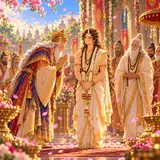
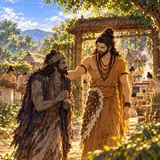
were seen singing in the streets and royal roads by Bharata’s elder brother. Rama, slayer of enemies, brought the brothers Kusha and Lava to his own palace and honoured them as they deserved. Seated on his divine golden throne, the lord,
गलियों और राजमार्गों पर गाते हुए भरत के बड़े भाई को दिखाई दिए। शत्रुओं का नाश करने वाले राम दोनों भाइयों कुश और लव को अपने महल में ले आए और उनका यथायोग्य सत्कार किया। अपने दिव्य स्वर्ण सिंहासन पर बैठे प्रभु ने,
CommentaryNot scripture Rama sees the boys singing in the streets and brings them to his palace. Notice he is called “Bharata’s elder brother”, a title that recalls his family. He honours them as they deserve. He does not yet know who they are, or what story they carry.
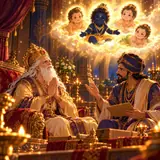
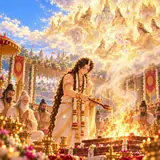
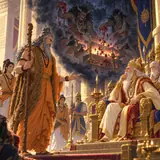
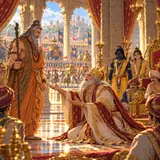
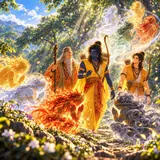
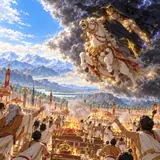
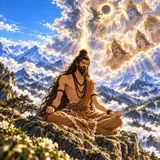
Scene 3 of 3 · Rama hears the twins singing in the street and brings them to sing in his court.
उपोपविष्टैः सचिवैर्भ्रातृभिश्च समन्वितः । दृष्ट्वा तु रूपसम्पन्नौ विनीतौ भ्रातरावुभौ ॥ ३१ ॥
उवाच लक्ष्मणं रामः शत्रुघ्नं भरतं तथा । श्रूयतामेतदाख्यानमनयोर्देववर्चसोः ॥ ३२ ॥
with his ministers and brothers seated close by, looked at the two handsome, modest brothers and said to Lakshmana, Shatrughna and Bharata: “Listen to this tale from these two, radiant as gods.”
जिनके पास मंत्री और भाई बैठे थे, उन दोनों सुंदर, विनम्र भाइयों को देखकर लक्ष्मण, शत्रुघ्न और भरत से कहा: “देवताओं जैसे तेजस्वी इन दोनों से यह कथा सुनो।”
CommentaryNot scripture Rama on his golden throne, his ministers and brothers beside him. He asks his brothers to listen to the boys, who are “radiant as gods”. The hero sits in court, about to hear his own life sung back to him by two boys who look like him.
Scene 3 of 3 · Rama hears the twins singing in the street and brings them to sing in his court.
विचित्रार्थपदं सम्यग्गायकौ समचोदयत् । तौ चापि मधुरं रक्तं स्वचित्तायतनिःस्वनम् ॥ ३३ ॥
तन्त्रीलयवदत्यर्थं विश्रुतार्थमगायताम् । ह्लादयत् सर्वगात्राणि मनांसि हृदयानि च । श्रोत्राश्रयसुखं गेयं तद् बभौ जनसंसदि ॥ ३४ ॥
He bade the two singers sing it properly, rich in wonderful words and meaning. And they sang, sweetly and feelingly, their voices rising from their hearts, keeping perfectly to the strings and rhythm, their meaning clear. The song, pleasing to the ear, delighting every limb, mind and heart, shone in that assembly of people.
उन्होंने दोनों गायकों को अद्भुत शब्दों और अर्थ से भरी उस कथा को ठीक से गाने को कहा। और वे गाने लगे, मधुरता और भाव से, उनके स्वर हृदय से उठते हुए, वीणा और ताल का पूरा पालन करते हुए, अर्थ को स्पष्ट रखते हुए। कानों को प्रिय, शरीर, मन और हृदय को आनंद देने वाला वह गीत लोगों की उस सभा में शोभायमान हुआ।
CommentaryNot scripture The song “rises from their hearts” and delights “every limb, mind and heart”. The assembly is transformed. Valmiki describes the effect of his own poem being sung. It is one of literature’s earliest scenes of an audience listening to a story.
Scene 3 of 3 · Rama hears the twins singing in the street and brings them to sing in his court.
इमौ मुनी पार्थिवलक्षणान्वितौ । कुशीलवौ चैव महातपस्विनौ । ममापि तद् भूतिकरं प्रचक्षते । महानुभावं चरितं निबोधत ॥ ३५ ॥
“These two sages, Kusha and Lava, bear the marks of kings and are great ascetics. They tell a story that brings blessing even to me. Hear this story of great power.”
“ये दोनों मुनि कुश और लव राजाओं के लक्षणों वाले और महान तपस्वी हैं। ये ऐसी कथा कहते हैं जो मुझे भी कल्याण देती है। इस महाप्रभावी कथा को सुनो।”
CommentaryNot scripture Rama says this story brings blessing “even to me” (mamapi ). The hero listens as a devotee listens. The tale of his own life benefits him. This is one of the great paradoxes of the Ramayana: Rama learns about himself from the poem.
Scene 3 of 3 · Rama hears the twins singing in the street and brings them to sing in his court.
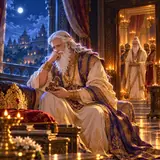
ततस्तु तौ रामवचः प्रचोदिता- वगायतां मार्गविधानसम्पदा । स चापि रामः परिषद्गतः शनै- र्बुभूषयासक्तमना बभूव ह ॥ ३६ ॥
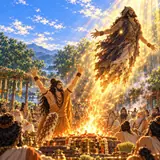
Then, urged by Rama’s words, the two sang in the classical manner, and Rama too, sitting in the assembly, slowly gave his whole mind to it, eager to hear.
तब राम के वचनों से प्रेरित होकर दोनों ने शास्त्रीय रीति से गाना शुरू किया, और सभा में बैठे राम भी सुनने को उत्सुक होकर धीरे-धीरे पूरे मन से उसमें डूब गए।
CommentaryNot scripture And so the poem begins. Rama “slowly gave his whole mind to it”. From this verse onward, everything you read is what the boys sang, and Rama heard. You are sitting in that assembly too, listening beside him.
Scene 3 of 3 · Rama hears the twins singing in the street and brings them to sing in his court.