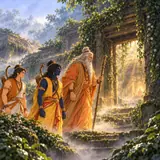
Bala Kanda · Sarga 20 of 77 · 28 verses
Dasharatha Refuses
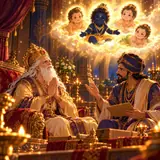
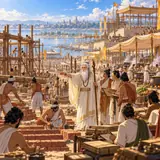
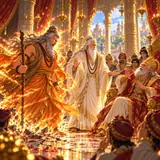
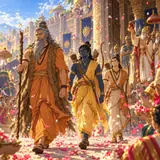
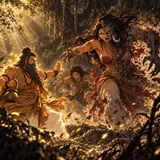
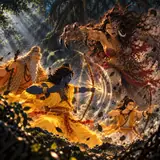
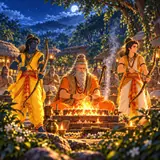
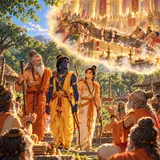
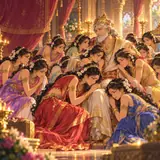
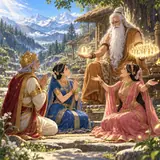
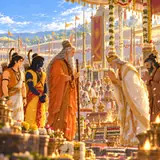
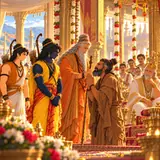
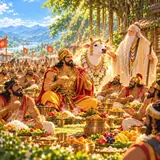
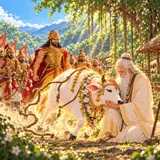
When he can speak, Dasharatha pleads. Rama is not yet sixteen, untrained in battle, and rakshasas fight by trickery. “I have a whole army. I will go myself, bow in hand, and fight them as long as I live. Do not take Rama.” He had his sons after sixty thousand years and great difficulty; he cannot live a moment without Rama. If the sage must take him, let him take the army and the king along too.
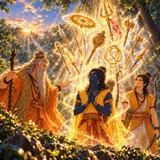
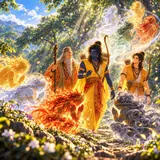
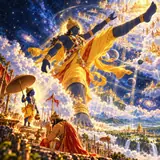
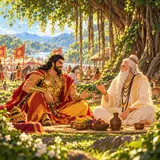
He asks who these rakshasas are. Vishvamitra explains: Ravana, of Pulastya’s line, brother of Kubera and son of the sage Vishravas, has a boon from Brahma and oppresses the three worlds; he himself does not stoop to spoil sacrifices but sends Maricha and Subahu. At Ravana’s name Dasharatha’s courage fails completely: gods and gandharvas cannot stand against him, how could men? He will not give his young son, though he might fight one of the two lesser demons himself. At this, a great anger enters Vishvamitra, blazing like a sacrificial fire fed with ghee.
Press › to begin with verse 1.
तच्छ्रुत्वा राजशार्दूलो विश्वामित्रस्य भाषितम् । मुहूर्तमिव निःसंज्ञः संज्ञावानिदमब्रवीत् ॥ १ ॥
Hearing Vishvamitra’s words, the tiger among kings was senseless for a moment; then, coming to himself, he said:
विश्वामित्र के वचन सुनकर राजसिंह क्षण भर के लिए अचेत हो गए; फिर होश में आकर बोले:
Commentary on the whole sarga
Dasharatha Refuses 1 min read.
Read the commentary CommentaryNot scripture The king is “senseless for a moment” (muhurtam iva nihsamjnah ), then speaks. What follows is one of the most human speeches in the Bala Kanda: a father pleading for his son.
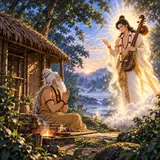
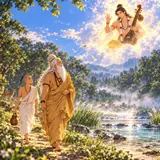
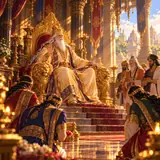
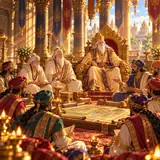
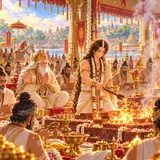
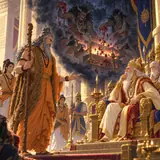
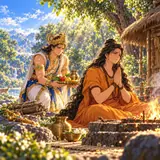
Scene 1 of 2 · The old king pleads: take my army, take me, but not my Rama, not yet sixteen.
ऊनषोडशवर्षो मे रामो राजीवलोचनः । न युद्धयोग्यतामस्य पश्यामि सह राक्षसैः ॥ २ ॥
“My lotus-eyed Rama is not yet sixteen. I do not see that he is fit to fight with rakshasas.
“मेरा कमल-नयन राम अभी सोलह वर्ष का भी नहीं हुआ। मैं नहीं देखता कि वह राक्षसों से युद्ध करने योग्य है।
CommentaryNot scripture “Not yet sixteen” (una-shodasha-varsha ). This verse is the poem’s own statement of Rama’s age when he leaves with Vishvamitra. To his father he is still “lotus-eyed”, still a child.
Scene 1 of 2 · The old king pleads: take my army, take me, but not my Rama, not yet sixteen.
इयमक्षौहिणी सेना यस्याहं पतिरीश्वरः । अनया सहितो गत्वा योद्धाहं तैर्निशाचरैः ॥ ३ ॥
“Here is a full army, an akshauhini, of which I am lord and master. With it I will go and fight those night-walkers.
“यह पूरी एक अक्षौहिणी सेना है, जिसका मैं स्वामी और अधिपति हूँ। इसके साथ मैं जाकर उन निशाचरों से युद्ध करूँगा।
CommentaryNot scripture An akshauhini is a full army: by later reckoning, over twenty thousand chariots, as many elephants, and hundreds of thousands of horse and foot. Dasharatha offers all of it in place of one boy.
Scene 1 of 2 · The old king pleads: take my army, take me, but not my Rama, not yet sixteen.
इमे शूराश्च विक्रान्ता भृत्या मेऽस्त्रविशारदाः । योग्या रक्षोगणैर्योद्धुं न रामं नेतुमर्हसि ॥ ४ ॥
“These brave and valiant servants of mine are skilled in weapons and fit to fight the hosts of rakshasas. You should not take Rama.
“मेरे ये वीर और पराक्रमी सेवक अस्त्रों में कुशल हैं और राक्षसों के समूहों से लड़ने योग्य हैं। आपको राम को नहीं ले जाना चाहिए।
CommentaryNot scripture “You should not take Rama” (narhase ramam ). This line will come again and again, like a sob. Valmiki lets the father repeat himself as a frightened parent would.
Scene 1 of 2 · The old king pleads: take my army, take me, but not my Rama, not yet sixteen.
अहमेव धनुष्पाणिर्गोप्ता समरमूर्धनि । यावत् प्राणान् धरिष्यामि तावद् योत्स्ये निशाचरैः ॥ ५ ॥
“I myself, bow in hand, will be your guardian at the head of the battle. As long as I hold my life I will fight the night-walkers.
“मैं स्वयं हाथ में धनुष लेकर युद्ध के आगे आपका रक्षक बनूँगा। जब तक मेरे प्राण हैं, मैं निशाचरों से लड़ूँगा।
CommentaryNot scripture “I myself, bow in hand.” The old king offers his own body. As long as he has breath he will fight. This is love that would rather die than send a child into danger.
Scene 1 of 2 · The old king pleads: take my army, take me, but not my Rama, not yet sixteen.
निर्विघ्ना व्रतचर्या सा भविष्यति सुरक्षिता । अहं तत्र गमिष्यामि न रामं नेतुमर्हसि ॥ ६ ॥
“Your vow will be performed without obstruction, well protected. I will go there; you should not take Rama.
“आपका व्रत बिना बाधा के, अच्छी तरह सुरक्षित होकर पूरा होगा। मैं वहाँ जाऊँगा; आपको राम को नहीं ले जाना चाहिए।
CommentaryNot scripture Your vow will be safe, he says, and again: do not take Rama. The king tries every argument, but they all circle back to the same plea.
Scene 1 of 2 · The old king pleads: take my army, take me, but not my Rama, not yet sixteen.
बालो ह्यकृतविद्यश्च न च वेत्ति बलाबलम् । न चास्त्रबलसंयुक्तो न च युद्धविशारदः ॥ ७ ॥
“He is a child, not yet fully trained; he does not know strength from weakness. He has no power of divine weapons and is not skilled in war.
“वह बालक है, अभी पूरी तरह प्रशिक्षित नहीं; वह बल और दुर्बलता को नहीं जानता। उसके पास दिव्य अस्त्रों की शक्ति नहीं है और वह युद्ध में कुशल नहीं है।
CommentaryNot scripture The father’s honest assessment: Rama is a child, not fully trained, does not know strength from weakness, has no divine weapons. Every one of these will change on this very journey. Vishvamitra will give him the weapons.
Scene 1 of 2 · The old king pleads: take my army, take me, but not my Rama, not yet sixteen.
न चासौ रक्षसां योग्यः कूटयुद्धा हि राक्षसाः । विप्रयुक्तो हि रामेण मुहूर्तमपि नोत्सहे ॥ ८ ॥
जीवितुं मुनिशार्दूल न रामं नेतुमर्हसि । यदि वा राघवं ब्रह्मन् नेतुमिच्छसि सुव्रत ॥ ९ ॥
“He is no match for rakshasas, for rakshasas fight with deceit. Parted from Rama I cannot bear to live even a moment, tiger among sages. You should not take Rama. Or, brahmana of good vows, if you wish to take Raghava,
“वह राक्षसों के बराबर नहीं है, क्योंकि राक्षस छल से लड़ते हैं। मुनिसिंह, राम से अलग होकर मैं एक क्षण भी जीवित नहीं रह सकता। आपको राम को नहीं ले जाना चाहिए। या फिर, सुव्रत ब्राह्मण, यदि आप राघव को ले ही जाना चाहते हैं,
CommentaryNot scripture “Rakshasas fight with deceit” (kuta-yodhinah ). Dasharatha fears not only their strength but their tricks. Then the heart of it: “Parted from Rama, I cannot live a moment.” In the Ayodhya Kanda, this will prove literally true.
Scene 1 of 2 · The old king pleads: take my army, take me, but not my Rama, not yet sixteen.
चतुरङ्गसमायुक्तं मया सह च तं नय । षष्टिर्वर्षसहस्राणि जातस्य मम कौशिक ॥ १० ॥
कृच्छ्रेणोत्पादितश्चायं न रामं नेतुमर्हसि । चतुर्णामात्मजानां हि प्रीतिः परमिका मम ॥ ११ ॥
“take him with me and with my fourfold army. Kaushika, I am sixty thousand years old; this son was born to me with difficulty. You should not take Rama. Of my four sons, my highest love is
“तो उसे मेरे और मेरी चतुरंगिणी सेना के साथ ले जाइए। कौशिक, मैं साठ हज़ार वर्ष का हूँ; यह पुत्र मुझे बड़ी कठिनाई से मिला है। आपको राम को नहीं ले जाना चाहिए। मेरे चार पुत्रों में मेरा सबसे बड़ा प्रेम
CommentaryNot scripture If you must take him, take me and my army too. Then the age: sixty thousand years. Epic ages are not historical numbers: they mean the king is very old, and the son came late and “with difficulty”. Every parent who waited long for a child will feel this verse.
Scene 1 of 2 · The old king pleads: take my army, take me, but not my Rama, not yet sixteen.
ज्येष्ठे धर्मप्रधाने च न रामं नेतुमर्हसि । किंवीर्या राक्षसास्ते च कस्य पुत्राश्च के च ते ॥ १२ ॥
कथं प्रमाणाः के चैतान् रक्षन्ति मुनिपुंगव । कथं च प्रतिकर्तव्यं तेषां रामेण रक्षसाम् ॥ १३ ॥
“for the eldest, whose chief concern is dharma. You should not take Rama. What is the strength of these rakshasas, whose sons are they, and who are they? How big are they, and who protects them, best of sages? And how is Rama to counter those rakshasas,
“सबसे बड़े पुत्र पर है, जिसकी मुख्य चिंता धर्म है। आपको राम को नहीं ले जाना चाहिए। मुनिश्रेष्ठ, इन राक्षसों का बल क्या है, ये किसके पुत्र हैं, और कौन हैं? ये कितने बड़े हैं, और इनकी रक्षा कौन करता है? और राम उन राक्षसों का सामना कैसे करेगा,
CommentaryNot scripture Of four sons, “my highest love is for the eldest”. A father admits a preference. Then, practically, he asks: who are these demons? How strong? Who protects them? He is trying to understand the enemy.
Scene 1 of 2 · The old king pleads: take my army, take me, but not my Rama, not yet sixteen.
मामकैर्वा बलैर्ब्रह्मन् मया वा कूटयोधिनाम् । सर्वं मे शंस भगवन् कथं तेषां मया रणे ॥ १४ ॥
स्थातव्यं दुष्टभावानां वीर्योत्सिक्ता हि राक्षसाः । तस्य तद् वचनं श्रुत्वा विश्वामित्रोऽभ्यभाषत ॥ १५ ॥
“or I, with my armies, brahmana, against those who fight by deceit? Tell me everything, lord: how am I to stand against those wicked ones in battle? For rakshasas are swollen with pride in their strength.” Hearing his words, Vishvamitra said:
“या मैं अपनी सेनाओं के साथ, ब्राह्मण, उन छल से लड़ने वालों का? प्रभु, मुझे सब बताइए: मैं युद्ध में उन दुष्टों के सामने कैसे टिकूँ? क्योंकि राक्षस अपने बल के घमंड में फूले रहते हैं।” उनकी बात सुनकर विश्वामित्र ने कहा:
CommentaryNot scripture How could Rama, or even I with my armies, fight those who fight with tricks? The king asks for the whole truth. Vishvamitra will give it.
Scene 1 of 2 · The old king pleads: take my army, take me, but not my Rama, not yet sixteen.
पौलस्त्यवंशप्रभवो रावणो नाम राक्षसः । स ब्रह्मणा दत्तवरस्त्रैलोक्यं बाधते भृशम् ॥ १६ ॥
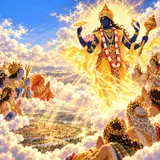
“Born of the line of Pulastya, there is a rakshasa named Ravana. Granted a boon by Brahma, he greatly harasses the three worlds.
“पुलस्त्य के वंश में जन्मा रावण नाम का एक राक्षस है। ब्रह्मा से वर पाकर वह तीनों लोकों को बहुत सताता है।
CommentaryNot scripture The name lands: Ravana, of the line of the sage Pulastya, empowered by Brahma’s boon, tormenting the three worlds. The human story and the divine story meet again. The king does not know that his son was born to kill this very demon.
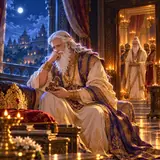
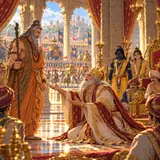
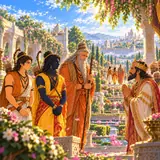
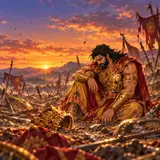
Scene 2 of 2 · Vishvamitra names Ravana; the frightened king refuses, and the sage’s anger blazes like fire fed with ghee.
महाबलो महावीर्यो राक्षसैर्बहुभिर्वृतः । श्रूयते च महाराज रावणो राक्षसाधिपः ॥ १७ ॥
साक्षाद्वैश्रवणभ्राता पुत्रो विश्रवसो मुनेः । यदा न खलु यज्ञस्य विघ्नकर्ता महाबलः ॥ १८ ॥
“Of great strength and great valour, surrounded by many rakshasas, Ravana is spoken of, great king, as the lord of the rakshasas, brother of Vaishravana himself and son of the sage Vishravas. When that mighty one does not himself obstruct a sacrifice,
“महाबली और महापराक्रमी, बहुत से राक्षसों से घिरा रावण, महाराज, राक्षसों का स्वामी कहलाता है, स्वयं वैश्रवण (कुबेर) का भाई और मुनि विश्रवा का पुत्र। जब वह बलवान स्वयं किसी यज्ञ में बाधा नहीं डालता,
CommentaryNot scripture Ravana is the brother of Vaishravana (Kubera, god of wealth) and son of the sage Vishravas. The demon king comes from a noble line of sages. His evil is not in his birth but in his choices.
Scene 2 of 2 · Vishvamitra names Ravana; the frightened king refuses, and the sage’s anger blazes like fire fed with ghee.
तेन संचोदितौ तौ तु राक्षसौ सुमहाबलौ । मारीचश्च सुबाहुश्च यज्ञविघ्नं करिष्यतः ॥ १९ ॥
“these two very powerful rakshasas, Maricha and Subahu, urged on by him, obstruct the sacrifice.”
“तब उसके भेजे ये दो अत्यंत बलवान राक्षस, मारीच और सुबाहु, यज्ञ में बाधा डालते हैं।”
CommentaryNot scripture When Ravana does not come himself, he sends Maricha and Subahu. These two are his agents. Defeating them is the first step toward the war in Lanka.
Scene 2 of 2 · Vishvamitra names Ravana; the frightened king refuses, and the sage’s anger blazes like fire fed with ghee.
इत्युक्तो मुनिना तेन राजोवाच मुनिं तदा । नहि शक्तोऽस्मि संग्रामे स्थातुं तस्य दुरात्मनः ॥ २० ॥
Told this by the sage, the king said: “I am not able to stand in battle against that evil one.
मुनि के ऐसा कहने पर राजा ने कहा: “मैं युद्ध में उस दुष्ट के सामने टिकने में समर्थ नहीं हूँ।
CommentaryNot scripture Dasharatha says plainly: “I cannot stand against that evil one.” Hearing Ravana’s name breaks his confidence completely.
Scene 2 of 2 · Vishvamitra names Ravana; the frightened king refuses, and the sage’s anger blazes like fire fed with ghee.
स त्वं प्रसादं धर्मज्ञ कुरुष्व मम पुत्रके । मम चैवाल्पभाग्यस्य दैवतं हि भवान् गुरुः ॥ २१ ॥
“Knower of dharma, show favour to my little son, and to me, whose fortune is small. You are my god and my teacher.
“धर्म के ज्ञाता, मेरे छोटे से पुत्र पर और मुझ अभागे पर कृपा कीजिए। आप मेरे देवता और गुरु हैं।
CommentaryNot scripture He calls himself manda-bhagya , “whose fortune is small”. He begs for mercy for “my little son”. The king has stopped arguing and started pleading.
Scene 2 of 2 · Vishvamitra names Ravana; the frightened king refuses, and the sage’s anger blazes like fire fed with ghee.
देवदानवगन्धर्वा यक्षाः पतगपन्नगाः । न शक्ता रावणं सोढुं किं पुनर्मानवा युधि ॥ २२ ॥
“Gods, danavas, gandharvas, yakshas, birds and serpents cannot withstand Ravana in battle; how much less can men?
“देवता, दानव, गंधर्व, यक्ष, पक्षी और सर्प भी युद्ध में रावण का सामना नहीं कर सकते; फिर मनुष्यों की क्या बात?
CommentaryNot scripture If gods, demons, gandharvas and serpents cannot face Ravana, how can men? The king’s fear repeats exactly the gap in Ravana’s boon: men were left out because they seemed too weak. The listener knows the irony.
Scene 2 of 2 · Vishvamitra names Ravana; the frightened king refuses, and the sage’s anger blazes like fire fed with ghee.
स तु वीर्यवतां वीर्यमादत्ते युधि रावणः । तेन चाहं न शक्तोऽस्मि संयोद्धुं तस्य वा बलैः ॥ २३ ॥
“That Ravana takes away in battle the strength of the strong. I cannot fight him, or his armies,
“वह रावण युद्ध में बलवानों का बल हर लेता है। मैं उससे या उसकी सेनाओं से नहीं लड़ सकता,
CommentaryNot scripture Ravana “takes away the strength of the strong”. He seems unbeatable. Dasharatha cannot imagine any way to fight him.
Scene 2 of 2 · Vishvamitra names Ravana; the frightened king refuses, and the sage’s anger blazes like fire fed with ghee.
सबलो वा मुनिश्रेष्ठ सहितो वा ममात्मजैः । कथमप्यमरप्रख्यं संग्रामाणामकोविदम् ॥ २४ ॥
बालं मे तनयं ब्रह्मन् नैव दास्यामि पुत्रकम् । अथ कालोपमौ युद्धे सुतौ सुन्दोपसुन्दयोः ॥ २५ ॥
“even with my army, best of sages, or with my sons. In no way will I give you my child, my little son, godlike though he is, ignorant of battle. And the two sons of Sunda and Upasunda, like Death in battle,
“मुनिश्रेष्ठ, न अपनी सेना के साथ, न अपने पुत्रों के साथ। मैं किसी भी तरह अपना बालक, अपना छोटा पुत्र, जो देवता जैसा होते हुए भी युद्ध से अनजान है, आपको नहीं दूँगा। और सुंद और उपसुंद के वे दोनों पुत्र, जो युद्ध में यमराज जैसे हैं,
CommentaryNot scripture “I will not give you my child.” He calls Rama deva-upama , “godlike”, without knowing how true that is. Then he mistakenly names Maricha and Subahu as sons of Sunda and Upasunda; their real parentage is told later (Maricha is the son of Tataka and Sunda).
Scene 2 of 2 · Vishvamitra names Ravana; the frightened king refuses, and the sage’s anger blazes like fire fed with ghee.
यज्ञविघ्नकरौ तौ ते नैव दास्यामि पुत्रकम् । मारीचश्च सुबाहुश्च वीर्यवन्तौ सुशिक्षितौ ॥ २६ ॥
तयोरन्यतरं योद्धुं यास्यामि ससुहृद्गणः । अन्यथा त्वनुनेष्यामि भवन्तं सहबान्धवः ॥ २७ ॥
“who obstruct your sacrifice: I will not give you my little son. Maricha and Subahu are powerful and well trained; I will go with my friends to fight one or the other of them. Otherwise, with my kin, I will beg you to excuse me.”
“जो आपके यज्ञ में बाधा डालते हैं: मैं अपना छोटा पुत्र आपको नहीं दूँगा। मारीच और सुबाहु बलवान और प्रशिक्षित हैं; मैं अपने मित्रों के साथ उनमें से किसी एक से लड़ने जाऊँगा। नहीं तो, अपने संबंधियों सहित मैं आपसे क्षमा माँगूँगा।”
CommentaryNot scripture His last offer: he will fight one of the two himself, with his friends. Or else he begs to be excused. The king has now gone back on his open promise. That is a serious thing in this world.
Scene 2 of 2 · Vishvamitra names Ravana; the frightened king refuses, and the sage’s anger blazes like fire fed with ghee.
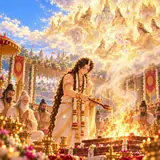
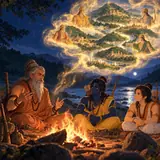
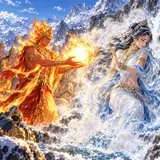
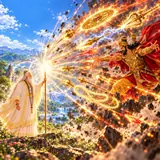
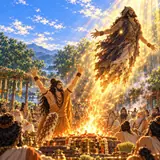
इति नरपतिजल्पनात् द्विजेन्द्रं कुशिकसुतं सुमहान् विवेश मन्युः । सुहुत इव मखेऽग्निराज्यसिक्तः समभवदुज्ज्वलितो महर्षिवह्निः ॥ २८ ॥
At these words of the lord of men a great anger entered the son of Kushika, lord of brahmanas; the great sage’s fire flared up, like the fire at a sacrifice when ghee is poured on it.
मनुष्यों के स्वामी के इन वचनों पर ब्राह्मणों के स्वामी कुशिक-पुत्र के मन में बड़ा क्रोध भर आया; महामुनि का तेज वैसे ही भड़क उठा, जैसे यज्ञ की अग्नि में घी डालने पर।
CommentaryNot scripture Vishvamitra’s anger flares “like the sacrificial fire when ghee is poured on it”. A promise broken to a great sage is dangerous. The scene has turned from tender to perilous, and the next sarga shows Vasishtha stepping in to save the king.
Scene 2 of 2 · Vishvamitra names Ravana; the frightened king refuses, and the sage’s anger blazes like fire fed with ghee.