Bala Kanda · Sarga 12 of 77 · 22 verses
The Sacrifice Is Ordered
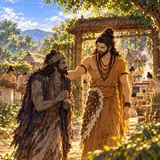
After a long time, when lovely spring arrives, Dasharatha bows before Rishyashringa and chooses him to perform the sacrifice for the continuance of his line. The sage agrees and gives the same instructions as before: gather the materials, release the horse, prepare the ground on the north bank of the Sarayu.
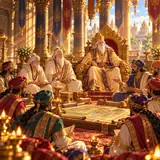
The king summons his priests again through Sumantra and tells them he will perform the horse sacrifice through the power of the sage’s son. The brahmanas, led by Vasishtha and with Rishyashringa at their head, promise him four sons of boundless valour. The king gives his orders once more, again warning that no fault must enter the rite, and the ministers carry them out.
Press › to begin with verse 1.
ततः काले बहुतिथे कस्मिंश्चित् सुमनोहरे । वसन्ते समनुप्राप्ते राज्ञो यष्टुं मनोऽभवत् ॥ १ ॥
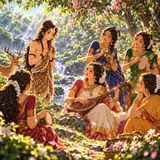
Then, after a long time, when lovely spring had come, the king’s mind turned to sacrifice.
फिर बहुत समय बीतने पर, जब सुहावना वसंत आया, तब राजा का मन यज्ञ की ओर गया।
Commentary on the whole sarga
The Sacrifice Is Ordered 1 min read.
Read the commentary CommentaryNot scripture “After a long time” (kalasya mahatah ), spring arrives. Spring (vasanta ) is the season of new life, the right time for a rite to bring children. The king has waited patiently for the right moment. Ancient rites were tied to the seasons, and the horse sacrifice traditionally began in spring.
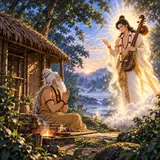
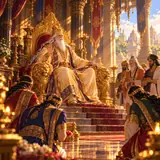
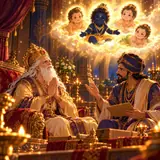
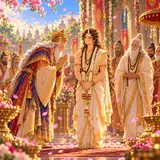
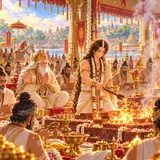
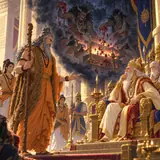
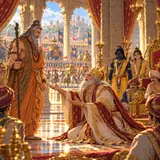
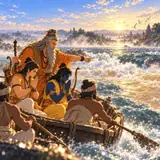
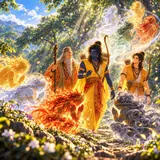
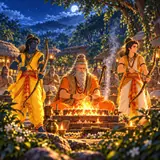
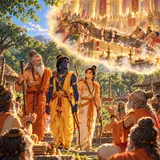
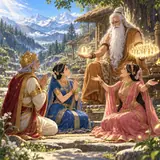
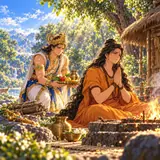
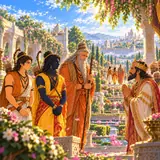
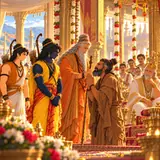
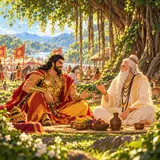
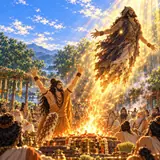
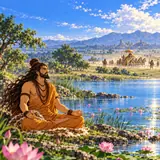
Scene 1 of 2 · In spring, Dasharatha bows to Rishyashringa and chooses him as the priest of the great sacrifice.
ततः प्रणम्य शिरसा तं विप्रं देववर्णिनम् । यज्ञाय वरयामास संतानार्थं कुलस्य च ॥ २ ॥
Bowing his head to that brahmana of godlike splendour, he chose him for the sacrifice, for the continuance of his line.
देवताओं जैसे तेजस्वी उन ब्राह्मण को सिर झुकाकर प्रणाम करके उन्होंने वंश चलाने के लिए उन्हें यज्ञ के लिए चुना।
CommentaryNot scripture Dasharatha bows his head to Rishyashringa. The king of Ayodhya bows to the young sage from the forest. He chooses him formally as the priest of the rite: an honour and a responsibility.
Scene 1 of 2 · In spring, Dasharatha bows to Rishyashringa and chooses him as the priest of the great sacrifice.
तथेति च स राजानमुवाच वसुधाधिपम् । सम्भाराः सम्भ्रियन्तां ते तुरगश्च विमुच्यताम् ॥ ३ ॥
सरय्वाश्चोत्तरे तीरे यज्ञभूमिर्विधीयताम् । ततोऽब्रवीनृपो वाक्यं ब्राह्मणान् वेदपारगान् ॥ ४ ॥
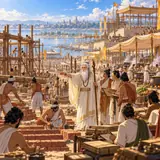
He said to the king, lord of the earth, “So be it. Let the materials be gathered and the horse released; let the ground for the sacrifice be prepared on the north bank of the Sarayu.” Then the king said to the brahmanas, masters of the Vedas:
उन्होंने पृथ्वीपति राजा से कहा, “ऐसा ही हो। सामग्री इकट्ठी की जाए और घोड़ा छोड़ा जाए; सरयू के उत्तरी तट पर यज्ञभूमि तैयार की जाए।” तब राजा ने वेदों के पारंगत ब्राह्मणों से कहा:
CommentaryNot scripture The sage’s first words are the same instructions the priests gave in sarga 8: gather the materials, release the horse, prepare the ground by the Sarayu. Many readers notice that this sarga repeats sarga 8 closely. Oral epics often repeat key scenes; reciters may also have preserved two tellings side by side. This edition keeps both, as printed.
Scene 1 of 2 · In spring, Dasharatha bows to Rishyashringa and chooses him as the priest of the great sacrifice.
सुमन्त्रावाहय क्षिप्रमृत्विजो ब्रह्मवादिनः । सुयज्ञं वामदेवं च जाबालिमथ काश्यपम् ॥ ५ ॥
पुरोहितं वसिष्ठं च ये चान्ये द्विजसत्तमाः । ततः सुमन्त्रस्त्वरितं गत्वा त्वरितविक्रमः ॥ ६ ॥
“Sumantra, quickly summon the priests who expound Brahman: Suyajna, Vamadeva, Jabali and Kashyapa, the family priest Vasishtha and the other best of brahmanas.” Then Sumantra went quickly, swift of foot,
“सुमंत्र, ब्रह्म का उपदेश देने वाले पुरोहितों को जल्दी बुलाओ: सुयज्ञ, वामदेव, जाबालि और काश्यप, कुलपुरोहित वसिष्ठ और दूसरे श्रेष्ठ ब्राह्मणों को।” तब तेज़ चलने वाले सुमंत्र जल्दी गए
CommentaryNot scripture Sumantra is sent again to summon the same priests. The repetition has a ritual feel, like a refrain. Each step of the great rite must be taken properly, and the poem walks through it carefully.
Scene 1 of 2 · In spring, Dasharatha bows to Rishyashringa and chooses him as the priest of the great sacrifice.
समानयत् स तान् सर्वान् समस्तान् वेदपारगान् । तान् पूजयित्वा धर्मात्मा राजा दशरथस्तदा ॥ ७ ॥
धर्मार्थसहितं युक्तं श्लक्ष्णं वचनमब्रवीत् । मम तातप्यमानस्य पुत्रार्थं नास्ति वै सुखम् ॥ ८ ॥
and brought all of them, masters of the Vedas. Honouring them, the righteous King Dasharatha spoke fitting, gentle words full of dharma and sense: “Burning with longing for a son, I have no happiness.
और वेदों के पारंगत उन सबको ले आए। उनका सम्मान करके धर्मात्मा राजा दशरथ ने धर्म और अर्थ से भरे उचित, कोमल वचन कहे: “पुत्र की लालसा में जलते हुए मुझे कोई सुख नहीं है।
CommentaryNot scripture “Burning with longing for a son” (putrartham paritapyatah ): the king’s words are a little stronger here than before. His waiting has deepened his longing.
Scene 1 of 2 · In spring, Dasharatha bows to Rishyashringa and chooses him as the priest of the great sacrifice.
पुत्रार्थं हयमेधेन यक्ष्यामीति मतिर्मम । तदहं यष्टुमिच्छामि हयमेधेन कर्मणा ॥ ९ ॥
ऋषिपुत्रप्रभावेण कामान् प्राप्स्यामि चाप्यहम् । ततः साध्विति तद्वाक्यं ब्राह्मणाः प्रत्यपूजयन् ॥ १० ॥
“I have resolved to sacrifice with the horse sacrifice for a son. So I wish to perform the horse sacrifice, and by the power of the sage’s son I shall gain my wishes.” Then the brahmanas honoured with “Well said!” the words
“मैंने पुत्र के लिए अश्वमेध यज्ञ करने का निश्चय किया है। इसलिए मैं अश्वमेध यज्ञ करना चाहता हूँ, और मुनिपुत्र के प्रभाव से मेरी इच्छाएँ पूरी होंगी।” तब ब्राह्मणों ने राजा के मुख से निकले उन वचनों की “बहुत अच्छा!” कहकर सराहना की,
CommentaryNot scripture One phrase is new: “by the power of the sage’s son” (rishi-putra-prabhavena ). Dasharatha now trusts Rishyashringa’s power completely. The sage from the forest has become the centre of the king’s hope.
Scene 1 of 2 · In spring, Dasharatha bows to Rishyashringa and chooses him as the priest of the great sacrifice.
वसिष्ठप्रमुखाः सर्वे पार्थिवस्य मुखाच्च्युतम् । ऋष्यशृङ्गपुरोगाश्च प्रत्यूचुर्नृपतिं तदा ॥ ११ ॥
that came from the king’s mouth, all of them led by Vasishtha, and with Rishyashringa at their head they answered the king:
वसिष्ठ आदि सबने, और ऋष्यशृंग को आगे करके उन्होंने राजा को उत्तर दिया:
CommentaryNot scripture Another change: the priests reply “with Rishyashringa at their head” (rishyashringa-puraskritah ). The young sage now leads even Vasishtha in this rite. Each has his place, and this ceremony is Rishyashringa’s.
Scene 1 of 2 · In spring, Dasharatha bows to Rishyashringa and chooses him as the priest of the great sacrifice.
सम्भाराः सम्भ्रियन्तां ते तुरगश्च विमुच्यताम् । सरय्वाश्चोत्तरे तीरे यज्ञभूमिर्विधीयताम् ॥ १२ ॥
“Let the materials be gathered and the horse released; let the ground for the sacrifice be prepared on the north bank of the Sarayu.
“सामग्री इकट्ठी की जाए और घोड़ा छोड़ा जाए; सरयू के उत्तरी तट पर यज्ञभूमि तैयार की जाए।
CommentaryNot scripture The instructions are repeated. In a ritual setting, repetition is reassurance: the same words, the same order, nothing forgotten.
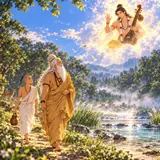
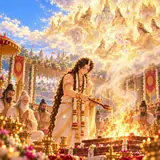
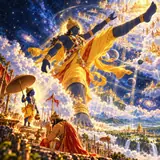
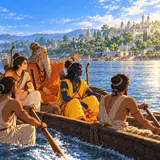
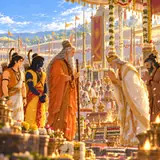
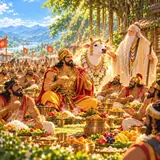
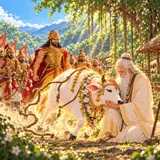
Scene 2 of 2 · The consecrated horse is released by the Sarayu to wander for a year, guarded by warriors and a priest.
सर्वथा प्राप्यसे पुत्रांश्चतुरोऽमितविक्रमान् । यस्य ते धार्मिकी बुद्धिरियं पुत्रार्थमागता ॥ १३ ॥
“You will surely gain four sons of boundless valour, since this righteous resolve has come to you for the sake of a son.”
“आप अवश्य ही असीम पराक्रम वाले चार पुत्र पाएँगे, क्योंकि पुत्र के लिए आपके मन में यह धर्ममय संकल्प आया है।”
CommentaryNot scripture Now the number is spoken: “four sons” (chatvarah ). In sarga 8 the priests said only “sons”. The promise becomes precise as the rite approaches. Rama and his three brothers are already near.
Scene 2 of 2 · The consecrated horse is released by the Sarayu to wander for a year, guarded by warriors and a priest.
ततः प्रीतोऽभवद् राजा श्रुत्वा तु द्विजभाषितम् । अमात्यानब्रवीद् राजा हर्षेणेदं शुभाक्षरम् ॥ १४ ॥
Pleased to hear what the brahmanas said, the king joyfully spoke these auspicious words to his ministers:
ब्राह्मणों की बात सुनकर प्रसन्न राजा ने आनंद से अपने मंत्रियों से ये मंगल वचन कहे:
CommentaryNot scripture The king’s words to his ministers are called “auspicious” (shubha ). Joy colours everything he says now.
Scene 2 of 2 · The consecrated horse is released by the Sarayu to wander for a year, guarded by warriors and a priest.
गुरूणां वचनाच्छीघ्रं सम्भाराः सम्भ्रियन्तु मे । समर्थाधिष्ठितश्चाश्वः सोपाध्यायो विमुच्यताम् ॥ १५ ॥
“At my teachers’ word, let the materials be gathered for me quickly, and let the horse be released, guarded by capable men and with a priest.
“गुरुओं के कहे अनुसार मेरे लिए जल्दी सामग्री इकट्ठी की जाए, और समर्थ पुरुषों की रक्षा में तथा एक पुरोहित के साथ घोड़ा छोड़ा जाए।
CommentaryNot scripture The horse is released, guarded by capable men and accompanied by a priest. For a full year it will roam, and the army will follow. Every kingdom it crosses must accept Ayodhya’s supremacy or fight.
Scene 2 of 2 · The consecrated horse is released by the Sarayu to wander for a year, guarded by warriors and a priest.
सरय्वाश्चोत्तरे तीरे यज्ञभूमिर्विधीयताम् । शान्तयश्चाभिवर्धन्तां यथाकल्पं यथाविधि ॥ १६ ॥
“Let the ground for the sacrifice be prepared on the north bank of the Sarayu, and let the rites of peace be increased as prescribed, by the rule.
“सरयू के उत्तरी तट पर यज्ञभूमि तैयार की जाए, और विधि के अनुसार नियम से शांति के कर्म बढ़ाए जाएँ।
CommentaryNot scripture Shanti , rites of peace, are “increased”, performed generously. The king leaves nothing to chance. Peace rites protect against both natural and supernatural harm.
Scene 2 of 2 · The consecrated horse is released by the Sarayu to wander for a year, guarded by warriors and a priest.
शक्यः कर्तुमयं यज्ञः सर्वेणापि महीक्षिता । नापराधो भवेत् कष्टो यद्यस्मिन् क्रतुसत्तमे ॥ १७ ॥
“This sacrifice can be performed by any lord of the earth, provided no grievous fault occurs in this best of rites.
“यह यज्ञ कोई भी पृथ्वीपति कर सकता है, बशर्ते इस श्रेष्ठ यज्ञ में कोई बड़ी भूल न हो।
CommentaryNot scripture Any king may perform this rite, but only if it is flawless. The stress on precision is a Vedic theme. Ritual is a careful art, and carelessness can turn blessing into harm.
Scene 2 of 2 · The consecrated horse is released by the Sarayu to wander for a year, guarded by warriors and a priest.
छिद्रं हि मृगयन्त्येते विद्वांसो ब्रह्मराक्षसाः । विधिहीनस्य यज्ञस्य सद्यः कर्ता विनश्यति ॥ १८ ॥
“For these learned brahmarakshasas look for flaws, and the performer of a sacrifice that lacks the rite perishes at once.
“क्योंकि ये विद्वान ब्रह्मराक्षस दोष ढूँढते रहते हैं, और विधि से रहित यज्ञ करने वाला तुरंत नष्ट हो जाता है।
CommentaryNot scripture The same warning as before about brahmarakshasas, demons of fallen learning who look for flaws. The fear is real to the king. He knows how much depends on this rite.
Scene 2 of 2 · The consecrated horse is released by the Sarayu to wander for a year, guarded by warriors and a priest.
तद् यथा विधिपूर्वं मे क्रतुरेष समाप्यते । तथा विधानं क्रियतां समर्थाः करणेष्विह ॥ १९ ॥
“So let it be arranged that this sacrifice of mine is completed according to the rule; you are capable of carrying it out.”
“इसलिए ऐसी व्यवस्था की जाए कि मेरा यह यज्ञ नियम के अनुसार पूरा हो; आप लोग इसे करने में समर्थ हैं।”
CommentaryNot scripture He trusts his ministers: “you are capable”. A wise king delegates. He does not try to do everything himself, but chooses good people and relies on them.
Scene 2 of 2 · The consecrated horse is released by the Sarayu to wander for a year, guarded by warriors and a priest.
तथेति च ततः सर्वे मन्त्रिणः प्रत्यपूजयन् । पार्थिवेन्द्रस्य तद् वाक्यं यथाज्ञप्तमकुर्वत ॥ २० ॥
All the ministers honoured the words of the lord of kings with “So be it”, and did as they were commanded.
सब मंत्रियों ने राजाधिराज के वचनों का “ऐसा ही होगा” कहकर सम्मान किया, और जैसा आदेश मिला वैसा किया।
CommentaryNot scripture Tatha : “so be it”. The ministers obey at once. In the Ayodhya Kanda, by contrast, ministers will plead with the king and fail. Here, all is harmony.
Scene 2 of 2 · The consecrated horse is released by the Sarayu to wander for a year, guarded by warriors and a priest.
ततो द्विजास्ते धर्मज्ञमस्तुवन् पार्थिवर्षभम् । अनुज्ञातास्ततः सर्वे पुनर्जग्मुर्यथागतम् ॥ २१ ॥
Then the brahmanas praised the bull among kings who knew dharma, and with his leave all went back as they had come.
तब ब्राह्मणों ने धर्म के ज्ञाता राजश्रेष्ठ की प्रशंसा की, और उनकी अनुमति से सब जैसे आए थे वैसे ही लौट गए।
CommentaryNot scripture The brahmanas praise the king and depart. A scene of perfect order. Valmiki paints this calm before the long journey of the horse begins.
Scene 2 of 2 · The consecrated horse is released by the Sarayu to wander for a year, guarded by warriors and a priest.
गतेषु तेषु विप्रेषु मन्त्रिणस्तान् नराधिपः । विसर्जयित्वा स्वं वेश्म प्रविवेश महामतिः ॥ २२ ॥
When those brahmanas had gone, the wise lord of men dismissed his ministers and entered his own palace.
उन ब्राह्मणों के चले जाने पर बुद्धिमान राजा ने अपने मंत्रियों को विदा किया और अपने महल में प्रवेश किया।
CommentaryNot scripture The king returns to his palace. A year will pass while the horse wanders. In the next sarga the year is complete and the sacrifice begins.
Scene 2 of 2 · The consecrated horse is released by the Sarayu to wander for a year, guarded by warriors and a priest.