Bala Kanda · Sarga 65 of 77 · 40 verses
Vishvamitra Becomes a Brahmarshi
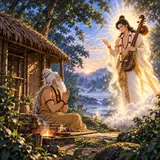
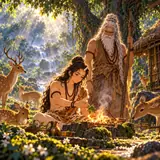
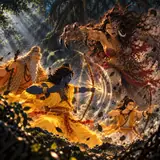
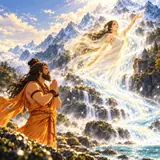
Leaving the Himalaya, Vishvamitra goes east and keeps a vow of silence for a thousand years, practising austerity beyond compare. Through many trials, become like a log of wood, he lets no anger in. At the end of the thousand years, as he is about to eat, Indra comes disguised as a brahmana and begs for the food. Vishvamitra gives him all of it, eats nothing, says nothing, and resumes his silence, now without even breathing. After another thousand years, smoke rises from his head; the three worlds are scorched and terrified.
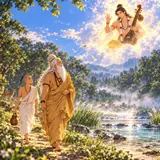
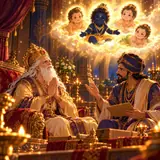
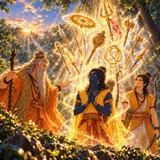
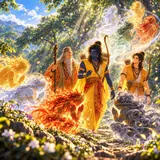
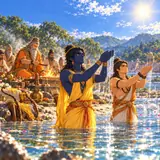
The gods and sages go to Brahma: “Tempted and provoked in many ways, Vishvamitra only grows by his austerity. No fault, however small, can be seen in him. If he is not given what his mind desires, he will destroy the three worlds. The seas are churning, mountains crumbling, the earth quaking, the sun has lost its light.” Brahma and the gods come to him: “Welcome, brahmarshi; we are pleased by your austerity. You have won brahmanahood. We grant you long life. Go in peace.” Vishvamitra bows and asks only that the Vedas, om and vashat accept him, and that Vasishtha himself call him brahmarshi. Vasishtha, entreated by the gods, makes friendship with him: “You are a brahmarshi, without doubt.” Vishvamitra honours Vasishtha.
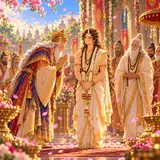
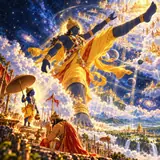
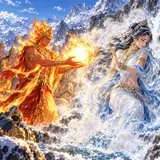
“This, Rama, is how this great soul won brahmanahood,” Shatananda ends. “He is austerity embodied, the highest dharma, the final refuge of power.” Janaka thanks Vishvamitra for coming with the princes; he could listen forever, but the sun is low and the rites call. “See me again at dawn.” The king walks around the sage in reverence and leaves; Vishvamitra returns to his lodging with Rama and Lakshmana.
Press › to begin with verse 1.
अथ हैमवतीं राम दिशं त्यक्त्वा महामुनिः । पूर्वां दिशमनुप्राप्य तपस्तेपे सुदारुणम् ॥ १ ॥
Then, Rama, the great sage left the Himalayan direction, went to the eastern direction and practised very severe austerity.
तब, राम, महामुनि हिमालय की दिशा छोड़कर पूर्व दिशा में गए और अत्यंत कठोर तप करने लगे।
Commentary on the whole sarga
Vishvamitra Becomes a Brahmarshi 1 min read.
Read the commentary CommentaryNot scripture Vishvamitra moves east and begins again. The fourth direction of his journey: south, west, north, and now east, the direction of sunrise. A new dawn for the sage.
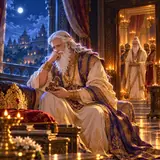
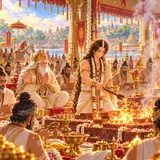
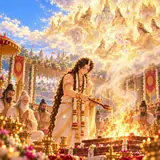
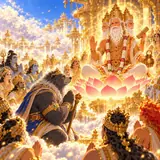
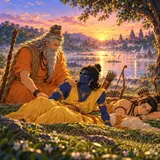
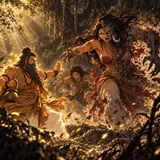
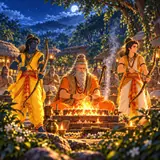
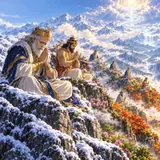
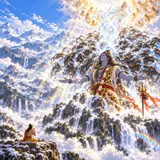
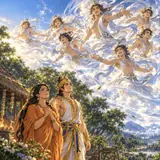
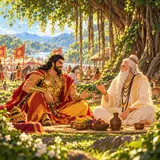
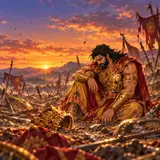
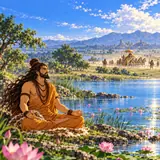
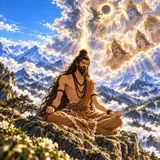
Scene 1 of 3 · Silent and breathless for a thousand years, Vishvamitra burns so brightly that smoke rises from his head and the sun grows dim.
मौनं वर्षसहस्रस्य कृत्वा व्रतमनुत्तमम् । चकाराप्रतिमं राम तपः परमदुष्करम् ॥ २ ॥
Keeping a supreme vow of silence for a thousand years, he practised austerity unequalled and most difficult, Rama.
हज़ार वर्षों तक परम मौन व्रत रखकर, राम, उन्होंने अद्वितीय और अत्यंत कठिन तप किया।
CommentaryNot scripture A thousand years of complete silence (mauna ). Silence is the discipline against anger: one who does not speak cannot curse.
Scene 1 of 3 · Silent and breathless for a thousand years, Vishvamitra burns so brightly that smoke rises from his head and the sun grows dim.
पूर्णे वर्षसहस्रे तु काष्ठभूतं महामुनिम् । विघ्नैर्बहुभिराधूतं क्रोधो नान्तरमाविशत् ॥ ३ ॥
When the full thousand years were complete, the great sage had become like a log of wood; though shaken by many obstacles, anger did not enter him.
जब पूरे हज़ार वर्ष पूरे हुए, तब महामुनि लकड़ी के लट्ठे जैसे हो गए थे; अनेक बाधाओं से हिलाए जाने पर भी क्रोध ने उनमें प्रवेश नहीं किया।
CommentaryNot scripture He becomes “like a log of wood”. Many obstacles came, and anger did not enter him. At last he has conquered the enemy that defeated him every time before.
Scene 1 of 3 · Silent and breathless for a thousand years, Vishvamitra burns so brightly that smoke rises from his head and the sun grows dim.
स कृत्वा निश्चयं राम तप आतिष्ठताव्ययम् । तस्य वर्षसहस्रस्य व्रते पूर्णे महाव्रतः ॥ ४ ॥
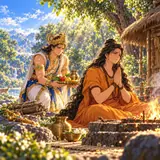
भोक्तुमारब्धवानन्नं तस्मिन् काले रघूत्तम । इन्द्रो द्विजातिर्भूत्वा तं सिद्धमन्नमयाचत ॥ ५ ॥
Having made his resolve, Rama, he undertook unending austerity. When his vow of a thousand years was complete, the one of great vows began to eat at that time, best of the Raghus. Indra, becoming a brahmana, asked him for the prepared food.
राम, अपना संकल्प करके उन्होंने अनंत तप किया। जब हज़ार वर्ष का उनका व्रत पूरा हुआ, तब, रघुश्रेष्ठ, उस महाव्रती ने उस समय भोजन करना आरंभ किया। इंद्र ने ब्राह्मण बनकर उनसे बना हुआ भोजन माँगा।
CommentaryNot scripture His vow ends; he prepares to eat his first meal in a thousand years. Indra, disguised as a brahmana, asks for the food. The final test is not temptation but hunger.
Scene 1 of 3 · Silent and breathless for a thousand years, Vishvamitra burns so brightly that smoke rises from his head and the sun grows dim.
तस्मै दत्त्वा तदा सिद्धं सर्वं विप्राय निश्चितः । निःशेषितेऽन्ने भगवानभुक्त्वैव महातपाः ॥ ६ ॥
न किंचिदवदद् विप्रं मौनव्रतमुपास्थितः । तथैवासीत् पुनर्मौनमनुच्छ्वासं चकार ह ॥ ७ ॥
Resolved, he gave all the prepared food to that brahmana. When the food was gone, the blessed great ascetic, without eating, said nothing to the brahmana, keeping his vow of silence. So he remained in silence again, and practised not breathing.
दृढ़ निश्चय वाले उन्होंने सारा बना हुआ भोजन उस ब्राह्मण को दे दिया। भोजन समाप्त हो जाने पर भगवान महातपस्वी ने बिना खाए, मौन व्रत रखते हुए उस ब्राह्मण से कुछ नहीं कहा। इस प्रकार वे फिर मौन रहे, और साँस न लेने का अभ्यास करने लगे।
CommentaryNot scripture Vishvamitra gives all the food away and says nothing. He keeps his silence; he does not even complain. Then he resumes austerity and stops breathing. A perfect act of self-giving, without a word.
Scene 1 of 3 · Silent and breathless for a thousand years, Vishvamitra burns so brightly that smoke rises from his head and the sun grows dim.
अथ वर्षसहस्रं च नोच्छ्वसन् मुनिपुंगवः । तस्यानुच्छ्वसमानस्य मूर्ध्नि धूमो व्यजायत ॥ ८ ॥
Then for a thousand years the foremost sage did not breathe, and as he went without breath, smoke arose from his head,
तब हज़ार वर्षों तक मुनिश्रेष्ठ ने साँस नहीं ली, और जब वे बिना साँस के रहे, तब उनके सिर से धुआँ उठने लगा,
CommentaryNot scripture A thousand years without breath. Smoke rises from his head: the inner fire of austerity.
Scene 1 of 3 · Silent and breathless for a thousand years, Vishvamitra burns so brightly that smoke rises from his head and the sun grows dim.
त्रैलोक्यं येन सम्भ्रान्तमातापितमिवाभवत् । ततो देवर्षिगन्धर्वाः पन्नगोरगराक्षसाः ॥ ९ ॥
मोहितास्तपसा तस्य तेजसा मन्दरश्मयः । कश्मलोपहताः सर्वे पितामहमथाब्रुवन् ॥ १० ॥
by which the three worlds were alarmed, as if scorched. Then the divine sages, gandharvas, nagas, serpents and rakshasas, bewildered by his austerity, their rays dimmed by his energy, all overcome with faintness, said to the Grandsire:
जिससे तीनों लोक मानो झुलसकर घबरा गए। तब देवर्षि, गंधर्व, नाग, सर्प और राक्षस उनके तप से भ्रमित, उनके तेज से मंद किरणों वाले, सब मूर्च्छा से अभिभूत होकर पितामह से बोले:
CommentaryNot scripture The three worlds are scorched. Sages, gandharvas, nagas and even rakshasas lose their brightness before his energy. They go to Brahma.
Scene 1 of 3 · Silent and breathless for a thousand years, Vishvamitra burns so brightly that smoke rises from his head and the sun grows dim.
बहुभिः कारणैर्देव विश्वामित्रो महामुनिः । लोभितः क्रोधितश्चैव तपसा चाभिवर्धते ॥ ११ ॥
“God, the great sage Vishvamitra, tempted and angered for many reasons, only grows through his austerity.
“देव, अनेक कारणों से लुभाए और क्रोधित किए गए महामुनि विश्वामित्र अपने तप से बढ़ते ही जाते हैं।
CommentaryNot scripture “Tempted and angered for many reasons, he only grows.” The gods admit their schemes have failed. Every obstacle made him stronger.
Scene 1 of 3 · Silent and breathless for a thousand years, Vishvamitra burns so brightly that smoke rises from his head and the sun grows dim.
नह्यस्य वृजिनं किंचिद् दृश्यते सूक्ष्ममप्युत । न दीयते यदि त्वस्य मनसा यदभीप्सितम् ॥ १२ ॥
विनाशयति त्रैलोक्यं तपसा सचराचरम् । व्याकुलाश्च दिशः सर्वा न च किंचित् प्रकाशते ॥ १३ ॥
“No fault in him, not even a subtle one, can be seen. If what he desires in his mind is not given him, he will destroy by his austerity the three worlds with all that moves and does not move. All the directions are in turmoil and nothing shines.
“उनमें कोई दोष, सूक्ष्म भी, नहीं दिखता। यदि उन्हें वह न दिया गया जो वे मन में चाहते हैं, तो वे अपने तप से चर-अचर सहित तीनों लोकों को नष्ट कर देंगे। सब दिशाएँ उथल-पुथल में हैं और कुछ भी चमकता नहीं।
CommentaryNot scripture “No fault in him, not even a subtle one.” At last. And if he is not given what he desires, he could destroy the worlds.
Scene 1 of 3 · Silent and breathless for a thousand years, Vishvamitra burns so brightly that smoke rises from his head and the sun grows dim.
सागराः क्षुभिताः सर्वे विशीर्यन्ते च पर्वताः । प्रकम्पते च वसुधा वायुर्वातीह संकुलः ॥ १४ ॥
“All the seas are churning and the mountains crumbling; the earth trembles and the wind blows in confusion.
“सब समुद्र उफन रहे हैं और पर्वत टूट रहे हैं; पृथ्वी काँप रही है और हवा उलटी-पुलटी बह रही है।
CommentaryNot scripture Seas churning, mountains crumbling, earth trembling. One man’s austerity shakes creation.
Scene 1 of 3 · Silent and breathless for a thousand years, Vishvamitra burns so brightly that smoke rises from his head and the sun grows dim.
ब्रह्मन् न प्रतिजानीमो नास्तिको जायते जनः । सम्मूढमिव त्रैलोक्यं सम्प्रक्षुभितमानसम् ॥ १५ ॥
“Brahmana, we do not know the remedy; people are becoming unbelievers. The three worlds are as if bewildered, their minds in agitation.
“ब्राह्मण, हमें उपाय नहीं सूझता; लोग नास्तिक होते जा रहे हैं। तीनों लोक मानो भ्रमित हैं, उनके मन व्याकुल हैं।
CommentaryNot scripture “People are becoming unbelievers.” Even faith is disturbed by the imbalance. The cosmos needs him recognised.
Scene 1 of 3 · Silent and breathless for a thousand years, Vishvamitra burns so brightly that smoke rises from his head and the sun grows dim.
भास्करो निष्प्रभश्चैव महर्षेस्तस्य तेजसा । बुद्धिं न कुरुते यावन्नाशे देव महामुनिः ॥ १६ ॥
तावत् प्रसादो भगवन्नग्निरूपो महाद्युतिः । कालाग्निना यथा पूर्वं त्रैलोक्यं दह्यतेऽखिलम् ॥ १७ ॥
“Even the sun is lightless through that great sage’s energy. Before the great sage sets his mind on destruction, god, let him be pacified, lord: he is like fire, of great radiance. As in the past, by the fire of time, the whole three worlds are burning.
“उस महामुनि के तेज से सूर्य भी प्रकाशहीन हो गया है। इससे पहले कि महामुनि विनाश का मन बनाएँ, देव, प्रभु, उन्हें शांत किया जाए: वे अग्नि जैसे महातेजस्वी हैं। जैसे पहले काल की अग्नि से, वैसे ही सारे तीनों लोक जल रहे हैं।
CommentaryNot scripture The sun itself is dimmed. “Let him be pacified before he sets his mind on destruction.” Note: he has not threatened anything. The gods fear his power, not his intent.
Scene 1 of 3 · Silent and breathless for a thousand years, Vishvamitra burns so brightly that smoke rises from his head and the sun grows dim.
देवराज्यं चिकीर्षेत दीयतामस्य यन्मनः । ततः सुरगणाः सर्वे पितामहपुरोगमाः ॥ १८ ॥
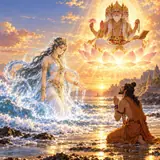
विश्वामित्रं महात्मानं वाक्यं मधुरमब्रुवन् । ब्रह्मर्षे स्वागतं तेऽस्तु तपसा स्म सुतोषिताः ॥ १९ ॥
“If he wishes for the kingdom of the gods, let him be given what is in his mind.” Then all the hosts of gods, led by the Grandsire, spoke sweet words to the great-souled Vishvamitra: “Welcome, brahmarshi; we are well pleased by your austerity.
“यदि वे देवताओं का राज्य भी चाहें, तो जो उनके मन में है वह उन्हें दिया जाए।” तब पितामह को आगे करके देवताओं के सब समूहों ने महात्मा विश्वामित्र से मधुर वचन कहे: “ब्रह्मर्षि, आपका स्वागत है; हम आपके तप से बहुत प्रसन्न हैं।
CommentaryNot scripture “Give him what he wants, even the kingdom of the gods.” The gods come with Brahma: “Welcome, brahmarshi .” The title he has sought for thousands of years.
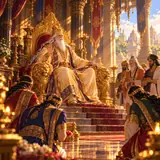
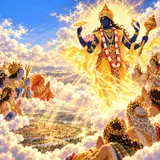
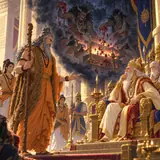
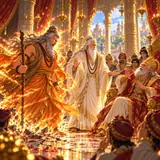
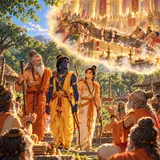
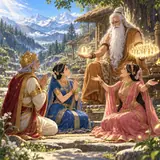
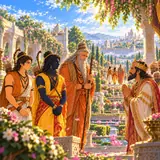
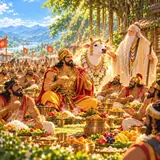
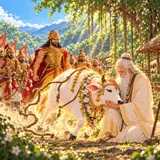
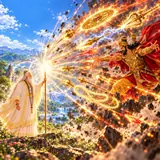
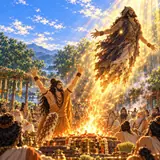
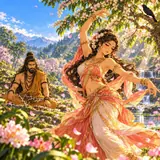
Scene 2 of 3 · The gods hail him as a brahmarshi, and Vasishtha, his old rival, embraces him in friendship.
ब्राह्मण्यं तपसोग्रेण प्राप्तवानसि कौशिक । दीर्घमायुश्च ते ब्रह्मन् ददामि समरुद्गणः ॥ २० ॥
“By your fierce austerity you have attained brahmanahood, Kaushika. And we, with the Maruts, give you long life, brahmana.
“कौशिक, अपने उग्र तप से आपने ब्राह्मणत्व पा लिया है। और ब्राह्मण, मरुतों सहित हम आपको दीर्घायु देते हैं।
CommentaryNot scripture “By your fierce austerity you have attained brahmanahood.” Born a kshatriya, he has become a brahmana by his own effort. This is one of the most important statements in Indian tradition about effort overcoming birth.
Scene 2 of 3 · The gods hail him as a brahmarshi, and Vasishtha, his old rival, embraces him in friendship.
स्वस्ति प्राप्नुहि भद्रं ते गच्छ सौम्य यथासुखम् । पितामहवचः श्रुत्वा सर्वेषां त्रिदिवौकसाम् ॥ २१ ॥
कृत्वा प्रणामं मुदितो व्याजहार महामुनिः । ब्राह्मण्यं यदि मे प्राप्तं दीर्घमायुस्तथैव च ॥ २२ ॥
“Be well, bless you; go as you please, gentle one.” Hearing the Grandsire’s words and those of all the dwellers of heaven, the great sage bowed joyfully and said: “If I have attained brahmanahood, and long life as well,
“कुशल रहिए, आपका कल्याण हो; सौम्य, जहाँ इच्छा हो जाइए।” पितामह और सब स्वर्गवासियों के वचन सुनकर महामुनि ने प्रसन्न होकर प्रणाम किया और कहा: “यदि मैंने ब्राह्मणत्व पा लिया है, और दीर्घायु भी,
CommentaryNot scripture “Go as you please.” Vishvamitra bows joyfully. But he has one more request.
Scene 2 of 3 · The gods hail him as a brahmarshi, and Vasishtha, his old rival, embraces him in friendship.
ॐकारोऽथ वषट्कारो वेदाश्च वरयन्तु माम् । क्षत्रवेदविदां श्रेष्ठो ब्रह्मवेदविदामपि ॥ २३ ॥
ब्रह्मपुत्रो वसिष्ठो मामेवं वदतु देवताः । यद्येवं परमः कामः कृतो यान्तु सुरर्षभाः ॥ २४ ॥
“let om, vashat and the Vedas choose me. And let Vasishtha, son of Brahma, best of those who know the Veda of kshatriyas and of those who know the Veda of Brahman, say so to me, gods. If this highest wish is fulfilled, let the best of gods depart.”
“तो ॐ, वषट् और वेद मुझे वरण करें। और देवताओ, क्षत्रिय-वेद और ब्रह्म-वेद के जानने वालों में श्रेष्ठ ब्रह्मापुत्र वसिष्ठ मुझसे यह कहें। यदि यह परम इच्छा पूरी हो, तो श्रेष्ठ देवता विदा हों।”
CommentaryNot scripture “Let om , vashat and the Vedas accept me. And let Vasishtha say it.” He wants the recognition of the one man whose opinion matters most: his old rival. Without Vasishtha’s word, the title would feel incomplete.
Scene 2 of 3 · The gods hail him as a brahmarshi, and Vasishtha, his old rival, embraces him in friendship.
ततः प्रसादितो देवैर्वसिष्ठो जपतां वरः । सख्यं चकार ब्रह्मर्षिरेवमस्त्विति चाब्रवीत् ॥ २५ ॥
Then Vasishtha, best of those who pray, entreated by the gods, made friendship with him, and the brahmarshi said: “So be it.
तब देवताओं की विनती पर जप करने वालों में श्रेष्ठ वसिष्ठ ने उनसे मित्रता की, और ब्रह्मर्षि ने कहा: “ऐसा ही हो।
CommentaryNot scripture Vasishtha comes, makes friendship with him, and says: “So be it.” The enmity of thousands of years ends in a few words.
Scene 2 of 3 · The gods hail him as a brahmarshi, and Vasishtha, his old rival, embraces him in friendship.
ब्रह्मर्षिस्त्वं न संदेहः सर्वं सम्पद्यते तव । इत्युक्त्वा देवताश्चापि सर्वा जग्मुर्यथागतम् ॥ २६ ॥
“You are a brahmarshi, without doubt; everything is accomplished for you.” Having said this, all the gods went back as they had come.
“आप निःसंदेह ब्रह्मर्षि हैं; आपके लिए सब कुछ सिद्ध है।” यह कहकर सब देवता जैसे आए थे वैसे ही लौट गए।
CommentaryNot scripture “You are a brahmarshi, without doubt.” The man who once called him a disgrace to the kshatriyas now calls him a brahmarshi. Both have been generous.
Scene 2 of 3 · The gods hail him as a brahmarshi, and Vasishtha, his old rival, embraces him in friendship.
विश्वामित्रोऽपि धर्मात्मा लब्ध्वा ब्राह्मण्यमुत्तमम् । पूजयामास ब्रह्मर्षिं वसिष्ठं जपतां वरम् ॥ २७ ॥
And the righteous Vishvamitra, having attained supreme brahmanahood, honoured the brahmarshi Vasishtha, best of those who pray.
और धर्मात्मा विश्वामित्र ने परम ब्राह्मणत्व पाकर जप करने वालों में श्रेष्ठ ब्रह्मर्षि वसिष्ठ का सम्मान किया।
CommentaryNot scripture And Vishvamitra honours Vasishtha. The rivals become friends. This, not the title, is the true end of the story.
Scene 2 of 3 · The gods hail him as a brahmarshi, and Vasishtha, his old rival, embraces him in friendship.
कृतकामो महीं सर्वां चचार तपसि स्थितः । एवं त्वनेन ब्राह्मण्यं प्राप्तं राम महात्मना ॥ २८ ॥
His wish fulfilled, he wandered the whole earth, steadfast in austerity. In this way, Rama, this great soul attained brahmanahood.
अपनी इच्छा पूरी होने पर वे तप में दृढ़ रहकर सारी पृथ्वी पर घूमे। इस प्रकार, राम, इन महात्मा ने ब्राह्मणत्व पाया।
CommentaryNot scripture He wanders the earth, steadfast in austerity. So Vishvamitra became a brahmarshi.
Scene 2 of 3 · The gods hail him as a brahmarshi, and Vasishtha, his old rival, embraces him in friendship.
एष राम मुनिश्रेष्ठ एष विग्रहवांस्तपः । एष धर्मः परो नित्यं वीर्यस्यैष परायणम् ॥ २९ ॥
“This, Rama, is the best of sages; he is austerity in bodily form; he is the highest dharma for ever; he is the final refuge of power.”
“राम, ये मुनियों में श्रेष्ठ हैं; ये शरीरधारी तप हैं; ये सदा के लिए परम धर्म हैं; ये शक्ति का अंतिम आश्रय हैं।”
CommentaryNot scripture Shatananda concludes: “He is austerity in bodily form, the highest dharma, the final refuge of power.” This is the teacher who has been walking beside Rama all along.
Scene 2 of 3 · The gods hail him as a brahmarshi, and Vasishtha, his old rival, embraces him in friendship.
एवमुक्त्वा महातेजा विरराम द्विजोत्तमः । शतानन्दवचः श्रुत्वा रामलक्ष्मणसंनिधौ ॥ ३० ॥
जनकः प्राञ्जलिर्वाक्यमुवाच कुशिकात्मजम् । धन्योऽस्म्यनुगृहीतोऽस्मि यस्य मे मुनिपुंगव ॥ ३१ ॥
Having said this, the radiant best of brahmanas fell silent. Hearing Shatananda’s words, in the presence of Rama and Lakshmana, Janaka, with joined palms, said to the son of Kushika: “I am blessed, I am favoured, foremost of sages,
यह कहकर तेजस्वी ब्राह्मणश्रेष्ठ चुप हो गए। राम और लक्ष्मण के सामने शतानंद के वचन सुनकर जनक ने हाथ जोड़कर कुशिक-पुत्र से कहा: “मुनिश्रेष्ठ, मैं धन्य हूँ, मुझ पर कृपा हुई है,
CommentaryNot scripture Janaka, having heard it all, speaks with joined palms: “I am blessed.”
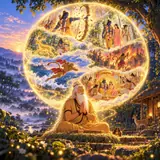
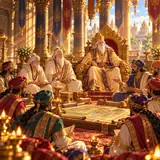
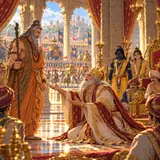
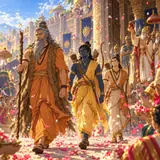
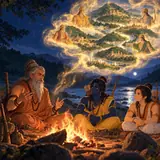
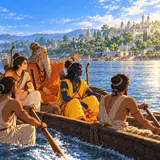
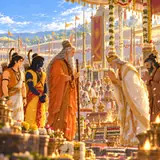
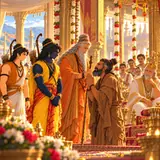
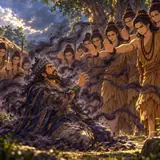
Scene 3 of 3 · At dusk in Mithila, King Janaka bows to the great sage and asks to see him again at dawn.
यज्ञं काकुत्स्थसहितः प्राप्तवानसि कौशिक । पावितोऽहं त्वया ब्रह्मन् दर्शनेन महामुने ॥ ३२ ॥
“since you have come to my sacrifice with the Kakutsthas, Kaushika. I am purified by you, brahmana, by the sight of you, great sage.
“क्योंकि कौशिक, आप काकुत्स्थों के साथ मेरे यज्ञ में आए हैं। ब्राह्मण, महामुनि, आपके दर्शन से मैं पवित्र हो गया।
CommentaryNot scripture “I am purified by the sight of you.” The king of Mithila honours the sage.
Scene 3 of 3 · At dusk in Mithila, King Janaka bows to the great sage and asks to see him again at dawn.
गुणा बहुविधाः प्राप्तास्तव संदर्शनान्मया । विस्तरेण च वै ब्रह्मन् कीर्त्यमानं महत्तपः ॥ ३३ ॥
श्रुतं मया महातेजो रामेण च महात्मना । सदस्यैः प्राप्य च सदः श्रुतास्ते बहवो गुणाः ॥ ३४ ॥
“Many blessings have come to me through seeing you. And your great austerity, told at length, brahmana, I have heard, radiant one, and so has great-souled Rama; the members of the assembly too have heard your many virtues.
“आपके दर्शन से मुझे अनेक आशीर्वाद मिले हैं। और ब्राह्मण, तेजस्वी, आपका विस्तार से कहा गया महान तप मैंने सुना है, और महात्मा राम ने भी; सभा के सदस्यों ने भी आपके अनेक गुण सुने हैं।
CommentaryNot scripture Janaka notes that Rama heard it all too. The young prince now knows who his teacher really is: a man who conquered himself through thousands of years of failure and effort.
Scene 3 of 3 · At dusk in Mithila, King Janaka bows to the great sage and asks to see him again at dawn.
अप्रमेयं तपस्तुभ्यमप्रमेयं च ते बलम् । अप्रमेया गुणाश्चैव नित्यं ते कुशिकात्मज ॥ ३५ ॥
“Immeasurable is your austerity, immeasurable your strength, immeasurable always your virtues, son of Kushika.
“कुशिक-पुत्र, आपका तप अपार है, आपका बल अपार है, आपके गुण सदा अपार हैं।
CommentaryNot scripture “Immeasurable austerity, strength and virtue.”
Scene 3 of 3 · At dusk in Mithila, King Janaka bows to the great sage and asks to see him again at dawn.
तृप्तिराश्चर्यभूतानां कथानां नास्ति मे विभो । कर्मकालो मुनिश्रेष्ठ लम्बते रविमण्डलम् ॥ ३६ ॥
“I have no fill of these wonderful stories, lord. But it is time for the rites, best of sages; the sun’s disc is sinking.
“भगवन, इन अद्भुत कथाओं से मेरा मन नहीं भरता। पर मुनिश्रेष्ठ, कर्मों का समय है; सूर्य का बिंब डूब रहा है।
CommentaryNot scripture “I cannot have enough of these stories. But the sun is setting.” Like Rama on the banks of the Ganga, Janaka has lost himself in the tale.
Scene 3 of 3 · At dusk in Mithila, King Janaka bows to the great sage and asks to see him again at dawn.
श्वः प्रभाते महातेजो द्रष्टुमर्हसि मां पुनः । स्वागतं जपतां श्रेष्ठ मामनुज्ञातुमर्हसि ॥ ३७ ॥
“Tomorrow at dawn, radiant one, please see me again. Welcome, best of those who pray; please give me leave.”
“तेजस्वी, कल सवेरे फिर मुझसे मिलिए। जप करने वालों में श्रेष्ठ, आपका स्वागत है; कृपया मुझे अनुमति दीजिए।”
CommentaryNot scripture “See me tomorrow at dawn.” Tomorrow: the bow.
Scene 3 of 3 · At dusk in Mithila, King Janaka bows to the great sage and asks to see him again at dawn.
एवमुक्तो मुनिवरः प्रशस्य पुरुषर्षभम् । विससर्जाशु जनकं प्रीतं प्रीतमनास्तदा ॥ ३८ ॥
So addressed, the best of sages praised that bull among men, and, glad at heart, quickly dismissed the pleased Janaka.
ऐसा कहे जाने पर मुनिश्रेष्ठ ने उस पुरुषश्रेष्ठ की प्रशंसा की, और प्रसन्न मन से प्रसन्न जनक को जल्दी विदा किया।
CommentaryNot scripture Vishvamitra praises Janaka and lets him go, both content.
Scene 3 of 3 · At dusk in Mithila, King Janaka bows to the great sage and asks to see him again at dawn.
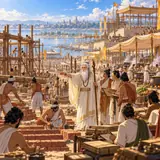
एवमुक्त्वा मुनिश्रेष्ठं वैदेहो मिथिलाधिपः । प्रदक्षिणं चकाराशु सोपाध्यायः सबान्धवः ॥ ३९ ॥
Having said this to the foremost sage, the Videha king, lord of Mithila, with his priests and kin, quickly walked around him in reverence.
मुनिश्रेष्ठ से यह कहकर मिथिला के स्वामी, विदेहराज ने अपने पुरोहितों और संबंधियों के साथ जल्दी उनकी परिक्रमा की।
CommentaryNot scripture Janaka walks around the sage in reverence.
Scene 3 of 3 · At dusk in Mithila, King Janaka bows to the great sage and asks to see him again at dawn.
विश्वामित्रोऽपि धर्मात्मा सहरामः सलक्ष्मणः । स्ववासमभिचक्राम पूज्यमानो महात्मभिः ॥ ४० ॥
And the righteous Vishvamitra, with Rama and Lakshmana, went to his own lodging, honoured by great souls.
और धर्मात्मा विश्वामित्र, महात्माओं से सम्मानित होकर, राम और लक्ष्मण के साथ अपने निवास को चले गए।
CommentaryNot scripture Vishvamitra returns to his lodging with Rama and Lakshmana. The long story of the sage ends, and the story of Rama and Sita is about to begin.
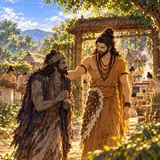
Scene 3 of 3 · At dusk in Mithila, King Janaka bows to the great sage and asks to see him again at dawn.