Bala Kanda · Sarga 16 of 77 · 32 verses
The Divine Payasa
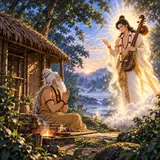
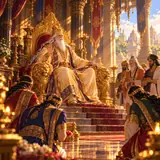
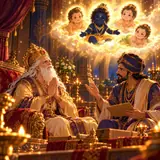
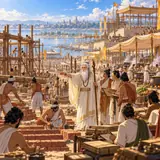
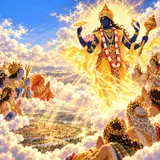
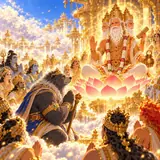
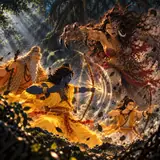
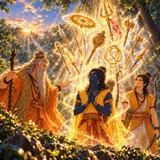
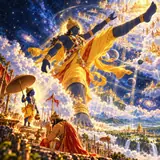
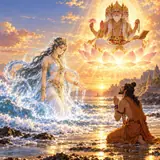
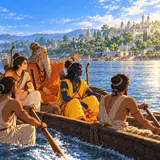
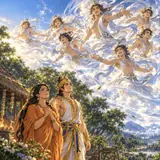
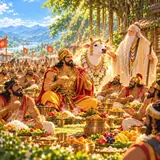
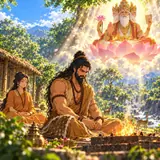
Vishnu, though he already knows, asks the gods how Ravana may be killed, and they repeat it: take human form, since Ravana scorned humans when he won his boon. Vishnu accepts Dasharatha as his father and vanishes.
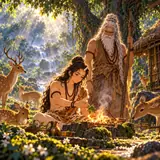
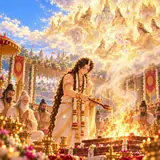
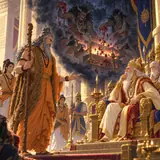
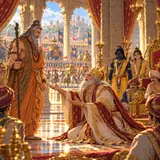
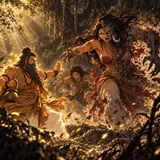
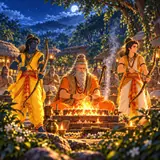
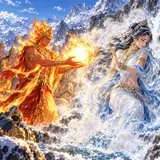
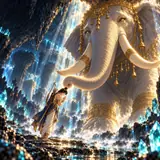
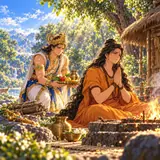
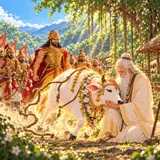
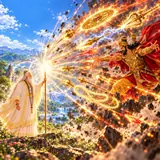
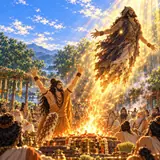
Then from Dasharatha’s sacrificial fire rises a huge, radiant being, dark, in red garments, with a voice like a drum, holding in both arms a great golden vessel with a silver lid, full of divine payasa (sweet milk-rice), carried as tenderly as a beloved wife. He tells the king: “I am a being sent by Prajapati. Give this to your worthy wives to eat, and you will have the sons you sacrifice for.” Dasharatha takes it joyfully, like a poor man finding treasure.
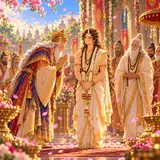
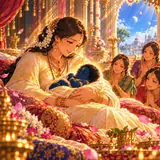
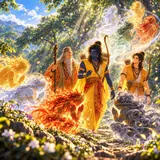
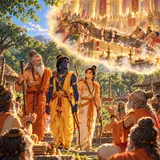
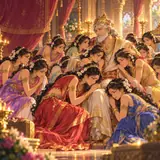
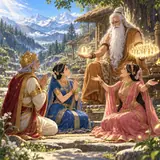
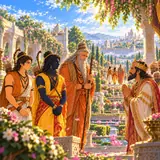
In the inner palace he gives half to Kausalya, half of the rest to Sumitra, half of what remains to Kaikeyi, and, after thinking, the last portion again to Sumitra. The queens, honoured, eat it and soon conceive, glowing like fire and the sun. The king rejoices like Vishnu in heaven.
Press › to begin with verse 1.
ततो नारायणो विष्णुर्नियुक्तः सुरसत्तमैः । जानन्नपि सुरानेवं श्लक्ष्णं वचनमब्रवीत् ॥ १ ॥
Then Narayana Vishnu, appointed by the best of gods, spoke gently to them, though he knew the answer:
तब श्रेष्ठ देवताओं द्वारा नियुक्त नारायण विष्णु ने उत्तर जानते हुए भी उनसे कोमल स्वर में कहा:
Commentary on the whole sarga
The Divine Payasa 1 min read.
Read the commentary CommentaryNot scripture Vishnu asks a question “though he knew the answer” (janann api ). Why ask? So that the gods can say it themselves, and so that the plan is theirs as well as his. A wise leader often asks what he already knows, to let others own the decision.
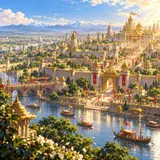
Scene 1 of 3 · Vishnu hears how Ravana can die, chooses Dasharatha as his father, and vanishes from heaven.
उपायः को वधे तस्य राक्षसाधिपतेः सुराः । यमहं तं समास्थाय निहन्यामृषिकण्टकम् ॥ २ ॥
“Gods, what is the way to kill the lord of the rakshasas, by following which I may slay that thorn of the sages?”
“देवताओ, राक्षसों के स्वामी को मारने का उपाय क्या है, जिसे अपनाकर मैं ऋषियों के उस काँटे को मार सकूँ?”
CommentaryNot scripture Vishnu calls Ravana “the thorn of the sages” (rishi-kantaka ). From the start, Ravana’s crime is described in terms of harm to the good and the gentle. The war to come is a war to protect.
Scene 1 of 3 · Vishnu hears how Ravana can die, chooses Dasharatha as his father, and vanishes from heaven.
एवमुक्ताः सुराः सर्वे प्रत्यूचुर्विष्णुमव्ययम् । मानुषं रूपमास्थाय रावणं जहि संयुगे ॥ ३ ॥
So asked, all the gods replied to the imperishable Vishnu: “Take human form and kill Ravana in battle.
ऐसा पूछने पर सब देवताओं ने अविनाशी विष्णु से कहा: “मनुष्य रूप धारण करके युद्ध में रावण को मारिए।
CommentaryNot scripture “Take human form” (manusham rupam asthaya ). The gods say it plainly. God must become man. This is the theology of the avatara in a single phrase.
Scene 1 of 3 · Vishnu hears how Ravana can die, chooses Dasharatha as his father, and vanishes from heaven.
स हि तेपे तपस्तीव्रं दीर्घकालमरिन्दमः । येन तुष्टोऽभवद् ब्रह्मा लोककृल्लोकपूर्वजः ॥ ४ ॥
“That subduer of enemies practised fierce austerity for a long time, by which Brahma, the maker of the worlds, firstborn of the worlds, was pleased.
“शत्रुओं का दमन करने वाले उस राक्षस ने बहुत समय तक कठोर तप किया, जिससे लोकों के रचयिता, लोकों में सबसे पहले जन्मे ब्रह्मा प्रसन्न हुए।
CommentaryNot scripture Ravana won his power by austerity, tapas , practised fiercely for a long time. In this tradition, even a demon can earn great power through discipline. Power is not the same as goodness. What matters is how it is used.
Scene 1 of 3 · Vishnu hears how Ravana can die, chooses Dasharatha as his father, and vanishes from heaven.
संतुष्टः प्रददौ तस्मै राक्षसाय वरं प्रभुः । नानाविधेभ्यो भूतेभ्यो भयं नान्यत्र मानुषात् ॥ ५ ॥
“Pleased, the lord gave that rakshasa a boon: no fear from beings of many kinds, except from man.
“प्रसन्न होकर प्रभु ने उस राक्षस को वर दिया: मनुष्य को छोड़कर अनेक प्रकार के प्राणियों से कोई भय नहीं।
CommentaryNot scripture Brahma gave him freedom from fear of every kind of being, “except from man”. The gods repeat the loophole so we cannot miss it.
Scene 1 of 3 · Vishnu hears how Ravana can die, chooses Dasharatha as his father, and vanishes from heaven.
अवज्ञाताः पुरा तेन वरदाने हि मानवाः । एवं पितामहात् तस्मात् वरदानेन गर्वितः ॥ ६ ॥
उत्सादयति लोकांस्त्रीन् स्त्रियश्चाप्युपकर्षति । तस्मात् तस्य वधो दृष्टो मानुषेभ्यः परंतप ॥ ७ ॥
“For in receiving the boon he once despised men. So, proud of the boon from the Grandsire, he lays waste the three worlds and carries off women too. Therefore his death is seen to come from men, scorcher of enemies.”
“क्योंकि वर पाते समय उसने मनुष्यों का तिरस्कार किया था। इसलिए पितामह के वर के घमंड में वह तीनों लोकों को उजाड़ता है और स्त्रियों का हरण भी करता है। इसलिए, शत्रुओं को तपाने वाले, उसकी मृत्यु मनुष्यों से ही दिखाई देती है।”
CommentaryNot scripture Two crimes are named: he lays waste the three worlds, and he carries off women (striyash chapy apakarshati ). This second crime points straight at the heart of the story: Ravana will carry off Sita. His past already predicts his fate.
Scene 1 of 3 · Vishnu hears how Ravana can die, chooses Dasharatha as his father, and vanishes from heaven.
इत्येतद् वचनं श्रुत्वा सुराणां विष्णुरात्मवान् । पितरं रोचयामास तदा दशरथं नृपम् ॥ ८ ॥
Hearing these words of the gods, the self-possessed Vishnu chose King Dasharatha as his father.
देवताओं के ये वचन सुनकर संयमी विष्णु ने राजा दशरथ को पिता के रूप में चुना।
CommentaryNot scripture Vishnu chooses Dasharatha as his father. The choice falls on a good king who is, at that very moment, praying for a son. Heaven answers a human prayer with its own need.
Scene 1 of 3 · Vishnu hears how Ravana can die, chooses Dasharatha as his father, and vanishes from heaven.
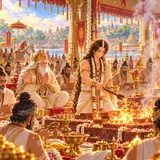
स चाप्यपुत्रो नृपतिस्तस्मिन् काले महाद्युतिः । अयजत् पुत्रियामिष्टिं पुत्रेप्सुररिसूदनः ॥ ९ ॥
And at that time the radiant king, slayer of enemies, being sonless and longing for a son, was performing the offering for sons.
और उसी समय शत्रुओं का नाश करने वाले वे तेजस्वी राजा, जो पुत्रहीन थे और पुत्र चाहते थे, पुत्र के लिए इष्टि कर रहे थे।
CommentaryNot scripture “At that time”: the poem joins the two scenes. In heaven Vishnu decides; on earth Dasharatha is pouring offerings for sons. The two stories become one.
Scene 1 of 3 · Vishnu hears how Ravana can die, chooses Dasharatha as his father, and vanishes from heaven.
स कृत्वा निश्चयं विष्णुरामन्त्र्य च पितामहम् । अन्तर्धानं गतो देवैः पूज्यमानो महर्षिभिः ॥ १० ॥
Having made his resolve and taken leave of the Grandsire, Vishnu vanished, honoured by the gods and great sages.
निश्चय करके और पितामह से विदा लेकर विष्णु देवताओं और महर्षियों से पूजित होकर अंतर्धान हो गए।
CommentaryNot scripture Vishnu vanishes, honoured by gods and sages. He has gone to be born. The next being we meet will come not from heaven but from the fire.
Scene 1 of 3 · Vishnu hears how Ravana can die, chooses Dasharatha as his father, and vanishes from heaven.
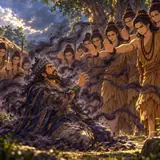
ततो वै यजमानस्य पावकादतुलप्रभम् । प्रादुर्भूतं महद् भूतं महावीर्यं महाबलम् ॥ ११ ॥
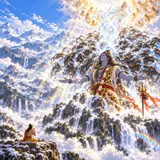
Then from the fire of the sacrificer there appeared a great being of matchless splendour, of great might and great strength,
तब यज्ञ करने वाले की अग्नि से अनुपम तेज वाला, महाबली और महापराक्रमी एक महान पुरुष प्रकट हुआ,
CommentaryNot scripture From the sacrificial fire rises a great being of matchless splendour. The fire, which carried the offerings up to the gods, now carries the gods’ gift down to the king.
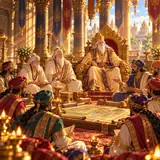
Scene 2 of 3 · From the sacrificial fire rises a radiant being holding a golden bowl of divine payasa.
कृष्णं रक्ताम्बरधरं रक्तास्यं दुन्दुभिस्वनम् । स्निग्धहर्यक्षतनुजश्मश्रुप्रवरमूर्धजम् ॥ १२ ॥
dark, wearing red garments, with a red mouth and a voice like a drum, his body hair, beard and fine head hair glossy like a lion’s,
श्याम वर्ण, लाल वस्त्र पहने, लाल मुख वाला, दुंदुभि जैसे स्वर वाला, सिंह जैसे चमकीले रोम, दाढ़ी और सुंदर केशों वाला,
CommentaryNot scripture Dark-skinned, in red garments, with a voice like a drum and a lion’s glossy hair and beard. The description is vivid and strange: a being of fire and power, both awesome and noble.
Scene 2 of 3 · From the sacrificial fire rises a radiant being holding a golden bowl of divine payasa.
शुभलक्षणसम्पन्नं दिव्याभरणभूषितम् । शैलशृङ्गसमुत्सेधं दृप्तशार्दूलविक्रमम् ॥ १३ ॥
bearing auspicious marks, adorned with divine ornaments, tall as a mountain peak, striding like a proud tiger,
शुभ लक्षणों से युक्त, दिव्य आभूषणों से सजा, पर्वत की चोटी जितना ऊँचा, गर्वीले बाघ जैसी चाल वाला,
CommentaryNot scripture Tall as a mountain peak, striding like a proud tiger, wearing divine ornaments. Valmiki builds the figure line by line. This is the messenger of Prajapati, the lord of creatures.
Scene 2 of 3 · From the sacrificial fire rises a radiant being holding a golden bowl of divine payasa.
दिवाकरसमाकारं दीप्तानलशिखोपमम् । तप्तजाम्बूनदमयीं राजतान्तपरिच्छदाम् ॥ १४ ॥
दिव्यपायससम्पूर्णां पात्रीं पत्नीमिव प्रियाम् । प्रगृह्य विपुलां दोर्भ्यां स्वयं मायामयीमिव ॥ १५ ॥
like the sun in form, like the flame of a blazing fire, holding in his two arms, as he would a beloved wife, a large vessel of burnished gold with a silver lid, full of divine payasa, as if it were made of magic.
सूर्य जैसे रूप वाला, जलती आग की लपट जैसा, अपनी दोनों भुजाओं में, जैसे कोई अपनी प्रिय पत्नी को थामे, चाँदी के ढक्कन वाला तपे सोने का एक बड़ा पात्र लिए, जो दिव्य खीर से भरा था, मानो माया से बना हो।
CommentaryNot scripture He holds a golden vessel with a silver lid, full of divine payasa , a sweet rice and milk pudding. And the tenderness of the image: he holds it “as one holds a beloved wife” (priyam iva ). The gift of children is carried with love.
Scene 2 of 3 · From the sacrificial fire rises a radiant being holding a golden bowl of divine payasa.
समवेक्ष्याब्रवीद् वाक्यमिदं दशरथं नृपम् । प्राजापत्यं नरं विद्धि मामिहाभ्यागतं नृप ॥ १६ ॥
Looking at King Dasharatha, he said: “King, know me as a being from Prajapati, come here.”
राजा दशरथ की ओर देखकर उसने कहा: “राजन, मुझे प्रजापति की ओर से आया हुआ पुरुष जानिए।”
CommentaryNot scripture “Know me as a being from Prajapati.” He introduces himself simply. His message is from the creator.
Scene 2 of 3 · From the sacrificial fire rises a radiant being holding a golden bowl of divine payasa.
ततः परं तदा राजा प्रत्युवाच कृताञ्जलिः । भगवन् स्वागतं तेऽस्तु किमहं करवाणि ते ॥ १७ ॥
Then the king, with joined palms, replied: “Lord, welcome to you. What may I do for you?”
तब राजा ने हाथ जोड़कर उत्तर दिया: “भगवन, आपका स्वागत है। मैं आपके लिए क्या करूँ?”
CommentaryNot scripture Dasharatha’s response is perfect hospitality: joined palms, welcome, “What may I do for you?” Even before a fire-born messenger, the king remembers his manners.
Scene 2 of 3 · From the sacrificial fire rises a radiant being holding a golden bowl of divine payasa.
अथो पुनरिदं वाक्यं प्राजापत्यो नरोऽब्रवीत् । राजन्नर्चयता देवानद्य प्राप्तमिदं त्वया ॥ १८ ॥
Then the being from Prajapati spoke again: “King, worshipping the gods, today you have obtained this.
तब प्रजापति के उस पुरुष ने फिर कहा: “राजन, देवताओं की पूजा करके आज आपने यह पाया है।
CommentaryNot scripture “Today you have obtained this”: the reward of the king’s long worship. The answer to a lifetime’s prayer arrives in a golden bowl.
Scene 2 of 3 · From the sacrificial fire rises a radiant being holding a golden bowl of divine payasa.
इदं तु नरशार्दूल पायसं देवनिर्मितम् । प्रजाकरं गृहाण त्वं धन्यमारोग्यवर्धनम् ॥ १९ ॥
“Tiger among men, take this payasa made by the gods, which gives offspring, brings fortune and increases health.
“पुरुषसिंह, देवताओं की बनाई यह खीर लीजिए, जो संतान देती है, सौभाग्य लाती है और आरोग्य बढ़ाती है।
CommentaryNot scripture The payasa gives offspring, fortune and health. Payasa (kheer) is still the most loved festive sweet in India, offered in temples and cooked for every celebration. Here it is food made by the gods.
Scene 2 of 3 · From the sacrificial fire rises a radiant being holding a golden bowl of divine payasa.
भार्याणामनुरूपाणामश्नीतेति प्रयच्छ वै । तासु त्वं लप्स्यसे पुत्रान् यदर्थं यजसे नृप ॥ २० ॥
“Give it to your worthy wives, saying ‘Eat.’ In them, king, you will obtain the sons for whom you are sacrificing.”
“इसे अपनी योग्य पत्नियों को देकर कहिए, ‘खाओ।’ राजन, उनसे आपको वे पुत्र मिलेंगे जिनके लिए आप यज्ञ कर रहे हैं।”
CommentaryNot scripture “Give it to your worthy wives.” The sons will come through the queens. The divine gift needs human mothers.
Scene 2 of 3 · From the sacrificial fire rises a radiant being holding a golden bowl of divine payasa.
तथेति नृपतिः प्रीतः शिरसा प्रतिगृह्य ताम् । पात्रीं देवान्नसम्पूर्णां देवदत्तां हिरण्मयीम् ॥ २१ ॥
अभिवाद्य च तद्भूतमद्भुतं प्रियदर्शनम् । मुदा परमया युक्तश्चकाराभिप्रदक्षिणम् ॥ २२ ॥
“So be it,” said the king, delighted, and receiving on his head that golden vessel, given by the gods and full of the food of the gods, he saluted that wonderful, lovely being and, in the greatest joy, walked around him in reverence.
“ऐसा ही हो,” प्रसन्न होकर राजा ने कहा, और देवताओं द्वारा दिए गए, देवताओं के अन्न से भरे उस सोने के पात्र को सिर पर लेकर उन्होंने उस अद्भुत, सुंदर पुरुष को प्रणाम किया और परम आनंद से उसकी परिक्रमा की।
CommentaryNot scripture The king places the vessel on his head, the gesture of greatest reverence, and walks around the being in respect. His joy is complete.
Scene 2 of 3 · From the sacrificial fire rises a radiant being holding a golden bowl of divine payasa.
ततो दशरथः प्राप्य पायसं देवनिर्मितम् । बभूव परमप्रीतः प्राप्य वित्तमिवाधनः ॥ २३ ॥
Then Dasharatha, having received the payasa made by the gods, was overjoyed, like a poor man who has found wealth.
तब देवताओं की बनाई खीर पाकर दशरथ वैसे ही अत्यंत प्रसन्न हुए, जैसे कोई निर्धन धन पाकर।
CommentaryNot scripture A homely simile: the king is happy “like a poor man who has found wealth”. Valmiki often brings the grandest moments down to ordinary feelings everyone knows.
Scene 2 of 3 · From the sacrificial fire rises a radiant being holding a golden bowl of divine payasa.
ततस्तदद्भुतप्रख्यं भूतं परमभास्वरम् । संवर्तयित्वा तत् कर्म तत्रैवान्तरधीयत ॥ २४ ॥
Then that wondrous, supremely radiant being, having completed his task, vanished on the spot.
तब वह अद्भुत, परम तेजस्वी पुरुष अपना कार्य पूरा करके वहीं अंतर्धान हो गया।
CommentaryNot scripture The being vanishes. His work is done. Divine messengers in the Ramayana come, act, and go without lingering.
Scene 2 of 3 · From the sacrificial fire rises a radiant being holding a golden bowl of divine payasa.
हर्षरश्मिभिरुद्द्योतं तस्यान्तःपुरमाबभौ । शारदस्याभिरामस्य चन्द्रस्येव नभोंऽशुभिः ॥ २५ ॥
His inner palace shone, lit with rays of joy, as the sky shines with the beams of the lovely autumn moon.
उनका अंतःपुर आनंद की किरणों से ऐसे जगमगा उठा, जैसे शरद ऋतु के सुंदर चंद्रमा की किरणों से आकाश।
CommentaryNot scripture The inner palace shines with joy “as the sky shines in the beams of the autumn moon”. Autumn in India brings the clearest skies and brightest moon of the year. The palace that knew long sorrow is now full of light.
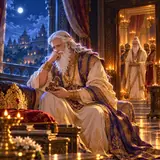
Scene 3 of 3 · Dasharatha shares the payasa among Kausalya, Sumitra and Kaikeyi, and the palace glows like an autumn night.
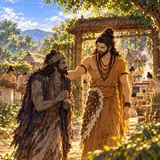
सोऽन्तःपुरं प्रविश्यैव कौसल्यामिदमब्रवीत् । पायसं प्रतिगृह्णीष्व पुत्रीयं त्विदमात्मनः ॥ २६ ॥
Entering the inner palace, he said to Kausalya: “Take this payasa; it is for a son for you.”
अंतःपुर में प्रवेश करके उन्होंने कौसल्या से कहा: “यह खीर लो; यह तुम्हारे पुत्र के लिए है।”
CommentaryNot scripture Dasharatha goes first to Kausalya, the senior queen: “This is for a son for you.” The gift is given in order and with care.
Scene 3 of 3 · Dasharatha shares the payasa among Kausalya, Sumitra and Kaikeyi, and the palace glows like an autumn night.
कौसल्यायै नरपतिः पायसार्धं ददौ तदा । अर्धादर्धं ददौ चापि सुमित्रायै नराधिपः ॥ २७ ॥
The lord of men gave half the payasa to Kausalya, and the lord of men gave half of the half to Sumitra.
मनुष्यों के स्वामी ने आधी खीर कौसल्या को दी, और आधे का आधा सुमित्रा को दिया।
CommentaryNot scripture Half the payasa to Kausalya, a quarter to Sumitra. Tradition reads the portions as shares of Vishnu’s divine nature in each son.
Scene 3 of 3 · Dasharatha shares the payasa among Kausalya, Sumitra and Kaikeyi, and the palace glows like an autumn night.
कैकेय्यै चावशिष्टार्धं ददौ पुत्रार्थकारणात् । प्रददौ चावशिष्टार्धं पायसस्यामृतोपमम् ॥ २८ ॥
अनुचिन्त्य सुमित्रायै पुनरेव महामतिः । एवं तासां ददौ राजा भार्याणां पायसं पृथक् ॥ २९ ॥
To Kaikeyi he gave half of what was left, for the sake of a son; and the remaining half of the nectar-like payasa the wise one, after reflecting, gave again to Sumitra. So the king gave the payasa to his wives separately.
जो बचा उसका आधा उन्होंने पुत्र के लिए कैकेयी को दिया; और अमृत जैसी खीर का बचा हुआ आधा भाग बुद्धिमान राजा ने सोच-विचार कर फिर से सुमित्रा को दे दिया। इस प्रकार राजा ने अपनी पत्नियों को अलग-अलग खीर दी।
CommentaryNot scripture An eighth to Kaikeyi, and the last eighth to Sumitra again, “after reflecting”. Because Sumitra receives two portions, she will bear twins: Lakshmana and Shatrughna. The arithmetic of the payasa explains the four brothers.
Scene 3 of 3 · Dasharatha shares the payasa among Kausalya, Sumitra and Kaikeyi, and the palace glows like an autumn night.
ताश्चैवं पायसं प्राप्य नरेन्द्रस्योत्तमस्त्रियः । सम्मानं मेनिरे सर्वाः प्रहर्षोदितचेतसः ॥ ३० ॥
The king’s noble wives, receiving the payasa so, all thought themselves honoured, their hearts rising with joy.
इस प्रकार खीर पाकर राजा की उत्तम पत्नियों ने अपने को सम्मानित माना, और उनके हृदय आनंद से भर उठे।
CommentaryNot scripture Each queen feels honoured. There is no jealousy here. The scene is one of shared joy, very different from the bitterness that will divide this household years later.
Scene 3 of 3 · Dasharatha shares the payasa among Kausalya, Sumitra and Kaikeyi, and the palace glows like an autumn night.
ततस्तु ताः प्राश्य तमुत्तमस्त्रियो महीपतेरुत्तमपायसं पृथक् । हुताशनादित्यसमानतेजसो- ऽचिरेण गर्भान् प्रतिपेदिरे तदा ॥ ३१ ॥
Then those noble women, having each eaten the king’s excellent payasa, glowing like fire and the sun, soon conceived.
फिर उन उत्तम स्त्रियों ने राजा की उत्तम खीर खाकर, अग्नि और सूर्य की तरह दमकते हुए, जल्दी ही गर्भ धारण किया।
CommentaryNot scripture The queens glow “like fire and the sun”, and soon conceive. The divine light of the fire-born being passes into them.
Scene 3 of 3 · Dasharatha shares the payasa among Kausalya, Sumitra and Kaikeyi, and the palace glows like an autumn night.
ततस्तु राजा प्रतिवीक्ष्य ताः स्त्रियः प्ररूढगर्भाः प्रतिलब्धमानसः । बभूव हृष्टस्त्रिदिवे यथा हरिः सुरेन्द्रसिद्धर्षिगणाभिपूजितः ॥ ३२ ॥
Then the king, seeing his wives with child, his heart’s wish fulfilled, rejoiced, as Hari rejoices in heaven, honoured by the lord of the gods, the siddhas and the hosts of sages.
तब अपनी पत्नियों को गर्भवती देखकर, मनोकामना पूरी होने पर राजा वैसे ही आनंदित हुए, जैसे स्वर्ग में देवराज, सिद्धों और ऋषियों से पूजित होकर हरि आनंदित होते हैं।
CommentaryNot scripture The king rejoices “as Hari rejoices in heaven”. Hari is Vishnu himself. Dasharatha’s joy is compared to the joy of the very god who is about to become his son. The longing that began in sarga 8 is fulfilled.
Scene 3 of 3 · Dasharatha shares the payasa among Kausalya, Sumitra and Kaikeyi, and the palace glows like an autumn night.