Bala Kanda · Sarga 48 of 77 · 33 verses
Ahalya’s Story
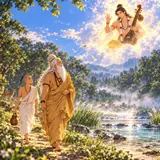
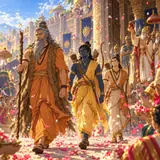
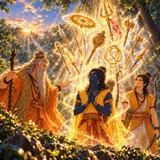
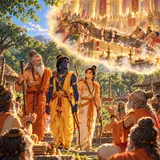
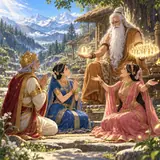
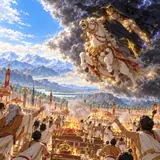
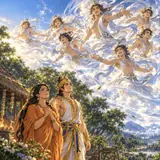
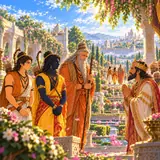
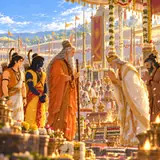
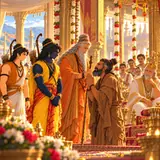
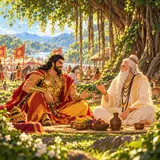
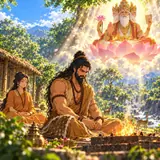
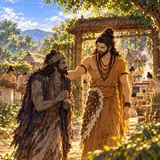
King Sumati asks who the two youths are: like gods, like the Ashvins, armed with swords, quivers and bows, alike in build and bearing, walking on foot on a hard road. Vishvamitra tells him everything, and the astonished king honours Dasharatha’s sons as guests. After one night they go on to Mithila, Janaka’s lovely city, praised by all the sages.
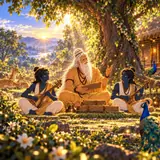
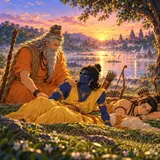
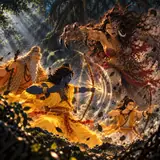
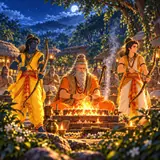
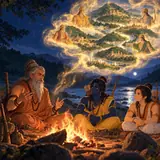
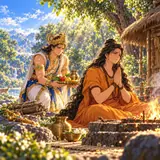
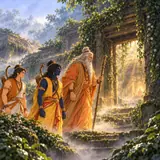
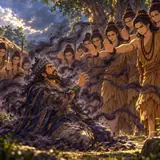
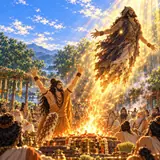
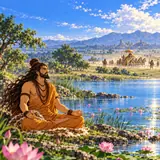
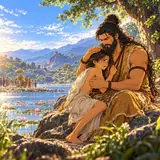
In a grove near Mithila Rama sees an old, empty, lovely hermitage and asks whose it was. Vishvamitra tells him: it belonged to the great sage Gautama, who practised austerity here with his wife Ahalya. Once, when Gautama was away, Indra came disguised as the sage and asked Ahalya to lie with him. She recognised him as the king of the gods and, out of curiosity, agreed; afterwards she told him to leave quickly and protect them both from Gautama. As Indra slipped out, nervous, he met Gautama returning from his bath, blazing with power, holding firewood and kusha grass. The sage saw through the disguise and cursed him: “You took my form to do what should not be done; you will be made fruitless,” and Indra’s testicles fell to the ground. He cursed Ahalya too: to live here for many thousands of years, living on air, fasting, lying in ashes, invisible to all beings, until Rama, son of Dasharatha, comes to this forest. “By welcoming him as a guest you will be purified, free of greed and delusion, and regain your own form in my presence.” Then Gautama left for the Himalaya.
Press › to begin with verse 1.
पृष्ट्वा तु कुशलं तत्र परस्परसमागमे । कथान्ते सुमतिर्वाक्यं व्याजहार महामुनिम् ॥ १ ॥
After they had asked after each other’s welfare at their meeting, at the end of their talk Sumati said to the great sage:
मिलने पर एक-दूसरे का कुशल पूछ लेने के बाद, बातचीत के अंत में सुमति ने महामुनि से कहा:
Commentary on the whole sarga
Ahalya’s Story 1 min read.
Read the commentary CommentaryNot scripture King Sumati, after the courtesies, turns to what he really wants to know: who are these two young men? Everyone the princes meet notices them.
Scene 1 of 2 · King Sumati marvels at the two young princes, as alike as the sun and moon, and the travellers reach Mithila.
इमौ कुमारौ भद्रं ते देवतुल्यपराक्रमौ । गजसिंहगती वीरौ शार्दूलवृषभोपमौ ॥ २ ॥
“These two youths, bless you, of valour like the gods’, heroes walking like elephants and lions, like tigers and bulls,
“आपका कल्याण हो, ये दोनों युवक देवताओं जैसे पराक्रमी, हाथियों और सिंहों जैसी चाल वाले, बाघों और बैलों जैसे वीर,
CommentaryNot scripture Sumati describes them with animal similes: elephants and lions in their walk, tigers and bulls in their courage. The epic way of praising heroes is to compare them with the noblest creatures.
Scene 1 of 2 · King Sumati marvels at the two young princes, as alike as the sun and moon, and the travellers reach Mithila.
पद्मपत्रविशालाक्षौ खड्गतूणिधनुर्धरौ । अश्विनाविव रूपेण समुपस्थितयौवनौ ॥ ३ ॥
“with large eyes like lotus petals, bearing swords, quivers and bows, like the Ashvins in beauty, just come into youth,
“कमल की पंखुड़ियों जैसी बड़ी आँखों वाले, तलवार, तरकश और धनुष धारण किए, सौंदर्य में अश्विनीकुमारों जैसे, अभी-अभी युवावस्था में आए,
CommentaryNot scripture Lotus-petal eyes, swords and bows, beautiful as the Ashvins, “just come into youth”. They are teenagers, armed and radiant.
Scene 1 of 2 · King Sumati marvels at the two young princes, as alike as the sun and moon, and the travellers reach Mithila.
यदृच्छयैव गां प्राप्तौ देवलोकादिवामरौ । कथं पद्भ्यामिह प्राप्तौ किमर्थं कस्य वा मुने ॥ ४ ॥
“as if two immortals had come to the earth from the world of the gods by chance: how have they come here on foot, sage, for what purpose, and whose sons are they?
“मानो दो अमर देवलोक से संयोग से पृथ्वी पर आ गए हों: मुनि, ये पैदल यहाँ कैसे आए, किस प्रयोजन से, और किसके पुत्र हैं?
CommentaryNot scripture “As if two immortals had come down to earth by chance.” Sumati senses something divine in them. And practically: “How did they come here on foot?” Princes usually ride.
Scene 1 of 2 · King Sumati marvels at the two young princes, as alike as the sun and moon, and the travellers reach Mithila.
भूषयन्ताविमं देशं चन्द्रसूर्याविवाम्बरम् । परस्परेण सदृशौ प्रमाणेङ्गितचेष्टितैः ॥ ५ ॥
“They adorn this land as the sun and moon adorn the sky, alike to each other in build, gesture and movement.
“ये इस भूमि को वैसे ही शोभित करते हैं जैसे सूर्य और चंद्रमा आकाश को, शरीर, चेष्टा और चाल में एक-दूसरे जैसे।
CommentaryNot scripture “Like the sun and moon in the sky”: the two brothers, one dark, one fair, alike in movement. The simile fits Rama and Lakshmana perfectly.
Scene 1 of 2 · King Sumati marvels at the two young princes, as alike as the sun and moon, and the travellers reach Mithila.
किमर्थं च नरश्रेष्ठौ सम्प्राप्तौ दुर्गमे पथि । वरायुधधरौ वीरौ श्रोतुमिच्छामि तत्त्वतः ॥ ६ ॥
“Why have these two best of men, heroes bearing fine weapons, come along this hard road? I wish to hear it truly.”
“हथियार धारण किए ये दोनों श्रेष्ठ पुरुष, वीर, इस कठिन मार्ग से क्यों आए हैं? मैं यह सच-सच सुनना चाहता हूँ।”
CommentaryNot scripture Why did they come by such a hard road? The king’s curiosity is our curiosity: the princes are far from home.
Scene 1 of 2 · King Sumati marvels at the two young princes, as alike as the sun and moon, and the travellers reach Mithila.
तस्य तद् वचनं श्रुत्वा यथावृत्तं न्यवेदयत् । सिद्धाश्रमनिवासं च राक्षसानां वधं यथा । विश्वामित्रवचः श्रुत्वा राजा परमविस्मितः ॥ ७ ॥
Hearing his words, he told him what had happened: their stay at Siddhashrama and how the rakshasas were killed. Hearing Vishvamitra’s words, the king was filled with wonder.
उनके वचन सुनकर विश्वामित्र ने उन्हें जो हुआ था वह बताया: सिद्धाश्रम में उनका रहना और राक्षसों का वध। विश्वामित्र के वचन सुनकर राजा विस्मय से भर गए।
CommentaryNot scripture Vishvamitra tells of Siddhashrama and the killing of the rakshasas. The news of Rama’s first victory begins to spread.
Scene 1 of 2 · King Sumati marvels at the two young princes, as alike as the sun and moon, and the travellers reach Mithila.
अतिथी परमं प्राप्तौ पुत्रौ दशरथस्य तौ । पूजयामास विधिवत् सत्कारार्हौ महाबलौ ॥ ८ ॥
He honoured as guests, according to rule, those two sons of Dasharatha who had arrived, mighty and worthy of honour.
उन्होंने आए हुए, बलवान और सम्मान के योग्य दशरथ के उन दोनों पुत्रों का विधि से अतिथि-सत्कार किया।
CommentaryNot scripture Sumati honours them “as guests, according to rule”. The sons of Dasharatha are received as royalty.
Scene 1 of 2 · King Sumati marvels at the two young princes, as alike as the sun and moon, and the travellers reach Mithila.
ततः परमसत्कारं सुमतेः प्राप्य राघवौ । उष्य तत्र निशामेकां जग्मतुर्मिथिलां ततः ॥ ९ ॥
Then, having received great honour from Sumati, the two Raghavas stayed there one night and then went on to Mithila.
फिर सुमति से बड़ा सम्मान पाकर दोनों राघव वहाँ एक रात रहे और फिर मिथिला की ओर चले।
CommentaryNot scripture One night in Vishala, then on to Mithila. The destination is near.
Scene 1 of 2 · King Sumati marvels at the two young princes, as alike as the sun and moon, and the travellers reach Mithila.
तां दृष्ट्वा मुनयः सर्वे जनकस्य पुरीं शुभाम् । साधु साध्विति शंसन्तो मिथिलां समपूजयन् ॥ १० ॥
Seeing Janaka’s lovely city, all the sages praised Mithila, saying “Wonderful, wonderful!”
जनक की सुंदर नगरी को देखकर सब मुनियों ने “अद्भुत, अद्भुत!” कहकर मिथिला की प्रशंसा की।
CommentaryNot scripture The sages praise Mithila: “Wonderful!” Janaka’s city is famous for its learning; the Upanishads remember Janaka as a king who debated with sages.
Scene 1 of 2 · King Sumati marvels at the two young princes, as alike as the sun and moon, and the travellers reach Mithila.
मिथिलोपवने तत्र आश्रमं दृश्य राघवः । पुराणं निर्जनं रम्यं पप्रच्छ मुनिपुङ्गवम् ॥ ११ ॥
There, in a grove near Mithila, Raghava saw an ancient, deserted, lovely hermitage and asked the best of sages:
वहाँ मिथिला के पास एक उपवन में राघव ने एक पुराना, सूना, सुंदर आश्रम देखा और मुनिश्रेष्ठ से पूछा:
CommentaryNot scripture Near Mithila, a deserted hermitage. Rama notices it: old, lovely, empty. Something about it draws his eye.
Scene 2 of 2 · By a deserted hermitage, the tale of Gautama: returning from his bath, the sage finds Indra in his own form at his door.
इदमाश्रमसंकाशं किं न्विदं मुनिवर्जितम् । श्रोतुमिच्छामि भगवन् कस्यायं पूर्व आश्रमः ॥ १२ ॥
“This looks like a hermitage; why is it empty of sages? I wish to hear, lord: whose hermitage was this once?”
“यह आश्रम जैसा लगता है; यह मुनियों से खाली क्यों है? भगवन, मैं सुनना चाहता हूँ: यह आश्रम पहले किसका था?”
CommentaryNot scripture “Why is it empty? Whose was it?” Rama’s question leads to one of the most discussed stories in the Ramayana.
Scene 2 of 2 · By a deserted hermitage, the tale of Gautama: returning from his bath, the sage finds Indra in his own form at his door.
तच्छ्रुत्वा राघवेणोक्तं वाक्यं वाक्यविशारदः । प्रत्युवाच महातेजा विश्वामित्रो महामुनिः ॥ १३ ॥
Hearing these words spoken by Raghava, the radiant great sage Vishvamitra, skilled in speech, replied:
राघव के कहे ये वचन सुनकर बोलने में कुशल, तेजस्वी महामुनि विश्वामित्र ने उत्तर दिया:
CommentaryNot scripture Vishvamitra, “skilled in speech”, begins. This story needs care in the telling.
Scene 2 of 2 · By a deserted hermitage, the tale of Gautama: returning from his bath, the sage finds Indra in his own form at his door.
हन्त ते कथयिष्यामि शृणु तत्त्वेन राघव । यस्यैतदाश्रमपदं शप्तं कोपान्महात्मनः ॥ १४ ॥
“I will tell you; listen truly, Raghava, whose hermitage this is, cursed in anger by a great-souled one.
“राघव, मैं तुम्हें बताता हूँ; सच-सच सुनो कि यह आश्रम किसका है, जिसे एक महात्मा ने क्रोध में शाप दिया।
CommentaryNot scripture “Cursed in anger by a great-souled one.” The hermitage carries a curse. Its emptiness is a wound.
Scene 2 of 2 · By a deserted hermitage, the tale of Gautama: returning from his bath, the sage finds Indra in his own form at his door.
गौतमस्य नरश्रेष्ठ पूर्वमासीन्महात्मनः । आश्रमो दिव्यसंकाशः सुरैरपि सुपूजितः ॥ १५ ॥
“This was once the hermitage of the great-souled Gautama, best of men, heavenly to see, honoured even by the gods.
“यह पहले महात्मा गौतम का आश्रम था, पुरुषश्रेष्ठ, स्वर्ग जैसा सुंदर, देवताओं से भी पूजित।
CommentaryNot scripture It belonged to Gautama, a great sage, “honoured even by the gods”. (This is not Gautama the Buddha, but an ancient Vedic seer.)
Scene 2 of 2 · By a deserted hermitage, the tale of Gautama: returning from his bath, the sage finds Indra in his own form at his door.
स चात्र तप आतिष्ठदहल्यासहितः पुरा । वर्षपूगान्यनेकानि राजपुत्र महायशः ॥ १६ ॥
“Here long ago he practised austerity with Ahalya for many years, glorious prince.
“यशस्वी राजकुमार, बहुत पहले यहाँ उन्होंने अहल्या के साथ अनेक वर्षों तक तप किया।
CommentaryNot scripture Gautama and his wife Ahalya practised austerity here together for many years. A life of shared discipline.
Scene 2 of 2 · By a deserted hermitage, the tale of Gautama: returning from his bath, the sage finds Indra in his own form at his door.
तस्यान्तरं विदित्वा च सहस्राक्षः शचीपतिः । मुनिवेषधरो भूत्वा अहल्यामिदमब्रवीत् ॥ १७ ॥
“Knowing his absence, the thousand-eyed lord of Shachi took the guise of a sage and said to Ahalya:
“उनकी अनुपस्थिति जानकर शची के स्वामी सहस्र नेत्रों वाले इंद्र ने मुनि का वेश धारण करके अहल्या से कहा:
CommentaryNot scripture When Gautama is away, Indra comes disguised as him. Indra again: the god who stole Sagara’s horse and betrayed Diti.
Scene 2 of 2 · By a deserted hermitage, the tale of Gautama: returning from his bath, the sage finds Indra in his own form at his door.
ऋतुकालं प्रतीक्षन्ते नार्थिनः सुसमाहिते । संगमं त्वहमिच्छामि त्वया सह सुमध्यमे ॥ १८ ॥
“’Those who desire do not wait for the proper season, you who are well composed. I want to be with you, slender-waisted one.’
“’सुंदर अंगों वाली, कामना करने वाले उचित ऋतु की प्रतीक्षा नहीं करते। पतली कमर वाली, मैं तुम्हारे साथ रहना चाहता हूँ।’
CommentaryNot scripture Indra’s words are direct: desire does not wait for the proper time. The king of the gods speaks as a seducer.
Scene 2 of 2 · By a deserted hermitage, the tale of Gautama: returning from his bath, the sage finds Indra in his own form at his door.
मुनिवेषं सहस्राक्षं विज्ञाय रघुनन्दन । मतिं चकार दुर्मेधा देवराजकुतूहलात् ॥ १९ ॥
“Recognising the thousand-eyed one in the sage’s guise, delight of the Raghus, the foolish woman agreed, out of curiosity about the king of the gods.
“रघुनंदन, मुनि के वेश में सहस्र नेत्रों वाले इंद्र को पहचानकर भी उस नासमझ स्त्री ने देवराज के प्रति उत्सुकता के कारण सहमति दे दी।
CommentaryNot scripture This verse is important and much debated. In Valmiki’s text, Ahalya recognises Indra and consents “out of curiosity”. Later retellings, such as the Adhyatma Ramayana and Tulsidas’s Ramcharitmanas , make her an innocent victim of deception. This edition translates Valmiki as he wrote.
Scene 2 of 2 · By a deserted hermitage, the tale of Gautama: returning from his bath, the sage finds Indra in his own form at his door.
अथाब्रवीत् सुरश्रेष्ठं कृतार्थेनान्तरात्मना । कृतार्थास्मि सुरश्रेष्ठ गच्छ शीघ्रमितः प्रभो ॥ २० ॥
“Then, her desire fulfilled, she said to the best of gods: ‘I am satisfied, best of gods. Go quickly from here, lord.
“फिर अपनी इच्छा पूरी होने पर उसने देवश्रेष्ठ से कहा: ‘देवश्रेष्ठ, मैं संतुष्ट हूँ। प्रभु, यहाँ से जल्दी जाइए।
CommentaryNot scripture “Go quickly.” Ahalya is afraid of discovery.
Scene 2 of 2 · By a deserted hermitage, the tale of Gautama: returning from his bath, the sage finds Indra in his own form at his door.
आत्मानं मां च देवेश सर्वथा रक्ष गौतमात् । इन्द्रस्तु प्रहसन् वाक्यमहल्यामिदमब्रवीत् ॥ २१ ॥
“’Lord of gods, protect yourself and me in every way from Gautama.’ Indra, laughing, said to Ahalya:
“’देवेश्वर, गौतम से अपनी और मेरी हर तरह से रक्षा कीजिए।’ इंद्र ने हँसते हुए अहल्या से कहा:
CommentaryNot scripture “Protect yourself and me from Gautama.” Indra laughs. His carelessness contrasts with her fear.
Scene 2 of 2 · By a deserted hermitage, the tale of Gautama: returning from his bath, the sage finds Indra in his own form at his door.
सुश्रोणि परितुष्टोऽस्मि गमिष्यामि यथागतम् । एवं संगम्य तु तदा निश्चक्रामोटजात् ततः ॥ २२ ॥
“’Lovely-hipped one, I am content; I will go as I came.’ Having been with her, he came out of the hut.
“’सुंदरी, मैं संतुष्ट हूँ; जैसे आया था वैसे ही जाऊँगा।’ उसके साथ रहकर वह कुटी से बाहर निकला।
CommentaryNot scripture Indra leaves the hut. But he has stayed too long.
Scene 2 of 2 · By a deserted hermitage, the tale of Gautama: returning from his bath, the sage finds Indra in his own form at his door.
स सम्भ्रमात् त्वरन् राम शङ्कितो गौतमं प्रति । गौतमं स ददर्शाथ प्रविशन्तं महामुनिम् ॥ २३ ॥
“Hurrying in alarm, Rama, fearful of Gautama, he then saw the great sage Gautama coming in,
“राम, गौतम के डर से घबराकर जल्दी करते हुए उसने तभी महामुनि गौतम को भीतर आते देखा,
CommentaryNot scripture He sees Gautama returning. The god is terrified of the sage.
Scene 2 of 2 · By a deserted hermitage, the tale of Gautama: returning from his bath, the sage finds Indra in his own form at his door.
देवदानवदुर्धर्षं तपोबलसमन्वितम् । तीर्थोदकपरिक्लिन्नं दीप्यमानमिवानलम् ॥ २४ ॥
“unassailable by gods and danavas, full of the power of austerity, wet with the water of the sacred ford, blazing like fire,
“देवताओं और दानवों के लिए अजेय, तप की शक्ति से भरे, तीर्थ के जल से भीगे, अग्नि की तरह दमकते,
CommentaryNot scripture Gautama comes from bathing at the holy ford, wet, blazing like fire with the power of his austerity. Unassailable by gods or demons. A sage’s power can exceed a god’s.
Scene 2 of 2 · By a deserted hermitage, the tale of Gautama: returning from his bath, the sage finds Indra in his own form at his door.
गृहीतसमिधं तत्र सकुशं मुनिपुंगवम् । दृष्ट्वा सुरपतिस्त्रस्तो विषण्णवदनोऽभवत् ॥ २५ ॥
“holding firewood and kusha grass, that foremost sage. Seeing him, the lord of the gods was terrified, and his face fell.
“समिधा और कुश लिए उन मुनिश्रेष्ठ को देखकर देवराज भयभीत हो गए, और उनका मुख उतर गया।
CommentaryNot scripture Gautama carries firewood and kusha grass for his rites. He is returning to ordinary holy work. Indra’s face falls.
Scene 2 of 2 · By a deserted hermitage, the tale of Gautama: returning from his bath, the sage finds Indra in his own form at his door.
अथ दृष्ट्वा सहस्राक्षं मुनिवेषधरं मुनिः । दुर्वृत्तं वृत्तसम्पन्नो रोषाद् वचनमब्रवीत् ॥ २६ ॥
“Then the sage, rich in good conduct, seeing the thousand-eyed one of bad conduct in a sage’s guise, spoke in anger:
“तब सदाचार के धनी मुनि ने मुनि के वेश में दुराचारी सहस्र नेत्रों वाले को देखकर क्रोध में कहा:
CommentaryNot scripture Gautama sees Indra in a sage’s disguise, wearing his own form, and speaks in anger.
Scene 2 of 2 · By a deserted hermitage, the tale of Gautama: returning from his bath, the sage finds Indra in his own form at his door.
मम रूपं समास्थाय कृतवानसि दुर्मते । अकर्तव्यमिदं यस्माद् विफलस्त्वं भविष्यसि ॥ २७ ॥
“’Wicked one, you took my form and did this thing that should not be done; therefore you will become fruitless.’
“’दुष्ट, तूने मेरा रूप धारण करके यह न करने योग्य काम किया है; इसलिए तू निष्फल (वृषणहीन) हो जाएगा।’
CommentaryNot scripture “You took my form and did what should not be done.” The curse fits the crime: Indra will lose his manhood.
Scene 2 of 2 · By a deserted hermitage, the tale of Gautama: returning from his bath, the sage finds Indra in his own form at his door.
गौतमेनैवमुक्तस्य सुरोषेण महात्मना । पेततुर्वृषणौ भूमौ सहस्राक्षस्य तत्क्षणात् ॥ २८ ॥
“As the great-souled Gautama said this in great anger, the thousand-eyed one’s testicles fell to the ground at that very moment.
“जैसे ही महात्मा गौतम ने बड़े क्रोध में यह कहा, उसी क्षण सहस्र नेत्रों वाले के अंडकोष धरती पर गिर पड़े।
CommentaryNot scripture The curse takes effect at once. The king of the gods is humiliated. The next sarga tells how the gods repair him with a ram’s parts, a story told with dark humour.
Scene 2 of 2 · By a deserted hermitage, the tale of Gautama: returning from his bath, the sage finds Indra in his own form at his door.
तथा शप्त्वा च वै शक्रं भार्यामपि च शप्तवान् । इह वर्षसहस्राणि बहूनि निवसिष्यसि ॥ २९ ॥
“Having cursed Shakra, he cursed his wife too: ‘Here you will live for many thousands of years,
“इंद्र को शाप देकर उन्होंने अपनी पत्नी को भी शाप दिया: ‘तुम यहाँ हज़ारों वर्षों तक रहोगी,
CommentaryNot scripture Then Gautama curses Ahalya: thousands of years in this hermitage.
Scene 2 of 2 · By a deserted hermitage, the tale of Gautama: returning from his bath, the sage finds Indra in his own form at his door.
वातभक्षा निराहारा तप्यन्ती भस्मशायिनी । अदृश्या सर्वभूतानामाश्रमेऽस्मिन् वसिष्यसि ॥ ३० ॥
“’living on air, without food, practising austerity, lying in ashes, invisible to all beings: you will live in this hermitage.
“’वायु पर जीवित रहकर, बिना भोजन के, तप करते हुए, राख पर लेटी हुई, सब प्राणियों के लिए अदृश्य: तुम इसी आश्रम में रहोगी।
CommentaryNot scripture Living on air, without food, lying in ashes, invisible to all. Her punishment is a life of severe austerity, unseen. Notice: in Valmiki, Ahalya is not turned to stone. That image comes from later tellings.
Scene 2 of 2 · By a deserted hermitage, the tale of Gautama: returning from his bath, the sage finds Indra in his own form at his door.
यदा त्वेतद् वनं घोरं रामो दशरथात्मजः । आगमिष्यति दुर्धर्षस्तदा पूता भविष्यसि ॥ ३१ ॥
“’When Rama, the unassailable son of Dasharatha, comes to this dreadful forest, then you will be purified.
“’जब दशरथ के अजेय पुत्र राम इस भयानक वन में आएँगे, तब तुम पवित्र हो जाओगी।
CommentaryNot scripture But the curse contains its own end: when Rama comes, she will be purified. Even in anger, the sage builds in a path to grace.
Scene 2 of 2 · By a deserted hermitage, the tale of Gautama: returning from his bath, the sage finds Indra in his own form at his door.
तस्यातिथ्येन दुर्वृत्ते लोभमोहविवर्जिता । मत्सकाशं मुदा युक्ता स्वं वपुर्धारयिष्यसि ॥ ३२ ॥
“’By offering him hospitality, woman of bad conduct, freed from greed and delusion, you will regain your own body with joy in my presence.’
“’दुराचारिणी, उनका आतिथ्य करके, लोभ और मोह से मुक्त होकर, तुम आनंद से मेरे पास अपना शरीर फिर पा लोगी।’
CommentaryNot scripture By offering hospitality to Rama, she will be freed and return to Gautama with joy. Her redemption will come through the simplest of sacred acts: welcoming a guest.
Scene 2 of 2 · By a deserted hermitage, the tale of Gautama: returning from his bath, the sage finds Indra in his own form at his door.
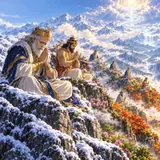
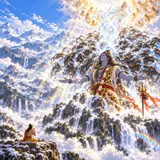
एवमुक्त्वा महातेजा गौतमो दुष्टचारिणीम् । इममाश्रममुत्सृज्य सिद्धचारणसेविते । हिमवच्छिखरे रम्ये तपस्तेपे महातपाः ॥ ३३ ॥
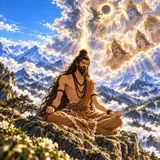
“Having said this to the one who had done wrong, the radiant Gautama of great austerity left this hermitage and practised austerity on a lovely peak of the Himalaya, frequented by siddhas and charanas.”
“जिसने अपराध किया था उससे यह कहकर महातपस्वी तेजस्वी गौतम इस आश्रम को छोड़कर सिद्धों और चारणों से सेवित हिमालय की एक सुंदर चोटी पर तप करने लगे।”
CommentaryNot scripture Gautama leaves for the Himalaya. The hermitage stands empty, with Ahalya hidden in it, waiting. And Rama has just arrived at its gate.
Scene 2 of 2 · By a deserted hermitage, the tale of Gautama: returning from his bath, the sage finds Indra in his own form at his door.