Bala Kanda · Sarga 63 of 77 · 26 verses
Menaka
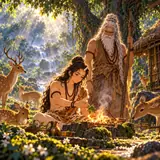
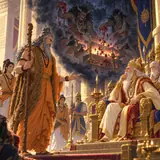
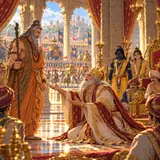
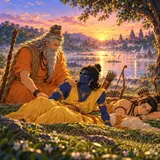
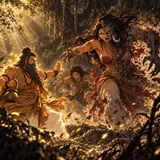
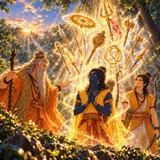
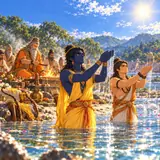
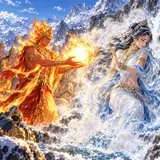
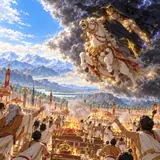
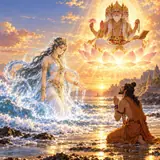
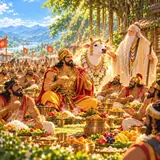
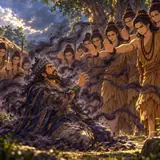
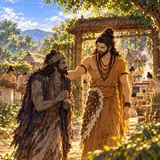
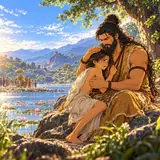
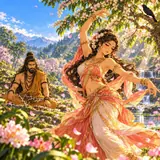
After a thousand years Brahma comes and declares Vishvamitra a rishi, a sage, by his own good deeds, and leaves. Vishvamitra resumes his austerity. Then the great apsaras Menaka comes to bathe at Pushkara, matchless in beauty, like lightning in a cloud. Overcome by desire, Vishvamitra invites her to live in his hermitage, and she stays. Ten years pass in happiness, like a single day and night.
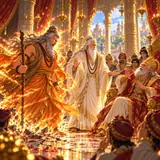
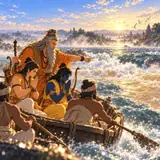
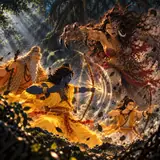
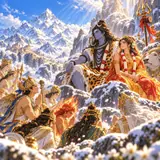
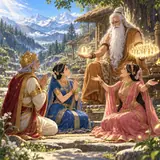
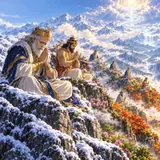
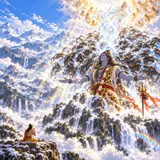
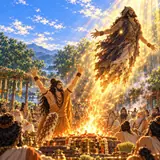
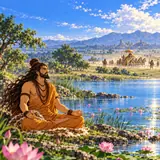
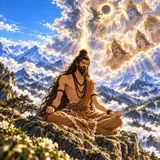
Then he comes to himself, ashamed, sorrowful, angry: “This was all the gods’ doing, to steal my austerity. Ten years have passed as if they were a day and a night; overcome by desire and delusion I met this obstacle.” He sees Menaka trembling with fear, palms joined, and dismisses her gently. He goes north to the bank of the Kaushiki, his sister-river, resolved to conquer desire, and practises terrible austerity for a thousand years. The gods ask Brahma to grant him the title of maharshi, great sage. Brahma does so, but when Vishvamitra asks whether that means he has conquered his senses and become a brahmarshi, Brahma answers: “Not yet have you conquered your senses. Strive on.” Vishvamitra then practises with arms raised, without support, living on air, amid five fires in summer, open to the sky in the rains, lying in water in winter, day and night, for another thousand years. Alarmed, Indra calls the apsaras Rambha and gives her an order that is for his own good and against Kaushika’s.
Press › to begin with verse 1.
पूर्णे वर्षसहस्रे तु व्रतस्नातं महामुनिम् । अभ्यगच्छन् सुराः सर्वे तपः फलचिकीर्षवः ॥ १ ॥
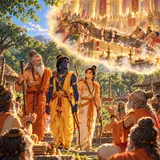
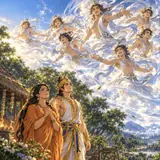
When a full thousand years were complete, all the gods came to the great sage, who had bathed at the end of his vow, wishing to give the fruit of his austerity.
जब पूरे हज़ार वर्ष पूरे हुए, तब व्रत के अंत में स्नान कर चुके महामुनि के पास उनके तप का फल देने की इच्छा से सब देवता आए।
Commentary on the whole sarga
Read the commentary CommentaryNot scripture After a thousand more years, the gods come to give him the fruit of his austerity. Each stage of his journey is marked by a visit from heaven.
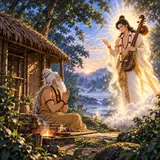
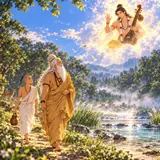
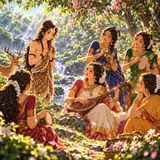
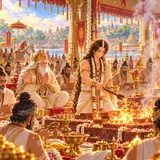
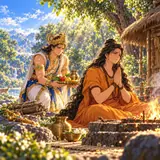
Scene 1 of 2 · The apsaras Menaka bathes in the lakes of Pushkara, and the sage’s long austerity is broken for ten years.
अब्रवीत् सुमहातेजा ब्रह्मा सुरुचिरं वचः । ऋषिस्त्वमसि भद्रं ते स्वार्जितैः कर्मभिः शुभैः ॥ २ ॥
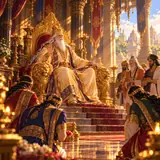
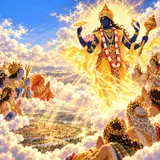
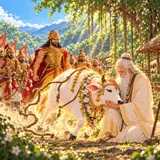
The radiant Brahma spoke lovely words: “You are a rishi, bless you, by your own good deeds.”
तेजस्वी ब्रह्मा ने सुंदर वचन कहे: “तुम्हारा कल्याण हो, अपने शुभ कर्मों से तुम ऋषि हो।”
CommentaryNot scripture “You are a rishi , a seer.” A higher title than royal sage. Progress, step by step.
Scene 1 of 2 · The apsaras Menaka bathes in the lakes of Pushkara, and the sage’s long austerity is broken for ten years.
तमेवमुक्त्वा देवेशस्त्रिदिवं पुनरभ्यगात् । विश्वामित्रो महातेजा भूयस्तेपे महत् तपः ॥ ३ ॥
Having said this, the lord of the gods returned to heaven. The radiant Vishvamitra practised great austerity again.
यह कहकर देवताओं के स्वामी स्वर्ग लौट गए। तेजस्वी विश्वामित्र ने फिर से महान तप किया।
CommentaryNot scripture Brahma leaves, and Vishvamitra returns to austerity. He is still not satisfied.
Scene 1 of 2 · The apsaras Menaka bathes in the lakes of Pushkara, and the sage’s long austerity is broken for ten years.
ततः कालेन महता मेनका परमाप्सराः । पुष्करेषु नरश्रेष्ठ स्नातुं समुपचक्रमे ॥ ४ ॥
Then, after a long time, Menaka, the supreme apsaras, came to bathe in the lakes of Pushkara, best of men.
फिर बहुत समय बाद श्रेष्ठ अप्सरा मेनका पुष्कर के सरोवरों में स्नान करने आई, पुरुषश्रेष्ठ।
CommentaryNot scripture Then Menaka, the most famous of the apsarases, comes to bathe at Pushkara.
Scene 1 of 2 · The apsaras Menaka bathes in the lakes of Pushkara, and the sage’s long austerity is broken for ten years.
तां ददर्श महातेजा मेनकां कुशिकात्मजः । रूपेणाप्रतिमां तत्र विद्युतं जलदे यथा ॥ ५ ॥
The radiant son of Kushika saw Menaka there, unmatched in beauty, like lightning in a cloud.
तेजस्वी कुशिक-पुत्र ने वहाँ अनुपम सौंदर्य वाली मेनका को बादल में बिजली की तरह देखा।
CommentaryNot scripture He sees her “like lightning in a cloud”. A sudden, dazzling beauty in the midst of discipline.
Scene 1 of 2 · The apsaras Menaka bathes in the lakes of Pushkara, and the sage’s long austerity is broken for ten years.
कन्दर्पदर्पवशगो मुनिस्तामिदमब्रवीत् । अप्सरः स्वागतं तेऽस्तु वस चेह ममाश्रमे ॥ ६ ॥
Under the sway of Kandarpa’s pride, the sage said to her: “Welcome to you, apsaras; live here in my hermitage.
कंदर्प (काम) के दर्प के वश में होकर मुनि ने उससे कहा: “अप्सरा, तुम्हारा स्वागत है; मेरे आश्रम में रहो।
CommentaryNot scripture “Under the sway of Kandarpa’s pride” (Kama, god of love), the sage invites her to stay. The ascetic who conquered kings is conquered by love.
Scene 1 of 2 · The apsaras Menaka bathes in the lakes of Pushkara, and the sage’s long austerity is broken for ten years.
अनुगृह्णीष्व भद्रं ते मदनेन विमोहितम् । इत्युक्ता सा वरारोहा तत्र वासमथाकरोत् ॥ ७ ॥
“Show me favour, bless you; I am bewildered by love.” So addressed, the lovely woman made her dwelling there.
“तुम्हारा कल्याण हो, मुझ पर कृपा करो; मैं प्रेम से मोहित हूँ।” ऐसा कहे जाने पर वह सुंदरी वहीं रहने लगी।
CommentaryNot scripture “I am bewildered by love.” He admits it plainly. She stays.
Scene 1 of 2 · The apsaras Menaka bathes in the lakes of Pushkara, and the sage’s long austerity is broken for ten years.
तपसो हि महाविघ्नो विश्वामित्रमुपागमत् । तस्यां वसन्त्यां वर्षाणि पञ्च पञ्च च राघव ॥ ८ ॥
विश्वामित्राश्रमे सौम्ये सुखेन व्यतिचक्रमुः । अथ काले गते तस्मिन् विश्वामित्रो महामुनिः ॥ ९ ॥
A great obstacle to his austerity had come upon Vishvamitra. While she lived there, Raghava, ten years passed happily in Vishvamitra’s pleasant hermitage. Then, when that time had passed, the great sage Vishvamitra
विश्वामित्र के तप में एक बड़ी बाधा आ गई थी। जब वह वहाँ रही, तब राघव, विश्वामित्र के सुंदर आश्रम में दस वर्ष सुख से बीत गए। फिर जब वह समय बीत गया, तब महामुनि विश्वामित्र
CommentaryNot scripture Ten years pass “happily”. Valmiki does not condemn the happiness; he simply notes it was an obstacle to austerity. (In the Mahabharata, their daughter is Shakuntala, mother of King Bharata, from whom India’s name Bharata comes.)
Scene 1 of 2 · The apsaras Menaka bathes in the lakes of Pushkara, and the sage’s long austerity is broken for ten years.
सव्रीड इव संवृत्तश्चिन्ताशोकपरायणः । बुद्धिर्मुनेः समुत्पन्ना सामर्षा रघुनन्दन ॥ १० ॥
became as if ashamed, given to brooding and grief. An angry thought arose in the sage, delight of the Raghus:
मानो लज्जित हो गए, चिंता और शोक में डूब गए। रघुनंदन, मुनि के मन में एक क्रोध भरा विचार उठा:
CommentaryNot scripture When the ten years are over, he is ashamed and grieved.
Scene 1 of 2 · The apsaras Menaka bathes in the lakes of Pushkara, and the sage’s long austerity is broken for ten years.
सर्वं सुराणां कर्मैतत् तपोऽपहरणं महत् । अहोरात्रापदेशेन गताः संवत्सरा दश ॥ ११ ॥
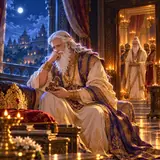
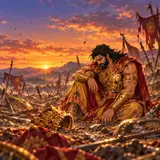
“All this is the gods’ doing, a great theft of my austerity. Ten years have gone by as if they were a single day and night.
“यह सब देवताओं का काम है, मेरे तप की एक बड़ी चोरी। दस वर्ष ऐसे बीत गए मानो एक ही दिन-रात हो।
CommentaryNot scripture “This is the gods’ doing, a theft of my austerity. Ten years passed like one day.” He blames the gods, and he is partly right: other tellings say Indra sent Menaka. But he also sees his own weakness.
Scene 1 of 2 · The apsaras Menaka bathes in the lakes of Pushkara, and the sage’s long austerity is broken for ten years.
काममोहाभिभूतस्य विघ्नोऽयं प्रत्युपस्थितः । स निःश्वसन् मुनिवरः पश्चात्तापेन दुःखितः ॥ १२ ॥
भीतामप्सरसं दृष्ट्वा वेपन्तीं प्राञ्जलिं स्थिताम् । मेनकां मधुरैर्वाक्यैर्विसृज्य कुशिकात्मजः ॥ १३ ॥
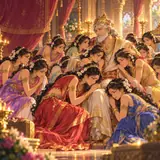
“This obstacle came to me, overcome by desire and delusion.” Sighing, tormented by remorse, the best of sages saw the apsaras Menaka standing afraid and trembling, with joined palms, and the son of Kushika sent her away with sweet words.
“काम और मोह से अभिभूत मुझ पर यह बाधा आई।” आहें भरते हुए, पश्चात्ताप से पीड़ित मुनिश्रेष्ठ ने अप्सरा मेनका को डरी हुई, काँपती हुई, हाथ जोड़े खड़ी देखा, और कुशिक-पुत्र ने उसे मधुर वचनों से विदा कर दिया।
CommentaryNot scripture “Overcome by desire and delusion.” He takes responsibility. And Menaka stands before him trembling, afraid of his curse. This time he does not curse. He sends her away “with sweet words”. For the first time, Vishvamitra masters his anger. This is real progress.
Scene 1 of 2 · The apsaras Menaka bathes in the lakes of Pushkara, and the sage’s long austerity is broken for ten years.
उत्तरं पर्वतं राम विश्वामित्रो जगाम ह । स कृत्वा नैष्ठिकीं बुद्धिं जेतुकामो महायशाः ॥ १४ ॥
कौशिकीतीरमासाद्य तपस्तेपे दुरासदम् । तस्य वर्षसहस्राणि घोरं तप उपासतः ॥ १५ ॥
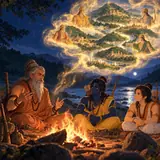
Vishvamitra went to the northern mountain, Rama. Having made a resolve for lifelong discipline, wishing to conquer desire, the glorious one reached the bank of the Kaushiki and practised unassailable austerity. As he practised terrible austerity there for a thousand years,
राम, विश्वामित्र उत्तरी पर्वत पर गए। जीवन भर के नियम का संकल्प करके, काम को जीतने की इच्छा से वे यशस्वी कौशिकी के तट पर पहुँचे और अजेय तप करने लगे। जब वे वहाँ हज़ार वर्ष तक भयानक तप करते रहे,
CommentaryNot scripture He goes north to the Kaushiki river, where his sister flows, and vows lifelong discipline “to conquer desire”. He has learned what he must overcome.
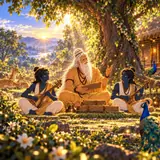
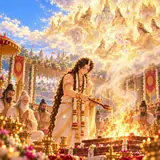
Scene 2 of 2 · By the Kaushiki river, Vishvamitra stands with arms raised through summer fires and winter waters, striving to conquer himself.
उत्तरे पर्वते राम देवतानामभूद् भयम् । आमन्त्रयन् समागम्य सर्वे सर्षिगणाः सुराः ॥ १६ ॥
महर्षिशब्दं लभतां साध्वयं कुशिकात्मजः । देवतानां वचः श्रुत्वा सर्वलोकपितामहः ॥ १७ ॥
on the northern mountain, Rama, fear arose among the gods. The gods with the hosts of sages came together and agreed: “Let this son of Kushika rightly receive the title of great sage (maharshi).” Hearing the gods’ words, the Grandsire of all worlds
उत्तरी पर्वत पर, राम, तब देवताओं में भय उत्पन्न हुआ। ऋषियों के समूहों सहित देवताओं ने मिलकर निश्चय किया: “इस कुशिक-पुत्र को उचित रूप से महर्षि की उपाधि मिले।” देवताओं के वचन सुनकर सब लोकों के पितामह ने
CommentaryNot scripture A thousand years of terrible austerity. The gods are afraid. They agree to give him the title maharshi , great sage.
Scene 2 of 2 · By the Kaushiki river, Vishvamitra stands with arms raised through summer fires and winter waters, striving to conquer himself.
अब्रवीन्मधुरं वाक्यं विश्वामित्रं तपोधनम् । महर्षे स्वागतं वत्स तपसोग्रेण तोषितः ॥ १८ ॥
महत्त्वमृषिमुख्यत्वं ददामि तव कौशिक । ब्रह्मणस्तु वचः श्रुत्वा विश्वामित्रस्तपोधनः ॥ १९ ॥
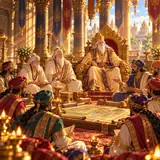
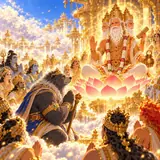
spoke sweet words to Vishvamitra, rich in austerity: “Welcome, great sage, child; I am pleased by your fierce austerity. I give you greatness and the foremost rank among sages, Kaushika.” Hearing Brahma’s words, Vishvamitra, rich in austerity,
तप के धनी विश्वामित्र से मधुर वचन कहे: “महर्षि, वत्स, तुम्हारा स्वागत है; मैं तुम्हारे उग्र तप से प्रसन्न हूँ। कौशिक, मैं तुम्हें महत्ता और ऋषियों में श्रेष्ठ पद देता हूँ।” ब्रह्मा के वचन सुनकर तप के धनी विश्वामित्र ने
CommentaryNot scripture Brahma greets him warmly: “Welcome, child. I give you the foremost rank among sages.” Vishvamitra has climbed higher.
Scene 2 of 2 · By the Kaushiki river, Vishvamitra stands with arms raised through summer fires and winter waters, striving to conquer himself.
प्राञ्जलिः प्रणतो भूत्वा प्रत्युवाच पितामहम् । ब्रह्मर्षिशब्दमतुलं स्वार्जितैः कर्मभिः शुभैः ॥ २० ॥
यदि मे भगवन्नाह ततोऽहं विजितेन्द्रियः । तमुवाच ततो ब्रह्मा न तावत् त्वं जितेन्द्रियः ॥ २१ ॥
bowed with joined palms and replied to the Grandsire: “If the lord calls me by the matchless title of brahmarshi, won by my own good deeds, then I have conquered my senses.” Then Brahma said to him: “Not yet have you conquered your senses.
हाथ जोड़कर प्रणाम किया और पितामह को उत्तर दिया: “यदि भगवान मुझे अपने शुभ कर्मों से अर्जित ब्रह्मर्षि की अनुपम उपाधि से पुकारें, तो मैंने अपनी इंद्रियों को जीत लिया है।” तब ब्रह्मा ने उनसे कहा: “अभी तुमने अपनी इंद्रियाँ नहीं जीतीं।
CommentaryNot scripture Vishvamitra asks: “If I am a brahmarshi, then I have conquered my senses.” Brahma answers: “Not yet have you conquered your senses.” Honest, and kind. The title he wants requires a mastery he does not yet have.
Scene 2 of 2 · By the Kaushiki river, Vishvamitra stands with arms raised through summer fires and winter waters, striving to conquer himself.
यतस्व मुनिशार्दूल इत्युक्त्वा त्रिदिवं गतः । विप्रस्थितेषु देवेषु विश्वामित्रो महामुनिः ॥ २२ ॥
ऊर्ध्वबाहुर्निरालम्बो वायुभक्षस्तपश्चरन् । घर्मे पञ्चतपा भूत्वा वर्षास्वाकाशसंश्रयः ॥ २३ ॥
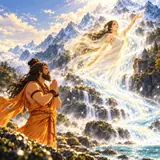
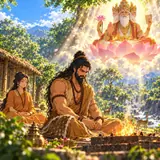
“Strive, tiger among sages.” Saying this, he went to heaven. When the gods had departed, the great sage Vishvamitra practised austerity with his arms raised, without support, living on air; in the hot season between five fires, in the rains under the open sky,
“मुनिसिंह, प्रयत्न करो।” यह कहकर वे स्वर्ग चले गए। देवताओं के चले जाने पर महामुनि विश्वामित्र भुजाएँ उठाए, बिना किसी सहारे के, वायु पर जीते हुए तप करने लगे; गर्मी में पंचाग्नि के बीच, वर्षा में खुले आकाश के नीचे,
CommentaryNot scripture “Strive.” Brahma leaves. And Vishvamitra strives: arms raised, without support, living on air, between five fires in summer, under open sky in the rains.
Scene 2 of 2 · By the Kaushiki river, Vishvamitra stands with arms raised through summer fires and winter waters, striving to conquer himself.
शिशिरे सलिलेशायी रात्र्यहानि तपोधनः । एवं वर्षसहस्रं हि तपो घोरमुपागमत् ॥ २४ ॥
in winter lying in water, night and day, rich in austerity. So for a thousand years he undertook terrible austerity.
सर्दी में दिन-रात जल में लेटे हुए, तप के धनी। इस प्रकार उन्होंने हज़ार वर्ष तक भयानक तप किया।
CommentaryNot scripture Lying in water day and night through winter. A thousand years. Austerity of every season. His determination is astonishing.
Scene 2 of 2 · By the Kaushiki river, Vishvamitra stands with arms raised through summer fires and winter waters, striving to conquer himself.
तस्मिन् संतप्यमाने तु विश्वामित्रे महामुनौ । संतापः सुमहानासीत् सुराणां वासवस्य च ॥ २५ ॥
As the great sage Vishvamitra was burning in austerity, great distress came upon the gods and on Vasava.
जब महामुनि विश्वामित्र तप में जल रहे थे, तब देवताओं और इंद्र पर बड़ा संकट आ गया।
CommentaryNot scripture The gods and Indra are distressed. His power is growing beyond their control.
Scene 2 of 2 · By the Kaushiki river, Vishvamitra stands with arms raised through summer fires and winter waters, striving to conquer himself.
रम्भामप्सरसं शक्रः सर्वैः सह मरुद्गणैः । उवाचात्महितं वाक्यमहितं कौशिकस्य च ॥ २६ ॥
Shakra, with all the hosts of Maruts, spoke to the apsaras Rambha words that were for his own good and against Kaushika’s.
मरुतों के सब समूहों के साथ इंद्र ने अप्सरा रंभा से ऐसे वचन कहे जो उनके अपने हित में और कौशिक के अहित में थे।
CommentaryNot scripture Indra sends the apsaras Rambha, “for his own good and against Kaushika’s”. Indra’s fear of human spiritual power drives him again. The next sarga shows whether Vishvamitra has learned.
Scene 2 of 2 · By the Kaushiki river, Vishvamitra stands with arms raised through summer fires and winter waters, striving to conquer himself.