Bala Kanda · Sarga 57 of 77 · 22 verses
Rajarshi; Trishanku’s Wish
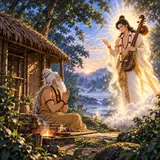
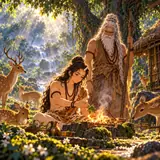
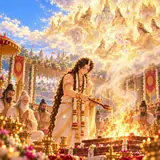
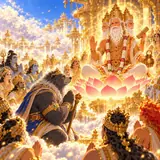
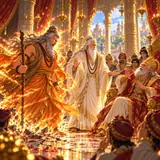
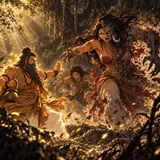
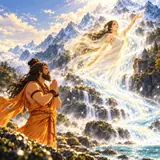
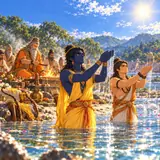
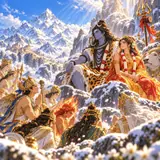
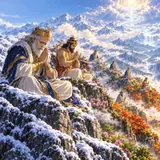
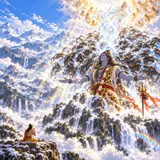
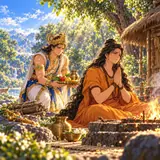
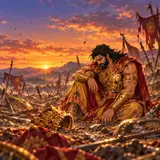
Burning at heart, remembering his defeat and sighing again and again, having made an enemy of the great soul, Vishvamitra goes south with his queen and practises terrible austerity, living on fruit and roots. Sons are born to him there: Havishpanda, Madhushpanda, Dridhanetra and Maharatha. After a thousand years Brahma appears: “By this austerity you have won the worlds of royal sages; we know you as a rajarshi.” Vishvamitra, hanging his head in shame and grief, thinks his austerity fruitless: after all that, the gods call him only a royal sage. He begins again.
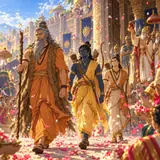
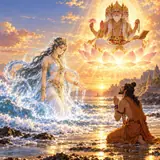
At that time the truthful, self-controlled Ikshvaku king Trishanku resolves to perform a sacrifice and go to heaven in his own body. Vasishtha tells him it is impossible. Trishanku goes south to Vasishtha’s hundred sons, who are practising austerity there. Head bowed in shame, palms joined, he asks them for refuge: “Your father refused me. I bow to you, his sons, ascetics; perform the sacrifice for me so that I may reach the world of the gods in my body. The family priest is the highest refuge of the Ikshvakus; after him, you are my gods.”
Press › to begin with verse 1.
ततः संतप्तहृदयः स्मरन्निग्रहमात्मनः । विनिःश्वस्य विनिःश्वस्य कृतवैरो महात्मना ॥ १ ॥
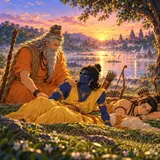
स दक्षिणां दिशं गत्वा महिष्या सह राघव । तताप परमं घोरं विश्वामित्रो महातपाः ॥ २ ॥
Then, burning at heart, remembering his own defeat, sighing and sighing, having made an enemy of the great soul, Vishvamitra of great austerity went to the southern direction with his queen, Raghava, and practised supreme, terrible austerity.
तब हृदय में जलते हुए, अपनी पराजय को याद करते हुए, बार-बार आहें भरते हुए, उन महात्मा से वैर बाँधकर महातपस्वी विश्वामित्र अपनी रानी के साथ दक्षिण दिशा में गए, राघव, और परम, भयानक तप करने लगे।
Commentary on the whole sarga
Rajarshi; Trishanku’s Wish 1 min read.
Read the commentary CommentaryNot scripture Vishvamitra goes south with his queen, “burning at heart”, sighing, having made Vasishtha his enemy. His austerity begins in resentment. The poem is honest: a great transformation can start from a wounded ego.
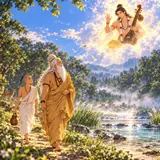
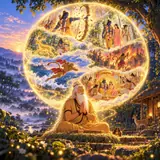
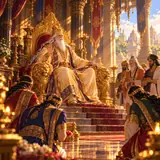
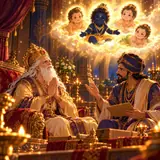
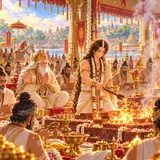
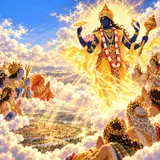
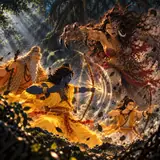
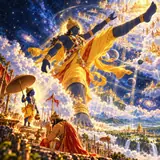
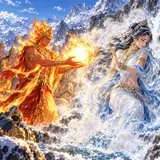
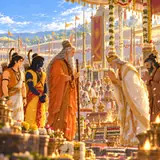
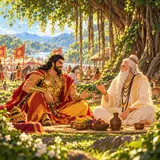
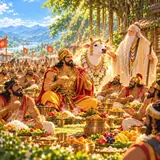
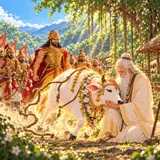
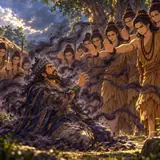
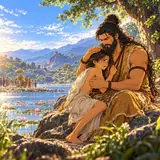
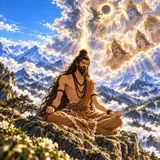
Scene 1 of 2 · After a thousand years of austerity in the south, Brahma names Vishvamitra a royal sage, and he lowers his face, unsatisfied.
फलमूलाशनो दान्तश्चचार परमं तपः । अथास्य जज्ञिरे पुत्राः सत्यधर्मपरायणाः ॥ ३ ॥
हविष्पन्दो मधुष्पन्दो दृढनेत्रो महारथः । पूर्णे वर्षसहस्रे तु ब्रह्मा लोकपितामहः ॥ ४ ॥
Living on fruit and roots, self-restrained, he practised the highest austerity. Then sons were born to him, devoted to truth and dharma: Havishpanda, Madhushpanda, Dridhanetra and Maharatha. When a full thousand years had passed, Brahma, the grandsire of the worlds,
फल और मूल पर जीते हुए, संयमी होकर उन्होंने परम तप किया। तब उनके सत्य और धर्म में लगे पुत्र हुए: हविष्पंद, मधुष्पंद, दृढ़नेत्र और महारथ। जब पूरे हज़ार वर्ष बीत गए, तब लोकों के पितामह ब्रह्मा ने
CommentaryNot scripture Fruits and roots, self-restraint, the highest austerity. Sons are born to him, “devoted to truth and dharma”. A thousand years pass. Brahma appears.
Scene 1 of 2 · After a thousand years of austerity in the south, Brahma names Vishvamitra a royal sage, and he lowers his face, unsatisfied.
अब्रवीन्मधुरं वाक्यं विश्वामित्रं तपोधनम् । जिता राजर्षिलोकास्ते तपसा कुशिकात्मज ॥ ५ ॥
spoke sweet words to Vishvamitra, rich in austerity: “By your austerity you have conquered the worlds of the royal sages, son of Kushika.
तप के धनी विश्वामित्र से मधुर वचन कहे: “कुशिक-पुत्र, अपने तप से तुमने राजर्षियों के लोकों को जीत लिया है।
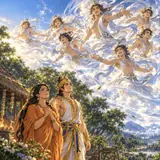
CommentaryNot scripture “You have conquered the worlds of the royal sages.” Brahma gives him a title: rajarshi , royal sage.
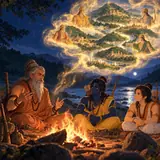
Scene 1 of 2 · After a thousand years of austerity in the south, Brahma names Vishvamitra a royal sage, and he lowers his face, unsatisfied.
अनेन तपसा त्वां हि राजर्षिरिति विद्महे । एवमुक्त्वा महातेजा जगाम सह दैवतैः ॥ ६ ॥
त्रिविष्टपं ब्रह्मलोकं लोकानां परमेश्वरः । विश्वामित्रोऽपि तच्छ्रुत्वा ह्रिया किंचिदवाङ्मुखः ॥ ७ ॥
“By this austerity we know you as a royal sage.” Having said this, the radiant supreme lord of the worlds went with the gods to heaven, to the world of Brahma. Vishvamitra, hearing this, his face lowered a little in shame,
“इस तप से हम तुम्हें राजर्षि मानते हैं।” यह कहकर लोकों के तेजस्वी परम स्वामी देवताओं के साथ स्वर्ग, ब्रह्मलोक चले गए। यह सुनकर विश्वामित्र का मुख लज्जा से थोड़ा झुक गया,
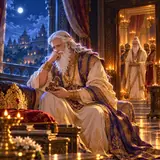
CommentaryNot scripture “We know you as a royal sage.” Brahma leaves, and Vishvamitra lowers his face in shame. He wanted more. To him, “royal sage” means “still a king”.
Scene 1 of 2 · After a thousand years of austerity in the south, Brahma names Vishvamitra a royal sage, and he lowers his face, unsatisfied.
दुःखेन महताविष्टः समन्युरिदमब्रवीत् । तपश्च सुमहत् तप्तं राजर्षिरिति मां विदुः ॥ ८ ॥
देवाः सर्षिगणाः सर्वे नास्ति मन्ये तपः फलम् । एवं निश्चित्य मनसा भूय एव महातपाः ॥ ९ ॥
overcome with great sorrow, said in anger: “I have practised very great austerity, and all the gods with the hosts of sages know me only as a royal sage. I think there is no fruit to austerity.” Having resolved this in his mind, the great ascetic once more
और बड़े दुख से भरकर उन्होंने क्रोध में कहा: “मैंने बहुत बड़ा तप किया है, और ऋषियों के समूहों सहित सब देवता मुझे केवल राजर्षि जानते हैं। मुझे लगता है तप का कोई फल नहीं।” मन में यह निश्चय करके महातपस्वी ने फिर से
CommentaryNot scripture “All the gods know me only as a royal sage. I think austerity has no fruit.” His frustration is human. He measures success by recognition. Yet he does not give up: he begins again.
Scene 1 of 2 · After a thousand years of austerity in the south, Brahma names Vishvamitra a royal sage, and he lowers his face, unsatisfied.
तपश्चचार धर्मात्मा काकुत्स्थ परमात्मवान् । एतस्मिन्नेव काले तु सत्यवादी जितेन्द्रियः ॥ १० ॥
त्रिशङ्कुरिति विख्यात इक्ष्वाकुकुलवर्धनः । तस्य बुद्धिः समुत्पन्ना यजेयमिति राघव ॥ ११ ॥
practised austerity, the righteous one, Kakutstha, supremely self-possessed. At that very time there was one known as Trishanku, truthful and master of his senses, increaser of the Ikshvaku line. The thought arose in him, Raghava: “I will sacrifice,
तप किया, धर्मात्मा, काकुत्स्थ, परम संयमी होकर। उसी समय त्रिशंकु नाम से प्रसिद्ध, सत्यवादी और जितेंद्रिय, इक्ष्वाकु वंश को बढ़ाने वाले एक राजा थे। राघव, उनके मन में यह विचार उठा: “मैं यज्ञ करूँगा,
CommentaryNot scripture He practises again, “supremely self-possessed”. Meanwhile a new figure enters: Trishanku, a king of the Ikshvaku line, Rama’s ancestor. Truthful and self-controlled, but with an extraordinary wish.
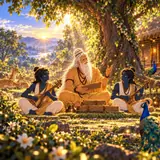
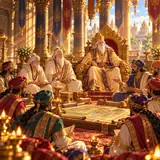
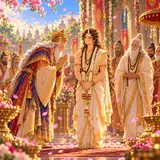
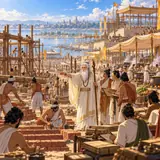
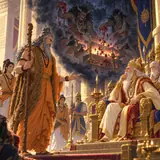
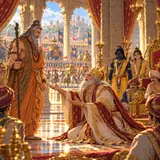
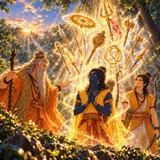
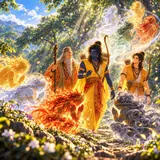
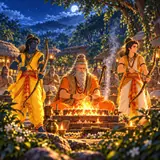
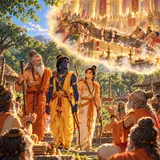
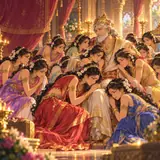
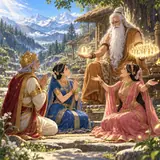
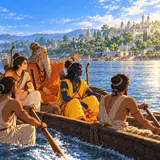
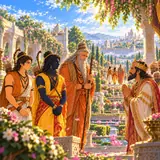
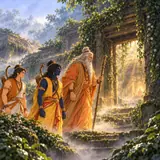
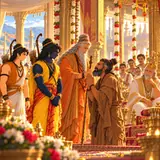
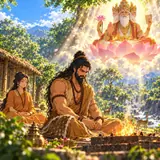
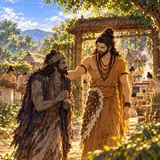
Scene 2 of 2 · King Trishanku, wishing to enter heaven in his own body, bows before the hundred sons of Vasishtha.
गच्छेयं स्वशरीरेण देवतानां परां गतिम् । वसिष्ठं स समाहूय कथयामास चिन्तितम् ॥ १२ ॥
“and go in my own body to the highest goal of the gods.” He summoned Vasishtha and told him what he had in mind.
“और अपने शरीर सहित देवताओं की परम गति को जाऊँगा।” उन्होंने वसिष्ठ को बुलाकर अपने मन की बात बताई।
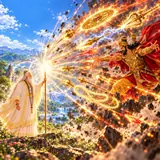
CommentaryNot scripture “I will go to heaven in my own body.” Not after death, but alive, in this body. It is a wish to break the order of the world.
Scene 2 of 2 · King Trishanku, wishing to enter heaven in his own body, bows before the hundred sons of Vasishtha.
अशक्यमिति चाप्युक्तो वसिष्ठेन महात्मना । प्रत्याख्यातो वसिष्ठेन स ययौ दक्षिणां दिशम् ॥ १३ ॥
Told “It is impossible” by the great-souled Vasishtha, and refused by Vasishtha, he went to the southern direction.
महात्मा वसिष्ठ से “यह असंभव है” सुनकर, और वसिष्ठ द्वारा अस्वीकार किए जाने पर, वे दक्षिण दिशा में गए।
CommentaryNot scripture Vasishtha says: “It is impossible.” The family priest refuses. Some things should not be done, even for a king.
Scene 2 of 2 · King Trishanku, wishing to enter heaven in his own body, bows before the hundred sons of Vasishtha.
ततस्तत्कर्मसिद्ध्यर्थं पुत्रांस्तस्य गतो नृपः । वासिष्ठा दीर्घतपसस्तपो यत्र हि तेपिरे ॥ १४ ॥
Then, to accomplish that rite, the king went to his sons, the sons of Vasishtha of long austerity, where they were practising austerity.
फिर उस कर्म को पूरा कराने के लिए राजा अपने पुत्रों, लंबे तप वाले वसिष्ठ के पुत्रों के पास गए, जहाँ वे तप कर रहे थे।
CommentaryNot scripture Trishanku goes to Vasishtha’s sons, hoping they will help where their father would not. Seeking a second opinion against one’s teacher: a dangerous move.
Scene 2 of 2 · King Trishanku, wishing to enter heaven in his own body, bows before the hundred sons of Vasishtha.
त्रिशङ्कुस्तु महातेजाः शतं परमभास्वरम् । वसिष्ठपुत्रान् ददृशे तप्यमानान् मनस्विनः ॥ १५ ॥
The radiant Trishanku saw the hundred sons of Vasishtha, most brilliant, practising austerity, high-minded.
तेजस्वी त्रिशंकु ने वसिष्ठ के सौ पुत्रों को देखा, जो अत्यंत तेजस्वी, ऊँचे मन वाले, तप में लगे थे।
CommentaryNot scripture A hundred sons of Vasishtha, radiant, high-minded, practising austerity.
Scene 2 of 2 · King Trishanku, wishing to enter heaven in his own body, bows before the hundred sons of Vasishtha.
सोऽभिगम्य महात्मानः सर्वानेव गुरोः सुतान् । अभिवाद्यानुपूर्वेण ह्रिया किंचिदवाङ्मुखः ॥ १६ ॥
अब्रवीत् स महात्मानः सर्वानेव कृताञ्जलिः । शरणं वः प्रपन्नोऽहं शरण्यान् शरणं गतः ॥ १७ ॥
Approaching all those great-souled sons of his teacher, saluting them in order, his face lowered a little in shame, he said to all those great souls with joined palms: “I have come to you for refuge; I have come to those who give refuge.
गुरु के उन सब महात्मा पुत्रों के पास जाकर, क्रम से प्रणाम करके, लज्जा से थोड़ा मुख झुकाकर उन्होंने हाथ जोड़कर उन सब महात्माओं से कहा: “मैं आपकी शरण में आया हूँ; शरण देने वालों के पास आया हूँ।
CommentaryNot scripture He bows, his face lowered in shame, and seeks refuge. He knows he is asking for something his teacher refused.
Scene 2 of 2 · King Trishanku, wishing to enter heaven in his own body, bows before the hundred sons of Vasishtha.
प्रत्याख्यातो हि भद्रं वो वसिष्ठेन महात्मना । यष्टुकामो महायज्ञं तदनुज्ञातुमर्हथ ॥ १८ ॥
“I was refused, bless you, by great-souled Vasishtha. I wish to perform a great sacrifice; please give your consent.
“आपका कल्याण हो, महात्मा वसिष्ठ ने मुझे मना कर दिया। मैं एक महान यज्ञ करना चाहता हूँ; कृपया अपनी अनुमति दीजिए।
CommentaryNot scripture “I was refused by Vasishtha. Please consent.” He is honest about the refusal.
Scene 2 of 2 · King Trishanku, wishing to enter heaven in his own body, bows before the hundred sons of Vasishtha.
गुरुपुत्रानहं सर्वान् नमस्कृत्य प्रसादये । शिरसा प्रणतो याचे ब्राह्मणांस्तपसि स्थितान् ॥ १९ ॥
“Bowing to all of you, my teacher’s sons, I seek your favour. With head bowed, I beg you, brahmanas steadfast in austerity:
“गुरु के पुत्रो, आप सबको प्रणाम करके मैं आपकी कृपा चाहता हूँ। तप में दृढ़ ब्राह्मणो, सिर झुकाकर मैं आपसे विनती करता हूँ:
CommentaryNot scripture He bows his head and begs. Trishanku is humble in manner, but stubborn in his wish.
Scene 2 of 2 · King Trishanku, wishing to enter heaven in his own body, bows before the hundred sons of Vasishtha.
ते मां भवन्तः सिद्ध्यर्थं याजयन्तु समाहिताः । सशरीरो यथाहं वै देवलोकमवाप्नुयाम् ॥ २० ॥
“with full attention, perform the sacrifice for me so that it succeeds, so that I may reach the world of the gods in my own body.
“पूरे ध्यान से मेरा यज्ञ कराइए ताकि वह सफल हो, ताकि मैं अपने शरीर सहित देवलोक पहुँच सकूँ।
CommentaryNot scripture “So that I may reach the world of the gods in my own body.” He repeats the wish. Humility of form cannot hide the pride of the request.
Scene 2 of 2 · King Trishanku, wishing to enter heaven in his own body, bows before the hundred sons of Vasishtha.
प्रत्याख्यातो वसिष्ठेन गतिमन्यां तपोधनाः । गुरुपुत्रानृते सर्वान् नाहं पश्यामि कांचन ॥ २१ ॥
“Refused by Vasishtha, ascetics, I see no other refuge than all of you, my teacher’s sons.
“तपस्वियो, वसिष्ठ द्वारा मना किए जाने पर मुझे गुरु-पुत्रो, आप सबके सिवा कोई दूसरी शरण नहीं दिखती।
CommentaryNot scripture “I see no other refuge.” He puts the sons in an impossible position: help him, or seem to fail one who seeks refuge.
Scene 2 of 2 · King Trishanku, wishing to enter heaven in his own body, bows before the hundred sons of Vasishtha.
इक्ष्वाकूणां हि सर्वेषां पुरोधाः परमा गतिः । तस्मादनन्तरं सर्वे भवन्तो दैवतं मम ॥ २२ ॥
“The family priest is the highest refuge of all the Ikshvakus; next to him, you are all my gods.”
“कुलपुरोहित सब इक्ष्वाकुओं की परम शरण हैं; उनके बाद आप सब मेरे देवता हैं।”
CommentaryNot scripture “The family priest is the highest refuge; next to him, you are my gods.” He flatters them, while going around their father. The next sarga shows how they respond.
Scene 2 of 2 · King Trishanku, wishing to enter heaven in his own body, bows before the hundred sons of Vasishtha.