Bala Kanda · Sarga 67 of 77 · 27 verses
Rama Breaks the Bow
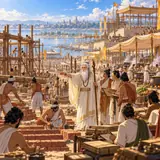
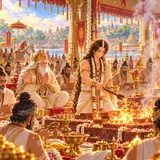
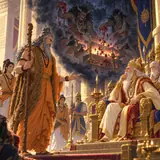
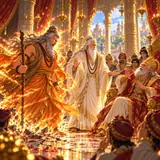
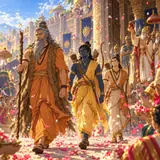
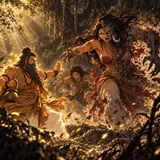
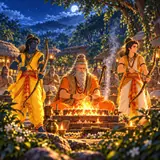
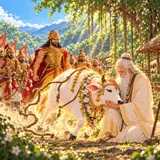
Vishvamitra asks Janaka to show Rama the bow. Janaka orders it brought, anointed with perfumes and garlands. Five thousand tall, strong men barely manage to haul the iron chest on its eight wheels. The ministers present it: “This is the best of bows, king, honoured by all kings.” Janaka tells Vishvamitra: “No gods, asuras, rakshasas, gandharvas, yakshas, kinnaras or great serpents can string, bend or even lift it; what chance have men? Show it to these two princes.”
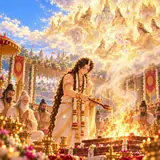
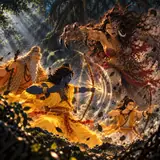
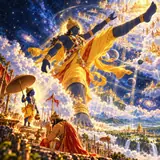
“Rama, my child, look at the bow,” says Vishvamitra. Rama opens the chest, looks, and asks: “May I touch this divine bow? I will try to lift it and string it.” “Yes,” say king and sage. Before thousands of watching people, Rama takes it by the middle as if in play, strings it effortlessly, draws the string to full stretch, and breaks the bow in the middle. The sound is like a thunderbolt and the earth shakes as if a mountain were splitting; everyone falls stunned except the sage, the king and the two Raghavas.
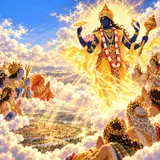
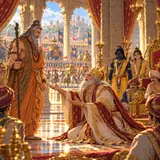
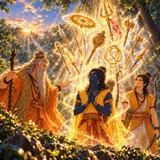
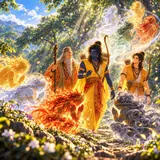
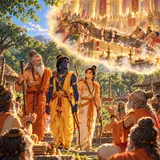
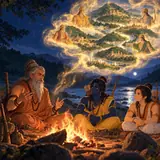
When people recover, Janaka, his fear gone, says: “Lord, I have seen the valour of Dasharatha’s son. It is wonderful beyond imagining. Sita will bring glory to the Janaka line by gaining Rama as her husband. My promise holds: valour was her price, and Sita, dear to me as my life, will be given to Rama.” With Vishvamitra’s consent he sends ministers by chariot to Ayodhya to invite King Dasharatha respectfully, tell him everything, and bring him quickly.
Press › to begin with verse 1.
जनकस्य वचः श्रुत्वा विश्वामित्रो महामुनिः । धनुर्दर्शय रामाय इति होवाच पार्थिवम् ॥ १ ॥
Hearing Janaka’s words, the great sage Vishvamitra said to the king: “Show the bow to Rama.”
जनक के वचन सुनकर महामुनि विश्वामित्र ने राजा से कहा: “राम को धनुष दिखाइए।”
Commentary on the whole sarga
Rama Breaks the Bow 1 min read.
Read the commentary CommentaryNot scripture “Show the bow to Rama.” Vishvamitra’s words are brief. The moment has come.
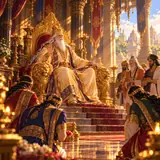
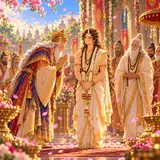
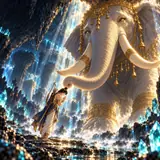
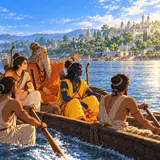
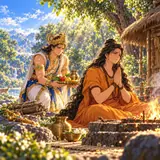
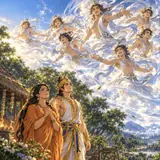
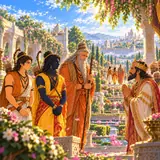
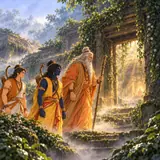
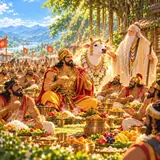
Scene 1 of 3 · Five thousand men drag in the eight-wheeled iron chest that holds Shiva’s bow, and Rama opens it.
ततः स राजा जनकः सचिवान् व्यादिदेश ह । धनुरानीयतां दिव्यं गन्धमाल्यानुलेपितम् ॥ २ ॥
Then King Janaka ordered his ministers: “Let the divine bow be brought, anointed with perfumes and garlands.”
तब राजा जनक ने मंत्रियों को आज्ञा दी: “सुगंधों और मालाओं से सजा दिव्य धनुष लाया जाए।”
CommentaryNot scripture The bow is brought anointed with perfumes and garlands. It is treated as a deity.
Scene 1 of 3 · Five thousand men drag in the eight-wheeled iron chest that holds Shiva’s bow, and Rama opens it.
जनकेन समादिष्टाः सचिवाः प्राविशन् पुरम् । तद्धनुः पुरतः कृत्वा निर्जग्मुरमितौजसः ॥ ३ ॥
Commanded by Janaka, the ministers of boundless energy entered the city and came out with that bow before them.
जनक की आज्ञा पाकर अपार शक्ति वाले मंत्री नगर में गए और उस धनुष को आगे करके बाहर आए।
CommentaryNot scripture The ministers go into the city and return with the bow.
Scene 1 of 3 · Five thousand men drag in the eight-wheeled iron chest that holds Shiva’s bow, and Rama opens it.
नृणां शतानि पञ्चाशद् व्यायतानां महात्मनाम् । मञ्जूषामष्टचक्रां तां समूहुस्ते कथंचन ॥ ४ ॥
Five thousand tall, great-souled men somehow dragged that chest with its eight wheels.
पाँच हज़ार लंबे, महाबली पुरुष आठ पहियों वाली उस पेटी को किसी तरह खींचकर लाए।
CommentaryNot scripture Five thousand men drag its eight-wheeled chest. The sheer weight is the first proof of what Rama is about to do.
Scene 1 of 3 · Five thousand men drag in the eight-wheeled iron chest that holds Shiva’s bow, and Rama opens it.
तामादाय सुमञ्जूषामायसीं यत्र तद्धनुः । सुरोपमं ते जनकमूचुर्नृपतिमन्त्रिणः ॥ ५ ॥
Bringing the fine iron chest in which the bow lay, the king’s ministers said to Janaka, who was like a god:
जिसमें धनुष रखा था वह उत्तम लोहे की पेटी लाकर राजा के मंत्रियों ने देवता जैसे जनक से कहा:
CommentaryNot scripture The chest is made of fine iron.
Scene 1 of 3 · Five thousand men drag in the eight-wheeled iron chest that holds Shiva’s bow, and Rama opens it.
इदं धनुर्वरं राजन् पूजितं सर्वराजभिः । मिथिलाधिप राजेन्द्र दर्शनीयं यदीच्छसि ॥ ६ ॥
“This is the best of bows, king, honoured by all kings, lord of Mithila, king of kings, if you wish it to be seen.”
“राजन, मिथिलापति, राजाओं के राजा, यह सब राजाओं से पूजित श्रेष्ठ धनुष है, यदि आप इसे दिखाना चाहें।”
CommentaryNot scripture “The best of bows, honoured by all kings.” The ministers present it formally.
Scene 1 of 3 · Five thousand men drag in the eight-wheeled iron chest that holds Shiva’s bow, and Rama opens it.
तेषां नृपो वचः श्रुत्वा कृताञ्जलिरभाषत । विश्वामित्रं महात्मानं तावुभौ रामलक्ष्मणौ ॥ ७ ॥
Hearing their words, the king, with joined palms, said to great-souled Vishvamitra and to both Rama and Lakshmana:
उनके वचन सुनकर राजा ने हाथ जोड़कर महात्मा विश्वामित्र से और राम तथा लक्ष्मण दोनों से कहा:
CommentaryNot scripture Janaka speaks with joined palms to Vishvamitra and the two princes.
Scene 1 of 3 · Five thousand men drag in the eight-wheeled iron chest that holds Shiva’s bow, and Rama opens it.
इदं धनुर्वरं ब्रह्मञ्जनकैरभिपूजितम् । राजभिश्च महावीर्यैरशक्तैः पूरितं तदा ॥ ८ ॥
“This is the best of bows, brahmana, worshipped by the Janakas, and at that time strained at by mighty kings who could not manage it.
“ब्राह्मण, यह जनकों द्वारा पूजित श्रेष्ठ धनुष है, जिस पर उस समय बलवान राजाओं ने ज़ोर लगाया पर सँभाल न सके।
CommentaryNot scripture Kings have strained at it and failed.
Scene 1 of 3 · Five thousand men drag in the eight-wheeled iron chest that holds Shiva’s bow, and Rama opens it.
नैतत् सुरगणाः सर्वे सासुरा न च राक्षसाः । गन्धर्वयक्षप्रवराः सकिन्नरमहोरगाः ॥ ९ ॥
“Not all the hosts of gods, nor the asuras, nor the rakshasas, nor the best of gandharvas and yakshas, with kinnaras and great serpents,
“न देवताओं के सब समूह, न असुर, न राक्षस, न श्रेष्ठ गंधर्व और यक्ष, किन्नरों और बड़े नागों सहित,
CommentaryNot scripture Not gods, asuras, rakshasas, gandharvas, yakshas, kinnaras or serpents could do it. The same list as Ravana’s boon, the same beings who fear Ravana.
Scene 1 of 3 · Five thousand men drag in the eight-wheeled iron chest that holds Shiva’s bow, and Rama opens it.
क्व गतिर्मानुषाणां च धनुषोऽस्य प्रपूरणे । आरोपणे समायोगे वेपने तोलने तथा ॥ १० ॥
“could do it; what chance have men of drawing this bow, or of stringing it, fitting the arrow, shaking it or lifting it?
“इसे कर सके; तो इस धनुष को खींचने, डोरी चढ़ाने, बाण रखने, हिलाने या उठाने की मनुष्यों की क्या संभावना?
CommentaryNot scripture “What chance have men?” Janaka’s question echoes Ravana’s contempt for humans. The answer is about to come from a man.
Scene 1 of 3 · Five thousand men drag in the eight-wheeled iron chest that holds Shiva’s bow, and Rama opens it.
तदेतद् धनुषां श्रेष्ठमानीतं मुनिपुंगव । दर्शयैतन्महाभाग अनयो राजपुत्रयोः ॥ ११ ॥
“This best of bows has been brought, best of sages. Show it, fortunate one, to these two princes.”
“मुनिश्रेष्ठ, यह श्रेष्ठ धनुष लाया गया है। भाग्यशाली, इन दोनों राजकुमारों को इसे दिखाइए।”
CommentaryNot scripture “Show it to the princes.”
Scene 1 of 3 · Five thousand men drag in the eight-wheeled iron chest that holds Shiva’s bow, and Rama opens it.
विश्वामित्रः सरामस्तु श्रुत्वा जनकभाषितम् । वत्स राम धनुः पश्य इति राघवमब्रवीत् ॥ १२ ॥
Vishvamitra, with Rama, having heard Janaka’s words, said to Raghava: “Rama, my child, look at the bow.”
जनक के वचन सुनकर राम के साथ विश्वामित्र ने राघव से कहा: “वत्स राम, धनुष देखो।”
CommentaryNot scripture “Rama, my child, look at the bow.” The teacher’s simple instruction.
Scene 1 of 3 · Five thousand men drag in the eight-wheeled iron chest that holds Shiva’s bow, and Rama opens it.
महर्षेर्वचनाद् रामो यत्र तिष्ठति तद्धनुः । मञ्जूषां तामपावृत्य दृष्ट्वा धनुरथाब्रवीत् ॥ १३ ॥
At the great sage’s word, Rama opened the chest where the bow lay, and, seeing the bow, said:
महामुनि के कहने पर राम ने वह पेटी खोली जिसमें धनुष रखा था, और धनुष देखकर कहा:
CommentaryNot scripture Rama opens the chest and looks.
Scene 1 of 3 · Five thousand men drag in the eight-wheeled iron chest that holds Shiva’s bow, and Rama opens it.
इदं धनुर्वरं दिव्यं संस्पृशामीह पाणिना । यत्नवांश्च भविष्यामि तोलने पूरणेऽपि वा ॥ १४ ॥
“May I touch this divine best of bows with my hand? And I will make an effort to lift it and to draw it.”
“क्या मैं इस दिव्य श्रेष्ठ धनुष को हाथ से छू सकता हूँ? और मैं इसे उठाने और खींचने का प्रयत्न करूँगा।”
CommentaryNot scripture “May I touch it? I will try to lift it and draw it.” Rama asks permission, humbly. He does not boast. He says only that he will try.
Scene 1 of 3 · Five thousand men drag in the eight-wheeled iron chest that holds Shiva’s bow, and Rama opens it.
बाढमित्यब्रवीद् राजा मुनिश्च समभाषत । लीलया स धनुर्मध्ये जग्राह वचनान्मुनेः ॥ १५ ॥
“Very well,” said the king, and the sage agreed. At the sage’s word he took the bow by the middle, as if in play.
“ठीक है,” राजा ने कहा, और मुनि ने भी सहमति दी। मुनि के कहने पर उन्होंने धनुष को बीच से, मानो खेल-खेल में, पकड़ लिया।
CommentaryNot scripture Janaka and the sage agree. Rama takes the bow by the middle “as if in play” (lilaya ), the same word used of Shiva’s threat. What was terrifying for others is play for him.
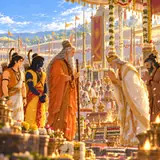
Scene 2 of 3 · As if in play, Rama strings and draws the great bow, and it breaks with a crash like thunder.
पश्यतां नृसहस्राणां बहूनां रघुनन्दनः । आरोपयत् स धर्मात्मा सलीलमिव तद्धनुः ॥ १६ ॥
While many thousands of men watched, the righteous delight of the Raghus strung that bow as if in play.
हज़ारों लोगों के देखते-देखते धर्मात्मा रघुनंदन ने उस धनुष पर मानो खेल-खेल में डोरी चढ़ा दी।
CommentaryNot scripture Thousands watch as he strings it, again “as if in play”. The effortlessness is the miracle.
Scene 2 of 3 · As if in play, Rama strings and draws the great bow, and it breaks with a crash like thunder.
आरोपयित्वा मौर्वीं च पूरयामास तद्धनुः । तद् बभञ्ज धनुर्मध्ये नरश्रेष्ठो महायशाः ॥ १७ ॥
Having strung it and fitted the string, he drew that bow to the full; and the glorious best of men broke the bow in the middle.
डोरी चढ़ाकर और जोड़कर उन्होंने उस धनुष को पूरा खींचा; और उस यशस्वी पुरुषश्रेष्ठ ने धनुष को बीच से तोड़ दिया।
CommentaryNot scripture He fits the string, draws it to the full, and the bow breaks in the middle. Rama did not try to break it; the bow could not bear his strength.
Scene 2 of 3 · As if in play, Rama strings and draws the great bow, and it breaks with a crash like thunder.
तस्य शब्दो महानासीन्निर्घातसमनिःस्वनः । भूमिकम्पश्च सुमहान् पर्वतस्येव दीर्यतः ॥ १८ ॥
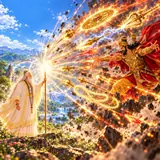
There was a great sound from it, like the crash of a thunderbolt, and a great shaking of the earth, as of a mountain splitting.
उससे वज्र के गिरने जैसा एक बड़ा शब्द हुआ, और पृथ्वी ऐसे काँपी मानो कोई पर्वत फट रहा हो।
CommentaryNot scripture A crash like a thunderbolt, the earth shaking as if a mountain were splitting. The breaking of Shiva’s bow will be heard as far as Parashurama, who appears in sarga 74.
Scene 2 of 3 · As if in play, Rama strings and draws the great bow, and it breaks with a crash like thunder.
निपेतुश्च नराः सर्वे तेन शब्देन मोहिताः । वर्जयित्वा मुनिवरं राजानं तौ च राघवौ ॥ १९ ॥
All the men fell down, stunned by that sound, except the best of sages, the king and the two Raghavas.
मुनिश्रेष्ठ, राजा और दोनों राघवों को छोड़कर सब लोग उस शब्द से स्तब्ध होकर गिर पड़े।
CommentaryNot scripture Everyone falls stunned, except Vishvamitra, Janaka and the two brothers. Only those who are steady within stay standing.
Scene 2 of 3 · As if in play, Rama strings and draws the great bow, and it breaks with a crash like thunder.
प्रत्याश्वस्ते जने तस्मिन् राजा विगतसाध्वसः । उवाच प्राञ्जलिर्वाक्यं वाक्यज्ञो मुनिपुंगवम् ॥ २० ॥
When the people had recovered, the king, his fear gone, skilled in speech, spoke with joined palms to the best of sages:
जब लोग सँभले, तब भय से मुक्त, बोलने में कुशल राजा ने हाथ जोड़कर मुनिश्रेष्ठ से कहा:
CommentaryNot scripture When the people recover, Janaka speaks, “his fear gone”.
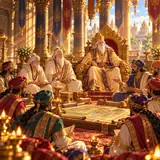
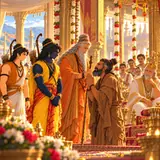
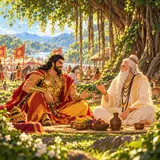
Scene 3 of 3 · Overjoyed, Janaka promises Sita to Rama and sends swift messengers to Ayodhya.
भगवन् दृष्टवीर्यो मे रामो दशरथात्मजः । अत्यद्भुतमचिन्त्यं च अतर्कितमिदं मया ॥ २१ ॥
“Lord, I have seen the valour of Rama, son of Dasharatha. It is most wonderful, inconceivable; I never imagined it.
“भगवन, मैंने दशरथ-पुत्र राम का पराक्रम देख लिया। यह अत्यंत अद्भुत, अचिंत्य है; मैंने इसकी कल्पना भी नहीं की थी।
CommentaryNot scripture “Most wonderful, inconceivable; I never imagined it.” Even the wise king did not expect this.
Scene 3 of 3 · Overjoyed, Janaka promises Sita to Rama and sends swift messengers to Ayodhya.
जनकानां कुले कीर्तिमाहरिष्यति मे सुता । सीता भर्तारमासाद्य रामं दशरथात्मजम् ॥ २२ ॥
“My daughter Sita, gaining Rama, son of Dasharatha, as her husband, will bring glory to the line of the Janakas.
“मेरी पुत्री सीता दशरथ-पुत्र राम को पति के रूप में पाकर जनकों के वंश को यश दिलाएगी।
CommentaryNot scripture “Sita, gaining Rama as husband, will bring glory to the line of the Janakas.” The marriage will honour both families.
Scene 3 of 3 · Overjoyed, Janaka promises Sita to Rama and sends swift messengers to Ayodhya.
मम सत्या प्रतिज्ञा सा वीर्यशुल्केति कौशिक । सीता प्राणैर्बहुमता देया रामाय मे सुता ॥ २३ ॥
“My promise, that her price is valour, is kept true, Kaushika. My daughter Sita, dearer to me than life, is to be given to Rama.
“कौशिक, मेरी प्रतिज्ञा, कि उसका शुल्क पराक्रम है, सत्य हुई। प्राणों से भी प्रिय मेरी पुत्री सीता राम को दी जानी है।
CommentaryNot scripture “My promise is kept. Sita, dearer than life, is to be given to Rama.” Janaka’s vow and his love meet in one sentence.
Scene 3 of 3 · Overjoyed, Janaka promises Sita to Rama and sends swift messengers to Ayodhya.
भवतोऽनुमते ब्रह्मन् शीघ्रं गच्छन्तु मन्त्रिणः । मम कौशिक भद्रं ते अयोध्यां त्वरिता रथैः ॥ २४ ॥
“With your consent, brahmana, let my ministers go quickly to Ayodhya by chariot, Kaushika; bless you.
“ब्राह्मण, कौशिक, आपकी अनुमति से मेरे मंत्री रथ से जल्दी अयोध्या जाएँ; आपका कल्याण हो।
CommentaryNot scripture He asks Vishvamitra’s leave to send messengers to Ayodhya. The father of the groom must be invited.
Scene 3 of 3 · Overjoyed, Janaka promises Sita to Rama and sends swift messengers to Ayodhya.
राजानं प्रश्रितैर्वाक्यैरानयन्तु पुरं मम । प्रदानं वीर्यशुल्कायाः कथयन्तु च सर्वशः ॥ २५ ॥
“With respectful words let them bring the king to my city, and tell him everything about the giving of the bride won by valour.
“आदर भरे वचनों से वे राजा को मेरी नगरी में लाएँ, और पराक्रम से जीती गई कन्या के दान के बारे में सब बताएँ।
CommentaryNot scripture “Let them bring the king with respectful words.” A marriage between royal houses requires the proper courtesies.
Scene 3 of 3 · Overjoyed, Janaka promises Sita to Rama and sends swift messengers to Ayodhya.
मुनिगुप्तौ च काकुत्स्थौ कथयन्तु नृपाय वै । प्रीतियुक्तं तु राजानमानयन्तु सुशीघ्रगाः ॥ २६ ॥
“Let them tell the king that the Kakutsthas are protected by the sage, and let those swift ones bring the king, gladdened.”
“वे राजा को बताएँ कि काकुत्स्थ मुनि से रक्षित हैं, और वे तेज़ चलने वाले प्रसन्न राजा को ले आएँ।”
CommentaryNot scripture “Tell him the princes are safe under the sage’s protection.” A thoughtful touch: Janaka knows Dasharatha must be anxious about his sons.
Scene 3 of 3 · Overjoyed, Janaka promises Sita to Rama and sends swift messengers to Ayodhya.
कौशिकस्तु तथेत्याह राजा चाभाष्य मन्त्रिणः । अयोध्यां प्रेषयामास धर्मात्मा कृतशासनान् । यथावृत्तं समाख्यातुमानेतुं च नृपं तथा ॥ २७ ॥
Kaushika said, “So be it,” and the righteous king spoke to his ministers and sent them, their orders given, to Ayodhya, to tell what had happened and to bring the king.
कौशिक ने कहा, “ऐसा ही हो,” और धर्मात्मा राजा ने अपने मंत्रियों से बात करके, आदेश देकर, जो हुआ था उसे बताने और राजा को लाने के लिए उन्हें अयोध्या भेजा।
CommentaryNot scripture Vishvamitra agrees, and messengers race to Ayodhya. The story turns from the bow to the wedding.
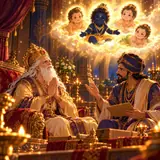
Scene 3 of 3 · Overjoyed, Janaka promises Sita to Rama and sends swift messengers to Ayodhya.