Bala Kanda · Sarga 49 of 77 · 22 verses
Ahalya Released
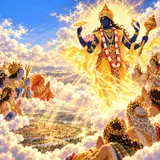
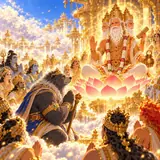
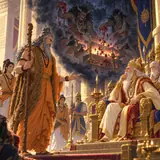
Indra, made fruitless, tells the gods that he acted for their sake: by provoking Gautama’s anger he destroyed the merit of the sage’s austerity. He asks them to restore him. The gods ask the ancestral deities (Pitris) to take the testicles of a ram and give them to Indra; the Pitris do so, and since then they accept rams without testicles as offerings, and reward those who offer them. Indra has borne a ram’s testicles ever since.
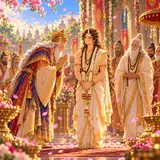
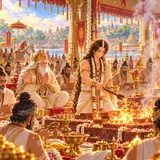
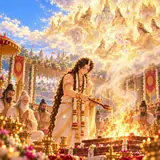
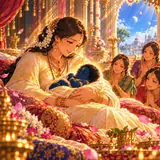
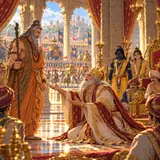
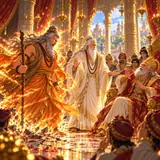
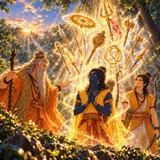
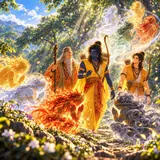
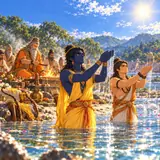
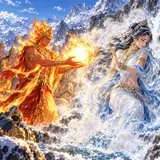
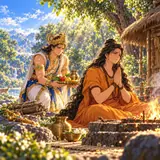
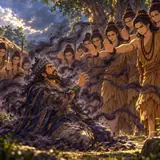
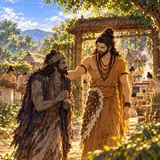
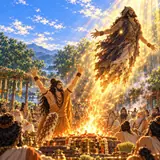
“Come now,” says Vishvamitra, “to the hermitage of that holy man, and free the noble Ahalya, who has the form of a goddess.” Rama and Lakshmana enter and see her, radiant with austerity, hard for gods, asuras or men to look at: like a divine illusion shaped by the Creator, like a flame wrapped in smoke, like the full moon veiled in mist and cloud, like the sun’s glare upon water. By Gautama’s word she had been invisible to the three worlds until she saw Rama; now, her curse over, she becomes visible. The two Raghavas joyfully touch her feet, and she, remembering Gautama’s words, receives them, offering water for their feet, the guest offering and hospitality, which Rama accepts according to rule. Flowers rain down, divine drums sound, gandharvas and apsarases celebrate, and the gods praise Ahalya, purified by austerity. Gautama returns, happy, reunited with her, honours Rama, and resumes his austerity. Rama goes on to Mithila.
Press › to begin with verse 1.
अफलस्तु ततः शक्रो देवानग्निपुरोगमान् । अब्रवीत् त्रस्तनयनः सिद्धगन्धर्वचारणान् ॥ १ ॥
Then Shakra, made fruitless, with frightened eyes, said to the gods led by Agni, and to the siddhas, gandharvas and charanas:
तब निष्फल किए गए, भयभीत आँखों वाले इंद्र ने अग्नि आदि देवताओं से, और सिद्धों, गंधर्वों और चारणों से कहा:
Commentary on the whole sarga
Ahalya Released 1 min read.
Read the commentary CommentaryNot scripture Indra, “with frightened eyes”, goes to the gods. The proud king of heaven is reduced to asking for help.
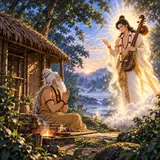
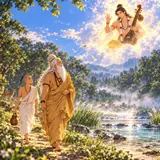
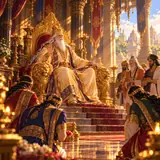
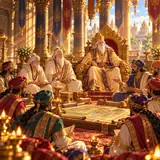
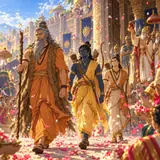
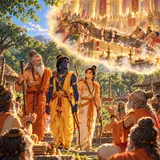
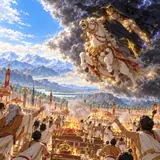
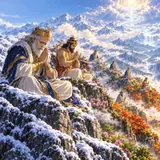
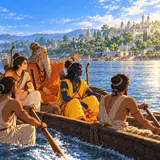
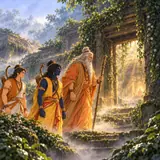
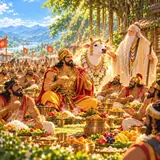
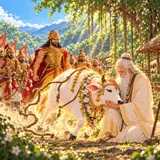
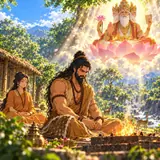
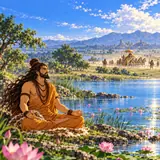
Scene 1 of 2 · Vishvamitra leads Rama to the gate of the misty, forgotten hermitage where Ahalya waits unseen.
कुर्वता तपसो विघ्नं गौतमस्य महात्मनः । क्रोधमुत्पाद्य हि मया सुरकार्यमिदं कृतम् ॥ २ ॥
“By obstructing the austerity of the great-souled Gautama and rousing his anger, I have done this work for the gods.
“महात्मा गौतम के तप में बाधा डालकर और उनका क्रोध भड़काकर मैंने देवताओं का यह कार्य किया है।
CommentaryNot scripture Indra makes an excuse: by provoking Gautama’s anger, he says, he served the gods, because a sage’s anger uses up his austerity. It is a self-serving argument, and Valmiki lets us hear how hollow it sounds.
Scene 1 of 2 · Vishvamitra leads Rama to the gate of the misty, forgotten hermitage where Ahalya waits unseen.
अफलोऽस्मि कृतस्तेन क्रोधात् सा च निराकृता । शापमोक्षेण महता तपोऽस्यापहृतं मया ॥ ३ ॥
“He made me fruitless in his anger, and she was rejected. By that great release of a curse, I have taken away his austerity.
“उन्होंने क्रोध में मुझे निष्फल कर दिया, और उसका त्याग कर दिया। शाप के उस बड़े प्रयोग से मैंने उनका तप हर लिया है।
CommentaryNot scripture “I have taken away his austerity.” In Indra’s view, every great ascetic is a threat to heaven’s power. Some myths show Indra disturbing ascetics for exactly this reason.
Scene 1 of 2 · Vishvamitra leads Rama to the gate of the misty, forgotten hermitage where Ahalya waits unseen.
तन्मां सुरवराः सर्वे सर्षिसङ्घाः सचारणाः । सुरकार्यकरं यूयं सफलं कर्तुमर्हथ ॥ ४ ॥
“So, best of gods, all of you with the hosts of sages and charanas, you should make me whole, since I did the work of the gods.”
“इसलिए, देवश्रेष्ठो, ऋषियों और चारणों के समूहों सहित तुम सब मुझे पूर्ण करो, क्योंकि मैंने देवताओं का कार्य किया।”
CommentaryNot scripture “Make me whole, since I did the gods’ work.” He presents his wrongdoing as public service.
Scene 1 of 2 · Vishvamitra leads Rama to the gate of the misty, forgotten hermitage where Ahalya waits unseen.
शतक्रतोर्वचः श्रुत्वा देवाः साग्निपुरोगमाः । पितृदेवानुपेत्याहुः सर्वे सह मरुद्गणैः ॥ ५ ॥
Hearing the words of the one of a hundred sacrifices, the gods led by Agni, with all the hosts of Maruts, went to the ancestral gods and said:
सौ यज्ञों वाले इंद्र के वचन सुनकर अग्नि आदि देवता मरुतों के सब समूहों के साथ पितृदेवताओं के पास गए और बोले:
CommentaryNot scripture The gods go to the pitris , the ancestral deities, for a remedy. Here the poem turns almost comic.
Scene 1 of 2 · Vishvamitra leads Rama to the gate of the misty, forgotten hermitage where Ahalya waits unseen.
अयं मेषः सवृषणः शक्रो ह्यवृषणः कृतः । मेषस्य वृषणौ गृह्य शक्रायाशु प्रयच्छत ॥ ६ ॥
“This ram has testicles, while Shakra has been made without them. Take the ram’s testicles and give them quickly to Shakra.
“इस मेढ़े के अंडकोष हैं, जबकि इंद्र उनसे रहित कर दिए गए हैं। मेढ़े के अंडकोष लेकर जल्दी इंद्र को दे दो।
CommentaryNot scripture Their solution: give Indra the testicles of a ram. The king of gods gets an animal’s parts. Valmiki’s tone is dry: Indra’s punishment has become a joke.
Scene 1 of 2 · Vishvamitra leads Rama to the gate of the misty, forgotten hermitage where Ahalya waits unseen.
अफलस्तु कृतो मेषः परां तुष्टिं प्रदास्यति । भवतां हर्षणार्थं च ये च दास्यन्ति मानवाः । अक्षयं हि फलं तेषां यूयं दास्यथ पुष्कलम् ॥ ७ ॥
“The ram made fruitless will give you the highest satisfaction; and to men who give it for your delight, you will give abundant, unending reward.”
“निष्फल किया गया मेढ़ा तुम्हें परम संतोष देगा; और जो मनुष्य तुम्हारी प्रसन्नता के लिए उसे देंगे, उन्हें तुम भरपूर, अक्षय फल दोगे।”
CommentaryNot scripture The ancestors are promised the castrated ram as an offering, with reward for those who give it. The story explains an old ritual rule.
Scene 1 of 2 · Vishvamitra leads Rama to the gate of the misty, forgotten hermitage where Ahalya waits unseen.
अग्नेस्तु वचनं श्रुत्वा पितृदेवाः समागताः । उत्पाट्य मेषवृषणौ सहस्राक्षे न्यवेशयन् ॥ ८ ॥
Hearing Agni’s words, the ancestral gods assembled, tore off the ram’s testicles and set them on the thousand-eyed one.
अग्नि के वचन सुनकर इकट्ठे हुए पितृदेवताओं ने मेढ़े के अंडकोष निकालकर सहस्र नेत्रों वाले पर लगा दिए।
CommentaryNot scripture The ancestral gods do as asked. Indra is “repaired”, in a way that keeps the memory of his disgrace.
Scene 1 of 2 · Vishvamitra leads Rama to the gate of the misty, forgotten hermitage where Ahalya waits unseen.
तदाप्रभृति काकुत्स्थ पितृदेवाः समागताः । अफलान् भुञ्जते मेषान् फलैस्तेषामयोजयन् ॥ ९ ॥
From that time, Kakutstha, the assembled ancestral gods eat rams without testicles, and give their reward to those who offer them.
काकुत्स्थ, उसी समय से इकट्ठे हुए पितृदेवता अंडकोषरहित मेढ़ों को खाते हैं, और उन्हें अर्पित करने वालों को फल देते हैं।
CommentaryNot scripture From then on, the ancestors accept castrated rams in offerings. The poem connects myth and ritual practice.
Scene 1 of 2 · Vishvamitra leads Rama to the gate of the misty, forgotten hermitage where Ahalya waits unseen.
इन्द्रस्तु मेषवृषणस्तदाप्रभृति राघव । गौतमस्य प्रभावेण तपसा च महात्मनः ॥ १० ॥
And Indra, Raghava, has had a ram’s testicles from that time, through the power and austerity of great-souled Gautama.
और राघव, उसी समय से महात्मा गौतम के प्रभाव और तप के कारण इंद्र के मेढ़े के अंडकोष हैं।
CommentaryNot scripture “Through the power of Gautama’s austerity”, Indra bears a ram’s parts. The sage’s curse remains visible. Even the king of the gods carries the mark of his wrongdoing.
Scene 1 of 2 · Vishvamitra leads Rama to the gate of the misty, forgotten hermitage where Ahalya waits unseen.
तदागच्छ महातेज आश्रमं पुण्यकर्मणः । तारयैनां महाभागामहल्यां देवरूपिणीम् ॥ ११ ॥
“So come, radiant one, to the hermitage of that one of holy deeds, and deliver this fortunate Ahalya, who has the form of a goddess.”
“इसलिए, तेजस्वी, पवित्र कर्मों वाले उन मुनि के आश्रम में चलो, और देवी जैसे रूप वाली इस भाग्यशाली अहल्या का उद्धार करो।”
CommentaryNot scripture Now Vishvamitra turns to Rama: “Come and deliver Ahalya, who has the form of a goddess.” Notice the respect: she is not called a sinner here, but mahabhaga , fortunate, and godlike.
Scene 1 of 2 · Vishvamitra leads Rama to the gate of the misty, forgotten hermitage where Ahalya waits unseen.
विश्वामित्रवचः श्रुत्वा राघवः सहलक्ष्मणः । विश्वामित्रं पुरस्कृत्य आश्रमं प्रविवेश ह ॥ १२ ॥
Hearing Vishvamitra’s words, Raghava with Lakshmana, putting Vishvamitra before him, entered the hermitage.
विश्वामित्र के वचन सुनकर लक्ष्मण सहित राघव ने विश्वामित्र को आगे करके आश्रम में प्रवेश किया।
CommentaryNot scripture Rama enters the hermitage with Lakshmana, Vishvamitra before him. The moment Gautama foretold has come.
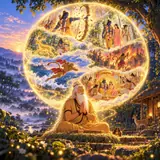
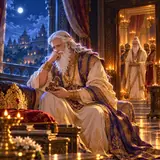
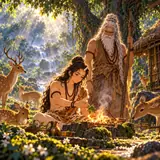
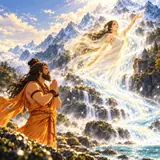
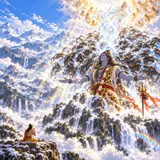
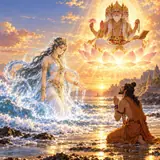
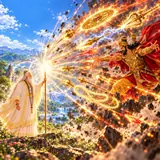
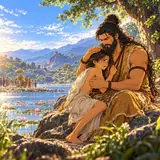
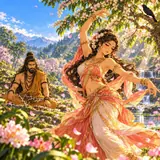
Scene 2 of 2 · Ahalya appears like a flame wrapped in smoke; the princes touch her feet and flowers rain from the sky.
ददर्श च महाभागां तपसा द्योतितप्रभाम् । लोकैरपि समागम्य दुर्निरीक्ष्यां सुरासुरैः ॥ १३ ॥
He saw the fortunate one, her radiance kindled by austerity, whom even the worlds coming together, gods and asuras, could hardly look upon:
उन्होंने उस भाग्यशाली को देखा, जिसका तेज तप से प्रज्वलित था, जिसे इकट्ठे हुए लोक, देवता और असुर भी कठिनाई से देख पाते थे:
CommentaryNot scripture Ahalya’s radiance, kindled by long austerity, is so great that gods and asuras could hardly look at her. Her years of penance have transformed her.
Scene 2 of 2 · Ahalya appears like a flame wrapped in smoke; the princes touch her feet and flowers rain from the sky.
प्रयत्नान्निर्मितां धात्रा दिव्यां मायामयीमिव । धूमेनाभिपरीतांगीं दीप्तामग्निशिखामिव ॥ १४ ॥
as if fashioned with care by the Creator, divine, like an illusion; like a blazing flame of fire with its body wrapped in smoke;
मानो विधाता ने बड़े यत्न से रचा हो, दिव्य, माया जैसी; धुएँ में लिपटे शरीर वाली जलती आग की लपट जैसी;
CommentaryNot scripture Three similes follow, among the most beautiful in the Bala Kanda: a blazing flame wrapped in smoke. Hidden brilliance, about to be revealed.
Scene 2 of 2 · Ahalya appears like a flame wrapped in smoke; the princes touch her feet and flowers rain from the sky.
सतुषारावृतां साभ्रां पूर्णचन्द्रप्रभामिव । मध्येऽम्भसो दुराधर्षां दीप्तां सूर्यप्रभामिव ॥ १५ ॥
like the light of the full moon covered with mist and cloud; like the blazing light of the sun on water, hard to approach.
कोहरे और बादल से ढकी पूर्णिमा के चाँद की रोशनी जैसी; जल पर सूर्य के दमकते प्रकाश जैसी, जिसके पास जाना कठिन हो।
CommentaryNot scripture Like the full moon veiled by mist, like sunlight on water too bright to look at. Each image is of light concealed or dazzling. Her goodness has been hidden, not lost.
Scene 2 of 2 · Ahalya appears like a flame wrapped in smoke; the princes touch her feet and flowers rain from the sky.
सा हि गौतमवाक्येन दुर्निरीक्ष्या बभूव ह । त्रयाणामपि लोकानां यावद् रामस्य दर्शनम् । शापस्यान्तमुपागम्य तेषां दर्शनमागता ॥ १६ ॥
By Gautama’s word she had become invisible to all three worlds until she saw Rama; reaching the end of her curse, she came into their sight.
गौतम के वचन से वह राम को देखने तक तीनों लोकों के लिए अदृश्य हो गई थी; शाप का अंत आने पर वह उनकी दृष्टि में आई।
CommentaryNot scripture She was invisible to all until she saw Rama. Now she appears. The curse ends with sight.
Scene 2 of 2 · Ahalya appears like a flame wrapped in smoke; the princes touch her feet and flowers rain from the sky.
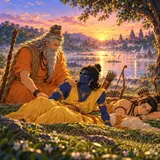
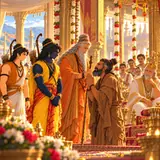
राघवौ तु तदा तस्याः पादौ जगृहतुर्मुदा । स्मरन्ती गौतमवचः प्रतिजग्राह सा हि तौ ॥ १७ ॥
Then the two Raghavas joyfully took hold of her feet, and she, remembering Gautama’s words, received them.
तब दोनों राघवों ने प्रसन्न होकर उसके चरण पकड़े, और उसने गौतम के वचनों को याद करके उनका स्वागत किया।
CommentaryNot scripture The two princes touch her feet. This is a crucial detail: in Valmiki, Rama does not free her with his foot touching a stone, as in later versions. He and Lakshmana bow to her and touch her feet in respect, as one honours an elder.
Scene 2 of 2 · Ahalya appears like a flame wrapped in smoke; the princes touch her feet and flowers rain from the sky.
पाद्यमर्घ्यं तथाऽऽतिथ्यं चकार सुसमाहिता । प्रतिजग्राह काकुत्स्थो विधिदृष्टेन कर्मणा ॥ १८ ॥
With full attention she offered water for the feet, the guest offering and hospitality, and Kakutstha accepted them by the rite laid down.
पूरे ध्यान से उसने पाद्य, अर्घ्य और आतिथ्य दिया, और काकुत्स्थ ने विधि के अनुसार उन्हें स्वीकार किया।
CommentaryNot scripture She offers water for the feet, the guest offering and hospitality, and Rama accepts. As Gautama said, she is freed by welcoming a guest. Hospitality is her redemption.
Scene 2 of 2 · Ahalya appears like a flame wrapped in smoke; the princes touch her feet and flowers rain from the sky.
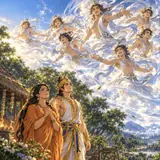
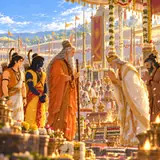
पुष्पवृष्टिर्महत्यासीद् देवदुन्दुभिनिःस्वनैः । गन्धर्वाप्सरसां चैव महानासीत् समुत्सवः ॥ १९ ॥
There was a great rain of flowers with the sound of divine drums, and a great festival of the gandharvas and apsarases.
देवताओं के नगाड़ों की ध्वनि के साथ फूलों की बड़ी वर्षा हुई, और गंधर्वों तथा अप्सराओं का बड़ा उत्सव हुआ।
CommentaryNot scripture Flowers rain, divine drums sound, gandharvas and apsarases celebrate. Heaven honours her release.
Scene 2 of 2 · Ahalya appears like a flame wrapped in smoke; the princes touch her feet and flowers rain from the sky.
साधु साध्विति देवास्तामहल्यां समपूजयन् । तपोबलविशुद्धाङ्गीं गौतमस्य वशानुगाम् ॥ २० ॥
“Well done, well done!” the gods praised that Ahalya, her body purified by the power of austerity, devoted to Gautama.
“साधु, साधु!” कहकर देवताओं ने तप की शक्ति से पवित्र शरीर वाली, गौतम के प्रति समर्पित उस अहल्या की प्रशंसा की।
CommentaryNot scripture The gods praise Ahalya: “Well done!” They call her body “purified by the power of austerity”. She has earned her freedom through her own long penance, and Rama’s coming completes it.
Scene 2 of 2 · Ahalya appears like a flame wrapped in smoke; the princes touch her feet and flowers rain from the sky.
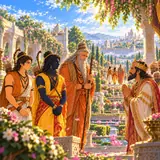
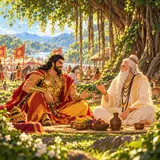
गौतमोऽपि महातेजा अहल्यासहितः सुखी । रामं सम्पूज्य विधिवत् तपस्तेपे महातपाः ॥ २१ ॥
The radiant Gautama too, happy, reunited with Ahalya, honoured Rama according to rule, and the great ascetic resumed his austerity.
तेजस्वी गौतम भी प्रसन्न होकर, अहल्या से मिलकर, विधि के अनुसार राम का सम्मान करके, उस महातपस्वी ने फिर तप आरंभ किया।
CommentaryNot scripture Gautama returns, happy, reunited with Ahalya. He honours Rama and resumes his austerity, now with his wife. The story of a broken marriage ends in reconciliation.
Scene 2 of 2 · Ahalya appears like a flame wrapped in smoke; the princes touch her feet and flowers rain from the sky.
रामोऽपि परमां पूजां गौतमस्य महामुनेः । सकाशाद् विधिवत् प्राप्य जगाम मिथिलां ततः ॥ २२ ॥
And Rama, having received the highest honour from the great sage Gautama according to rule, then went on to Mithila.
और महामुनि गौतम से विधि के अनुसार परम सम्मान पाकर राम फिर मिथिला की ओर चले।
CommentaryNot scripture Honoured by Gautama, Rama goes on to Mithila. He has just restored one marriage. In Mithila, his own awaits.
Scene 2 of 2 · Ahalya appears like a flame wrapped in smoke; the princes touch her feet and flowers rain from the sky.