Bala Kanda · Sarga 70 of 77 · 45 verses
Vasishtha Recites the Line of the Ikshvakus
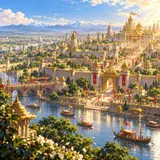
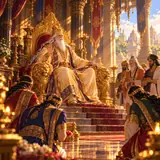
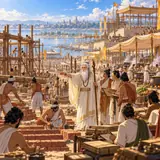
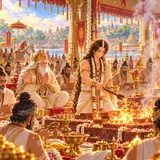
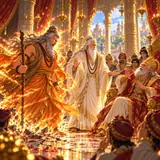
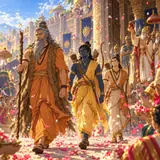
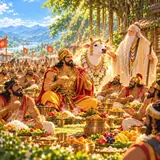
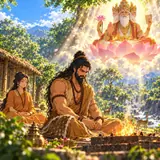
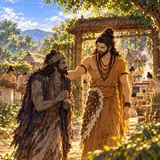
In the morning Janaka sends for his brother Kushadhvaja, a valiant and righteous king who rules the lovely city of Sankashya on the Ikshumati river, to share the joy and guard the sacrifice. Kushadhvaja comes swiftly and sits with Janaka. The brothers send their chief minister Sudaman to invite Dasharatha, his sons and ministers. Dasharatha comes with the sages and kin, and says: “The holy Vasishtha, the deity of the Ikshvaku line, speaks for us in all matters; with Vishvamitra’s consent he will speak for me in order.”
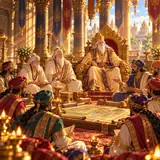
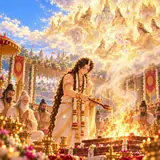
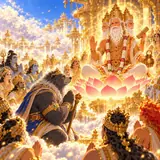
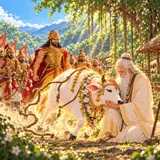
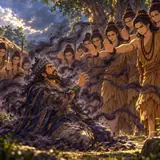
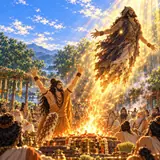
Vasishtha recites the lineage: from the unmanifest came Brahma, eternal; from him Marichi; from Marichi, Kashyapa; from Kashyapa, Vivasvat; from him Manu Vaivasvata; from Manu, Ikshvaku, the first king of Ayodhya. Then Kukshi, Vikukshi, Bana, Anaranya, Prithu, Trishanku, Dhundhumara, Yuvanashva, Mandhata, Susandhi, Dhruvasandhi, Bharata and Asita. Asita, defeated by the Haihayas, Talajanghas and Shashabindus, died in exile on the Himalaya, leaving two pregnant wives; one gave the other poison (gara) to destroy her child. The poisoned queen, Kalindi, bowed to the sage Cyavana, who promised her a mighty son; he was born with the poison, and so was called Sagara. After Sagara: Asamanja, Amshuman, Dilipa, Bhagiratha, Kakutstha, Raghu, Kalmashapada, Shankhana, Sudarshana, Agnivarna, Shighraga, Maru, Prashushruka, Ambarisha, Nahusha, Yayati, Nabhaga, Aja, and Dasharatha, whose sons are Rama and Lakshmana. “For Rama and Lakshmana, born of this pure and righteous line of truthful heroes, I ask for your daughters, king. You should give two worthy brides to two worthy grooms.”
Press › to begin with verse 1.
ततः प्रभाते जनकः कृतकर्मा महर्षिभिः । उवाच वाक्यं वाक्यज्ञः शतानन्दं पुरोहितम् ॥ १ ॥
Then at dawn Janaka, his rites done with the great sages, spoke, skilled in speech, to his family priest Shatananda:
फिर सवेरे महर्षियों के साथ अपने कर्म करके बोलने में कुशल जनक ने अपने कुलपुरोहित शतानंद से कहा:
Commentary on the whole sarga
Vasishtha Recites the Line of the Ikshvakus 1 min read.
Read the commentary CommentaryNot scripture The wedding day dawns. Janaka, his rites done, turns to Shatananda. He wants his family present.
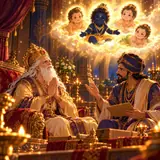
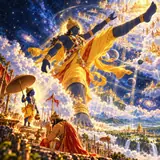
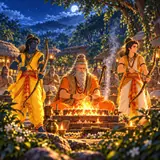
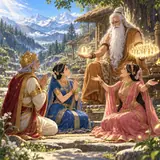
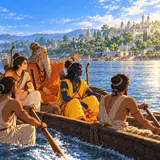
Scene 1 of 2 · Janaka’s brother Kushadhvaja rides in from Sankashya, and the two kings send for Dasharatha.
भ्राता मम महातेजा वीर्यवानतिधार्मिकः । कुशध्वज इति ख्यातः पुरीमध्यवसच्छुभाम् ॥ २ ॥
वार्याफलकपर्यन्तां पिबन्निक्षुमतीं नदीम् । सांकाश्यां पुण्यसंकाशां विमानमिव पुष्पकम् ॥ ३ ॥
“My brother, radiant, valiant and most righteous, known as Kushadhvaja, dwells in the lovely city of Sankashya, which drinks the river Ikshumati and is bounded by its stockade, a city holy to see, like the celestial chariot Pushpaka.
“मेरे भाई, तेजस्वी, पराक्रमी और अत्यंत धर्मात्मा, कुशध्वज नाम से प्रसिद्ध, इक्षुमती नदी का जल पीने वाली और अपने परकोटे से घिरी सुंदर नगरी सांकाश्या में रहते हैं, जो पुष्पक विमान जैसी देखने में पवित्र नगरी है।
CommentaryNot scripture His brother Kushadhvaja rules Sankashya, a city on the river Ikshumati, ringed by a stockade. Janaka wants his brother at the wedding. Families gather.
Scene 1 of 2 · Janaka’s brother Kushadhvaja rides in from Sankashya, and the two kings send for Dasharatha.
तमहं द्रष्टुमिच्छामि यज्ञगोप्ता स मे मतः । प्रीतिं सोऽपि महातेजा इमां भोक्ता मया सह ॥ ४ ॥
“I wish to see him; I regard him as the protector of my sacrifice. That radiant one too should share this joy with me.”
“मैं उन्हें देखना चाहता हूँ; मैं उन्हें अपने यज्ञ का रक्षक मानता हूँ। उन तेजस्वी को भी मेरे साथ इस आनंद में भाग लेना चाहिए।”
CommentaryNot scripture “I regard him as the protector of my sacrifice.” A loving tribute from one brother to another.
Scene 1 of 2 · Janaka’s brother Kushadhvaja rides in from Sankashya, and the two kings send for Dasharatha.
एवमुक्ते तु वचने शतानन्दस्य संनिधौ । आगताः केचिदव्यग्रा जनकस्तान् समादिशत् ॥ ५ ॥
When these words were spoken in Shatananda’s presence, some men came forward unhurried, and Janaka gave them their orders.
शतानंद के सामने ये वचन कहे जाने पर कुछ पुरुष बिना जल्दबाज़ी के आगे आए, और जनक ने उन्हें आदेश दिए।
CommentaryNot scripture Messengers come forward “unhurried”: calm, capable men.
Scene 1 of 2 · Janaka’s brother Kushadhvaja rides in from Sankashya, and the two kings send for Dasharatha.
शासनात् तु नरेन्द्रस्य प्रययुः शीघ्रवाजिभिः । समानेतुं नरव्याघ्रं विष्णुमिन्द्राज्ञया यथा ॥ ६ ॥
At the king’s command they set out with swift horses to bring the tiger among men, as one brings Vishnu at Indra’s command.
राजा की आज्ञा से वे तेज़ घोड़ों से उस पुरुषसिंह को लाने चले, जैसे इंद्र की आज्ञा से विष्णु को लाया जाता है।
CommentaryNot scripture They ride swiftly, “as one brings Vishnu at Indra’s command”. Even an errand gets a divine simile.
Scene 1 of 2 · Janaka’s brother Kushadhvaja rides in from Sankashya, and the two kings send for Dasharatha.
सांकाश्यां ते समागम्य ददृशुश्च कुशध्वजम् । न्यवेदयन् यथावृत्तं जनकस्य च चिन्तितम् ॥ ७ ॥
Reaching Sankashya, they saw Kushadhvaja and told him what had happened and what Janaka had in mind.
सांकाश्या पहुँचकर उन्होंने कुशध्वज को देखा और जो हुआ था तथा जनक के मन की बात बताई।
CommentaryNot scripture They find Kushadhvaja and tell him everything.
Scene 1 of 2 · Janaka’s brother Kushadhvaja rides in from Sankashya, and the two kings send for Dasharatha.
तद्वृत्तं नृपतिः श्रुत्वा दूतश्रेष्ठैर्महाजवैः । आज्ञया तु नरेन्द्रस्य आजगाम कुशध्वजः ॥ ८ ॥
Hearing what had happened from those excellent and swift messengers, Kushadhvaja came at the king’s command.
उन उत्तम और तेज़ दूतों से जो हुआ था सुनकर कुशध्वज राजा की आज्ञा से आए।
CommentaryNot scripture He comes at once.
Scene 1 of 2 · Janaka’s brother Kushadhvaja rides in from Sankashya, and the two kings send for Dasharatha.
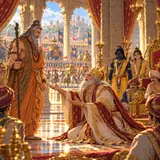
स ददर्श महात्मानं जनकं धर्मवत्सलम् । सोऽभिवाद्य शतानन्दं जनकं चातिधार्मिकम् ॥ ९ ॥
राजार्हं परमं दिव्यमासनं सोऽध्यरोहत । उपविष्टावुभौ तौ तु भ्रातरावमितद्युती ॥ १० ॥
He saw great-souled Janaka, devoted to dharma; he saluted Shatananda and the most righteous Janaka, and took his seat on a supreme, divine seat fit for a king. When the two brothers of boundless splendour were seated,
उन्होंने धर्म में लगे महात्मा जनक को देखा; उन्होंने शतानंद और अत्यंत धर्मात्मा जनक को प्रणाम किया, और राजा के योग्य परम दिव्य आसन पर बैठ गए। जब अपार तेज वाले दोनों भाई बैठ गए,
CommentaryNot scripture He salutes Shatananda and Janaka and takes a royal seat. The two brothers sit side by side.
Scene 1 of 2 · Janaka’s brother Kushadhvaja rides in from Sankashya, and the two kings send for Dasharatha.
प्रेषयामासतुर्वीरौ मन्त्रिश्रेष्ठं सुदामनम् । गच्छ मन्त्रिपते शीघ्रमिक्ष्वाकुममितप्रभम् ॥ ११ ॥
आत्मजैः सह दुर्धर्षमानयस्व समन्त्रिणम् । औपकार्यां स गत्वा तु रघूणां कुलवर्धनम् ॥ १२ ॥
the heroes sent Sudaman, the best of ministers: “Go quickly, lord of ministers, and bring the unassailable Ikshvaku king of boundless splendour, with his sons and ministers.” He went to the guest quarters, to the increaser of the Raghu line,
तब उन वीरों ने मंत्रियों में श्रेष्ठ सुदामन को भेजा: “मंत्रियों के स्वामी, जल्दी जाओ और अपार तेज वाले अजेय इक्ष्वाकु राजा को उनके पुत्रों और मंत्रियों सहित ले आओ।” वे अतिथिशाला में रघुवंश बढ़ाने वाले के पास गए,
CommentaryNot scripture They send Sudaman, their best minister, to bring Dasharatha with his sons and ministers.
Scene 1 of 2 · Janaka’s brother Kushadhvaja rides in from Sankashya, and the two kings send for Dasharatha.
ददर्श शिरसा चैनमभिवाद्येदमब्रवीत् । अयोध्याधिपते वीर वैदेहो मिथिलाधिपः ॥ १३ ॥
स त्वां द्रष्टुं व्यवसितः सोपाध्यायपुरोहितम् । मन्त्रिश्रेष्ठवचः श्रुत्वा राजा सर्षिगणस्तथा ॥ १४ ॥
saw him, bowed his head, and said: “Heroic lord of Ayodhya, the Videha king, lord of Mithila, is resolved to see you, with your teachers and family priest.” Hearing the chief minister’s words, the king, with the hosts of sages
उन्हें देखा, सिर झुकाया, और कहा: “अयोध्या के वीर स्वामी, विदेहराज, मिथिलापति आपको आपके गुरुओं और कुलपुरोहित सहित देखना चाहते हैं।” प्रमुख मंत्री के वचन सुनकर राजा मुनियों के समूहों
CommentaryNot scripture Sudaman bows: “The king of Mithila wishes to see you.” The formal invitation to the wedding council.
Scene 1 of 2 · Janaka’s brother Kushadhvaja rides in from Sankashya, and the two kings send for Dasharatha.
सबन्धुरगमत् तत्र जनको यत्र वर्तते । राजा च मन्त्रिसहितः सोपाध्यायः सबान्धवः ॥ १५ ॥
वाक्यं वाक्यविदां श्रेष्ठो वैदेहमिदमब्रवीत् । विदितं ते महाराज इक्ष्वाकुकुलदैवतम् ॥ १६ ॥
and his kin, went to where Janaka was. And the king, with his ministers, teachers and kin, the best of those who know speech, said to the Videha king: “It is known to you, great king, that the deity of the Ikshvaku line
और अपने संबंधियों के साथ वहाँ गए जहाँ जनक थे। और अपने मंत्रियों, गुरुओं और संबंधियों के साथ, बोलना जानने वालों में श्रेष्ठ राजा ने विदेहराज से कहा: “महाराज, आपको ज्ञात है कि इक्ष्वाकु वंश के देवता
CommentaryNot scripture Dasharatha arrives with his sages and kin, and speaks first: Vasishtha is “the deity of the Ikshvaku line”.
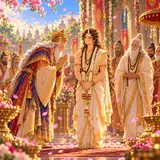
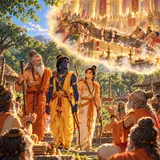
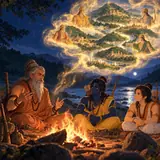
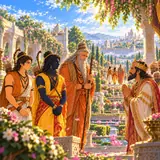
Scene 2 of 2 · Before both royal houses, Vasishtha recites the line of the Sun kings, from Manu and Ikshvaku down to Rama.
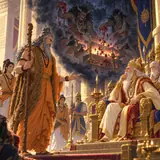
वक्ता सर्वेषु कृत्येषु वसिष्ठो भगवानृषिः । विश्वामित्राभ्यनुज्ञातः सह सर्वैर्महर्षिभिः ॥ १७ ॥
एष वक्ष्यति धर्मात्मा वसिष्ठो मे यथाक्रमम् । तूष्णींभूते दशरथे वसिष्ठो भगवानृषिः ॥ १८ ॥
“and the speaker in all our affairs is the holy sage Vasishtha. With the permission of Vishvamitra and all the great sages, this righteous Vasishtha will speak for me in due order.” When Dasharatha fell silent, the holy sage Vasishtha,
“और हमारे सब कामों में बोलने वाले भगवान ऋषि वसिष्ठ हैं। विश्वामित्र और सब महर्षियों की अनुमति से ये धर्मात्मा वसिष्ठ क्रम से मेरी ओर से बोलेंगे।” जब दशरथ चुप हो गए, तब बोलने में कुशल भगवान ऋषि वसिष्ठ ने
CommentaryNot scripture “Vasishtha will speak for me.” In a royal marriage negotiation, the family priest recites the lineage. Dasharatha honours the custom.
Scene 2 of 2 · Before both royal houses, Vasishtha recites the line of the Sun kings, from Manu and Ikshvaku down to Rama.
उवाच वाक्यं वाक्यज्ञो वैदेहं सपुरोधसम् । अव्यक्तप्रभवो ब्रह्मा शाश्वतो नित्य अव्ययः ॥ १९ ॥
skilled in speech, said to the Videha king and his priest: “From the unmanifest arose Brahma, eternal, everlasting, imperishable.
विदेहराज और उनके पुरोहित से कहा: “अव्यक्त से ब्रह्मा उत्पन्न हुए, शाश्वत, नित्य, अविनाशी।
CommentaryNot scripture Vasishtha begins at the very beginning: from the unmanifest, Brahma. A royal lineage traced back to creation.
Scene 2 of 2 · Before both royal houses, Vasishtha recites the line of the Sun kings, from Manu and Ikshvaku down to Rama.
तस्मान्मरीचिः संजज्ञे मरीचेः कश्यपः सुतः । विवस्वान् कश्यपाज्जज्ञे मनुर्वैवस्वतः स्मृतः ॥ २० ॥
“From him was born Marichi; Marichi’s son was Kashyapa. Vivasvat was born of Kashyapa, and Manu is known as the son of Vivasvat.
“उनसे मरीचि उत्पन्न हुए; मरीचि के पुत्र कश्यप थे। कश्यप से विवस्वान उत्पन्न हुए, और मनु विवस्वान के पुत्र कहलाते हैं।
CommentaryNot scripture Marichi, Kashyapa, Vivasvat (the sun god), Manu. This is why Rama’s family is called the Solar Dynasty (Surya-vamsha ).
Scene 2 of 2 · Before both royal houses, Vasishtha recites the line of the Sun kings, from Manu and Ikshvaku down to Rama.
मनुः प्रजापतिः पूर्वमिक्ष्वाकुश्च मनोः सुतः । तमिक्ष्वाकुमयोध्यायां राजानं विद्धि पूर्वकम् ॥ २१ ॥
“Manu was the first Prajapati, and Ikshvaku was Manu’s son. Know that Ikshvaku was the first king in Ayodhya.
“मनु पहले प्रजापति थे, और इक्ष्वाकु मनु के पुत्र थे। जान लीजिए कि इक्ष्वाकु अयोध्या के पहले राजा थे।
CommentaryNot scripture Manu, first Prajapati; Ikshvaku, his son, the first king of Ayodhya.
Scene 2 of 2 · Before both royal houses, Vasishtha recites the line of the Sun kings, from Manu and Ikshvaku down to Rama.
इक्ष्वाकोस्तु सुतः श्रीमान् कुक्षिरित्येव विश्रुतः । कुक्षेरथात्मजः श्रीमान् विकुक्षिरुदपद्यत ॥ २२ ॥
“Ikshvaku’s glorious son was known as Kukshi; from Kukshi was born the glorious Vikukshi.
“इक्ष्वाकु के यशस्वी पुत्र कुक्षि नाम से प्रसिद्ध थे; कुक्षि से यशस्वी विकुक्षि उत्पन्न हुए।
CommentaryNot scripture Kukshi, Vikukshi. The ancient names roll on.
Scene 2 of 2 · Before both royal houses, Vasishtha recites the line of the Sun kings, from Manu and Ikshvaku down to Rama.
विकुक्षेस्तु महातेजा बाणः पुत्रः प्रतापवान् । बाणस्य तु महातेजा अनरण्यः प्रतापवान् ॥ २३ ॥
“Vikukshi’s son was the radiant, valiant Bana; Bana’s son was the radiant, valiant Anaranya.
“विकुक्षि के पुत्र तेजस्वी, पराक्रमी बाण थे; बाण के पुत्र तेजस्वी, पराक्रमी अनरण्य थे।
CommentaryNot scripture Bana, Anaranya. In the later Uttara tradition, Anaranya cursed Ravana that a descendant of his would kill him.
Scene 2 of 2 · Before both royal houses, Vasishtha recites the line of the Sun kings, from Manu and Ikshvaku down to Rama.
अनरण्यात् पृथुर्जज्ञे त्रिशङ्कुस्तु पृथोरपि । त्रिशङ्कोरभवत् पुत्रो धुन्धुमारो महायशाः ॥ २४ ॥
“From Anaranya was born Prithu, and from Prithu, Trishanku. Trishanku’s son was the greatly renowned Dhundhumara.
“अनरण्य से पृथु उत्पन्न हुए, और पृथु से त्रिशंकु। त्रिशंकु के पुत्र महायशस्वी धुंधुमार थे।
CommentaryNot scripture Prithu, Trishanku (whose story we heard in sargas 57 to 60), Dhundhumara.
Scene 2 of 2 · Before both royal houses, Vasishtha recites the line of the Sun kings, from Manu and Ikshvaku down to Rama.
धुन्धुमारान्महातेजा युवनाश्वो महारथः । युवनाश्वसुतश्चासीन्मान्धाता पृथिवीपतिः ॥ २५ ॥
“From Dhundhumara came the radiant great chariot-warrior Yuvanashva; Yuvanashva’s son was Mandhata, lord of the earth.
“धुंधुमार से तेजस्वी महारथी युवनाश्व हुए; युवनाश्व के पुत्र पृथ्वीपति मांधाता थे।
CommentaryNot scripture Yuvanashva, Mandhata, the great emperor of legend.
Scene 2 of 2 · Before both royal houses, Vasishtha recites the line of the Sun kings, from Manu and Ikshvaku down to Rama.
मान्धातुस्तु सुतः श्रीमान् सुसन्धिरुदपद्यत । सुसन्धेरपि पुत्रौ द्वौ ध्रुवसन्धिः प्रसेनजित् ॥ २६ ॥
“Mandhata’s glorious son was Susandhi; Susandhi had two sons, Dhruvasandhi and Prasenajit.
“मांधाता के यशस्वी पुत्र सुसंधि थे; सुसंधि के दो पुत्र थे, ध्रुवसंधि और प्रसेनजित।
CommentaryNot scripture Susandhi, Dhruvasandhi, Prasenajit.
Scene 2 of 2 · Before both royal houses, Vasishtha recites the line of the Sun kings, from Manu and Ikshvaku down to Rama.
यशस्वी ध्रुवसन्धेस्तु भरतो नाम नामतः । भरतात् तु महातेजा असितो नाम जायत ॥ २७ ॥
“Dhruvasandhi’s glorious son was named Bharata; from Bharata was born the radiant one named Asita,
“ध्रुवसंधि के यशस्वी पुत्र का नाम भरत था; भरत से असित नाम के तेजस्वी पुत्र हुए,
CommentaryNot scripture Bharata (an earlier Bharata, not Rama’s brother), Asita.
Scene 2 of 2 · Before both royal houses, Vasishtha recites the line of the Sun kings, from Manu and Ikshvaku down to Rama.
यस्यैते प्रतिराजान उदपद्यन्त शत्रवः । हैहयास्तालजङ्घाश्च शूराश्च शशबिन्दवः ॥ २८ ॥
“against whom these rival kings arose as enemies: the Haihayas, the Talajanghas and the brave Shashabindus.
“जिनके विरुद्ध ये शत्रु राजा उठ खड़े हुए: हैहय, तालजंघ और वीर शशबिंदु।
CommentaryNot scripture Asita’s enemies: the Haihayas, Talajanghas, Shashabindus. Even this great line knew defeat.
Scene 2 of 2 · Before both royal houses, Vasishtha recites the line of the Sun kings, from Manu and Ikshvaku down to Rama.
तांश्च स प्रतियुध्यन् वै युद्धे राजा प्रवासितः । हिमवन्तमुपागम्य भार्याभ्यां सहितस्तदा ॥ २९ ॥
असितोऽल्पबलो राजा कालधर्ममुपेयिवान् । द्वे चास्य भार्ये गर्भिण्यौ बभूवतुरिति श्रुतिः ॥ ३० ॥
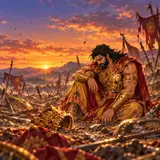
“Fighting them, the king was driven into exile in war; going to the Himalaya with his two wives, Asita, a king of little strength, met the law of time. His two wives were pregnant, so it is heard.
“उनसे लड़ते हुए राजा युद्ध में निर्वासित हो गए; अपनी दो पत्नियों के साथ हिमालय जाकर कम बल वाले राजा असित काल के नियम को प्राप्त हुए। सुना जाता है कि उनकी दोनों पत्नियाँ गर्भवती थीं।
CommentaryNot scripture Asita is driven into exile and dies in the Himalaya. His two wives are pregnant. Exile in the forest runs in Rama’s family.
Scene 2 of 2 · Before both royal houses, Vasishtha recites the line of the Sun kings, from Manu and Ikshvaku down to Rama.
एका गर्भविनाशार्थं सपत्न्यै सगरं ददौ । ततः शैलवरे रम्ये बभूवाभिरतो मुनिः ॥ ३१ ॥
भार्गवश्च्यवनो नाम हिमवन्तमुपाश्रितः । तत्र चैका महाभागा भार्गवं देववर्चसम् ॥ ३२ ॥
ववन्दे पद्मपत्राक्षी कांक्षन्ती सुतमुत्तमम् । तमृषिं साभ्युपागम्य कालिन्दी चाभ्यवादयत् ॥ ३३ ॥
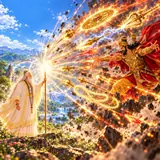
“One, to destroy the other’s embryo, gave her co-wife food with poison. Then on a lovely great mountain there lived a sage, Cyavana of Bhrigu’s line, who dwelt on the Himalaya. There one of the two, the fortunate, lotus-eyed Kalindi, longing for a fine son, went to the sage and saluted Bhargava, who shone like a god.
“एक ने दूसरी का गर्भ नष्ट करने के लिए अपनी सौत को विष वाला भोजन दिया। तब एक सुंदर बड़े पर्वत पर भृगु वंश के मुनि च्यवन रहते थे, जो हिमालय पर निवास करते थे। वहाँ उनमें से एक, भाग्यशाली, कमल-नयनी कालिंदी, उत्तम पुत्र की इच्छा से मुनि के पास गई और देवता जैसे चमकते भार्गव को प्रणाम किया।
CommentaryNot scripture One wife poisons the other to kill her unborn child. Kalindi, the victim, goes to the sage Cyavana.
Scene 2 of 2 · Before both royal houses, Vasishtha recites the line of the Sun kings, from Manu and Ikshvaku down to Rama.
स तामभ्यवदद् विप्रः पुत्रेप्सुं पुत्रजन्मनि । तव कुक्षौ महाभागे सुपुत्रः सुमहाबलः ॥ ३४ ॥
महावीर्यो महातेजा अचिरात् संजनिष्यति । गरेण सहितः श्रीमान् मा शुचः कमलेक्षणे ॥ ३५ ॥
“The brahmana said to her, who longed for a son, about the birth of her son: ‘In your womb, fortunate one, a fine son, very strong, of great valour and radiance, will soon be born, together with the poison. Do not grieve, lotus-eyed one.’
“पुत्र चाहने वाली उससे ब्राह्मण ने उसके पुत्र के जन्म के बारे में कहा: ‘भाग्यशाली, तुम्हारे गर्भ में जल्दी ही विष के साथ एक उत्तम पुत्र जन्म लेगा, अत्यंत बलवान, महापराक्रमी और तेजस्वी। कमल-नयनी, शोक मत करो।’
CommentaryNot scripture Cyavana promises: “A fine son will be born, together with the poison.” A blessing that turns harm into strength.
Scene 2 of 2 · Before both royal houses, Vasishtha recites the line of the Sun kings, from Manu and Ikshvaku down to Rama.
च्यवनं च नमस्कृत्य राजपुत्री पतिव्रता । पत्या विरहिता तस्मात् पुत्रं देवी व्यजायत ॥ ३६ ॥
“Bowing to Cyavana, the princess, devoted to her husband and parted from him, gave birth to a son.
“च्यवन को प्रणाम करके पति से बिछुड़ी, पतिव्रता राजकुमारी ने एक पुत्र को जन्म दिया।
CommentaryNot scripture Kalindi gives birth.
Scene 2 of 2 · Before both royal houses, Vasishtha recites the line of the Sun kings, from Manu and Ikshvaku down to Rama.
सपत्न्या तु गरस्तस्यै दत्तो गर्भजिघांसया । सह तेन गरेणैव संजातः सगरोऽभवत् ॥ ३७ ॥
“The poison had been given her by her co-wife to kill the embryo; born together with that poison (gara), he became Sagara.
“गर्भ को मारने के लिए सौत ने उसे विष दिया था; उस विष (गर) के साथ जन्म लेने के कारण वह सगर कहलाया।
CommentaryNot scripture Born “with poison” (sa-gara ), he is named Sagara: the king whose sixty thousand sons dug the ocean. Vasishtha explains his name.
Scene 2 of 2 · Before both royal houses, Vasishtha recites the line of the Sun kings, from Manu and Ikshvaku down to Rama.
सगरस्यासमञ्जस्तु असमञ्जादथांशुमान् । दिलीपोंऽशुमतः पुत्रो दिलीपस्य भगीरथः ॥ ३८ ॥
“Sagara’s son was Asamanja, and from Asamanja came Amshuman; Dilipa was Amshuman’s son, and Dilipa’s was Bhagiratha.
“सगर के पुत्र असमंज थे, और असमंज से अंशुमान; दिलीप अंशुमान के पुत्र थे, और दिलीप के भगीरथ।
CommentaryNot scripture Asamanja, Amshuman, Dilipa, Bhagiratha: the four generations of the Ganga story.
Scene 2 of 2 · Before both royal houses, Vasishtha recites the line of the Sun kings, from Manu and Ikshvaku down to Rama.
भगीरथात् ककुत्स्थश्च ककुत्स्थाच्च रघुस्तथा । रघोस्तु पुत्रस्तेजस्वी प्रवृद्धः पुरुषादकः ॥ ३९ ॥
कल्माषपादोऽप्यभवत् तस्माज्जातस्तु शङ्खणः । सुदर्शनः शङ्खणस्य अग्निवर्णः सुदर्शनात् ॥ ४० ॥
“From Bhagiratha came Kakutstha, and from Kakutstha Raghu. Raghu’s radiant son was Pravriddha, the man-eater, who also became Kalmashapada; from him was born Shankhana. Shankhana’s son was Sudarshana, and from Sudarshana came Agnivarna.
“भगीरथ से ककुत्स्थ हुए, और ककुत्स्थ से रघु। रघु के तेजस्वी पुत्र प्रवृद्ध थे, जो नरभक्षी हुए, और कल्माषपाद भी कहलाए; उनसे शंखण उत्पन्न हुए। शंखण के पुत्र सुदर्शन थे, और सुदर्शन से अग्निवर्ण।
CommentaryNot scripture Kakutstha (from whom Rama’s title Kakutstha comes) and Raghu (from whom “Raghava” comes). Then Kalmashapada, a king cursed to become a man-eater, and on through Shankhana, Sudarshana, Agnivarna.
Scene 2 of 2 · Before both royal houses, Vasishtha recites the line of the Sun kings, from Manu and Ikshvaku down to Rama.
शीघ्रगस्त्वग्निवर्णस्य शीघ्रगस्य मरुः सुतः । मरोः प्रशुश्रुकस्त्वासीदम्बरीषः प्रशुश्रुकात् ॥ ४१ ॥
“Agnivarna’s son was Shighraga, Shighraga’s son was Maru; Maru’s son was Prashushruka, and from Prashushruka came Ambarisha.
“अग्निवर्ण के पुत्र शीघ्रग थे, शीघ्रग के पुत्र मरु; मरु के पुत्र प्रशुश्रुक थे, और प्रशुश्रुक से अंबरीष।
CommentaryNot scripture Shighraga, Maru, Prashushruka, Ambarisha (who bought Shunahshepa).
Scene 2 of 2 · Before both royal houses, Vasishtha recites the line of the Sun kings, from Manu and Ikshvaku down to Rama.
अम्बरीषस्य पुत्रोऽभून्नहुषश्च महीपतिः । नहुषस्य ययातिस्तु नाभागस्तु ययातिजः ॥ ४२ ॥
“Ambarisha’s son was Nahusha, lord of the earth; Nahusha’s son was Yayati, and Nabhaga was born of Yayati.
“अंबरीष के पुत्र पृथ्वीपति नहुष थे; नहुष के पुत्र ययाति थे, और ययाति से नाभाग उत्पन्न हुए।
CommentaryNot scripture Nahusha, Yayati, Nabhaga. Some of these names also appear in other royal lists; the epics often share old names.
Scene 2 of 2 · Before both royal houses, Vasishtha recites the line of the Sun kings, from Manu and Ikshvaku down to Rama.
नाभागस्य बभूवाज अजाद् दशरथोऽभवत् । अस्माद् दशरथाज्जातौ भ्रातरौ रामलक्ष्मणौ ॥ ४३ ॥
“Nabhaga’s son was Aja; from Aja came Dasharatha. From this Dasharatha were born the brothers Rama and Lakshmana.
“नाभाग के पुत्र अज थे; अज से दशरथ हुए। इन्हीं दशरथ से भाई राम और लक्ष्मण उत्पन्न हुए।
CommentaryNot scripture Aja, and Dasharatha. And from Dasharatha, Rama and Lakshmana. The long line arrives at the two young men in the room.
Scene 2 of 2 · Before both royal houses, Vasishtha recites the line of the Sun kings, from Manu and Ikshvaku down to Rama.
आदिवंशविशुद्धानां राज्ञां परमधर्मिणाम् । इक्ष्वाकुकुलजातानां वीराणां सत्यवादिनाम् ॥ ४४ ॥
रामलक्ष्मणयोरर्थे त्वत्सुते वरये नृप । सदृशाभ्यां नरश्रेष्ठ सदृशे दातुमर्हसि ॥ ४५ ॥
“For Rama and Lakshmana, born in the Ikshvaku line of kings pure from the first line, supremely righteous, heroic and truthful, I ask for your daughters, king. Best of men, you should give two worthy brides to two worthy grooms.”
“राजन, पहली पीढ़ी से शुद्ध इक्ष्वाकु राजवंश में जन्मे, परम धर्मात्मा, वीर और सत्यवादी राम और लक्ष्मण के लिए मैं आपकी पुत्रियाँ माँगता हूँ। पुरुषश्रेष्ठ, आपको दो योग्य वरों को दो योग्य वधुएँ देनी चाहिए।”
CommentaryNot scripture “Pure from the first line”: Vasishtha formally asks for Janaka’s daughters for both Rama and Lakshmana. “Worthy brides for worthy grooms.” The lineage is the bridegroom’s credential. Now Janaka will recite his own.
Scene 2 of 2 · Before both royal houses, Vasishtha recites the line of the Sun kings, from Manu and Ikshvaku down to Rama.