Bala Kanda · Sarga 33 of 77 · 26 verses
Forgiveness, and Brahmadatta
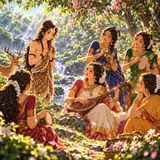
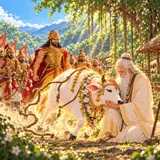
The daughters bow and explain: Vayu tried to force them, following an evil path, and when they said “We are not free to choose; ask our father”, he broke them. Kushanabha answers with praise: “You have forgiven, as the forgiving do; that was a great thing. Forgiveness is the ornament of women and of men, and hard to practise, especially toward the gods. Forgiveness is generosity, truth, sacrifice, fame and dharma; the world rests on forgiveness.”
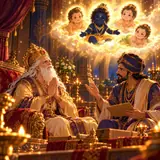
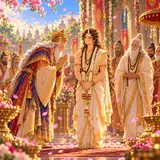
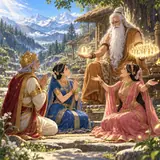
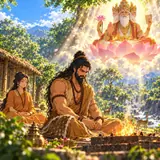
He consults his ministers about whom to give them to. At that time a sage named Chuli practised Brahma’s austerity, and a gandharva woman, Somada, daughter of Urmila, served him devotedly. Pleased, he offered her a wish; she asked for a righteous son born of his spiritual power, though she had no husband. He gave her a mind-born son, Brahmadatta, who became king of Kampilya. Kushanabha gives his hundred daughters to Brahmadatta. As he takes each one’s hand, her body is healed and her beauty returns. Kushanabha rejoices again and again, and Somada welcomes her daughters-in-law.
Press › to begin with verse 1.
तस्य तद्वचनं श्रुत्वा कुशनाभस्य धीमतः । शिरोभिश्चरणौ स्पृष्ट्वा कन्याशतमभाषत ॥ १ ॥
Hearing the words of the wise Kushanabha, the hundred daughters touched his feet with their heads and said:
बुद्धिमान कुशनाभ के वचन सुनकर सौ पुत्रियों ने सिर से उनके चरण छुए और कहा:
Commentary on the whole sarga
Forgiveness, and Brahmadatta 1 min read.
Read the commentary CommentaryNot scripture The daughters touch their father’s feet and tell him what happened. They come to him first. Their trust in him is the trust they spoke of to Vayu.
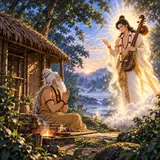
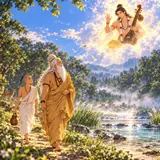
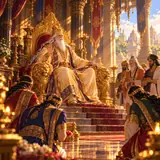
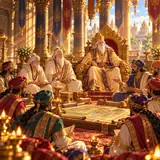
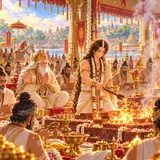
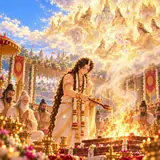
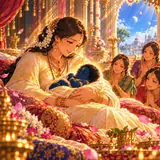
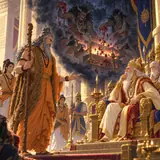
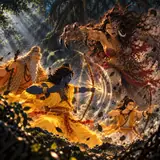
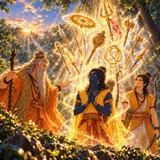
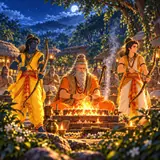
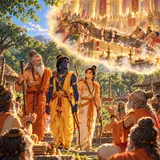
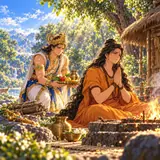
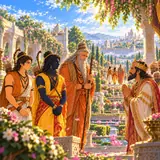
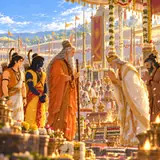
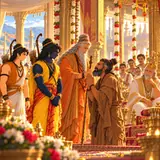
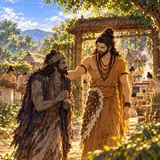
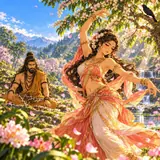
Scene 1 of 2 · King Kushanabha praises his daughters’ forgiveness: “the world rests on forgiveness.”
वायुः सर्वात्मको राजन् प्रधर्षयितुमिच्छति । अशुभं मार्गमास्थाय न धर्मं प्रत्यवेक्षते ॥ २ ॥
“King, Vayu, who is the self of all, wishes to violate us. Taking an evil path, he does not regard dharma.
“राजन, सबकी आत्मा वायु हमारा अपमान करना चाहते हैं। बुरे मार्ग पर चलते हुए वे धर्म का ध्यान नहीं रखते।
CommentaryNot scripture “He does not regard dharma.” The daughters name Vayu’s wrong clearly. A god can do wrong, and the Ramayana says so.
Scene 1 of 2 · King Kushanabha praises his daughters’ forgiveness: “the world rests on forgiveness.”
पितृमत्यः स्म भद्रं ते स्वच्छन्दे न वयं स्थिताः । पितरं नो वृणीष्व त्वं यदि नो दास्यते तव ॥ ३ ॥
“We said: ‘We have a father, bless you; we are not our own masters. Ask our father, if he will give us to you.’
“हमने कहा: ‘आपका कल्याण हो, हमारे पिता हैं; हम अपनी स्वामिनी नहीं हैं। हमारे पिता से माँगिए, यदि वे हमें आपको दें।’
CommentaryNot scripture Their reply to Vayu was simple: “Ask our father.” They did not insult him; they redirected him. A calm, dignified answer.
Scene 1 of 2 · King Kushanabha praises his daughters’ forgiveness: “the world rests on forgiveness.”
तेन पापानुबन्धेन वचनं न प्रतीच्छता । एवं ब्रुवन्त्यः सर्वाः स्म वायुनाभिहता भृशम् ॥ ४ ॥
“Saying this, we were all struck down hard by Vayu, who, bent on evil, would not accept our words.”
“यह कहने पर पाप में लगे वायु ने, जिन्होंने हमारी बात नहीं मानी, हम सबको बुरी तरह मारा।”
CommentaryNot scripture For this they were struck down. Their courage cost them dearly. Valmiki makes sure we know the punishment was unjust.
Scene 1 of 2 · King Kushanabha praises his daughters’ forgiveness: “the world rests on forgiveness.”
तासां तु वचनं श्रुत्वा राजा परमधार्मिकः । प्रत्युवाच महातेजाः कन्याशतमनुत्तमम् ॥ ५ ॥
Hearing their words, the most righteous and radiant king replied to his hundred matchless daughters:
उनके वचन सुनकर अत्यंत धर्मात्मा और तेजस्वी राजा ने अपनी सौ अनुपम पुत्रियों को उत्तर दिया:
CommentaryNot scripture The king answers his daughters, and what he says is not what we might expect. He does not swear vengeance on the god.
Scene 1 of 2 · King Kushanabha praises his daughters’ forgiveness: “the world rests on forgiveness.”
क्षान्तं क्षमावतां पुत्र्यः कर्तव्यं सुमहत् कृतम् । ऐकमत्यमुपागम्य कुलं चावेक्षितं मम ॥ ६ ॥
“Daughters, you have forgiven, as the forgiving do; you have done a very great thing. You were of one mind and looked to the honour of my family.
“पुत्रियो, तुमने क्षमाशीलों की तरह क्षमा किया है; तुमने बहुत बड़ा काम किया है। तुम सब एक मत रहीं और मेरे कुल के सम्मान का ध्यान रखा।
CommentaryNot scripture “You have forgiven, as the forgiving do. You have done a very great thing.” The daughters could have cursed Vayu with their austerity (sarga 32). They chose not to. Their father honours that choice above everything.
Scene 1 of 2 · King Kushanabha praises his daughters’ forgiveness: “the world rests on forgiveness.”
अलङ्कारो हि नारीणां क्षमा तु पुरुषस्य वा । दुष्करं तच्च वै क्षान्तं त्रिदशेषु विशेषतः ॥ ७ ॥
“Forgiveness is the ornament of women, and of men too. And what you have forgiven is hard to forgive, especially among the gods.
“क्षमा स्त्रियों का आभूषण है, और पुरुषों का भी। और तुमने जो क्षमा किया है, वह क्षमा करना कठिन है, विशेषकर देवताओं के प्रति।
CommentaryNot scripture “Forgiveness (kshama ) is the ornament of women, and of men too.” Kushanabha extends it to everyone. And to forgive a god, who has power over you, is the hardest forgiveness of all.
Scene 1 of 2 · King Kushanabha praises his daughters’ forgiveness: “the world rests on forgiveness.”
यादृशी वः क्षमा पुत्र्यः सर्वासामविशेषतः । क्षमा दानं क्षमा सत्यं क्षमा यज्ञाश्च पुत्रिकाः ॥ ८ ॥
“Such is the forgiveness of all of you, daughters, without distinction. Forgiveness is generosity, forgiveness is truth, forgiveness is sacrifice, my daughters;
“पुत्रियो, तुम सबकी क्षमा बिना भेद के ऐसी ही है। मेरी पुत्रियो, क्षमा दान है, क्षमा सत्य है, क्षमा यज्ञ है;
CommentaryNot scripture Then comes one of the most famous passages on forgiveness in Sanskrit: “Forgiveness is generosity, forgiveness is truth, forgiveness is sacrifice.”
Scene 1 of 2 · King Kushanabha praises his daughters’ forgiveness: “the world rests on forgiveness.”
क्षमा यशः क्षमा धर्मः क्षमायां विष्ठितं जगत् । विसृज्य कन्याः काकुत्स्थ राजा त्रिदशविक्रमः ॥ ९ ॥
मन्त्रज्ञो मन्त्रयामास प्रदानं सह मन्त्रिभिः । देशे काले च कर्तव्यं सदृशे प्रतिपादनम् ॥ १० ॥
“forgiveness is fame, forgiveness is dharma; the world rests on forgiveness.” Sending away his daughters, Kakutstha, the king, whose valour was like the gods’, skilled in counsel, consulted with his ministers about giving them away: the giving should be done at the right place and time, to a worthy match.
“क्षमा यश है, क्षमा धर्म है; संसार क्षमा पर ही टिका है।” पुत्रियों को विदा करके, काकुत्स्थ, देवताओं जैसे पराक्रमी, मंत्रणा में कुशल राजा ने अपने मंत्रियों के साथ उनके विवाह के बारे में विचार किया: विवाह उचित देश और काल में, योग्य वर से होना चाहिए।
CommentaryNot scripture “Forgiveness is fame, forgiveness is dharma; the world rests on forgiveness.” The passage is still quoted in India. Then the practical turn: the king consults his ministers about his daughters’ marriages, at the right time and to a worthy husband.
Scene 1 of 2 · King Kushanabha praises his daughters’ forgiveness: “the world rests on forgiveness.”
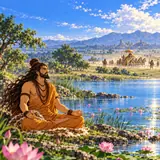
एतस्मिन्नेव काले तु चूली नाम महाद्युतिः । ऊर्ध्वरेताः शुभाचारो ब्राह्मं तप उपागमत् ॥ ११ ॥
At that very time a radiant sage named Chuli, chaste and of good conduct, had undertaken Brahma’s austerity.
उसी समय चूली नाम के एक तेजस्वी, ब्रह्मचारी और सदाचारी मुनि ब्राह्म तप कर रहे थे।
CommentaryNot scripture A new thread: the sage Chuli, chaste and of good conduct, practising austerity. Vishvamitra’s story widens to include a whole new family.
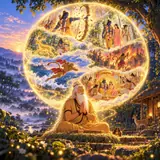
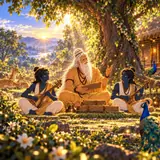
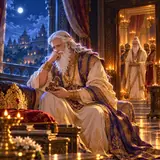
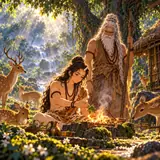
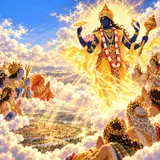
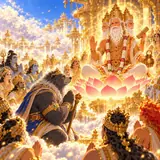
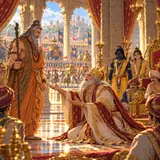
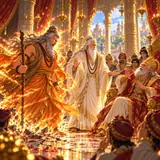
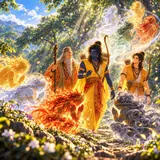
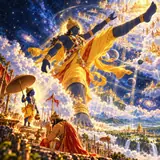
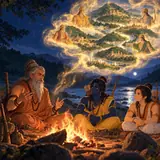
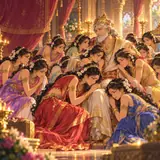
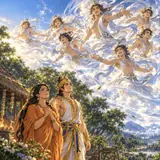
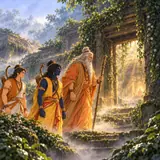
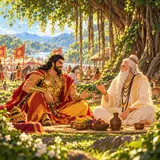
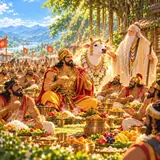
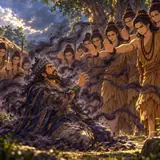
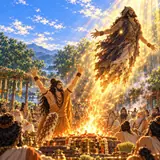
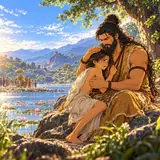
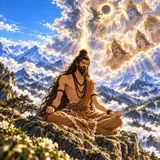
Scene 2 of 2 · At the touch of King Brahmadatta’s hand, the hundred bent maidens are healed and shine again.
तपस्यन्तमृषिं तत्र गन्धर्वी पर्युपासते । सोमदा नाम भद्रं ते ऊर्मिलातनया तदा ॥ १२ ॥
While the sage practised austerity there, a gandharva woman named Somada, daughter of Urmila, waited on him, bless you.
जब मुनि वहाँ तप कर रहे थे, तब ऊर्मिला की पुत्री सोमदा नाम की एक गंधर्वी उनकी सेवा करती थी, तुम्हारा कल्याण हो।
CommentaryNot scripture Somada, a gandharva woman, serves him. Service to a sage is itself a spiritual practice in these stories.
Scene 2 of 2 · At the touch of King Brahmadatta’s hand, the hundred bent maidens are healed and shine again.
सा च तं प्रणता भूत्वा शुश्रूषणपरायणा । उवास काले धर्मिष्ठा तस्यास्तुष्टोऽभवद् गुरुः ॥ १३ ॥
Bowing to him, devoted to his service, the righteous one lived there in due time, and her teacher was pleased with her.
उन्हें प्रणाम करते हुए, उनकी सेवा में लगी वह धर्मात्मा समय से वहाँ रहती थी, और उसके गुरु उससे प्रसन्न थे।
CommentaryNot scripture She bows and serves in due time, and her teacher is pleased. The relationship is one of devotion and respect.
Scene 2 of 2 · At the touch of King Brahmadatta’s hand, the hundred bent maidens are healed and shine again.
स च तां कालयोगेन प्रोवाच रघुनन्दन । परितुष्टोऽस्मि भद्रं ते किं करोमि तव प्रियम् ॥ १४ ॥
In time he said to her, delight of the Raghus: “I am well pleased with you; blessings on you. What can I do to please you?”
समय आने पर उन्होंने उससे कहा, रघुनंदन: “मैं तुमसे बहुत प्रसन्न हूँ; तुम्हारा कल्याण हो। मैं तुम्हें प्रसन्न करने के लिए क्या कर सकता हूँ?”
CommentaryNot scripture “What can I do to please you?” The sage offers a boon, as gods and sages do in return for devoted service.
Scene 2 of 2 · At the touch of King Brahmadatta’s hand, the hundred bent maidens are healed and shine again.
परितुष्टं मुनिं ज्ञात्वा गन्धर्वी मधुरस्वरम् । उवाच परमप्रीता वाक्यज्ञा वाक्यकोविदम् ॥ १५ ॥
Knowing the sage was pleased, the gandharva woman, skilled in speech, said in a sweet voice to one who knew how to speak, in great joy:
मुनि को प्रसन्न जानकर बोलने में कुशल गंधर्वी ने बोलना जानने वाले मुनि से बड़े आनंद से मधुर स्वर में कहा:
CommentaryNot scripture Somada is skilled in speech, and so is the sage. Valmiki enjoys these little notes about how people speak.
Scene 2 of 2 · At the touch of King Brahmadatta’s hand, the hundred bent maidens are healed and shine again.
लक्ष्म्या समुदितो ब्राह्म्या ब्रह्मभूतो महातपाः । ब्राह्मेण तपसा युक्तं पुत्रमिच्छामि धार्मिकम् ॥ १६ ॥
“You are full of the splendour of Brahman, become one with Brahman, of great austerity. I want a righteous son endowed with Brahma’s austerity.
“आप ब्रह्म के तेज से भरे हैं, ब्रह्म में लीन हैं, महातपस्वी हैं। मैं ब्राह्म तप से युक्त एक धर्मात्मा पुत्र चाहती हूँ।
CommentaryNot scripture She asks for a righteous son endowed with Brahma’s austerity. Like Dasharatha, like Suketu, she longs for a child.
Scene 2 of 2 · At the touch of King Brahmadatta’s hand, the hundred bent maidens are healed and shine again.
अपतिश्चास्मि भद्रं ते भार्या चास्मि न कस्यचित् । ब्राह्मेणोपगतायाश्च दातुमर्हसि मे सुतम् ॥ १७ ॥
“I have no husband, bless you, and I am no one’s wife. You should give a son to me, who have come to you through Brahma’s discipline.”
“आपका कल्याण हो, मेरा कोई पति नहीं है, और मैं किसी की पत्नी नहीं हूँ। ब्राह्म नियम से आपके पास आई हुई मुझे आप एक पुत्र दीजिए।”
CommentaryNot scripture “I have no husband, and am no one’s wife.” She asks openly. Her request is honest and properly made.
Scene 2 of 2 · At the touch of King Brahmadatta’s hand, the hundred bent maidens are healed and shine again.
तस्याः प्रसन्नो ब्रह्मर्षिर्ददौ ब्राह्ममनुत्तमम् । ब्रह्मदत्त इति ख्यातं मानसं चूलिनः सुतम् ॥ १८ ॥
Pleased with her, the brahmarshi gave her a supreme son of Brahman: born of Chuli’s mind, known as Brahmadatta.
उससे प्रसन्न होकर ब्रह्मर्षि ने उसे ब्रह्म का एक परम पुत्र दिया: चूली के मन से उत्पन्न, जो ब्रह्मदत्त कहलाया।
CommentaryNot scripture The sage gives her a son “born of his mind” (manasa ): a spiritual birth, not a physical one. His name is Brahmadatta, “given by Brahman”.
Scene 2 of 2 · At the touch of King Brahmadatta’s hand, the hundred bent maidens are healed and shine again.
स राजा ब्रह्मदत्तस्तु पुरीमध्यवसत् तदा । काम्पिल्यां परया लक्ष्म्या देवराजो यथा दिवम् ॥ १९ ॥
That King Brahmadatta then dwelt in the city of Kampilya in supreme glory, as the king of the gods dwells in heaven.
वह राजा ब्रह्मदत्त फिर कांपिल्य नगरी में परम शोभा से वैसे ही रहता था जैसे स्वर्ग में देवराज।
CommentaryNot scripture Brahmadatta becomes king in Kampilya (in the land of Panchala, today’s Uttar Pradesh). The son of a sage and a gandharva becomes a great king.
Scene 2 of 2 · At the touch of King Brahmadatta’s hand, the hundred bent maidens are healed and shine again.
स बुद्धिं कृतवान् राजा कुशनाभः सुधार्मिकः । ब्रह्मदत्ताय काकुत्स्थ दातुं कन्याशतं तदा ॥ २० ॥
The most righteous King Kushanabha decided then, Kakutstha, to give his hundred daughters to Brahmadatta.
काकुत्स्थ, तब अत्यंत धर्मात्मा राजा कुशनाभ ने अपनी सौ पुत्रियाँ ब्रह्मदत्त को देने का निश्चय किया।
CommentaryNot scripture Kushanabha chooses Brahmadatta as husband for all hundred daughters. A worthy match, as he wished: a king of spiritual birth.
Scene 2 of 2 · At the touch of King Brahmadatta’s hand, the hundred bent maidens are healed and shine again.
तमाहूय महातेजा ब्रह्मदत्तं महीपतिः । ददौ कन्याशतं राजा सुप्रीतेनान्तरात्मना ॥ २१ ॥
Summoning the radiant Brahmadatta, the lord of the earth gave him the hundred daughters with a glad heart.
तेजस्वी ब्रह्मदत्त को बुलाकर पृथ्वीपति ने प्रसन्न मन से उन्हें सौ पुत्रियाँ दीं।
CommentaryNot scripture He gives them “with a glad heart”. The father’s grief has turned to joy.
Scene 2 of 2 · At the touch of King Brahmadatta’s hand, the hundred bent maidens are healed and shine again.
यथाक्रमं तदा पाणिं जग्राह रघुनन्दन । ब्रह्मदत्तो महीपालस्तासां देवपतिर्यथा ॥ २२ ॥
Then, delight of the Raghus, the lord of the earth Brahmadatta took their hands one by one, like the lord of the gods.
तब, रघुनंदन, पृथ्वीपति ब्रह्मदत्त ने देवराज की तरह एक-एक करके उनका पाणिग्रहण किया।
CommentaryNot scripture Brahmadatta takes their hands one by one (pani-grahana , the rite of taking the hand in marriage).
Scene 2 of 2 · At the touch of King Brahmadatta’s hand, the hundred bent maidens are healed and shine again.
स्पृष्टमात्रे तदा पाणौ विकुब्जा विगतज्वराः । युक्तं परमया लक्ष्म्या बभौ कन्याशतं तदा ॥ २३ ॥
The moment their hands were touched, the hundred maidens were no longer bent, their pain was gone, and they shone with supreme beauty.
हाथ छूते ही सौ कन्याएँ कुबड़ी नहीं रहीं, उनकी पीड़ा दूर हो गई, और वे परम सौंदर्य से चमकने लगीं।
CommentaryNot scripture At the touch of his hand, the maidens are healed. Their bodies straighten, their pain vanishes, they shine with beauty. Forgiveness has been rewarded, and harm undone by a righteous touch.
Scene 2 of 2 · At the touch of King Brahmadatta’s hand, the hundred bent maidens are healed and shine again.
स दृष्ट्वा वायुना मुक्ताः कुशनाभो महीपतिः । बभूव परमप्रीतो हर्षं लेभे पुनः पुनः ॥ २४ ॥
Seeing them released by Vayu, the lord of the earth Kushanabha was overjoyed and rejoiced again and again.
उन्हें वायु से मुक्त देखकर पृथ्वीपति कुशनाभ अत्यंत प्रसन्न हुए और बार-बार आनंदित हुए।
CommentaryNot scripture Kushanabha rejoices “again and again”. The story that began with injustice ends with healing.
Scene 2 of 2 · At the touch of King Brahmadatta’s hand, the hundred bent maidens are healed and shine again.
कृतोद्वाहं तु राजानं ब्रह्मदत्तं महीपतिम् । सदारं प्रेषयामास सोपाध्यायगणं तदा ॥ २५ ॥
When King Brahmadatta, lord of the earth, had married them, he sent him off with his wives and his company of priests.
जब राजा ब्रह्मदत्त ने उनसे विवाह कर लिया, तब उन्होंने उन्हें उनकी पत्नियों और पुरोहितों के दल के साथ विदा किया।
CommentaryNot scripture The king sends Brahmadatta home with his wives and priests. A happy ending.
Scene 2 of 2 · At the touch of King Brahmadatta’s hand, the hundred bent maidens are healed and shine again.
सोमदापि सुतं दृष्ट्वा पुत्रस्य सदृशीं क्रियाम् । यथान्यायं च गन्धर्वी स्नुषास्ताः प्रत्यनन्दत । स्पृष्ट्वा स्पृष्ट्वा च ताः कन्याः कुशनाभं प्रशस्य च ॥ २६ ॥
And Somada, the gandharva woman, seeing her son and the fitting marriage he had made, welcomed her daughters-in-law as was proper; touching those maidens again and again, she praised Kushanabha.
और गंधर्वी सोमदा ने अपने पुत्र और उसके योग्य विवाह को देखकर अपनी बहुओं का उचित स्वागत किया; उन कन्याओं को बार-बार छूकर उसने कुशनाभ की प्रशंसा की।
CommentaryNot scripture Somada welcomes her hundred daughters-in-law, touching them again and again with love. A mother-in-law who embraces her new daughters: the story ends with a picture of family warmth.
Scene 2 of 2 · At the touch of King Brahmadatta’s hand, the hundred bent maidens are healed and shine again.