Bala Kanda · Sarga 18 of 77 · 59 verses
The Birth of Rama and His Brothers; Vishvamitra Arrives
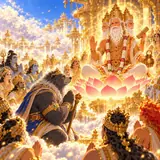
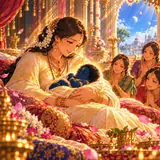
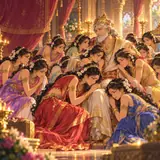
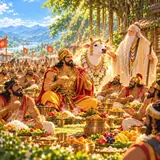
The sacrifice ends, the gods take their shares, the kings go home, and Rishyashringa leaves with Shanta. Twelve months later, in the month of Caitra, on the ninth day, under the star Punarvasu, with five planets exalted and Cancer rising, Kausalya gives birth to Rama, half of Vishnu, lord of the world. Kaikeyi bears Bharata, a quarter of Vishnu, under Pushya; Sumitra bears the twins Lakshmana and Shatrughna under Ashlesha. Gandharvas sing, apsarases dance, flowers fall from the sky, and Ayodhya celebrates.
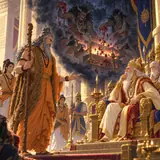
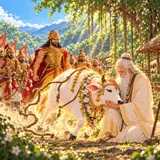
On the twelfth day Vasishtha names them. The boys grow learned, brave and devoted to their father. Rama, the eldest, is loved by everyone; Lakshmana from childhood is like Rama’s second life outside his body: Rama cannot sleep or eat without him, and when Rama rides out to hunt Lakshmana follows with his bow. Shatrughna is just as devoted to Bharata.
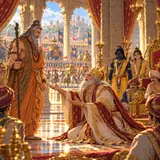
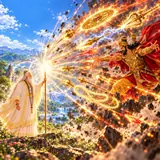
As Dasharatha begins to think of their marriages, the great sage Vishvamitra arrives at the gate. The king receives him with joy, as Indra receives Brahma, and says his coming is like nectar, like rain in a drought, like a son to the childless. “Whatever you wish, consider it done.”
Press › to begin with verse 1.
निर्वृत्ते तु क्रतौ तस्मिन् हयमेधे महात्मनः । प्रतिगृह्यमरा भागान् प्रतिजग्मुर्यथागतम् ॥ १ ॥
When the great-souled king’s horse sacrifice was over, the immortals took their shares and went back as they had come.
जब महात्मा राजा का अश्वमेध यज्ञ पूरा हुआ, तब देवता अपने भाग लेकर जैसे आए थे वैसे ही लौट गए।
Commentary on the whole sarga
The Birth of Rama and His Brothers; Vishvamitra Arrives 1 min read.
Read the commentary CommentaryNot scripture The horse sacrifice is over. The gods take their shares and return home. Everything that needed to happen in heaven has happened. Now the story comes down to earth and waits.
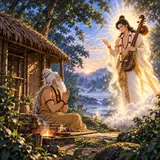
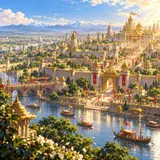
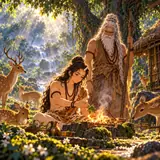
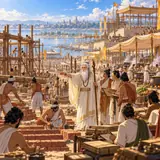
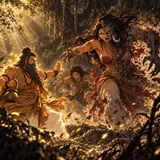
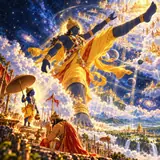
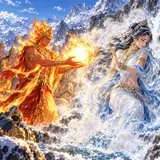
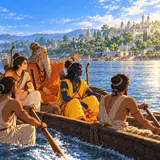
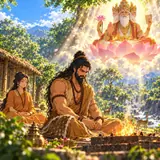
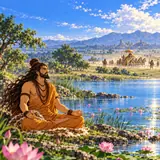
Scene 1 of 4 · On the ninth day of Caitra, Kausalya gives birth to Rama, and the room fills with light.
समाप्तदीक्षानियमः पत्नीगणसमन्वितः । प्रविवेश पुरीं राजा सभृत्यबलवाहनः ॥ २ ॥
Having completed the rules of consecration, the king, with his wives, entered the city with his servants, army and vehicles.
दीक्षा के नियम पूरे करके राजा ने अपनी रानियों, सेवकों, सेना और वाहनों के साथ नगर में प्रवेश किया।
CommentaryNot scripture The king completes the rules of consecration and enters the city with his queens. The rite has ended, but its promise has not yet been fulfilled. The queens carry it within them.
Scene 1 of 4 · On the ninth day of Caitra, Kausalya gives birth to Rama, and the room fills with light.
यथार्हं पूजितास्तेन राज्ञा वै पृथिवीश्वराः । मुदिताः प्रययुर्देशान् प्रणम्य मुनिपुंगवम् ॥ ३ ॥
The lords of the earth, honoured by the king as they deserved, bowed to the foremost sage and joyfully went to their own countries.
राजा से यथायोग्य सम्मान पाकर पृथ्वी के राजा मुनिश्रेष्ठ को प्रणाम करके प्रसन्नता से अपने-अपने देश चले गए।
CommentaryNot scripture The visiting kings bow to Vasishtha, the foremost sage, and go home. Every guest leaves honoured. Vasishtha’s teaching about giving with respect has been kept.
Scene 1 of 4 · On the ninth day of Caitra, Kausalya gives birth to Rama, and the room fills with light.
श्रीमतां गच्छतां तेषां स्वगृहाणि पुरात् ततः । बलानि राज्ञां शुभ्राणि प्रहृष्टानि चकाशिरे ॥ ४ ॥
As those glorious kings went from the city to their homes, their bright, happy armies shone.
नगर से अपने घरों को जाते उन यशस्वी राजाओं की उजली, प्रसन्न सेनाएँ शोभा पा रही थीं।
CommentaryNot scripture The departing armies shine bright and happy. Valmiki ends the great gathering with a picture of contentment spreading out across the land.
Scene 1 of 4 · On the ninth day of Caitra, Kausalya gives birth to Rama, and the room fills with light.
गतेषु पृथिवीशेषु राजा दशरथः पुनः । प्रविवेश पुरीं श्रीमान् पुरस्कृत्य द्विजोत्तमान् ॥ ५ ॥
When the kings had gone, the glorious King Dasharatha entered the city again, with the best of brahmanas before him.
राजाओं के चले जाने पर यशस्वी राजा दशरथ श्रेष्ठ ब्राह्मणों को आगे करके फिर नगर में आए।
CommentaryNot scripture Dasharatha re-enters the city with brahmanas before him. Placing the learned in front is a gesture of honour that recurs through these sargas.
Scene 1 of 4 · On the ninth day of Caitra, Kausalya gives birth to Rama, and the room fills with light.
शान्तया प्रययौ सार्धमृष्यशृङ्गः सुपूजितः । अनुगम्यमानो राज्ञा च सानुयात्रेण धीमता ॥ ६ ॥
Rishyashringa, well honoured, set out with Shanta, followed by the wise king with his retinue.
सम्मानित ऋष्यशृंग शांता के साथ चल पड़े, और बुद्धिमान राजा अपने परिवार के साथ उन्हें विदा करने साथ चले।
CommentaryNot scripture Rishyashringa and Shanta leave, and the king himself escorts them part of the way. You do not simply dismiss a sage who has given you everything. You walk with him.
Scene 1 of 4 · On the ninth day of Caitra, Kausalya gives birth to Rama, and the room fills with light.
एवं विसृज्य तान् सर्वान् राजा सम्पूर्णमानसः । उवास सुखितस्तत्र पुत्रोत्पत्तिं विचिन्तयन् ॥ ७ ॥
Having sent them all off, the king, his heart content, lived there happily, thinking of the birth of sons.
सबको विदा करके संतुष्ट मन वाले राजा पुत्रों के जन्म के बारे में सोचते हुए वहाँ सुख से रहने लगे।
CommentaryNot scripture The king lives “happily, thinking of the birth of sons”. The waiting is now joyful. A long sorrow has turned into hope.
Scene 1 of 4 · On the ninth day of Caitra, Kausalya gives birth to Rama, and the room fills with light.
ततो यज्ञे समाप्ते तु ऋतूनां षट् समत्ययुः । ततश्च द्वादशे मासे चैत्रे नावमिके तिथौ ॥ ८ ॥
नक्षत्रेऽदितिदैवत्ये स्वोच्चसंस्थेषु पञ्चसु । ग्रहेषु कर्कटे लग्ने वाक्पताविन्दुना सह ॥ ९ ॥
प्रोद्यमाने जगन्नाथं सर्वलोकनमस्कृतम् । कौसल्याजनयद् रामं दिव्यलक्षणसंयुतम् ॥ १० ॥
When the sacrifice was over, six seasons passed. Then in the twelfth month, Caitra, on the ninth day, under the star whose deity is Aditi (Punarvasu), with five planets in their exaltation, Cancer rising, and Jupiter with the Moon, Kausalya gave birth to Rama, lord of the world, honoured by all the worlds, bearing divine marks:
यज्ञ पूरा होने के बाद छह ऋतुएँ बीत गईं। फिर बारहवें महीने चैत्र में, नवमी तिथि को, अदिति देवता वाले नक्षत्र (पुनर्वसु) में, जब पाँच ग्रह उच्च स्थान में थे, कर्क लग्न का उदय था, और बृहस्पति चंद्रमा के साथ थे, तब कौसल्या ने सब लोकों से पूजित, जगत के स्वामी, दिव्य लक्षणों वाले राम को जन्म दिया:
CommentaryNot scripture The most celebrated birth in Indian tradition. In Caitra (March–April), on the ninth day of the bright half: the day still celebrated across India as Rama Navami . Valmiki gives a full horoscope: the Punarvasu star, five planets exalted, Cancer rising, Jupiter with the Moon. Kausalya gives birth to Rama, “lord of the world”.
Scene 1 of 4 · On the ninth day of Caitra, Kausalya gives birth to Rama, and the room fills with light.
विष्णोरर्धं महाभागं पुत्रमैक्ष्वाकुनन्दनम् । लोहिताक्षं महाबाहुं रक्तोष्ठं दुन्दुभिस्वनम् ॥ ११ ॥
half of Vishnu, most fortunate, the son and delight of the Ikshvakus, with reddish eyes, long arms, red lips and a voice like a drum.
विष्णु का आधा भाग, अत्यंत भाग्यशाली, इक्ष्वाकुओं के पुत्र और आनंद, लाल आँखों के कोनों वाले, लंबी भुजाओं वाले, लाल होंठों वाले और दुंदुभि जैसे स्वर वाले।
CommentaryNot scripture Rama is “half of Vishnu”, the largest share, matching Kausalya’s half of the payasa. His first description as a baby: reddish corners to his eyes, long arms, red lips, a voice like a drum. These are the marks of a great man, already visible at birth.
Scene 1 of 4 · On the ninth day of Caitra, Kausalya gives birth to Rama, and the room fills with light.
कौसल्या शुशुभे तेन पुत्रेणामिततेजसा । यथा वरेण देवानामदितिर्वज्रपाणिना ॥ १२ ॥
Kausalya shone with that son of boundless splendour, as Aditi shone with the best of the gods, who holds the thunderbolt.
असीम तेज वाले उस पुत्र से कौसल्या वैसे ही शोभा पाईं, जैसे वज्रधारी देवश्रेष्ठ इंद्र से अदिति।
CommentaryNot scripture Kausalya shines with her son “as Aditi shone with Indra”. Aditi is the mother of the gods. The mother is honoured as much as the child: she is the one through whom the god came into the world.
Scene 1 of 4 · On the ninth day of Caitra, Kausalya gives birth to Rama, and the room fills with light.
भरतो नाम कैकेय्यां जज्ञे सत्यपराक्रमः । साक्षाद् विष्णोश्चतुर्भागः सर्वैः समुदितो गुणैः ॥ १३ ॥
Bharata, of true valour, was born to Kaikeyi: a quarter of Vishnu himself, endowed with every virtue.
कैकेयी से सत्य-पराक्रमी भरत का जन्म हुआ: स्वयं विष्णु का चौथाई भाग, सब गुणों से संपन्न।
CommentaryNot scripture Bharata, son of Kaikeyi, is “a quarter of Vishnu”, of “true valour” (satya-parakrama ). Valmiki gives him every virtue from birth. Whatever happens later because of his mother, Bharata himself is good from the beginning.
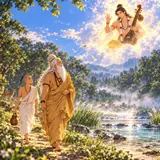
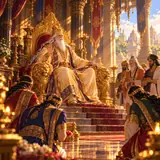
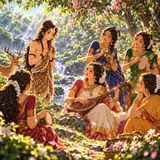
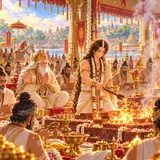
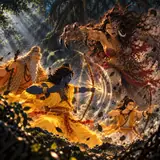
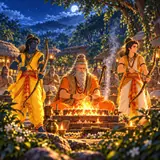
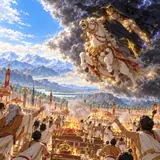
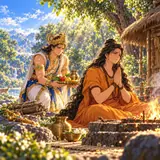
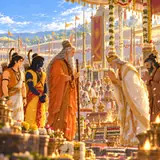
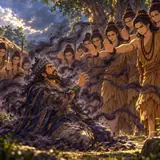
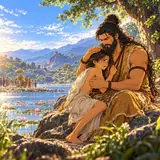
Scene 2 of 4 · Four princes are born; flowers rain from the sky and Ayodhya dances in the streets.
अथ लक्ष्मणशत्रुघ्नौ सुमित्राजनयत् सुतौ । वीरौ सर्वास्त्रकुशलौ विष्णोरर्धसमन्वितौ ॥ १४ ॥
Then Sumitra gave birth to two sons, Lakshmana and Shatrughna, heroes skilled in every weapon, sharing in Vishnu’s half.
फिर सुमित्रा ने दो पुत्रों, लक्ष्मण और शत्रुघ्न को जन्म दिया, जो सब अस्त्रों में कुशल वीर थे और विष्णु के आधे के भागीदार थे।
CommentaryNot scripture Sumitra bears twins, Lakshmana and Shatrughna. Together they share Vishnu’s remaining portion, as Sumitra had two portions of the payasa. Twins born together, they will each attach themselves to one elder brother.
Scene 2 of 4 · Four princes are born; flowers rain from the sky and Ayodhya dances in the streets.
पुष्ये जातस्तु भरतो मीनलग्ने प्रसन्नधीः । सार्पे जातौ तु सौमित्री कुलीरेऽभ्युदिते रवौ ॥ १५ ॥
Bharata, of serene mind, was born under Pushya with Pisces rising; the two sons of Sumitra were born under Ashlesha, with the sun risen in Cancer.
प्रसन्न मन वाले भरत पुष्य नक्षत्र में मीन लग्न में जन्मे; सुमित्रा के दोनों पुत्र आश्लेषा नक्षत्र में, जब सूर्य कर्क में था, जन्मे।
CommentaryNot scripture Bharata born under Pushya with Pisces rising; the twins under Ashlesha. Traditional astrology still uses these details. The verse also tells us the births came on different days: Bharata the day after Rama, the twins after that.
Scene 2 of 4 · Four princes are born; flowers rain from the sky and Ayodhya dances in the streets.
राज्ञः पुत्रा महात्मानश्चत्वारो जज्ञिरे पृथक् । गुणवन्तोऽनुरूपाश्च रुच्या प्रोष्ठपदोपमाः ॥ १६ ॥
Four great-souled sons were born separately to the king, virtuous and worthy, shining like the four stars of Proshthapada.
राजा के चार महात्मा पुत्र अलग-अलग जन्मे, गुणवान और योग्य, जो प्रोष्ठपदा के चार तारों की तरह चमकते थे।
CommentaryNot scripture Four sons, shining “like the four stars of Proshthapada”, a constellation of four bright stars (in the area of Pegasus). Four brothers, one light divided four ways.
Scene 2 of 4 · Four princes are born; flowers rain from the sky and Ayodhya dances in the streets.
जगुः कलं च गन्धर्वा ननृतुश्चाप्सरोगणाः । देवदुन्दुभयो नेदुः पुष्पवृष्टिश्च खात् पतत् ॥ १७ ॥
The gandharvas sang sweetly, troupes of apsarases danced, the drums of the gods sounded, and a rain of flowers fell from the sky.
गंधर्वों ने मधुर गान किया, अप्सराओं के समूह नाचे, देवताओं के नगाड़े बजे, और आकाश से फूलों की वर्षा हुई।
CommentaryNot scripture Heaven celebrates: gandharvas sing, apsarases dance, divine drums sound, flowers rain from the sky. Every devotional painting of Rama’s birth draws on this verse.
Scene 2 of 4 · Four princes are born; flowers rain from the sky and Ayodhya dances in the streets.
उत्सवश्च महानासीदयोध्यायां जनाकुलः । रथ्याश्च जनसम्बाधा नटनर्तकसंकुलाः ॥ १८ ॥
There was a great festival in Ayodhya, crowded with people; the streets were packed and full of actors and dancers,
अयोध्या में लोगों की भीड़ से भरा एक बड़ा उत्सव हुआ; गलियाँ भरी हुई थीं और नटों तथा नर्तकों से भरी थीं,
CommentaryNot scripture Ayodhya erupts in festival. Crowds, actors, dancers fill the streets. The city that waited so long for an heir now pours into joy.
Scene 2 of 4 · Four princes are born; flowers rain from the sky and Ayodhya dances in the streets.
गायनैश्च विराविण्यो वादनैश्च तथापरैः । विरेजुर्विपुलास्तत्र सर्वरत्नसमन्विताः ॥ १९ ॥
ringing with singers and with players of instruments; the broad streets shone, full of every jewel.
गायकों और वादकों से गूँजती थीं; चौड़ी गलियाँ हर प्रकार के रत्नों से भरी शोभा पा रही थीं।
CommentaryNot scripture The streets ring with music and shine with jewels. Valmiki’s Ayodhya is a city of sound and colour, and it has never been brighter than today.
Scene 2 of 4 · Four princes are born; flowers rain from the sky and Ayodhya dances in the streets.
प्रदेयांश्च ददौ राजा सूतमागधवन्दिनाम् । ब्राह्मणेभ्यो ददौ वित्तम् गोधनानि सहस्रशः ॥ २० ॥
The king gave gifts to bards, heralds and panegyrists, and to the brahmanas he gave wealth and thousands of cattle.
राजा ने सूतों, मागधों और बंदीजनों को उपहार दिए, और ब्राह्मणों को धन और हज़ारों गायें दीं।
CommentaryNot scripture The king gives gifts to the bards and wealth and cattle to the brahmanas. Joy, in this world, always overflows into giving.
Scene 2 of 4 · Four princes are born; flowers rain from the sky and Ayodhya dances in the streets.
अतीत्यैकादशाहं तु नामकर्म तथाकरोत् । ज्येष्ठं रामं महात्मानं भरतं कैकयीसुतम् ॥ २१ ॥
सौमित्रिं लक्ष्मणमिति शत्रुघ्नमपरं तथा । वसिष्ठः परमप्रीतो नामानि कुरुते तदा ॥ २२ ॥
When eleven days had passed he performed the naming ceremony. Vasishtha, most pleased, gave them their names: the eldest, great-souled, Rama; Kaikeyi’s son, Bharata; the son of Sumitra, Lakshmana; and the other, Shatrughna.
ग्यारह दिन बीतने पर उन्होंने नामकरण संस्कार किया। अत्यंत प्रसन्न वसिष्ठ ने उनके नाम रखे: सबसे बड़े, महात्मा राम; कैकेयी के पुत्र भरत; सुमित्रा के पुत्र लक्ष्मण; और दूसरे शत्रुघ्न।
CommentaryNot scripture On the eleventh day, the naming ceremony (namakarana ). Vasishtha names them: Rama (“the one who delights”), Bharata (“the one who bears, sustains”), Lakshmana (“marked with good fortune”) and Shatrughna (“slayer of enemies”). Four names, four destinies.
Scene 2 of 4 · Four princes are born; flowers rain from the sky and Ayodhya dances in the streets.
ब्राह्मणान् भोजयामास पौराजानपदानपि । अददद् ब्राह्मणानां च रत्नौघमलं बहु ॥ २३ ॥
He fed brahmanas, citizens and country people, and gave the brahmanas abundant heaps of jewels.
उन्होंने ब्राह्मणों, नगरवासियों और देशवासियों को भोजन कराया, और ब्राह्मणों को रत्नों के बहुत से ढेर दिए।
CommentaryNot scripture The king feeds the city and the countryside, and gives heaps of jewels to the brahmanas. The celebration includes everyone.
Scene 2 of 4 · Four princes are born; flowers rain from the sky and Ayodhya dances in the streets.
तेषां जन्मक्रियादीनि सर्वकर्माण्यकारयत् । तेषां केतुरिव ज्येष्ठो रामो रतिकरः पितुः ॥ २४ ॥
बभूव भूयो भूतानां स्वयम्भूरिव सम्मतः । सर्वे वेदविदः शूराः सर्वे लोकहिते रताः ॥ २५ ॥
He had all the rites performed for them, beginning with the birth rites. Of them, the eldest, Rama, like a banner, was his father’s delight, and was esteemed by all beings even more, like the Self-born himself. All were learned in the Vedas, all were brave, all devoted to the good of the world,
उन्होंने जातकर्म से आरंभ करके उनके सब संस्कार करवाए। उनमें सबसे बड़े राम ध्वजा के समान पिता का आनंद थे, और स्वयंभू ब्रह्मा की तरह सब प्राणियों में और भी अधिक सम्मानित थे। सब वेदों के ज्ञाता थे, सब वीर थे, सब संसार के हित में लगे थे,
CommentaryNot scripture All the rites of childhood are performed. Rama is like a banner (ketu ), the pride of his father, and esteemed by all beings. All four brothers are learned and brave and devoted to the world’s good.
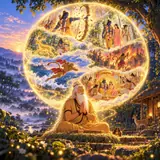
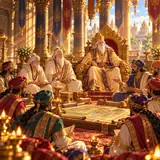
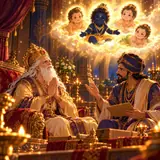
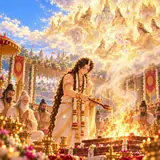
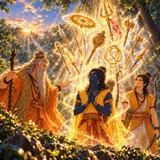
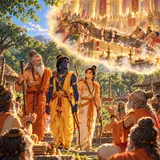
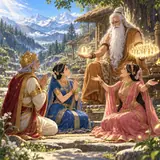
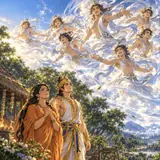
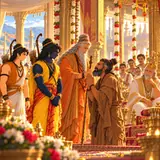
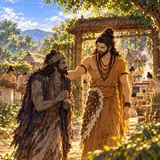
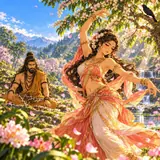
Scene 3 of 4 · The brothers grow up: Rama rides out to hunt, and Lakshmana follows with his bow, never apart.
सर्वे ज्ञानोपसम्पन्नाः सर्वे समुदिता गुणैः । तेषामपि महातेजा रामः सत्यपराक्रमः ॥ २६ ॥
इष्टः सर्वस्य लोकस्य शशाङ्क इव निर्मलः । गजस्कन्धेऽश्वपृष्ठे च रथचर्यासु सम्मतः ॥ २७ ॥
all full of knowledge, all endowed with virtues. And among them the splendid Rama, of true valour, was dear to the whole world, spotless as the moon. He was admired on an elephant’s back, on horseback and in driving chariots,
सब ज्ञान से भरे, सब गुणों से संपन्न। और उनमें तेजस्वी, सत्य-पराक्रमी राम चंद्रमा की तरह निर्मल और सारे संसार के प्रिय थे। हाथी की पीठ पर, घोड़े पर और रथ चलाने में उनकी प्रशंसा होती थी,
CommentaryNot scripture Rama is “spotless as the moon” (nishkalanka iva induh ) and “dear to the whole world”. The boys learn to ride elephants, horses and chariots. A prince’s education was physical as well as scholarly.
Scene 3 of 4 · The brothers grow up: Rama rides out to hunt, and Lakshmana follows with his bow, never apart.
धनुर्वेदे च निरतः पितुः शुश्रूषणे रतः । बाल्यात् प्रभृति सुस्निग्धो लक्ष्मणो लक्ष्मिवर्धनः ॥ २८ ॥
devoted to the science of archery and to serving his father. From childhood, Lakshmana, increaser of fortune, was deeply attached
वे धनुर्वेद में और पिता की सेवा में लगे रहते थे। बचपन से ही सौभाग्य बढ़ाने वाले लक्ष्मण
CommentaryNot scripture Rama is devoted to archery and to serving his father. These two loves, the bow and his father, will define his life. One will save the world; the other will send him into exile.
Scene 3 of 4 · The brothers grow up: Rama rides out to hunt, and Lakshmana follows with his bow, never apart.
रामस्य लोकरामस्य भ्रातुर्ज्येष्ठस्य नित्यशः । सर्वप्रियकरस्तस्य रामस्यापि शरीरतः ॥ २९ ॥
लक्ष्मणो लक्ष्मिसम्पन्नो बहिःप्राण इवापरः । न च तेन विना निद्रां लभते पुरुषोत्तमः ॥ ३० ॥
to Rama, delight of the world, his eldest brother, always doing everything to please him. Lakshmana, rich in fortune, was like Rama’s second life-breath outside his body. The best of men could not sleep without him,
संसार को आनंद देने वाले अपने बड़े भाई राम से गहरा प्रेम करते थे, और सदा उन्हें प्रसन्न करने वाले काम करते थे। सौभाग्य से संपन्न लक्ष्मण राम के शरीर के बाहर दूसरे प्राण जैसे थे। पुरुषश्रेष्ठ राम उनके बिना सोते नहीं थे,
CommentaryNot scripture Lakshmana loves Rama from childhood. He is “like Rama’s second life-breath outside his body” (bahih prana iva aparah ). This is one of the most beautiful descriptions of brotherly love in all literature.
Scene 3 of 4 · The brothers grow up: Rama rides out to hunt, and Lakshmana follows with his bow, never apart.
मृष्टमन्नमुपानीतमश्नाति न हि तं विना । यदा हि हयमारूढो मृगयां याति राघवः ॥ ३१ ॥
अथैनं पृष्ठतोऽभ्येति सधनुः परिपालयन् । भरतस्यापि शत्रुघ्नो लक्ष्मणावरजो हि सः ॥ ३२ ॥
nor would he eat fine food that was brought to him unless Lakshmana was there. Whenever Raghava rode out hunting on horseback, Lakshmana followed behind him with his bow, guarding him. And Shatrughna, Lakshmana’s younger brother, was to Bharata
और उनके बिना लाया गया उत्तम भोजन भी नहीं खाते थे। जब भी राघव घोड़े पर शिकार के लिए निकलते, लक्ष्मण धनुष लेकर उनकी रक्षा करते हुए पीछे चलते। और लक्ष्मण के छोटे भाई शत्रुघ्न भरत को
CommentaryNot scripture Rama cannot sleep or eat without Lakshmana. When Rama rides out hunting, Lakshmana follows with his bow. The pattern of their whole life, Lakshmana guarding Rama, begins in boyhood. And Shatrughna loves Bharata the same way.
Scene 3 of 4 · The brothers grow up: Rama rides out to hunt, and Lakshmana follows with his bow, never apart.
प्राणैः प्रियतरो नित्यं तस्य चासीत् तथा प्रियः । स चतुर्भिर्महाभागैः पुत्रैर्दशरथः प्रियैः ॥ ३३ ॥
always dearer than life, and Bharata loved him in the same way. With those four fortunate, beloved sons Dasharatha
सदा प्राणों से भी प्रिय थे, और भरत भी उनसे वैसा ही प्रेम करते थे। उन चार भाग्यशाली, प्रिय पुत्रों से दशरथ
CommentaryNot scripture The brothers pair off: Lakshmana with Rama, Shatrughna with Bharata, each bond as deep as life. These pairings will hold through everything that follows.
Scene 3 of 4 · The brothers grow up: Rama rides out to hunt, and Lakshmana follows with his bow, never apart.
बभूव परमप्रीतो देवैरिव पितामहः । ते यदा ज्ञानसंपन्नाः सर्वे समुदिता गुणैः ॥ ३४ ॥
ह्रीमन्तः कीर्तिमन्तश्च सर्वज्ञा दीर्घदर्शिनः । तेषामेवंप्रभावाणां सर्वेषां दीप्ततेजसाम् ॥ ३५ ॥
was supremely happy, like the Grandsire with the gods. When they were full of knowledge and endowed with every virtue, modest, renowned, all-knowing and far-seeing, their father Dasharatha, seeing all of them so powerful and blazing with energy,
वैसे ही परम सुखी थे, जैसे देवताओं से पितामह ब्रह्मा। जब वे ज्ञान से भरे और सब गुणों से संपन्न, विनम्र, यशस्वी, सर्वज्ञ और दूरदर्शी हो गए, तब पिता दशरथ उन सबको ऐसे बलवान और तेज से दमकते देखकर
CommentaryNot scripture With four such sons, Dasharatha is happy “like Brahma with the gods”. The boys grow modest, renowned, wise and far-seeing. The long sorrow of sarga 8 has become the king’s greatest joy.
Scene 3 of 4 · The brothers grow up: Rama rides out to hunt, and Lakshmana follows with his bow, never apart.
पिता दशरथो हृष्टो ब्रह्मा लोकाधिपो यथा । ते चापि मनुजव्याघ्रा वैदिकाध्ययने रताः ॥ ३६ ॥
पितृशुश्रूषणरता धनुर्वेदे च निष्ठिताः । अथ राजा दशरथस्तेषां दारक्रियां प्रति ॥ ३७ ॥
rejoiced, like Brahma, lord of the worlds. Those tigers among men were devoted to Vedic study, devoted to serving their father, and accomplished in archery. Then King Dasharatha, the righteous one,
लोकों के स्वामी ब्रह्मा की तरह आनंदित हुए। वे पुरुषसिंह वेदों के अध्ययन में लगे थे, पिता की सेवा में लगे थे, और धनुर्विद्या में पारंगत थे। तब धर्मात्मा राजा दशरथ
CommentaryNot scripture The princes are devoted to the Vedas, to their father, and to archery. Learning, duty and skill: a complete prince. Dasharatha rejoices like the lord of the worlds.
Scene 3 of 4 · The brothers grow up: Rama rides out to hunt, and Lakshmana follows with his bow, never apart.
चिन्तयामास धर्मात्मा सोपाध्यायः सबान्धवः । तस्य चिन्तयमानस्य मन्त्रिमध्ये महात्मनः ॥ ३८ ॥
अभ्यागच्छन्महातेजो विश्वामित्रो महामुनिः । स राज्ञो दर्शनाकाङ्क्षी द्वाराध्यक्षानुवाच ह ॥ ३९ ॥
began to think about their marriages, with his priests and kin. As the great-souled king was thinking in the midst of his ministers, the radiant great sage Vishvamitra arrived. Wishing to see the king, he said to the gatekeepers:
अपने पुरोहितों और संबंधियों के साथ उनके विवाह के बारे में सोचने लगे। जब महात्मा राजा अपने मंत्रियों के बीच विचार कर रहे थे, तभी तेजस्वी महामुनि विश्वामित्र आ पहुँचे। राजा से मिलने की इच्छा से उन्होंने द्वारपालों से कहा:
CommentaryNot scripture Now the king thinks of their marriages, with his priests and kin. And at that very moment Vishvamitra arrives. Valmiki times it perfectly: the king plans weddings, and the sage arrives who will lead Rama to his bride.
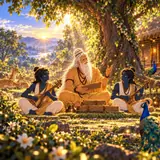
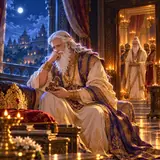
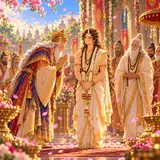
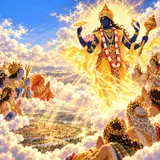
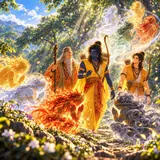
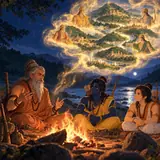
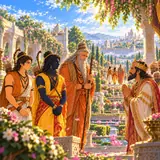
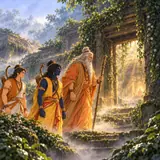
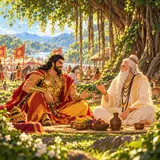
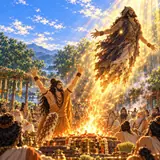
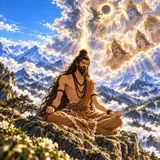
Scene 4 of 4 · As the king thinks of his sons’ marriages, the great sage Vishvamitra arrives at the palace gate.
शीघ्रमाख्यात मां प्राप्तं कौशिकं गाधिनः सुतम् । तच्छ्रुत्वा वचनं तस्य राज्ञो वेश्म प्रदुद्रुवुः ॥ ४० ॥
संभ्रान्तमनसः सर्वे तेन वाक्येन चोदिताः । ते गत्वा राजभवनं विश्वामित्रमृषिं तदा ॥ ४१ ॥
“Announce quickly that I, Kaushika, son of Gadhi, have come.” Hearing his words, they all ran to the king’s palace, flustered, driven by what he said. Reaching the royal palace, they
“जल्दी जाकर कहो कि मैं गाधि का पुत्र कौशिक आया हूँ।” उनके वचन सुनकर सब घबराए हुए, उनकी बात से प्रेरित होकर राजमहल की ओर दौड़े। राजमहल पहुँचकर उन्होंने
CommentaryNot scripture “Announce that Kaushika, son of Gadhi, has come.” Vishvamitra was born a king, Kaushika of the line of Kusha, and became a sage through tremendous austerity. The gatekeepers run in a fluster. His reputation for fierce power goes before him.
Scene 4 of 4 · As the king thinks of his sons’ marriages, the great sage Vishvamitra arrives at the palace gate.
प्राप्तमावेदयामासुर्नृपायेक्ष्वाकवे तदा । तेषां तद्वचनं श्रुत्वा सपुरोधाः समाहितः ॥ ४२ ॥
प्रत्युज्जगाम संहृष्टो ब्रह्माणमिव वासवः । स दृष्ट्वा ज्वलितं दीप्त्या तापसं संशितव्रतम् ॥ ४३ ॥
announced to the Ikshvaku king that the sage Vishvamitra had arrived. Hearing their words, the king, collected, with his priest, went out to meet him joyfully, as Vasava goes to meet Brahma. Seeing the ascetic of strict vows, blazing with radiance,
इक्ष्वाकु राजा को बताया कि मुनि विश्वामित्र आए हैं। उनकी बात सुनकर संयमी राजा प्रसन्न होकर अपने पुरोहित के साथ उनसे मिलने बाहर गए, जैसे इंद्र ब्रह्मा से मिलने जाते हैं। कठोर व्रत वाले, तेज से दमकते उन तपस्वी को देखकर
CommentaryNot scripture Dasharatha goes out to meet him “as Indra goes to meet Brahma”. The king does not wait on his throne. He goes to the gate with his priest. The arrival of a great sage is the arrival of grace, and also, sometimes, of a great demand.
Scene 4 of 4 · As the king thinks of his sons’ marriages, the great sage Vishvamitra arrives at the palace gate.
प्रहृष्टवदनो राजा ततोऽर्घ्यमुपहारयत् । स राज्ञः प्रतिगृह्यार्घ्यं शास्त्रदृष्टेन कर्मणा ॥ ४४ ॥
कुशलं चाव्ययं चैव पर्यपृच्छन्नराधिपम् । पुरे कोशे जनपदे बान्धवेषु सुहृत्सु च ॥ ४५ ॥
the king, his face bright with joy, had the guest-offering brought. Receiving the king’s offering in the manner the shastras prescribe, he asked the lord of men about his well-being and prosperity.
प्रसन्न मुख वाले राजा ने अर्घ्य मँगवाया। शास्त्रों में बताई रीति से राजा का अर्घ्य स्वीकार करके उन्होंने मनुष्यों के स्वामी से उनका कुशल-मंगल और समृद्धि पूछी।
CommentaryNot scripture The king’s face is bright with joy as he offers the guest-water. Vishvamitra receives it “as the shastras prescribe”. Everything is done correctly, which makes what follows more dramatic.
Scene 4 of 4 · As the king thinks of his sons’ marriages, the great sage Vishvamitra arrives at the palace gate.
कुशलं कौशिको राज्ञः पर्यपृच्छत् सुधार्मिकः । अपि ते संनताः सर्वे सामन्तरिपवो जिताः ॥ ४६ ॥
दैवं च मानुषं चैव कर्म ते साध्वनुष्ठितम् । वसिष्ठं च समागम्य कुशलं मुनिपुङ्गवः ॥ ४७ ॥
The righteous Kaushika asked after the king’s welfare in city, treasury and countryside, among his kin and friends: “Are all your neighbours submissive, your enemies conquered? Are your rites to gods and men well performed?” The foremost sage met Vasishtha and asked after his welfare,
धर्मात्मा कौशिक ने नगर, कोष और देश में, संबंधियों और मित्रों में राजा का कुशल पूछा: “क्या आपके सब पड़ोसी आपके अधीन हैं, शत्रु जीत लिए गए हैं? क्या देवताओं और मनुष्यों के प्रति आपके कर्म अच्छी तरह होते हैं?” मुनिश्रेष्ठ वसिष्ठ से मिले और उनका कुशल पूछा,
CommentaryNot scripture Vishvamitra asks after everything: city, treasury, country, kin and friends, neighbours, enemies, rites. A sage’s blessing includes concern for the kingdom’s whole wellbeing. Then he greets Vasishtha. These two great sages have an old, famous rivalry, told later in this kanda; here they meet in courtesy.
Scene 4 of 4 · As the king thinks of his sons’ marriages, the great sage Vishvamitra arrives at the palace gate.
ऋषींश्च तान् यथान्यायं महाभाग उवाच ह । ते सर्वे हृष्टमनसस्तस्य राज्ञो निवेशनम् ॥ ४८ ॥
विविशुः पूजितास्तेन निषेदुश्च यथार्हतः । अथ हृष्टमना राजा विश्वामित्रं महामुनिम् ॥ ४९ ॥
and the fortunate one spoke to the other sages as was fitting. All of them, glad at heart, entered the king’s palace and, honoured by him, sat down in order. Then the king, glad at heart, said to the great sage Vishvamitra,
और उन भाग्यशाली ने दूसरे मुनियों से भी उचित रीति से बात की। सब प्रसन्न मन से राजा के महल में गए और उनसे सम्मान पाकर क्रम से बैठ गए। तब प्रसन्न मन वाले राजा ने महामुनि विश्वामित्र से
CommentaryNot scripture All sit down in order. The king prepares to speak. The air of the court is warm and expectant.
Scene 4 of 4 · As the king thinks of his sons’ marriages, the great sage Vishvamitra arrives at the palace gate.
उवाच परमोदारो हृष्टस्तमभिपूजयन् । यथामृतस्य सम्प्राप्तिर्यथा वर्षमनूदके ॥ ५० ॥
यथा सदृशदारेषु पुत्रजन्माप्रजस्य वै । प्रणष्टस्य यथा लाभो यथा हर्षो महोदयः ॥ ५१ ॥
तथैवागमनं मन्ये स्वागतं ते महामुने । कं च ते परमं कामं करोमि किमु हर्षितः ॥ ५२ ॥
most generously, honouring him with joy: “As the gaining of nectar, as rain in a waterless land, as the birth of a son to a childless man by a worthy wife, as the recovery of what was lost, as great joy and good fortune, so I regard your coming. Welcome, great sage! What great wish of yours shall I fulfil, delighted?
अत्यंत उदारता से, आनंद से सम्मान करते हुए कहा: “जैसे अमृत की प्राप्ति, जैसे जलहीन भूमि में वर्षा, जैसे संतानहीन को योग्य पत्नी से पुत्र का जन्म, जैसे खोई वस्तु का मिलना, जैसे महान आनंद और सौभाग्य, वैसा ही मैं आपके आगमन को मानता हूँ। महामुनि, आपका स्वागत है! मैं प्रसन्न होकर आपकी कौन-सी बड़ी इच्छा पूरी करूँ?
CommentaryNot scripture A cascade of joyful similes: nectar, rain in a dry land, a son to a childless man, finding what was lost. The third simile is personal: Dasharatha knows that joy himself. Then he makes an open promise: “What great wish shall I fulfil?” A promise made before he knows what will be asked.
Scene 4 of 4 · As the king thinks of his sons’ marriages, the great sage Vishvamitra arrives at the palace gate.
पात्रभूतोऽसि मे विप्र दिष्ट्या प्राप्तोऽसि मानद । अद्य मे सफलं जन्म जीवितं च सुजीवितम् ॥ ५३ ॥
यस्माद् विप्रेन्द्रमद्राक्षं सुप्रभाता निशा मम । पूर्वं राजर्षिशब्देन तपसा द्योतितप्रभः ॥ ५४ ॥
“You are a worthy recipient for me, brahmana; by good fortune you have come, giver of honour. Today my birth bears fruit and my life is well lived, since I have seen the lord of brahmanas. My night has dawned well. Before, you shone with austerity under the title of royal sage;
“ब्राह्मण, आप मेरे लिए दान के योग्य पात्र हैं; सम्मान देने वाले, सौभाग्य से आप आए हैं। आज मेरा जन्म सफल हुआ और मेरा जीवन सार्थक हुआ, क्योंकि मैंने ब्राह्मणों के स्वामी के दर्शन किए। मेरी रात का सुंदर सवेरा हुआ। पहले आप राजर्षि की उपाधि से तप में चमकते थे;
CommentaryNot scripture “Today my birth bears fruit; my night has dawned well.” The king’s praise grows warmer. He recalls that Vishvamitra was once a royal sage (rajarshi ). The king flatters, but sincerely.
Scene 4 of 4 · As the king thinks of his sons’ marriages, the great sage Vishvamitra arrives at the palace gate.
ब्रह्मर्षित्वमनुप्राप्तः पूज्योऽसि बहुधा मया । तदद्भुतमभूद् विप्र पवित्रं परमं मम ॥ ५५ ॥
शुभक्षेत्रगतश्चाहं तव संदर्शनात् प्रभो । ब्रूहि यत् प्रार्थितं तुभ्यं कार्यमागमनं प्रति ॥ ५६ ॥
“now you have attained the rank of brahmarshi and are to be honoured by me in many ways. This is a wonder to me, brahmana, and supremely purifying. By seeing you, lord, I have reached a holy place. Tell me what you wish, the purpose of your coming.
“अब आपने ब्रह्मर्षि का पद पा लिया है, और मुझे अनेक प्रकार से आपका सम्मान करना चाहिए। ब्राह्मण, यह मेरे लिए एक आश्चर्य है और परम पवित्र करने वाला है। प्रभु, आपके दर्शन से मैं मानो किसी तीर्थ में पहुँच गया हूँ। बताइए आप क्या चाहते हैं, आपके आने का प्रयोजन क्या है।
CommentaryNot scripture Vishvamitra is now a brahmarshi , the highest rank of seer, which he won after thousands of years of struggle. Dasharatha honours that achievement. Seeing him is like reaching a holy place (tirtha ).
Scene 4 of 4 · As the king thinks of his sons’ marriages, the great sage Vishvamitra arrives at the palace gate.
इच्छाम्यनुगृहीतोऽहं त्वदर्थं परिवृद्धये । कार्यस्य न विमर्शं च गन्तुमर्हसि सुव्रत ॥ ५७ ॥
कर्ता चाहमशेषेण दैवतं हि भवान् मम । मम च अयमनुप्राप्तो महानभ्युदयो द्विज । तवागमनजः कृत्स्नो धर्मश्चानुत्तमो द्विज ॥ ५८ ॥
“I wish, being favoured, to serve you and prosper. Do not hesitate over the task, you of good vows. I will do it entirely, for you are a god to me. This great good fortune that has come to me, brahmana, comes from your arrival, and so does the whole of my highest dharma.”
“आपकी कृपा पाकर मैं आपकी सेवा करना और समृद्ध होना चाहता हूँ। सुव्रत, कार्य के बारे में संकोच मत कीजिए। मैं उसे पूरा का पूरा करूँगा, क्योंकि आप मेरे लिए देवता हैं। ब्राह्मण, यह जो महान सौभाग्य मुझे मिला है, वह आपके आगमन से है, और मेरा सारा परम धर्म भी।”
CommentaryNot scripture “Do not hesitate. I will do it entirely, for you are a god to me.” The king promises everything, unconditionally. Readers who know the next sarga feel the danger: Dasharatha’s open promise will cost him dearly.
Scene 4 of 4 · As the king thinks of his sons’ marriages, the great sage Vishvamitra arrives at the palace gate.
इति हृदयसुखं निशम्य वाक्यं श्रुतिसुखमात्मवता विनीतमुक्तम् । प्रथितगुणयशा गुणैर्विशिष्टः परमऋषिः परमं जगाम हर्षम् ॥ ५९ ॥
Hearing these words, pleasing to the heart and ear, spoken humbly by the self-possessed king, the supreme sage, of famed virtues and glory, rich in excellence, was filled with the greatest joy.
संयमी राजा के विनम्रता से कहे हृदय और कान को प्रिय ये वचन सुनकर, प्रसिद्ध गुणों और यश वाले, श्रेष्ठता से भरे परम मुनि परम आनंद से भर गए।
CommentaryNot scripture Vishvamitra is filled with joy at the king’s words. The scene is warm and generous. But the sage has not yet said why he came, and the next sarga reveals it.
Scene 4 of 4 · As the king thinks of his sons’ marriages, the great sage Vishvamitra arrives at the palace gate.