Bala Kanda · Sarga 73 of 77 · 40 verses
The Wedding
On the day of the godana, Yudhajit, prince of Kekaya and Bharata’s maternal uncle, arrives: his father wished to see his grandson Bharata, and hearing in Ayodhya that the princes were in Mithila for their weddings, he hurried here. Dasharatha honours him.
At the auspicious hour called Vijaya, Rama and his brothers, adorned and with the wedding thread tied on, come with Vasishtha. Vasishtha tells Janaka that Dasharatha awaits the giver. Janaka answers: “What doorkeeper stands in your way, whose order do you wait for? What hesitation is there in your own home? My daughters, adorned, have come to the foot of the altar, shining like flames. Why delay?” Vasishtha, with Vishvamitra and Shatananda, prepares the altar in the pavilion, decorating it with perfumes, flowers, golden vessels, painted pots with sprouts, incense, conches, ladles, garlands and parched grain, spreads darbha grass, kindles the fire with mantras and makes the offerings.
Janaka brings Sita, adorned with every ornament, sets her facing Rama before the fire, and says to the joy of Kausalya: “This is my daughter Sita, your companion in dharma. Accept her, bless you; take her hand in yours. Devoted to her husband, most fortunate, she will follow you always like your shadow.” He pours the water consecrated by mantras; gods and sages cry “Well done!”, divine drums sound and flowers rain. Then he gives Urmila to Lakshmana, Mandavi to Bharata and Shrutakirti to Shatrughna. The four princes take the hands of the four princesses, circle the fire, the altar, the king and the sages, and, as apsarases dance and gandharvas sing, walk three times around the fire with their brides, and go to their lodgings, the king following with sages and kin.
Press › to begin with verse 1.
यस्मिंस्तु दिवसे राजा चक्रे गोदानमुत्तमम् । तस्मिंस्तु दिवसे वीरो युधाजित् समुपेयिवान् ॥ १ ॥
On the very day the king performed the excellent godana, the hero Yudhajit arrived,
जिस दिन राजा ने उत्तम गोदान किया, उसी दिन वीर युधाजित आ पहुँचे,
Commentary on the whole sarga
Read the commentary CommentaryNot scripture Yudhajit arrives on the very day of the godana. Bharata’s uncle from the Kekaya kingdom. His arrival will matter later: he will take Bharata to Kekaya, so Bharata will be away when the crisis of the Ayodhya Kanda begins.
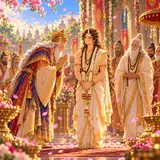
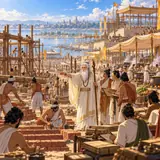
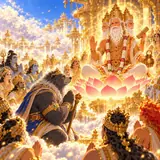
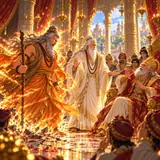
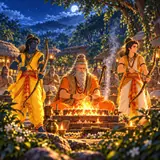
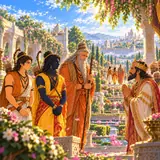
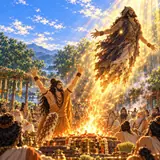
Scene 1 of 3 · Under a pavilion of flowers and golden pots, the four brides stand at the altar, shining like flames.
पुत्रः केकयराजस्य साक्षाद्भरतमातुलः । दृष्ट्वा पृष्ट्वा च कुशलं राजानमिदमब्रवीत् ॥ २ ॥
son of the king of Kekaya, Bharata’s own maternal uncle. Seeing the king and asking after his welfare, he said:
केकयराज के पुत्र, भरत के सगे मामा। राजा को देखकर और उनका कुशल पूछकर उन्होंने कहा:
CommentaryNot scripture He is “Bharata’s own maternal uncle”, Kaikeyi’s brother. Valmiki plants him quietly in the wedding scene.
Scene 1 of 3 · Under a pavilion of flowers and golden pots, the four brides stand at the altar, shining like flames.
केकयाधिपती राजा स्नेहात् कुशलमब्रवीत् । येषां कुशलकामोऽसि तेषां सम्प्रत्यनामयम् ॥ ३ ॥
“The king, lord of the Kekayas, out of love, asks after your welfare. Those whose welfare you wish for are now in good health.
“केकयों के स्वामी राजा प्रेम से आपका कुशल पूछते हैं। जिनका कुशल आप चाहते हैं, वे अब स्वस्थ हैं।
CommentaryNot scripture The Kekaya king sends loving greetings.
Scene 1 of 3 · Under a pavilion of flowers and golden pots, the four brides stand at the altar, shining like flames.
स्वस्रीयं मम राजेन्द्र द्रष्टुकामो महीपतिः । तदर्थमुपयातोऽहमयोध्यां रघुनन्दन ॥ ४ ॥
“The lord of the earth wishes to see my sister’s son, king of kings. For that I came to Ayodhya, delight of the Raghus.
“राजाधिराज, पृथ्वीपति मेरी बहन के पुत्र को देखना चाहते हैं। रघुनंदन, इसी के लिए मैं अयोध्या आया था।
CommentaryNot scripture He wants to see his grandson Bharata.
Scene 1 of 3 · Under a pavilion of flowers and golden pots, the four brides stand at the altar, shining like flames.
श्रुत्वा त्वहमयोध्यायां विवाहार्थं तवात्मजान् । मिथिलामुपयातांस्तु त्वया सह महीपते ॥ ५ ॥
त्वरयाभ्युपयातोऽहं द्रष्टुकामः स्वसुः सुतम् । अथ राजा दशरथः प्रियातिथिमुपस्थितम् ॥ ६ ॥
“But hearing in Ayodhya that your sons had gone with you to Mithila for their marriage, lord of the earth, I came in haste, wishing to see my sister’s son.” Then King Dasharatha, seeing his dear guest arrived,
“पर पृथ्वीपति, अयोध्या में यह सुनकर कि आपके पुत्र विवाह के लिए आपके साथ मिथिला गए हैं, अपनी बहन के पुत्र को देखने की इच्छा से मैं जल्दी आया हूँ।” तब राजा दशरथ ने अपने प्रिय अतिथि को आया देखकर
CommentaryNot scripture Finding the princes gone to Mithila, Yudhajit hurried after them. Family arrives from every direction.
Scene 1 of 3 · Under a pavilion of flowers and golden pots, the four brides stand at the altar, shining like flames.
दृष्ट्वा परमसत्कारैः पूजनार्हमपूजयत् । ततस्तामुषितो रात्रिं सह पुत्रैर्महात्मभिः ॥ ७ ॥
honoured him, worthy of honour, with the highest courtesies. Then, having spent that night with his great-souled sons,
सम्मान के योग्य उनका परम सत्कार किया। फिर अपने महात्मा पुत्रों के साथ वह रात बिताकर,
CommentaryNot scripture Dasharatha honours his “dear guest”. Family ties strengthen on every side.
Scene 1 of 3 · Under a pavilion of flowers and golden pots, the four brides stand at the altar, shining like flames.
प्रभाते पुनरुत्थाय कृत्वा कर्माणि तत्त्ववित् । ऋषींस्तदा पुरस्कृत्य यज्ञवाटमुपागमत् ॥ ८ ॥
rising again at dawn and performing the rites, the knower of truth went with the sages before him to the sacrificial enclosure.
सवेरे फिर उठकर और कर्म करके, सत्य के ज्ञाता राजा मुनियों को आगे करके यज्ञशाला गए।
CommentaryNot scripture At dawn, after rites, the king goes to the sacrificial enclosure with the sages.
Scene 1 of 3 · Under a pavilion of flowers and golden pots, the four brides stand at the altar, shining like flames.
युक्ते मुहूर्ते विजये सर्वाभरणभूषितैः । भ्रातृभिः सहितो रामः कृतकौतुकमंगलः ॥ ९ ॥
वसिष्ठं पुरतः कृत्वा महर्षीनपरानपि । वसिष्ठो भगवानेत्य वैदेहमिदमब्रवीत् ॥ १० ॥
At the auspicious hour called Vijaya, Rama with his brothers, adorned with every ornament, the wedding thread and auspicious rites done, came with Vasishtha and the other great sages before him. The blessed Vasishtha went and said to the Videha king:
विजय नाम के शुभ मुहूर्त में सब आभूषणों से सजे, विवाह-सूत्र और मंगल कर्म कर चुके राम अपने भाइयों के साथ, वसिष्ठ और दूसरे महर्षियों को आगे करके आए। भगवान वसिष्ठ ने जाकर विदेहराज से कहा:
CommentaryNot scripture At the auspicious hour called Vijaya (“victory”), Rama and his brothers come, adorned, with wedding threads tied and rites done. Vasishtha goes ahead to Janaka.
Scene 1 of 3 · Under a pavilion of flowers and golden pots, the four brides stand at the altar, shining like flames.
राजा दशरथो राजन् कृतकौतुकमंगलैः । पुत्रैर्नरवरश्रेष्ठो दातारमभिकाङ्क्षते ॥ ११ ॥
“King, King Dasharatha, best of the best of men, with his sons, whose wedding threads and auspicious rites are done, awaits the giver.
“राजन, श्रेष्ठ पुरुषों में श्रेष्ठ राजा दशरथ अपने पुत्रों के साथ, जिनके विवाह-सूत्र और मंगल कर्म हो चुके हैं, कन्यादान करने वाले की प्रतीक्षा कर रहे हैं।
CommentaryNot scripture “Dasharatha and his sons await the giver.” A traditional formula: the bride’s family is the giver.
Scene 1 of 3 · Under a pavilion of flowers and golden pots, the four brides stand at the altar, shining like flames.
दातृप्रतिग्रहीतृभ्यां सर्वार्थाः सम्भवन्ति हि । स्वधर्मं प्रतिपद्यस्व कृत्वा वैवाह्यमुत्तमम् ॥ १२ ॥
“All purposes come into being through a giver and a receiver. Fulfil your own dharma by performing the excellent wedding.”
“सब प्रयोजन देने वाले और लेने वाले से ही सिद्ध होते हैं। उत्तम विवाह करके अपना धर्म पूरा कीजिए।”
CommentaryNot scripture “All purposes come through a giver and a receiver.” Vasishtha echoes Dasharatha’s own words from sarga 69. The wedding is an exchange of gifts and honour.
Scene 1 of 3 · Under a pavilion of flowers and golden pots, the four brides stand at the altar, shining like flames.
इत्युक्तः परमोदारो वसिष्ठेन महात्मना । प्रत्युवाच महातेजा वाक्यं परमधर्मवित् ॥ १३ ॥
So addressed by great-souled Vasishtha, the most generous, radiant one, supreme knower of dharma, replied:
महात्मा वसिष्ठ के ऐसा कहने पर परम उदार, तेजस्वी, धर्म के परम ज्ञाता जनक ने उत्तर दिया:
CommentaryNot scripture Janaka, “most generous”, replies.
Scene 1 of 3 · Under a pavilion of flowers and golden pots, the four brides stand at the altar, shining like flames.
कः स्थितः प्रतिहारो मे कस्याज्ञां सम्प्रतीक्षते । स्वगृहे को विचारोऽस्ति यथा राज्यमिदं तव ॥ १४ ॥
“What doorkeeper of mine stands there? Whose order is he waiting for? What hesitation is there in one’s own home? This kingdom is as much yours.
“मेरा कौन-सा द्वारपाल वहाँ खड़ा है? वह किसकी आज्ञा की प्रतीक्षा कर रहा है? अपने ही घर में कैसा संकोच? यह राज्य जितना मेरा है उतना ही आपका।
CommentaryNot scripture “What doorkeeper stands there? Why hesitate in your own home?” Janaka gently scolds them for waiting outside. “This kingdom is yours.” A warm, almost humorous welcome.
Scene 1 of 3 · Under a pavilion of flowers and golden pots, the four brides stand at the altar, shining like flames.
कृतकौतुकसर्वस्वा वेदिमूलमुपागताः । मम कन्या मुनिश्रेष्ठ दीप्ता बह्नेरिवार्चिषः ॥ १५ ॥
“My daughters, all their wedding rites performed, have come to the foot of the altar, best of sages, shining like flames of fire.
“मुनिश्रेष्ठ, मेरी पुत्रियाँ, जिनके विवाह के सब कर्म हो चुके हैं, अग्नि की लपटों की तरह चमकती हुई वेदी के पास आ गई हैं।
CommentaryNot scripture “My daughters stand at the altar, shining like flames.” The four brides are ready.
Scene 1 of 3 · Under a pavilion of flowers and golden pots, the four brides stand at the altar, shining like flames.
सद्योऽहं त्वत्प्रतीक्षोऽस्मि वेद्यामस्यां प्रतिष्ठितः । अविघ्नं क्रियतां सर्वं किमर्थं हि विलम्ब्यते ॥ १६ ॥
“I am ready, awaiting you, standing at this altar. Let everything be done without obstacle; why is there delay?”
“मैं तैयार हूँ, आपकी प्रतीक्षा करता हुआ इस वेदी पर खड़ा हूँ। सब कुछ निर्विघ्न हो; देर क्यों है?”
CommentaryNot scripture “Why the delay?” The father of the brides is eager.
Scene 1 of 3 · Under a pavilion of flowers and golden pots, the four brides stand at the altar, shining like flames.
तद् वाक्यं जनकेनोक्तं श्रुत्वा दशरथस्तदा । प्रवेशयामास सुतान् सर्वानृषिगणानपि ॥ १७ ॥
Hearing these words spoken by Janaka, Dasharatha then brought in his sons and all the hosts of sages.
जनक के कहे ये वचन सुनकर दशरथ अपने पुत्रों और मुनियों के सब समूहों को भीतर ले आए।
CommentaryNot scripture Dasharatha brings in his sons and the sages.
Scene 1 of 3 · Under a pavilion of flowers and golden pots, the four brides stand at the altar, shining like flames.
ततो राजा विदेहानां वसिष्ठमिदमब्रवीत् । कारयस्व ऋषे सर्वामृषिभिः सह धार्मिक ॥ १८ ॥
रामस्य लोकरामस्य क्रियां वैवाहिकीं प्रभो । तथेत्युक्त्वा तु जनकं वसिष्ठो भगवानृषिः ॥ १९ ॥
Then the king of the Videhas said to Vasishtha: “Righteous sage, with the sages, have the whole wedding rite performed for Rama, the delight of the world, lord.” Saying “So be it” to Janaka, the blessed sage Vasishtha,
तब विदेहों के राजा ने वसिष्ठ से कहा: “धर्मात्मा मुनि, ऋषियों के साथ संसार के आनंद राम का पूरा विवाह कर्म करवाइए, प्रभु।” जनक से “ऐसा ही हो” कहकर भगवान मुनि वसिष्ठ ने,
CommentaryNot scripture Janaka asks Vasishtha to perform the rite.
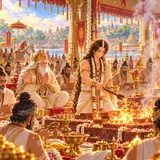
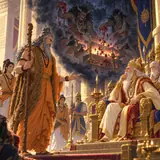
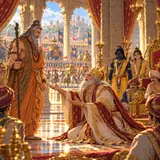
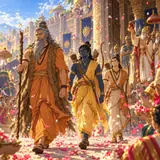
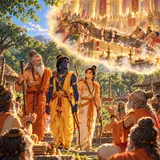
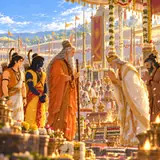
Scene 2 of 3 · Before the sacred fire, Janaka places Sita’s hand in Rama’s: “She will follow you always, like your shadow.”
विश्वामित्रं पुरस्कृत्य शतानन्दं च धार्मिकम् । प्रपामध्ये तु विधिवद् वेदिं कृत्वा महातपाः ॥ २० ॥
अलंचकार तां वेदिं गन्धपुष्पैः समन्ततः । सुवर्णपालिकाभिश्च चित्रकुम्भैश्च साङ्कुरैः ॥ २१ ॥
with Vishvamitra and the righteous Shatananda before him, the great ascetic made the altar in the middle of the pavilion according to rule, and decorated that altar on every side with perfumes and flowers, with golden vessels and painted pots with sprouts,
विश्वामित्र और धर्मात्मा शतानंद को आगे करके, उस महातपस्वी ने विधि से मंडप के बीच वेदी बनाई, और उस वेदी को चारों ओर से सुगंधों और फूलों से, सोने के पात्रों और अंकुरों वाले चित्रित कलशों से सजाया,
CommentaryNot scripture Vasishtha, with Vishvamitra and Shatananda, builds the altar and decorates it with perfumes, flowers, golden vessels and pots of sprouting seeds. Sprouts are symbols of new life and fertility at Indian weddings to this day.
Scene 2 of 3 · Before the sacred fire, Janaka places Sita’s hand in Rama’s: “She will follow you always, like your shadow.”
अङ्कुराढ्यैः शरावैश्च धूपपात्रैः सधूपकैः । शङ्खपात्रैः स्रुवैः स्रग्भिः पात्रैरर्घ्यादिपूजितैः ॥ २२ ॥
with bowls full of sprouts, incense vessels with incense, conch vessels, ladles, garlands, and vessels honoured with the guest offering,
अंकुरों से भरे पात्रों, धूप वाले धूपदानों, शंख-पात्रों, स्रुवाओं, मालाओं, और अर्घ्य से पूजित पात्रों से,
CommentaryNot scripture Bowls, incense, conch vessels, ladles, garlands.
Scene 2 of 3 · Before the sacred fire, Janaka places Sita’s hand in Rama’s: “She will follow you always, like your shadow.”
लाजपूर्णैश्च पात्रीभिरक्षतैरपि संस्कृतैः । दर्भैः समैः समास्तीर्य विधिवन्मन्त्रपूर्वकम् ॥ २३ ॥
अग्निमाधाय तं वेद्यां विधिमन्त्रपुरस्कृतम् । जुहावाग्नौ महातेजा वसिष्ठो मुनिपुंगवः ॥ २४ ॥
with pots full of parched grain and with consecrated unbroken rice. He spread darbha grass evenly according to rule, with mantras, set the fire on the altar with rite and mantra, and the radiant Vasishtha, best of sages, made offerings into the fire.
लावा से भरे कलशों और अभिमंत्रित अक्षतों से। उन्होंने मंत्रों के साथ विधि से समान रूप से कुश बिछाए, विधि और मंत्र से वेदी पर अग्नि स्थापित की, और मुनियों में श्रेष्ठ तेजस्वी वसिष्ठ ने अग्नि में आहुतियाँ दीं।
CommentaryNot scripture Parched grain, consecrated rice, darbha grass spread with mantras, and the sacred fire set on the altar. Vasishtha makes the first offerings. The fire is the witness of a Hindu marriage.
Scene 2 of 3 · Before the sacred fire, Janaka places Sita’s hand in Rama’s: “She will follow you always, like your shadow.”
ततः सीतां समानीय सर्वाभरणभूषिताम् । समक्षमग्नेः संस्थाप्य राघवाभिमुखे तदा ॥ २५ ॥
अब्रवीज्जनको राजा कौसल्यानन्दवर्धनम् । इयं सीता मम सुता सहधर्मचरी तव ॥ २६ ॥
Then, bringing Sita, adorned with every ornament, and placing her before the fire facing Raghava, King Janaka said to the increaser of Kausalya’s joy: “This is my daughter Sita, your companion in the practice of dharma.
तब सब आभूषणों से सजी सीता को लाकर, अग्नि के सामने राघव के सम्मुख खड़ा करके, राजा जनक ने कौसल्या का आनंद बढ़ाने वाले से कहा: “यह मेरी पुत्री सीता है, धर्म के आचरण में तुम्हारी सहचारिणी।
CommentaryNot scripture Janaka brings Sita, adorned, and places her before the fire, facing Rama. “This is my daughter Sita, your companion in dharma” (saha-dharma-chari ). These words are among the most quoted in Hindu weddings.
Scene 2 of 3 · Before the sacred fire, Janaka places Sita’s hand in Rama’s: “She will follow you always, like your shadow.”
प्रतीच्छ चैनां भद्रं ते पाणिं गृह्णीष्व पाणिना । पतिव्रता महाभागा छायेवानुगता सदा ॥ २७ ॥
“Accept her, bless you; take her hand in your hand. Devoted to her husband, most fortunate, she will always follow you like your shadow.”
“इसे स्वीकार करो, तुम्हारा कल्याण हो; इसका हाथ अपने हाथ में लो। पति के प्रति समर्पित, परम भाग्यशाली यह सदा छाया की तरह तुम्हारे पीछे चलेगी।”
CommentaryNot scripture “Take her hand. She will always follow you like your shadow.” The image of Sita as Rama’s shadow will be tested to the utmost in the forest and in Lanka. She will follow him into exile, as a shadow follows.
Scene 2 of 3 · Before the sacred fire, Janaka places Sita’s hand in Rama’s: “She will follow you always, like your shadow.”
इत्युक्त्वा प्राक्षिपद् राजा मन्त्रपूतं जलं तदा । साधुसाध्विति देवानामृषीणां वदतां तदा ॥ २८ ॥
देवदुन्दुभिनिर्घोषः पुष्पवर्षो महानभूत् । एवं दत्त्वा सुतां सीतां मन्त्रोदकपुरस्कृताम् ॥ २९ ॥
Having said this, the king poured water purified by mantras. As the gods and sages cried “Well done, well done!”, there was the roar of divine drums and a great rain of flowers. Having thus given his daughter Sita, with water consecrated by mantras,
यह कहकर राजा ने मंत्रों से पवित्र जल डाला। देवताओं और ऋषियों के “साधु, साधु!” कहते हुए, देवताओं के नगाड़ों की गर्जना हुई और फूलों की बड़ी वर्षा हुई। इस प्रकार मंत्रों से अभिमंत्रित जल से अपनी पुत्री सीता को देकर,
CommentaryNot scripture Janaka pours consecrated water: the kanyadana , the gift of the daughter. Gods and sages cry “Well done!”, divine drums sound, flowers rain. Heaven blesses the union.
Scene 2 of 3 · Before the sacred fire, Janaka places Sita’s hand in Rama’s: “She will follow you always, like your shadow.”
अब्रवीज्जनको राजा हर्षेणाभिपरिप्लुतः । लक्ष्मणागच्छ भद्रं ते ऊर्मिलामुद्यतां मया ॥ ३० ॥
प्रतीच्छ पाणिं गृह्णीष्व मा भूत् कालस्य पर्ययः । तमेवमुक्त्वा जनको भरतं चाभ्यभाषत ॥ ३१ ॥
King Janaka, overflowing with joy, said: “Lakshmana, come, bless you; accept Urmila, offered by me; take her hand; let no time be lost.” Having said this to him, Janaka spoke to Bharata:
आनंद से भरे राजा जनक ने कहा: “लक्ष्मण, आओ, तुम्हारा कल्याण हो; मेरे द्वारा दी गई ऊर्मिला को स्वीकार करो; उसका हाथ लो; देर मत करो।” उनसे यह कहकर जनक ने भरत से कहा:
CommentaryNot scripture “Lakshmana, take Urmila’s hand.” Janaka, overflowing with joy, hurries on to the next couple.
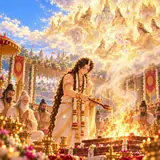
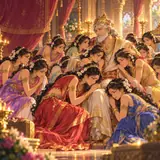
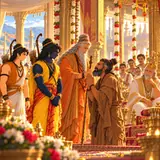
Scene 3 of 3 · The four brothers and their brides circle the fire three times as flowers rain and gandharvas sing.
गृहाण पाणिं माण्डव्याः पाणिना रघुनन्दन । शत्रुघ्नं चापि धर्मात्मा अब्रवीन्मिथिलेश्वरः ॥ ३२ ॥
“Take Mandavi’s hand in your hand, delight of the Raghus.” And the righteous lord of Mithila said to Shatrughna:
“रघुनंदन, मांडवी का हाथ अपने हाथ में लो।” और धर्मात्मा मिथिलापति ने शत्रुघ्न से कहा:
CommentaryNot scripture “Bharata, take Mandavi’s hand.”
Scene 3 of 3 · The four brothers and their brides circle the fire three times as flowers rain and gandharvas sing.
श्रुतकीर्तेर्महाबाहो पाणिं गृह्णीष्व पाणिना । सर्वे भवन्तः सौम्याश्च सर्वे सुचरितव्रताः ॥ ३३ ॥
पत्नीभिः सन्तु काकुत्स्था मा भूत् कालस्य पर्ययः । जनकस्य वचः श्रुत्वा पाणीन् पाणिभिरस्पृशन् ॥ ३४ ॥
“Take Shrutakirti’s hand in your hand, mighty-armed one. All of you are gentle, all of you keep good vows; let the Kakutsthas be joined with wives; let no time be lost.” Hearing Janaka’s words, they touched hands with hands,
“महाबाहु, श्रुतकीर्ति का हाथ अपने हाथ में लो। तुम सब सौम्य हो, सब उत्तम व्रत वाले हो; काकुत्स्थ पत्नियों से जुड़ें; देर न हो।” जनक के वचन सुनकर उन्होंने हाथों से हाथ पकड़े,
CommentaryNot scripture “Shatrughna, take Shrutakirti’s hand. Let no time be lost.” Four couples, one ceremony.
Scene 3 of 3 · The four brothers and their brides circle the fire three times as flowers rain and gandharvas sing.
चत्वारस्ते चतसॄणां वसिष्ठस्य मते स्थिताः । अग्निं प्रदक्षिणं कृत्वा वेदिं राजानमेव च ॥ ३५ ॥
ऋषींश्चापि महात्मानः सहभार्या रघूद्वहाः । यथोक्तेन ततश्चक्रुर्विवाहं विधिपूर्वकम् ॥ ३६ ॥
the four with the four, following Vasishtha’s direction. Circling the fire, the altar, the king and the great sages, the best of the Raghus with their wives then performed the marriage according to rule, as prescribed.
चारों ने चारों के, वसिष्ठ के निर्देश के अनुसार। अग्नि, वेदी, राजा और महर्षियों की परिक्रमा करके रघुश्रेष्ठों ने अपनी पत्नियों के साथ विधि के अनुसार, जैसा बताया गया था, विवाह किया।
CommentaryNot scripture The four take the four by the hand and circle the fire, the altar, the king and the sages. The circling of the fire (agni-pradakshina ) seals a Hindu marriage.
Scene 3 of 3 · The four brothers and their brides circle the fire three times as flowers rain and gandharvas sing.
पुष्पवृष्टिर्महत्यासीदन्तरिक्षात् सुभास्वरा । दिव्यदुन्दुभिनिर्घोषैर्गीतवादित्रनिःस्वनैः ॥ ३७ ॥
ननृतुश्चाप्सरःसङ्घा गन्धर्वाश्च जगुः कलम् । विवाहे रघुमुख्यानां तदद्भुतमदृश्यत ॥ ३८ ॥
A great, shining rain of flowers fell from the sky, with the roar of divine drums and the sound of song and music. Hosts of apsarases danced and gandharvas sang sweetly; that wonder was seen at the wedding of the foremost of the Raghus.
आकाश से फूलों की बड़ी, चमकती वर्षा हुई, देवताओं के नगाड़ों की गर्जना और गीत-संगीत की ध्वनि के साथ। अप्सराओं के समूह नाचे और गंधर्वों ने मधुर गान किया; रघुश्रेष्ठों के विवाह में वह आश्चर्य देखा गया।
CommentaryNot scripture Flowers rain, drums roar, apsarases dance, gandharvas sing. Heaven celebrates as it did at Rama’s birth.
Scene 3 of 3 · The four brothers and their brides circle the fire three times as flowers rain and gandharvas sing.
ईदृशे वर्तमाने तु तूर्योद्घुष्टनिनादिते । त्रिरग्निं ते परिक्रम्य ऊहुर्भार्या महौजसः ॥ ३९ ॥
While this went on, resounding with trumpets, the mighty ones walked three times around the fire and took their wives.
जब यह चल रहा था, तुरहियों से गूँजते हुए, उन बलवानों ने तीन बार अग्नि की परिक्रमा की और अपनी पत्नियों को ग्रहण किया।
CommentaryNot scripture Three times around the fire. The marriage is complete.
Scene 3 of 3 · The four brothers and their brides circle the fire three times as flowers rain and gandharvas sing.
अथोपकार्यं जग्मुस्ते सभार्या रघुनन्दनाः । राजाप्यनुययौ पश्यन् सर्षिसङ्घः सबान्धवः ॥ ४० ॥
Then the delights of the Raghus went with their wives to their lodgings, and the king followed, watching, with the hosts of sages and his kin.
फिर रघुनंदन अपनी पत्नियों के साथ अपने निवासों को गए, और राजा मुनियों के समूहों और अपने संबंधियों के साथ उन्हें देखते हुए पीछे-पीछे चले।
CommentaryNot scripture The new couples go to their lodgings, and Dasharatha follows, “watching”. A father watching his four sons walk away with their brides: a quiet, tender close to the wedding.
Scene 3 of 3 · The four brothers and their brides circle the fire three times as flowers rain and gandharvas sing.