Bala Kanda · Sarga 36 of 77 · 27 verses
Uma’s Curse
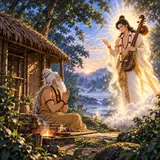
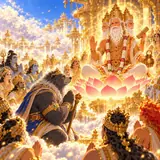
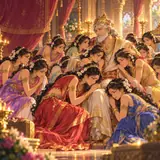
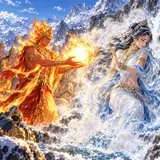
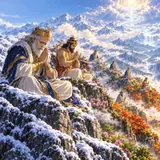
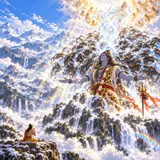
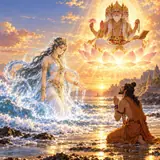
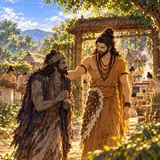
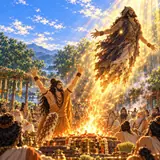
Rama and Lakshmana ask to hear more of the elder daughter. Vishvamitra tells how, after his marriage, Shiva (the blue-throated) lived in union with the goddess Uma for a hundred divine years without a son being born. The gods, led by Brahma, grew afraid: who could bear a being born of such power? They begged Shiva to hold his energy within himself and practise austerity with the goddess. He agreed, but asked who would hold the energy already stirred from its place. “The earth will hold it,” they said. He released it, and it pervaded the earth with its mountains and forests; the gods asked Agni, with the wind, to take it in, and from it arose a white mountain and a divine reed forest, where Karttikeya, born of fire, came into being.
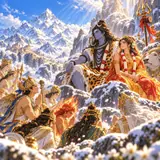
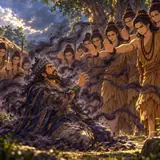
The gods and sages worshipped Uma and Shiva. But Uma, her eyes red with anger, cursed them: “Because I was stopped when I wished for a son, you will never have children by your wives.” She cursed the earth too: “You will take many forms and have many lords, and, made foul by my anger, you will never know the joy of a son, because you did not want mine.” Seeing the gods afflicted, Shiva went west to the northern side of the Himalaya and practised austerity there with the goddess.
Press › to begin with verse 1.
उक्तवाक्ये मुनौ तस्मिन्नुभौ राघवलक्ष्मणौ । प्रतिनन्द्य कथां वीरावूचतुर्मुनिपुङ्गवम् ॥ १ ॥
When the sage had finished speaking, the two heroes Raghava and Lakshmana welcomed the story and said to the foremost sage:
जब मुनि बोल चुके, तब दोनों वीर राघव और लक्ष्मण ने कथा का स्वागत करते हुए मुनिश्रेष्ठ से कहा:
Commentary on the whole sarga
Read the commentary CommentaryNot scripture Both brothers welcome the story (abhinandya ). They are good listeners, and good listeners ask for more.
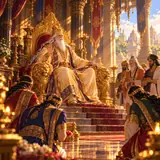
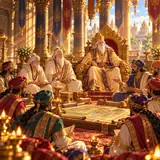
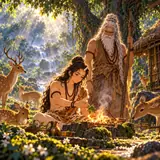
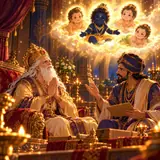
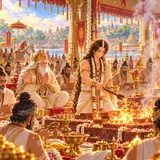
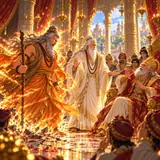
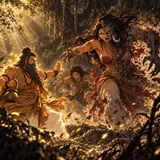
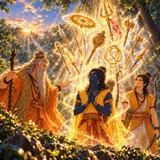
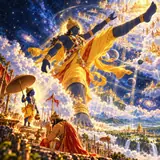
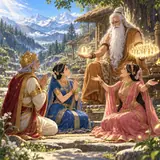
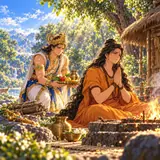
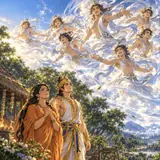
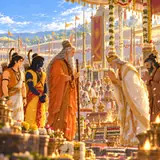
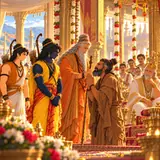
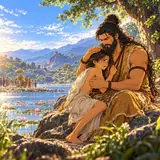
Scene 1 of 2 · On Kailasa the gods bow before Shiva and Uma and beg the great god to hold his power within himself.
धर्मयुक्तमिदं ब्रह्मन् कथितं परमं त्वया । दुहितुः शैलराजस्य ज्येष्ठाया वक्तुमर्हसि । विस्तरं विस्तरज्ञोऽसि दिव्यमानुषसम्भवम् ॥ २ ॥
“Brahmana, you have told this supremely righteous story. Please tell in full of the elder daughter of the king of mountains, her divine and human origin; you know it in full.
“ब्राह्मण, आपने यह परम धर्ममय कथा सुनाई। पर्वतराज की बड़ी पुत्री की दिव्य और मानवीय उत्पत्ति पूरी कहिए; आप उसे पूरी तरह जानते हैं।
CommentaryNot scripture They ask for the full story of the Ganga, “her divine and human origin”. They have heard the beginning; they want the whole.
Scene 1 of 2 · On Kailasa the gods bow before Shiva and Uma and beg the great god to hold his power within himself.
त्रीन् पथो हेतुना केन प्लावयेल्लोकपावनी । कथं गङ्गां त्रिपथगा विश्रुता सरिदुत्तमा ॥ ३ ॥
त्रिषु लोकेषु धर्मज्ञ कर्मभिः कैः समन्विता । तथा ब्रुवति काकुत्स्थे विश्वामित्रस्तपोधनः ॥ ४ ॥
“For what reason does the purifier of the worlds flood three paths? How did the Ganga, best of rivers, become famous as the three-pathed one? With what deeds is she joined in the three worlds, knower of dharma?” As Kakutstha spoke so, Vishvamitra, rich in austerity,
“लोकों को पवित्र करने वाली गंगा किस कारण से तीन मार्गों को भरती है? नदियों में श्रेष्ठ गंगा त्रिपथगा के नाम से कैसे प्रसिद्ध हुई? धर्मज्ञ, तीनों लोकों में वह किन कर्मों से जुड़ी है?” काकुत्स्थ के ऐसा कहने पर तप के धनी विश्वामित्र ने
CommentaryNot scripture Three questions: why does she flood three paths, how did she get that name, and what are her deeds in the three worlds? Rama’s questions are precise. Vishvamitra begins to answer, but first he tells the story of Uma, the other sister.
Scene 1 of 2 · On Kailasa the gods bow before Shiva and Uma and beg the great god to hold his power within himself.
निखिलेन कथां सर्वामृषिमध्ये न्यवेदयत् । पुरा राम कृतोद्वाहः शितिकण्ठो महातपाः ॥ ५ ॥
दृष्ट्वा च भगवान् देवीं मैथुनायोपचक्रमे । तस्य संक्रीडमानस्य महादेवस्य धीमतः । शितिकण्ठस्य देवस्य दिव्यं वर्षशतं गतम् ॥ ६ ॥
told the whole story fully in the midst of the sages: “Long ago, Rama, when the blue-throated one of great austerity had married, the blessed one, seeing the goddess, began to make love. While the wise great god, the blue-throated god, was taking his pleasure, a hundred divine years passed,
मुनियों के बीच पूरी कथा विस्तार से कही: “राम, बहुत पहले जब महातपस्वी नीलकंठ (शिव) का विवाह हुआ, तब भगवान देवी को देखकर उनके साथ रमण करने लगे। जब बुद्धिमान महादेव, नीलकंठ देव, विहार कर रहे थे, तब सौ दिव्य वर्ष बीत गए,
CommentaryNot scripture Shiva, “the blue-throated one” (shiti-kantha , from the poison he drank to save the world), marries Uma, and their union lasts a hundred divine years. Valmiki tells this with restraint, as a cosmic event.
Scene 1 of 2 · On Kailasa the gods bow before Shiva and Uma and beg the great god to hold his power within himself.
न चापि तनयो राम तस्यामासीत् परंतप । सर्वे देवाः समुद्युक्ताः पितामहपुरोगमाः ॥ ७ ॥
यदिहोत्पद्यते भूतं कस्तत् प्रतिसहिष्यति । अभिगम्य सुराः सर्वे प्रणिपत्येदमब्रुवन् ॥ ८ ॥
“and yet, scorcher of enemies, no son was born to her, Rama. All the gods, led by the Grandsire, grew anxious: ‘If a being is born here, who will be able to bear it?’ All the gods approached him, bowed down and said:
“और फिर भी, शत्रुओं को तपाने वाले राम, उनके कोई पुत्र नहीं हुआ। पितामह आदि सब देवता चिंतित हुए: ‘यदि यहाँ कोई प्राणी जन्म लेगा, तो उसे कौन सह पाएगा?’ सब देवता उनके पास गए, प्रणाम किया और बोले:
CommentaryNot scripture The gods grow anxious: a child born of such power might be more than the worlds could bear. Their fear is about the safety of creation. They go to Shiva and bow.
Scene 1 of 2 · On Kailasa the gods bow before Shiva and Uma and beg the great god to hold his power within himself.
देवदेव महादेव लोकस्यास्य हिते रत । सुराणां प्रणिपातेन प्रसादं कर्तुमर्हसि ॥ ९ ॥
“’God of gods, great god, devoted to the good of this world, be gracious to the gods who bow before you.
“’देवों के देव, महादेव, इस संसार के हित में लगे रहने वाले, आपके सामने झुके देवताओं पर कृपा कीजिए।
CommentaryNot scripture “God of gods, great god, devoted to the good of this world.” The gods appeal to Shiva’s care for the world. He is not only fierce; he is also the protector.
Scene 1 of 2 · On Kailasa the gods bow before Shiva and Uma and beg the great god to hold his power within himself.
न लोका धारयिष्यन्ति तव तेजः सुरोत्तम । ब्राह्मेण तपसा युक्तो देव्या सह तपश्चर ॥ १० ॥
“’The worlds will not be able to bear your energy, best of gods. Practise austerity with the goddess, joined with Brahma’s austerity.
“’देवश्रेष्ठ, संसार आपका तेज सह नहीं पाएगा। देवी के साथ ब्राह्म तप से युक्त होकर तप कीजिए।
CommentaryNot scripture “Practise austerity with the goddess.” The gods ask the divine couple to turn their energy inward, into spiritual discipline.
Scene 1 of 2 · On Kailasa the gods bow before Shiva and Uma and beg the great god to hold his power within himself.
त्रैलोक्यहितकामार्थं तेजस्तेजसि धारय । रक्ष सर्वानिमाँल्लोकान् नालोकं कर्तुमर्हसि ॥ ११ ॥
“’For the good of the three worlds, hold your energy within your energy. Protect all these worlds; you must not destroy them.’
“’तीनों लोकों के हित के लिए अपने तेज को अपने तेज में ही धारण कीजिए। इन सब लोकों की रक्षा कीजिए; आपको इन्हें नष्ट नहीं करना चाहिए।’
CommentaryNot scripture “Hold your energy within your energy.” It is a mystical phrase. The gods ask Shiva to contain his power so that it does not overwhelm creation.
Scene 1 of 2 · On Kailasa the gods bow before Shiva and Uma and beg the great god to hold his power within himself.
देवतानां वचः श्रुत्वा सर्वलोकमहेश्वरः । बाढमित्यब्रवीत् सर्वान् पुनश्चेदमुवाच ह ॥ १२ ॥
“Hearing the gods’ words, the great lord of all the worlds said ‘Very well’ to them all, and spoke again:
“देवताओं के वचन सुनकर सब लोकों के महान स्वामी ने सबसे कहा ‘ठीक है’, और फिर बोले:
CommentaryNot scripture Shiva agrees: “Very well.” Even the great god listens to the needs of the world.
Scene 1 of 2 · On Kailasa the gods bow before Shiva and Uma and beg the great god to hold his power within himself.
धारयिष्याम्यहं तेजस्तेजसैव सहोमया । त्रिदशाः पृथिवी चैव निर्वाणमधिगच्छतु ॥ १३ ॥
“’I will hold my energy within my own energy, together with Uma. Let the gods and the earth find peace.
“’मैं उमा के साथ अपने तेज को अपने ही तेज में धारण करूँगा। देवता और पृथ्वी शांति पाएँ।
CommentaryNot scripture “Let the gods and the earth find peace.” Shiva agrees to restrain himself with Uma. His concern is for others’ peace.
Scene 1 of 2 · On Kailasa the gods bow before Shiva and Uma and beg the great god to hold his power within himself.
यदिदं क्षुभितं स्थानान्मम तेजो ह्यनुत्तमम् । धारयिष्यति कस्तन्मे ब्रुवन्तु सुरसत्तमाः ॥ १४ ॥
“’But this supreme energy of mine that has been stirred from its place: who will hold it? Tell me, best of gods.’
“’पर मेरा यह परम तेज जो अपने स्थान से हिल गया है: उसे कौन धारण करेगा? देवश्रेष्ठो, मुझे बताओ।’
CommentaryNot scripture But energy already stirred must go somewhere. “Who will hold it?” A practical problem, even for a god.
Scene 1 of 2 · On Kailasa the gods bow before Shiva and Uma and beg the great god to hold his power within himself.
एवमुक्तास्ततो देवाः प्रत्यूचुर्वृषभध्वजम् । यत्तेजः क्षुभितं ह्यद्य तद्धरा धारयिष्यति ॥ १५ ॥
“Thus addressed, the gods replied to the one whose banner is the bull: ‘The energy that has been stirred today, the earth will hold it.’
“ऐसा पूछे जाने पर देवताओं ने वृषभ-ध्वज वाले (शिव) को उत्तर दिया: ‘आज जो तेज हिल गया है, उसे पृथ्वी धारण करेगी।’
CommentaryNot scripture The gods answer: “The earth will hold it.” The earth, mother of all, is asked to bear what no one else can.
Scene 1 of 2 · On Kailasa the gods bow before Shiva and Uma and beg the great god to hold his power within himself.
एवमुक्तः सुरपतिः प्रमुमोच महाबलः । तेजसा पृथिवी येन व्याप्ता सगिरिकानना ॥ १६ ॥
“So addressed, the mighty lord of the gods released it, and by that energy the earth with its mountains and forests was pervaded.
“ऐसा कहे जाने पर बलवान देवेश्वर ने उसे छोड़ा, और उस तेज से पर्वतों और वनों सहित पृथ्वी व्याप्त हो गई।
CommentaryNot scripture The energy pervades the earth, its mountains and forests. The whole earth becomes charged with divine power.
Scene 1 of 2 · On Kailasa the gods bow before Shiva and Uma and beg the great god to hold his power within himself.
ततो देवाः पुनरिदमूचुश्चापि हुताशनम् । आविश त्वं महातेजो रौद्रं वायुसमन्वितः ॥ १७ ॥
“Then the gods said to the fire-god: ‘Enter this great energy of Rudra, together with the wind.’
“तब देवताओं ने अग्नि से कहा: ‘वायु के साथ मिलकर रुद्र के इस महान तेज में प्रवेश करो।’
CommentaryNot scripture The gods ask Agni, the fire god, to enter it with the wind. Fire and wind will carry and shape the energy.
Scene 1 of 2 · On Kailasa the gods bow before Shiva and Uma and beg the great god to hold his power within himself.
तदग्निना पुनर्व्याप्तं संजातं श्वेतपर्वतम् । दिव्यं शरवणं चैव पावकादित्यसंनिभम् ॥ १८ ॥
“Pervaded again by Agni, it became a white mountain, and a divine forest of reeds, like fire and the sun,
“अग्नि से फिर व्याप्त होकर वह एक श्वेत पर्वत बन गया, और अग्नि और सूर्य जैसा सरकंडों का एक दिव्य वन,
CommentaryNot scripture It becomes a white mountain and a forest of reeds, shining like fire and the sun. From such strange beginnings, a god will be born.
Scene 1 of 2 · On Kailasa the gods bow before Shiva and Uma and beg the great god to hold his power within himself.
यत्र जातो महातेजाः कार्तिकेयोऽग्निसम्भवः । अथोमां च शिवं चैव देवाः सर्षिगणास्तदा ॥ १९ ॥
पूजयामासुरत्यर्थं सुप्रीतमनसस्तदा । अथ शैलसुता राम त्रिदशानिदमब्रवीत् ॥ २० ॥
“where the radiant Karttikeya, born of fire, was born. Then the gods with the hosts of sages worshipped Uma and Shiva greatly, with very glad hearts. But the daughter of the mountain, Rama, said this to the gods:
“जहाँ अग्नि से उत्पन्न तेजस्वी कार्तिकेय का जन्म हुआ। तब ऋषियों के समूहों के साथ देवताओं ने अत्यंत प्रसन्न मन से उमा और शिव की बड़ी पूजा की। पर राम, पर्वत की पुत्री ने देवताओं से यह कहा:
CommentaryNot scripture Karttikeya (Skanda), born of fire, the god of war and commander of the gods’ armies, is born here. His full birth story comes in sarga 37. The gods worship Shiva and Uma. But Uma is not pleased.
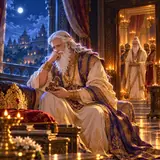
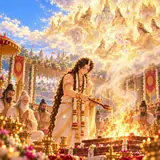
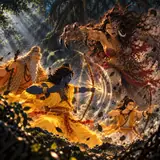
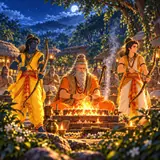
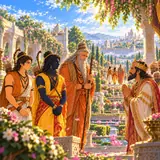
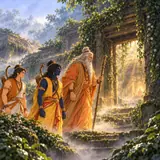
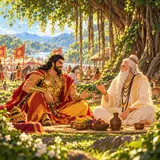
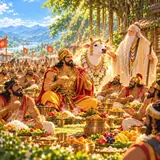
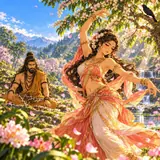
Scene 2 of 2 · Uma, her eyes red with anger, curses the gods who denied her a son.
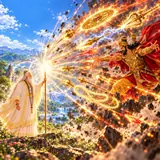
समन्युरशपत् सर्वान् क्रोधसंरक्तलोचना । यस्मान्निवारिता चाहं संगता पुत्रकाम्यया ॥ २१ ॥
अपत्यं स्वेषु दारेषु नोत्पादयितुमर्हथ । अद्यप्रभृति युष्माकमप्रजाः सन्तु पत्नयः ॥ २२ ॥
“Angrily, her eyes red with fury, she cursed them all: ‘Because I was stopped when I had joined with my lord out of longing for a son, you shall not beget offspring on your own wives. From this day on, may your wives be childless.’
“क्रोध से, आँखें रोष से लाल करके उन्होंने सबको शाप दिया: ‘क्योंकि जब मैं पुत्र की इच्छा से अपने स्वामी से मिली थी, तब मुझे रोका गया, इसलिए तुम अपनी पत्नियों से संतान उत्पन्न नहीं करोगे। आज से तुम्हारी पत्नियाँ संतानहीन रहें।’
CommentaryNot scripture Uma, eyes red with anger, curses the gods: “Because you stopped me from having a son, your own wives will be childless.” Her anger is a mother’s anger at a child denied. The gods acted out of fear, but they took something from her.
Scene 2 of 2 · Uma, her eyes red with anger, curses the gods who denied her a son.
एवमुक्त्वा सुरान् सर्वाञ्शशाप पृथिवीमपि । अवने नैकरूपा त्वं बहुभार्या भविष्यसि ॥ २३ ॥
न च पुत्रकृतां प्रीतिं मत्क्रोधकलुषीकृता । प्राप्स्यसि त्वं सुदुर्मेधो मम पुत्रमनिच्छती ॥ २४ ॥
“Having said this to all the gods, she cursed the earth too: ‘Earth, you will have many forms and be the wife of many. Fouled by my anger, foolish one, you will not know the joy that a son brings, since you did not want my son.’
“सब देवताओं से यह कहकर उन्होंने पृथ्वी को भी शाप दिया: ‘पृथ्वी, तुम्हारे अनेक रूप होंगे और तुम अनेकों की पत्नी होगी। मेरे क्रोध से दूषित, मूर्ख, तुम पुत्र से मिलने वाला सुख नहीं जानोगी, क्योंकि तुमने मेरा पुत्र नहीं चाहा।’
CommentaryNot scripture She also curses the earth: “You will have many forms and many husbands, and not know the joy of a son.” The earth is ruled by many kings, one after another. The curse explains, in mythic terms, why the earth is “wife” to many rulers.
Scene 2 of 2 · Uma, her eyes red with anger, curses the gods who denied her a son.
तान् सर्वान् पीडितान् दृष्ट्वा सुरान् सुरपतिस्तदा । गमनायोपचक्राम दिशं वरुणपालिताम् ॥ २५ ॥
“Seeing all the gods afflicted, the lord of the gods then set out for the direction guarded by Varuna (the west).
“सब देवताओं को पीड़ित देखकर देवेश्वर तब वरुण से रक्षित दिशा (पश्चिम) की ओर चल पड़े।
CommentaryNot scripture Seeing the gods suffer, Shiva goes west. He withdraws from the scene of conflict. Sometimes the wise response to a quarrel is to go away and practise austerity.
Scene 2 of 2 · Uma, her eyes red with anger, curses the gods who denied her a son.
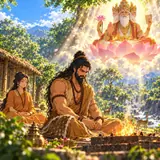
स गत्वा तप आतिष्ठत् पार्श्वे तस्योत्तरे गिरेः । हिमवत्प्रभवे शृङ्गे सह देव्या महेश्वरः ॥ २६ ॥
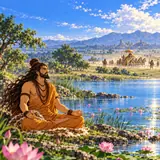
“There the great lord went and, with the goddess, practised austerity on the northern slope of that mountain, on a peak born of the Himalaya.
“वहाँ जाकर महान स्वामी ने देवी के साथ उस पर्वत के उत्तरी ढलान पर, हिमालय से उत्पन्न एक शिखर पर तप किया।
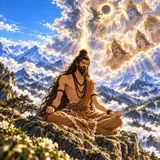
CommentaryNot scripture Shiva and Uma practise austerity together on a Himalayan peak. The story of the sister ends in quiet discipline.
Scene 2 of 2 · Uma, her eyes red with anger, curses the gods who denied her a son.
एष ते विस्तरो राम शैलपुत्र्या निवेदितः । गङ्गायाः प्रभवं चैव शृणु मे सहलक्ष्मण ॥ २७ ॥
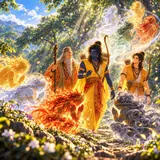
“This, Rama, is told to you in full about the mountain’s daughter. Now hear from me, with Lakshmana, about the Ganga’s origin.”
“राम, यह पर्वत की पुत्री के बारे में तुम्हें पूरा बताया गया। अब लक्ष्मण के साथ मुझसे गंगा की उत्पत्ति सुनो।”
CommentaryNot scripture “Now hear about the Ganga’s origin.” Vishvamitra has told Uma’s story first. Now he turns to Ganga, and to the birth of Karttikeya, in which she will play a part.
Scene 2 of 2 · Uma, her eyes red with anger, curses the gods who denied her a son.