Bala Kanda · Sarga 46 of 77 · 23 verses
Diti’s Vow and Indra’s Betrayal
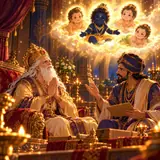
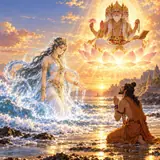
Grieving for her slain sons, Diti asks her husband, the sage Kashyapa, for a son who will kill Indra, earned by long austerity. Kashyapa agrees: if she stays pure for a thousand years, she will bear a son who can conquer the three worlds. He strokes her, blesses her, and leaves for his own austerity.
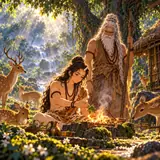
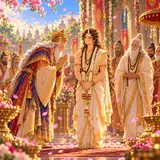
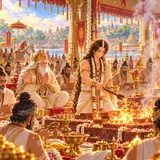
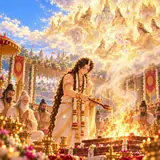
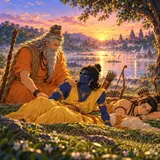
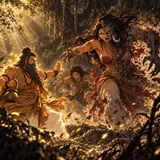
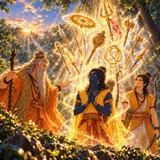
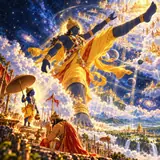
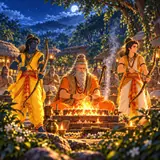
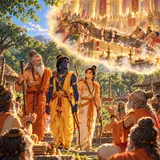
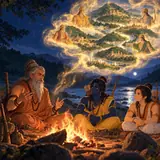
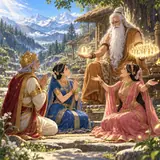
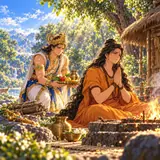
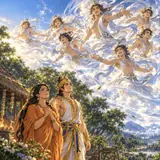
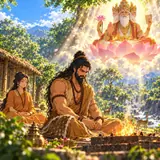
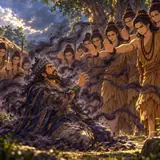
Diti goes to Kushaplava and begins fierce austerity. Indra himself serves her devotedly: bringing fire, kusha grass, firewood, water, fruit and roots, massaging her limbs and relieving her fatigue. When only ten years remain, Diti, pleased, tells him: “In ten years you will see your brother; I will make him eager for victory, and you will enjoy the conquered three worlds together with him.” But at midday she falls asleep with her feet where her head should be, a lapse in purity. Indra, seeing his chance, laughs, enters her womb and cuts the embryo into seven pieces with his thunderbolt. The embryo cries, and Diti wakes. “Don’t cry, don’t cry,” says Indra, still cutting. “Do not kill it, do not kill it!” cries Diti, and out of respect for her Indra comes out. With joined palms and thunderbolt in hand, he confesses: “You slept impure, with your feet at your head. Taking that opening, I split into seven the one who was to kill me. Forgive me, goddess.”
Press › to begin with verse 1.
हतेषु तेषु पुत्रेषु दितिः परमदुःखिता । मारीचं कश्यपं नाम भर्तारमिदमब्रवीत् ॥ १ ॥
When those sons had been killed, Diti, in the deepest grief, said to her husband Kashyapa, son of Marichi:
जब वे पुत्र मारे गए, तब गहरे शोक में डूबी दिति ने अपने पति, मरीचि के पुत्र कश्यप से कहा:
Commentary on the whole sarga
Diti’s Vow and Indra’s Betrayal 1 min read.
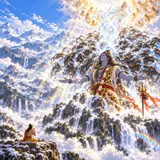
Read the commentary CommentaryNot scripture Diti, mother of the slain asuras, grieves. The war of the last sarga has a cost the victors do not see: a mother who has lost her sons. Valmiki turns to her grief.
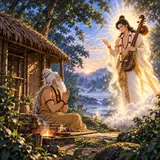
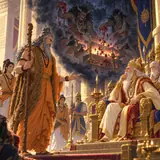
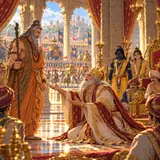
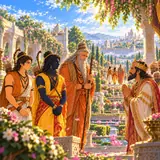
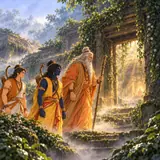
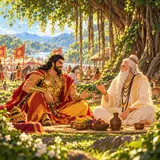
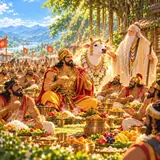
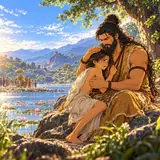
Scene 1 of 2 · Grieving Diti practises austerity at Kushaplava, and Indra waits on her, bringing fire, water and fruit.
हतपुत्रास्मि भगवंस्तव पुत्रैर्महाबलैः । शक्रहन्तारमिच्छामि पुत्रं दीर्घतपोर्जितम् ॥ २ ॥
“Lord, my sons have been killed by your mighty sons. I want a son who will kill Shakra, won by long austerity.
“भगवन, आपके बलवान पुत्रों ने मेरे पुत्रों को मार डाला है। मैं लंबे तप से पाया हुआ ऐसा पुत्र चाहती हूँ जो इंद्र को मारे।
CommentaryNot scripture “I want a son who will kill Shakra.” Her grief has turned to a wish for revenge. A mother’s pain becomes the seed of a new war.
Scene 1 of 2 · Grieving Diti practises austerity at Kushaplava, and Indra waits on her, bringing fire, water and fruit.
साहं तपश्चरिष्यामि गर्भं मे दातुमर्हसि । ईश्वरं शक्रहन्तारं त्वमनुज्ञातुमर्हसि ॥ ३ ॥
“I will practise austerity; you should give me an embryo. Please consent to a powerful son who will kill Shakra.”
“मैं तप करूँगी; आप मुझे गर्भ दीजिए। इंद्र को मारने वाले एक शक्तिशाली पुत्र के लिए सहमति दीजिए।”
CommentaryNot scripture She will win him by austerity. Like every seeker in this kanda, she turns to discipline to get what she longs for.
Scene 1 of 2 · Grieving Diti practises austerity at Kushaplava, and Indra waits on her, bringing fire, water and fruit.
तस्यास्तद्वचनं श्रुत्वा मारीचः कश्यपस्तदा । प्रत्युवाच महातेजा दितिं परमदुःखिताम् ॥ ४ ॥
Hearing her words, the radiant Kashyapa, son of Marichi, replied to Diti in her deep grief:
उसके वचन सुनकर तेजस्वी मरीचिपुत्र कश्यप ने गहरे शोक में डूबी दिति को उत्तर दिया:
CommentaryNot scripture Kashyapa, father of both gods and asuras, hears her grief. He is caught between his children.
Scene 1 of 2 · Grieving Diti practises austerity at Kushaplava, and Indra waits on her, bringing fire, water and fruit.
एवं भवतु भद्रं ते शुचिर्भव तपोधने । जनयिष्यसि पुत्रं त्वं शक्रहन्तारमाहवे ॥ ५ ॥
“So be it; bless you. Be pure, you who are rich in austerity. You will bear a son who will kill Shakra in battle.
“ऐसा ही हो; तुम्हारा कल्याण हो। तप की धनी, पवित्र रहो। तुम एक ऐसे पुत्र को जन्म दोगी जो युद्ध में इंद्र को मारेगा।
CommentaryNot scripture “So be it, if you remain pure.” The boon comes with a condition. In these stories, conditions are where everything turns.
Scene 1 of 2 · Grieving Diti practises austerity at Kushaplava, and Indra waits on her, bringing fire, water and fruit.
पूर्णे वर्षसहस्रे तु शुचिर्यदि भविष्यसि । पुत्रं त्रैलोक्यहन्तारं मत्तस्त्वं जनयिष्यसि ॥ ६ ॥
“When a full thousand years are complete, if you remain pure, you will bear from me a son who will conquer the three worlds.”
“जब पूरे हज़ार वर्ष पूरे होंगे, यदि तुम पवित्र रहोगी, तो तुम मुझसे तीनों लोकों को जीतने वाले पुत्र को जन्म दोगी।”
CommentaryNot scripture A thousand years of purity, and she will bear a son who conquers the three worlds. A long test.
Scene 1 of 2 · Grieving Diti practises austerity at Kushaplava, and Indra waits on her, bringing fire, water and fruit.
एवमुक्त्वा महातेजाः पाणिना सम्ममार्ज ताम् । तामालभ्य ततः स्वस्ति इत्युक्त्वा तपसे ययौ ॥ ७ ॥
Having said this, the radiant one stroked her with his hand, touched her, said “May it go well”, and went away to his austerity.
यह कहकर तेजस्वी कश्यप ने उसे हाथ से सहलाया, छुआ, “कल्याण हो” कहा, और अपने तप के लिए चले गए।
CommentaryNot scripture Kashyapa strokes her and leaves for his own austerity. A tender gesture before a long separation.
Scene 1 of 2 · Grieving Diti practises austerity at Kushaplava, and Indra waits on her, bringing fire, water and fruit.
गते तस्मिन् नरश्रेष्ठ दितिः परमहर्षिता । कुशप्लवं समासाद्य तपस्तेपे सुदारुणम् ॥ ८ ॥
When he had gone, best of men, Diti, overjoyed, went to Kushaplava and practised very fierce austerity.
उनके चले जाने पर, पुरुषश्रेष्ठ, अत्यंत प्रसन्न दिति कुशप्लव गई और अत्यंत कठोर तप करने लगी।
CommentaryNot scripture Diti goes to Kushaplava and practises fierce austerity. The place is near Vishala; this is why Vishvamitra tells the story here.
Scene 1 of 2 · Grieving Diti practises austerity at Kushaplava, and Indra waits on her, bringing fire, water and fruit.
तपस्तस्यां हि कुर्वत्यां परिचर्यां चकार ह । सहस्राक्षो नरश्रेष्ठ परया गुणसम्पदा ॥ ९ ॥
While she practised austerity, the thousand-eyed one waited on her, best of men, with the greatest excellence.
जब वह तप कर रही थी, तब पुरुषश्रेष्ठ, सहस्र नेत्रों वाले इंद्र ने परम उत्कृष्टता से उसकी सेवा की।
CommentaryNot scripture And Indra, the son of her rival, serves her “with the greatest excellence”. A surprising twist: the god she wants killed waits on her day and night.
Scene 1 of 2 · Grieving Diti practises austerity at Kushaplava, and Indra waits on her, bringing fire, water and fruit.
अग्निं कुशान् काष्ठमपः फलं मूलं तथैव च । न्यवेदयत् सहस्राक्षो यच्चान्यदपि कांक्षितम् ॥ १० ॥
The thousand-eyed one brought her fire, kusha grass, firewood, water, fruits and roots, and whatever else she wished.
सहस्र नेत्रों वाले इंद्र उसके लिए अग्नि, कुश, समिधा, जल, फल और मूल, और जो कुछ वह चाहती, ले आते थे।
CommentaryNot scripture He brings fire, grass, firewood, water, fruits and roots. Everything she needs. Is it kindness or watchfulness? The poem lets us wonder.
Scene 1 of 2 · Grieving Diti practises austerity at Kushaplava, and Indra waits on her, bringing fire, water and fruit.
गात्रसंवाहनैश्चैव श्रमापनयनैस्तथा । शक्रः सर्वेषु कालेषु दितिं परिचचार ह ॥ ११ ॥
With massaging of her limbs and relief of her weariness, Shakra waited on Diti at all times.
उसके अंग दबाकर और उसकी थकान मिटाकर इंद्र हर समय दिति की सेवा करते रहे।
CommentaryNot scripture He massages her limbs and eases her weariness. Diti, a mother, grows fond of him. She calls him “son” in the next verses.
Scene 1 of 2 · Grieving Diti practises austerity at Kushaplava, and Indra waits on her, bringing fire, water and fruit.
पूर्णे वर्षसहस्रे सा दशोने रघुनन्दन । दितिः परमसंहृष्टा सहस्राक्षमथाब्रवीत् ॥ १२ ॥
When the thousand years lacked only ten, delight of the Raghus, Diti, overjoyed, said to the thousand-eyed one:
रघुनंदन, जब हज़ार वर्ष में केवल दस बाकी रहे, तब अत्यंत प्रसन्न दिति ने सहस्र नेत्रों वाले से कहा:
CommentaryNot scripture Ten years before the end, Diti speaks to Indra with joy. She trusts him.
Scene 1 of 2 · Grieving Diti practises austerity at Kushaplava, and Indra waits on her, bringing fire, water and fruit.
तपश्चरन्त्या वर्षाणि दश वीर्यवतां वर । अवशिष्टानि भद्रं ते भ्रातरं द्रक्ष्यसे ततः ॥ १३ ॥
“Best of the mighty, ten years of my austerity remain; bless you. Then you will see your brother.
“बलवानों में श्रेष्ठ, मेरे तप के दस वर्ष बाकी हैं; तुम्हारा कल्याण हो। तब तुम अपने भाई को देखोगे।
CommentaryNot scripture “Then you will see your brother.” She calls the unborn child Indra’s brother. In her heart, the revenge has softened into family.
Scene 1 of 2 · Grieving Diti practises austerity at Kushaplava, and Indra waits on her, bringing fire, water and fruit.
यमहं त्वत्कृते पुत्र तमाधास्ये जयोत्सुकम् । त्रैलोक्यविजयं पुत्र सह भोक्ष्यसि विज्वर ॥ १४ ॥
“The one I bear for your sake, son, I will make eager for victory. Together with him, son, you will enjoy the conquest of the three worlds, free of fever.
“पुत्र, जिसे मैं तुम्हारे लिए धारण कर रही हूँ, उसे मैं विजय के लिए उत्सुक बनाऊँगी। पुत्र, उसके साथ मिलकर तुम चिंता से मुक्त होकर तीनों लोकों की विजय का आनंद लोगे।
CommentaryNot scripture “Together you will conquer the three worlds.” She now imagines her son and Indra side by side. Her austerity and Indra’s service have changed her purpose. This makes what follows even more painful.
Scene 1 of 2 · Grieving Diti practises austerity at Kushaplava, and Indra waits on her, bringing fire, water and fruit.
याचितेन सुरश्रेष्ठ पित्रा तव महात्मना । वरो वर्षसहस्रान्ते मम दत्तः सुतं प्रति ॥ १५ ॥
“When begged by your great-souled father, best of gods, he gave me a boon concerning a son, at the end of a thousand years.”
“देवश्रेष्ठ, तुम्हारे महात्मा पिता से याचना करने पर उन्होंने मुझे हज़ार वर्ष के अंत में पुत्र का वर दिया था।”
CommentaryNot scripture She explains the boon from Kashyapa. She hides nothing from Indra.
Scene 1 of 2 · Grieving Diti practises austerity at Kushaplava, and Indra waits on her, bringing fire, water and fruit.
इत्युक्त्वा च दितिस्तत्र प्राप्ते मध्यं दिनेश्वरे । निद्रयापहृता देवी पादौ कृत्वाथ शीर्षतः ॥ १६ ॥
Having said this, when the lord of day had reached midday, the goddess Diti was overcome by sleep, and lay with her feet where her head should be.
यह कहकर, जब दिन का स्वामी (सूर्य) मध्याह्न में पहुँचा, तब देवी दिति नींद से अभिभूत हो गई, और जहाँ सिर होना चाहिए वहाँ पैर करके लेट गई।
CommentaryNot scripture At midday she falls asleep with her feet where her head should be. A small breach of ritual purity.
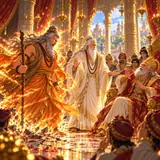
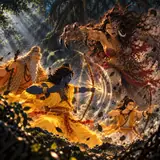
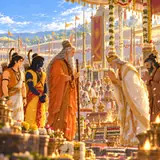
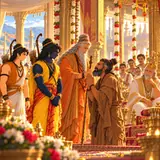
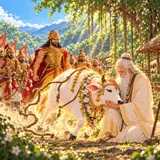
Scene 2 of 2 · Holding his thunderbolt, Indra kneels with joined palms before the woken, weeping Diti and begs her forgiveness.
दृष्ट्वा तामशुचिं शक्रः पादयोः कृतमूर्धजाम् । शिरःस्थाने कृतौ पादौ जहास च मुमोद च ॥ १७ ॥
Seeing her impure, with her hair at her feet and her feet in the place of her head, Shakra laughed and rejoiced.
उसे अपवित्र, केश पैरों की ओर और पैर सिर की जगह देखकर इंद्र हँसे और प्रसन्न हुए।
CommentaryNot scripture Indra sees the lapse and laughs. His service was waiting for this moment. The mask falls.
Scene 2 of 2 · Holding his thunderbolt, Indra kneels with joined palms before the woken, weeping Diti and begs her forgiveness.
तस्याः शरीरविवरं प्रविवेश पुरंदरः । गर्भं च सप्तधा राम चिच्छेद परमात्मवान् ॥ १८ ॥
Purandara entered an opening of her body, and, utterly self-possessed, cut the embryo into seven parts, Rama.
राम, पुरंदर उसके शरीर के एक छिद्र में प्रवेश कर गए, और पूरी तरह संयत होकर गर्भ को सात भागों में काट दिया।
CommentaryNot scripture He enters her body and cuts the embryo into seven parts. Valmiki tells it plainly. This is one of the darkest acts of any god in the Ramayana.
Scene 2 of 2 · Holding his thunderbolt, Indra kneels with joined palms before the woken, weeping Diti and begs her forgiveness.
भिद्यमानस्ततो गर्भो वज्रेण शतपर्वणा । रुरोद सुस्वरं राम ततो दितिरबुध्यत ॥ १९ ॥
As it was being cut by the hundred-jointed thunderbolt, the embryo cried loudly, Rama, and Diti woke.
राम, जब सौ पर्वों वाले वज्र से वह काटा जा रहा था, तब गर्भ ज़ोर से रोया, और दिति जाग गई।
CommentaryNot scripture The embryo cries out, and Diti wakes. The poem does not soften the horror.
Scene 2 of 2 · Holding his thunderbolt, Indra kneels with joined palms before the woken, weeping Diti and begs her forgiveness.
मा रुदो मा रुदश्चेति गर्भं शक्रोऽभ्यभाषत । बिभेद च महातेजा रुदन्तमपि वासवः ॥ २० ॥
“Don’t cry, don’t cry,” said Shakra to the embryo; and the radiant Vasava kept cutting it even as it cried.
“मत रो, मत रो,” इंद्र ने गर्भ से कहा; और तेजस्वी वासव रोते हुए को भी काटते रहे।
CommentaryNot scripture “Don’t cry, don’t cry” (ma rudah ), Indra says, as he keeps cutting. From these words the beings will get their name: Maruts, as the next sarga explains. The cruelty and the name are bound together.
Scene 2 of 2 · Holding his thunderbolt, Indra kneels with joined palms before the woken, weeping Diti and begs her forgiveness.
न हन्तव्यं न हन्तव्यमित्येव दितिरब्रवीत् । निष्पपात ततः शक्रो मातुर्वचनगौरवात् ॥ २१ ॥
“Do not kill it, do not kill it!” Diti cried; and out of respect for the mother’s words, Shakra came out.
“मत मारो, मत मारो!” दिति चिल्लाई; और माता के वचनों के आदर के कारण इंद्र बाहर आ गए।
CommentaryNot scripture “Do not kill it!” Diti cries, and Indra stops, “out of respect for the mother’s words”. Too late to undo what he has done, but he stops.
Scene 2 of 2 · Holding his thunderbolt, Indra kneels with joined palms before the woken, weeping Diti and begs her forgiveness.
प्राञ्जलिर्वज्रसहितो दितिं शक्रोऽभ्यभाषत । अशुचिर्देवि सुप्तासि पादयोः कृतमूर्धजा ॥ २२ ॥
With joined palms, holding the thunderbolt, Shakra said to Diti: “Goddess, you were sleeping impure, with your hair at your feet.
वज्र लिए, हाथ जोड़कर इंद्र ने दिति से कहा: “देवी, तुम केश पैरों की ओर करके, अपवित्र होकर सो रही थीं।
CommentaryNot scripture Indra stands with joined palms and gives his excuse: you slept impure. He blames the mother.
Scene 2 of 2 · Holding his thunderbolt, Indra kneels with joined palms before the woken, weeping Diti and begs her forgiveness.
तदन्तरमहं लब्ध्वा शक्रहन्तारमाहवे । अभिन्दं सप्तधा देवि तन्मे त्वं क्षन्तुमर्हसि ॥ २३ ॥
“Finding that opening, I split into seven the one who was to kill Shakra in battle. Goddess, you should forgive me for it.”
“वह छिद्र पाकर मैंने उसे सात भागों में बाँट दिया जो युद्ध में इंद्र को मारने वाला था। देवी, इसके लिए तुम्हें मुझे क्षमा करना चाहिए।”
CommentaryNot scripture “Forgive me.” Indra asks forgiveness. Valmiki presents the king of the gods as powerful but deeply flawed: he steals Sagara’s horse, betrays Diti, and in sarga 48 will wrong Ahalya. The gods of this poem are not models of virtue; Rama is.
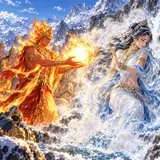
Scene 2 of 2 · Holding his thunderbolt, Indra kneels with joined palms before the woken, weeping Diti and begs her forgiveness.