Bala Kanda · Sarga 47 of 77 · 22 verses
The Maruts, and the Kings of Vishala
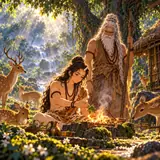
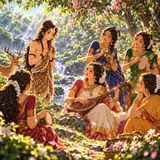
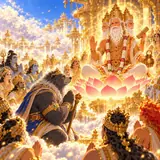
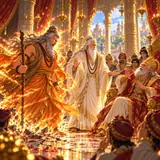
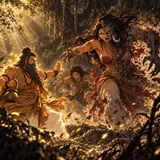
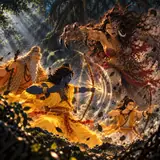
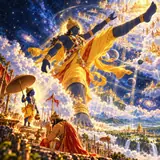
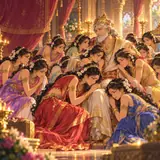
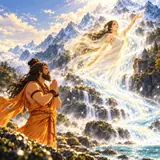
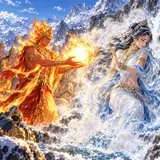
Diti, in deep grief, speaks gently to Indra: the fault was hers, not his. She asks that the seven pieces of her child become the guardians of the seven regions of the winds, roaming the sky as the Maruts, divine in form: one in Brahma’s world, one in Indra’s, a third known as the divine wind, and four in the four directions at Indra’s command. Indra, palms joined, agrees: her sons will move about in divine form. Mother and son, their purpose achieved, go to heaven.
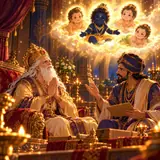
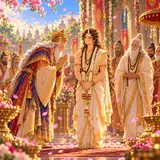
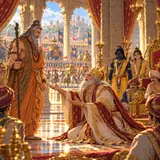
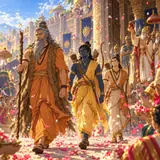
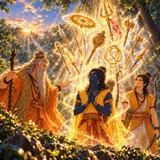
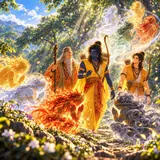
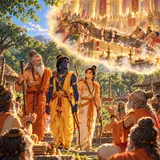
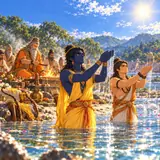
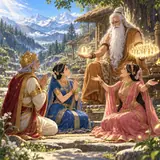
“This is the land where Indra waited on Diti,” says Vishvamitra. Later, Ikshvaku’s righteous son Vishala, born of Alambusha, founded the city of Vishala here. His line runs through Hemacandra, Sucandra, Dhumrashva, Srinjaya, Sahadeva, Kushashva, Somadatta and Kakutstha to the present king, the invincible Sumati. By Ikshvaku’s grace all these kings are long-lived, mighty and righteous. “We will sleep here tonight; tomorrow you will see Janaka.” King Sumati, hearing of Vishvamitra’s arrival, comes out with his priests and kin, honours him, and says no one could be more blessed than he.
Press › to begin with verse 1.
सप्तधा तु कृते गर्भे दितिः परमदुःखिता । सहस्राक्षं दुराधर्षं वाक्यं सानुनयाब्रवीत् ॥ १ ॥
When the embryo had been made sevenfold, Diti, in the deepest grief, spoke gently to the unassailable thousand-eyed one:
जब गर्भ सात भागों में बँट गया, तब गहरे शोक में डूबी दिति ने अजेय सहस्र नेत्रों वाले इंद्र से कोमल स्वर में कहा:
Commentary on the whole sarga
The Maruts, and the Kings of Vishala 1 min read.
Read the commentary CommentaryNot scripture Diti speaks “gently” (santvam ) to the god who has just destroyed her child. Her grief is deep, yet she does not curse. Like Kushanabha’s daughters, she chooses a harder virtue.
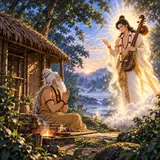
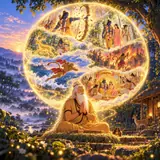
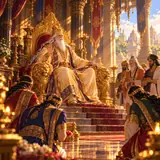
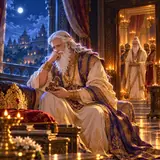
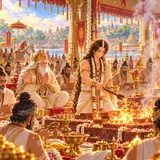
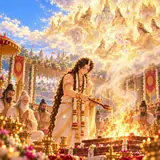
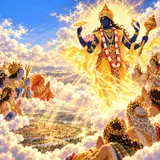
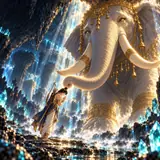
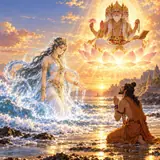
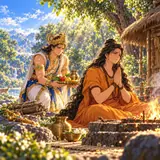
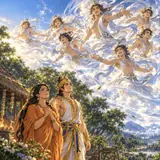
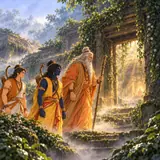
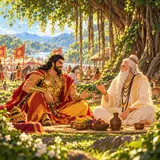
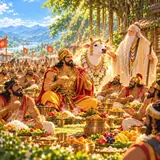
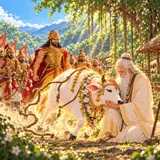
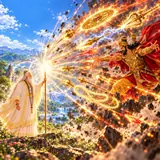
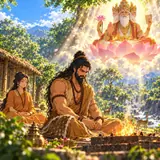
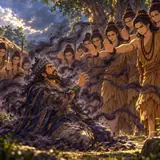
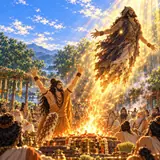
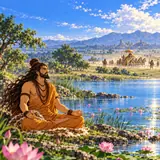
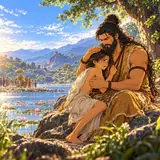
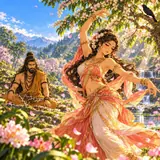
Scene 1 of 2 · Diti forgives Indra, and her seven sons become the Maruts, the gods of the winds, sweeping across the sky.
ममापराधाद् गर्भोऽयं सप्तधा शकलीकृतः । नापराधो हि देवेश तवात्र बलसूदन ॥ २ ॥
“It was through my fault that this embryo was cut into seven pieces. There is no fault in you here, lord of gods, slayer of Bala.
“मेरे ही दोष से यह गर्भ सात टुकड़ों में कटा। देवेश्वर, बल का वध करने वाले, इसमें तुम्हारा कोई दोष नहीं है।
CommentaryNot scripture “It was my fault. There is no fault in you.” Diti takes the blame on herself. Readers may disagree with her, but her generosity is remarkable. Forgiveness again shapes the outcome.
Scene 1 of 2 · Diti forgives Indra, and her seven sons become the Maruts, the gods of the winds, sweeping across the sky.
प्रियं त्वत्कृतमिच्छामि मम गर्भविपर्यये । मरुतां सप्त सप्तानां स्थानपाला भवन्तु ते ॥ ३ ॥
“Even with my embryo destroyed, I wish for something good to come of what you have done. Let these seven be the guardians of the regions of the seven Maruts.
“मेरा गर्भ नष्ट हो जाने पर भी मैं चाहती हूँ कि तुम्हारे किए से कुछ अच्छा निकले। ये सातों सात मरुतों के क्षेत्रों के रक्षक हों।
CommentaryNot scripture “Let something good come of it.” She turns loss into blessing: let the seven become guardians of the winds. A mother who cannot save her child gives him a purpose.
Scene 1 of 2 · Diti forgives Indra, and her seven sons become the Maruts, the gods of the winds, sweeping across the sky.
वातस्कन्धा इमे सप्त चरन्तु दिवि पुत्रक । मारुता इति विख्याता दिव्यरूपा ममात्मजाः ॥ ४ ॥
“Let these seven roam the sky as the seven regions of the winds, son, known as Marutas, my sons, divine in form.
“पुत्र, ये सातों वायु के सात क्षेत्रों के रूप में आकाश में विचरें, मारुत नाम से जाने जाएँ, मेरे पुत्र, दिव्य रूप वाले।
CommentaryNot scripture They will be the Maruts (Marutas ), the storm gods, seven regions of the wind. The Maruts are ancient: whole hymns of the Rig Veda are addressed to them.
Scene 1 of 2 · Diti forgives Indra, and her seven sons become the Maruts, the gods of the winds, sweeping across the sky.
ब्रह्मलोकं चरत्वेक इन्द्रलोकं तथापरः । दिव्यवायुरिति ख्यातस्तृतीयोऽपि महायशाः ॥ ५ ॥
“Let one roam Brahma’s world and another Indra’s world; the third, greatly renowned, will be known as the divine wind.
“एक ब्रह्मलोक में विचरे और दूसरा इंद्रलोक में; तीसरा, महायशस्वी, दिव्य वायु के नाम से जाना जाए।
CommentaryNot scripture One in Brahma’s world, one in Indra’s, one as the divine wind. Diti assigns each a place. A mother arranging her children’s futures.
Scene 1 of 2 · Diti forgives Indra, and her seven sons become the Maruts, the gods of the winds, sweeping across the sky.
चत्वारस्तु सुरश्रेष्ठ दिशो वै तव शासनात् । संचरिष्यन्ति भद्रं ते कालेन हि ममात्मजाः ॥ ६ ॥
“And the four, best of gods, will move through the directions at your command, bless you, in time, these sons of mine,
“और देवश्रेष्ठ, बाकी चार तुम्हारी आज्ञा से, समय पर, दिशाओं में विचरें, तुम्हारा कल्याण हो, ये मेरे पुत्र,
CommentaryNot scripture The other four will move through the directions. The winds of the world are Diti’s sons.
Scene 1 of 2 · Diti forgives Indra, and her seven sons become the Maruts, the gods of the winds, sweeping across the sky.
त्वत्कृतेनैव नाम्ना वै मारुता इति विश्रुताः । तस्यास्तद् वचनं श्रुत्वा सहस्राक्षः पुरन्दरः ॥ ७ ॥
उवाच प्राञ्जलिर्वाक्यमतीदं बलसूदनः । सर्वमेतद् यथोक्तं ते भविष्यति न संशयः ॥ ८ ॥
“known as the Marutas by the very name you gave them.” Hearing her words, the thousand-eyed Purandara, slayer of Bala, said with joined palms: “All this will be as you have said, without doubt.
“उसी नाम से मारुत कहलाएँ जो तुमने उन्हें दिया।” उसके वचन सुनकर बल का वध करने वाले सहस्र नेत्रों वाले पुरंदर ने हाथ जोड़कर कहा: “जैसा तुमने कहा, सब वैसा ही होगा, निःसंदेह।
CommentaryNot scripture “Known by the name you gave them”: from Indra’s words “ma rudah ”, “don’t cry”, comes Maruts . The name keeps the memory of the cruelty. Indra agrees with joined palms.
Scene 1 of 2 · Diti forgives Indra, and her seven sons become the Maruts, the gods of the winds, sweeping across the sky.
विचरिष्यन्ति भद्रं ते देवरूपास्तवात्मजाः । एवं तौ निश्चयं कृत्वा मातापुत्रौ तपोवने ॥ ९ ॥
जग्मतुस्त्रिदिवं राम कृतार्थाविति नः श्रुतम् । एष देशः स काकुत्स्थ महेन्द्राध्युषितः पुरा ॥ १० ॥
“Your sons will roam in divine form; bless you.” So, having come to an agreement, mother and son went to heaven from that forest of austerities, Rama, their purpose achieved, as we have heard. This is that very land, Kakutstha, where great Indra once lived,
“तुम्हारे पुत्र दिव्य रूप में विचरेंगे; तुम्हारा कल्याण हो।” इस प्रकार समझौता करके माता और पुत्र अपना प्रयोजन पूरा करके उस तपोवन से स्वर्ग चले गए, राम, जैसा हमने सुना है। काकुत्स्थ, यही वह भूमि है जहाँ पहले महेंद्र रहते थे,
CommentaryNot scripture Mother and son, Diti and Indra, go to heaven together, reconciled. The story ends not in revenge but in agreement. This is the land where it all happened.
Scene 1 of 2 · Diti forgives Indra, and her seven sons become the Maruts, the gods of the winds, sweeping across the sky.
दितिं यत्र तपःसिद्धामेवं परिचचार सः । इक्ष्वाकोस्तु नरव्याघ्र पुत्रः परमधार्मिकः ॥ ११ ॥
अलम्बुषायामुत्पन्नो विशाल इति विश्रुतः । तेन चासीदिह स्थाने विशालेति पुरी कृता ॥ १२ ॥
“where he waited on Diti, perfected in austerity. And a most righteous son of Ikshvaku, tiger among men, born of Alambusha, was known as Vishala; by him the city named Vishala was built in this place.
“जहाँ उन्होंने तप में सिद्ध दिति की सेवा की थी। और पुरुषसिंह, अलंबुषा से जन्मे इक्ष्वाकु के एक अत्यंत धर्मात्मा पुत्र विशाल नाम से प्रसिद्ध हुए; उन्होंने इसी स्थान पर विशाला नाम की नगरी बसाई।
CommentaryNot scripture Vishala, a son of Ikshvaku (Rama’s own ancestor) and the apsaras Alambusha, founded the city of Vishala here. So the kings of this city are Rama’s distant cousins.
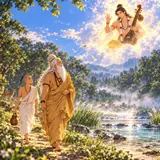
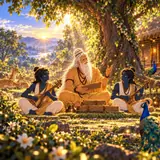
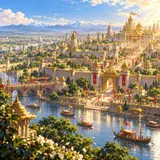
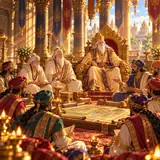
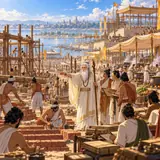
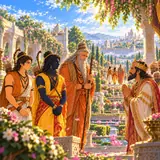
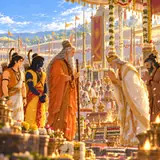
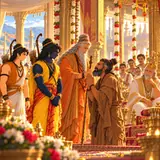
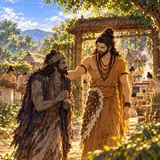
Scene 2 of 2 · King Sumati of Vishala comes out with his priests to welcome Vishvamitra and the two princes.
विशालस्य सुतो राम हेमचन्द्रो महाबलः । सुचन्द्र इति विख्यातो हेमचन्द्रादनन्तरः ॥ १३ ॥
“Vishala’s son, Rama, was the mighty Hemacandra; after Hemacandra came the one known as Sucandra.
“राम, विशाल के पुत्र बलवान हेमचंद्र थे; हेमचंद्र के बाद सुचंद्र नाम से प्रसिद्ध राजा हुए।
CommentaryNot scripture The genealogy begins: Vishala, Hemacandra, Sucandra. Old Indian texts preserve long lists of kings, and Valmiki honours the custom.
Scene 2 of 2 · King Sumati of Vishala comes out with his priests to welcome Vishvamitra and the two princes.
सुचन्द्रतनयो राम धूम्राश्व इति विश्रुतः । धूम्राश्वतनयश्चापि सृञ्जयः समपद्यत ॥ १४ ॥
“Sucandra’s son, Rama, was known as Dhumrashva, and Dhumrashva’s son was Srinjaya.
“राम, सुचंद्र के पुत्र धूम्राश्व नाम से प्रसिद्ध थे, और धूम्राश्व के पुत्र सृंजय।
CommentaryNot scripture Dhumrashva, Srinjaya. Each name is a generation, a lifetime.
Scene 2 of 2 · King Sumati of Vishala comes out with his priests to welcome Vishvamitra and the two princes.
सृञ्जयस्य सुतः श्रीमान् सहदेवः प्रतापवान् । कुशाश्वः सहदेवस्य पुत्रः परमधार्मिकः ॥ १५ ॥
“Srinjaya’s son was the glorious, valiant Sahadeva; Sahadeva’s son was the most righteous Kushashva.
“सृंजय के पुत्र यशस्वी, पराक्रमी सहदेव थे; सहदेव के पुत्र अत्यंत धर्मात्मा कुशाश्व।
CommentaryNot scripture Sahadeva, Kushashva. “Most righteous”: the line has kept its virtue.
Scene 2 of 2 · King Sumati of Vishala comes out with his priests to welcome Vishvamitra and the two princes.
कुशाश्वस्य महातेजाः सोमदत्तः प्रतापवान् । सोमदत्तस्य पुत्रस्तु काकुत्स्थ इति विश्रुतः ॥ १६ ॥
“Kushashva’s son was the radiant, valiant Somadatta; Somadatta’s son was known as Kakutstha.
“कुशाश्व के पुत्र तेजस्वी, पराक्रमी सोमदत्त थे; सोमदत्त के पुत्र काकुत्स्थ नाम से प्रसिद्ध थे।
CommentaryNot scripture Somadatta, and Kakutstha. A king with the same family title Rama bears.
Scene 2 of 2 · King Sumati of Vishala comes out with his priests to welcome Vishvamitra and the two princes.
तस्य पुत्रो महातेजाः सम्प्रत्येष पुरीमिमाम् । आवसत् परमप्रख्यः सुमतिर्नाम दुर्जयः ॥ १७ ॥
“His son, radiant and most famous, now lives in this city: the invincible one named Sumati.
“उनके पुत्र, तेजस्वी और अत्यंत प्रसिद्ध, अजेय सुमति अब इस नगरी में रहते हैं।
CommentaryNot scripture Sumati, the present king. The list arrives at the living ruler they are about to meet.
Scene 2 of 2 · King Sumati of Vishala comes out with his priests to welcome Vishvamitra and the two princes.
इक्ष्वाकोस्तु प्रसादेन सर्वे वैशालिका नृपाः । दीर्घायुषो महात्मानो वीर्यवन्तः सुधार्मिकाः ॥ १८ ॥
“By the grace of Ikshvaku, all the kings of Vishala are long-lived, great-souled, valiant and most righteous.
“इक्ष्वाकु की कृपा से विशाला के सब राजा दीर्घायु, महात्मा, पराक्रमी और अत्यंत धर्मात्मा हैं।
CommentaryNot scripture “By the grace of Ikshvaku”, all these kings are long-lived and righteous. The founder’s merit protects his descendants.
Scene 2 of 2 · King Sumati of Vishala comes out with his priests to welcome Vishvamitra and the two princes.
इहाद्य रजनीमेकां सुखं स्वप्स्यामहे वयम् । श्वः प्रभाते नरश्रेष्ठ जनकं द्रष्टुमर्हसि ॥ १९ ॥
“Here we will sleep happily tonight; tomorrow at dawn, best of men, you shall see Janaka.”
“आज रात हम यहाँ सुख से सोएँगे; कल सवेरे, पुरुषश्रेष्ठ, तुम जनक को देखोगे।”
CommentaryNot scripture “Tomorrow you shall see Janaka.” The destination is near. Mithila, the bow, and Sita are one day away.
Scene 2 of 2 · King Sumati of Vishala comes out with his priests to welcome Vishvamitra and the two princes.
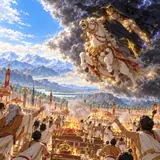
सुमतिस्तु महातेजा विश्वामित्रमुपागतम् । श्रुत्वा नरवरश्रेष्ठः प्रत्यागच्छन्महायशाः ॥ २० ॥
The radiant, greatly renowned Sumati, best of the best of men, hearing that Vishvamitra had arrived, came out to meet him.
तेजस्वी, महायशस्वी, श्रेष्ठ पुरुषों में श्रेष्ठ सुमति विश्वामित्र के आने की बात सुनकर उनसे मिलने बाहर आए।
CommentaryNot scripture King Sumati hears of Vishvamitra’s arrival and comes out to meet him. The sage’s fame precedes him everywhere.
Scene 2 of 2 · King Sumati of Vishala comes out with his priests to welcome Vishvamitra and the two princes.
पूजां च परमां कृत्वा सोपाध्यायः सबान्धवः । प्राञ्जलिः कुशलं पृष्ट्वा विश्वामित्रमथाब्रवीत् ॥ २१ ॥
With his priests and kin he paid him the highest honour, and with joined palms, having asked after his welfare, said to Vishvamitra:
पुरोहितों और संबंधियों के साथ उन्होंने उनका परम सम्मान किया, और हाथ जोड़कर, कुशल पूछकर विश्वामित्र से कहा:
CommentaryNot scripture He honours the sage with his priests and kin, joined palms, asking after his welfare. The same pattern of reverence we have seen at every stop.
Scene 2 of 2 · King Sumati of Vishala comes out with his priests to welcome Vishvamitra and the two princes.
धन्योऽस्म्यनुगृहीतोऽस्मि यस्य मे विषयं मुने । सम्प्राप्तो दर्शनं चैव नास्ति धन्यतरो मम ॥ २२ ॥
“I am blessed, I am favoured, since you have come to my realm, sage, and I have seen you. No one is more blessed than I.”
“मुनि, मैं धन्य हूँ, मुझ पर कृपा हुई है, क्योंकि आप मेरे राज्य में आए और मैंने आपके दर्शन किए। मुझसे अधिक धन्य कोई नहीं।”
CommentaryNot scripture “No one is more blessed than I.” Sumati’s joy at a sage’s visit. In this world, a holy guest is the greatest fortune a house can have. The next sarga begins at Mithila’s edge, with a deserted hermitage and a hidden woman.
Scene 2 of 2 · King Sumati of Vishala comes out with his priests to welcome Vishvamitra and the two princes.