Bala Kanda · Sarga 24 of 77 · 32 verses
Across the Ganga; Tataka’s Forest
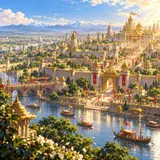
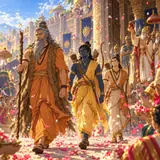
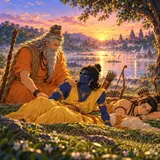
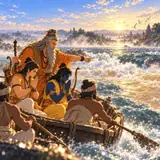
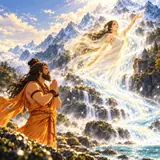
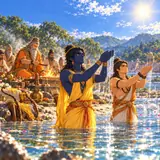
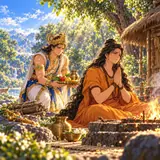
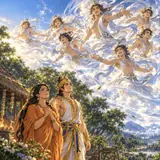
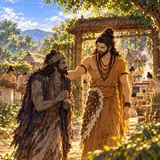
In the morning the sages bring a boat and the three cross the Ganga. In midstream Rama hears a roar of churning water and asks what it is. Vishvamitra explains: Brahma made a lake on Mount Kailasa with his mind, the Manasa; from it flows the holy Sarayu, which embraces Ayodhya and here meets the Ganga. The brothers bow to both rivers.
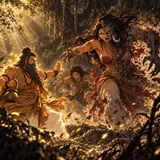
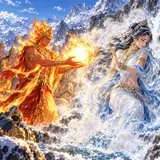
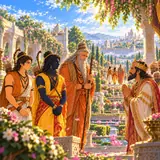
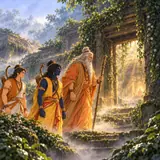
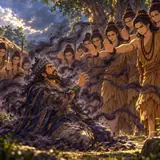
On the south bank they enter a dreadful forest, loud with crickets, wild beasts and harsh-voiced birds. Vishvamitra tells its story. Once there were two thriving lands here, Malada and Karusha. When Indra killed Vritra, the sin of killing a brahmana and a defilement (mala) clung to him; the gods washed him here, and the land received his filth (mala) and hunger (karusha); in gratitude Indra blessed it to prosper. But later the yakshi Tataka, with the strength of a thousand elephants, wife of Sunda and mother of the rakshasa Maricha, came to live a yojana and a half away, blocking the road, and laid both lands waste. “Rely on the strength of your arms, kill this evil woman at my command, and make the land free of thorns again.”
Press › to begin with verse 1.
ततः प्रभाते विमले कृताह्निकमरिन्दमौ । विश्वामित्रं पुरस्कृत्य नद्यास्तीरमुपागतौ ॥ १ ॥
Then, in the clear morning, the two subduers of enemies, their daily rites done, came to the bank of the river with Vishvamitra before them.
फिर निर्मल प्रभात में, नित्य कर्म पूरे करके, शत्रुओं का दमन करने वाले दोनों भाई विश्वामित्र को आगे करके नदी के तट पर आए।
Commentary on the whole sarga
Across the Ganga; Tataka’s Forest 1 min read.
Read the commentary CommentaryNot scripture A clear morning (vimala prabhata ), daily rites done. Each day of the journey begins the same way: prayer first, then the road. Rhythm and discipline carry the young princes forward.
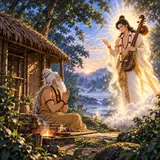
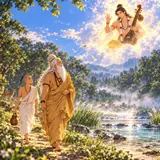
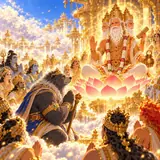
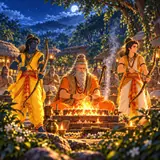
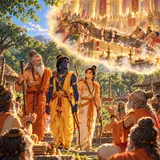
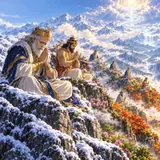
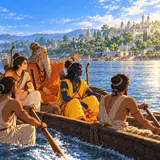
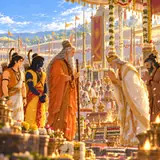
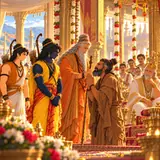
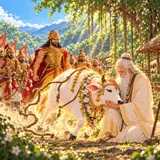
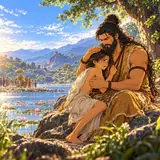
Scene 1 of 2 · Crossing the Ganga by boat, the princes hear the roar where the Sarayu meets her, and bow to both rivers.
ते च सर्वे महात्मानो मुनयः संशितव्रताः । उपस्थाप्य शुभां नावं विश्वामित्रमथाब्रुवन् ॥ २ ॥
All those great-souled sages of strict vows brought a fine boat and said to Vishvamitra:
कठोर व्रत वाले उन सब महात्मा मुनियों ने एक अच्छी नाव लाकर विश्वामित्र से कहा:
CommentaryNot scripture The sages of Kama’s hermitage bring a fine boat. Hospitality extends to helping guests on their way. A good host does not only welcome; he also sends you off well.
Scene 1 of 2 · Crossing the Ganga by boat, the princes hear the roar where the Sarayu meets her, and bow to both rivers.
आरोहतु भवान् नावं राजपुत्रपुरस्कृतः । अरिष्टं गच्छ पन्थानं मा भूत् कालस्य पर्ययः ॥ ३ ॥
“Board the boat, with the princes before you. Go on your way unharmed; let no time be lost.”
“राजकुमारों को आगे करके नाव पर चढ़िए। बिना किसी हानि के अपनी राह जाइए; समय नष्ट न हो।”
CommentaryNot scripture “Board the boat, with the princes before you.” Even the sages give the princes precedence. And “let no time be lost”: Vishvamitra’s sacrifice is waiting.
Scene 1 of 2 · Crossing the Ganga by boat, the princes hear the roar where the Sarayu meets her, and bow to both rivers.
विश्वामित्रस्तथेत्युक्त्वा तानृषीन् प्रतिपूज्य च । ततार सहितस्ताभ्यां सरितं सागरङ्गमाम् ॥ ४ ॥
Vishvamitra said “So be it”, honoured the sages in return, and with the two crossed the river that flows to the sea.
विश्वामित्र ने “ऐसा ही हो” कहकर मुनियों का सम्मान किया, और दोनों के साथ समुद्र की ओर बहने वाली नदी को पार किया।
CommentaryNot scripture They cross the Ganga, “the river that flows to the sea” (sagaramgama ). This is Rama’s first crossing of the great river. In exile, he will cross it again with Guha.
Scene 1 of 2 · Crossing the Ganga by boat, the princes hear the roar where the Sarayu meets her, and bow to both rivers.
तत्र शुश्राव वै शब्दं तोयसंरम्भवर्धितम् । मध्यमागम्य तोयस्य तस्य शब्दस्य निश्चयम् ॥ ५ ॥
ज्ञातुकामो महातेजाः सह रामः कनीयसा । अथ रामः सरिन्मध्ये पप्रच्छ मुनिपुङ्गवम् ॥ ६ ॥
There he heard a sound swelled by the turmoil of the waters. Reaching midstream, the radiant Rama with his younger brother wished to know the cause of that sound, and in the middle of the river asked the foremost sage:
वहाँ उन्होंने जल के उथल-पुथल से बढ़ा हुआ एक शब्द सुना। बीच धारा में पहुँचकर तेजस्वी राम ने छोटे भाई के साथ उस शब्द का कारण जानना चाहा, और नदी के बीच मुनिश्रेष्ठ से पूछा:
CommentaryNot scripture In midstream a great roar of water. Rama wants to know the cause. Curiosity is part of his education: the young prince asks about everything he sees, and Vishvamitra answers.
Scene 1 of 2 · Crossing the Ganga by boat, the princes hear the roar where the Sarayu meets her, and bow to both rivers.
वारिणो भिद्यमानस्य किमयं तुमुलो ध्वनिः । राघवस्य वचः श्रुत्वा कौतूहलसमन्वितम् ॥ ७ ॥
“What is this tumultuous roar of water breaking?” Hearing Raghava’s words, full of curiosity,
“यह टूटते जल का कोलाहल भरा गर्जन क्या है?” राघव के उत्सुकता भरे वचन सुनकर
CommentaryNot scripture “What is this tumultuous roar?” Valmiki calls Rama’s question “full of curiosity” (kautuhala-samanvita ), the same word used for Valmiki’s own eagerness in sarga 1. Wonder links the poet and the hero.
Scene 1 of 2 · Crossing the Ganga by boat, the princes hear the roar where the Sarayu meets her, and bow to both rivers.
कथयामास धर्मात्मा तस्य शब्दस्य निश्चयम् । कैलासपर्वते राम मनसा निर्मितं परम् ॥ ८ ॥
ब्रह्मणा नरशार्दूल तेनेदं मानसं सरः । तस्मात् सुस्राव सरसः सायोध्यामुपगूहते ॥ ९ ॥
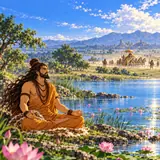
the righteous one told him the cause of that sound: “On Mount Kailasa, Rama, there is a supreme lake made by Brahma with his mind, tiger among men; therefore it is called Manasa. From that lake flows the river that embraces Ayodhya,
धर्मात्मा मुनि ने उन्हें उस शब्द का कारण बताया: “राम, कैलास पर्वत पर ब्रह्मा द्वारा मन से रचा गया एक उत्तम सरोवर है, पुरुषसिंह; इसलिए वह मानस कहलाता है। उसी सरोवर से वह नदी निकलती है जो अयोध्या को घेरे हुए है,
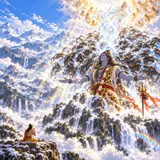
CommentaryNot scripture The Sarayu’s source is Lake Manasa on Mount Kailasa, “made by Brahma’s mind” (manas ). Manasarovar, in Tibet, is still one of the holiest pilgrimages for Hindus and Buddhists. The river that flows past Ayodhya begins at the roof of the world.
Scene 1 of 2 · Crossing the Ganga by boat, the princes hear the roar where the Sarayu meets her, and bow to both rivers.
सरःप्रवृत्ता सरयूः पुण्या ब्रह्मसरश्च्युता । तस्यायमतुलः शब्दो जाह्नवीमभिवर्तते ॥ १० ॥
वारिसंक्षोभजो राम प्रणामं नियतः कुरु । ताभ्यां तु तावुभौ कृत्वा प्रणाममतिधार्मिकौ ॥ ११ ॥
“the holy Sarayu, born of the lake, falling from Brahma’s lake. This matchless sound is hers as she meets the Jahnavi, born of the churning of the waters, Rama. Bow to them, with full attention.” The two most righteous ones bowed to both rivers,
“पवित्र सरयू, जो ब्रह्मा के सरोवर से निकलकर गिरती है। यह अनुपम शब्द उसी का है, राम, जब वह जल के मंथन से उत्पन्न जाह्नवी (गंगा) से मिलती है। पूरे ध्यान से दोनों को प्रणाम करो।” दोनों अत्यंत धर्मात्मा भाइयों ने दोनों नदियों को प्रणाम किया,
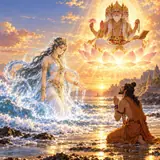
CommentaryNot scripture The roar is the Sarayu meeting the Ganga. Vishvamitra says: bow to both rivers. The brothers do. In India, rivers are not just water; they are goddesses and mothers, greeted with reverence.
Scene 1 of 2 · Crossing the Ganga by boat, the princes hear the roar where the Sarayu meets her, and bow to both rivers.
तीरं दक्षिणमासाद्य जग्मतुर्लघुविक्रमौ । स वनं घोरसंकाशं दृष्ट्वा नरवरात्मजः ॥ १२ ॥
अविप्रहतमैक्ष्वाकः पप्रच्छ मुनिपुङ्गवम् । अहो वनमिदं दुर्गं झिल्लिकागणसंयुतम् ॥ १३ ॥
reached the south bank and went on with light steps. Seeing a forest of dreadful aspect, untrodden, the son of the best of men, the Ikshvaku prince, asked the foremost sage: “Ah, this forest is hard to pass, full of swarms of crickets,
दक्षिणी तट पर पहुँचे और हल्के कदमों से आगे चले। भयानक रूप वाला, अनछुआ एक वन देखकर, नरश्रेष्ठ के पुत्र, इक्ष्वाकु राजकुमार ने मुनिश्रेष्ठ से पूछा: “अहा, यह वन पार करना कठिन है, झींगुरों के झुंडों से भरा,
CommentaryNot scripture On the south bank, a terrifying forest: untrodden, full of crickets’ shrill noise. The tone of the journey changes. After holy rivers and peaceful hermitages, danger.
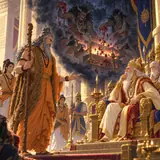
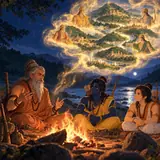
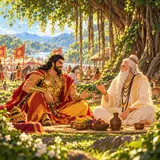
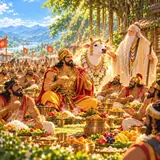
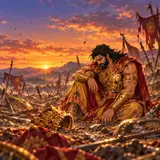
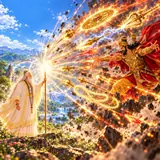
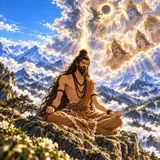
Scene 2 of 2 · On the far bank lies a dark, dreadful forest, laid waste by the yakshi Tataka.
भैरवैः श्वापदैः कीर्णं शकुन्तैर्दारुणारवैः । नानाप्रकारैः शकुनैर्वाश्यद्भिर्भैरवस्वनैः ॥ १४ ॥
सिंहव्याघ्रवराहैश्च वारणैश्चापि शोभितम् । धवाश्वकर्णककुभैर्बिल्वतिन्दुकपाटलैः ॥ १५ ॥
संकीर्णं बदरीभिश्च किं न्विदं दारुणं वनम् । तमुवाच महातेजा विश्वामित्रो महामुनिः ॥ १६ ॥
“filled with terrible beasts of prey and with birds of harsh cries, with many kinds of birds calling in frightening voices, with lions, tigers, boars and elephants, thick with dhava, ashvakarna, kakubha, bilva, tinduka, patala and jujube trees. What is this dreadful forest?” The radiant great sage Vishvamitra said to him:
“भयानक हिंसक पशुओं और कर्कश आवाज़ वाले पक्षियों से भरा, डरावने स्वर में बोलते अनेक प्रकार के पक्षियों से भरा, सिंहों, बाघों, सूअरों और हाथियों से भरा, धव, अश्वकर्ण, ककुभ, बेल, तेंदू, पाटल और बेर के पेड़ों से घना। यह भयानक वन क्या है?” तेजस्वी महामुनि विश्वामित्र ने उनसे कहा:
CommentaryNot scripture Valmiki lists the forest’s beasts and its trees: dhava, ashvakarna, kakubha, bilva, tinduka, patala, jujube. He knew the Indian forest intimately. Even in a place of terror, he names each tree.
Scene 2 of 2 · On the far bank lies a dark, dreadful forest, laid waste by the yakshi Tataka.
श्रूयतां वत्स काकुत्स्थ यस्यैतद् दारुणं वनम् । एतौ जनपदौ स्फीतौ पूर्वमास्तां नरोत्तम ॥ १७ ॥
मलदाश्च करूषाश्च देवनिर्माणनिर्मितौ । पुरा वृत्रवधे राम मलेन समभिप्लुतम् ॥ १८ ॥
“Listen, child Kakutstha, to whom this dreadful forest belongs. Formerly these were two prosperous countries, best of men, Malada and Karusha, made by the gods’ own craft. Long ago, Rama, when Vritra was killed, defilement (mala) covered the thousand-eyed one,
“वत्स काकुत्स्थ, सुनो कि यह भयानक वन किसका है। पहले, नरश्रेष्ठ, यहाँ दो समृद्ध देश थे, मलद और करूष, जो देवताओं की अपनी कारीगरी से बने थे। बहुत पहले, राम, जब वृत्र मारा गया, तब सहस्र नेत्रों वाले इंद्र पर मल (अपवित्रता) छा गया,
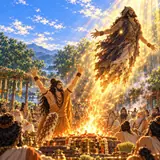
CommentaryNot scripture Malada and Karusha were once prosperous, “made by the gods’ own craft”. Then the story of Indra: after killing the demon Vritra, he was stained with defilement (mala ) and the sin of killing a brahmana (Vritra was of brahmana birth). Even the king of gods must atone.
Scene 2 of 2 · On the far bank lies a dark, dreadful forest, laid waste by the yakshi Tataka.
क्षुधा चैव सहस्राक्षं ब्रह्महत्या समाविशत् । तमिन्द्रं मलिनं देवा ऋषयश्च तपोधनाः ॥ १९ ॥
कलशैः स्नापयामासुर्मलं चास्य प्रमोचयन् । इह भूम्यां मलं दत्त्वा देवाः कारूषमेव च ॥ २० ॥
“and hunger, and the sin of killing a brahmana entered him. The gods and the sages rich in austerity bathed that defiled Indra with water from jars and released his defilement. Having given to this land the defilement and hunger (karusha)
“और भूख तथा ब्रह्महत्या का पाप उनमें प्रवेश कर गया। देवताओं और तप के धनी ऋषियों ने उस मलिन इंद्र को कलशों के जल से नहलाया और उनका मल छुड़ाया। इस भूमि को वह मल और भूख (करूष) देकर,
CommentaryNot scripture The gods bathed Indra with water from jars and washed away his defilement into this land. Places have histories of sin and cleansing, just as people do. The land took on Indra’s burden.
Scene 2 of 2 · On the far bank lies a dark, dreadful forest, laid waste by the yakshi Tataka.
शरीरजं महेन्द्रस्य ततो हर्षं प्रपेदिरे । निर्मलो निष्करूषश्च शुद्ध इन्द्रो यथाभवत् ॥ २१ ॥
“born of great Indra’s body, the gods rejoiced. When Indra was free of defilement and hunger and pure as before,
“जो महेंद्र के शरीर से उत्पन्न हुई थी, देवता प्रसन्न हुए। जब इंद्र मल और भूख से मुक्त होकर पहले की तरह शुद्ध हो गए,
CommentaryNot scripture Indra is pure again. The gods rejoice. The land bears what the god could not. There is a quiet sadness in this: the earth absorbs the stains of the powerful.
Scene 2 of 2 · On the far bank lies a dark, dreadful forest, laid waste by the yakshi Tataka.
ददौ देशस्य सुप्रीतो वरं प्रादादनुत्तमम् । इमौ जनपदौ स्फीतौ ख्यातिं लोके गमिष्यतः ॥ २२ ॥
मलदाश्च करूषाश्च ममाङ्गमलधारिणौ । साधु साध्विति तं देवाः पाकशासनमब्रुवन् ॥ २३ ॥
“well pleased, he gave the land a supreme boon: ‘These two prosperous countries, Malada and Karusha, which carry the defilement of my body, will be famous in the world.’ The gods said to the chastiser of Paka, ‘Well done, well done!’
“तब अत्यंत प्रसन्न होकर उन्होंने इस भूमि को एक उत्तम वर दिया: ‘ये दो समृद्ध देश, मलद और करूष, जो मेरे शरीर का मल धारण करते हैं, संसार में प्रसिद्ध होंगे।’ देवताओं ने पाकशासन (इंद्र) से कहा, ‘साधु, साधु!’
CommentaryNot scripture In gratitude Indra blesses the land: “Malada and Karusha will be famous.” The names come from mala (defilement) and karusha (hunger). A land named for a god’s stain becomes a land of plenty.
Scene 2 of 2 · On the far bank lies a dark, dreadful forest, laid waste by the yakshi Tataka.
देशस्य पूजां तां दृष्ट्वा कृतां शक्रेण धीमता । एतौ जनपदौ स्फीतौ दीर्घकालमरिंदम ॥ २४ ॥
मलदाश्च करूषाश्च मुदिता धनधान्यतः । कस्यचित्त्वथ कालस्य यक्षिणी कामरूपिणी ॥ २५ ॥
“Seeing that honour paid to the land by wise Shakra, subduer of enemies, these two countries, Malada and Karusha, were prosperous and happy for a long time, rich in wealth and grain. Then, after some time, a yakshi able to take any form,
“शत्रुओं का दमन करने वाले बुद्धिमान इंद्र द्वारा भूमि को दिया गया वह सम्मान देखकर ये दोनों देश, मलद और करूष, बहुत समय तक धन-धान्य से भरे, समृद्ध और सुखी रहे। फिर कुछ समय बाद इच्छा से रूप बदलने वाली एक यक्षिणी
CommentaryNot scripture For a long time, these countries prospered. Then a yakshi came, a female nature spirit who could take any form. Prosperity is not permanent; it must be protected.
Scene 2 of 2 · On the far bank lies a dark, dreadful forest, laid waste by the yakshi Tataka.
बलं नागसहस्रस्य धारयन्ती तदा ह्यभूत् । ताटका नाम भद्रं ते भार्या सुन्दस्य धीमतः ॥ २६ ॥
मारीचो राक्षसः पुत्रो यस्याः शक्रपराक्रमः । वृत्तबाहुर्महाशीर्षो विपुलास्यतनुर्महान् ॥ २७ ॥
“who had the strength of a thousand elephants, came to be. Her name is Tataka, bless you, wife of the wise Sunda. Her son is the rakshasa Maricha, of Indra’s valour, with round arms, a great head, a huge mouth and body,
“उत्पन्न हुई, जिसमें हज़ार हाथियों का बल था। उसका नाम ताटका है, तुम्हारा कल्याण हो, वह बुद्धिमान सुंद की पत्नी है। उसका पुत्र राक्षस मारीच है, जो इंद्र जैसा पराक्रमी है, गोल भुजाओं, बड़े सिर, विशाल मुख और शरीर वाला,
CommentaryNot scripture Tataka has the strength of a thousand elephants. She is the wife of Sunda and mother of Maricha. Here is Maricha’s true parentage, correcting Dasharatha’s confusion in sarga 20. Mother and son terrorise the land together.
Scene 2 of 2 · On the far bank lies a dark, dreadful forest, laid waste by the yakshi Tataka.
राक्षसो भैरवाकारो नित्यं त्रासयते प्रजाः । इमौ जनपदौ नित्यं विनाशयति राघव ॥ २८ ॥
मलदांश्च करूषांश्च ताटका दुष्टचारिणी । सेयं पन्थानमावृत्य वसत्यत्यर्धयोजने ॥ २९ ॥
“a rakshasa of terrible shape, who always terrifies the people. Tataka of evil ways is always destroying these two countries, Malada and Karusha, Raghava. She lives a yojana and a half from here, blocking the road.
“भयानक रूप वाला राक्षस, जो सदा लोगों को डराता है। दुराचारी ताटका इन दोनों देशों, मलद और करूष, को सदा उजाड़ती रहती है, राघव। वह यहाँ से डेढ़ योजन दूर रास्ता रोककर रहती है।
CommentaryNot scripture She lives a yojana and a half away, “blocking the road”. She has made the country empty. Wherever she is, life cannot pass. The fertile land has become a wasteland because of one destroyer.
Scene 2 of 2 · On the far bank lies a dark, dreadful forest, laid waste by the yakshi Tataka.
अत एव च गन्तव्यं ताटकाया वनं यतः । स्वबाहुबलमाश्रित्य जहीमां दुष्टचारिणीम् ॥ ३० ॥
मन्नियोगादिमं देशं कुरु निष्कण्टकं पुनः । नहि कश्चिदिमं देशं शक्तो ह्यागन्तुमीदृशम् ॥ ३१ ॥
“So we must go to Tataka’s forest. Relying on the strength of your own arms, kill this woman of evil ways. At my command make this land free of thorns again. No one is able to come to this land, such as it is,
“इसलिए हमें ताटका के वन में जाना होगा। अपनी भुजाओं के बल पर भरोसा करके इस दुराचारिणी को मारो। मेरी आज्ञा से इस भूमि को फिर से काँटों से मुक्त करो। जैसी यह भूमि है, इसमें कोई आ नहीं सकता,
CommentaryNot scripture “Rely on the strength of your own arms, and kill this woman.” Vishvamitra’s command is direct. “Make this land free of thorns again.” The mission is restoration: give the land back to life.
Scene 2 of 2 · On the far bank lies a dark, dreadful forest, laid waste by the yakshi Tataka.
यक्षिण्या घोरया राम उत्सादितमसह्यया । एतत्ते सर्वमाख्यातं यथैतद् दारुणं वनम् । यक्ष्या चोत्सादितं सर्वमद्यापि न निवर्तते ॥ ३२ ॥
“laid waste by the terrible, unbearable yakshi, Rama. I have told you all of how this forest became dreadful: laid waste entirely by the yakshi, and even now she does not stop.”
“भयानक, असहनीय यक्षिणी ने इसे उजाड़ दिया है, राम। मैंने तुम्हें सब बता दिया कि यह वन भयानक कैसे बना: यक्षिणी ने इसे पूरी तरह उजाड़ दिया, और अब भी वह रुकती नहीं।”
CommentaryNot scripture “Even now she does not stop.” The harm is ongoing. This is why Vishvamitra insists. In the next sarga Rama will hesitate, because Tataka is a woman, and the sage will answer that hesitation.
Scene 2 of 2 · On the far bank lies a dark, dreadful forest, laid waste by the yakshi Tataka.