Bala Kanda · Sarga 42 of 77 · 25 verses
Bhagiratha’s Austerity
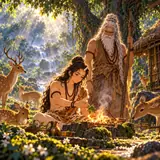
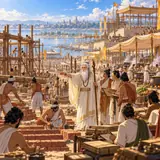
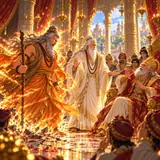
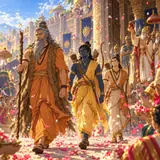
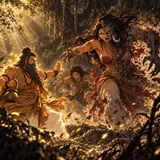
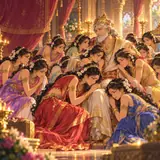
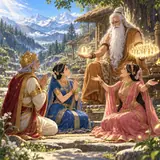
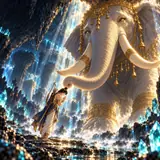
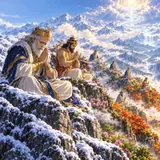
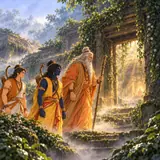
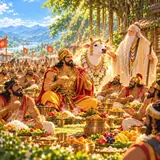
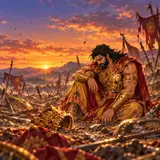
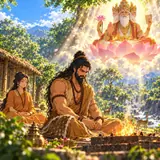
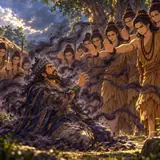
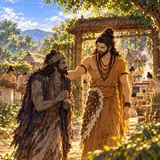
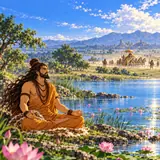
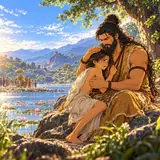
After Sagara’s death the people choose Amshuman as king. He hands the kingdom to his son Dilipa and practises austerity on a Himalayan peak for thirty-two thousand years, reaching heaven, but without bringing down the Ganga. Dilipa too broods over how to bring the river and save his forefathers; he performs many sacrifices and rules for thirty thousand years, but dies of illness without finding a way, leaving the throne to his son Bhagiratha.
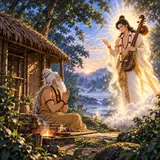
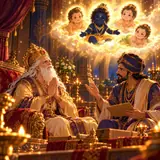
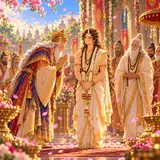
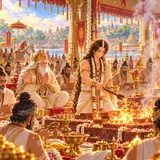
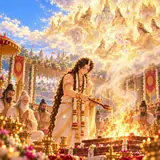
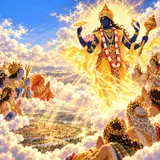
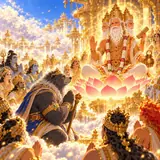
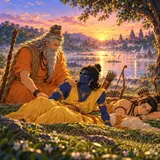
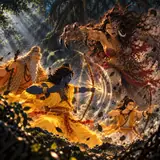
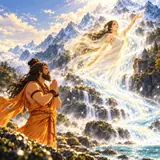
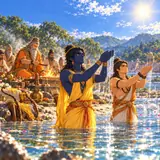
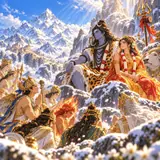
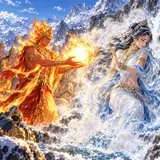
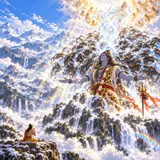
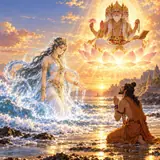
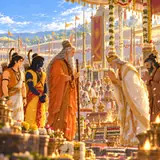
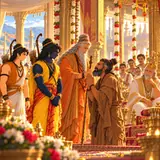
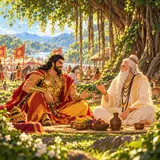
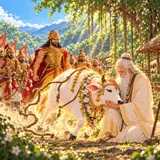
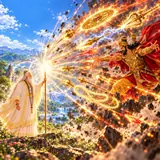
Bhagiratha, righteous and childless, leaves the kingdom to his ministers and goes to Gokarna to practise fierce austerity: arms raised, surrounded by five fires, eating once a month, master of his senses, for a thousand years. Brahma, pleased, comes with the gods and offers a boon. Bhagiratha asks two things: that the sons of Sagara receive water from him, so that the Ganga’s water may wet their ashes and they may go to heaven; and that his own line, the Ikshvakus, may not die out. Brahma grants both, but warns: the earth cannot bear the Ganga’s fall. Only Shiva, the trident-bearer, can hold her.
Press › to begin with verse 1.
कालधर्मं गते राम सगरे प्रकृतीजनाः । राजानं रोचयामासुरंशुमन्तं सुधार्मिकम् ॥ १ ॥
“When Sagara had gone the way of time, Rama, the people chose the most righteous Amshuman as king.
“राम, जब सगर काल के मार्ग पर चले गए, तब प्रजा ने अत्यंत धर्मात्मा अंशुमान को राजा चुना।
Commentary on the whole sarga
Bhagiratha’s Austerity 1 min read.
Read the commentary CommentaryNot scripture After Sagara’s death, “the people chose” Amshuman as king. A striking phrase: the people (prakritayah ) themselves choose. A good ruler has the people’s consent.
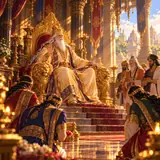
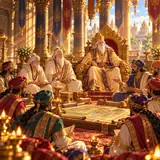
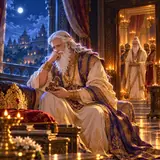
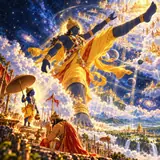
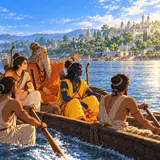
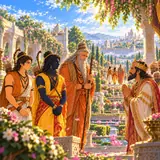
Scene 1 of 2 · Generations pass: Amshuman and Dilipa grieve and pray for their ancestors, but the Ganga does not come.
स राजा सुमहानासीदंशुमान् रघुनन्दन । तस्य पुत्रो महानासीद् दिलीप इति विश्रुतः ॥ २ ॥
“That Amshuman was a very great king, delight of the Raghus. His son, also great, was known as Dilipa.
“रघुनंदन, वे अंशुमान बहुत महान राजा थे। उनके पुत्र, जो स्वयं भी महान थे, दिलीप नाम से प्रसिद्ध हुए।
CommentaryNot scripture Amshuman is a great king, and his son Dilipa is great too. The line of good kings continues. (Dilipa is famous in Kalidasa’s Raghuvamsha for his devotion to the cow Nandini.)
Scene 1 of 2 · Generations pass: Amshuman and Dilipa grieve and pray for their ancestors, but the Ganga does not come.
तस्मै राज्यं समादिश्य दिलीपे रघुनन्दन । हिमवच्छिखरे रम्ये तपस्तेपे सुदारुणम् ॥ ३ ॥
“Entrusting the kingdom to Dilipa, delight of the Raghus, he practised very severe austerity on a lovely peak of the Himalaya.
“रघुनंदन, दिलीप को राज्य सौंपकर उन्होंने हिमालय की एक सुंदर चोटी पर अत्यंत कठोर तप किया।
CommentaryNot scripture Amshuman hands the kingdom to Dilipa and goes to the Himalaya for austerity. He is trying to bring down the Ganga. The quest passes from grandfather to grandson.
Scene 1 of 2 · Generations pass: Amshuman and Dilipa grieve and pray for their ancestors, but the Ganga does not come.
द्वात्रिंशच्छतसाहस्रं वर्षाणि सुमहायशाः । तपोवनगतो राजा स्वर्गं लेभे तपोधनः ॥ ४ ॥
“For thirty-two thousand years the greatly renowned king, having gone to the forest of austerities, rich in austerity, gained heaven.
“बत्तीस हज़ार वर्षों तक तपोवन में जाकर, तप के धनी उन महायशस्वी राजा ने स्वर्ग पाया।
CommentaryNot scripture Thirty-two thousand years of austerity. He reaches heaven, but the Ganga does not come. Even a lifetime of effort may not be enough.
Scene 1 of 2 · Generations pass: Amshuman and Dilipa grieve and pray for their ancestors, but the Ganga does not come.
दिलीपस्तु महातेजाः श्रुत्वा पैतामहं वधम् । दुःखोपहतया बुद्ध्या निश्चयं नाध्यगच्छत ॥ ५ ॥
“The radiant Dilipa, hearing of his grandfathers’ slaughter, his mind struck with sorrow, could come to no decision.
“तेजस्वी दिलीप अपने पितामहों के संहार की बात सुनकर, शोक से आहत मन वाले होकर, कोई निश्चय नहीं कर सके।
CommentaryNot scripture Dilipa hears of his ancestors’ fate and grieves. He cannot decide what to do.
Scene 1 of 2 · Generations pass: Amshuman and Dilipa grieve and pray for their ancestors, but the Ganga does not come.
कथं गङ्गावतरणं कथं तेषां जलक्रिया । तारयेयं कथं चैतानिति चिन्तापरोऽभवत् ॥ ६ ॥
“’How can the Ganga be brought down? How can the water rites be performed for them? How can I save them?’ He was absorbed in these thoughts.
“’गंगा को नीचे कैसे लाया जाए? उनके लिए जल-तर्पण कैसे किया जाए? मैं उनका उद्धार कैसे करूँ?’ वे इन्हीं विचारों में डूबे रहते थे।
CommentaryNot scripture “How can the Ganga be brought down? How can I save them?” A third generation now carries the same question. A family’s duty to its dead can last for centuries.
Scene 1 of 2 · Generations pass: Amshuman and Dilipa grieve and pray for their ancestors, but the Ganga does not come.
तस्य चिन्तयतो नित्यं धर्मेण विदितात्मनः । पुत्रो भगीरथो नाम जज्ञे परमधार्मिकः ॥ ७ ॥
“While he was always thinking of this, a most righteous son named Bhagiratha was born to him, whose self was known through dharma.
“जब वे सदा यही सोचते रहते थे, तब उनके भगीरथ नाम का एक अत्यंत धर्मात्मा पुत्र हुआ, जिसका स्वरूप धर्म से जाना जाता था।
CommentaryNot scripture Bhagiratha is born, “whose self was known through dharma”. His name will become a word in Hindi: bhagiratha prayatna , a “Bhagiratha effort”, meaning a superhuman, persistent effort.
Scene 1 of 2 · Generations pass: Amshuman and Dilipa grieve and pray for their ancestors, but the Ganga does not come.
दिलीपस्तु महातेजा यज्ञैर्बहुभिरिष्टवान् । त्रिंशद्वर्षसहस्राणि राजा राज्यमकारयत् ॥ ८ ॥
“The radiant King Dilipa performed many sacrifices and ruled the kingdom for thirty thousand years.
“तेजस्वी राजा दिलीप ने अनेक यज्ञ किए और तीस हज़ार वर्ष तक राज्य किया।
CommentaryNot scripture Dilipa performs many sacrifices and rules thirty thousand years. A good reign, but his great task remains undone.
Scene 1 of 2 · Generations pass: Amshuman and Dilipa grieve and pray for their ancestors, but the Ganga does not come.
अगत्वा निश्चयं राजा तेषामुद्धरणं प्रति । व्याधिना नरशार्दूल कालधर्ममुपेयिवान् ॥ ९ ॥
“Without reaching a decision about raising them up, the king met the law of time through illness, tiger among men.
“पुरुषसिंह, उनके उद्धार के बारे में कोई निश्चय किए बिना राजा रोग से काल के नियम को प्राप्त हुए।
CommentaryNot scripture He dies of illness without saving his ancestors. Valmiki does not hide the sadness of unfinished work.
Scene 1 of 2 · Generations pass: Amshuman and Dilipa grieve and pray for their ancestors, but the Ganga does not come.
इन्द्रलोकं गतो राजा स्वार्जितेनैव कर्मणा । राज्ये भगीरथं पुत्रमभिषिच्य नरर्षभः ॥ १० ॥
“Having consecrated his son Bhagiratha in the kingdom, the king, bull among men, went to Indra’s world by the merit he himself had earned.
“अपने पुत्र भगीरथ का राज्य पर अभिषेक करके, पुरुषश्रेष्ठ राजा अपने कमाए पुण्य से इंद्रलोक चले गए।
CommentaryNot scripture He crowns Bhagiratha and goes to Indra’s world. The baton passes again.
Scene 1 of 2 · Generations pass: Amshuman and Dilipa grieve and pray for their ancestors, but the Ganga does not come.
भगीरथस्तु राजर्षिर्धार्मिको रघुनन्दन । अनपत्यो महाराजः प्रजाकामः स चाप्रजः ॥ ११ ॥
“Bhagiratha, the royal sage, righteous, delight of the Raghus, the great king, longing for offspring, was also childless.
“रघुनंदन, धर्मात्मा राजर्षि भगीरथ, वे महाराज, संतान की इच्छा रखते हुए भी संतानहीन थे।
CommentaryNot scripture Bhagiratha, too, has no son. Like Dasharatha, like Sagara, like Kushanabha: the longing for an heir runs through this whole line.
Scene 1 of 2 · Generations pass: Amshuman and Dilipa grieve and pray for their ancestors, but the Ganga does not come.
मन्त्रिष्वाधाय तद् राज्यं गङ्गावतरणे रतः । तपो दीर्घं समातिष्ठद् गोकर्णे रघुनन्दन ॥ १२ ॥
“Entrusting the kingdom to his ministers, devoted to the descent of the Ganga, he undertook long austerity at Gokarna, delight of the Raghus.
“रघुनंदन, मंत्रियों को राज्य सौंपकर, गंगा के अवतरण में लगे हुए उन्होंने गोकर्ण में लंबा तप किया।
CommentaryNot scripture He hands the kingdom to his ministers and goes to Gokarna to practise austerity. He makes the Ganga’s descent his life’s single purpose.
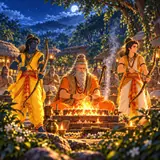
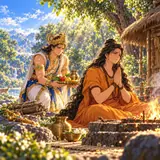
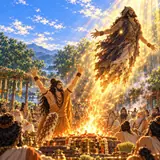
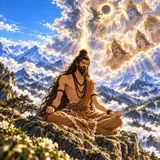
Scene 2 of 2 · King Bhagiratha stands with arms raised among five fires at Gokarna until Brahma appears and grants his wish.
ऊर्ध्वबाहुः पञ्चतपा मासाहारो जितेन्द्रियः । तस्य वर्षसहस्राणि घोरे तपसि तिष्ठतः ॥ १३ ॥
अतीतानि महाबाहो तस्य राज्ञो महात्मनः । सुप्रीतो भगवान् ब्रह्मा प्रजानां प्रभुरीश्वरः ॥ १४ ॥
“Arms raised, between five fires, eating once a month, master of his senses: while he stood in that terrible austerity, thousands of years passed for that great-souled king, mighty-armed one. The blessed Brahma, lord of creatures, the master, was well pleased.
“भुजाएँ उठाए, पंचाग्नि के बीच, महीने में एक बार भोजन करते हुए, जितेंद्रिय: जब वे उस भयानक तप में खड़े थे, तब उन महात्मा राजा के हज़ारों वर्ष बीत गए, महाबाहु। प्रजाओं के स्वामी, प्रभु, भगवान ब्रह्मा अत्यंत प्रसन्न हुए।
CommentaryNot scripture Arms raised, between five fires (four fires around him and the sun above), eating once a month. This is one of the fiercest austerities described in Indian literature. Thousands of years pass. Brahma is pleased at last.
Scene 2 of 2 · King Bhagiratha stands with arms raised among five fires at Gokarna until Brahma appears and grants his wish.
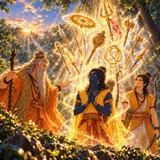
ततः सुरगणैः सार्धमुपागम्य पितामहः । भगीरथं महात्मानं तप्यमानमथाब्रवीत् ॥ १५ ॥
“Then the Grandsire came with the hosts of gods and said to the great-souled Bhagiratha, who was practising austerity:
“तब देवताओं के समूहों के साथ पितामह आए और तप कर रहे महात्मा भगीरथ से बोले:
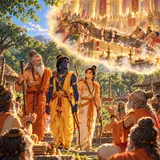
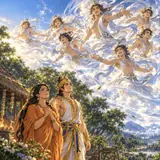
CommentaryNot scripture Brahma comes with the gods. Four generations of effort have reached heaven.
Scene 2 of 2 · King Bhagiratha stands with arms raised among five fires at Gokarna until Brahma appears and grants his wish.
भगीरथ महाराज प्रीतस्तेऽहं जनाधिप । तपसा च सुतप्तेन वरं वरय सुव्रत ॥ १६ ॥
“’Bhagiratha, great king, I am pleased with you, lord of the people. By your well-practised austerity, choose a boon, you of good vows.’
“’भगीरथ, महाराज, प्रजाओं के स्वामी, मैं तुमसे प्रसन्न हूँ। उत्तम व्रत वाले, अपने अच्छी तरह किए गए तप से वर माँगो।’
CommentaryNot scripture “Choose a boon.” The reward for persistence.
Scene 2 of 2 · King Bhagiratha stands with arms raised among five fires at Gokarna until Brahma appears and grants his wish.
तमुवाच महातेजाः सर्वलोकपितामहम् । भगीरथो महाबाहुः कृताञ्जलिपुटः स्थितः ॥ १७ ॥
“The radiant, mighty-armed Bhagiratha, standing with joined palms, said to the Grandsire of all the worlds:
“तेजस्वी, महाबाहु भगीरथ ने हाथ जोड़कर खड़े होकर सब लोकों के पितामह से कहा:
CommentaryNot scripture Bhagiratha stands with joined palms. After all his suffering, he asks humbly.
Scene 2 of 2 · King Bhagiratha stands with arms raised among five fires at Gokarna until Brahma appears and grants his wish.
यदि मे भगवान् प्रीतो यद्यस्ति तपसः फलम् । सगरस्यात्मजाः सर्वे मत्तः सलिलमाप्नुयुः ॥ १८ ॥
“’If the lord is pleased with me, if there is fruit to my austerity, may all the sons of Sagara receive water from me.
“’यदि प्रभु मुझसे प्रसन्न हैं, यदि मेरे तप का कोई फल है, तो सगर के सब पुत्रों को मुझसे जल मिले।
CommentaryNot scripture “May the sons of Sagara receive water from me.” His first wish is not for himself but for his dead ancestors. The son of a long line of seekers asks for what they all asked.
Scene 2 of 2 · King Bhagiratha stands with arms raised among five fires at Gokarna until Brahma appears and grants his wish.
गङ्गायाः सलिलक्लिन्ने भस्मन्येषां महात्मनाम् । स्वर्गं गच्छेयुरत्यन्तं सर्वे च प्रपितामहाः ॥ १९ ॥
“’When the ash of these great-souled ones is wetted by the water of the Ganga, may all my great-grandfathers go to heaven for ever.
“’जब इन महात्माओं की राख गंगा के जल से भीगेगी, तब मेरे सब प्रपितामह सदा के लिए स्वर्ग जाएँ।
CommentaryNot scripture “When the ash is wetted by the Ganga, may my great-grandfathers go to heaven forever.” The purpose of the whole quest.
Scene 2 of 2 · King Bhagiratha stands with arms raised among five fires at Gokarna until Brahma appears and grants his wish.
देव याचे ह संतत्यै नावसीदेत् कुलं च नः । इक्ष्वाकूणां कुले देव एष मेऽस्तु वरः परः ॥ २० ॥
“’And, god, I ask for offspring, so that our line may not fail. In the line of the Ikshvakus, god, let this be my second boon.’
“’और देव, मैं संतान माँगता हूँ, ताकि हमारा वंश न टूटे। देव, इक्ष्वाकु वंश में यह मेरा दूसरा वर हो।’
CommentaryNot scripture Only then, a second wish: a son, so the line does not end. The ancestors first, himself second.
Scene 2 of 2 · King Bhagiratha stands with arms raised among five fires at Gokarna until Brahma appears and grants his wish.
उक्तवाक्यं तु राजानं सर्वलोकपितामहः । प्रत्युवाच शुभां वाणीं मधुरां मधुराक्षराम् ॥ २१ ॥
“When the king had spoken, the Grandsire of all worlds replied in auspicious, sweet words, sweet in every syllable:
“राजा के कहने पर सब लोकों के पितामह ने हर अक्षर में मधुर, शुभ और मधुर वचनों में उत्तर दिया:
CommentaryNot scripture Brahma’s reply is “sweet in every syllable” (madhura-akshara ). Valmiki notices the sound of divine speech.
Scene 2 of 2 · King Bhagiratha stands with arms raised among five fires at Gokarna until Brahma appears and grants his wish.
मनोरथो महानेष भगीरथ महारथ । एवं भवतु भद्रं ते इक्ष्वाकुकुलवर्धन ॥ २२ ॥
“’Great is this desire of yours, Bhagiratha, great chariot-warrior. So be it; bless you, increaser of the Ikshvaku line.
“’महारथी भगीरथ, तुम्हारी यह इच्छा महान है। ऐसा ही हो; तुम्हारा कल्याण हो, इक्ष्वाकु वंश को बढ़ाने वाले।
CommentaryNot scripture “Great is this desire.” Brahma grants both wishes. The Ikshvaku line will continue.
Scene 2 of 2 · King Bhagiratha stands with arms raised among five fires at Gokarna until Brahma appears and grants his wish.
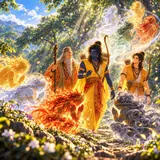
इयं हैमवती ज्येष्ठा गङ्गा हिमवतः सुता । तां वै धारयितुं राजन् हरस्तत्र नियुज्यताम् ॥ २३ ॥
“’This is Ganga of the Himalaya, the elder daughter of Himavan. King, let Hara (Shiva) be engaged to hold her.
“’यह हिमालय की गंगा है, हिमवान की बड़ी पुत्री। राजन, उसे धारण करने के लिए हर (शिव) को तैयार करो।
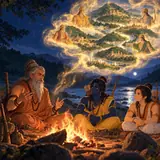
CommentaryNot scripture But there is a problem: the Ganga’s fall from heaven would be too powerful. Bhagiratha must win over Hara (Shiva) to catch her.
Scene 2 of 2 · King Bhagiratha stands with arms raised among five fires at Gokarna until Brahma appears and grants his wish.
गङ्गायाः पतनं राजन् पृथिवी न सहिष्यते । तां वै धारयितुं राजन् नान्यं पश्यामि शूलिनः ॥ २४ ॥
“’The earth will not bear the Ganga’s fall, king. I see no one but the trident-bearer able to hold her.’
“’राजन, पृथ्वी गंगा का गिरना सह नहीं पाएगी। त्रिशूलधारी के सिवा मैं किसी को उसे धारण करने में समर्थ नहीं देखता।’
CommentaryNot scripture “The earth cannot bear her fall. Only the trident-bearer can hold her.” The divine river is so mighty that only the greatest god can receive her. One great task leads to another.
Scene 2 of 2 · King Bhagiratha stands with arms raised among five fires at Gokarna until Brahma appears and grants his wish.
तमेवमुक्त्वा राजानं गङ्गां चाभाष्य लोककृत् । जगाम त्रिदिवं देवैः सर्वैः सह मरुद्गणैः ॥ २५ ॥
“Having said this to the king and spoken to the Ganga, the maker of the worlds went to heaven with all the gods and the hosts of Maruts.
“राजा से यह कहकर और गंगा से बात करके लोकों के रचयिता सब देवताओं और मरुतों के समूहों के साथ स्वर्ग चले गए।
CommentaryNot scripture Brahma speaks to the Ganga and returns to heaven. Bhagiratha must begin again: now he must please Shiva. Perseverance is never finished.
Scene 2 of 2 · King Bhagiratha stands with arms raised among five fires at Gokarna until Brahma appears and grants his wish.