Bala Kanda · Sarga 45 of 77 · 45 verses
Vishala and the Churning of the Ocean
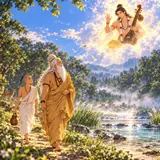
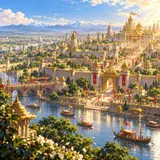
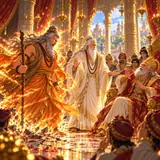
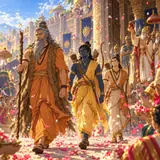
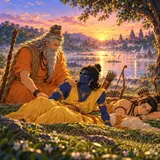
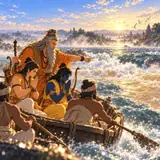
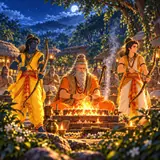
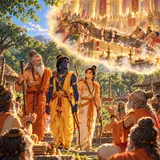
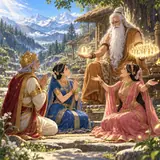
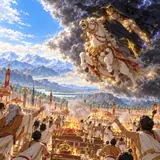
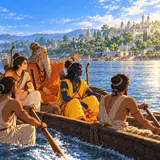
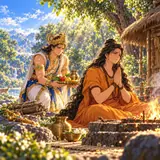
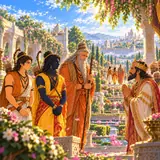
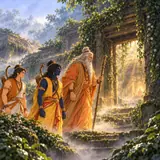
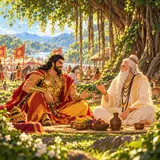
Rama tells Vishvamitra the night passed like a moment as he and Lakshmana thought over the story. In the morning the sages’ boat carries them across the Ganga, and on the north bank they see the lovely, heavenly city of Vishala. Rama asks which royal line rules it, and Vishvamitra tells a story he heard from Indra.
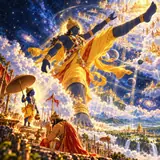
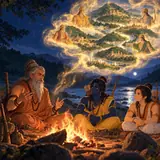
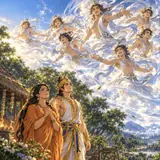
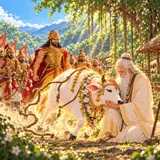
In the Krita age the sons of Diti (the asuras) and the sons of Aditi (the devas) wished to be free from death, age and sickness, and decided to churn the ocean of milk for its elixir, using the serpent Vasuki as the rope and Mount Mandara as the churning rod. After a thousand years the serpent’s heads spewed venom and bit the rocks, and the deadly poison Halahala rose up like fire, burning the whole world. The gods begged Shiva for protection; Vishnu appeared and, smiling, told Shiva that what rose first was his share, and Shiva swallowed the poison as if it were nectar. When the mountain sank into the underworld, Vishnu took the form of a tortoise and held it on his back, while holding its peak with his hand. From the churning rose Dhanvantari, the physician; sixty crores of apsarases (rejected by both sides, so belonging to all); Varuni, goddess of wine, accepted by the devas, who are therefore called suras, while the asuras refused her; the horse Uchchaihshravas, the jewel Kaustubha, and the nectar. A war broke out over the nectar; Vishnu took it away through the enchanting illusion of Mohini, and the devas defeated the daityas. Indra, victorious, ruled the worlds.
Press › to begin with verse 1.
विश्वामित्रवचः श्रुत्वा राघवः सहलक्ष्मणः । विस्मयं परमं गत्वा विश्वामित्रमथाब्रवीत् ॥ १ ॥
Hearing Vishvamitra’s words, Raghava with Lakshmana, filled with the greatest wonder, said to Vishvamitra:
विश्वामित्र के वचन सुनकर लक्ष्मण सहित राघव परम विस्मय से भरकर विश्वामित्र से बोले:
Commentary on the whole sarga
Vishala and the Churning of the Ocean 1 min read.
Read the commentary CommentaryNot scripture Rama and Lakshmana are filled “with the greatest wonder” (param vismayam ). The Ganga story has moved them deeply. It is the story of their own ancestors.
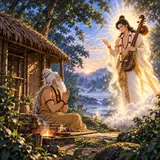
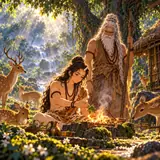
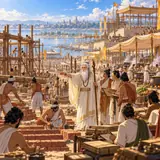
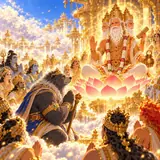
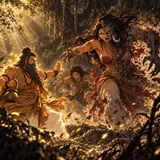
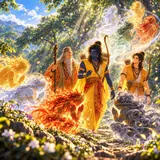
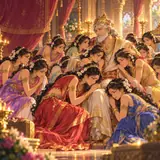
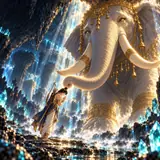
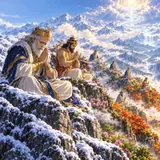
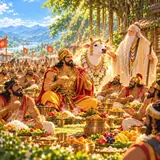
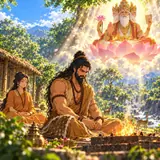
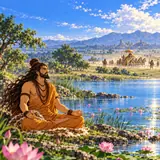
Scene 1 of 3 · The travellers cross the Ganga and see the lovely city of Vishala on the northern bank.
अत्यद्भुतमिदं ब्रह्मन् कथितं परमं त्वया । गङ्गावतरणं पुण्यं सागरस्यापि पूरणम् ॥ २ ॥
“This most wonderful and supreme story you have told, brahmana: the holy descent of the Ganga and the filling of the ocean.
“ब्राह्मण, आपने यह अत्यंत अद्भुत और उत्तम कथा सुनाई: गंगा का पवित्र अवतरण और समुद्र का भरना।
CommentaryNot scripture Rama sums up: the descent of the Ganga and “the filling of the ocean”. The ocean dug by Sagara’s sons was filled by the Ganga. Both halves of the family story belong to the sea.
Scene 1 of 3 · The travellers cross the Ganga and see the lovely city of Vishala on the northern bank.
क्षणभूतेव नौ रात्रिः संवृत्तेयं परंतप । इमां चिन्तयतोः सर्वां निखिलेन कथां तव ॥ ३ ॥
“This night has passed for us like a moment, scorcher of enemies, as we pondered your whole story in full.”
“शत्रुओं को तपाने वाले, आपकी पूरी कथा पर विचार करते हुए हमारी यह रात एक क्षण की तरह बीत गई।”
CommentaryNot scripture “The night passed like a moment.” Good stories make time vanish. Rama speaks for every listener who has lost track of the hours in a tale.
Scene 1 of 3 · The travellers cross the Ganga and see the lovely city of Vishala on the northern bank.
तस्य सा शर्वरी सर्वा मम सौमित्रिणा सह । जगाम चिन्तयानस्य विश्वामित्र कथां शुभाम् ॥ ४ ॥
That whole night passed for me with Saumitri, Vishvamitra, as I thought over your auspicious story.
विश्वामित्र, आपकी मंगलमय कथा के बारे में सोचते हुए सौमित्रि के साथ मेरी वह पूरी रात बीत गई।
CommentaryNot scripture A rare moment in Rama’s own voice: “That whole night passed for me with Saumitri, thinking over your story.” He did not sleep; he pondered. Rama is a reflective listener.
Scene 1 of 3 · The travellers cross the Ganga and see the lovely city of Vishala on the northern bank.
ततः प्रभाते विमले विश्वामित्रं तपोधनम् । उवाच राघवो वाक्यं कृताह्निकमरिन्दमः ॥ ५ ॥
Then in the clear morning Raghava, subduer of enemies, his daily rites done, said to Vishvamitra, rich in austerity:
फिर निर्मल प्रभात में शत्रुओं का दमन करने वाले राघव ने नित्य कर्म करके तप के धनी विश्वामित्र से कहा:
CommentaryNot scripture Morning again; rites again. Then Rama speaks first, eager to go on.
Scene 1 of 3 · The travellers cross the Ganga and see the lovely city of Vishala on the northern bank.
गता भगवती रात्रिः श्रोतव्यं परमं श्रुतम् । तराम सरितां श्रेष्ठां पुण्यां त्रिपथगां नदीम् ॥ ६ ॥
“The blessed night is gone; we have heard what was most worth hearing. Let us cross the holy river of three paths, best of rivers.
“शुभ रात बीत गई; हमने वह सुना जो सुनने योग्य था। आइए, नदियों में श्रेष्ठ, तीन मार्गों वाली पवित्र नदी को पार करें।
CommentaryNot scripture “We have heard what was most worth hearing.” Now let us cross the holy river. Hearing and doing follow one another.
Scene 1 of 3 · The travellers cross the Ganga and see the lovely city of Vishala on the northern bank.
नौरेषा हि सुखास्तीर्णा ऋषीणां पुण्यकर्मणाम् । भगवन्तमिह प्राप्तं ज्ञात्वा त्वरितमागता ॥ ७ ॥
“Here is the boat of the sages of holy deeds, well spread for comfort; knowing that you, lord, have arrived, it has come quickly.”
“यह पवित्र कर्मों वाले मुनियों की नाव है, सुख के लिए अच्छी तरह बिछी हुई; भगवन, आपको आया जानकर यह जल्दी आ गई है।”
CommentaryNot scripture A boat has arrived, sent by the sages, “knowing you have come”. Vishvamitra’s arrival is always known in advance. Hospitality anticipates.
Scene 1 of 3 · The travellers cross the Ganga and see the lovely city of Vishala on the northern bank.
तस्य तद् वचनं श्रुत्वा राघवस्य महात्मनः । सन्तारं कारयामास सर्षिसङ्घस्य कौशिकः ॥ ८ ॥
Hearing these words of great-souled Raghava, Kaushika had the crossing made for himself and the company of sages.
महात्मा राघव के ये वचन सुनकर कौशिक ने अपने और मुनियों के दल के लिए पार उतरने की व्यवस्था की।
CommentaryNot scripture Kaushika arranges the crossing. The third crossing of the Ganga on this journey.
Scene 1 of 3 · The travellers cross the Ganga and see the lovely city of Vishala on the northern bank.
उत्तरं तीरमासाद्य सम्पूज्यर्षिगणं ततः । गङ्गाकूले निविष्टास्ते विशालां ददृशुः पुरीम् ॥ ९ ॥
Reaching the north bank, they honoured the company of sages, settled on the bank of the Ganga, and saw the city of Vishala.
उत्तरी तट पर पहुँचकर उन्होंने मुनियों के दल का सम्मान किया, गंगा के तट पर ठहरे, और विशाला नगरी को देखा।
CommentaryNot scripture On the north bank they see the city of Vishala. (Vishala, later Vaishali, in Bihar, was a famous ancient city where the Buddha often taught.)
Scene 1 of 3 · The travellers cross the Ganga and see the lovely city of Vishala on the northern bank.
ततो मुनिवरस्तूर्णं जगाम सहराघवः । विशालां नगरीं रम्यां दिव्यां स्वर्गोपमां तदा ॥ १० ॥
Then the best of sages with the Raghavas went quickly to Vishala, a lovely, divine city like heaven.
तब राघवों के साथ मुनिश्रेष्ठ जल्दी से स्वर्ग जैसी सुंदर, दिव्य नगरी विशाला की ओर गए।
CommentaryNot scripture “Lovely, divine, like heaven.” After forests and hermitages, a beautiful city.
Scene 1 of 3 · The travellers cross the Ganga and see the lovely city of Vishala on the northern bank.
अथ रामो महाप्राज्ञो विश्वामित्रं महामुनिम् । पप्रच्छ प्राञ्जलिर्भूत्वा विशालामुत्तमां पुरीम् ॥ ११ ॥
Then the wise Rama, with joined palms, asked the great sage Vishvamitra about the excellent city of Vishala:
तब बुद्धिमान राम ने हाथ जोड़कर महामुनि विश्वामित्र से उत्तम नगरी विशाला के बारे में पूछा:
CommentaryNot scripture Rama asks with joined palms. Curiosity and courtesy together, as always.
Scene 1 of 3 · The travellers cross the Ganga and see the lovely city of Vishala on the northern bank.
कतमो राजवंशोऽयं विशालायां महामुने । श्रोतुमिच्छामि भद्रं ते परं कौतूहलं हि मे ॥ १२ ॥
“Which royal line rules here in Vishala, great sage? I wish to hear; bless you; my curiosity is great.”
“महामुनि, यहाँ विशाला में कौन-सा राजवंश राज्य करता है? मैं सुनना चाहता हूँ; आपका कल्याण हो; मुझे बड़ी उत्सुकता है।”
CommentaryNot scripture “Which royal line rules here?” The question opens another of Vishvamitra’s great stories.
Scene 1 of 3 · The travellers cross the Ganga and see the lovely city of Vishala on the northern bank.
तस्य तद् वचनं श्रुत्वा रामस्य मुनिपुङ्गवः । आख्यातुं तत्समारेभे विशालायाः पुरातनम् ॥ १३ ॥
Hearing Rama’s words, the foremost sage began to tell the ancient history of Vishala:
राम के वचन सुनकर मुनिश्रेष्ठ ने विशाला का प्राचीन इतिहास सुनाना आरंभ किया:
CommentaryNot scripture Vishvamitra begins “the ancient history” (purani katha ). The story he tells is one of the most famous in Hindu mythology.
Scene 1 of 3 · The travellers cross the Ganga and see the lovely city of Vishala on the northern bank.
श्रूयतां राम शक्रस्य कथां कथयतः श्रुताम् । अस्मिन् देशे हि यद् वृत्तं शृणु तत्त्वेन राघव ॥ १४ ॥
“Hear, Rama, the story I heard told by Shakra. Hear truly, Raghava, what happened in this land.
“राम, इंद्र से सुनी कथा सुनो। राघव, इस भूमि में जो हुआ, उसे सच-सच सुनो।
CommentaryNot scripture “The story I heard from Shakra (Indra).” Vishvamitra heard it from the king of the gods himself. Its authority is high.
Scene 1 of 3 · The travellers cross the Ganga and see the lovely city of Vishala on the northern bank.
पूर्वं कृतयुगे राम दितेः पुत्रा महाबलाः । अदितेश्च महाभागा वीर्यवन्तः सुधार्मिकाः ॥ १५ ॥
“Long ago in the Krita age, Rama, the sons of Diti were mighty, and the sons of Aditi were fortunate, valiant and most righteous.
“राम, बहुत पहले सत्ययुग में दिति के पुत्र बलवान थे, और अदिति के पुत्र भाग्यशाली, पराक्रमी और अत्यंत धर्मात्मा थे।
CommentaryNot scripture In the age of truth, two families: the sons of Diti (daityas, asuras) and the sons of Aditi (adityas, gods). They are half-brothers, both children of Kashyapa. The great war of gods and demons is a family quarrel.
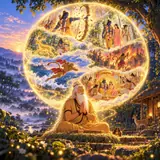
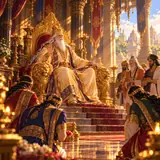
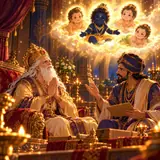
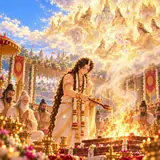
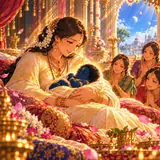
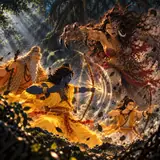
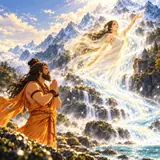
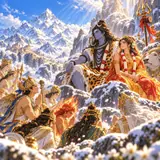
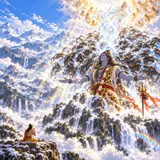
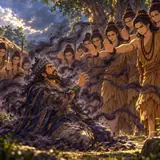
Scene 2 of 3 · Gods and asuras churn the ocean of milk with Mount Mandara and the serpent Vasuki; Shiva drinks the world-burning poison.
ततस्तेषां नरव्याघ्र बुद्धिरासीन्महात्मनाम् । अमरा विजराश्चैव कथं स्यामो निरामयाः ॥ १६ ॥
“Then, tiger among men, a thought came to those great-souled ones: ‘How may we become immortal, ageless and free of disease?’
“तब, पुरुषसिंह, उन महात्माओं के मन में एक विचार आया: ‘हम अमर, अजर और रोगरहित कैसे हो सकते हैं?’
CommentaryNot scripture Both wanted the same thing: to be immortal, ageless, free of disease. The oldest human wish, here given to gods and demons alike.
Scene 2 of 3 · Gods and asuras churn the ocean of milk with Mount Mandara and the serpent Vasuki; Shiva drinks the world-burning poison.
तेषां चिन्तयतां तत्र बुद्धिरासीद् विपश्चिताम् । क्षीरोदमथनं कृत्वा रसं प्राप्स्याम तत्र वै ॥ १७ ॥
“As those wise ones were thinking, a resolve came to them: ‘Let us churn the ocean of milk; we shall get the elixir there.’
“जब वे बुद्धिमान सोच रहे थे, तब उनके मन में एक निश्चय आया: ‘आइए क्षीरसागर को मथें; वहाँ हमें अमृत मिलेगा।’
CommentaryNot scripture Their plan: churn the ocean of milk to find the elixir (rasa , amrita ). Gods and demons work together, for once.
Scene 2 of 3 · Gods and asuras churn the ocean of milk with Mount Mandara and the serpent Vasuki; Shiva drinks the world-burning poison.
ततो निश्चित्य मथनं योक्त्रं कृत्वा च वासुकिम् । मन्थानं मन्दरं कृत्वा ममन्थुरमितौजसः ॥ १८ ॥
“Having decided on the churning, they made Vasuki the rope and Mandara the churning rod, and those of boundless power churned.
“मंथन का निश्चय करके उन्होंने वासुकि को रस्सी और मंदर को मथानी बनाया, और अपार शक्ति वाले वे मथने लगे।
CommentaryNot scripture Vasuki, the great serpent, becomes the rope; Mandara mountain becomes the churning rod. This is the famous samudra manthan , depicted in temples across Asia, including the great relief at Angkor Wat.
Scene 2 of 3 · Gods and asuras churn the ocean of milk with Mount Mandara and the serpent Vasuki; Shiva drinks the world-burning poison.
अथ वर्षसहस्रेण योक्त्रसर्पशिरांसि च । वमन्तोऽतिविषं तत्र ददंशुर्दशनैः शिलाः ॥ १९ ॥
“After a thousand years, the heads of the serpent rope, spewing deadly poison, bit the rocks with their fangs.
“हज़ार वर्ष बाद रस्सी बने सर्प के सिरों ने घातक विष उगलते हुए अपने दाँतों से चट्टानों को काटा।
CommentaryNot scripture After a thousand years, the serpent’s heads, in agony, spit poison and bite the rocks. The great work has a cost.
Scene 2 of 3 · Gods and asuras churn the ocean of milk with Mount Mandara and the serpent Vasuki; Shiva drinks the world-burning poison.
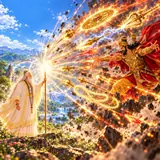
उत्पपाताग्निसंकाशं हालाहलमहाविषम् । तेन दग्धं जगत् सर्वं सदेवासुरमानुषम् ॥ २० ॥
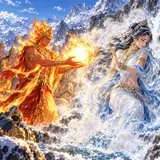
“Then the great poison Halahala shot up like fire; by it the whole world was burned, with gods, asuras and men.
“तब महाविष हालाहल आग की तरह ऊपर उठा; उससे देवताओं, असुरों और मनुष्यों सहित सारा संसार जलने लगा।
CommentaryNot scripture The poison Halahala rises like fire and burns the world. Before the treasures, the danger. Every great endeavour brings up poison first.
Scene 2 of 3 · Gods and asuras churn the ocean of milk with Mount Mandara and the serpent Vasuki; Shiva drinks the world-burning poison.
अथ देवा महादेवं शङ्करं शरणार्थिनः । जग्मुः पशुपतिं रुद्रं त्राहि त्राहीति तुष्टुवुः ॥ २१ ॥
“Then the gods, seeking refuge, went to the great god Shankara, Pashupati, Rudra, and praised him: ‘Save us, save us!’
“तब शरण चाहते हुए देवता महादेव शंकर, पशुपति, रुद्र के पास गए और उनकी स्तुति की: ‘बचाइए, बचाइए!’
CommentaryNot scripture The gods run to Shiva: “Save us!” When the world burns, they turn to the great ascetic.
Scene 2 of 3 · Gods and asuras churn the ocean of milk with Mount Mandara and the serpent Vasuki; Shiva drinks the world-burning poison.
एवमुक्तस्ततो देवैर्देवदेवेश्वरः प्रभुः । प्रादुरासीत् ततोऽत्रैव शङ्खचक्रधरो हरिः ॥ २२ ॥
“When the gods had said this to the lord, lord of the gods of gods, Hari, bearer of conch and discus, appeared right there.
“जब देवताओं ने प्रभु से यह कहा, तब देवों के देवों के स्वामी, शंख और चक्र धारण करने वाले हरि वहीं प्रकट हुए।
CommentaryNot scripture Vishnu (Hari) appears too, with conch and discus. The two great gods together.
Scene 2 of 3 · Gods and asuras churn the ocean of milk with Mount Mandara and the serpent Vasuki; Shiva drinks the world-burning poison.
उवाचैनं स्मितं कृत्वा रुद्रं शूलधरं हरिः । दैवतैर्मथ्यमाने तु यत्पूर्वं समुपस्थितम् ॥ २३ ॥
तत् त्वदीयं सुरश्रेष्ठ सुराणामग्रतो हि यत् । अग्रपूजामिह स्थित्वा गृहाणेदं विषं प्रभो ॥ २४ ॥
“Smiling, Hari said to Rudra, holder of the trident: ‘What appeared first as the gods churned, that is yours, best of gods, since you stand foremost among the gods. Standing here, lord, accept this poison as your first honour.’
“मुस्कराते हुए हरि ने त्रिशूलधारी रुद्र से कहा: ‘देवताओं के मथने पर जो सबसे पहले प्रकट हुआ, वह आपका है, देवश्रेष्ठ, क्योंकि आप देवताओं में अग्रणी हैं। प्रभु, यहाँ खड़े होकर इस विष को अपनी पहली भेंट के रूप में स्वीकार कीजिए।’
CommentaryNot scripture Vishnu smiles: “The first thing that comes from the churning is yours, as first among the gods. Accept this poison as your first honour.” A gentle, almost humorous way of asking Shiva to save the world.
Scene 2 of 3 · Gods and asuras churn the ocean of milk with Mount Mandara and the serpent Vasuki; Shiva drinks the world-burning poison.
इत्युक्त्वा च सुरश्रेष्ठस्तत्रैवान्तरधीयत । देवतानां भयं दृष्ट्वा श्रुत्वा वाक्यं तु शार्ङ्गिणः ॥ २५ ॥
हालाहलं विषं घोरं संजग्राहामृतोपमम् । देवान् विसृज्य देवेशो जगाम भगवान् हरः ॥ २६ ॥
“Having said this, the best of gods vanished on the spot. Seeing the gods’ fear and hearing the words of the bearer of the Sharnga bow, the blessed lord of gods, Hara, took the dreadful poison Halahala as if it were nectar, dismissed the gods, and went away.
“यह कहकर देवश्रेष्ठ वहीं अंतर्धान हो गए। देवताओं का भय देखकर और शार्ङ्ग धनुषधारी के वचन सुनकर देवों के स्वामी भगवान हर ने भयानक विष हालाहल को अमृत की तरह पी लिया, देवताओं को विदा किया, और चले गए।
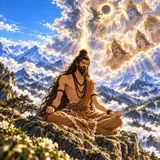
CommentaryNot scripture Shiva drinks the poison “as if it were nectar”. Tradition says he held it in his throat, which turned blue: that is why he is called Nilakantha, “the blue-throated”, the name used in sarga 36. The god who drinks the world’s poison so that others may live.
Scene 2 of 3 · Gods and asuras churn the ocean of milk with Mount Mandara and the serpent Vasuki; Shiva drinks the world-burning poison.
ततो देवासुराः सर्वे ममन्थू रघुनन्दन । प्रविवेशाथ पातालं मन्थानः पर्वतोत्तमः ॥ २७ ॥
“Then all the gods and asuras churned again, delight of the Raghus, and the churning rod, that best of mountains, sank into the underworld.
“तब रघुनंदन, सब देवता और असुर फिर से मथने लगे, और मथानी बना वह श्रेष्ठ पर्वत पाताल में धँस गया।
CommentaryNot scripture The churning resumes, and the mountain sinks into the underworld. The plan fails again. The gods need help once more.
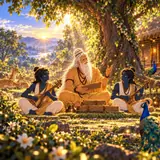
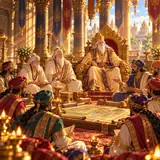
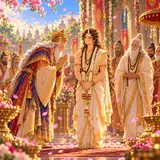
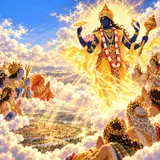
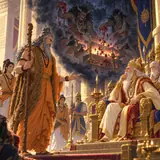
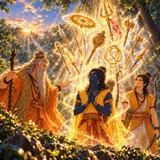
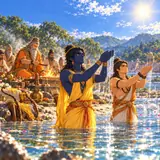
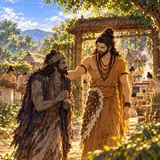
Scene 3 of 3 · Vishnu as a great tortoise holds up the mountain, and Dhanvantari, the apsarases and the nectar rise from the sea.
ततो देवाः सगन्धर्वास्तुष्टुवुर्मधुसूदनम् । त्वं गतिः सर्वभूतानां विशेषेण दिवौकसाम् ॥ २८ ॥
पालयास्मान् महाबाहो गिरिमुद्धर्तुमर्हसि । इति श्रुत्वा हृषीकेशः कामठं रूपमास्थितः ॥ २९ ॥
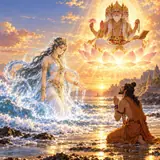
“Then the gods with the gandharvas praised the slayer of Madhu: ‘You are the refuge of all beings, and especially of the dwellers of heaven. Protect us, mighty-armed one; you must lift the mountain.’ Hearing this, Hrishikesha took the form of a tortoise,
“तब गंधर्वों सहित देवताओं ने मधुसूदन की स्तुति की: ‘आप सब प्राणियों की शरण हैं, और विशेषकर स्वर्गवासियों की। महाबाहु, हमारी रक्षा कीजिए; आपको पर्वत उठाना चाहिए।’ यह सुनकर हृषीकेश ने कछुए का रूप धारण किया,
CommentaryNot scripture They praise Vishnu: “You are the refuge of all beings.” And Vishnu becomes a tortoise. This is the Kurma avatara, Vishnu’s tortoise incarnation.
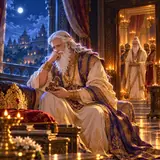
Scene 3 of 3 · Vishnu as a great tortoise holds up the mountain, and Dhanvantari, the apsarases and the nectar rise from the sea.
पर्वतं पृष्ठतः कृत्वा शिश्ये तत्रोदधौ हरिः । पर्वताग्रं तु लोकात्मा हस्तेनाक्रम्य केशवः ॥ ३० ॥
देवानां मध्यतः स्थित्वा ममन्थ पुरुषोत्तमः । अथ वर्षसहस्रेण आयुर्वेदमयः पुमान् ॥ ३१ ॥
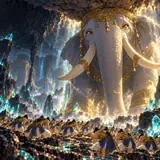
“set the mountain on his back and lay there in the ocean, Hari; and Keshava, soul of the world, holding the mountain’s peak with his hand, stood among the gods and churned, the supreme person. Then after a thousand years a man made of the Veda of life,
“पर्वत को अपनी पीठ पर रखकर हरि समुद्र में लेट गए; और संसार की आत्मा केशव पर्वत की चोटी को हाथ से पकड़कर देवताओं के बीच खड़े होकर मथने लगे, वे परम पुरुष। फिर हज़ार वर्ष बाद आयुर्वेद से बना एक पुरुष,
CommentaryNot scripture The tortoise holds the mountain on his back from below, while Vishnu also holds the peak from above and churns. God supports the work from beneath and guides it from above. A beautiful image of divine help.
Scene 3 of 3 · Vishnu as a great tortoise holds up the mountain, and Dhanvantari, the apsarases and the nectar rise from the sea.
उदतिष्ठत् सुधर्मात्मा सदण्डः सकमण्डलुः । पूर्वं धन्वन्तरिर्नाम अप्सराश्च सुवर्चसः ॥ ३२ ॥
“most righteous, with staff and water-pot, rose up, named Dhanvantari; and before that, the radiant apsarases.
“अत्यंत धर्मात्मा, दंड और कमंडलु लिए, धन्वंतरि नाम का, ऊपर उठा; और उससे पहले तेजस्वी अप्सराएँ।
CommentaryNot scripture Dhanvantari rises, “made of the Veda of life” (ayurveda ), with staff and water pot. He is the divine physician, the founder of Ayurveda, still honoured by Indian doctors on Dhanteras.
Scene 3 of 3 · Vishnu as a great tortoise holds up the mountain, and Dhanvantari, the apsarases and the nectar rise from the sea.
अप्सु निर्मथनादेव रसात् तस्माद् वरस्त्रियः । उत्पेतुर्मनुजश्रेष्ठ तस्मादप्सरसोऽभवन् ॥ ३३ ॥
“From the churning of the waters (ap), from that elixir (rasa), excellent women rose up, best of men; therefore they became apsarases.
“जल (अप्) के मंथन से, उस रस से, उत्तम स्त्रियाँ उठीं, पुरुषश्रेष्ठ; इसलिए वे अप्सराएँ कहलाईं।
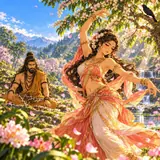
CommentaryNot scripture The apsarases rise from the churning of the waters (ap ): this is their name, “those who move in the waters”. Valmiki explains the word through the story.
Scene 3 of 3 · Vishnu as a great tortoise holds up the mountain, and Dhanvantari, the apsarases and the nectar rise from the sea.
षष्टिः कोट्योऽभवंस्तासामप्सराणां सुवर्चसाम् । असंख्येयास्तु काकुत्स्थ यास्तासां परिचारिकाः ॥ ३४ ॥
“There were sixty crores of those radiant apsarases, and their attendants were countless, Kakutstha.
“उन तेजस्वी अप्सराओं की संख्या साठ करोड़ थी, और उनकी परिचारिकाएँ अनगिनत थीं, काकुत्स्थ।
CommentaryNot scripture Sixty crores of apsarases, and countless attendants. The ocean pours out beings of beauty.
Scene 3 of 3 · Vishnu as a great tortoise holds up the mountain, and Dhanvantari, the apsarases and the nectar rise from the sea.
न ताः स्म प्रतिगृह्णन्ति सर्वे ते देवदानवाः । अप्रतिग्रहणादेव ता वै साधारणाः स्मृताः ॥ ३५ ॥
“None of the gods or danavas would accept them; because they were not accepted, they are known as common to all.
“देवताओं या दानवों में से किसी ने उन्हें स्वीकार नहीं किया; स्वीकार न किए जाने के कारण वे सबकी साझी कहलाती हैं।
CommentaryNot scripture Neither gods nor demons accepted them as wives, so they belong to no one. The poem gives a mythic origin to the celestial dancers who appear throughout Indian story.
Scene 3 of 3 · Vishnu as a great tortoise holds up the mountain, and Dhanvantari, the apsarases and the nectar rise from the sea.
वरुणस्य ततः कन्या वारुणी रघुनन्दन । उत्पपात महाभागा मार्गमाणा परिग्रहम् ॥ ३६ ॥
“Then Varuna’s daughter Varuni rose, delight of the Raghus, the fortunate one, seeking someone to accept her.
“तब रघुनंदन, वरुण की पुत्री वारुणी उठी, सौभाग्यशाली, किसी स्वीकार करने वाले की खोज में।
CommentaryNot scripture Varuni, daughter of Varuna, goddess of wine, rises seeking someone to accept her.
Scene 3 of 3 · Vishnu as a great tortoise holds up the mountain, and Dhanvantari, the apsarases and the nectar rise from the sea.
दितेः पुत्रा न तां राम जगृहुर्वरुणात्मजाम् । अदितेस्तु सुता वीर जगृहुस्तामनिन्दिताम् ॥ ३७ ॥
“The sons of Diti did not take Varuna’s daughter, Rama; but the sons of Aditi, hero, took that faultless one.
“राम, दिति के पुत्रों ने वरुण की पुत्री को नहीं लिया; पर वीर, अदिति के पुत्रों ने उस निर्दोष को ले लिया।
CommentaryNot scripture The sons of Diti refuse her; the sons of Aditi accept her.
Scene 3 of 3 · Vishnu as a great tortoise holds up the mountain, and Dhanvantari, the apsarases and the nectar rise from the sea.
असुरास्तेन दैतेयाः सुरास्तेनादितेः सुताः । हृष्टाः प्रमुदिताश्चासन् वारुणीग्रहणात् सुराः ॥ ३८ ॥
“Therefore the sons of Diti are asuras, and the sons of Aditi suras; the suras were glad and delighted at taking Varuni.
“इसलिए दिति के पुत्र असुर हैं, और अदिति के पुत्र सुर; वारुणी को लेकर सुर प्रसन्न और आनंदित हुए।
CommentaryNot scripture This is offered as the origin of the names: sura (gods, those who accepted sura ) and a-sura (those who did not). It is a playful folk etymology. Valmiki enjoys these explanations of words.
Scene 3 of 3 · Vishnu as a great tortoise holds up the mountain, and Dhanvantari, the apsarases and the nectar rise from the sea.
उच्चैःश्रवा हयश्रेष्ठो मणिरत्नं च कौस्तुभम् । उदतिष्ठन्नरश्रेष्ठ तथैवामृतमुत्तमम् ॥ ३९ ॥
“Uchchaihshravas, best of horses, the jewel Kaustubha, and the supreme nectar rose up, best of men.
“घोड़ों में श्रेष्ठ उच्चैःश्रवा, कौस्तुभ मणि, और परम अमृत उठे, पुरुषश्रेष्ठ।
CommentaryNot scripture The horse Uchchaihshravas, the jewel Kaustubha (which Vishnu wears on his chest), and finally the nectar itself. The treasures of the ocean.
Scene 3 of 3 · Vishnu as a great tortoise holds up the mountain, and Dhanvantari, the apsarases and the nectar rise from the sea.
अथ तस्य कृते राम महानासीत् कुलक्षयः । अदितेस्तु ततः पुत्रा दितिपुत्रानयोधयन् ॥ ४० ॥
“Then, for its sake, Rama, there was a great destruction of the family: the sons of Aditi fought the sons of Diti.
“तब, राम, उसके लिए कुल का बड़ा विनाश हुआ: अदिति के पुत्र दिति के पुत्रों से लड़े।
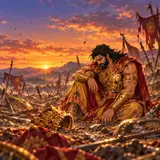
CommentaryNot scripture And then the family destroys itself. Gods and demons fight over the nectar. The shared work ends in war.
Scene 3 of 3 · Vishnu as a great tortoise holds up the mountain, and Dhanvantari, the apsarases and the nectar rise from the sea.
एकतामगमन् सर्वे असुरा राक्षसैः सह । युद्धमासीन्महाघोरं वीर त्रैलोक्यमोहनम् ॥ ४१ ॥
“All the asuras united with the rakshasas, and there was a most terrible war, hero, bewildering the three worlds.
“सब असुर राक्षसों से मिल गए, और वीर, तीनों लोकों को भ्रमित करने वाला एक अत्यंत भयानक युद्ध हुआ।
CommentaryNot scripture Asuras ally with rakshasas. A terrible war that bewilders the three worlds.
Scene 3 of 3 · Vishnu as a great tortoise holds up the mountain, and Dhanvantari, the apsarases and the nectar rise from the sea.
यदा क्षयं गतं सर्वं तदा विष्णुर्महाबलः । अमृतं सोऽहरत् तूर्णं मायामास्थाय मोहिनीम् ॥ ४२ ॥
“When all was destroyed, the mighty Vishnu swiftly carried off the nectar, using the enchanting illusion (Mohini).
“जब सब नष्ट हो गया, तब बलवान विष्णु ने मोहिनी माया का सहारा लेकर जल्दी से अमृत ले लिया।
CommentaryNot scripture Vishnu takes the nectar using the “enchanting illusion”: Mohini, his only female form, who distracts the asuras and gives the nectar to the gods.
Scene 3 of 3 · Vishnu as a great tortoise holds up the mountain, and Dhanvantari, the apsarases and the nectar rise from the sea.
ये गताभिमुखं विष्णुमक्षरं पुरुषोत्तमम् । सम्पिष्टास्ते तदा युद्धे विष्णुना प्रभविष्णुना ॥ ४३ ॥
“Those who went against Vishnu, the imperishable supreme person, were crushed in that battle by the mighty Vishnu.
“जो अविनाशी परम पुरुष विष्णु के विरुद्ध गए, उन्हें उस युद्ध में बलवान विष्णु ने कुचल दिया।
CommentaryNot scripture Those who oppose Vishnu are crushed. The preserver of the world takes sides when the cosmic order is at stake.
Scene 3 of 3 · Vishnu as a great tortoise holds up the mountain, and Dhanvantari, the apsarases and the nectar rise from the sea.
अदितेरात्मजा वीरा दितेः पुत्रान् निजघ्निरे । अस्मिन् घोरे महायुद्धे दैतेयादित्ययोर्भृशम् ॥ ४४ ॥
“The heroic sons of Aditi killed the sons of Diti in that terrible great war of the daityas and adityas.
“दैत्यों और आदित्यों के उस भयानक महायुद्ध में अदिति के वीर पुत्रों ने दिति के पुत्रों को मार डाला।
CommentaryNot scripture The adityas defeat the daityas. Heaven is won.
Scene 3 of 3 · Vishnu as a great tortoise holds up the mountain, and Dhanvantari, the apsarases and the nectar rise from the sea.
निहत्य दितिपुत्रांस्तु राज्यं प्राप्य पुरंदरः । शशास मुदितो लोकान् सर्षिसङ्घान् सचारणान् ॥ ४५ ॥
“Having killed the sons of Diti and gained the kingdom, Purandara joyfully ruled the worlds with the hosts of sages and charanas.”
“दिति के पुत्रों को मारकर और राज्य पाकर पुरंदर (इंद्र) ऋषियों और चारणों के समूहों के साथ प्रसन्न होकर लोकों पर राज्य करने लगे।”
CommentaryNot scripture Indra (Purandara) rules the worlds. The story has explained the origin of the gods’ power. The next sarga reveals how this ancient war connects to Vishala.
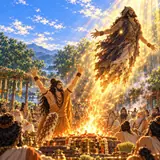
Scene 3 of 3 · Vishnu as a great tortoise holds up the mountain, and Dhanvantari, the apsarases and the nectar rise from the sea.