Bala Kanda · Sarga 15 of 77 · 34 verses
The Gods Ask Vishnu to Be Born as a Man
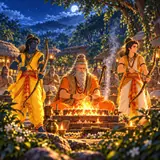
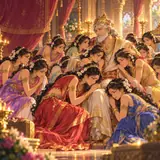
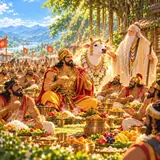
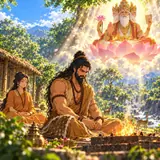
Rishyashringa reflects and announces a second rite, the putriya ishti, an offering for sons using mantras from the Atharva Veda, and begins pouring oblations into the fire. The gods, gandharvas, siddhas and sages gather to receive their shares, and there they complain to Brahma: the rakshasa Ravana, made invincible by Brahma’s own boon, torments the three worlds. The sun does not burn him, the wind does not blow hard near him, the sea dares not stir.
Brahma remembers the loophole: Ravana asked to be unkillable by gods, gandharvas, yakshas, danavas and rakshasas, but out of contempt did not name humans. “So he can be killed by a man.” Then Vishnu arrives on Garuda, holding conch, discus and mace, in yellow garments. The gods beg him to divide himself into four and be born as the sons of Dasharatha’s three queens, and as a man to kill Ravana. Vishnu promises to kill Ravana with all his family and then to rule the earth among men for eleven thousand years. He chooses Dasharatha as his father.
Press › to begin with verse 1.
मेधावी तु ततो ध्यात्वा स किञ्चिदिदमुत्तरम् । लब्धसंज्ञस्ततस्तं तु वेदज्ञो नृपमब्रवीत् ॥ १ ॥
The wise one, knower of the Veda, meditated for a while, and having found the answer, said to the king:
वेदों के ज्ञाता उन बुद्धिमान ने थोड़ी देर ध्यान किया, और उत्तर पाकर राजा से कहा:
Commentary on the whole sarga
The Gods Ask Vishnu to Be Born as a Man 1 min read.
Read the commentary CommentaryNot scripture Rishyashringa meditates (dhyatva ) before he answers. Even a sage of his power does not answer a king’s deepest wish on impulse. He looks within, finds the way, and then speaks.
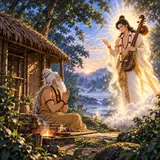
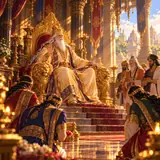
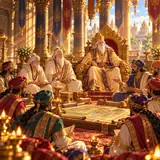
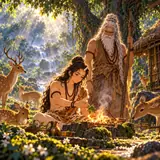
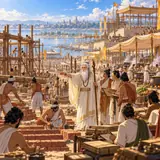
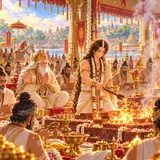
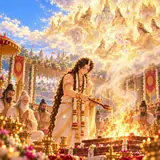
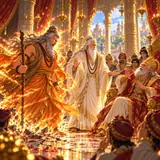
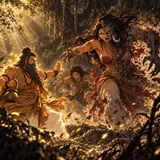
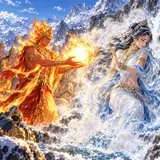
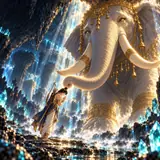
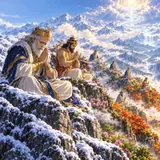
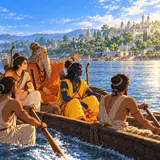
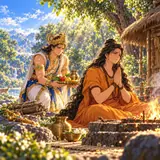
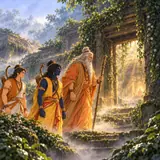
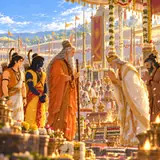
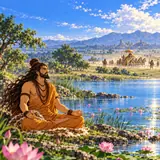
Scene 1 of 3 · Rishyashringa pours offerings into the fire for the king’s sons, and the gods gather unseen to take their share.
इष्टिं तेऽहं करिष्यामि पुत्रीयां पुत्रकारणात् । अथर्वशिरसि प्रोक्तैर्मन्त्रैः सिद्धां विधानतः ॥ २ ॥
“I will perform for you the putriya offering, for the sake of a son, accomplished by the rite with the mantras taught in the Atharvashiras.”
“मैं आपके लिए पुत्र प्राप्ति हेतु पुत्रीया इष्टि करूँगा, जो अथर्वशिरस में बताए मंत्रों के साथ विधि से सिद्ध होती है।”
CommentaryNot scripture The putriya ishti (often called putrakameshti , “the rite for one who desires a son”) is a separate offering from the horse sacrifice. Its mantras come from the Atharvashiras , a text linked to the Atharva Veda. Two rites: the horse sacrifice for purification and merit, this one specifically for sons.
Scene 1 of 3 · Rishyashringa pours offerings into the fire for the king’s sons, and the gods gather unseen to take their share.
ततः प्राक्रमदिष्टिं तां पुत्रीयां पुत्रकारणात् । जुहावाग्नौ च तेजस्वी मन्त्रदृष्टेन कर्मणा ॥ ३ ॥
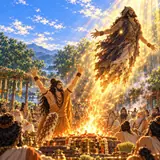
Then the radiant one began that offering for a son, and poured oblations into the fire by the rite seen in the mantras.
तब उन तेजस्वी ने पुत्र के लिए वह इष्टि आरंभ की, और मंत्रों में देखी विधि से अग्नि में आहुतियाँ डालीं।
CommentaryNot scripture The offering begins. Oblations go into the fire “by the rite seen in the mantras”. Now Valmiki lifts the curtain: while the priests pour offerings on earth, something is happening in heaven.
Scene 1 of 3 · Rishyashringa pours offerings into the fire for the king’s sons, and the gods gather unseen to take their share.
ततो देवाः सगन्धर्वाः सिद्धाश्च परमर्षयः । भागप्रतिग्रहार्थं वै समवेता यथाविधि ॥ ४ ॥
Then the gods with the gandharvas, the siddhas and the supreme sages gathered as prescribed to receive their shares.
तब देवता, गंधर्वों, सिद्धों और परम ऋषियों के साथ, अपने भाग पाने के लिए विधिपूर्वक इकट्ठे हुए।
CommentaryNot scripture The gods gather to receive their shares. In Vedic thought, the gods truly come to a rite to take their portion. This is the bridge between the two worlds, and through it the story of heaven enters the story of earth.
Scene 1 of 3 · Rishyashringa pours offerings into the fire for the king’s sons, and the gods gather unseen to take their share.
ताः समेत्य यथान्यायं तस्मिन् सदसि देवताः । अब्रुवँल्लोककर्तारं ब्रह्माणं वचनं ततः ॥ ५ ॥
Having gathered in that assembly in due order, the gods said to Brahma, maker of the worlds:
उस सभा में क्रम से इकट्ठे होकर देवताओं ने लोकों के रचयिता ब्रह्मा से कहा:
CommentaryNot scripture The scene shifts entirely. The gods are no longer only guests at Dasharatha’s rite; they turn to Brahma with their own problem. Two needs meet: a king who wants sons, and gods who need a saviour.
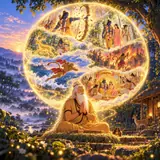
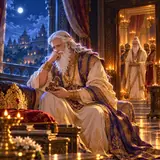
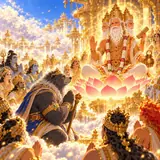
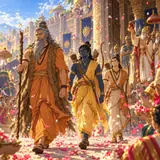
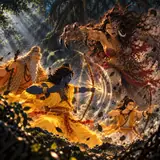
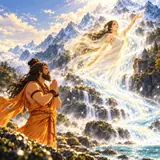
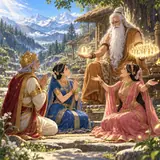
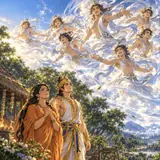
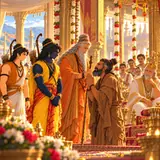
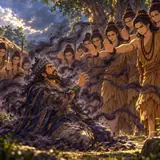
Scene 2 of 3 · In heaven the gods beg Brahma for help against Ravana, whose boon left out only one thing: man.
भगवंस्त्वत्प्रसादेन रावणो नाम राक्षसः । सर्वान् नो बाधते वीर्याच्छासितुं तं न शक्नुमः ॥ ६ ॥
“Lord, by your grace a rakshasa named Ravana harasses all of us with his might, and we cannot restrain him.
“भगवन, आपकी कृपा से रावण नाम का एक राक्षस अपने बल से हम सबको सताता है, और हम उसे रोक नहीं सकते।
CommentaryNot scripture Ravana is named for the first time in this telling, and he is introduced through the fear he causes. “By your grace” (tvat-prasadat ): the gods remind Brahma that it was his boon that made Ravana so powerful. Even a creator’s gifts can be misused.
Scene 2 of 3 · In heaven the gods beg Brahma for help against Ravana, whose boon left out only one thing: man.
त्वया तस्मै वरो दत्तः प्रीतेन भगवंस्तदा । मानयन्तश्च तं नित्यं सर्वं तस्य क्षमामहे ॥ ७ ॥
“You gave him a boon then, lord, being pleased with him. Out of respect for it, we always bear everything from him.
“प्रभु, आपने प्रसन्न होकर उसे तब वर दिया था। उस वर के आदर के कारण हम उसकी सब बातें सहते रहते हैं।
CommentaryNot scripture The gods have tolerated Ravana out of respect for Brahma’s boon. A boon, once given, must be honoured even when its holder abuses it. This is the moral bind of the cosmos: dharma has trapped itself, as it trapped Dasharatha later.
Scene 2 of 3 · In heaven the gods beg Brahma for help against Ravana, whose boon left out only one thing: man.
उद्वेजयति लोकांस्त्रीनुच्छ्रितान् द्वेष्टि दुर्मतिः । शक्रं त्रिदशराजानं प्रधर्षयितुमिच्छति ॥ ८ ॥
“The wicked one terrifies the three worlds and hates whatever stands high; he wants to overpower even Shakra, king of the gods.
“वह दुष्ट तीनों लोकों को डराता है और जो कुछ ऊँचा है उससे द्वेष करता है; वह देवराज इंद्र को भी पराजित करना चाहता है।
CommentaryNot scripture Ravana “hates whatever stands high” (uchhritam dveshti ). This is a sharp psychological portrait: his ambition is not to be great, but to bring down whatever is greater. He wants to overpower even Indra.
Scene 2 of 3 · In heaven the gods beg Brahma for help against Ravana, whose boon left out only one thing: man.
ऋषीन् यक्षान् सगन्धर्वान् ब्राह्मणानसुरांस्तदा । अतिक्रामति दुर्धर्षो वरदानेन मोहितः ॥ ९ ॥
“Sages, yakshas with gandharvas, brahmanas and asuras: the unassailable one oversteps them all, deluded by the gift of the boon.
“ऋषि, यक्ष, गंधर्व, ब्राह्मण और असुर: वर के घमंड में चूर वह अजेय राक्षस सबका अपमान करता है।
CommentaryNot scripture He insults sages, yakshas, gandharvas, brahmanas and even asuras. Vara-dana-mohita : “deluded by the gift of the boon”. Power without wisdom blinds the one who holds it.
Scene 2 of 3 · In heaven the gods beg Brahma for help against Ravana, whose boon left out only one thing: man.
नैनं सूर्यः प्रतपति पार्श्वे वाति न मारुतः । चलोर्मिमाली तं दृष्ट्वा समुद्रोऽपि न कम्पते ॥ १० ॥
“The sun does not scorch him, the wind does not blow beside him, and seeing him, even the ocean garlanded with restless waves does not stir.
“सूर्य उसे नहीं तपाता, हवा उसके पास नहीं बहती, और उसे देखकर चंचल लहरों की माला पहने समुद्र भी नहीं हिलता।
CommentaryNot scripture A frightening image: the sun does not dare to scorch him, the wind does not blow near him, even the ocean holds still when it sees him. Nature itself is afraid. Ravana’s terror reaches beyond people to the elements.
Scene 2 of 3 · In heaven the gods beg Brahma for help against Ravana, whose boon left out only one thing: man.
तन्महन्नो भयं तस्माद् राक्षसाद् घोरदर्शनात् । वधार्थं तस्य भगवन्नुपायं कर्तुमर्हसि ॥ ११ ॥
“Great is our fear of that rakshasa of dreadful form. Lord, you must devise a way to kill him.”
“उस भयानक रूप वाले राक्षस से हमें बड़ा भय है। भगवन, आप उसके वध का कोई उपाय सोचिए।”
CommentaryNot scripture The gods admit their fear plainly: “great is our fear”. They ask Brahma to devise a way. Heaven itself needs help.
Scene 2 of 3 · In heaven the gods beg Brahma for help against Ravana, whose boon left out only one thing: man.
एवमुक्तः सुरैः सर्वैश्चिन्तयित्वा ततोऽब्रवीत् । हन्तायं विदितस्तस्य वधोपायो दुरात्मनः ॥ १२ ॥
So addressed by all the gods, he thought and said: “Ah, the means of killing that evil-minded one is known.
सब देवताओं के ऐसा कहने पर उन्होंने सोचकर कहा: “अहा, उस दुष्टात्मा के वध का उपाय ज्ञात है।
CommentaryNot scripture Brahma’s answer begins with hanta , “ah!”, a word of sudden realisation, almost relief. He knows the way. The solution lies in the very words of the boon.
Scene 2 of 3 · In heaven the gods beg Brahma for help against Ravana, whose boon left out only one thing: man.
तेन गन्धर्वयक्षाणां देवदानवरक्षसाम् । अवध्योऽस्मीति वागुक्ता तथेत्युक्तं च तन्मया ॥ १३ ॥
“He said, ‘May I be unkillable by gandharvas, yakshas, gods, danavas and rakshasas,’ and I said, ‘So be it.’
“उसने कहा था, ‘मैं गंधर्वों, यक्षों, देवताओं, दानवों और राक्षसों से अवध्य रहूँ,’ और मैंने कहा था, ‘ऐसा ही हो।’
CommentaryNot scripture Ravana asked to be unkillable by gandharvas, yakshas, gods, danavas and rakshasas. He listed every power he feared. And Brahma granted it: “So be it.”
Scene 2 of 3 · In heaven the gods beg Brahma for help against Ravana, whose boon left out only one thing: man.
नाकीर्तयदवज्ञानात् तद् रक्षो मानुषांस्तदा । तस्मात् स मानुषाद् वध्यो मृत्युर्नान्योऽस्य विद्यते ॥ १४ ॥
“Out of contempt, that rakshasa did not name humans then. Therefore he is to be killed by a man; no other death exists for him.”
“तिरस्कार के कारण उस राक्षस ने तब मनुष्यों का नाम नहीं लिया। इसलिए उसका वध मनुष्य से होगा; उसकी कोई दूसरी मृत्यु नहीं है।”
CommentaryNot scripture But he did not name humans, out of contempt (avajnanat ). He thought men too weak to matter. His pride left a gap, and through that gap his death will come. This is the hinge of the whole Ramayana: the despised human is the one who saves the world.
Scene 2 of 3 · In heaven the gods beg Brahma for help against Ravana, whose boon left out only one thing: man.
एतच्छ्रुत्वा प्रियं वाक्यं ब्रह्मणा समुदाहृतम् । देवा महर्षयः सर्वे प्रहृष्टास्तेऽभवंस्तदा ॥ १५ ॥
Hearing these welcome words spoken by Brahma, all the gods and great sages rejoiced.
ब्रह्मा के कहे ये प्रिय वचन सुनकर सब देवता और महर्षि प्रसन्न हुए।
CommentaryNot scripture The gods rejoice. A way exists. Now someone must take it.
Scene 2 of 3 · In heaven the gods beg Brahma for help against Ravana, whose boon left out only one thing: man.
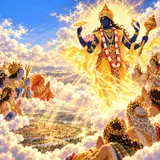
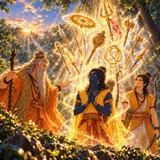
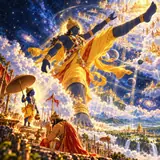
एतस्मिन्नन्तरे विष्णुरुपयातो महाद्युतिः । शङ्खचक्रगदापाणिः पीतवासा जगत्पतिः ॥ १६ ॥
वैनतेयं समारुह्य भास्करस्तोयदम् यथा । तप्तहाटककेयूरो वन्द्यमानः सुरोत्तमैः ॥ १७ ॥
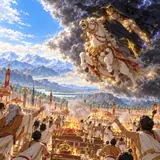
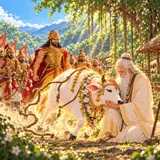
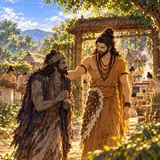
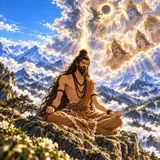
At that moment Vishnu arrived, of great radiance, lord of the world, with conch, discus and mace in his hands, wearing yellow garments, riding on Vainateya (Garuda) like the sun on a cloud, with armlets of burnished gold, praised by the best of the gods.
उसी समय महातेजस्वी, जगत के स्वामी विष्णु वहाँ आए, हाथों में शंख, चक्र और गदा लिए, पीले वस्त्र पहने, बादल पर सूर्य की तरह वैनतेय (गरुड़) पर सवार, तपे सोने के बाजूबंद पहने, श्रेष्ठ देवताओं से स्तुति पाते हुए।
CommentaryNot scripture Vishnu arrives: conch, discus and mace in his hands, yellow garments, golden armlets, riding Garuda (Vainateya , “son of Vinata”) “like the sun on a cloud”. This is the classic image of Vishnu, the preserver of the world, and he arrives exactly when he is needed.
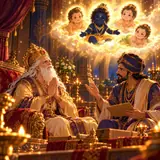
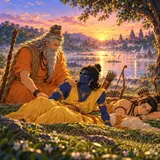
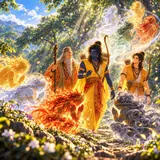
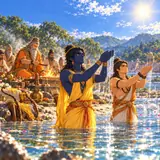
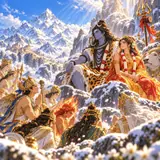
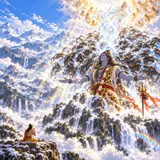
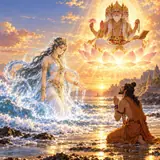
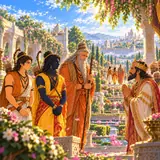
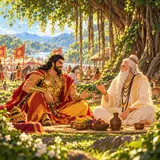
Scene 3 of 3 · Vishnu arrives on Garuda and promises to be born as four sons of Dasharatha.
ब्रह्मणा च समागत्य तत्र तस्थौ समाहितः । तमब्रुवन् सुराः सर्वे समभिष्टूय संनताः ॥ १८ ॥
He met Brahma and stood there attentive. All the gods praised him, bowed, and said:
वे ब्रह्मा से मिलकर सावधान होकर वहाँ खड़े रहे। सब देवताओं ने उनकी स्तुति की, प्रणाम किया और कहा:
CommentaryNot scripture He meets Brahma and stands attentive (samahita ). The gods bow and praise him. All of heaven turns toward him.
Scene 3 of 3 · Vishnu arrives on Garuda and promises to be born as four sons of Dasharatha.
त्वां नियोक्ष्यामहे विष्णो लोकानां हितकाम्यया । राज्ञो दशरथस्य त्वमयोध्याधिपतेर्विभो ॥ १९ ॥
धर्मज्ञस्य वदान्यस्य महर्षिसमतेजसः । तस्य भार्यासु तिसृषु ह्रीश्रीकीर्त्युपमासु च ॥ २० ॥
“Vishnu, for the good of the worlds we appoint you. Lord, to King Dasharatha, lord of Ayodhya, who knows dharma, is generous and has the splendour of a great sage, and to his three wives, who are like Modesty, Fortune and Fame,
“विष्णु, लोकों के कल्याण के लिए हम आपको नियुक्त करते हैं। प्रभु, अयोध्या के स्वामी राजा दशरथ, जो धर्म के ज्ञाता, उदार और महर्षि जैसे तेजस्वी हैं, और उनकी तीन रानियाँ, जो ह्री, श्री और कीर्ति के समान हैं,
CommentaryNot scripture The gods “appoint” Vishnu for the good of the worlds. They choose Dasharatha, who knows dharma and is generous, and his three queens, compared with Modesty (hri ), Fortune (shri ) and Fame (kirti ). The family is chosen for its virtue.
Scene 3 of 3 · Vishnu arrives on Garuda and promises to be born as four sons of Dasharatha.
विष्णो पुत्रत्वमागच्छ कृत्वाऽऽत्मानं चतुर्विधम् । तत्र त्वं मानुषो भूत्वा प्रवृद्धं लोककण्टकम् ॥ २१ ॥
अवध्यं दैवतैर्विष्णो समरे जहि रावणम् । स हि देवान् सगन्धर्वान् सिद्धांश्च ऋषिसत्तमान् ॥ २२ ॥
राक्षसो रावणो मूर्खो वीर्योद्रेकेण बाधते । ऋषयश्च ततस्तेन गन्धर्वाप्सरसस्तथा ॥ २३ ॥
क्रीडन्तो नन्दनवने रौद्रेण विनिपातिताः । वधार्थं वयमायातास्तस्य वै मुनिभिः सह ॥ २४ ॥
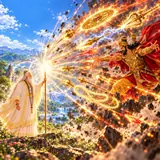
“become a son, Vishnu, making yourself fourfold. There, become a man and kill in battle Ravana, the swollen thorn of the worlds, whom the gods cannot kill. For that foolish rakshasa Ravana, in the excess of his might, oppresses the gods with the gandharvas, the siddhas and the best of sages. Sages, gandharvas and apsarases at play in the Nandana grove have been struck down by that savage one. We have come with the sages for his death,
“विष्णु, अपने को चार भागों में बाँटकर उनके पुत्र बनिए। वहाँ मनुष्य बनकर युद्ध में लोकों के बढ़े हुए काँटे रावण को मारिए, जिसे देवता नहीं मार सकते। क्योंकि वह मूर्ख राक्षस रावण अपने बल के अहंकार में गंधर्वों, सिद्धों और श्रेष्ठ ऋषियों सहित देवताओं को सताता है। नंदन वन में क्रीड़ा करते ऋषियों, गंधर्वों और अप्सराओं को उस क्रूर ने मार गिराया है। उसके वध के लिए हम ऋषियों के साथ आए हैं,
CommentaryNot scripture “Make yourself fourfold”: Vishnu will be born as four sons, Rama and his three brothers. Then the charge: become a man and kill Ravana. The gods describe his cruelty, even the killing of gandharvas and apsarases at play in Indra’s garden. The plea is both urgent and grief-stricken.
Scene 3 of 3 · Vishnu arrives on Garuda and promises to be born as four sons of Dasharatha.
सिद्धगन्धर्वयक्षाश्च ततस्त्वां शरणं गताः । त्वं गतिः परमा देव सर्वेषाम् नः परंतपः ॥ २५ ॥
“and the siddhas, gandharvas and yakshas have come to you for refuge. You are our highest refuge, god, scorcher of enemies.
“और सिद्ध, गंधर्व और यक्ष आपकी शरण में आए हैं। देव, शत्रुओं को तपाने वाले, आप ही हमारी परम शरण हैं।
CommentaryNot scripture “You are our highest refuge” (parama gatih ). The siddhas, gandharvas and yakshas have all come for shelter. The whole of heaven takes refuge in one god, as countless devotees since have taken refuge in Rama.
Scene 3 of 3 · Vishnu arrives on Garuda and promises to be born as four sons of Dasharatha.
वधाय देवशत्रूणां नृणां लोके मनः कुरु । एवं स्तुतस्तु देवेशो विष्णुस्त्रिदशपुंगवः ॥ २६ ॥
पितामहपुरोगांस्तान् सर्वलोकनमस्कृतः । अब्रवीत् त्रिदशान् सर्वान् समेतान् धर्मसंहितान् ॥ २७ ॥
“Set your mind on being born in the world of men to kill the enemies of the gods.” So praised, Vishnu, lord of the gods, foremost of the thirty, honoured by all the worlds, said to all the assembled gods led by the Grandsire, who were set on dharma:
“देवताओं के शत्रुओं को मारने के लिए मनुष्य लोक में जन्म लेने का मन बनाइए।” ऐसी स्तुति पाकर देवताओं के स्वामी, तैंतीस देवताओं में श्रेष्ठ, सब लोकों से पूजित विष्णु ने पितामह ब्रह्मा आदि धर्म में लगे सब इकट्ठे देवताओं से कहा:
CommentaryNot scripture “Set your mind on being born among men.” The gods ask Vishnu to take a human birth. Vishnu, “foremost of the thirty” (the thirty-three gods of the Veda), answers. This is the birth of the idea of Rama as avatara , the god who descends.
Scene 3 of 3 · Vishnu arrives on Garuda and promises to be born as four sons of Dasharatha.
भयं त्यजत भद्रं वो हितार्थं युधि रावणम् । सपुत्रपौत्रं सामात्यं समन्त्रिज्ञातिबान्धवम् ॥ २८ ॥
हत्वा क्रूरं दुराधर्षं देवर्षीणां भयावहम् । दशवर्षसहस्राणि दशवर्षशतानि च ॥ २९ ॥
वत्स्यामि मानुषे लोके पालयन् पृथिवीमिमाम् । एवं दत्त्वा वरं देवो देवानां विष्णुरात्मवान् ॥ ३० ॥
“Give up fear; blessings on you. For your good I will kill in battle the cruel, unassailable Ravana, terror of the gods and sages, with his sons and grandsons, his ministers, counsellors, kin and friends, and I will live in the world of men for ten thousand years and ten hundred years, protecting this earth.” Having given the gods this boon, the self-possessed god Vishnu
“भय छोड़ दो; तुम्हारा कल्याण हो। तुम्हारे हित के लिए मैं देवताओं और ऋषियों को आतंकित करने वाले उस क्रूर, अजेय रावण को उसके पुत्रों, पौत्रों, मंत्रियों, सलाहकारों, संबंधियों और मित्रों सहित युद्ध में मारूँगा, और दस हज़ार और दस सौ वर्ष मनुष्य लोक में रहकर इस पृथ्वी की रक्षा करूँगा।” देवताओं को यह वर देकर संयमी भगवान विष्णु ने
CommentaryNot scripture “Give up fear.” Vishnu’s first words are comfort. Then the promise: he will kill Ravana with all his family and allies, and then rule the earth for eleven thousand years. The same number Narada gave in sarga 1. Heaven’s plan and the poem’s story agree.
Scene 3 of 3 · Vishnu arrives on Garuda and promises to be born as four sons of Dasharatha.
मानुष्ये चिन्तयामास जन्मभूमिमथात्मनः । ततः पद्मपलाशाक्षः कृत्वात्मानं चतुर्विधम् ॥ ३१ ॥
पितरं रोचयामास तदा दशरथं नृपम् । ततो देवर्षिगन्धर्वाः सरुद्राः साप्सरोगणाः । स्तुतिभिर्दिव्यरूपाभिस्तुष्टुवुर्मधुसूदनम् ॥ ३२ ॥
considered where to be born among men. Then the lotus-eyed one, making himself fourfold, chose King Dasharatha as his father. Then the divine sages, gandharvas, Rudras and hosts of apsarases praised the slayer of Madhu with hymns of divine form:
सोचा कि मनुष्यों में कहाँ जन्म लें। तब कमल-नयन ने अपने को चार भागों में बाँटकर राजा दशरथ को पिता के रूप में चुना। तब देवर्षियों, गंधर्वों, रुद्रों और अप्सराओं के समूहों ने दिव्य स्तुतियों से मधुसूदन की स्तुति की:
CommentaryNot scripture Vishnu considers where to be born, and chooses Dasharatha as his father. He divides himself into four. Then all of heaven sings hymns to him as Madhusudana , “slayer of Madhu”, one of his ancient names. The incarnation has been decided.
Scene 3 of 3 · Vishnu arrives on Garuda and promises to be born as four sons of Dasharatha.
तमुद्धतं रावणमुग्रतेजसं प्रवृद्धदर्पं त्रिदशेश्वरद्विषम् । विरावणं साधु तपस्विकण्टकं तपस्विनामुद्धर तं भयावहम् ॥ ३३ ॥
“Root out that insolent Ravana of fierce power, swollen with pride, enemy of the lord of the gods, who makes the world cry out, the thorn of ascetics, the terror of the good and of all who practise austerity.
“उस उद्धत, उग्र बल वाले, घमंड से फूले रावण को जड़ से उखाड़ दीजिए, जो देवराज का शत्रु है, संसार को रुलाता है, तपस्वियों का काँटा है, और सज्जनों तथा सब तपस्वियों के लिए आतंक है।
CommentaryNot scripture The hymn calls Ravana “the thorn of ascetics” and “the one who makes the world cry out”. His very name is often explained as “he who makes others cry” (from ru , to cry out). The gods want him “rooted out” like a weed.
Scene 3 of 3 · Vishnu arrives on Garuda and promises to be born as four sons of Dasharatha.
तमेव हत्वा सबलं सबान्धवम् विरावणं रावणमुग्रपौरुषम् । स्वर्लोकमागच्छ गतज्वरश्चिरं सुरेन्द्रगुप्तं गतदोषकल्मषम् ॥ ३४ ॥
“Having slain that Ravana of fierce might, who makes the world wail, with his army and kin, come back free of fever for a long time to the world of heaven guarded by the lord of the gods, cleansed of fault and stain.”
“संसार को रुलाने वाले उग्र पराक्रमी रावण को उसकी सेना और संबंधियों सहित मारकर, दोष और मल से मुक्त होकर, चिंता से रहित होकर बहुत समय के लिए देवराज से रक्षित स्वर्गलोक लौट आइए।”
CommentaryNot scripture They ask Vishnu to return “free of fever” (vijvara ) after the task. The word we saw for Dasharatha and for Rama in sarga 1. Every hero of this poem longs for one thing: to finish the work and be at peace.
Scene 3 of 3 · Vishnu arrives on Garuda and promises to be born as four sons of Dasharatha.