Bala Kanda · Sarga 62 of 77 · 28 verses
Vishvamitra Saves Shunahshepa
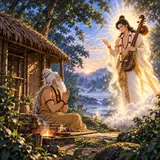
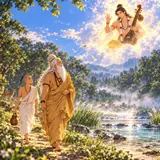
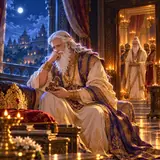
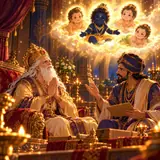
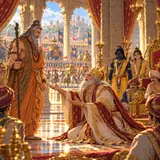
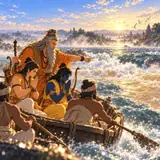
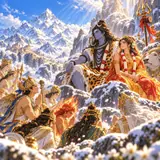
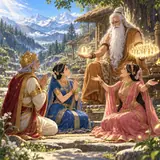
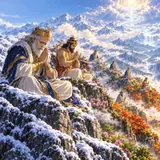
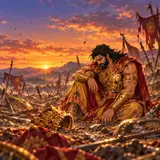
At midday Ambarisha rests at Pushkara. Shunahshepa, desperate, thirsty and exhausted, finds Vishvamitra, his mother’s brother, practising austerity with the sages, and falls into his lap: “I have no mother, no father, no kin. Save me by dharma, gentle one. Let the king’s work be done and let me live long and reach heaven by austerity. Be the protector of one who has none; save me from this evil as a father saves a son.”
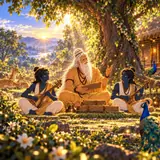
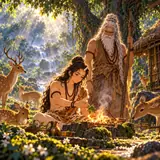
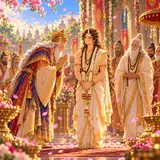
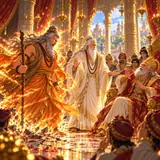
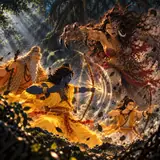
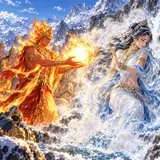
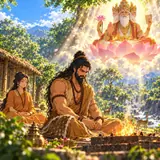
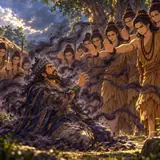
Vishvamitra comforts him and turns to his own sons: “This is the time for which fathers beget sons: to do good for the next world. This boy, a sage’s son, seeks refuge with me. Do him this kindness and save his life: become the sacrificial animal for the king and satisfy the fire.” His sons, led by Madhucchandas, answer mockingly: “How can you abandon your own sons to save another’s? It seems as wrong as eating dog’s flesh.” Furious, Vishvamitra curses them to be born, like Vasishtha’s sons, as dog-eaters for a thousand years. Then he gives Shunahshepa protection and two divine hymns: “When you are bound to the post, sing these to Agni, Indra and Vishnu at Ambarisha’s sacrifice, and you will succeed.”
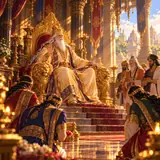
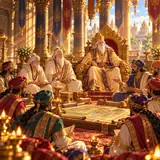
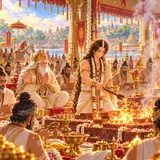
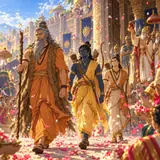
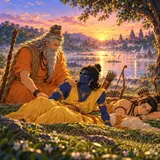
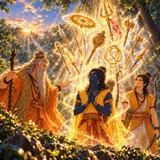
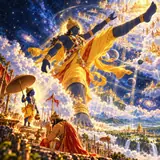
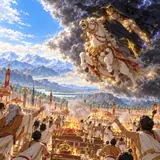
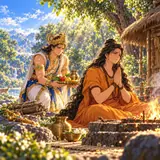
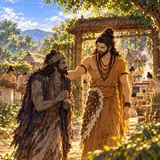
Shunahshepa hurries the king on; he is bound to the post in red garments and garlands, and sings the hymns to Indra and Indra’s younger brother, Upendra. Indra, pleased by the secret praise, grants him long life. The king gains the full fruit of the sacrifice through Indra’s grace, and Vishvamitra resumes his austerities at Pushkara for another thousand years.
Press › to begin with verse 1.
शुनःशेपं नरश्रेष्ठ गृहीत्वा तु महायशाः । व्यश्रमत् पुष्करे राजा मध्याह्ने रघुनन्दन ॥ १ ॥
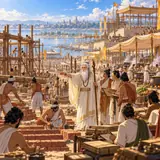
Having taken Shunahshepa, best of men, the greatly renowned king rested at Pushkara at midday, delight of the Raghus.
पुरुषश्रेष्ठ शुनःशेप को लेकर महायशस्वी राजा दोपहर के समय पुष्कर में विश्राम करने लगे, रघुनंदन।
Commentary on the whole sarga
Vishvamitra Saves Shunahshepa 1 min read.
Read the commentary CommentaryNot scripture Ambarisha rests at Pushkara at midday, the very place where Vishvamitra is practising austerity. The boy’s path and his uncle’s meet by grace.
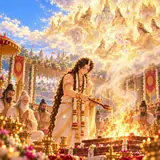
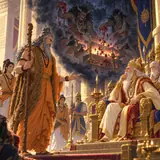
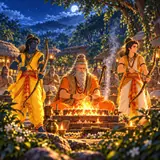
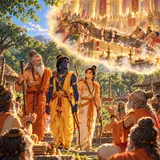
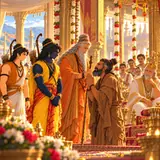
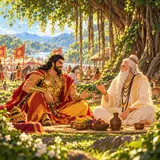
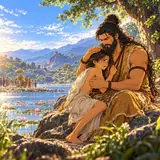
Scene 1 of 2 · Exhausted and despairing, the boy Shunahshepa falls into his uncle Vishvamitra’s lap at Pushkara and begs for his life.
तस्य विश्रममाणस्य शुनःशेपो महायशाः । पुष्करं ज्येष्ठमागम्य विश्वामित्रं ददर्श ह ॥ २ ॥
तप्यन्तमृषिभिः सार्धं मातुलं परमातुरः । विषण्णवदनो दीनस्तृष्णया च श्रमेण च ॥ ३ ॥
पपाताङ्के मुने राम वाक्यं चेदमुवाच ह । न मेऽस्ति माता न पिता ज्ञातयो बान्धवाः कुतः ॥ ४ ॥
While he rested, the glorious Shunahshepa came to the eldest Pushkara and saw Vishvamitra, his mother’s brother, practising austerity with the sages. In the greatest distress, his face downcast, wretched with thirst and weariness, he fell into the sage’s lap, Rama, and said: “I have no mother, no father; where then are kin and relatives?
जब वे विश्राम कर रहे थे, तब यशस्वी शुनःशेप ज्येष्ठ पुष्कर पर आया और उसने अपने मामा विश्वामित्र को मुनियों के साथ तप करते देखा। अत्यंत दुखी, उदास मुख वाला, प्यास और थकान से दीन वह मुनि की गोद में गिर पड़ा, राम, और बोला: “मेरी न माता है, न पिता; फिर संबंधी और रिश्तेदार कहाँ?
CommentaryNot scripture Shunahshepa sees Vishvamitra, his mother’s brother, and falls into his lap, exhausted, thirsty, despairing: “I have no mother, no father.” Sold by his parents, he feels utterly alone. It is one of the most heartbreaking cries in the kanda.
Scene 1 of 2 · Exhausted and despairing, the boy Shunahshepa falls into his uncle Vishvamitra’s lap at Pushkara and begs for his life.
त्रातुमर्हसि मां सौम्य धर्मेण मुनिपुंगव । त्राता त्वं हि नरश्रेष्ठ सर्वेषां त्वं हि भावनः ॥ ५ ॥
“You should save me by dharma, gentle one, best of sages. You are the saviour of all, best of men, you are the one who makes them prosper.
“सौम्य, मुनिश्रेष्ठ, आपको धर्म से मेरी रक्षा करनी चाहिए। पुरुषश्रेष्ठ, आप सबके रक्षक हैं, आप ही उन्हें समृद्ध करने वाले हैं।
CommentaryNot scripture “Save me by dharma. You are the saviour of all.” He appeals to the sage’s sense of righteousness.
Scene 1 of 2 · Exhausted and despairing, the boy Shunahshepa falls into his uncle Vishvamitra’s lap at Pushkara and begs for his life.
राजा च कृतकार्यः स्यादहं दीर्घायुरव्ययः । स्वर्गलोकमुपाश्नीयां तपस्तप्त्वा ह्यनुत्तमम् ॥ ६ ॥
“Let the king’s purpose be accomplished, and let me be long-lived and unharmed, and reach the world of heaven having practised supreme austerity.
“राजा का प्रयोजन भी पूरा हो, और मैं भी दीर्घायु और सुरक्षित रहूँ, और परम तप करके स्वर्गलोक पाऊँ।
CommentaryNot scripture A remarkable request: he wants the king’s rite to succeed too. He does not want to ruin Ambarisha; he only wants to live. Even in fear, the boy thinks of others.
Scene 1 of 2 · Exhausted and despairing, the boy Shunahshepa falls into his uncle Vishvamitra’s lap at Pushkara and begs for his life.
स मे नाथो ह्यनाथस्य भव भव्येन चेतसा । पितेव पुत्रं धर्मात्मंस्त्रातुमर्हसि किल्बिषात् ॥ ७ ॥
“Be the protector of me, who have no protector, with a kindly heart. As a father saves a son, righteous one, you should save me from this evil.”
“अनाथ मेरे आप कृपालु मन से रक्षक बनिए। धर्मात्मा, जैसे पिता पुत्र को बचाता है, वैसे ही आप मुझे इस विपत्ति से बचाइए।”
CommentaryNot scripture “As a father saves a son, save me.” He asks Vishvamitra to be the father his own father was not.
Scene 1 of 2 · Exhausted and despairing, the boy Shunahshepa falls into his uncle Vishvamitra’s lap at Pushkara and begs for his life.
तस्य तद् वचनं श्रुत्वा विश्वामित्रो महातपाः । सान्त्वयित्वा बहुविधं पुत्रानिदमुवाच ह ॥ ८ ॥
Hearing his words, the great ascetic Vishvamitra comforted him in many ways and said this to his sons:
उसके वचन सुनकर महातपस्वी विश्वामित्र ने अनेक प्रकार से उसे सांत्वना दी और अपने पुत्रों से यह कहा:
CommentaryNot scripture Vishvamitra comforts him “in many ways”. The sage responds with tenderness first.
Scene 1 of 2 · Exhausted and despairing, the boy Shunahshepa falls into his uncle Vishvamitra’s lap at Pushkara and begs for his life.
यत्कृते पितरः पुत्राञ्जनयन्ति शुभार्थिनः । परलोकहितार्थाय तस्य कालोऽयमागतः ॥ ९ ॥
“That for which fathers who seek good beget sons, for the welfare of the other world, the time for it has come.
“कल्याण चाहने वाले पिता परलोक के हित के लिए जिस काम के लिए पुत्र उत्पन्न करते हैं, उसका समय आ गया है।
CommentaryNot scripture Then he turns to his own sons: “The purpose for which fathers have sons has come.” In the old view, sons were meant to serve their father’s dharma.
Scene 1 of 2 · Exhausted and despairing, the boy Shunahshepa falls into his uncle Vishvamitra’s lap at Pushkara and begs for his life.
अयं मुनिसुतो बालो मत्तः शरणमिच्छति । अस्य जीवितमात्रेण प्रियं कुरुत पुत्रकाः ॥ १० ॥
“This boy, a sage’s son, seeks refuge from me. Do him a kindness, my sons, merely by giving him his life.
“मुनि का यह पुत्र मुझसे शरण माँगता है। मेरे पुत्रो, केवल इसे जीवनदान देकर इस पर उपकार करो।
CommentaryNot scripture “He seeks refuge from me. Give him his life.” Refuge again, the same principle that drove him to help Trishanku.
Scene 1 of 2 · Exhausted and despairing, the boy Shunahshepa falls into his uncle Vishvamitra’s lap at Pushkara and begs for his life.
सर्वे सुकृतकर्माणः सर्वे धर्मपरायणाः । पशुभूता नरेन्द्रस्य तृप्तिमग्नेः प्रयच्छत ॥ ११ ॥
“All of you have done good deeds, all of you are devoted to dharma. Become the sacrificial animal for the king and give satisfaction to the fire.
“तुम सबने अच्छे कर्म किए हैं, तुम सब धर्म में लगे हो। राजा के लिए यज्ञ-पशु बनो और अग्नि को तृप्त करो।
CommentaryNot scripture “Become the sacrificial animal in his place.” Vishvamitra asks his own sons to die for a stranger. It is an extreme demand, and the poem does not hide how extreme.
Scene 1 of 2 · Exhausted and despairing, the boy Shunahshepa falls into his uncle Vishvamitra’s lap at Pushkara and begs for his life.
नाथवांश्च शुनःशेपो यज्ञश्चाविघ्नतो भवेत् । देवतास्तर्पिताश्च स्युर्मम चापि कृतं वचः ॥ १२ ॥
“So Shunahshepa will have a protector, the sacrifice will be without obstacle, the gods will be satisfied, and my word will be kept.”
“इस प्रकार शुनःशेप को रक्षक मिलेगा, यज्ञ निर्विघ्न होगा, देवता तृप्त होंगे, और मेरा वचन भी रहेगा।”
CommentaryNot scripture Everyone would be served: the boy saved, the rite completed, the gods pleased, and his word kept. Vishvamitra thinks in terms of duty and promise.
Scene 1 of 2 · Exhausted and despairing, the boy Shunahshepa falls into his uncle Vishvamitra’s lap at Pushkara and begs for his life.
मुनेस्तद् वचनं श्रुत्वा मधुच्छन्दादयः सुताः । साभिमानं नरश्रेष्ठ सलीलमिदमब्रुवन् ॥ १३ ॥
Hearing the sage’s words, his sons led by Madhucchandas, best of men, said proudly and mockingly:
मुनि के वचन सुनकर मधुच्छंदा आदि उनके पुत्रों ने घमंड और उपहास से कहा, पुरुषश्रेष्ठ:
CommentaryNot scripture His sons, led by Madhucchandas, answer “proudly and mockingly”.
Scene 1 of 2 · Exhausted and despairing, the boy Shunahshepa falls into his uncle Vishvamitra’s lap at Pushkara and begs for his life.
कथमात्मसुतान् हित्वा त्रायसेऽन्यसुतं विभो । अकार्यमिव पश्यामः श्वमांसमिव भोजने ॥ १४ ॥
“How can you abandon your own sons and save another’s son, lord? We see this as something not to be done, like dog’s flesh in a meal.”
“भगवन, आप अपने पुत्रों को छोड़कर दूसरे के पुत्र को कैसे बचा सकते हैं? हम इसे न करने योग्य मानते हैं, जैसे भोजन में कुत्ते का मांस।”
CommentaryNot scripture “How can you abandon your own sons to save another’s? It is like dog’s flesh in a meal.” Their refusal is understandable to any reader. But they mock their father, and in this world that is grave.
Scene 1 of 2 · Exhausted and despairing, the boy Shunahshepa falls into his uncle Vishvamitra’s lap at Pushkara and begs for his life.
तेषां तद् वचनं श्रुत्वा पुत्राणां मुनिपुंगवः । क्रोधसंरक्तनयनो व्याहर्तुमुपचक्रमे ॥ १५ ॥
Hearing those words of his sons, the foremost sage, his eyes red with anger, began to speak:
पुत्रों के वे वचन सुनकर मुनिश्रेष्ठ क्रोध से लाल आँखें करके बोलने लगे:
CommentaryNot scripture Vishvamitra’s eyes turn red with anger.
Scene 1 of 2 · Exhausted and despairing, the boy Shunahshepa falls into his uncle Vishvamitra’s lap at Pushkara and begs for his life.
निःसाध्वसमिदं प्रोक्तं धर्मादपि विगर्हितम् । अतिक्रम्य तु मद्वाक्यं दारुणं रोमहर्षणम् ॥ १६ ॥
“What you have said without fear is condemned even by dharma: overstepping my word, it is dreadful and makes the hair stand on end.
“तुमने निडर होकर जो कहा है, वह धर्म द्वारा भी निंदित है: मेरे वचन का उल्लंघन करने वाला, भयानक और रोंगटे खड़े कर देने वाला।
CommentaryNot scripture “What you said is condemned by dharma: it oversteps my word.” To him, disobedience to a father’s dharma is the crime.
Scene 1 of 2 · Exhausted and despairing, the boy Shunahshepa falls into his uncle Vishvamitra’s lap at Pushkara and begs for his life.
श्वमांसभोजिनः सर्वे वासिष्ठा इव जातिषु । पूर्णं वर्षसहस्रं तु पृथिव्यामनुवत्स्यथ ॥ १७ ॥
“All of you, like the sons of Vasishtha, will be born among dog-eaters, and live on the earth for a full thousand years.”
“तुम सब वसिष्ठ के पुत्रों की तरह कुत्ते का मांस खाने वालों में जन्म लोगे, और पूरे हज़ार वर्ष पृथ्वी पर रहोगे।”
CommentaryNot scripture He curses his own sons as he cursed Vasishtha’s. Vishvamitra’s anger is still his great weakness: even his own children are not spared. His path to brahmarshi will require conquering exactly this.
Scene 1 of 2 · Exhausted and despairing, the boy Shunahshepa falls into his uncle Vishvamitra’s lap at Pushkara and begs for his life.
कृत्वा शापसमायुक्तान् पुत्रान् मुनिवरस्तदा । शुनःशेपमुवाचार्तं कृत्वा रक्षां निरामयाम् ॥ १८ ॥
Having made his sons subject to his curse, the best of sages then gave the distressed Shunahshepa perfect protection and said:
अपने पुत्रों को शाप के अधीन करके मुनिश्रेष्ठ ने तब दुखी शुनःशेप को पूरी रक्षा दी और कहा:
CommentaryNot scripture Then he gives Shunahshepa “perfect protection” in another way.
Scene 1 of 2 · Exhausted and despairing, the boy Shunahshepa falls into his uncle Vishvamitra’s lap at Pushkara and begs for his life.
पवित्रपाशैराबद्धो रक्तमाल्यानुलेपनः । वैष्णवं यूपमासाद्य वाग्भिरग्निमुदाहर ॥ १९ ॥
“Bound with sacred cords, with red garlands and unguent, when you come to the post of Vishnu, praise Agni in words.
“पवित्र रस्सियों से बँधे, लाल मालाओं और लेप से सजे, जब तुम विष्णु के यूप के पास आओ, तब वाणी से अग्नि की स्तुति करना।
CommentaryNot scripture “When you are bound to the post, praise Agni.” He gives the boy sacred verses to recite.
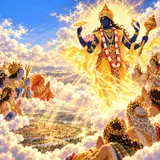
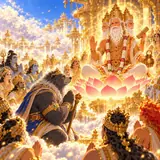
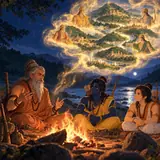
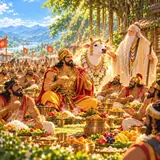
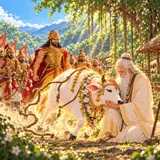
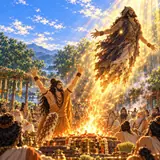
Scene 2 of 2 · Bound to the sacrificial post, Shunahshepa sings the secret hymns, and Indra, pleased, grants him long life.
इमे च गाथे द्वे दिव्ये गायेथा मुनिपुत्रक । अम्बरीषस्य यज्ञेऽस्मिंस्ततः सिद्धिमवाप्स्यसि ॥ २० ॥
“And sing these two divine verses, son of a sage, at this sacrifice of Ambarisha; then you will attain success.”
“और मुनिपुत्र, अंबरीष के इस यज्ञ में ये दो दिव्य मंत्र गाना; तब तुम्हें सिद्धि मिलेगी।”
CommentaryNot scripture “Sing these two divine verses, and you will succeed.” The weapon he gives is prayer.
Scene 2 of 2 · Bound to the sacrificial post, Shunahshepa sings the secret hymns, and Indra, pleased, grants him long life.
शुनःशेपो गृहीत्वा ते द्वे गाथे सुसमाहितः । त्वरया राजसिंहं तमम्बरीषमुवाच ह ॥ २१ ॥
Shunahshepa, receiving the two verses with full attention, said quickly to Ambarisha, the lion among kings:
पूरे ध्यान से वे दो मंत्र ग्रहण करके शुनःशेप ने राजसिंह अंबरीष से जल्दी कहा:
CommentaryNot scripture Shunahshepa receives the verses “with full attention”. He has learned his lesson well.
Scene 2 of 2 · Bound to the sacrificial post, Shunahshepa sings the secret hymns, and Indra, pleased, grants him long life.
राजसिंह महाबुद्धे शीघ्रं गच्छावहे वयम् । निवर्तयस्व राजेन्द्र दीक्षां च समुदाहर ॥ २२ ॥
“Lion among kings, wise one, let us go quickly. Turn back, lord of kings, and announce the consecration.”
“बुद्धिमान राजसिंह, हम जल्दी चलें। राजाधिराज, लौटिए और दीक्षा की घोषणा कीजिए।”
CommentaryNot scripture “Let us go quickly.” The boy now hurries to his own sacrifice, trusting the verses. Faith has replaced fear.
Scene 2 of 2 · Bound to the sacrificial post, Shunahshepa sings the secret hymns, and Indra, pleased, grants him long life.
तद् वाक्यमृषिपुत्रस्य श्रुत्वा हर्षसमन्वितः । जगाम नृपतिः शीघ्रं यज्ञवाटमतन्द्रितः ॥ २३ ॥
Hearing the sage’s son’s words, the king, filled with joy, went quickly and tirelessly to the sacrificial enclosure.
मुनिपुत्र के वचन सुनकर आनंद से भरे राजा बिना थके जल्दी से यज्ञशाला गए।
CommentaryNot scripture The king, joyful, goes to the sacrificial ground.
Scene 2 of 2 · Bound to the sacrificial post, Shunahshepa sings the secret hymns, and Indra, pleased, grants him long life.
सदस्यानुमते राजा पवित्रकृतलक्षणम् । पशुं रक्ताम्बरं कृत्वा यूपे तं समबन्धयत् ॥ २४ ॥
With the consent of the assembly, the king made the victim, marked with sacred signs and dressed in red, and bound him to the post.
सभा की सहमति से राजा ने पवित्र चिह्नों से चिह्नित और लाल वस्त्र पहने बलि-पात्र (शुनःशेप) को यूप से बाँध दिया।
CommentaryNot scripture The boy is marked, dressed in red, and bound to the post. The scene is grim.
Scene 2 of 2 · Bound to the sacrificial post, Shunahshepa sings the secret hymns, and Indra, pleased, grants him long life.
स बद्धो वाग्भिरग्र्याभिरभितुष्टाव वै सुरौ । इन्द्रमिन्द्रानुजं चैव यथावन्मुनिपुत्रकः ॥ २५ ॥
Bound, the sage’s son praised the two gods properly with excellent words: Indra and Indra’s younger brother.
बँधे हुए मुनिपुत्र ने उत्तम वचनों से दो देवताओं, इंद्र और इंद्र के छोटे भाई (विष्णु), की विधिवत स्तुति की।
CommentaryNot scripture Bound, he praises Indra and Vishnu (Indra’s younger brother) with excellent words.
Scene 2 of 2 · Bound to the sacrificial post, Shunahshepa sings the secret hymns, and Indra, pleased, grants him long life.
ततः प्रीतः सहस्राक्षो रहस्यस्तुतितोषितः । दीर्घमायुस्तदा प्रादाच्छुनःशेपाय वासवः ॥ २६ ॥
Then the thousand-eyed Vasava, pleased and gratified by the secret hymn of praise, granted long life to Shunahshepa.
तब उस रहस्यमय स्तुति से प्रसन्न और संतुष्ट होकर सहस्र नेत्रों वाले वासव ने शुनःशेप को दीर्घ आयु दी।
CommentaryNot scripture Indra, pleased by the secret hymn, grants him long life. The boy is saved by prayer. In the Vedic tradition, Shunahshepa is honoured as the seer of several Rig Veda hymns.
Scene 2 of 2 · Bound to the sacrificial post, Shunahshepa sings the secret hymns, and Indra, pleased, grants him long life.
स च राजा नरश्रेष्ठ यज्ञस्य च समाप्तवान् । फलं बहुगुणं राम सहस्राक्षप्रसादजम् ॥ २७ ॥
And the king, best of men, obtained the manifold fruit of the sacrifice, Rama, born of the grace of the thousand-eyed one.
और राम, पुरुषश्रेष्ठ राजा ने सहस्र नेत्रों वाले की कृपा से उत्पन्न यज्ञ का अनेक प्रकार का फल पाया।
CommentaryNot scripture And the king still receives the full fruit of his sacrifice. No one is killed; everyone is blessed. This is the story’s resolution: human sacrifice averted by devotion.
Scene 2 of 2 · Bound to the sacrificial post, Shunahshepa sings the secret hymns, and Indra, pleased, grants him long life.
विश्वामित्रोऽपि धर्मात्मा भूयस्तेपे महातपाः । पुष्करेषु नरश्रेष्ठ दशवर्षशतानि च ॥ २८ ॥
And the righteous Vishvamitra of great austerity practised austerity again at Pushkara for ten hundred years, best of men.
और पुरुषश्रेष्ठ, महातपस्वी धर्मात्मा विश्वामित्र ने पुष्कर में फिर से दस सौ वर्ष तक तप किया।
CommentaryNot scripture Vishvamitra practises austerity at Pushkara for another thousand years. His compassion saved a life; his anger cost him his sons and his merit. He begins again.
Scene 2 of 2 · Bound to the sacrificial post, Shunahshepa sings the secret hymns, and Indra, pleased, grants him long life.
End of sarga 62 Next: sarga 63 · Menaka