Bala Kanda · Sarga 5 of 77 · 23 verses
Ayodhya, the Unconquerable City
The song proper begins. This story was born in the line of the Ikshvaku kings, to whom the whole earth once belonged, the line of Sagara whose sons dug out the ocean.
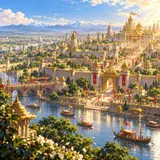
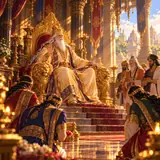
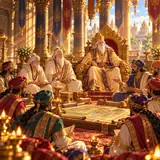
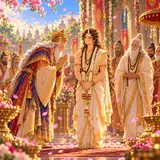
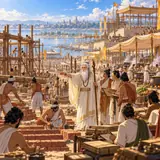
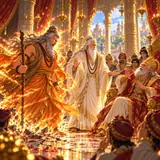
On the bank of the Sarayu lies the rich and happy land of Kosala, and in it Ayodhya, built by Manu himself: twelve yojanas long and three wide, with broad royal roads sprinkled with water and strewn with flowers. It has gates and arches, markets, walls and deep moats, weapons and engines on its towers, palaces like mountains, gardens of mango, music everywhere, merchants from many lands, and warriors so skilled they will not strike a helpless or fleeing enemy. King Dasharatha rules it as Indra rules heaven.
Press › to begin with verse 1.
सर्वा पूर्वमियं येषामासीत् कृत्स्ना वसुंधरा । प्रजापतिमुपादाय नृपाणां जयशालिनाम् ॥ १ ॥
The whole earth once belonged to the kings of this line, victorious kings who go back to Prajapati.
कभी यह पूरी पृथ्वी इसी वंश के राजाओं की थी, उन विजयी राजाओं की जिनकी परंपरा प्रजापति तक जाती है।
Commentary on the whole sarga
Ayodhya, the Unconquerable City 1 min read.
Read the commentary CommentaryNot scripture The twins begin their song with the dynasty. The line goes back to Prajapati, the lord of creatures, and its kings once ruled the whole earth. Indian epics often open with lineage: before you meet a hero, you meet the family that shaped him.
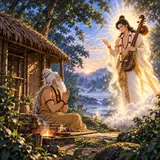
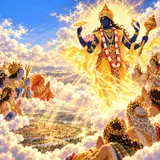
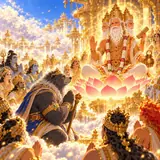
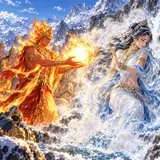
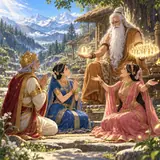
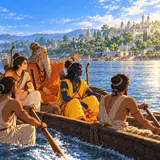
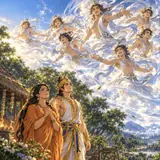
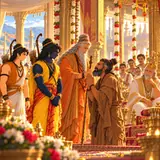
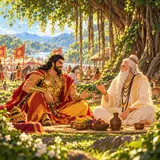
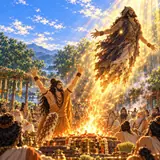
Scene 1 of 2 · Ayodhya on the Sarayu, the unconquerable city built by Manu, where King Dasharatha rules.
येषां स सगरो नाम सागरो येन खानितः । षष्टिपुत्रसहस्राणि यं यान्तं पर्यवारयन् ॥ २ ॥
Among them was the one named Sagara, by whom the ocean was dug, and whom sixty thousand sons surrounded as he went.
उन्हीं में सगर नाम के राजा हुए, जिन्होंने समुद्र खुदवाया, और जिनके साथ चलते समय साठ हज़ार पुत्र उन्हें घेरे रहते थे।
CommentaryNot scripture Sagara is a great ancestor whose story will be told later in this kanda: his sixty thousand sons dug the ocean bed while searching for a lost sacrificial horse. That is why the sea is called sagara , “of Sagara”. This is a seed planted early; the whole tale comes in sargas 38 to 44.
Scene 1 of 2 · Ayodhya on the Sarayu, the unconquerable city built by Manu, where King Dasharatha rules.
इक्ष्वाकूणामिदं तेषां राज्ञां वंशे महात्मनाम् । महदुत्पन्नमाख्यानं रामायणमिति श्रुतम् ॥ ३ ॥
In the line of these great-souled Ikshvaku kings arose this great tale, known as the Ramayana.
इन्हीं महात्मा इक्ष्वाकु राजाओं के वंश में रामायण नाम की यह महान कथा उत्पन्न हुई।
CommentaryNot scripture The Ramayana “arose in this line” (vamshe ). The story belongs to a family, the Ikshvakus, named after their first king. Rama is one of many great kings in this line, and the poem will tell of several of them before he is even born.
Scene 1 of 2 · Ayodhya on the Sarayu, the unconquerable city built by Manu, where King Dasharatha rules.
तदिदं वर्तयिष्यावः सर्वं निखिलमादितः । धर्मकामार्थसहितं श्रोतव्यमनसूयता ॥ ४ ॥
We two will now tell it all, from the very beginning, entire. Full of dharma, love and wealth, it should be heard without envy.
अब हम दोनों इसे आरंभ से, पूरी की पूरी सुनाएँगे। यह धर्म, काम और अर्थ से भरी है, इसे बिना ईर्ष्या के सुनना चाहिए।
CommentaryNot scripture Anasuyaya , “without envy”: the twins ask the audience to listen with an open heart. A story about a good man can provoke resentment in a small mind. To receive it, one must be willing to admire. This is the first instruction to the listener.
Scene 1 of 2 · Ayodhya on the Sarayu, the unconquerable city built by Manu, where King Dasharatha rules.
कोसलो नाम मुदितः स्फीतो जनपदो महान् । निविष्टः सरयूतीरे प्रभूतधनधान्यवान् ॥ ५ ॥
There is a great country named Kosala, happy and prosperous, settled on the bank of the Sarayu, rich in wealth and grain.
सरयू के तट पर बसा कोसल नाम का एक बड़ा देश है, सुखी और समृद्ध, धन और धान्य से भरपूर।
CommentaryNot scripture Kosala, on the banks of the Sarayu river, is the setting. The country is described as happy (mudita ) and prosperous. The Sarayu still flows by modern Ayodhya in Uttar Pradesh, and pilgrims bathe in it today.
Scene 1 of 2 · Ayodhya on the Sarayu, the unconquerable city built by Manu, where King Dasharatha rules.
अयोध्या नाम नगरी तत्रासील्लोकविश्रुता । मनुना मानवेन्द्रेण या पुरी निर्मिता स्वयम् ॥ ६ ॥
In it was a city famed through the world, named Ayodhya, built by Manu himself, the lord of men.
उसमें संसार भर में प्रसिद्ध अयोध्या नाम की नगरी थी, जिसे मनुष्यों के स्वामी स्वयं मनु ने बसाया था।
CommentaryNot scripture Ayodhya was built by Manu, the first man and first king in Hindu tradition. Its name means “the unconquerable”, the city that cannot be fought against (a-yodhya ). The whole sarga will show why.
Scene 1 of 2 · Ayodhya on the Sarayu, the unconquerable city built by Manu, where King Dasharatha rules.
आयता दश च द्वे च योजनानि महापुरी । श्रीमती त्रीणि विस्तीर्णा सुविभक्तमहापथा ॥ ७ ॥
That great city was twelve yojanas long and three wide, splendid, its great roads well laid out,
वह महानगरी बारह योजन लंबी और तीन योजन चौड़ी थी, शोभायमान, जिसके बड़े-बड़े मार्ग सुंदर ढंग से बने थे,
CommentaryNot scripture Twelve yojanas long and three wide: a vast city by any measure. A yojana is often taken as about twelve to fifteen kilometres, though the measure varies. The numbers are epic in scale, describing the grandest city the poet could imagine.
Scene 1 of 2 · Ayodhya on the Sarayu, the unconquerable city built by Manu, where King Dasharatha rules.
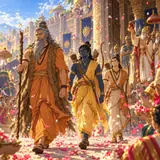
राजमार्गेण महता सुविभक्तेन शोभिता । मुक्तपुष्पावकीर्णेन जलसिक्तेन नित्यशः ॥ ८ ॥
adorned with a great, well-planned royal road, always sprinkled with water and strewn with loose flowers.
और एक बड़े, सुनियोजित राजमार्ग से सजी थी, जिस पर सदा जल छिड़का जाता और फूल बिखेरे जाते थे।
CommentaryNot scripture The royal road is sprinkled with water, which keeps the dust down in the hot plains, and strewn with flowers. Even the practical details show care: a city where someone tends the streets each day.
Scene 1 of 2 · Ayodhya on the Sarayu, the unconquerable city built by Manu, where King Dasharatha rules.
तां तु राजा दशरथो महाराष्ट्रविवर्धनः । पुरीमावासयामास दिवि देवपतिर्यथा ॥ ९ ॥
King Dasharatha, who enlarged his great kingdom, dwelt in that city as the king of the gods dwells in heaven.
अपने महान राज्य को बढ़ाने वाले राजा दशरथ उस नगरी में वैसे ही रहते थे जैसे स्वर्ग में देवराज इंद्र।
CommentaryNot scripture Dasharatha is introduced here for the first time in the poem’s own telling. He lives in Ayodhya “as Indra lives in heaven”. The king of the city is compared to the king of the gods. His name means “ten chariots”, one who can fight in all ten directions.
Scene 1 of 2 · Ayodhya on the Sarayu, the unconquerable city built by Manu, where King Dasharatha rules.
कपाटतोरणवतीं सुविभक्तान्तरापणाम् । सर्वयन्त्रायुधवतीमुषितां सर्वशिल्पिभिः ॥ १० ॥
It had doors and arched gateways and well-ordered markets within, every kind of engine and weapon, and craftsmen of every kind lived there.
उसमें द्वार और तोरण थे, भीतर सुव्यवस्थित बाज़ार थे, हर प्रकार के यंत्र और अस्त्र थे, और हर प्रकार के कारीगर वहाँ रहते थे।
CommentaryNot scripture Gates, arches, markets, engines of war, craftsmen of every kind. Ayodhya is a working city, not only a royal one. Valmiki is interested in how a good city functions: trade, defence, skill.
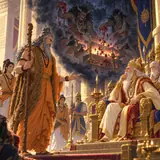
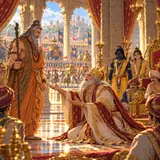
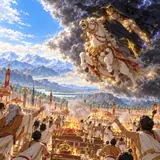
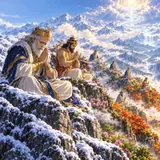
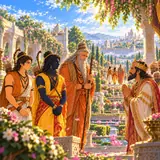
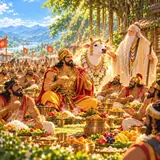
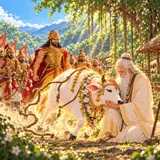
Scene 2 of 2 · Inside Ayodhya: royal roads strewn with flowers, markets, music, archers and sages.
सूतमागधसम्बाधां श्रीमतीमतुलप्रभाम् । उच्चाट्टालध्वजवतीं शतघ्नीशतसंकुलाम् ॥ ११ ॥
It was thronged with bards and heralds, glorious, of matchless splendour, with high towers and banners, and crowded with hundreds of shataghnis.
वह सूतों और मागधों (चारणों) से भरी थी, यशस्वी, अनुपम तेज वाली, ऊँची अटारियों और ध्वजाओं वाली, और सैकड़ों शतघ्नियों से युक्त थी।
CommentaryNot scripture Shataghni means “hundred-killer”, a defensive weapon set on city walls, perhaps a heavy spiked log or a kind of catapult. Its exact form is not known. Next to it, the city has bards and heralds (suta , magadha ) who sing the glory of kings.
Scene 2 of 2 · Inside Ayodhya: royal roads strewn with flowers, markets, music, archers and sages.
वधूनाटकसङ्घैश्च संयुक्तां सर्वतः पुरीम् । उद्यानाम्रवणोपेतां महतीं सालमेखलाम् ॥ १२ ॥
Everywhere in the city were troupes of women dancers and actors; it had gardens and mango groves, and a great girdle of sala trees.
नगरी में सब जगह नर्तकियों और नटों की मंडलियाँ थीं; उसमें बाग़ और आम के उपवन थे, और साल वृक्षों की एक बड़ी मेखला थी।
CommentaryNot scripture Dancers, actors, gardens, mango groves, a great belt of sala trees around the walls. The city has beauty and culture as well as power. A good kingdom, for Valmiki, protects not only its people’s safety but also their joy.
Scene 2 of 2 · Inside Ayodhya: royal roads strewn with flowers, markets, music, archers and sages.
दुर्गगम्भीरपरिखां दुर्गामन्यैर्दुरासदाम् । वाजिवारणसम्पूर्णां गोभिरुष्ट्रैः खरैस्तथा ॥ १३ ॥
Its moats were deep and hard to cross, the city impregnable to others; it was full of horses and elephants, cattle, camels and donkeys.
उसकी खाइयाँ गहरी और पार करने में कठिन थीं, नगरी दूसरों के लिए अजेय थी; वह घोड़ों, हाथियों, गायों, ऊँटों और गधों से भरी थी।
CommentaryNot scripture Deep moats, hard to cross: this is why the city is a-yodhya , unconquerable. Then a lively list of animals: horses, elephants, cattle, camels, donkeys. The city is full of life of every kind.
Scene 2 of 2 · Inside Ayodhya: royal roads strewn with flowers, markets, music, archers and sages.
सामन्तराजसङ्घैश्च बलिकर्मभिरावृताम् । नानादेशनिवासैश्च वणिग्भिरुपशोभिताम् ॥ १४ ॥
It was surrounded by hosts of vassal kings bringing tribute, and adorned with merchants who lived in many lands.
कर लेकर आने वाले सामंत राजाओं के समूह उसे घेरे रहते थे, और अनेक देशों में रहने वाले व्यापारी उसकी शोभा बढ़ाते थे।
CommentaryNot scripture Vassal kings bring tribute, and merchants come from many lands. Ayodhya is a centre of a wider world. Its wealth comes from trade and respect, not only from conquest.
Scene 2 of 2 · Inside Ayodhya: royal roads strewn with flowers, markets, music, archers and sages.
प्रासादै रत्नविकृतैः पर्वतैरिव शोभिताम् । कूटागारैश्च सम्पूर्णामिन्द्रस्येवामरावतीम् ॥ १५ ॥
It shone with jewel-wrought palaces like mountains, and was full of many-storeyed halls, like Indra’s Amaravati.
वह पर्वतों जैसे रत्नजड़ित महलों से चमकती थी, और अनेक मंज़िलों वाले भवनों से भरी थी, इंद्र की अमरावती की तरह।
CommentaryNot scripture Amaravati is Indra’s capital in heaven. Ayodhya is its earthly mirror, with palaces “like mountains” studded with jewels. The comparisons with heaven keep coming: this city is the best that earth can offer.
Scene 2 of 2 · Inside Ayodhya: royal roads strewn with flowers, markets, music, archers and sages.
चित्रामष्टापदाकारां वरनारीगणायुताम् । सर्वरत्नसमाकीर्णां विमानगृहशोभिताम् ॥ १६ ॥
Beautiful, laid out like a chessboard, full of lovely women, strewn with every jewel, adorned with mansions like celestial chariots,
सुंदर, शतरंज की बिसात की तरह बसी हुई, सुंदर स्त्रियों से भरी, हर प्रकार के रत्नों से जड़ी, दिव्य विमानों जैसे भवनों से सजी,
CommentaryNot scripture Ashtapada-akara : laid out like a chessboard (literally, a board of eight squares on a side). Ancient Indian cities were planned on grids. Valmiki admires order as much as beauty. Mansions “like celestial chariots” (vimana ) add the touch of heaven again.
Scene 2 of 2 · Inside Ayodhya: royal roads strewn with flowers, markets, music, archers and sages.
गृहगाढामविच्छिद्रां समभूमौ निवेशिताम् । शालितण्डुलसम्पूर्णामिक्षुकाण्डरसोदकाम् ॥ १७ ॥
dense with houses, without a gap, built on level ground, full of rice and grain, its water sweet as sugarcane juice,
घने बसे घरों वाली, बिना किसी खाली जगह के, समतल भूमि पर बनी, चावल और धान्य से भरी, जिसका जल गन्ने के रस जैसा मीठा था,
CommentaryNot scripture Water “sweet as sugarcane juice” (ikshu-rasa ): a fitting detail, since the dynasty is the Ikshvaku line, and ikshu means sugarcane. Houses close together, no empty land: a full and thriving city.
Scene 2 of 2 · Inside Ayodhya: royal roads strewn with flowers, markets, music, archers and sages.
दुन्दुभीभिर्मृदङ्गैश्च वीणाभिः पणवैस्तथा । नादितां भृशमत्यर्थं पृथिव्यां तामनुत्तमाम् ॥ १८ ॥
resounding loudly with drums, mridangas, vinas and panavas: it was the finest city on earth,
दुंदुभियों, मृदंगों, वीणाओं और पणवों की ऊँची ध्वनि से गूँजती हुई: वह पृथ्वी की सबसे उत्तम नगरी थी,
CommentaryNot scripture The sounds of the city: drums (dundubhi ), mridangas, vinas and panavas (small drums). Ayodhya is a city of music. Remember how the twins themselves sing to the vina: the poem and the city share the same sound.
Scene 2 of 2 · Inside Ayodhya: royal roads strewn with flowers, markets, music, archers and sages.
विमानमिव सिद्धानां तपसाधिगतं दिवि । सुनिवेशितवेश्मान्तां नरोत्तमसमावृताम् ॥ १९ ॥
like a celestial chariot of the siddhas won by austerity in heaven, its houses well built, filled with the best of men.
तपस्या से स्वर्ग में पाए गए सिद्धों के दिव्य विमान जैसी, जिसके घर सुंदर बने थे और श्रेष्ठ पुरुषों से भरे थे।
CommentaryNot scripture The city is like a vimana, a celestial chariot that siddhas , perfected beings, earn by their austerity. The comparison suggests that Ayodhya itself is a reward of merit, a place earned by good deeds.
Scene 2 of 2 · Inside Ayodhya: royal roads strewn with flowers, markets, music, archers and sages.
ये च बाणैर्न विध्यन्ति विविक्तमपरापरम् । शब्दवेध्यं च विततं लघुहस्ता विशारदाः ॥ २० ॥
Its archers were nimble-handed and skilled; they would not pierce with their arrows anyone cut off and alone, or one fleeing, though they could hit by sound alone;
उसके धनुर्धर फुर्तीले हाथों वाले और कुशल थे; वे शब्द सुनकर ही निशाना लगा सकते थे, फिर भी अकेले पड़ गए या भागते हुए किसी को बाणों से नहीं बेधते थे;
CommentaryNot scripture A beautiful rule of war. Ayodhya’s archers can hit a target by sound alone (shabda-vedhin ), yet they will never shoot a man who is alone and cut off, or one who is running away. Skill is bound by ethics. Remember this verse: in the Ayodhya Kanda, a sound-shot will bring tragedy on this very king.
Scene 2 of 2 · Inside Ayodhya: royal roads strewn with flowers, markets, music, archers and sages.
सिंहव्याघ्रवराहाणां मत्तानां नदतां वने । हन्तारो निशितैः शस्त्रैर्बलाद् बाहुबलैरपि ॥ २१ ॥
they killed lions, tigers and boars roaring in their rut in the forest, with sharp weapons or by the strength of their own arms.
वे वन में मद से गरजते सिंहों, बाघों और सूअरों को तेज़ शस्त्रों से या अपनी भुजाओं के बल से मार देते थे।
CommentaryNot scripture The warriors are brave in the forest, fighting wild animals with weapons or bare hands. Their courage protects the farms and villages around the city. Strength in Valmiki’s world is always strength in service.
Scene 2 of 2 · Inside Ayodhya: royal roads strewn with flowers, markets, music, archers and sages.
तादृशानां सहस्रैस्तामभिपूर्णां महारथैः । पुरीमावासयामास राजा दशरथस्तदा ॥ २२ ॥
King Dasharatha peopled that city with thousands of such great chariot-warriors.
राजा दशरथ ने उस नगरी को ऐसे हज़ारों महारथियों से बसाया था।
CommentaryNot scripture Maha-ratha : a “great chariot-warrior”, one able to fight thousands alone. Dasharatha fills his city with thousands of them. A king is measured by the quality of the people he gathers.
Scene 2 of 2 · Inside Ayodhya: royal roads strewn with flowers, markets, music, archers and sages.
तामग्निमद्भिर्गुणवद्भिरावृतां द्विजोत्तमैर्वेदषडङ्गपारगैः । सहस्रदैः सत्यरतैर्महात्मभि- र्महर्षिकल्पैर्ऋषिभिश्च केवलैः ॥ २३ ॥
It was filled with the best of the twice-born, keepers of the sacred fires, virtuous, masters of the Vedas and their six limbs, givers of thousands, devoted to truth, great-souled, like great seers, and with true seers as well.
वह श्रेष्ठ ब्राह्मणों से भरी थी, जो अग्निहोत्री, गुणवान, वेदों और छहों वेदांगों के पारंगत, हज़ारों का दान देने वाले, सत्य में लगे, महात्मा और महर्षियों जैसे थे, और सच्चे ऋषि भी वहाँ थे।
CommentaryNot scripture The sarga ends with the learned: keepers of the sacred fires, masters of the Vedas and their six limbs (vedanga ), generous and truthful. The city’s crown is its wisdom. Next comes a picture of the king and his people in the following sarga.
Scene 2 of 2 · Inside Ayodhya: royal roads strewn with flowers, markets, music, archers and sages.