Bala Kanda · Sarga 8 of 77 · 24 verses
The King Decides on the Horse Sacrifice
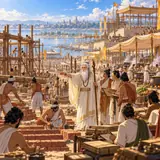
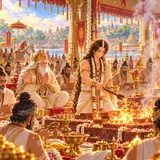
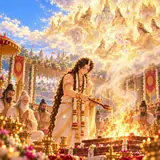
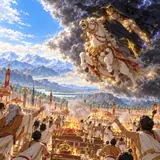
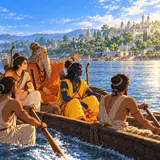
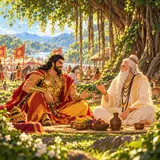
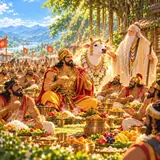
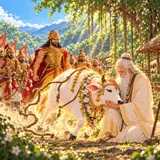
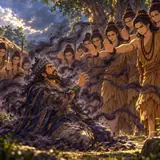
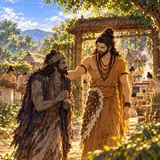
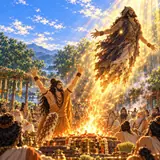
For all his greatness, Dasharatha has no son to continue his line, and it torments him. He resolves to perform the ashvamedha, the horse sacrifice, to obtain sons, and calls his priests through Sumantra. Vasishtha and the others approve: let the materials be gathered, let the horse be released, let the sacrificial ground be prepared on the north bank of the Sarayu. “You will certainly have the sons you desire.”
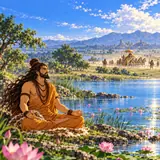
Overjoyed, the king orders it all, warning that the rite must be performed without the smallest fault, since learned brahmarakshasas look for flaws and a careless sacrifice destroys the one who offers it. Then he goes to his queens and tells them to undertake the consecration. Their faces light up like lotuses when winter ends.
Press › to begin with verse 1.
तस्य चैवं प्रभावस्य धर्मज्ञस्य महात्मनः । सुतार्थं तप्यमानस्य नासीद् वंशकरः सुतः ॥ १ ॥
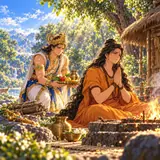
Yet that great-souled king who knew dharma, mighty as he was, had no son to continue his line, and grieved for want of one.
फिर भी, धर्म के ज्ञाता और इतने बलवान उन महात्मा राजा का वंश चलाने वाला कोई पुत्र नहीं था, और वे पुत्र की कमी से दुखी रहते थे।
Commentary on the whole sarga
The King Decides on the Horse Sacrifice 1 min read.
Read the commentary CommentaryNot scripture After three sargas of a perfect kingdom, a single word turns everything: “yet” (tu ). The king who has everything lacks one thing, a son to continue the line (vamsha-kara ). All his wealth, wisdom and glory cannot fill that absence. The Ramayana begins, as so many family stories do, with longing for a child.
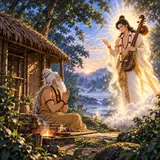
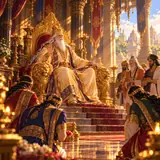
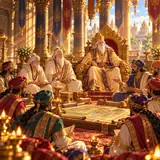
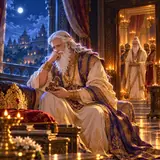
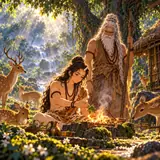
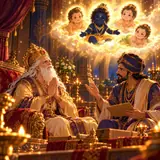
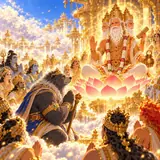
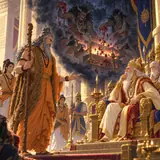
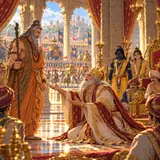
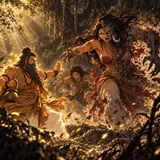
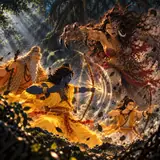
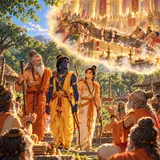
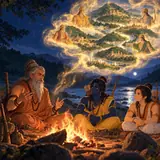
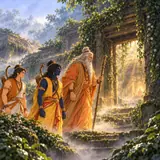
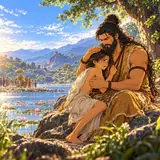
Scene 1 of 2 · The childless king, alone with his grief, resolves on the horse sacrifice and asks his priests for their counsel.
चिन्तयानस्य तस्यैवं बुद्धिरासीन्महात्मनः । सुतार्थं वाजिमेधेन किमर्थं न यजाम्यहम् ॥ २ ॥
As the great-souled one pondered, this thought came to him: “Why do I not perform the horse sacrifice for the sake of a son?”
सोचते-सोचते उन महात्मा के मन में यह विचार आया: “मैं पुत्र के लिए अश्वमेध यज्ञ क्यों न करूँ?”
CommentaryNot scripture The idea comes to him as he broods: the ashvamedha , the horse sacrifice. It was the grandest of royal rites. A consecrated horse wanders freely for a year, followed by an army; any king who stops it must fight. Then the horse is sacrificed. Dasharatha will offer the greatest rite he knows for the smallest, dearest wish.
Scene 1 of 2 · The childless king, alone with his grief, resolves on the horse sacrifice and asks his priests for their counsel.
स निश्चितां मतिं कृत्वा यष्टव्यमिति बुद्धिमान् । मन्त्रिभिः सह धर्मात्मा सर्वैरेव कृतात्मभिः ॥ ३ ॥
The wise and righteous king made the firm resolve, “I must sacrifice,” together with all his ministers of disciplined mind.
बुद्धिमान और धर्मात्मा राजा ने अपने संयमी मंत्रियों के साथ मिलकर दृढ़ निश्चय किया: “मुझे यज्ञ करना है।”
CommentaryNot scripture Buddhim cakre , “he made the resolve”, and he makes it “together with his ministers”. Even a private grief becomes a matter of counsel. The good king does not act alone, as the last sarga showed.
Scene 1 of 2 · The childless king, alone with his grief, resolves on the horse sacrifice and asks his priests for their counsel.
ततोऽब्रवीन्महातेजाः सुमन्त्रं मन्त्रिसत्तम । शीघ्रमानय मे सर्वान् गुरूंस्तान् सपुरोहितान् ॥ ४ ॥
Then the splendid king said to Sumantra: “Best of counsellors, quickly bring me all my teachers, with the priests.”
तब तेजस्वी राजा ने सुमंत्र से कहा: “मंत्रियों में श्रेष्ठ, मेरे सब गुरुओं को पुरोहितों सहित जल्दी ले आओ।”
CommentaryNot scripture Sumantra, the eighth minister and the one who knows the business of state, is sent to call the teachers. He will be close to the family through the whole story, driving Rama into exile and returning with the empty chariot. Here he begins as a messenger of hope.
Scene 1 of 2 · The childless king, alone with his grief, resolves on the horse sacrifice and asks his priests for their counsel.
ततः सुमन्त्रस्त्वरितं गत्वा त्वरितविक्रमः । समानयत् स तान् सर्वान् समस्तान् वेदपारगान् ॥ ५ ॥
Sumantra went quickly, swift of foot, and brought all of them, masters of the Vedas:
तेज़ चलने वाले सुमंत्र जल्दी गए और वेदों के पारंगत उन सबको ले आए:
CommentaryNot scripture “Swift of foot” (shighra-gamin ): Sumantra hurries. A small detail, but it shows the urgency. Everyone in the palace knows how much this matters to the king.
Scene 1 of 2 · The childless king, alone with his grief, resolves on the horse sacrifice and asks his priests for their counsel.
सुयज्ञं वामदेवं च जाबालिमथ काश्यपम् । पुरोहितं वशिष्ठं च ये चाप्यन्ये द्विजोत्तमाः ॥ ६ ॥
Suyajna, Vamadeva, Jabali and Kashyapa, the family priest Vasishtha, and the other excellent brahmanas.
सुयज्ञ, वामदेव, जाबालि और काश्यप, कुलपुरोहित वसिष्ठ, और दूसरे श्रेष्ठ ब्राह्मण।
CommentaryNot scripture The same names we met in sarga 7: Suyajna, Vamadeva, Jabali, Kashyapa and Vasishtha. Valmiki repeats them so we feel the continuity. These are the people who will guide the dynasty through everything to come.
Scene 1 of 2 · The childless king, alone with his grief, resolves on the horse sacrifice and asks his priests for their counsel.
तान् पूजयित्वा धर्मात्मा राजा दशरथस्तदा । इदं धर्मार्थसहितं श्लक्ष्णं वचनमब्रवीत् ॥ ७ ॥
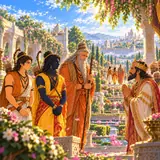
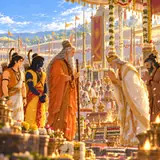
Honouring them, the righteous King Dasharatha spoke these gentle words, full of dharma and sense:
उनका सम्मान करके धर्मात्मा राजा दशरथ ने धर्म और अर्थ से भरे ये कोमल वचन कहे:
CommentaryNot scripture He honours them first, then speaks “gentle words, full of dharma and sense” (shlakshnam dharma-artha-sahitam ). Even a king asks his teachers humbly. Courtesy is not a decoration on power; it is part of what makes power just.
Scene 1 of 2 · The childless king, alone with his grief, resolves on the horse sacrifice and asks his priests for their counsel.
मम लालप्यमानस्य सुतार्थं नास्ति वै सुखम् । तदर्थं हयमेधेन यक्ष्यामीति मतिर्मम ॥ ८ ॥
“I keep lamenting for a son and have no happiness. For that reason I have resolved to perform the horse sacrifice.
“मैं पुत्र के लिए विलाप करता रहता हूँ और मुझे कोई सुख नहीं है। इसलिए मैंने अश्वमेध यज्ञ करने का निश्चय किया है।
CommentaryNot scripture Sutartham : “for the sake of a son”. Dasharatha speaks openly of his sorrow: “I have no happiness”. A great king admits his pain to his teachers. His honesty here is touching.
Scene 1 of 2 · The childless king, alone with his grief, resolves on the horse sacrifice and asks his priests for their counsel.
तदहं यष्टुमिच्छामि शास्त्रदृष्टेन कर्मणा । कथं प्राप्स्याम्यहं कामं बुद्धिरत्रविचिन्त्यताम् ॥ ९ ॥
“I wish to perform it by the rite seen in the shastras. How shall I gain my wish? Consider this.”
“मैं इसे शास्त्रों में बताई विधि से करना चाहता हूँ। मेरी इच्छा कैसे पूरी होगी? इस पर विचार कीजिए।”
CommentaryNot scripture He wants to perform the rite “as seen in the shastras”, the sacred texts. He does not want to improvise; he asks them to consider how. A wish, however deep, must be carried out in the right way.
Scene 1 of 2 · The childless king, alone with his grief, resolves on the horse sacrifice and asks his priests for their counsel.
ततः साध्विति तद्वाक्यं ब्राह्मणाः प्रत्यपूजयन् । वसिष्ठप्रमुखाः सर्वे पार्थिवस्य मुखेरितम् ॥ १० ॥
Then the brahmanas, led by Vasishtha, all honoured with “Well said!” the words that came from the king’s mouth,
तब वसिष्ठ आदि सब ब्राह्मणों ने राजा के मुख से निकले वचनों की “बहुत अच्छा!” कहकर सराहना की,
CommentaryNot scripture Sadhu , “well said”: the priests approve. They welcome his decision warmly. Vasishtha leads them, as he will in every great family moment, from the naming of the princes to the coronation.
Scene 1 of 2 · The childless king, alone with his grief, resolves on the horse sacrifice and asks his priests for their counsel.
ऊचुश्च परमप्रीताः सर्वे दशरथं वचः । सम्भाराः सम्भ्रियन्तां ते तुरगश्च विमुच्यताम् ॥ ११ ॥
and all of them, greatly pleased, said to Dasharatha: “Let the materials be gathered and the horse be released.
और सबने अत्यंत प्रसन्न होकर दशरथ से कहा: “सामग्री इकट्ठी की जाए और घोड़ा छोड़ा जाए।
CommentaryNot scripture Two commands begin the rite: gather the materials (sambhara ) and release the horse. The horse will wander for a full year before the sacrifice itself, which is why the next sargas move slowly.
Scene 1 of 2 · The childless king, alone with his grief, resolves on the horse sacrifice and asks his priests for their counsel.
सरय्वाश्चोत्तरे तीरे यज्ञभूमिर्विधीयताम् । सर्वथा प्राप्स्यसे पुत्रानभिप्रेतांश्च पार्थिव ॥ १२ ॥
यस्य ते धार्मिकी बुद्धिरियं पुत्रार्थमागता । ततस्तुष्टोऽभवद् राजा श्रुत्वैतद् द्विजभाषितम् ॥ १३ ॥
“Let the ground for the sacrifice be made ready on the north bank of the Sarayu. King, you will surely gain the sons you desire, since this righteous resolve has come to you for the sake of a son.” Hearing these words of the brahmanas, the king was pleased.
“सरयू के उत्तरी तट पर यज्ञभूमि तैयार की जाए। राजन, आप अवश्य ही मनचाहे पुत्र पाएँगे, क्योंकि पुत्र के लिए आपके मन में यह धर्ममय संकल्प आया है।” ब्राह्मणों के ये वचन सुनकर राजा प्रसन्न हुए।
CommentaryNot scripture The priests promise: “You will surely gain the sons you desire”. Note the plural, putran , sons. The king will have four. They also choose the place: the north bank of the Sarayu, near Ayodhya. The king’s joy begins with this promise.
Scene 1 of 2 · The childless king, alone with his grief, resolves on the horse sacrifice and asks his priests for their counsel.
अमात्यानब्रवीद् राजा हर्षव्याकुललोचनः । सम्भाराः सम्भ्रियन्तां मे गुरूणां वचनादिह ॥ १४ ॥
With eyes brimming with joy, the king said to his ministers: “Let the materials be gathered for me, at the word of my teachers.
आनंद से भरी आँखों वाले राजा ने अपने मंत्रियों से कहा: “मेरे गुरुओं के कहे अनुसार मेरे लिए सामग्री इकट्ठी की जाए।
CommentaryNot scripture “Eyes brimming with joy” (harsha-paryakula-ikshana ): the king who was grieving a few verses ago now has tears of happiness. Hope itself changes his face. He passes the priests’ instructions on to his ministers.
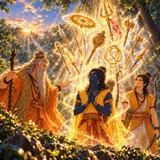
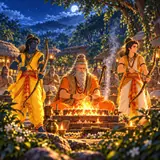
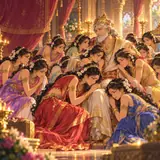
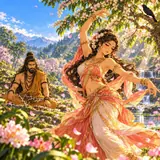
Scene 2 of 2 · Dasharatha tells his queens, and their faces open like lotuses at the end of winter.
समर्थाधिष्ठितश्चाश्वः सोपाध्यायो विमुच्यताम् । सरय्वाश्चोत्तरे तीरे यज्ञभूमिर्विधीयताम् ॥ १५ ॥
“Let the horse be released, guarded by capable men and accompanied by a priest. Let the ground for the sacrifice be prepared on the north bank of the Sarayu.
“समर्थ पुरुषों की रक्षा में और एक पुरोहित के साथ घोड़ा छोड़ा जाए। सरयू के उत्तरी तट पर यज्ञभूमि तैयार की जाए।
CommentaryNot scripture The horse must be guarded by capable warriors and accompanied by a priest. It wanders through other kingdoms, and any king who stops it challenges Ayodhya. In practice, the ashvamedha was a test of a king’s supremacy.
Scene 2 of 2 · Dasharatha tells his queens, and their faces open like lotuses at the end of winter.
शान्तयश्चापि वर्धन्तां यथाकल्पं यथाविधि । शक्यः प्राप्तुमयं यज्ञः सर्वेणापि महीक्षिता ॥ १६ ॥
“Let the rites of peace be performed as laid down, by the rule. This sacrifice can be performed by any lord of the earth,
“शांति के कर्म विधि के अनुसार, नियम से किए जाएँ। यह यज्ञ कोई भी पृथ्वीपति कर सकता है,
CommentaryNot scripture Shanti-karma , rites of peace, protect the sacrifice from obstacles. Dasharatha also notes that any king can perform this rite. What matters is not who performs it, but how carefully.
Scene 2 of 2 · Dasharatha tells his queens, and their faces open like lotuses at the end of winter.
नापराधो भवेत् कष्टो यद्यस्मिन् क्रतुसत्तमे । च्छिद्रं हि मृगयन्ते स्म विद्वांसो ब्रह्मराक्षसाः ॥ १७ ॥
“provided no grievous fault occurs in this best of rites. For learned brahmarakshasas seek out flaws.
“बशर्ते इस श्रेष्ठ यज्ञ में कोई बड़ी भूल न हो। क्योंकि विद्वान ब्रह्मराक्षस दोष खोजते रहते हैं।
CommentaryNot scripture A real fear: brahmarakshasas , learned demons (the spirits of brahmanas fallen into evil), watch for any mistake in a sacrifice so they can spoil it. A flawed rite brings harm, not blessing. The king is anxious that everything be done perfectly.
Scene 2 of 2 · Dasharatha tells his queens, and their faces open like lotuses at the end of winter.
विधिहीनस्य यज्ञस्य सद्यः कर्ता विनश्यति । तद्यथा विधिपूर्वं मे क्रतुरेष समाप्यते ॥ १८ ॥
तथा विधानं क्रियतां समर्थाः साधनेष्विति । तथेति चाब्रुवन् सर्वे मंत्रिणः प्रतिपूजिताः ॥ १९ ॥
“The performer of a sacrifice that lacks the rite perishes at once. So let it be arranged that this sacrifice of mine is completed according to the rules; you are capable of the means.” All the ministers, honoured by him, said: “So be it.”
“विधि से रहित यज्ञ करने वाला तुरंत नष्ट हो जाता है। इसलिए ऐसी व्यवस्था की जाए कि मेरा यह यज्ञ नियमों के अनुसार पूरा हो; आप लोग इसके उपाय करने में समर्थ हैं।” उनसे सम्मान पाकर सब मंत्रियों ने कहा: “ऐसा ही होगा।”
CommentaryNot scripture “The performer of a flawed sacrifice perishes at once.” This is the seriousness of Vedic ritual: precision is everything. Dasharatha trusts his ministers to manage it: “you are capable of the means”. They answer simply: tatha , “so be it”.
Scene 2 of 2 · Dasharatha tells his queens, and their faces open like lotuses at the end of winter.
पार्थिवेन्द्रस्य तद् वाक्यं यथापूर्वं निशम्य ते । तथा द्विजास्ते धर्मज्ञा वर्धयन्तो नृपोत्तमम् ॥ २० ॥
Hearing the words of the lord of kings, the brahmanas, knowers of dharma, wished the best of kings well as before,
राजाधिराज के वचन सुनकर धर्म के ज्ञाता ब्राह्मणों ने पहले की तरह श्रेष्ठ राजा को आशीर्वाद दिया,
CommentaryNot scripture The brahmanas bless the king again. The scene is a model of a harmonious court: king, priests and ministers all of one mind, all moving toward the same good.
Scene 2 of 2 · Dasharatha tells his queens, and their faces open like lotuses at the end of winter.
अनुज्ञातास्ततः सर्वे पुनर्जग्मुर्यथागतम् । विसर्जयित्वा तान् विप्रान् सचिवानिदमब्रवीत् ॥ २१ ॥
and, given leave, they all went back as they had come. Having dismissed the brahmanas, he said to his counsellors:
और अनुमति पाकर वे सब जैसे आए थे वैसे ही लौट गए। ब्राह्मणों को विदा करके राजा ने अपने सलाहकारों से कहा:
CommentaryNot scripture The priests leave “as they had come”. The king then turns to his counsellors. The pace of the sarga is calm and orderly, like the court it describes.
Scene 2 of 2 · Dasharatha tells his queens, and their faces open like lotuses at the end of winter.
ऋत्विग्भिरुपसंदिष्टो यथावत् क्रतुराप्यताम् । इत्युक्त्वा नृपशार्दूलः सचिवान् समुपस्थितान् ॥ २२ ॥
विसर्जयित्वा स्वं वेश्म प्रविवेश महामतिः । ततः स गत्वा ताः पत्नीर्नरेन्द्रो हृदयंगमाः ॥ २३ ॥
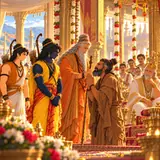
“Let the sacrifice be carried out properly, as the priests direct.” Saying this to the counsellors present, the tiger among kings dismissed them and, wise as he was, entered his own palace. Then the lord of men went to his beloved wives
“पुरोहितों के निर्देश के अनुसार यज्ञ ठीक से किया जाए।” उपस्थित सलाहकारों से यह कहकर राजाओं में सिंह जैसे उन बुद्धिमान राजा ने उन्हें विदा किया और अपने महल में प्रवेश किया। तब मनुष्यों के स्वामी अपनी प्रिय रानियों के पास गए
CommentaryNot scripture The king’s work in the hall is done, and he goes to the inner palace, to his “beloved wives” (priyah patnih ). The great public decision is complete; now comes the private joy. Valmiki moves us from the court to the home.
Scene 2 of 2 · Dasharatha tells his queens, and their faces open like lotuses at the end of winter.
उवाच दीक्षां विशत यक्ष्येऽहं सुतकारणात् । तासां तेनातिकान्तेन वचनेन सुवर्चसाम् । मुखपद्मान्यशोभन्त पद्मानीव हिमात्यये ॥ २४ ॥
and said: “Undertake the consecration; I will sacrifice for a son.” At those very welcome words, the faces of the radiant queens shone like lotuses at the end of winter.
और बोले: “दीक्षा ग्रहण करो; मैं पुत्र के लिए यज्ञ करूँगा।” उन अत्यंत प्रिय वचनों को सुनकर तेजस्वी रानियों के मुख वैसे ही खिल उठे जैसे शिशिर ऋतु के अंत में कमल।
CommentaryNot scripture The most beautiful image in the sarga: the queens’ faces shine “like lotuses at the end of winter” (padmaniva himatyaye ), when the cold lifts and the flowers open again. Their long sorrow has been a winter. Now spring is coming. Diksha , the consecration, means they will share in the rite as the king’s partners.
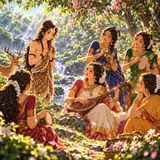
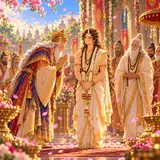
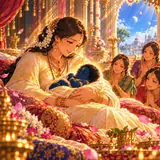
Scene 2 of 2 · Dasharatha tells his queens, and their faces open like lotuses at the end of winter.