Bala Kanda · Sarga 11 of 77 · 31 verses
Dasharatha Brings Rishyashringa to Ayodhya
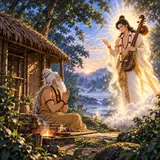
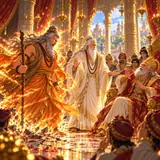
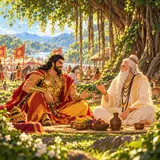
Sumantra finishes Sanatkumara’s prophecy: a righteous king named Dasharatha will be born in the Ikshvaku line and be a friend of Romapada, whose daughter is Shanta. Dasharatha will go to him and say, “I am childless; let Shanta’s husband perform my sacrifice.” Romapada will agree, and four sons of boundless valour will be born to Dasharatha. “So go yourself, great king, with your army, and bring him with honour.”
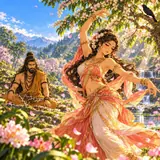
Delighted, and with Vasishtha’s consent, Dasharatha travels with his queens and ministers to Anga. He finds Rishyashringa blazing like fire beside Romapada, who tells the young sage of their friendship. After seven or eight days Dasharatha asks that Shanta and her husband come to Ayodhya for a great undertaking. Romapada agrees, the two kings embrace, and Dasharatha returns to a city decorated, perfumed and sprinkled for his arrival, bringing the sage in to the sound of conches and drums. The women of the palace rejoice to see Shanta.
Press › to begin with verse 1.
भूय एव हि राजेन्द्र शृणु मे वचनं हितम् । यथा स देवप्रवरः कथयामास बुद्धिमान् ॥ १ ॥
“Hear, lord of kings, my words for your good once more, as that best of gods, the wise one, told them:
“राजाधिराज, आपके हित की मेरी बात फिर से सुनिए, जैसी उन बुद्धिमान देवश्रेष्ठ ने कही थी:
Commentary on the whole sarga
Dasharatha Brings Rishyashringa to Ayodhya 1 min read.
Read the commentary CommentaryNot scripture Sumantra continues the prophecy. He calls Sanatkumara “best of gods” (deva-pravara ), a mark of honour for the eternal sage. What follows is history told in the future tense: things that had been foretold long before they happened.
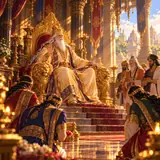
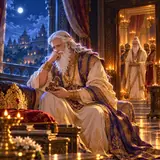
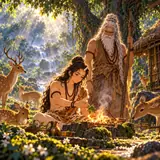
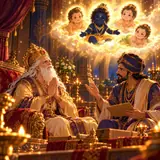
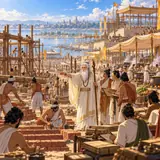
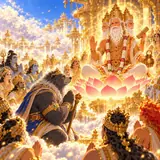
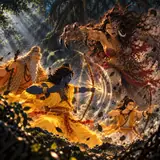
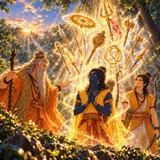
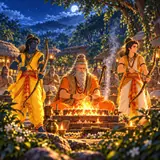
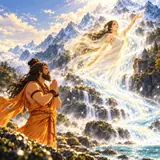
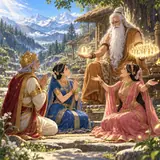
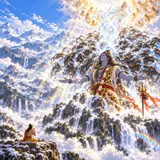
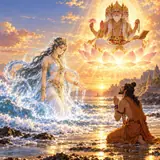
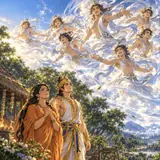
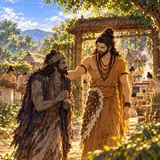
Scene 1 of 3 · Sumantra finishes the old prophecy: Dasharatha will have four sons of boundless valour.
इक्ष्वाकूणां कुले जातो भविष्यति सुधार्मिकः । नाम्ना दशरथो राजा श्रीमान् सत्यप्रतिश्रवः ॥ २ ॥
“’In the line of the Ikshvakus will be born a most righteous king named Dasharatha, glorious and true to his promise.
“’इक्ष्वाकु वंश में दशरथ नाम के अत्यंत धर्मात्मा राजा जन्म लेंगे, जो यशस्वी और सत्यप्रतिज्ञ होंगे।
CommentaryNot scripture The prophecy names Dasharatha himself, long before his birth. Imagine hearing your own name in an ancient prophecy. And the qualities named are the ones we already know: righteous, glorious, true to his promise.
Scene 1 of 3 · Sumantra finishes the old prophecy: Dasharatha will have four sons of boundless valour.
अङ्गराजेन सख्यं च तस्य राज्ञो भविष्यति । कन्या चास्य महाभागा शान्ता नाम भविष्यति ॥ ३ ॥
“’That king will have friendship with the king of Anga, whose daughter, most fortunate, will be named Shanta.
“’उस राजा की अंगराज से मित्रता होगी, जिनकी अत्यंत सौभाग्यशाली पुत्री का नाम शांता होगा।
CommentaryNot scripture Dasharatha’s friendship with the king of Anga is part of the plan. Friendship between kings is a recurring theme of the Ramayana, from this alliance to Rama’s friendship with Sugriva and Vibhishana.
Scene 1 of 3 · Sumantra finishes the old prophecy: Dasharatha will have four sons of boundless valour.
पुत्रस्त्वङ्गस्य राज्ञस्तु रोमपाद इति श्रुतः । तं स राजा दशरथो गमिष्यति महायशाः ॥ ४ ॥
अनपत्योऽस्मि धर्मात्मञ्छान्ताभर्ता मम क्रतुम् । आहरेत त्वयाज्ञप्तः संतानार्थं कुलस्य च ॥ ५ ॥
“’The son of the Anga king will be known as Romapada. The greatly renowned King Dasharatha will go to him and say: “I am childless, righteous one. At your bidding, let Shanta’s husband perform a sacrifice for me, for the continuance of my line.”
“’अंगराज का पुत्र रोमपाद नाम से प्रसिद्ध होगा। महायशस्वी राजा दशरथ उसके पास जाकर कहेंगे: “धर्मात्मा, मैं संतानहीन हूँ। आपकी आज्ञा से शांता के पति मेरे वंश को चलाने के लिए मेरा यज्ञ करवाएँ।”
CommentaryNot scripture In the prophecy, Dasharatha speaks humbly: “I am childless” (aputro’smi ). He asks a fellow king for help. There is no shame here, only honesty. The great king of Ayodhya goes to ask a favour in person.
Scene 1 of 3 · Sumantra finishes the old prophecy: Dasharatha will have four sons of boundless valour.
श्रुत्वा राज्ञोऽथ तद् वाक्यं मनसा स विचिन्त्य च । प्रदास्यते पुत्रवन्तं शान्ता भर्तारमात्मवान् ॥ ६ ॥
“’Hearing the king’s words and reflecting in his mind, the self-possessed one will give Shanta’s husband, who brings sons.
“’राजा के वचन सुनकर और मन में विचार करके वह संयमी राजा पुत्र दिलाने वाले शांता के पति को भेज देंगे।
CommentaryNot scripture Putra-dam , “who brings sons”: Rishyashringa is known by this power. Romapada thinks it over and agrees. Giving away one’s son-in-law, even for a while, is a generous act of friendship.
Scene 1 of 3 · Sumantra finishes the old prophecy: Dasharatha will have four sons of boundless valour.
प्रतिगृह्य च तं विप्रं स राजा विगतज्वरः । आहरिष्यति तं यज्ञं प्रहृष्टेनान्तरात्मना ॥ ७ ॥
“’Receiving that brahmana, the king, free of anxiety, will perform that sacrifice with a joyful heart.
“’उस ब्राह्मण को पाकर राजा चिंता से मुक्त होकर प्रसन्न मन से वह यज्ञ करेंगे।
CommentaryNot scripture Vigata-jvara : “free of fever”, free of anxiety. The same word was used of Rama at the end of the war in sarga 1. A long worry is lifted. The king performs the rite with a light heart.
Scene 1 of 3 · Sumantra finishes the old prophecy: Dasharatha will have four sons of boundless valour.
तं च राजा दशरथो यशस्कामः कृताञ्जलिः । ऋष्यशृङ्गं द्विजश्रेष्ठं वरयिष्यति धर्मवित् ॥ ८ ॥
यज्ञार्थं प्रसवार्थं च स्वर्गार्थं च नरेश्वरः । लभते च स तं कामं द्विजमुख्याद् विशाम्पतिः ॥ ९ ॥
“’And King Dasharatha, knower of dharma, desiring fame, with joined palms will choose Rishyashringa, best of brahmanas, for the sacrifice, for offspring and for heaven. And the lord of the people will gain his wish from that foremost of brahmanas.
“’और यश चाहने वाले धर्मज्ञ राजा दशरथ हाथ जोड़कर संतान और स्वर्ग के लिए ब्राह्मणश्रेष्ठ ऋष्यशृंग को यज्ञ के लिए चुनेंगे। और प्रजा के स्वामी उस श्रेष्ठ ब्राह्मण से अपनी इच्छा पूरी करेंगे।
CommentaryNot scripture Dasharatha chooses the sage “with joined palms”, humbly. He seeks offspring and heaven, for in the old belief a man without sons could not receive the rites that bring peace after death. This is why his longing is so deep.
Scene 1 of 3 · Sumantra finishes the old prophecy: Dasharatha will have four sons of boundless valour.
पुत्राश्चास्य भविष्यन्ति चत्वारोऽमितविक्रमाः । वंशप्रतिष्ठानकराः सर्वभूतेषु विश्रुताः ॥ १० ॥
“’He will have four sons of boundless valour, establishers of the line, famed among all beings.’
“’उनके असीम पराक्रम वाले चार पुत्र होंगे, जो वंश को स्थापित करेंगे और सब प्राणियों में प्रसिद्ध होंगे।’
CommentaryNot scripture The heart of the prophecy: four sons “of boundless valour” (aprameya-vikrama ), famed among all beings. The listener knows who they are: Rama, Bharata, Lakshmana and Shatrughna. The poem has named its future before it begins.
Scene 1 of 3 · Sumantra finishes the old prophecy: Dasharatha will have four sons of boundless valour.
एवं स देवप्रवरः पूर्वं कथितवान् कथाम् । सनत्कुमारो भगवान् पुरा देवयुगे प्रभुः ॥ ११ ॥
“So that foremost of gods, the holy lord Sanatkumara, told the story long ago, in the age of the gods.
“देवताओं में श्रेष्ठ भगवान सनत्कुमार ने यह कथा बहुत पहले, देवताओं के युग में कही थी।
CommentaryNot scripture “In the age of the gods” (deva-yuga ), long ago. The prophecy is ancient, and now it is coming true. The Ramayana often presents events as both freely chosen and long foreseen.
Scene 1 of 3 · Sumantra finishes the old prophecy: Dasharatha will have four sons of boundless valour.
स त्वं पुरुषशार्दूल समानय सुसत्कृतम् । स्वयमेव महाराज गत्वा सबलवाहनः ॥ १२ ॥
“So you, tiger among men, great king, go yourself with your army and vehicles and bring him here with every honour.”
“इसलिए पुरुषसिंह महाराज, आप स्वयं अपनी सेना और वाहनों के साथ जाइए और उन्हें पूरे सम्मान के साथ यहाँ ले आइए।”
CommentaryNot scripture Sumantra ends with practical advice: go yourself, with your army and vehicles, and bring him with honour. A sage of such power must be invited by the king in person. Courtesy is part of the rite.
Scene 1 of 3 · Sumantra finishes the old prophecy: Dasharatha will have four sons of boundless valour.
सुमन्त्रस्य वचः श्रुत्वा हृष्टो दशरथोऽभवत् । अनुमान्य वसिष्ठं च सूतवाक्यं निशाम्य च ॥ १३ ॥
सान्तःपुरः सहामात्यः प्रययौ यत्र स द्विजः । वनानि सरितश्चैव व्यतिक्रम्य शनैः शनैः ॥ १४ ॥
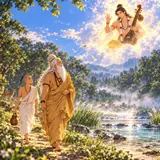
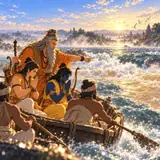
Hearing Sumantra’s words, Dasharatha was delighted. Taking leave of Vasishtha and having heard the charioteer out, he set out, with his queens and ministers, to where the brahmana was. Crossing forests and rivers slowly,
सुमंत्र के वचन सुनकर दशरथ प्रसन्न हुए। वसिष्ठ से अनुमति लेकर और सारथी की पूरी बात सुनकर वे अपनी रानियों और मंत्रियों के साथ वहाँ चल पड़े जहाँ वे ब्राह्मण थे। धीरे-धीरे वनों और नदियों को पार करते हुए
CommentaryNot scripture Dasharatha takes leave of Vasishtha before going. He respects his family priest even in his joy. Then the journey: queens, ministers, forests and rivers, crossed slowly (shanaih ). A royal journey is a stately procession.
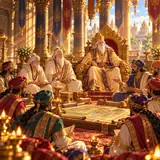
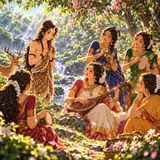
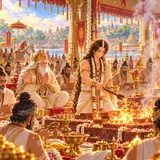
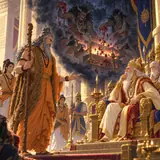
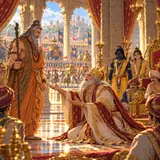
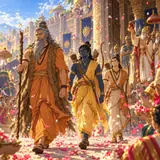
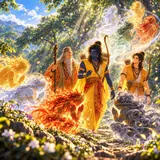
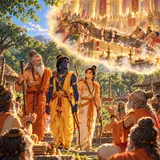
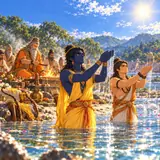
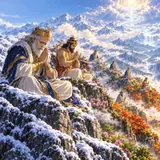
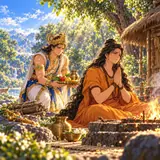
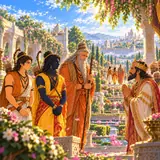
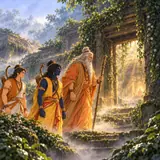
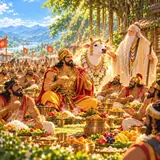
Scene 2 of 3 · Dasharatha travels to Anga, honours the blazing young sage, and embraces his friend Romapada.
अभिचक्राम तं देशं यत्र वै मुनिपुङ्गवः । आसाद्य तं द्विजश्रेष्ठं रोमपादसमीपगम् ॥ १५ ॥
ऋषिपुत्रं ददर्शाथो दीप्यमानमिवानलम् । ततो राजा यथायोग्यं पूजां चक्रे विशेषतः ॥ १६ ॥
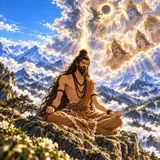
he reached the country where that foremost of sages was. Coming to that best of brahmanas, who was near Romapada, he saw the sage’s son blazing like fire. Then the king, as was fitting, paid him special honour,
वे उस देश में पहुँचे जहाँ वे मुनिश्रेष्ठ थे। रोमपाद के पास बैठे उन ब्राह्मणश्रेष्ठ के पास जाकर उन्होंने अग्नि के समान तेजस्वी मुनिपुत्र को देखा। तब राजा ने उचित रीति से उनका विशेष सम्मान किया,
CommentaryNot scripture He sees Rishyashringa “blazing like fire” (jvalantam iva pavakam ). The boy from the forest now shines with the power of his austerities. Dasharatha honours him as is fitting. The king bows to the holy man.
Scene 2 of 3 · Dasharatha travels to Anga, honours the blazing young sage, and embraces his friend Romapada.
सखित्वात्तस्य वै राज्ञः प्रहृष्टेनान्तरात्मना । रोमपादेन चाख्यातमृषिपुत्राय धीमते ॥ १७ ॥
सख्यं सम्बन्धकं चैव तदा तं प्रत्यपूजयत् । एवं सुसत्कृतस्तेन सहोषित्वा नरर्षभः ॥ १८ ॥
with a glad heart, because of his friendship with that king. Romapada told the wise son of the sage of their friendship and their bond, and he honoured Dasharatha in return. So, well honoured by him, the bull among men stayed with him
उस राजा से मित्रता के कारण प्रसन्न मन से। रोमपाद ने मुनि के बुद्धिमान पुत्र को अपनी मित्रता और संबंध के बारे में बताया, और उन्होंने भी दशरथ का सम्मान किया। उनसे ऐसा सम्मान पाकर वे पुरुषश्रेष्ठ उनके साथ
CommentaryNot scripture Romapada explains the friendship between the two kings, and Rishyashringa honours Dasharatha in return. Introductions matter in this world: the sage now sees the king as family, not a stranger.
Scene 2 of 3 · Dasharatha travels to Anga, honours the blazing young sage, and embraces his friend Romapada.
सप्ताष्टदिवसान् राजा राजानमिदमब्रवीत् । शान्ता तव सुता राजन् सह भर्त्रा विशाम्पते ॥ १९ ॥
मदीयं नगरं यातु कार्यं हि महदुद्यतम् । तथेति राजा संश्रुत्य गमनं तस्य धीमतः ॥ २० ॥
for seven or eight days, and then the king said to the king: “King, lord of the people, let your daughter Shanta come to my city with her husband, for a great work is in hand.” The king agreed to the wise man’s going, “So be it,”
सात-आठ दिन रहे, और फिर राजा ने राजा से कहा: “राजन, प्रजापालक, आपकी पुत्री शांता अपने पति के साथ मेरी नगरी में चले, क्योंकि एक महान कार्य करना है।” राजा ने उन बुद्धिमान के जाने की बात मान ली, “ऐसा ही हो,”
CommentaryNot scripture Seven or eight days of hospitality, then the request: let Shanta and her husband come to Ayodhya, “for a great work is in hand”. Note that the request is for both of them together. Shanta is included, not left behind.
Scene 2 of 3 · Dasharatha travels to Anga, honours the blazing young sage, and embraces his friend Romapada.
उवाच वचनं विप्रं गच्छ त्वं सह भार्यया । ऋषिपुत्रः प्रतिश्रुत्य तथेत्याह नृपं तदा ॥ २१ ॥
and said to the brahmana: “Go, with your wife.” The sage’s son assented and said to the king, “So be it.”
और ब्राह्मण से कहा: “अपनी पत्नी के साथ जाइए।” मुनिपुत्र ने स्वीकार किया और राजा से कहा, “ऐसा ही हो।”
CommentaryNot scripture Romapada tells the sage, “Go, with your wife,” and the sage agrees: tatha . The whole sarga is full of easy agreement. Everyone wants the same good outcome.
Scene 2 of 3 · Dasharatha travels to Anga, honours the blazing young sage, and embraces his friend Romapada.
स नृपेणाभ्यनुज्ञातः प्रययौ सह भार्यया । तावन्योन्याञ्जलिं कृत्वा स्नेहात्संश्लिष्य चोरसा ॥ २२ ॥
ननन्दतुर्दशरथो रोमपादश्च वीर्यवान् । ततः सुहृदमापृच्छ्य प्रस्थितो रघुनन्दनः ॥ २३ ॥
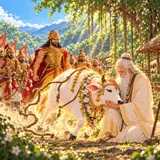
With the king’s leave he set out with his wife. Joining palms to each other and embracing each other to the chest with affection, Dasharatha and the valiant Romapada rejoiced. Then the delight of the Raghus took leave of his friend and set out.
राजा की अनुमति से वे अपनी पत्नी के साथ चल पड़े। एक-दूसरे को हाथ जोड़कर और स्नेह से छाती से लगाकर दशरथ और वीर रोमपाद आनंदित हुए। फिर रघुकुल के आनंद ने अपने मित्र से विदा ली और चल पड़े।
CommentaryNot scripture The two kings embrace “to the chest”, with palms joined. A warm farewell between old friends. Dasharatha is called “the delight of the Raghus” (raghu-nandana ), a title Rama will also bear.
Scene 2 of 3 · Dasharatha travels to Anga, honours the blazing young sage, and embraces his friend Romapada.
पौरेषु प्रेषयामास दूतान् वै शीघ्रगामिनः । क्रियतां नगरं सर्वं क्षिप्रमेव स्वलंकृतम् ॥ २४ ॥
धूपितं सिक्तसम्मृष्टं पताकाभिरलंकृतम् । ततः प्रहृष्टाः पौरास्ते श्रुत्वा राजानमागतम् ॥ २५ ॥
He sent swift messengers to the citizens: “Let the whole city be quickly adorned, perfumed with incense, sprinkled and swept, and decorated with banners.” Then the citizens, glad to hear that the king was coming,
उन्होंने नगरवासियों के पास तेज़ दूत भेजे: “पूरी नगरी को जल्दी सजाया जाए, धूप से सुगंधित किया जाए, छिड़काव और सफ़ाई की जाए, और पताकाओं से सजाया जाए।” तब राजा के आने की बात सुनकर प्रसन्न नगरवासियों ने
CommentaryNot scripture Messengers go ahead: decorate the city, burn incense, sprinkle and sweep, hang banners. Ayodhya prepares to receive a holy guest. The same preparations will be made, in sadder circumstances, for Rama’s coronation.
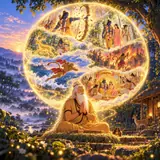
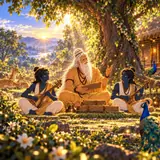
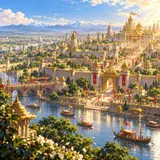
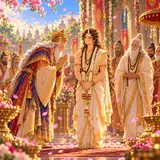
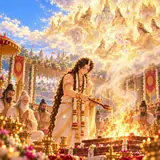
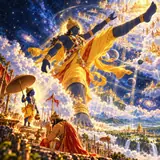
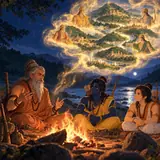
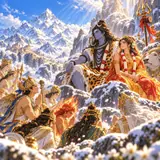
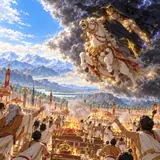
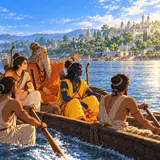
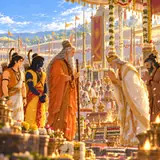
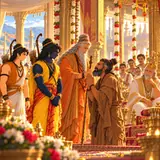
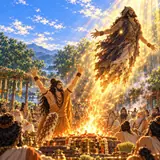
Scene 3 of 3 · Ayodhya, swept and hung with banners, welcomes Rishyashringa and Shanta with conches and drums.
तथा चक्रुश्च तत् सर्वं राज्ञा यत् प्रेषितं तदा । ततः स्वलंकृतं राजा नगरं प्रविवेश ह ॥ २६ ॥
शङ्खदुन्दुभिनिर्ह्रादैः पुरस्कृत्वा द्विजर्षभम् । ततः प्रमुदिताः सर्वे दृष्ट्वा वै नागरा द्विजम् ॥ २७ ॥
did all the king had sent word of. Then the king entered the adorned city to the sound of conches and drums, with the bull among brahmanas before him. All the people of the city rejoiced to see the brahmana
राजा के भेजे संदेश के अनुसार सब किया। फिर शंखों और नगाड़ों की ध्वनि के साथ, ब्राह्मणश्रेष्ठ को आगे करके राजा ने सजी हुई नगरी में प्रवेश किया। नगर के सब लोग उन ब्राह्मण को देखकर आनंदित हुए,
CommentaryNot scripture The king enters with conches and drums, the sage before him. Putting the brahmana in front is a mark of honour. The people rejoice to see him.
Scene 3 of 3 · Ayodhya, swept and hung with banners, welcomes Rishyashringa and Shanta with conches and drums.
प्रवेश्यमानं सत्कृत्य नरेन्द्रेणेन्द्रकर्मणा । यथा दिवि सुरेन्द्रेण सहस्राक्षेण काश्यपम् ॥ २८ ॥
being brought in with honour by the king, whose deeds were like Indra’s, as Kashyapa is brought into heaven by the thousand-eyed king of the gods.
जिन्हें इंद्र जैसे कर्मों वाले राजा सम्मान के साथ ला रहे थे, जैसे सहस्र नेत्रों वाले देवराज कश्यप को स्वर्ग में लाते हैं।
CommentaryNot scripture A divine comparison: as Indra brings Kashyapa, the father of the gods, into heaven, so Dasharatha brings Rishyashringa into Ayodhya. And Rishyashringa is himself of Kashyapa’s line. Earth mirrors heaven again.
Scene 3 of 3 · Ayodhya, swept and hung with banners, welcomes Rishyashringa and Shanta with conches and drums.
अन्तःपुरं प्रवेश्यैनं पूजां कृत्वा तु शास्त्रतः । कृतकृत्यं तदात्मानं मेने तस्योपवाहनात् ॥ २९ ॥
He brought him into the inner palace and honoured him according to the scriptures, and thought his purpose fulfilled by bringing him.
वे उन्हें अंतःपुर में ले गए और शास्त्रों के अनुसार उनका सम्मान किया, और उन्हें लाकर अपना उद्देश्य पूरा हुआ माना।
CommentaryNot scripture He honours the sage “according to the scriptures” and feels his purpose is already fulfilled (krita-kritya ). Bringing the sage is half the work; the sacrifice will do the rest.
Scene 3 of 3 · Ayodhya, swept and hung with banners, welcomes Rishyashringa and Shanta with conches and drums.
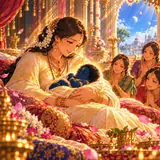
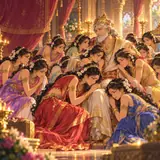
अन्तःपुराणि सर्वाणि शान्तां दृष्ट्वा तथागताम् । सह भर्त्रा विशालाक्षीं प्रीत्यानन्दमुपागमन् ॥ ३० ॥
All the women of the inner palace, seeing the large-eyed Shanta arrived with her husband, were filled with love and joy.
अंतःपुर की सब स्त्रियाँ बड़ी आँखों वाली शांता को पति के साथ आया देखकर प्रेम और आनंद से भर गईं।
CommentaryNot scripture The women of the palace see Shanta, “large-eyed”, and are filled with love. If she is Dasharatha’s daughter, as many say, this is a homecoming. Valmiki leaves the reason for their joy unspoken.
Scene 3 of 3 · Ayodhya, swept and hung with banners, welcomes Rishyashringa and Shanta with conches and drums.
पूज्यमाना तु ताभिः सा राज्ञा चैव विशेषतः । उवास तत्र सुखिता कञ्चित् कालं सहद्विजा ॥ ३१ ॥
Honoured by them, and especially by the king, she lived there happily for some time with the brahmana.
उनसे और विशेषकर राजा से सम्मान पाकर वे ब्राह्मण के साथ कुछ समय तक वहाँ सुख से रहीं।
CommentaryNot scripture Shanta lives happily in Ayodhya for a while. The sarga closes quietly. A year must pass before the horse sacrifice can begin, as the next sarga tells.
Scene 3 of 3 · Ayodhya, swept and hung with banners, welcomes Rishyashringa and Shanta with conches and drums.