Bala Kanda · Sarga 37 of 77 · 32 verses
The Birth of Karttikeya
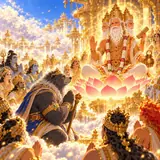
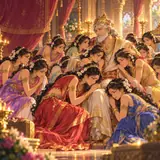
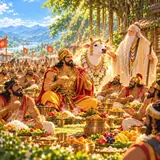
While Shiva practised austerity, the gods, needing a general, went to Brahma. He told them that Uma’s curse stands: they will have no children by their wives. But Agni will beget the general of the gods on the heavenly Ganga, Uma’s elder sister, and Uma will welcome that son as her own.
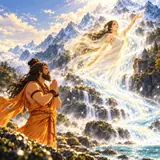
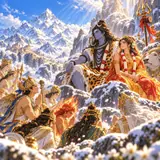
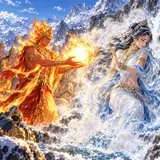
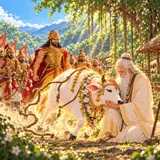
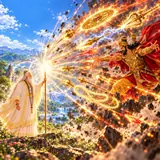
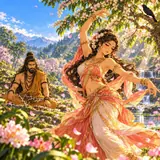
On Kailasa the gods ask Agni to release the great energy into Ganga. Ganga takes a divine form, and Agni pours the energy over her until all her streams are full. Unable to bear its heat, she asks for help, and Agni tells her to place the embryo on the slope of the Himalaya. What flowed from her became gold, shining like fire; from its sharpness came copper and iron; from its dross tin and lead. The whole forest and mountain where it lay turned to gold, which is why gold is called jatarupa, “born in form”.
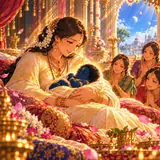
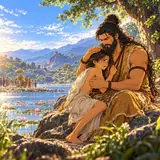
The gods appoint the six Krittikas (the Pleiades) to nurse the newborn; each claims him as her son, and he takes six faces to drink from all six. He is called Karttikeya, and Skanda because he slipped out (skanna) of the womb. In one day the child defeats the armies of the daityas, and the gods consecrate him as their general. Whoever is devoted to Karttikeya will live long, with sons and grandsons, and reach Skanda’s world.
Press › to begin with verse 1.
तप्यमाने तदा देवे सेन्द्राः साग्निपुरोगमाः । सेनापतिमभीप्सन्तः पितामहमुपागमन् ॥ १ ॥
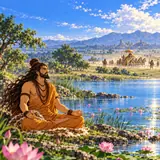
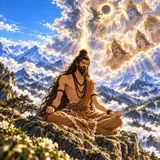
While the god practised austerity, the gods with Indra, led by Agni, desiring a general, went to the Grandsire.
जब देव (शिव) तप कर रहे थे, तब सेनापति चाहने वाले इंद्र सहित देवता, अग्नि को आगे करके, पितामह के पास गए।
Commentary on the whole sarga
The Birth of Karttikeya 1 min read.
Read the commentary CommentaryNot scripture The gods need a general (senapati ) to lead them against the demons. They go to Brahma. A recurring theme of these sargas: when heaven is in trouble, it looks for a champion.
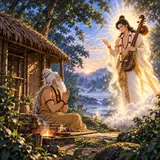
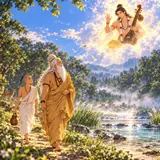
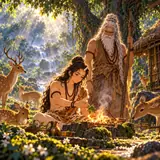
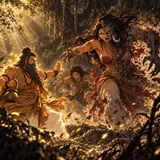
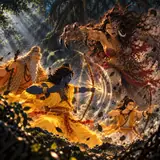
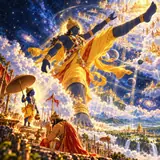
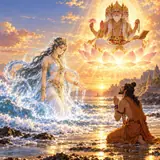
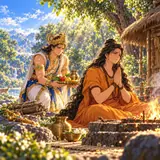
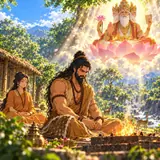
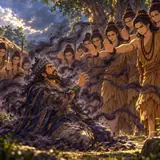
Scene 1 of 2 · Agni, the fire god, brings the burning energy of Shiva to the heavenly Ganga, who cannot bear its heat.
ततोऽब्रुवन् सुराः सर्वे भगवन्तं पितामहम् । प्रणिपत्य सुराराम सेन्द्राः साग्निपुरोगमाः ॥ २ ॥
Then all the gods, with Indra and led by Agni, bowing down, said to the blessed Grandsire, Rama:
तब राम, इंद्र सहित, अग्नि को आगे करके सब देवताओं ने प्रणाम करके भगवान पितामह से कहा:
CommentaryNot scripture Agni leads the delegation. Fire, the messenger between gods and men, is about to play the central part in this story.
Scene 1 of 2 · Agni, the fire god, brings the burning energy of Shiva to the heavenly Ganga, who cannot bear its heat.
येन सेनापतिर्देव दत्तो भगवता पुरा । स तपः परमास्थाय तप्यते स्म सहोमया ॥ ३ ॥
“God, the one through whom the lord gave us a general in the past now practises supreme austerity with Uma.
“देव, जिनके द्वारा प्रभु ने पहले हमें सेनापति दिया था, वे अब उमा के साथ परम तप कर रहे हैं।
CommentaryNot scripture “The one through whom we were to get a general is practising austerity with Uma.” Shiva has withdrawn. The gods must find another way.
Scene 1 of 2 · Agni, the fire god, brings the burning energy of Shiva to the heavenly Ganga, who cannot bear its heat.
यदत्रानन्तरं कार्यं लोकानां हितकाम्यया । संविधत्स्व विधानज्ञ त्वं हि नः परमा गतिः ॥ ४ ॥
“Arrange what must be done next for the good of the worlds, you who know how to arrange; you are our highest refuge.”
“व्यवस्था करना जानने वाले, लोकों के हित के लिए आगे जो करना है उसकी व्यवस्था कीजिए; आप ही हमारी परम शरण हैं।”
CommentaryNot scripture “You know how to arrange; you are our highest refuge.” The gods turn to the creator as the great planner.
Scene 1 of 2 · Agni, the fire god, brings the burning energy of Shiva to the heavenly Ganga, who cannot bear its heat.
देवतानां वचः श्रुत्वा सर्वलोकपितामहः । सान्त्वयन् मधुरैर्वाक्यैस्त्रिदशानिदमब्रवीत् ॥ ५ ॥
Hearing the gods’ words, the Grandsire of all worlds, comforting them with sweet words, said to the thirty gods:
देवताओं के वचन सुनकर सब लोकों के पितामह ने मधुर वचनों से उन्हें सांत्वना देते हुए तैंतीस देवताओं से कहा:
CommentaryNot scripture Brahma comforts them “with sweet words”. The creator’s first response is kindness.
Scene 1 of 2 · Agni, the fire god, brings the burning energy of Shiva to the heavenly Ganga, who cannot bear its heat.
शैलपुत्र्या यदुक्तं तन्न प्रजाः स्वासु पत्निषु । तस्या वचनमक्लिष्टं सत्यमेव न संशयः ॥ ६ ॥
“What the mountain’s daughter said, that you will have no offspring by your own wives, her unwavering word is true without doubt.
“पर्वत की पुत्री ने जो कहा था, कि तुम्हें अपनी पत्नियों से संतान नहीं होगी, उनका वह अटल वचन निःसंदेह सत्य है।
CommentaryNot scripture “Uma’s word is true.” Brahma accepts the curse; it cannot be undone. Even the creator honours the word of the goddess. Any solution must work within it.
Scene 1 of 2 · Agni, the fire god, brings the burning energy of Shiva to the heavenly Ganga, who cannot bear its heat.
इयमाकाशगङ्गा च यस्यां पुत्रं हुताशनः । जनयिष्यति देवानां सेनापतिमरिंदमम् ॥ ७ ॥
“Here is the Ganga of the sky, in whom the fire god will beget a son, the general of the gods, subduer of enemies.
“यह आकाश की गंगा है, जिसमें अग्नि देवता एक पुत्र उत्पन्न करेंगे, जो देवताओं का सेनापति और शत्रुओं का दमन करने वाला होगा।
CommentaryNot scripture The solution: the heavenly Ganga will bear the son, through Agni. The curse said the gods’ wives would be childless; Ganga is not their wife. The divine logic finds a path.
Scene 1 of 2 · Agni, the fire god, brings the burning energy of Shiva to the heavenly Ganga, who cannot bear its heat.
ज्येष्ठा शैलेन्द्रदुहिता मानयिष्यति तं सुतम् । उमायास्तद्बहुमतं भविष्यति न संशयः ॥ ८ ॥
“The elder daughter of the king of mountains will honour that son, and Uma will think highly of it, without doubt.”
“पर्वतराज की बड़ी पुत्री उस पुत्र का सम्मान करेगी, और उमा भी उसे बहुत मानेंगी, इसमें कोई संदेह नहीं।”
CommentaryNot scripture Ganga will honour the child, and Uma will be pleased. Both sisters will love him. Even Uma’s anger will be healed by this birth.
Scene 1 of 2 · Agni, the fire god, brings the burning energy of Shiva to the heavenly Ganga, who cannot bear its heat.
तच्छ्रुत्वा वचनं तस्य कृतार्था रघुनन्दन । प्रणिपत्य सुराः सर्वे पितामहमपूजयन् ॥ ९ ॥
Hearing his words, delight of the Raghus, all the gods felt their purpose achieved, bowed, and honoured the Grandsire.
रघुनंदन, उनके वचन सुनकर सब देवताओं ने अपना प्रयोजन सिद्ध हुआ माना, प्रणाम किया और पितामह का सम्मान किया।
CommentaryNot scripture The gods are satisfied. Their problem has an answer.
Scene 1 of 2 · Agni, the fire god, brings the burning energy of Shiva to the heavenly Ganga, who cannot bear its heat.
ते गत्वा परमं राम कैलासं धातुमण्डितम् । अग्निं नियोजयामासुः पुत्रार्थं सर्वदेवताः ॥ १० ॥
Going to the great Kailasa, adorned with minerals, Rama, all the gods charged Agni with begetting a son:
राम, धातुओं से सजे महान कैलास पर जाकर सब देवताओं ने अग्नि को पुत्र उत्पन्न करने का कार्य सौंपा:
CommentaryNot scripture They go to Kailasa, “adorned with minerals”, and give Agni the task. The mountain’s minerals foreshadow what will happen next.
Scene 1 of 2 · Agni, the fire god, brings the burning energy of Shiva to the heavenly Ganga, who cannot bear its heat.
देवकार्यमिदं देव समाधत्स्व हुताशन । शैलपुत्र्यां महातेजो गङ्गायां तेज उत्सृज ॥ ११ ॥
“God, fire, carry out this work of the gods. Release the great energy into Ganga, the mountain’s daughter.”
“देव, अग्नि, देवताओं का यह कार्य पूरा करो। पर्वत की पुत्री गंगा में महान तेज छोड़ो।”
CommentaryNot scripture “Release the great energy into Ganga.” Fire and water: opposites meeting to create.
Scene 1 of 2 · Agni, the fire god, brings the burning energy of Shiva to the heavenly Ganga, who cannot bear its heat.
देवतानां प्रतिज्ञाय गङ्गामभ्येत्य पावकः । गर्भं धारय वै देवि देवतानामिदं प्रियम् ॥ १२ ॥
Having promised the gods, Pavaka went to Ganga: “Goddess, bear this embryo; this is the gods’ wish.”
देवताओं को वचन देकर पावक गंगा के पास गए: “देवी, यह गर्भ धारण करो; यह देवताओं की इच्छा है।”
CommentaryNot scripture Agni asks Ganga directly: “Bear this embryo; this is the gods’ wish.” She is asked, and she agrees.
Scene 1 of 2 · Agni, the fire god, brings the burning energy of Shiva to the heavenly Ganga, who cannot bear its heat.
इत्येतद् वचनं श्रुत्वा दिव्यं रूपमधारयत् । स तस्या महिमां दृष्ट्वा समन्तादवशीर्यत ॥ १३ ॥
Hearing these words, she took on a divine form. He, seeing her greatness, spread himself out on every side.
ये वचन सुनकर उसने दिव्य रूप धारण किया। उसकी महिमा देखकर वह (अग्नि) चारों ओर फैल गए।
CommentaryNot scripture Ganga takes a divine form. Agni spreads around her. The meeting of fire and the river is described with cosmic grandeur.
Scene 1 of 2 · Agni, the fire god, brings the burning energy of Shiva to the heavenly Ganga, who cannot bear its heat.
समन्ततस्तदा देवीमभ्यषिञ्चत पावकः । सर्वस्रोतांसि पूर्णानि गङ्गाया रघुनन्दन ॥ १४ ॥
Then Pavaka bathed the goddess on every side, and all the streams of the Ganga were filled, delight of the Raghus.
तब पावक ने देवी को चारों ओर से नहलाया, और रघुनंदन, गंगा की सब धाराएँ भर गईं।
CommentaryNot scripture All of Ganga’s streams are filled. The river carries the fire within her.
Scene 1 of 2 · Agni, the fire god, brings the burning energy of Shiva to the heavenly Ganga, who cannot bear its heat.
तमुवाच ततो गङ्गा सर्वदेवपुरोगमम् । अशक्ता धारणे देव तेजस्तव समुद्धतम् ॥ १५ ॥
Then Ganga said to him who goes before all the gods: “God, I cannot bear your energy, raised so high.
तब गंगा ने सब देवताओं के आगे चलने वाले (अग्नि) से कहा: “देव, मैं आपके इतने ऊँचे उठे तेज को धारण नहीं कर सकती।
CommentaryNot scripture But she cannot bear it: “I cannot bear your energy.” Even the holy river has limits. The power is too great.
Scene 1 of 2 · Agni, the fire god, brings the burning energy of Shiva to the heavenly Ganga, who cannot bear its heat.
दह्यमानाग्निना तेन सम्प्रव्यथितचेतना । अथाब्रवीदिदं गङ्गां सर्वदेवहुताशनः ॥ १६ ॥
“I am burning with this fire; my mind is in torment.” Then the fire of all the gods said to Ganga:
“मैं इस आग से जल रही हूँ; मेरा मन व्याकुल है।” तब सब देवताओं की अग्नि ने गंगा से कहा:
CommentaryNot scripture “I am burning.” Water burning with fire: a vivid image of something unbearable.
Scene 1 of 2 · Agni, the fire god, brings the burning energy of Shiva to the heavenly Ganga, who cannot bear its heat.
इह हैमवते पार्श्वे गर्भोऽयं संनिवेश्यताम् । श्रुत्वा त्वग्निवचो गङ्गा तं गर्भमतिभास्वरम् ॥ १७ ॥
उत्ससर्ज महातेजाः स्रोतोभ्यो हि तदानघ । यदस्या निर्गतं तस्मात् तप्तजाम्बूनदप्रभम् ॥ १८ ॥
“Let this embryo be placed here, on the slope of the Himalaya.” Hearing the fire’s words, the radiant Ganga released that most brilliant embryo from her streams, sinless one. What came forth from her shone like burnished gold of the Jambu river.
“इस गर्भ को यहीं हिमालय की ढलान पर रख दो।” अग्नि के वचन सुनकर तेजस्वी गंगा ने अपनी धाराओं से वह अत्यंत तेजस्वी गर्भ छोड़ दिया, निष्पाप। उससे जो निकला वह जंबू नदी के तपे सोने की तरह चमक रहा था।
CommentaryNot scripture Agni tells her to release it on the Himalayan slope. What comes forth shines like gold of the Jambu river, the legendary river of finest gold. The divine embryo is radiance itself.
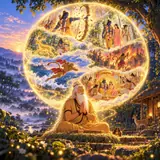
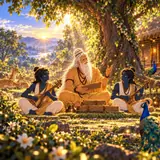
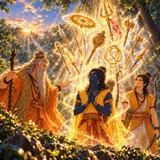
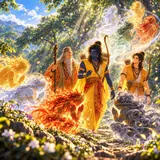
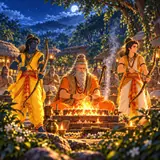
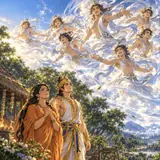
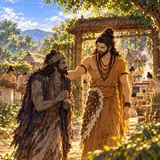
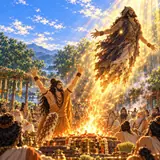
Scene 2 of 2 · On the Himalayan slope a golden child is born; the six star-mothers, the Krittikas, nurse six-faced Karttikeya.
काञ्चनं धरणीं प्राप्तं हिरण्यमतुलप्रभम् । ताम्रं कार्ष्णायसं चैव तैक्ष्ण्यादेवाभिजायत ॥ १९ ॥
Gold of matchless radiance reached the earth; copper and black iron were born from its sharpness;
अनुपम तेज वाला सोना पृथ्वी पर पहुँचा; उसकी तीक्ष्णता से ताँबा और काला लोहा उत्पन्न हुए;
CommentaryNot scripture The gold reaches the earth. From its sharpness come copper and iron. This is a myth of origins: how the metals of the earth were born.
Scene 2 of 2 · On the Himalayan slope a golden child is born; the six star-mothers, the Krittikas, nurse six-faced Karttikeya.
मलं तस्याभवत् तत्र त्रपु सीसकमेव च । तदेतद्धरणीं प्राप्य नानाधातुरवर्धत ॥ २० ॥
its dross became tin and lead. Reaching the earth, it grew into many kinds of metal.
उसका मैल राँगा और सीसा बन गया। पृथ्वी पर पहुँचकर वह अनेक प्रकार की धातुओं में बढ़ गया।
CommentaryNot scripture Its dross becomes tin and lead. Every metal used by human beings, in this story, comes from the fire of the gods.
Scene 2 of 2 · On the Himalayan slope a golden child is born; the six star-mothers, the Krittikas, nurse six-faced Karttikeya.
निक्षिप्तमात्रे गर्भे तु तेजोभिरभिरञ्जितम् । सर्वं पर्वतसंनद्धं सौवर्णमभवद् वनम् ॥ २१ ॥
As soon as the embryo was laid down, the whole forest on the mountain, coloured by its energy, became golden.
जैसे ही गर्भ रखा गया, पर्वत का सारा वन उसके तेज से रंगकर सुनहरा हो गया।
CommentaryNot scripture The whole forest on the mountain turns golden. Imagine the slope glowing as if lit from within.
Scene 2 of 2 · On the Himalayan slope a golden child is born; the six star-mothers, the Krittikas, nurse six-faced Karttikeya.
जातरूपमिति ख्यातं तदाप्रभृति राघव । सुवर्णं पुरुषव्याघ्र हुताशनसमप्रभम् । तृणवृक्षलतागुल्मं सर्वं भवति काञ्चनम् ॥ २२ ॥
From that time, Raghava, gold, shining like fire, has been called jatarupa, tiger among men; grass, trees, creepers and bushes all became golden.
राघव, उसी समय से अग्नि जैसा चमकता सोना जातरूप कहलाता है, पुरुषसिंह; घास, वृक्ष, लताएँ और झाड़ियाँ सब सुनहरी हो गईं।
CommentaryNot scripture This is why gold is called jatarupa , “born of beauty” (literally “of the form that was born”). Valmiki enjoys explaining old words through stories.
Scene 2 of 2 · On the Himalayan slope a golden child is born; the six star-mothers, the Krittikas, nurse six-faced Karttikeya.
तं कुमारं ततो जातं सेन्द्राः सह मरुद्गणाः । क्षीरसम्भावनार्थाय कृत्तिकाः समयोजयन् ॥ २३ ॥
The gods with Indra and the hosts of Maruts appointed the Krittikas to nurse the boy who had been born.
इंद्र और मरुतों के समूहों सहित देवताओं ने उत्पन्न हुए बालक को दूध पिलाने के लिए कृत्तिकाओं को नियुक्त किया।
CommentaryNot scripture The gods appoint the Krittikas to nurse the child. The Krittikas are the Pleiades, the cluster of six stars in the night sky.
Scene 2 of 2 · On the Himalayan slope a golden child is born; the six star-mothers, the Krittikas, nurse six-faced Karttikeya.
ताः क्षीरं जातमात्रस्य कृत्वा समयमुत्तमम् । ददुः पुत्रोऽयमस्माकं सर्वासामिति निश्चिताः ॥ २४ ॥
Making the best of agreements, they gave milk to the newborn, resolved: “This is the son of us all.”
सबसे अच्छा समझौता करके उन्होंने नवजात को दूध पिलाया, यह निश्चय करके: “यह हम सबका पुत्र है।”
CommentaryNot scripture “This is the son of us all.” The child belongs to everyone: to Shiva, Uma, Agni, Ganga, the Krittikas. A child of many parents.
Scene 2 of 2 · On the Himalayan slope a golden child is born; the six star-mothers, the Krittikas, nurse six-faced Karttikeya.
ततस्तु देवताः सर्वाः कार्तिकेय इति ब्रुवन् । पुत्रस्त्रैलोक्यविख्यातो भविष्यति न संशयः ॥ २५ ॥
Then all the gods said, “Karttikeya: he will be a son famous in the three worlds, without doubt.”
तब सब देवताओं ने कहा, “कार्तिकेय: यह तीनों लोकों में प्रसिद्ध पुत्र होगा, इसमें कोई संदेह नहीं।”
CommentaryNot scripture Karttikeya: “son of the Krittikas”. His name honours his foster-mothers, the stars who nursed him.
Scene 2 of 2 · On the Himalayan slope a golden child is born; the six star-mothers, the Krittikas, nurse six-faced Karttikeya.
तेषां तद् वचनं श्रुत्वा स्कन्नं गर्भपरिस्रवे । स्नापयन् परया लक्ष्म्या दीप्यमानं यथानलम् ॥ २६ ॥
स्कन्द इत्यब्रुवन् देवाः स्कन्नं गर्भपरिस्रवे । कार्तिकेयं महाबाहुं काकुत्स्थ ज्वलनोपमम् ॥ २७ ॥
Hearing their words, the Krittikas bathed the one who had slipped out with the flow from the womb, blazing with supreme beauty like fire, and the gods called him Skanda, because he had slipped out (skanna) with the flow from the womb: Karttikeya, mighty-armed, like fire, Kakutstha.
उनके वचन सुनकर कृत्तिकाओं ने गर्भ के प्रवाह के साथ निकले उस बालक को नहलाया, जो परम सौंदर्य से अग्नि की तरह दमक रहा था, और देवताओं ने उसे स्कंद कहा, क्योंकि वह गर्भ के प्रवाह के साथ स्खलित (स्कन्न) हुआ था: अग्नि जैसा महाबाहु कार्तिकेय, काकुत्स्थ।
CommentaryNot scripture He is also called Skanda, “the one who slipped out” (skanna ). The gods name him by the way he was born. Two names, two parts of his story.
Scene 2 of 2 · On the Himalayan slope a golden child is born; the six star-mothers, the Krittikas, nurse six-faced Karttikeya.
प्रादुर्भूतं ततः क्षीरं कृत्तिकानामनुत्तमम् । षण्णां षडाननो भूत्वा जग्राह स्तनजं पयः ॥ २८ ॥
Then the matchless milk of the Krittikas appeared, and, becoming six-faced, he drank the breast-milk of all six.
तब कृत्तिकाओं का अनुपम दूध प्रकट हुआ, और छह मुख वाला होकर उसने छहों का स्तनपान किया।
CommentaryNot scripture Six Krittikas, and the child grows six faces to drink from all of them at once. This is why Karttikeya is called Shanmukha, “six-faced”. In South India, as Murugan, he is one of the most beloved gods.
Scene 2 of 2 · On the Himalayan slope a golden child is born; the six star-mothers, the Krittikas, nurse six-faced Karttikeya.
गृहीत्वा क्षीरमेकाह्ना सुकुमारवपुस्तदा । अजयत् स्वेन वीर्येण दैत्यसैन्यगणान् विभुः ॥ २९ ॥
Having taken milk for a single day, the tender-bodied lord conquered the armies of the daityas by his own might.
एक ही दिन दूध पीकर उस कोमल शरीर वाले प्रभु ने अपने बल से दैत्यों की सेनाओं को जीत लिया।
CommentaryNot scripture After one day of milk, the tender infant conquers the daitya armies. The child-god is invincible from birth.
Scene 2 of 2 · On the Himalayan slope a golden child is born; the six star-mothers, the Krittikas, nurse six-faced Karttikeya.
सुरसेनागणपतिमभ्यषिञ्चन्महाद्युतिम् । ततस्तममराः सर्वे समेत्याग्निपुरोगमाः ॥ ३० ॥
Then all the immortals, gathered together with Agni at their head, consecrated that radiant one as lord of the hosts of the gods’ army.
तब अग्नि को आगे करके इकट्ठे हुए सब अमरों ने उस तेजस्वी का देवताओं की सेना के समूहों के स्वामी के रूप में अभिषेक किया।
CommentaryNot scripture The gods consecrate him as their general. Their need is fulfilled. Karttikeya will lead the armies of heaven.
Scene 2 of 2 · On the Himalayan slope a golden child is born; the six star-mothers, the Krittikas, nurse six-faced Karttikeya.
एष ते राम गङ्गाया विस्तरोऽभिहितो मया । कुमारसम्भवश्चैव धन्यः पुण्यस्तथैव च ॥ ३१ ॥
This, Rama, is the story of Ganga told to you in full, and the birth of Kumara, fortunate and holy.
राम, यह गंगा की कथा तुम्हें पूरी कही गई, और कुमार का भाग्यशाली और पवित्र जन्म भी।
CommentaryNot scripture “This is the story of Ganga and the birth of Kumara.” Kumara, “the youth”, is another of Karttikeya’s names. The first part of the Ganga story is complete.
Scene 2 of 2 · On the Himalayan slope a golden child is born; the six star-mothers, the Krittikas, nurse six-faced Karttikeya.
भक्तश्च यः कार्तिकेये काकुत्स्थ भुवि मानवः । आयुष्मान् पुत्रपौत्रैश्च स्कन्दसालोक्यतां व्रजेत् ॥ ३२ ॥
And the man on earth, Kakutstha, who is devoted to Karttikeya will live long, with sons and grandsons, and reach the world of Skanda.
और काकुत्स्थ, पृथ्वी पर जो मनुष्य कार्तिकेय का भक्त होगा, वह पुत्रों और पौत्रों सहित दीर्घायु होगा और स्कंद के लोक को प्राप्त करेगा।
CommentaryNot scripture A blessing (phala-shruti ): devotion to Karttikeya brings long life, family and heaven. Each great story in this kanda ends with a blessing for those who hear it. Next, the story turns to Rama’s own ancestor Sagara.
Scene 2 of 2 · On the Himalayan slope a golden child is born; the six star-mothers, the Krittikas, nurse six-faced Karttikeya.