Bala Kanda · Sarga 64 of 77 · 20 verses
Rambha Turned to Stone
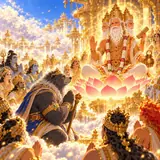
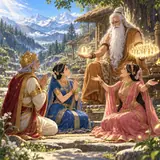
Indra tells Rambha to tempt Vishvamitra with desire. She is ashamed and afraid: “This sage is terrible; he will surely loose his anger on me.” Indra reassures her: he and Kandarpa, the god of love, will stand beside her as a koel, singing in a spring tree. She takes on a dazzling form and tries to entice the sage.
Vishvamitra hears the koel’s sweet call and looks at her with delight, but the song, her singing and her beauty make him suspicious. Seeing that it is all Indra’s doing, he curses her in anger: “Because you try to tempt me, who seek to conquer desire and anger, you will stand as a rock for ten thousand years, unlucky one. A radiant brahmana full of the power of austerity will release you.” Rambha becomes a stone, and Kandarpa slips away.
Vishvamitra realises that by giving way to anger he has again lost his austerity, and has no peace, his senses unconquered. He resolves: “I will not become angry, nor say anything at all. I will not even breathe for hundreds of years. I will dry up my body, master of my senses, until I gain the brahmanahood earned by austerity. Not breathing, not eating, I will stand for endless years, and my body will not perish.” He undertakes a vow of a thousand years, a vow unlike anything in the world.
Press › to begin with verse 1.
सुरकार्यमिदं रम्भे कर्तव्यं सुमहत् त्वया । लोभनं कौशिकस्येह काममोहसमन्वितम् ॥ १ ॥
“Rambha, this great work for the gods must be done by you: tempting Kaushika here with desire and infatuation.”
“रंभा, देवताओं का यह महान कार्य तुम्हें करना है: यहाँ काम और मोह से कौशिक को लुभाना।”
Commentary on the whole sarga
Rambha Turned to Stone 1 min read.
Read the commentary CommentaryNot scripture Indra orders Rambha to tempt Vishvamitra. He calls it “a great work for the gods”. Once again Indra fears a human’s spiritual rise and tries to sabotage it.
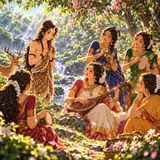
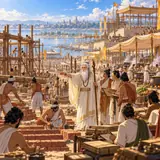
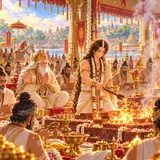
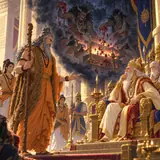
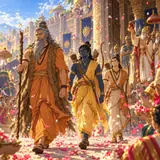
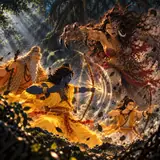
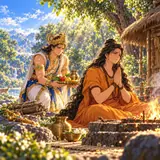
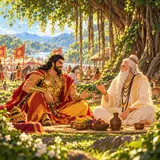
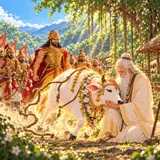
Scene 1 of 2 · Sent by Indra, the apsaras Rambha appears among spring blossoms while a koel sings, and the sage grows suspicious.
तथोक्ता साप्सरा राम सहस्राक्षेण धीमता । व्रीडिता प्राञ्जलिर्वाक्यं प्रत्युवाच सुरेश्वरम् ॥ २ ॥
So addressed, Rama, by the wise thousand-eyed one, the apsaras, ashamed, with joined palms, replied to the lord of gods:
राम, बुद्धिमान सहस्र नेत्रों वाले के ऐसा कहने पर लज्जित अप्सरा ने हाथ जोड़कर देवेश्वर को उत्तर दिया:
CommentaryNot scripture Rambha is “ashamed” (savrida ). She does not want this task. The apsaras has her own conscience.
Scene 1 of 2 · Sent by Indra, the apsaras Rambha appears among spring blossoms while a koel sings, and the sage grows suspicious.
अयं सुरपते घोरो विश्वामित्रो महामुनिः । क्रोधमुत्स्रक्ष्यते घोरं मयि देव न संशयः ॥ ३ ॥
“Lord of the gods, this great sage Vishvamitra is terrible. He will surely loose a terrible anger on me, god.
“देवेश्वर, ये महामुनि विश्वामित्र भयानक हैं। देव, वे निश्चय ही मुझ पर भयानक क्रोध छोड़ेंगे।
CommentaryNot scripture “He is terrible; he will turn his anger on me.” She knows Vishvamitra’s temper. Her fear is entirely reasonable.
Scene 1 of 2 · Sent by Indra, the apsaras Rambha appears among spring blossoms while a koel sings, and the sage grows suspicious.
ततो हि मे भयं देव प्रसादं कर्तुमर्हसि । एवमुक्तस्तया राम सभयं भीतया तदा ॥ ४ ॥
तामुवाच सहस्राक्षो वेपमानां कृताञ्जलिम् । मा भैषी रम्भे भद्रं ते कुरुष्व मम शासनम् ॥ ५ ॥
“So I am afraid, god; you should show me favour.” So addressed by her in fear, Rama, the thousand-eyed one said to her, trembling with joined palms: “Do not fear, Rambha; bless you; do as I command.
“इसलिए देव, मैं डरती हूँ; आप मुझ पर कृपा कीजिए।” राम, उसके डर से ऐसा कहने पर सहस्र नेत्रों वाले ने हाथ जोड़े काँपती हुई उससे कहा: “रंभा, डरो मत; तुम्हारा कल्याण हो; जैसा मैं कहता हूँ वैसा करो।
CommentaryNot scripture Indra brushes it aside: “Do not fear; do as I command.” Those with power often send others into danger.
Scene 1 of 2 · Sent by Indra, the apsaras Rambha appears among spring blossoms while a koel sings, and the sage grows suspicious.
कोकिलो हृदयग्राही माधवे रुचिरद्रुमे । अहं कन्दर्पसहितः स्थास्यामि तव पार्श्वतः ॥ ६ ॥
“As a koel that captures the heart, in a lovely tree in spring, I will stand beside you with Kandarpa.
“वसंत में किसी सुंदर वृक्ष पर हृदय को मोह लेने वाली कोयल बनकर मैं कंदर्प के साथ तुम्हारे पास खड़ा रहूँगा।
CommentaryNot scripture “I will be a koel in a spring tree, with Kandarpa beside you.” The god of love and the king of the gods will help set the trap. The koel (Indian cuckoo) sings in spring, the season of longing.
Scene 1 of 2 · Sent by Indra, the apsaras Rambha appears among spring blossoms while a koel sings, and the sage grows suspicious.
त्वं हि रूपं बहुगुणं कृत्वा परमभास्वरम् । तमृषिं कौशिकं भद्रे भेदयस्व तपस्विनम् ॥ ७ ॥
“You, taking on a form of many charms, supremely radiant, break the austerity of that sage Kaushika, lovely one.”
“तुम अनेक आकर्षणों वाला, परम तेजस्वी रूप धारण करके, सुंदरी, उस मुनि कौशिक का तप भंग करो।”
CommentaryNot scripture “Break his austerity.” The mission is plain.
Scene 1 of 2 · Sent by Indra, the apsaras Rambha appears among spring blossoms while a koel sings, and the sage grows suspicious.
सा श्रुत्वा वचनं तस्य कृत्वा रूपमनुत्तमम् । लोभयामास ललिता विश्वामित्रं शुचिस्मिता ॥ ८ ॥
Hearing his words, she took on a matchless form, and, graceful and sweet-smiling, tried to entice Vishvamitra.
उनके वचन सुनकर उसने अनुपम रूप धारण किया, और सुंदर, मधुर मुस्कान वाली वह विश्वामित्र को लुभाने लगी।
CommentaryNot scripture Rambha takes a dazzling form and smiles.
Scene 1 of 2 · Sent by Indra, the apsaras Rambha appears among spring blossoms while a koel sings, and the sage grows suspicious.
कोकिलस्य तु शुश्राव वल्गु व्याहरतः स्वनम् । सम्प्रहृष्टेन मनसा स चैनामन्ववैक्षत ॥ ९ ॥
He heard the sweet call of the koel singing, and with a delighted mind he looked at her.
उन्होंने गाती हुई कोयल का मधुर स्वर सुना, और प्रसन्न मन से उसकी ओर देखा।
CommentaryNot scripture Vishvamitra hears the koel’s song and looks at her with a delighted mind. For a moment, the trap almost works.
Scene 1 of 2 · Sent by Indra, the apsaras Rambha appears among spring blossoms while a koel sings, and the sage grows suspicious.
अथ तस्य च शब्देन गीतेनाप्रतिमेन च । दर्शनेन च रम्भाया मुनिः संदेहमागतः ॥ १० ॥
But at the sound, at her matchless singing and at the sight of Rambha, the sage became suspicious.
पर उस स्वर से, उसके अनुपम गायन से और रंभा को देखकर मुनि को संदेह हो गया।
CommentaryNot scripture But he becomes suspicious. The song, the singing, the beauty, all at once: it is too perfect. Experience has taught him.
Scene 1 of 2 · Sent by Indra, the apsaras Rambha appears among spring blossoms while a koel sings, and the sage grows suspicious.
सहस्राक्षस्य तत्सर्वं विज्ञाय मुनिपुंगवः । रम्भां क्रोधसमाविष्टः शशाप कुशिकात्मजः ॥ ११ ॥
Understanding it all to be the thousand-eyed one’s doing, the foremost sage, the son of Kushika, filled with anger, cursed Rambha:
यह सब सहस्र नेत्रों वाले का किया हुआ समझकर मुनिश्रेष्ठ कुशिक-पुत्र ने क्रोध से भरकर रंभा को शाप दिया:
CommentaryNot scripture He sees it is Indra’s doing, and in anger he curses Rambha. He has seen through the trap, but not through his own anger.
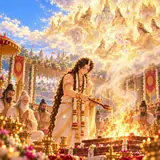
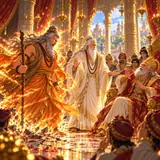
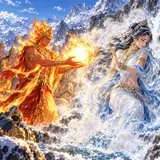
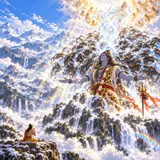
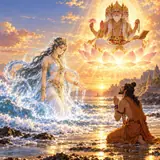
Scene 2 of 2 · In anger Vishvamitra turns Rambha to stone, then, full of remorse, vows never to be angry again.
यन्मां लोभयसे रम्भे कामक्रोधजयैषिणम् । दशवर्षसहस्राणि शैली स्थास्यसि दुर्भगे ॥ १२ ॥
“Since you tempt me, Rambha, who wish to conquer desire and anger, you will stand as a rock for ten thousand years, unlucky one.
“रंभा, क्योंकि तुम मुझे लुभाती हो, जो काम और क्रोध को जीतना चाहता है, इसलिए अभागी, तुम दस हज़ार वर्षों तक पत्थर बनकर खड़ी रहोगी।
CommentaryNot scripture “You will stand as a rock for ten thousand years.” The irony: he curses her for tempting one “who wishes to conquer desire and anger” while giving in to anger.
Scene 2 of 2 · In anger Vishvamitra turns Rambha to stone, then, full of remorse, vows never to be angry again.
ब्राह्मणः सुमहातेजास्तपोबलसमन्वितः । उद्धरिष्यति रम्भे त्वां मत्क्रोधकलुषीकृताम् ॥ १३ ॥
“A brahmana of great radiance, endowed with the power of austerity, will lift you up, Rambha, stained as you are by my anger.”
“रंभा, तप की शक्ति से युक्त एक महातेजस्वी ब्राह्मण तुम्हें, जो मेरे क्रोध से कलुषित हो, उबारेगा।”
CommentaryNot scripture Even in his curse, he provides a release: a brahmana of great power will free her. Like Gautama’s curse on Ahalya, the punishment has an end built into it.
Scene 2 of 2 · In anger Vishvamitra turns Rambha to stone, then, full of remorse, vows never to be angry again.
एवमुक्त्वा महातेजा विश्वामित्रो महामुनिः । अशक्नुवन् धारयितुं कोपं संतापमात्मनः ॥ १४ ॥
Having said this, the radiant great sage Vishvamitra, unable to hold back his anger, felt remorse.
यह कहकर अपने क्रोध को रोक न पाने वाले तेजस्वी महामुनि विश्वामित्र को पश्चात्ताप हुआ।
CommentaryNot scripture Immediately he feels remorse (santapa ). He sees what he has done. This moment of self-knowledge is crucial.
Scene 2 of 2 · In anger Vishvamitra turns Rambha to stone, then, full of remorse, vows never to be angry again.
तस्य शापेन महता रम्भा शैली तदाभवत् । वचः श्रुत्वा च कन्दर्पो महर्षेः स च निर्गतः ॥ १५ ॥
By his great curse Rambha then became a rock, and Kandarpa, hearing the great sage’s words, went away.
उनके महान शाप से रंभा तब पत्थर बन गई, और महामुनि के वचन सुनकर कंदर्प चला गया।
CommentaryNot scripture Rambha becomes stone; Kandarpa flees.
Scene 2 of 2 · In anger Vishvamitra turns Rambha to stone, then, full of remorse, vows never to be angry again.
कोपेन च महातेजास्तपोऽपहरणे कृते । इन्द्रियैरजितै राम न लेभे शान्तिमात्मनः ॥ १६ ॥
By his anger the radiant one’s austerity was taken away, and with his senses unconquered, Rama, he found no peace for himself.
क्रोध से उन तेजस्वी का तप हर लिया गया, और इंद्रियाँ न जीती होने के कारण, राम, उन्हें अपने लिए शांति नहीं मिली।
CommentaryNot scripture His austerity is spent by his anger. He has conquered desire, but not anger, and so he has no peace.
Scene 2 of 2 · In anger Vishvamitra turns Rambha to stone, then, full of remorse, vows never to be angry again.
बभूवास्य मनश्चिन्ता तपोऽपहरणे कृते । नैवं क्रोधं गमिष्यामि न च वक्ष्ये कथंचन ॥ १७ ॥
अथवा नोच्छ्वसिष्यामि संवत्सरशतान्यपि । अहं हि शोषयिष्यामि आत्मानं विजितेन्द्रियः ॥ १८ ॥
With his austerity lost, his mind was troubled: “I will not become angry again, and I will not speak in any way; or I will not breathe even for hundreds of years. Mastering my senses, I will dry up my body
तप नष्ट होने पर उनका मन व्याकुल हो गया: “मैं फिर क्रोध नहीं करूँगा, और किसी भी तरह नहीं बोलूँगा; या सैकड़ों वर्षों तक साँस भी नहीं लूँगा। इंद्रियों को वश में करके मैं अपना शरीर सुखा दूँगा
CommentaryNot scripture His resolution: “I will not become angry again. I will not speak. I will not even breathe.” He understands at last that the enemy is within.
Scene 2 of 2 · In anger Vishvamitra turns Rambha to stone, then, full of remorse, vows never to be angry again.
तावद् यावद्धि मे प्राप्तं ब्राह्मण्यं तपसार्जितम् । अनुच्छ्वसन्नभुञ्जानस्तिष्ठेयं शाश्वतीः समाः ॥ १९ ॥
“until I have gained brahmanahood, earned by austerity. Without breathing, without eating, I will stand for endless years.
“जब तक मैं तप से अर्जित ब्राह्मणत्व न पा लूँ। बिना साँस लिए, बिना भोजन किए, मैं अनंत वर्षों तक खड़ा रहूँगा।
CommentaryNot scripture Until he gains brahmanahood, he will stand without breath or food. The vow is beyond human endurance.
Scene 2 of 2 · In anger Vishvamitra turns Rambha to stone, then, full of remorse, vows never to be angry again.
नहि मे तप्यमानस्य क्षयं यास्यन्ति मूर्तयः । एवं वर्षसहस्रस्य दीक्षां स मुनिपुंगवः । चकाराप्रतिमां लोके प्रतिज्ञां रघुनन्दन ॥ २० ॥
“As I practise austerity, my limbs will not waste away.” So, for a thousand years, the foremost sage undertook a consecration, a vow unequalled in the world, delight of the Raghus.
“जब मैं तप करूँगा, तब मेरे अंग क्षीण नहीं होंगे।” इस प्रकार, रघुनंदन, हज़ार वर्षों तक मुनिश्रेष्ठ ने संसार में अद्वितीय व्रत, एक दीक्षा ली।
CommentaryNot scripture A thousand years of this vow, “unequalled in the world”. Each failure has taught him something; each restart goes deeper. The final test comes in the next sarga.
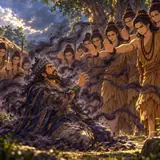
Scene 2 of 2 · In anger Vishvamitra turns Rambha to stone, then, full of remorse, vows never to be angry again.